
How To
How To
Time needed: 1 minute
Want the full printable classroom pack?
Take the flag reference from your screen to an offline pack for lessons, practice, and quiz time.
- Printable atlas with 230+ high-resolution flag flats
- Four regional quizzes with answer keys
- Flag Bingo boards and caller sheet
How to copy and paste the Flag of Zimbabwe Emoji to any device.
- Copy the Zimbabwean Flag Emoji
Go to flagemoji.com and press the copy button (above). This works on any device.
- Paste the Emoji
Go to your email/iMessage/SMS texting service/document and paste the emoji.
For mobile devices
— double-tap or tap-hold, then paste should appear. Tap it.
For desktop and laptops on Apple devices
— command-P / ⌘-P
For desktop and laptops on Windows devices
— control-p
Codes
Emoji Codes
Flag emojis are unicode symbols, like any other letter or number on your keyboard. This means you can copy and paste the emoji itself into your code, whatever the language (click the button above).
They actually count as two characters: the two-letter country code (the ISO international standard). The unicode and shortcode both represent country data which devices can interpret and display the emoji.
| Country Code | Unicode | Shortcode |
| ZW | U+1F1FF U+1F1FC | :flag_ZW: :ZW: |
Emoji shortcodes are used on some platforms as a way for users to type in emojis from the keyboard. If you type the emoji shortcode on Github or Slack, the emoji will appear.
*The official name of the emoji is only the country name, not ‘Zimbabwe Flag’, for example.
Description
Description
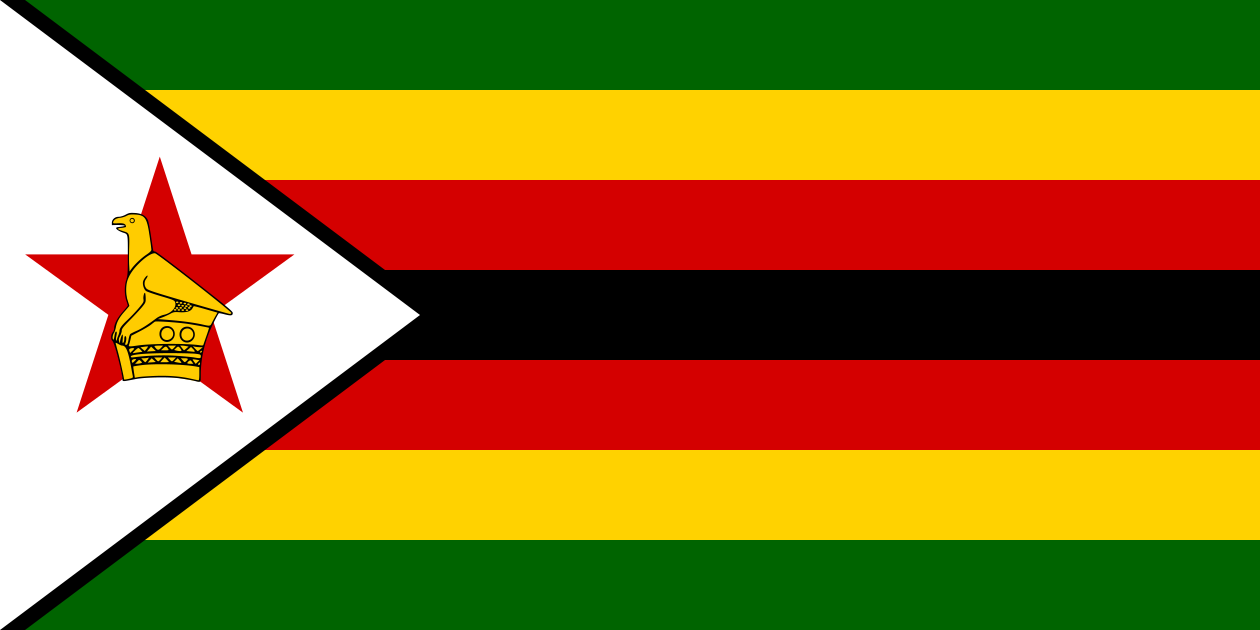
The flag of Zimbabwe has seven equal horizontal bands of green (top), yellow, red, black, red, yellow, and finally green on the bottom. There is a white isosceles triangle edged in black with its base on the hoist side. A yellow Zimbabwe bird—representing the long history of the country—is superimposed on a red five-pointed star in the center of the triangle, which symbolizes peace. Green represents agriculture, yellow mineral wealth, red the blood shed to achieve independence, and black stands for the native people.
Map
Map
Check out the map of Comoros!
Weather
Anthem
National Anthem
| Title | Kalibusiswe Ilizwe le Zimbabwe [Northern Ndebele language] “Simudzai Mureza WeZimbabwe” [Shona] (Blessed Be the Land of Zimbabwe) |
| Composer | Solomon Mutswairo / Fred Lecture Changundega |
FAQ
FAQs
Zimbabwe officially gained became an independent, sovereign state on April 18, 1980.
Green represents agriculture, yellow mineral wealth, red the blood shed to achieve independence, and black stands for the native people.
The flag of Zimbabwe was adopted on April 18, 1980, when the country became independent.
The governmental organization of Zimbabwe is called a Presidential Republic.
Discover more fun facts of Uzbekistan.
Printable
Printable Zimbabwean Flag
Print another really cool flag. Why not the flag of Tuvalu?
Flag History and Design Origins
The national flag of Zimbabwe stands as a powerful symbol of the nation’s independence and rich heritage, adopted on April 18, 1980, when Zimbabwe was granted independence from British colonial rule. The modern flag design was adapted from the Zimbabwe African National Union – Patriotic Front (ZANU-PF) party flag and reflects the country’s liberation struggle and aspirations for the future. The flag’s current design has remained unchanged since independence, making it one of Africa’s most stable national symbols.
Prior to 1980, Zimbabwe underwent several significant flag changes reflecting its colonial history. During the British colonial period as Southern Rhodesia, the nation used a defaced Blue Ensign with various colonial badges. Between the late 1920s and 1953, Southern Rhodesia displayed a Blue Ensign with the Union Flag in the canton and the shield from the colony’s coat of arms. In 1964, a new flag was introduced featuring a light Royal Air Force blue ensign with the shield from the coat of arms in the fly.
The most dramatic transformation occurred on November 11, 1968, when the white government proclaimed independence and adopted an entirely new flag with vertical green-white-green stripes and the full coat of arms in the center. However, this design proved to be short-lived. In 1979, as the country transitioned toward actual independence under majority rule and adopted the name Zimbabwe-Rhodesia, a new flag was adopted on September 4, featuring the pan-African colors of red, black, yellow, and green, along with the Zimbabwe Bird. This design served as a crucial transitional symbol, previewing the colors and themes that would define the independent nation’s flag just months later.
Color Symbolism and Meaning
The seven horizontal stripes of Zimbabwe’s flag—green, gold, red, black, red, gold, and green—each carry profound symbolic meaning representing the nation’s values and resources. Green represents the agricultural heritage and rural areas of Zimbabwe, reflecting the importance of farming and land to the nation’s identity and economy. Yellow (or gold) symbolizes the mineral wealth of Zimbabwe, particularly gold, which has been crucial to the country’s economic development and prosperity. The black stripe in the center represents the ethnic majority of the nation, honoring the indigenous Shona and Ndebele populations who form the backbone of Zimbabwean society.
Red, appearing on both sides of the black stripe, commemorates the blood shed during the liberation struggle and the nation’s freedom fight against colonial oppression. This color carries immense historical significance, honoring the sacrifice of those who fought for independence. The white triangle on the flag’s hoist side serves as a symbol of peace and unity, representing the nation’s desire for harmony and peaceful progress following decades of conflict and colonial rule.
Centered within the white triangle is a red five-pointed star, which officially represents the nation’s aspirations and future goals. The star has been widely interpreted as symbolizing communism and socialism, reflecting the ideological orientation of the ZANU-PF and the revolutionary struggle for freedom. This combination of colors—often referred to as pan-African colors—connects Zimbabwe to the broader African independence movement, linking the nation to its continental identity and shared struggle against colonialism.
The Zimbabwe Bird: Symbol of Ancient Heritage
One of the most distinctive features of Zimbabwe’s flag is the soapstone bird, or Zimbabwe Bird, which adorns the white triangle. This iconic emblem derives from ancient soapstone sculptures discovered among the ruins of Great Zimbabwe, a medieval city built by ancestors of the Shona people starting in the eleventh century. The original stone bird carvings stand approximately 40 centimeters (16 inches) tall and were mounted on columns exceeding 90 centimeters in height, positioned on walls and monoliths throughout the ancient city. These sculptures are unique to Great Zimbabwe; nothing comparable has been discovered anywhere else in the world, making them invaluable artifacts of pre-colonial African civilization.
Scholars believe the Zimbabwe Bird likely represents a sacred or totemic animal of the Shona people. The most probable identifications are the bateleur eagle (known as “chapungu” in the Shona language), which was traditionally believed to be a messenger from Mwari (God) and the ancestors, or the fish eagle (“hungwe”), which some suggest may have been the original totem of the Shona people. The bird’s presence on Great Zimbabwe’s structures indicates its profound spiritual and cultural importance to the medieval civilization that constructed those magnificent stone ruins.
The Zimbabwe Bird’s adoption as a national symbol traces back to 1924, when it first appeared on the coat of arms of Southern Rhodesia during the colonial period. It was later incorporated into the flag when the full coat of arms was displayed on the Rhodesian flag adopted on November 11, 1968. When Zimbabwe achieved independence in 1980, the bird was retained and reimagined in gold against the black stripe, symbolizing the nation’s connection to its pre-colonial African heritage and the achievements of Great Zimbabwe, one of Africa’s most remarkable medieval civilizations.
Notable Facts and Modern Legacy
Zimbabwe’s flag is notable for its remarkable stability since independence—it stands as one of the few African national flags that has remained completely unchanged since adoption, a testament to its universal acceptance and the powerful symbolism it carries. The flag’s design successfully synthesizes multiple layers of meaning: ancient African heritage through the Zimbabwe Bird, the nation’s liberation struggle through the color red, economic potential through gold, agricultural foundation through green, and hopes for peaceful unity through white.
The adoption of the flag on April 18, 1980, marked not merely the change of a symbol, but a fundamental transformation in Zimbabwe’s status and identity. At midnight between April 17 and 18, 1980, Britain formally granted Zimbabwe independence, and the new flag was raised for the first time as the official symbol of a sovereign African nation. This moment represented the triumph of the liberation struggle and the beginning of majority-rule governance after decades of colonial and minority-rule governance.
The pan-African colors featured on Zimbabwe’s flag—red, black, yellow, and green—echo across the continent, symbolizing Zimbabwe’s place within the broader African family of nations. These colors, which gained prominence through Pan-African movements and were popularized by the liberation movements of the mid-twentieth century, connect Zimbabwe’s struggle to those of other African nations seeking independence and self-determination. The flag thus serves not only as a national symbol but as a representation of African dignity, resilience, and the enduring quest for freedom and sovereignty that defined the post-colonial era.
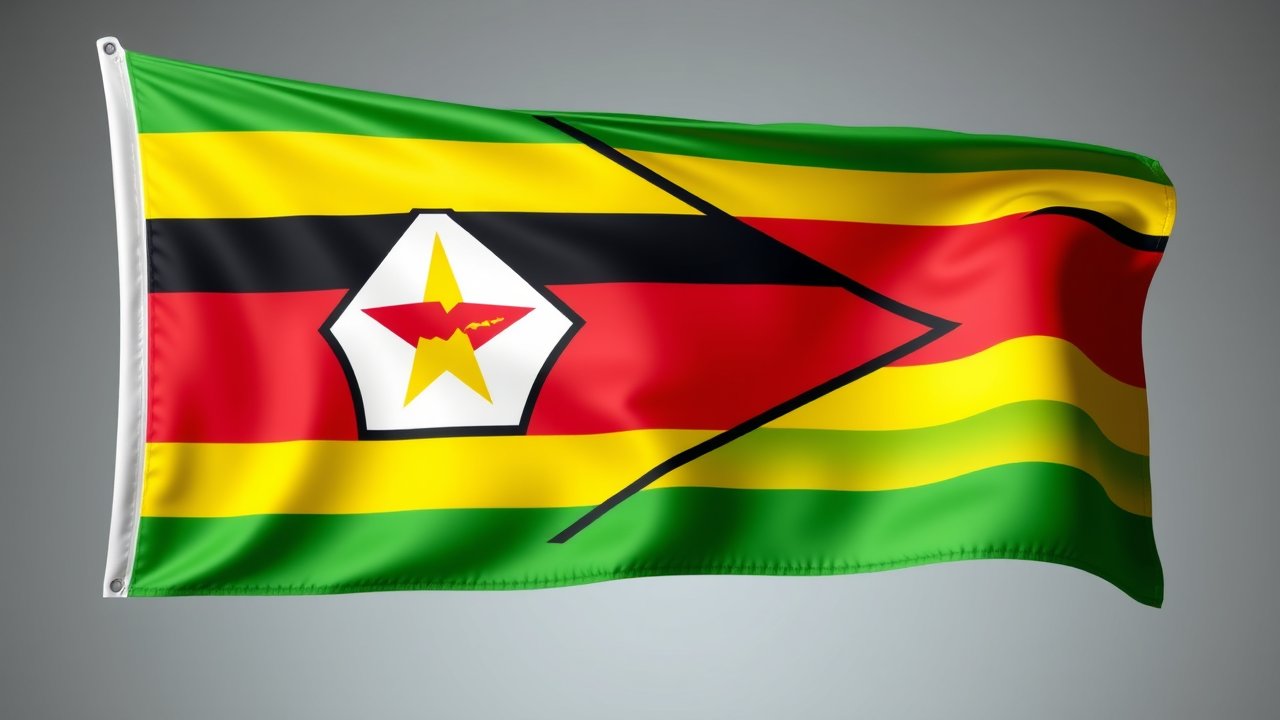
3D Glossy Render — Seven horizontal stripes of green, yellow, red, black, red, yellow, green with a white triangle bearing a red star and Zimbabwe Bird. The flag of Zimbabwe as a photorealistic 3D render. Seven horizontal stripes of green, yellow, red, black, red, yellow, green with a white triangle bearing a red star and Zimbabwe Bird. The flag fabric hangs or drapes naturally but preserves exact proportions, colors, and all symbols perfectly — completely faithful to the real Zimbabwe flag. Dramatic studio lighting, glossy silk material, soft shadows, subsurface scattering, perfect specular highlights. No text, no letters, no words, no writing of any kind.
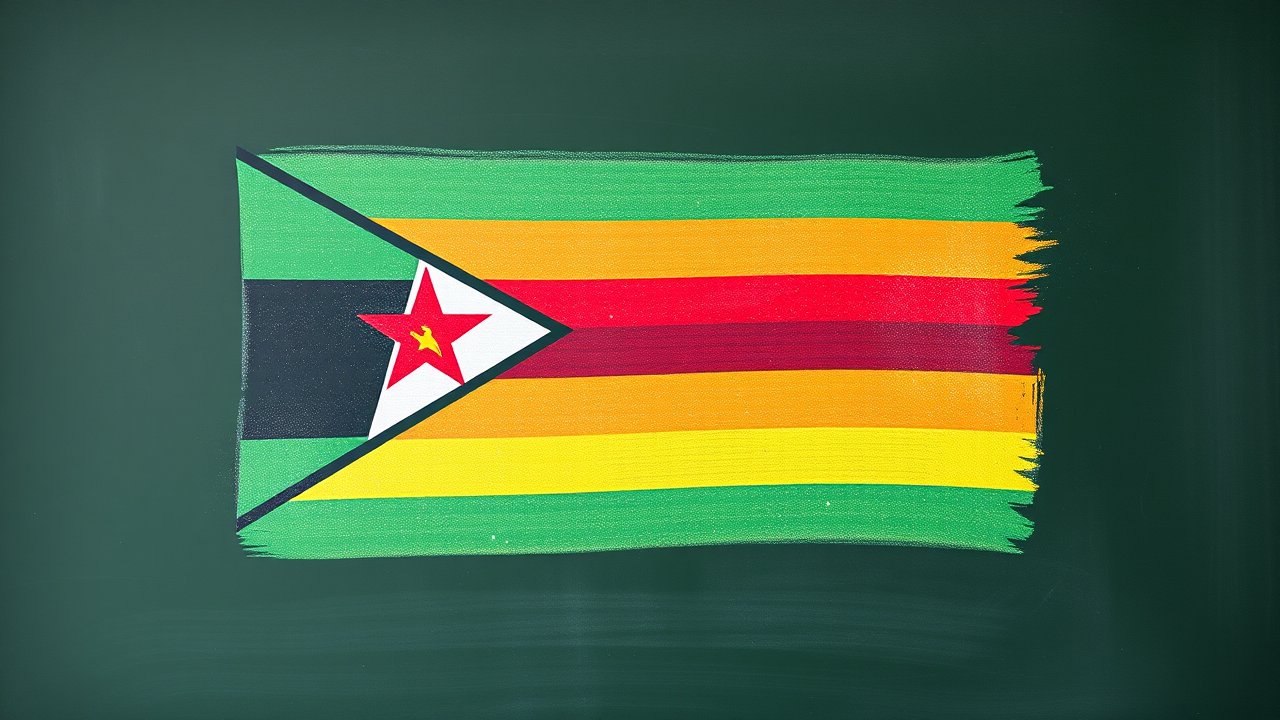
Chalk on Blackboard — Seven horizontal stripes of green, yellow, red, black, red, yellow, green with a white triangle bearing a red star and Zimbabwe Bird. The flag of Zimbabwe drawn in chalk on a real blackboard. Seven horizontal stripes of green, yellow, red, black, red, yellow, green with a white triangle bearing a red star and Zimbabwe Bird. Authentic blackboard — dark slate green surface with chalk dust and smudge marks. Soft, dusty white and colored chalk lines, imperfect edges, hand-drawn quality. Chalk dust particles visible in the air. The flag is immediately recognizable. No text, no letters, no words, no writing of any kind.
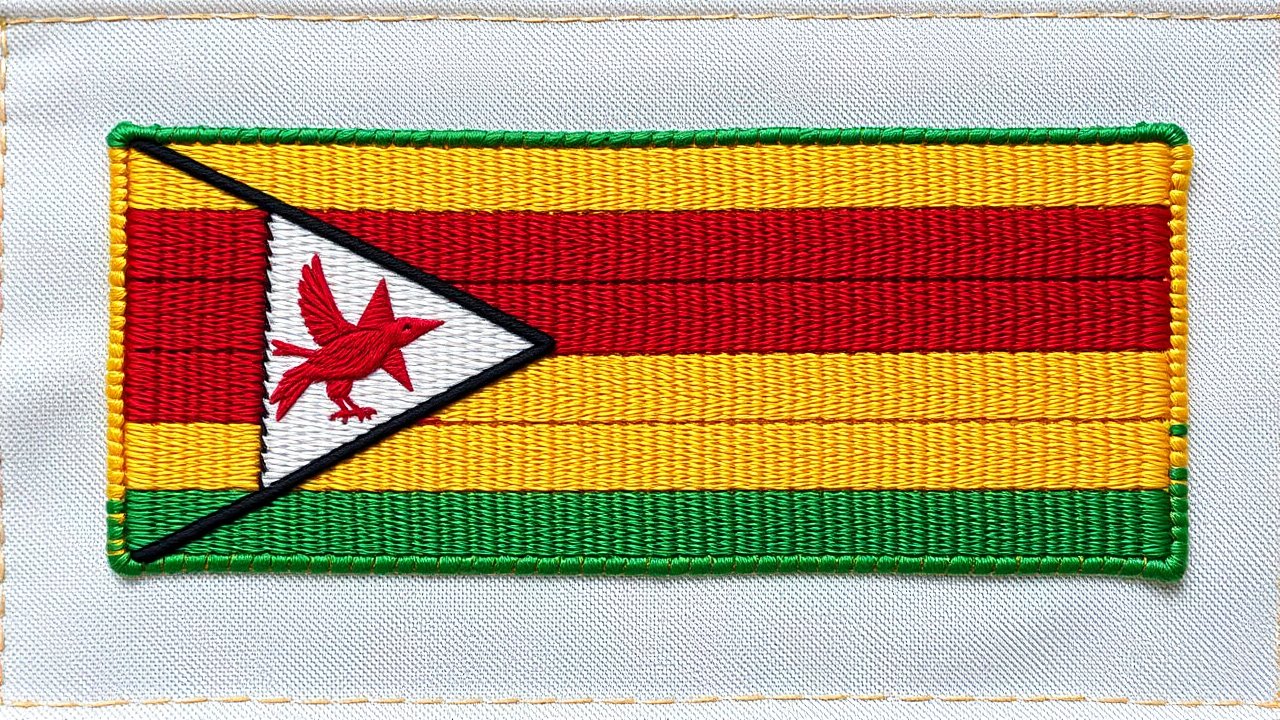
Embroidered Textile — Seven horizontal stripes of green, yellow, red, black, red, yellow, green with a white triangle bearing a red star and Zimbabwe Bird. The flag of Zimbabwe as intricate embroidery on linen fabric. Seven horizontal stripes of green, yellow, red, black, red, yellow, green with a white triangle bearing a red star and Zimbabwe Bird. Dense satin stitches, French knots, chain stitch detail. The flag design is completely faithful — exact colors, geometry, and all symbols faithfully stitched, immediately recognizable as the Zimbabwe flag. Visible thread texture, dimensional quality, warm handcrafted feel. No text, no letters, no words, no writing of any kind.

Flagpole in Capital — Seven horizontal stripes of green, yellow, red, black, red, yellow, green with a white triangle bearing a red star and Zimbabwe Bird. Photorealistic photograph of the Zimbabwe flag flying on a tall flagpole in front of an iconic government building in the capital city. Seven horizontal stripes of green, yellow, red, black, red, yellow, green with a white triangle bearing a red star and Zimbabwe Bird. The flag ripples naturally in the wind, colors vivid and exact. Documentary photography style, sharp and realistic. Grand architecture in the background. Blue sky, dramatic clouds. No text, no letters, no words, no writing of any kind.
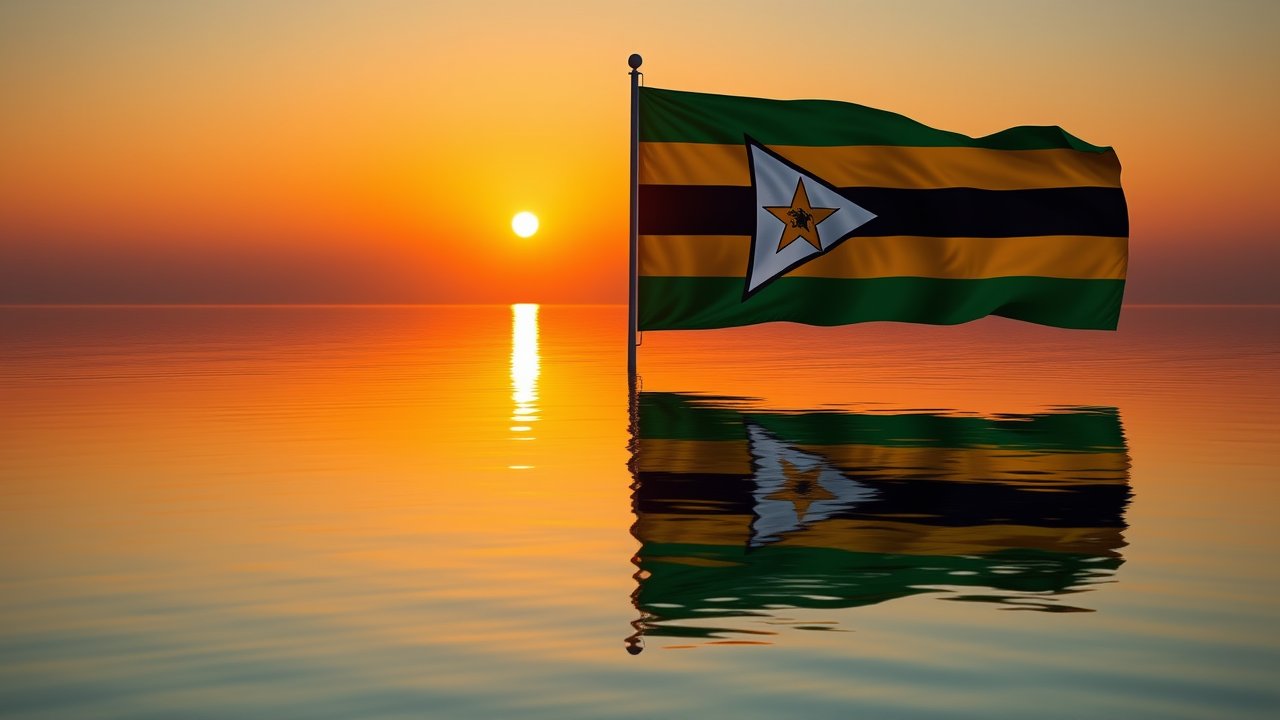
Golden Hour Reflection — Seven horizontal stripes of green, yellow, red, black, red, yellow, green with a white triangle bearing a red star and Zimbabwe Bird. Photorealistic photograph of the Zimbabwe flag reflected in still water at golden hour. Seven horizontal stripes of green, yellow, red, black, red, yellow, green with a white triangle bearing a red star and Zimbabwe Bird. The flag flies on a pole at the water’s edge, its reflection shimmering on the surface below. Warm amber and orange sunset light. The flag colors and design are faithful and vivid. Serene, cinematic landscape photography. No text, no letters, no words, no writing of any kind.
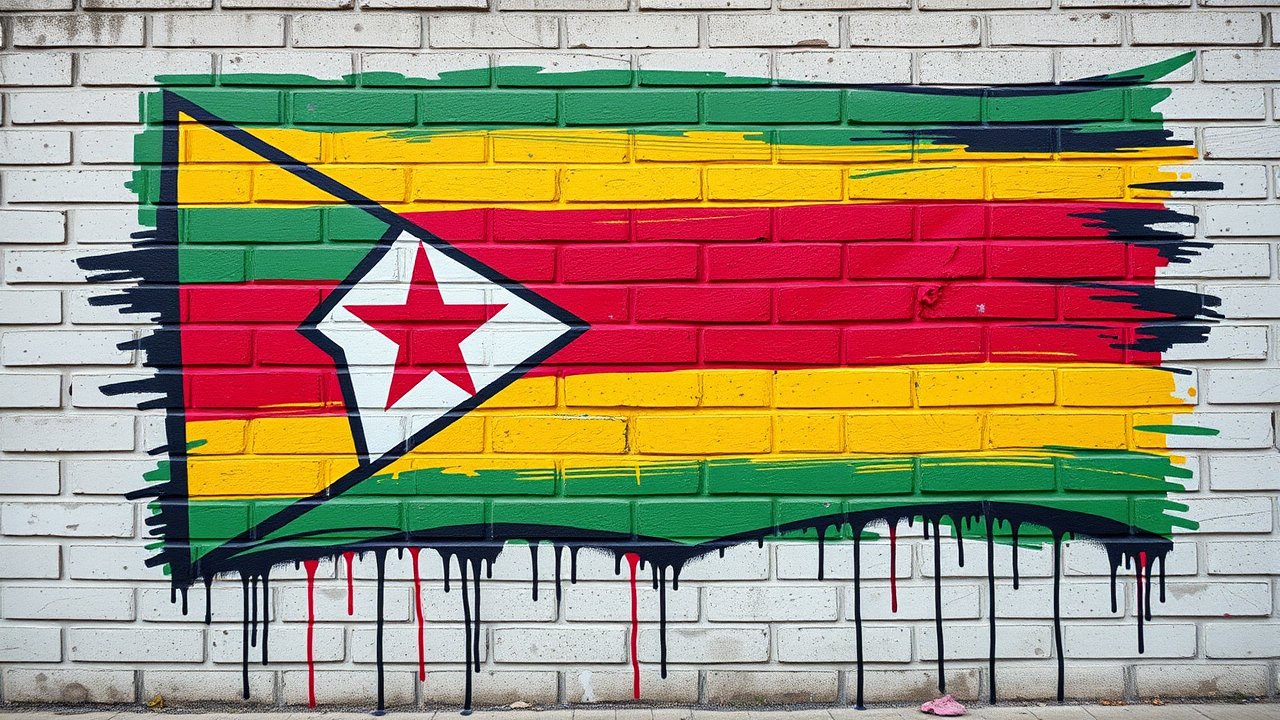
Street Art / Graffiti — Seven horizontal stripes of green, yellow, red, black, red, yellow, green with a white triangle bearing a red star and Zimbabwe Bird. The flag of Zimbabwe as vibrant street art spray-painted on a brick wall. Seven horizontal stripes of green, yellow, red, black, red, yellow, green with a white triangle bearing a red star and Zimbabwe Bird. Bold spray paint, dripping edges, stencil layers, overspray halos. The flag design is faithful and immediately recognizable — exact colors and symbols, just rendered in spray paint on urban concrete. No text, no letters, no words, no writing of any kind. No tags, no graffiti lettering.
Sci-Fi Hologram — Seven horizontal stripes of green, yellow, red, black, red, yellow, green with a white triangle bearing a red star and Zimbabwe Bird. The flag of Zimbabwe projected as a futuristic holographic display. Seven horizontal stripes of green, yellow, red, black, red, yellow, green with a white triangle bearing a red star and Zimbabwe Bird. Translucent blue-white projection with scan lines, floating in dark space. Glitching edges, particle effects, data streams. The flag design is completely faithful and recognizable. Cyberpunk HUD elements framing the projection. No text, no letters, no words, no writing of any kind.
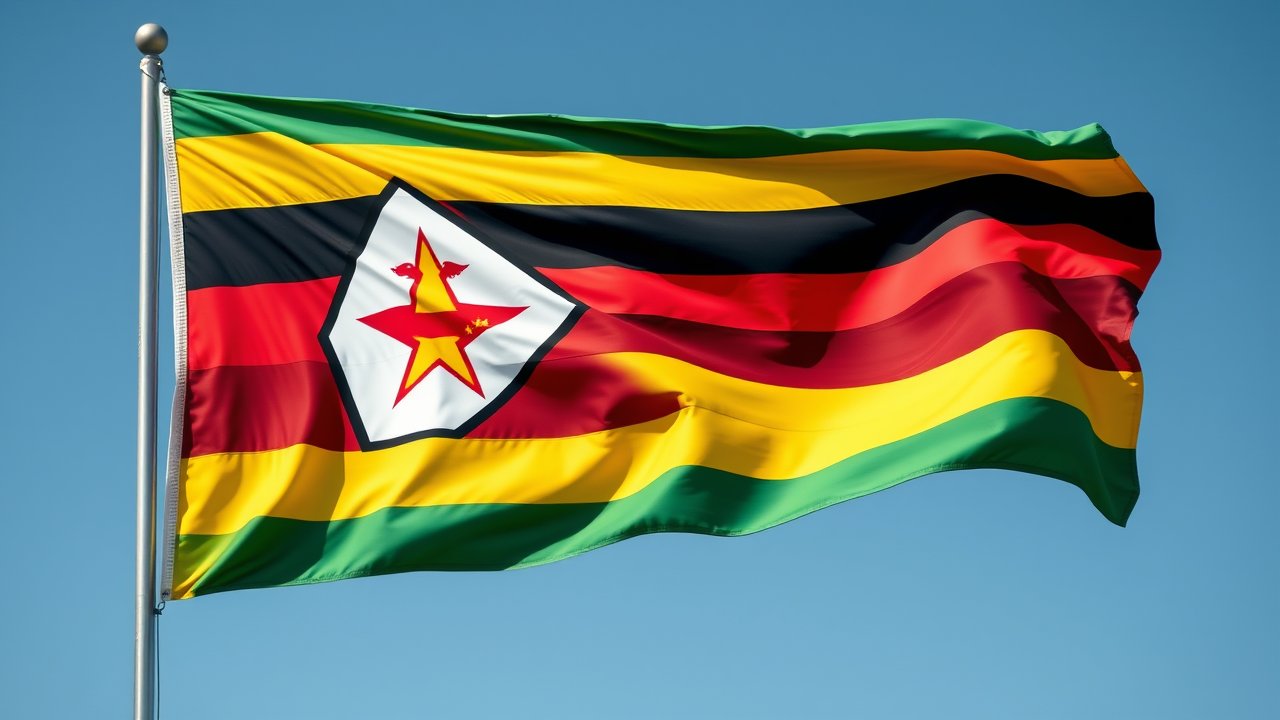
Hyperrealistic Wind — Seven horizontal stripes of green, yellow, red, black, red, yellow, green with a white triangle bearing a red star and Zimbabwe Bird. Ultra-hyperrealistic photograph of the Zimbabwe flag caught in a dramatic gust of wind. Seven horizontal stripes of green, yellow, red, black, red, yellow, green with a white triangle bearing a red star and Zimbabwe Bird. Macro-level fabric detail — individual threads visible, fabric folds and tension lines crisp. Colors and design completely faithful to the real Zimbabwe flag. High-speed shutter, razor-sharp focus, studio lighting. No text, no letters, no words, no writing of any kind.
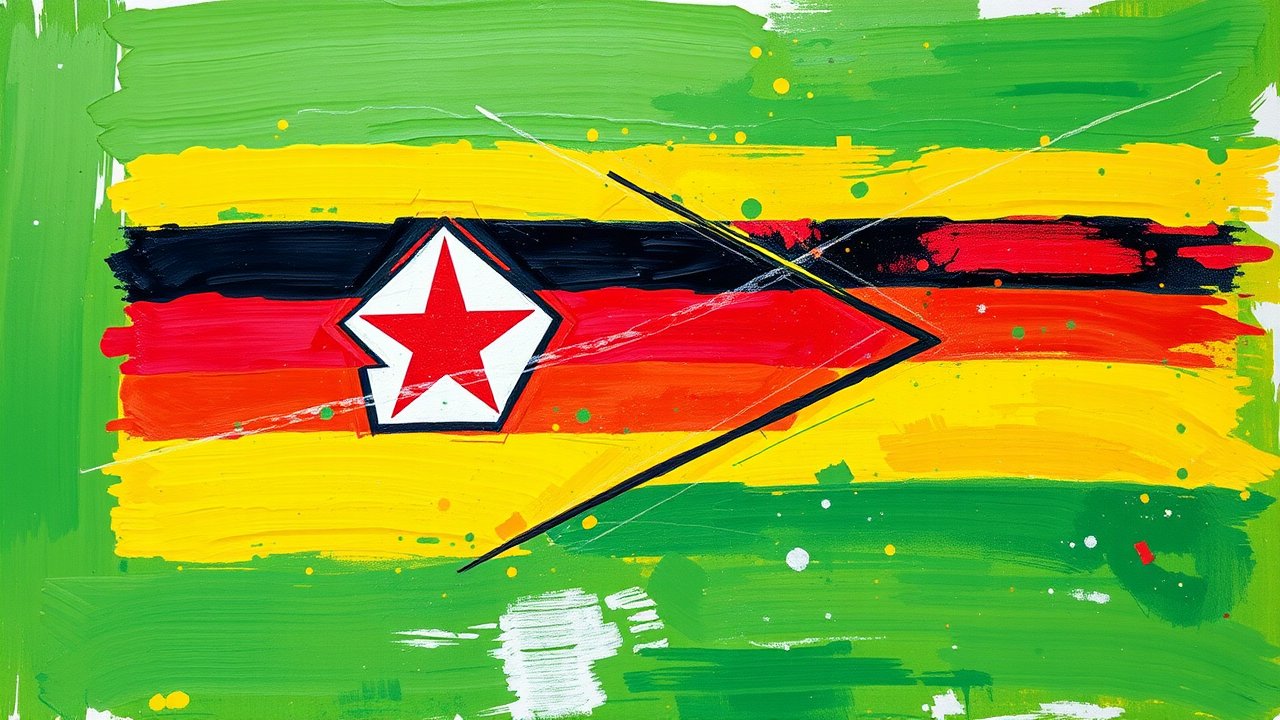
Impressionist Oil — Seven horizontal stripes of green, yellow, red, black, red, yellow, green with a white triangle bearing a red star and Zimbabwe Bird. The flag of Zimbabwe painted in French Impressionist oil on canvas. Seven horizontal stripes of green, yellow, red, black, red, yellow, green with a white triangle bearing a red star and Zimbabwe Bird. Thick impasto brushstrokes, dappled light, vibrant broken color technique in the style of Monet. The flag is instantly recognizable — colors and design faithful to the real Zimbabwe flag, interpreted with impressionist light and texture. No text, no letters, no words, no writing of any kind.
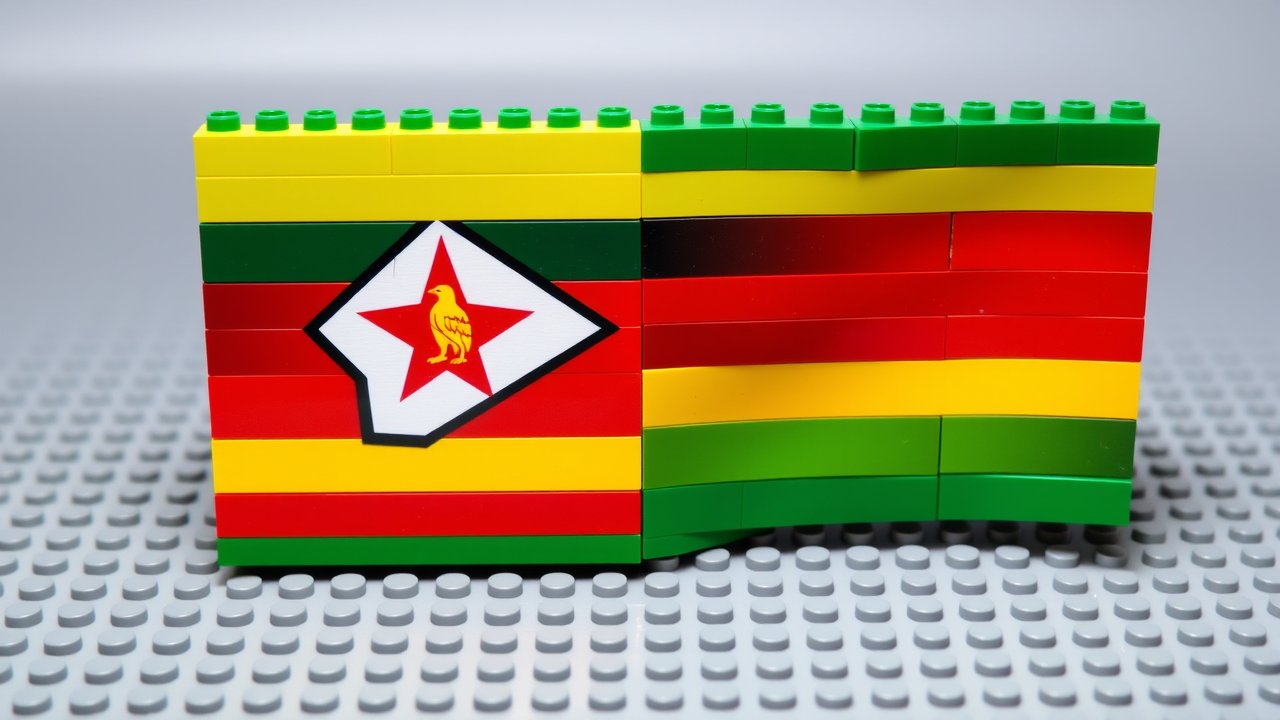
Lego Bricks — Seven horizontal stripes of green, yellow, red, black, red, yellow, green with a white triangle bearing a red star and Zimbabwe Bird. The flag of Zimbabwe built from Lego bricks, photographed as a real physical construction. Seven horizontal stripes of green, yellow, red, black, red, yellow, green with a white triangle bearing a red star and Zimbabwe Bird. Visible studs and brick seams, slight plastic sheen. Standard Lego colors approximate the flag’s palette. Built on a gray Lego baseplate. Dramatic angle showing the three-dimensional brick texture. No text, no letters, no words, no writing of any kind.
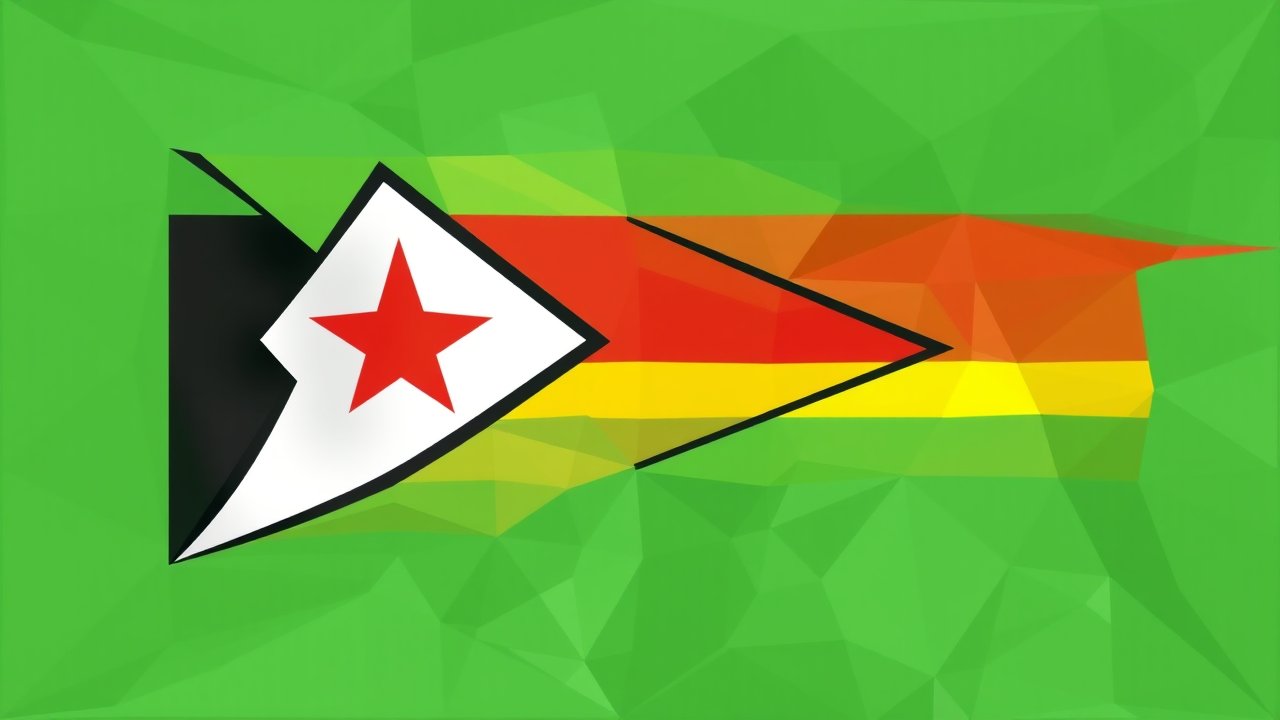
Low-Poly Geometric — Seven horizontal stripes of green, yellow, red, black, red, yellow, green with a white triangle bearing a red star and Zimbabwe Bird. The flag of Zimbabwe constructed from low-polygon geometric triangles. Seven horizontal stripes of green, yellow, red, black, red, yellow, green with a white triangle bearing a red star and Zimbabwe Bird. Aggressively faceted — each region broken into many visible triangular faces with subtle color variation across each polygon, creating real depth and dimensionality even in flat-color areas of the flag. Crystal-like, contemporary computational design. The flag is completely faithful and immediately recognizable. No text, no letters, no words, no writing of any kind.
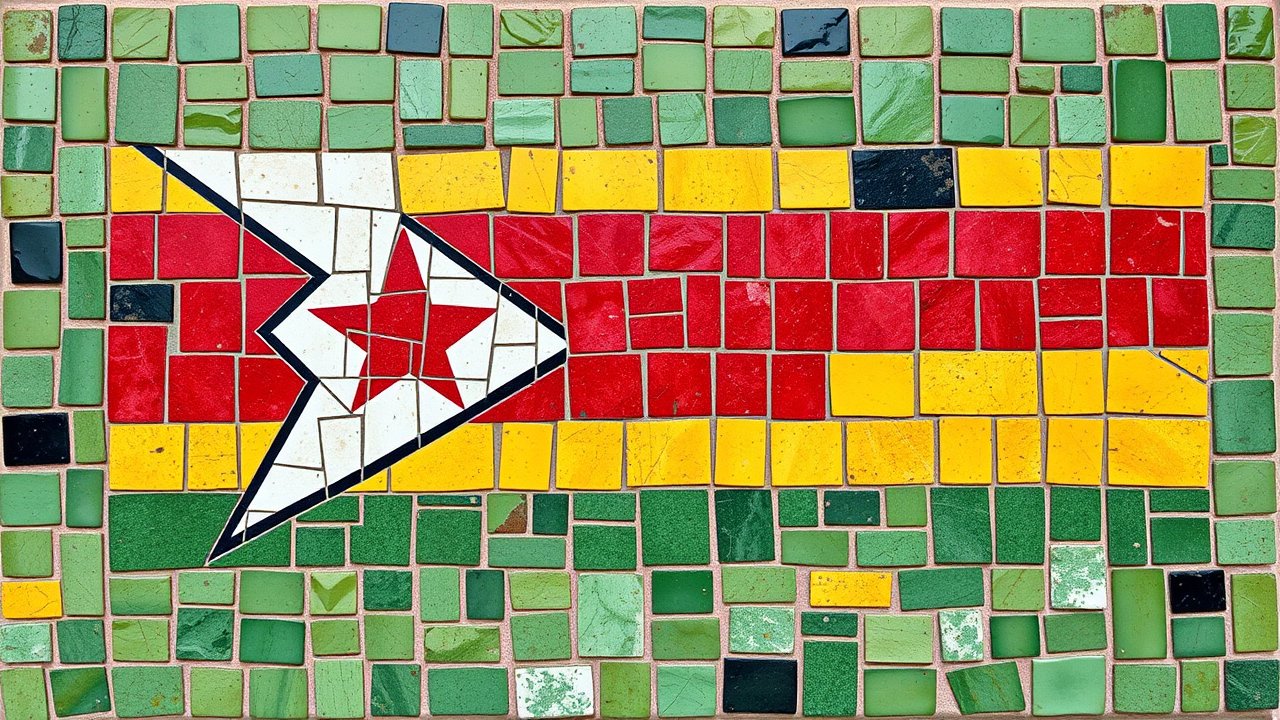
Mosaic Tiles — Seven horizontal stripes of green, yellow, red, black, red, yellow, green with a white triangle bearing a red star and Zimbabwe Bird. The flag of Zimbabwe assembled as a Roman-style mosaic. Seven horizontal stripes of green, yellow, red, black, red, yellow, green with a white triangle bearing a red star and Zimbabwe Bird. The flag is completely faithful to the real Zimbabwe flag — exact proportions, colors, and all symbols, rendered in thousands of small stone and glass tesserae. Visible grout lines, rich earthy tones mixed with brilliant glass, slight historical weathering. No text, no letters, no words, no writing of any kind.
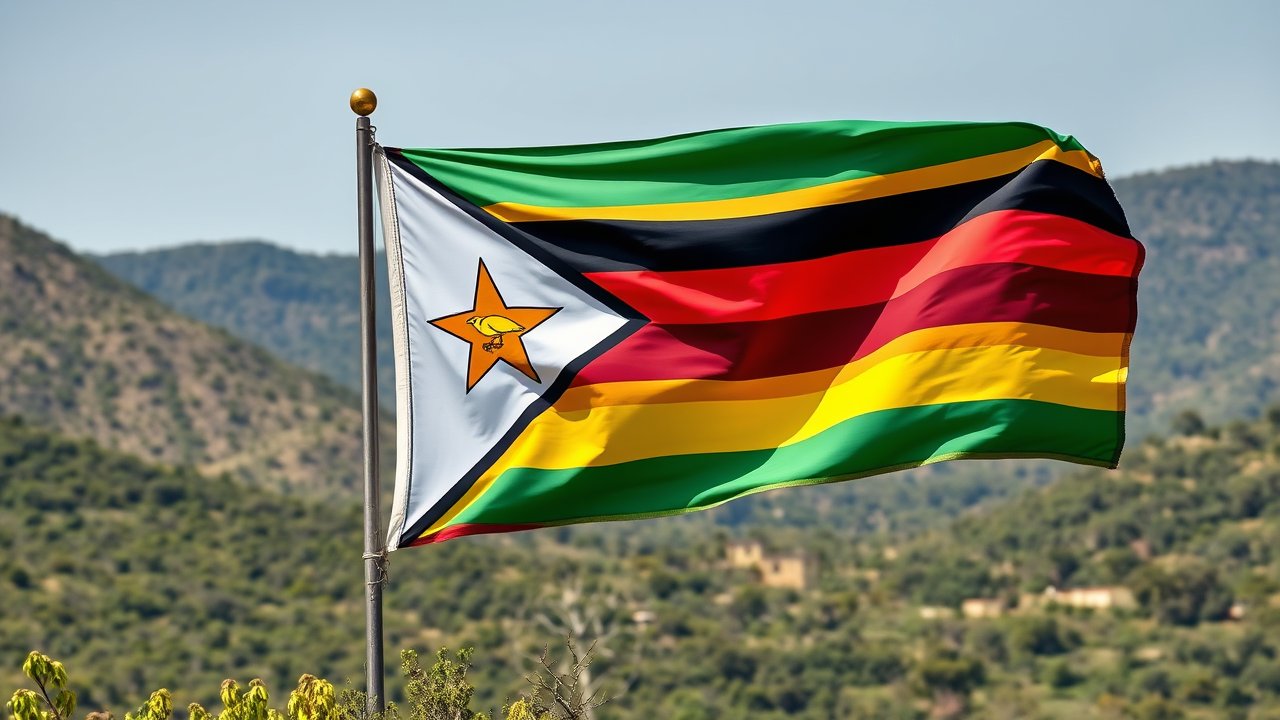
Native Landscape — Seven horizontal stripes of green, yellow, red, black, red, yellow, green with a white triangle bearing a red star and Zimbabwe Bird. Photorealistic photograph of the Zimbabwe flag flying in an iconic natural landscape native to Zimbabwe — the terrain, flora, and environment characteristic of that country. Seven horizontal stripes of green, yellow, red, black, red, yellow, green with a white triangle bearing a red star and Zimbabwe Bird. The flag is prominent and its colors are faithful and vivid. Remote, uninhabited wilderness. National Geographic photography style. No text, no letters, no words, no writing of any kind.
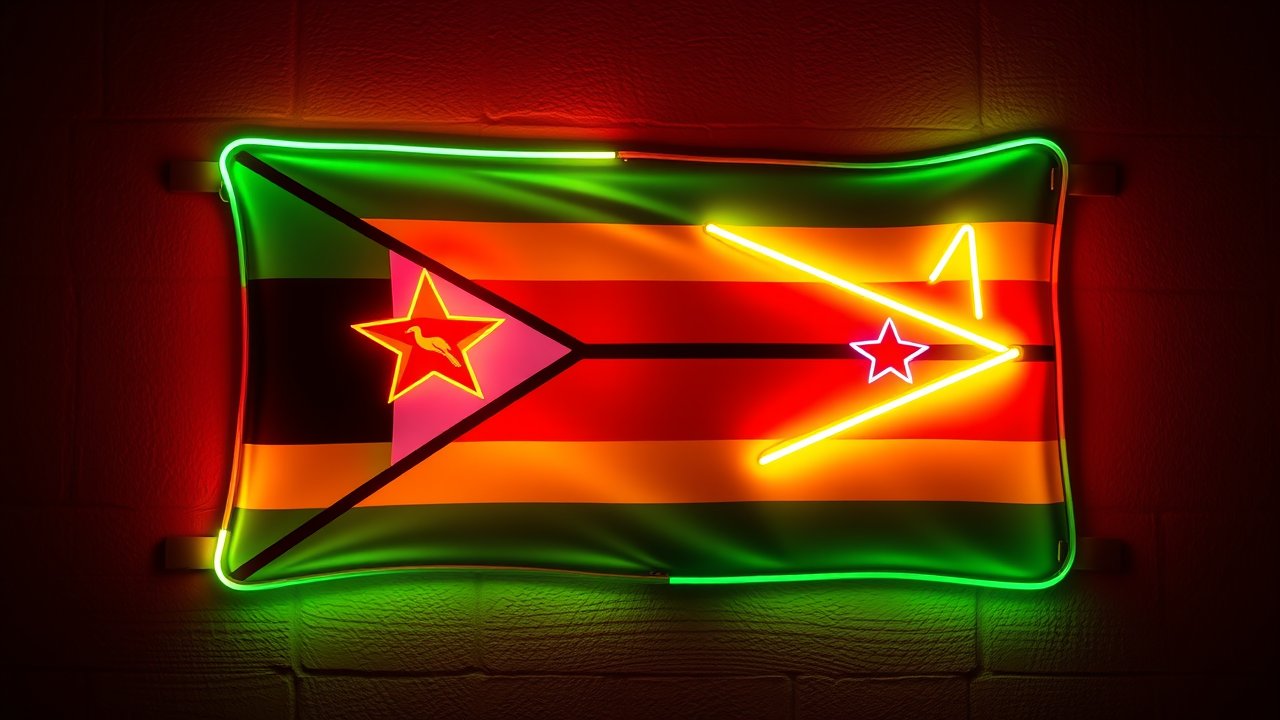
Neon Sign — Seven horizontal stripes of green, yellow, red, black, red, yellow, green with a white triangle bearing a red star and Zimbabwe Bird. The flag of Zimbabwe recreated as a real neon sign mounted on a dark wall. Seven horizontal stripes of green, yellow, red, black, red, yellow, green with a white triangle bearing a red star and Zimbabwe Bird. Glowing glass neon tubes bent into the flag’s shapes — the colors of the flag rendered in actual neon light. Visible glass tube bends, metal mounting brackets on the wall. Warm neon glow and light bloom. Real neon, not digital. Photographed in a dark room. No text, no letters, no words, no writing of any kind.
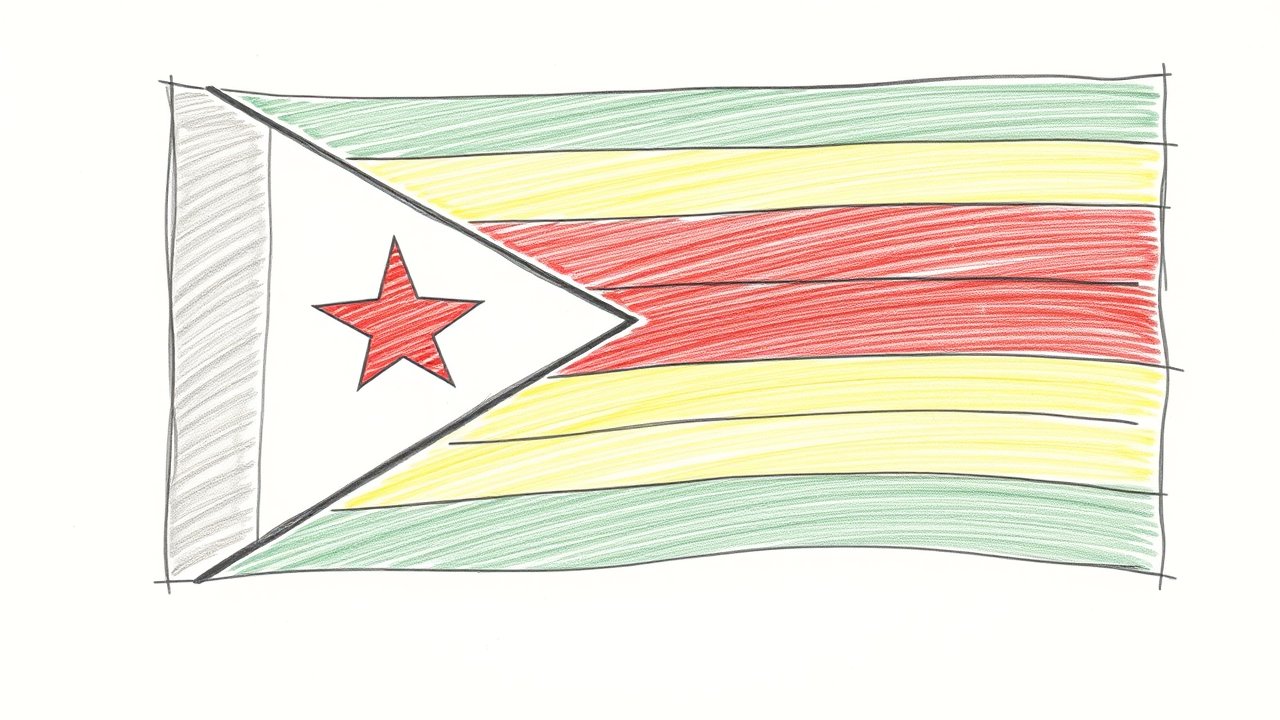
Pencil Sketch — Seven horizontal stripes of green, yellow, red, black, red, yellow, green with a white triangle bearing a red star and Zimbabwe Bird. The flag of Zimbabwe as a bold, confident pencil sketch. Seven horizontal stripes of green, yellow, red, black, red, yellow, green with a white triangle bearing a red star and Zimbabwe Bird. Strong graphite lines on cream paper — not delicate but bold and decisive. Heavy pressure on key outlines, dramatic cross-hatching for deep shadows and shading. Immediately recognizable as the Zimbabwe flag. Artist’s confident hand, not tentative. No text, no letters, no words, no writing of any kind.
Pixel Art — Seven horizontal stripes of green, yellow, red, black, red, yellow, green with a white triangle bearing a red star and Zimbabwe Bird. The flag of Zimbabwe as detailed 16-bit pixel art. Seven horizontal stripes of green, yellow, red, black, red, yellow, green with a white triangle bearing a red star and Zimbabwe Bird. Crisp pixel grid, limited palette with careful dithering, nostalgic retro game aesthetic. Clean grid-aligned design with subtle shading. Every element of the flag faithfully reproduced in pixels. No text, no letters, no words, no writing of any kind.
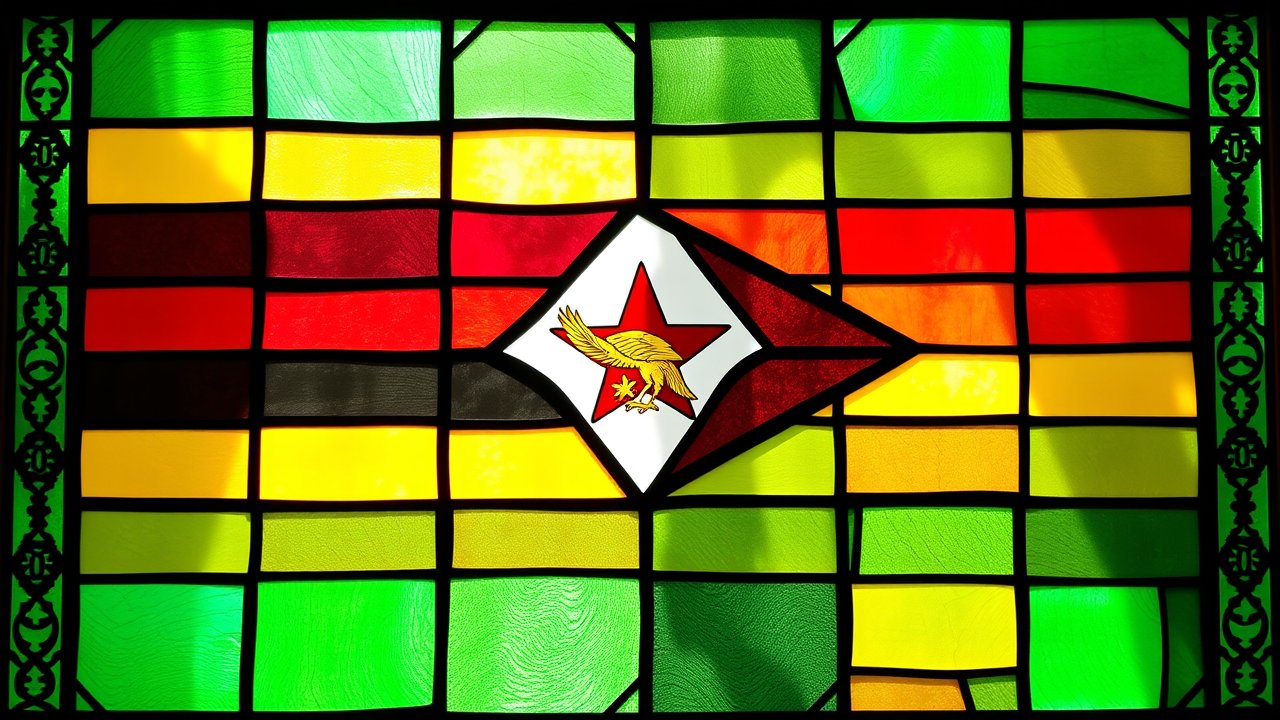
Stained Glass — Seven horizontal stripes of green, yellow, red, black, red, yellow, green with a white triangle bearing a red star and Zimbabwe Bird. The flag of Zimbabwe rendered as an ornate stained glass window. Seven horizontal stripes of green, yellow, red, black, red, yellow, green with a white triangle bearing a red star and Zimbabwe Bird. The design is completely faithful to the real Zimbabwe flag — exact colors, geometry, and all symbols preserved. Brilliant jewel-toned glass pieces separated by dark lead came lines. Warm sunlight streaming through, casting colored light. Gothic cathedral craftsmanship. No text, no letters, no words, no writing of any kind.
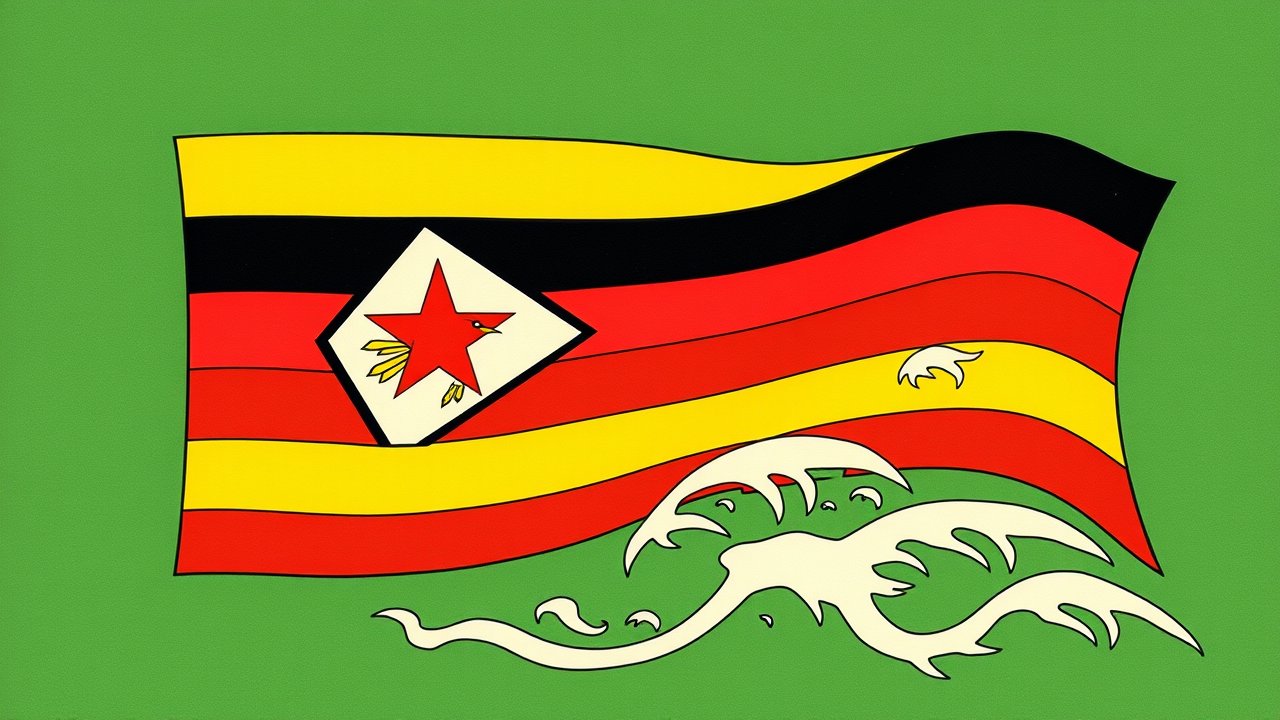
Ukiyo-e Woodblock — Seven horizontal stripes of green, yellow, red, black, red, yellow, green with a white triangle bearing a red star and Zimbabwe Bird. The flag of Zimbabwe as a traditional Japanese ukiyo-e woodblock print. Seven horizontal stripes of green, yellow, red, black, red, yellow, green with a white triangle bearing a red star and Zimbabwe Bird. Bold outlines, flat areas of rich color, flowing organic forms. Wind and waves incorporated into the composition. Printed on washi paper with visible wood grain texture. The flag is the central focus and instantly recognizable. No text, no letters, no words, no writing of any kind.
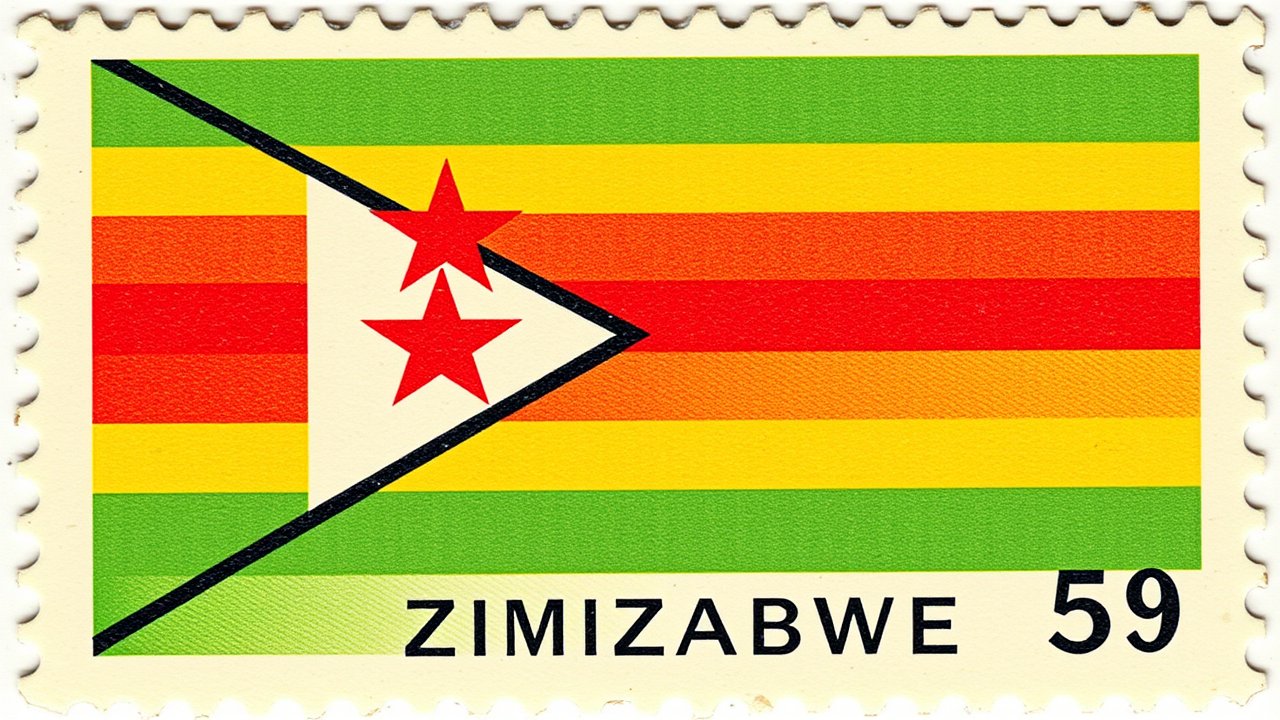
Vintage Postage Stamp — Seven horizontal stripes of green, yellow, red, black, red, yellow, green with a white triangle bearing a red star and Zimbabwe Bird. The flag of Zimbabwe as a vintage 1950s postage stamp. Seven horizontal stripes of green, yellow, red, black, red, yellow, green with a white triangle bearing a red star and Zimbabwe Bird. The flag fills most of the stamp — it is the primary subject, faithfully rendered in fine engraved intaglio style. Perforated edges, aged paper with slight foxing. The stamp may show a denomination numeral only — absolutely no other text or country names.
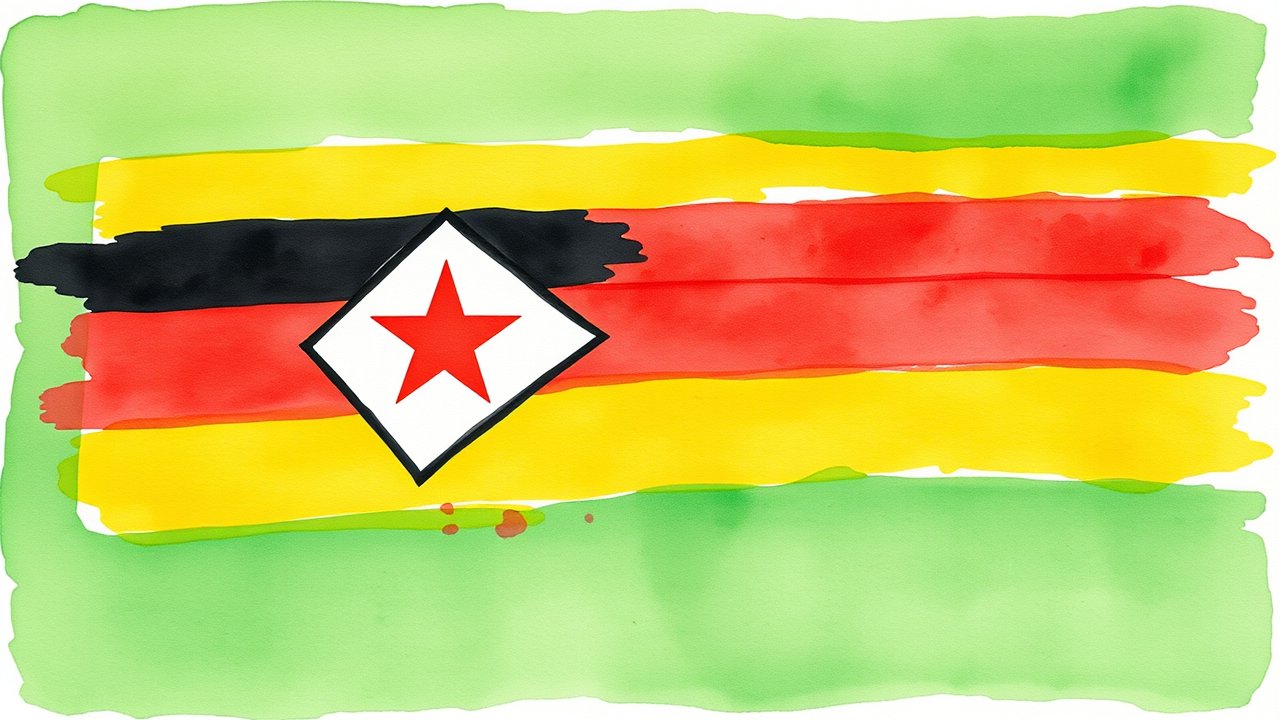
Watercolor — Seven horizontal stripes of green, yellow, red, black, red, yellow, green with a white triangle bearing a red star and Zimbabwe Bird. The flag of Zimbabwe painted in loose, expressive watercolor. Seven horizontal stripes of green, yellow, red, black, red, yellow, green with a white triangle bearing a red star and Zimbabwe Bird. Wet-on-wet technique with soft color bleeds, visible brushstrokes, natural paper texture. Delicate splashes and drips at the edges. Luminous, translucent layers of pigment. No text, no letters, no words, no writing of any kind.
Flag History and Design Origins
The national flag of Zimbabwe stands as a powerful symbol of the nation’s independence and rich heritage, adopted on April 18, 1980, when Zimbabwe was granted independence from British colonial rule. The modern flag design was adapted from the Zimbabwe African National Union – Patriotic Front (ZANU-PF) party flag and reflects the country’s liberation struggle and aspirations for the future. The flag’s current design has remained unchanged since independence, making it one of Africa’s most stable national symbols.
Prior to 1980, Zimbabwe underwent several significant flag changes reflecting its colonial history. During the British colonial period as Southern Rhodesia, the nation used a defaced Blue Ensign with various colonial badges. Between the late 1920s and 1953, Southern Rhodesia displayed a Blue Ensign with the Union Flag in the canton and the shield from the colony’s coat of arms. In 1964, a new flag was introduced featuring a light Royal Air Force blue ensign with the shield from the coat of arms in the fly.
The most dramatic transformation occurred on November 11, 1968, when the white government proclaimed independence and adopted an entirely new flag with vertical green-white-green stripes and the full coat of arms in the center. However, this design proved to be short-lived. In 1979, as the country transitioned toward actual independence under majority rule and adopted the name Zimbabwe-Rhodesia, a new flag was adopted on September 4, featuring the pan-African colors of red, black, yellow, and green, along with the Zimbabwe Bird. This design served as a crucial transitional symbol, previewing the colors and themes that would define the independent nation’s flag just months later.
Color Symbolism and Meaning
The seven horizontal stripes of Zimbabwe’s flag—green, gold, red, black, red, gold, and green—each carry profound symbolic meaning representing the nation’s values and resources. Green represents the agricultural heritage and rural areas of Zimbabwe, reflecting the importance of farming and land to the nation’s identity and economy. Yellow (or gold) symbolizes the mineral wealth of Zimbabwe, particularly gold, which has been crucial to the country’s economic development and prosperity. The black stripe in the center represents the ethnic majority of the nation, honoring the indigenous Shona and Ndebele populations who form the backbone of Zimbabwean society.
Red, appearing on both sides of the black stripe, commemorates the blood shed during the liberation struggle and the nation’s freedom fight against colonial oppression. This color carries immense historical significance, honoring the sacrifice of those who fought for independence. The white triangle on the flag’s hoist side serves as a symbol of peace and unity, representing the nation’s desire for harmony and peaceful progress following decades of conflict and colonial rule.
Centered within the white triangle is a red five-pointed star, which officially represents the nation’s aspirations and future goals. The star has been widely interpreted as symbolizing communism and socialism, reflecting the ideological orientation of the ZANU-PF and the revolutionary struggle for freedom. This combination of colors—often referred to as pan-African colors—connects Zimbabwe to the broader African independence movement, linking the nation to its continental identity and shared struggle against colonialism.
The Zimbabwe Bird: Symbol of Ancient Heritage
One of the most distinctive features of Zimbabwe’s flag is the soapstone bird, or Zimbabwe Bird, which adorns the white triangle. This iconic emblem derives from ancient soapstone sculptures discovered among the ruins of Great Zimbabwe, a medieval city built by ancestors of the Shona people starting in the eleventh century. The original stone bird carvings stand approximately 40 centimeters (16 inches) tall and were mounted on columns exceeding 90 centimeters in height, positioned on walls and monoliths throughout the ancient city. These sculptures are unique to Great Zimbabwe; nothing comparable has been discovered anywhere else in the world, making them invaluable artifacts of pre-colonial African civilization.
Scholars believe the Zimbabwe Bird likely represents a sacred or totemic animal of the Shona people. The most probable identifications are the bateleur eagle (known as “chapungu” in the Shona language), which was traditionally believed to be a messenger from Mwari (God) and the ancestors, or the fish eagle (“hungwe”), which some suggest may have been the original totem of the Shona people. The bird’s presence on Great Zimbabwe’s structures indicates its profound spiritual and cultural importance to the medieval civilization that constructed those magnificent stone ruins.
The Zimbabwe Bird’s adoption as a national symbol traces back to 1924, when it first appeared on the coat of arms of Southern Rhodesia during the colonial period. It was later incorporated into the flag when the full coat of arms was displayed on the Rhodesian flag adopted on November 11, 1968. When Zimbabwe achieved independence in 1980, the bird was retained and reimagined in gold against the black stripe, symbolizing the nation’s connection to its pre-colonial African heritage and the achievements of Great Zimbabwe, one of Africa’s most remarkable medieval civilizations.
Notable Facts and Modern Legacy
Zimbabwe’s flag is notable for its remarkable stability since independence—it stands as one of the few African national flags that has remained completely unchanged since adoption, a testament to its universal acceptance and the powerful symbolism it carries. The flag’s design successfully synthesizes multiple layers of meaning: ancient African heritage through the Zimbabwe Bird, the nation’s liberation struggle through the color red, economic potential through gold, agricultural foundation through green, and hopes for peaceful unity through white.
The adoption of the flag on April 18, 1980, marked not merely the change of a symbol, but a fundamental transformation in Zimbabwe’s status and identity. At midnight between April 17 and 18, 1980, Britain formally granted Zimbabwe independence, and the new flag was raised for the first time as the official symbol of a sovereign African nation. This moment represented the triumph of the liberation struggle and the beginning of majority-rule governance after decades of colonial and minority-rule governance.
The pan-African colors featured on Zimbabwe’s flag—red, black, yellow, and green—echo across the continent, symbolizing Zimbabwe’s place within the broader African family of nations. These colors, which gained prominence through Pan-African movements and were popularized by the liberation movements of the mid-twentieth century, connect Zimbabwe’s struggle to those of other African nations seeking independence and self-determination. The flag thus serves not only as a national symbol but as a representation of African dignity, resilience, and the enduring quest for freedom and sovereignty that defined the post-colonial era.
Free Printable: Flags of the World Reference Card
Get a beautiful printable poster with 50 flag emojis, Unicode codes, and fun facts. Perfect for classrooms and desks!
No spam, ever. Unsubscribe anytime.