
How To
Time needed: 1 minute
Want the full printable classroom pack?
Take the flag reference from your screen to an offline pack for lessons, practice, and quiz time.
- Printable atlas with 230+ high-resolution flag flats
- Four regional quizzes with answer keys
- Flag Bingo boards and caller sheet
How to copy and paste the Flag of Aruba Emoji to any device.
- Copy the Aruba Flag Emoji
Go to flagemoji.com and press the copy button (above). This works on any device.
- Paste the Emoji
Go to your email/iMessage/SMS texting service/document and paste the emoji.
For mobile devices
— double-tap or tap-hold, then paste should appear. Tap it.
For desktop and laptops on Apple devices
— command-P / ⌘-P
For desktop and laptops on Windows devices
— control-p
Emoji Codes
Flag emojis are unicode symbols, like any other letter or number on your keyboard. This means you can copy and paste the emoji itself into your code, whatever the language (click the button above).
They actually count as two characters: the two-letter country/territory code (the ISO international standard). The unicode and shortcode both represent territory data which devices can interpret and display the emoji.
| Territory Code | Unicode | Shortcode |
| AW | U+1F1E6 U+1F1FC | :flag_AW:n:AW: |
Emoji shortcodes are used on some platforms as a way for users to type in emojis from the keyboard. If you type the emoji shortcode on Github or Slack, the emoji will appear.
[/tab] [tab title=”Description”]Description
The flag of Aruba features a light blue background representing the sky, sea, peace, hope, and the island’s future. Two narrow yellow horizontal stripes near the bottom symbolise the island’s industries: tourism and gold. In the upper-left canton is a four-pointed red star outlined in white, representing the four points of the compass (drawing people from around the world) and the island’s diverse population. It was adopted on 18 March 1976.
[/tab] [tab title=”Map”]Map
[/tab] [tab title=”Weather”]Weather
In the Capital
ORANJESTAD WEATHER [/tab] [tab title=”FAQ”]FAQ
The Aruba flag emoji 🇦🇼 represents the flag of Aruba. You can copy and paste it from flagemoji.com.
The easiest way is to copy it from this page using the copy button above. The emoji uses the ISO code AW and works on all modern devices and platforms.
Most modern devices (iOS, Android, Mac, Windows) support territory flag emojis including Aruba. Some older Windows versions may show the country code letters instead of the flag image.
Printable Flag
A printable version of the Aruba flag is coming soon. Check back later or browse other flags.
[/tab] [/responsive_tabs]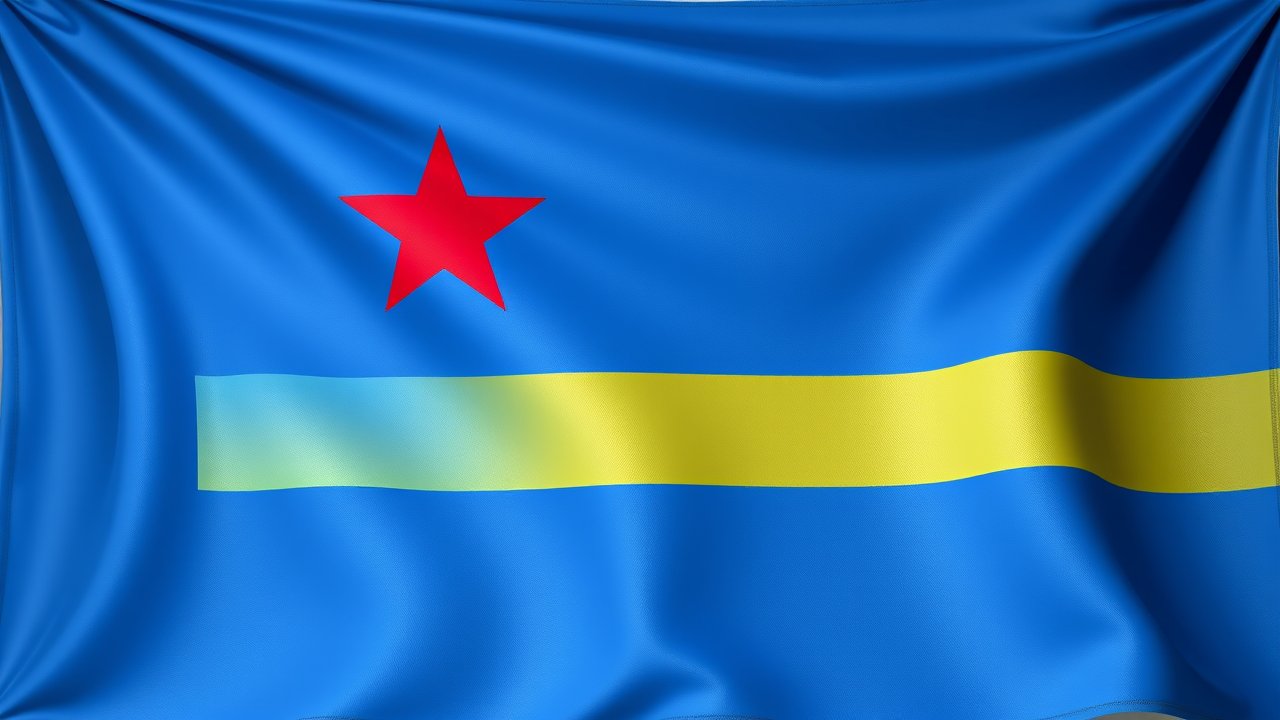
3D Glossy Render — Blue field with two narrow yellow horizontal stripes near the bottom and a red four-pointed star in the upper hoist. The flag of Aruba as a photorealistic 3D render. Blue field with two narrow yellow horizontal stripes near the bottom and a red four-pointed star in the upper hoist. The flag fabric hangs or drapes naturally but preserves exact proportions, colors, and all symbols perfectly — completely faithful to the real Aruba flag. Dramatic studio lighting, glossy silk material, soft shadows, subsurface scattering, perfect specular highlights. No text, no letters, no words, no writing of any kind.
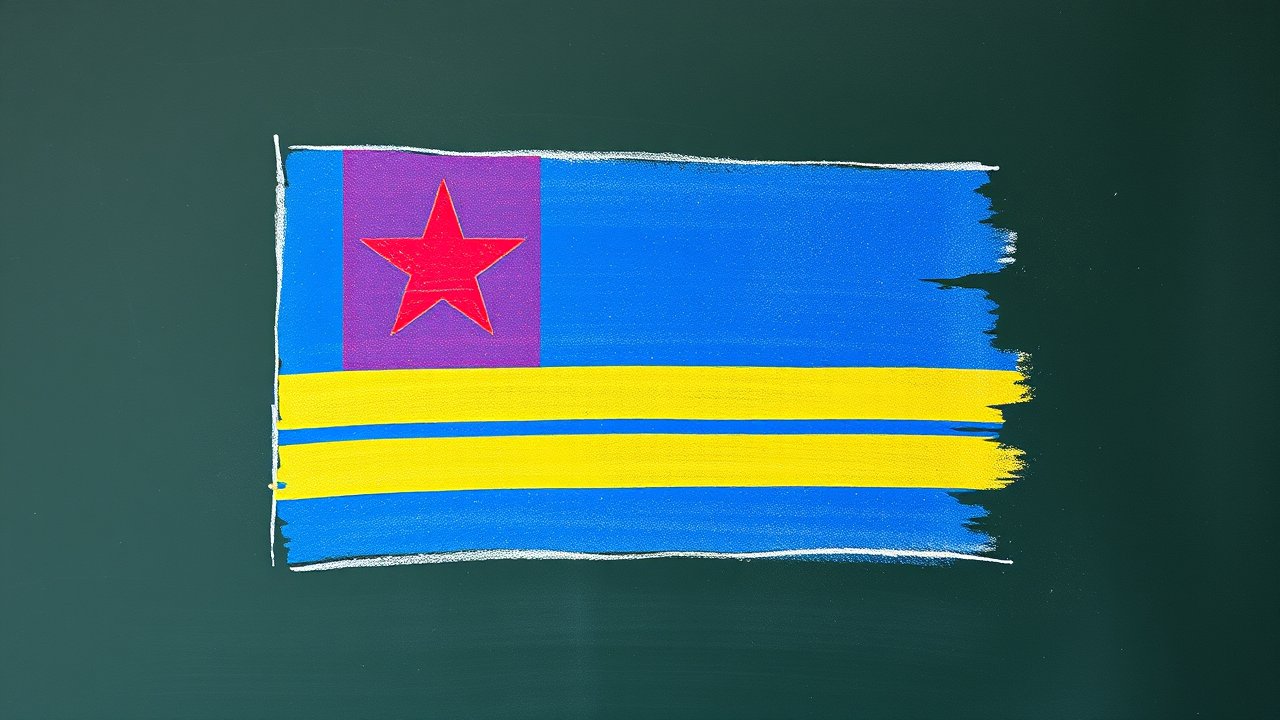
Chalk on Blackboard — Blue field with two narrow yellow horizontal stripes near the bottom and a red four-pointed star in the upper hoist. The flag of Aruba drawn in chalk on a real blackboard. Blue field with two narrow yellow horizontal stripes near the bottom and a red four-pointed star in the upper hoist. Authentic blackboard — dark slate green surface with chalk dust and smudge marks. Soft, dusty white and colored chalk lines, imperfect edges, hand-drawn quality. Chalk dust particles visible in the air. The flag is immediately recognizable. No text, no letters, no words, no writing of any kind.
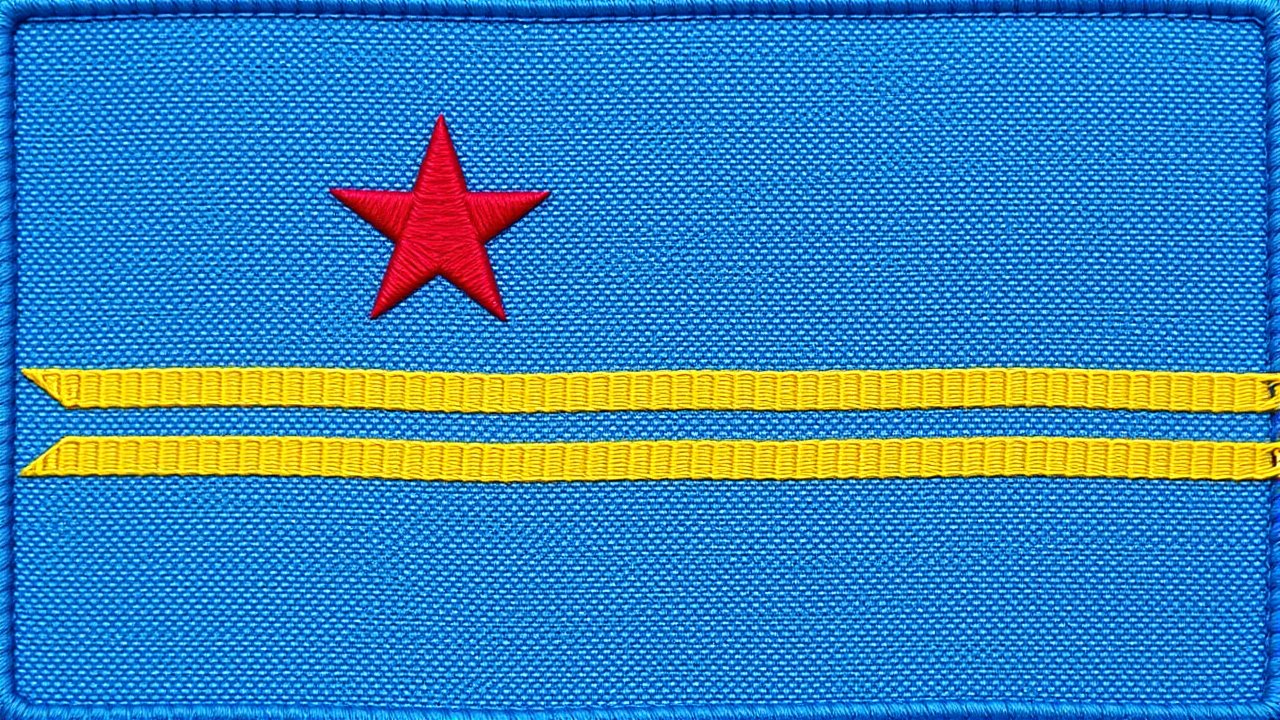
Embroidered Textile — Blue field with two narrow yellow horizontal stripes near the bottom and a red four-pointed star in the upper hoist. The flag of Aruba as intricate embroidery on linen fabric. Blue field with two narrow yellow horizontal stripes near the bottom and a red four-pointed star in the upper hoist. Dense satin stitches, French knots, chain stitch detail. The flag design is completely faithful — exact colors, geometry, and all symbols faithfully stitched, immediately recognizable as the Aruba flag. Visible thread texture, dimensional quality, warm handcrafted feel. No text, no letters, no words, no writing of any kind.
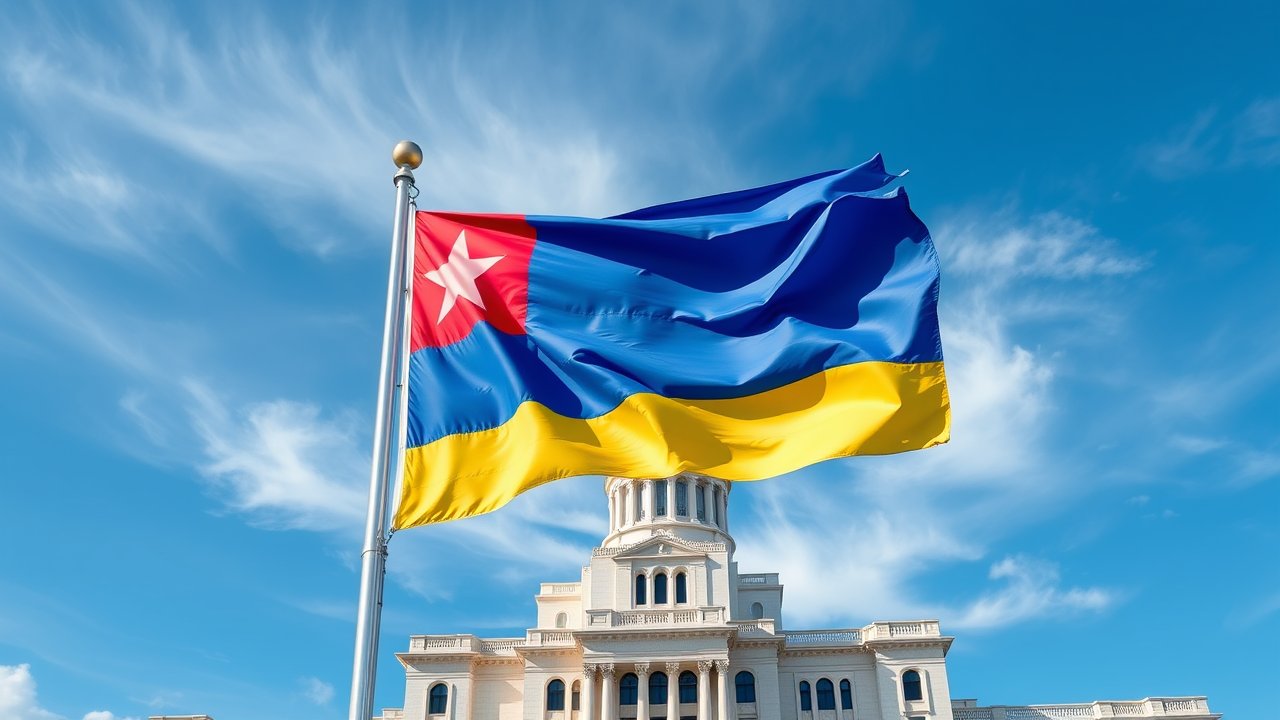
Flagpole in Capital — Blue field with two narrow yellow horizontal stripes near the bottom and a red four-pointed star in the upper hoist. Photorealistic photograph of the Aruba flag flying on a tall flagpole in front of an iconic government building in the capital city. Blue field with two narrow yellow horizontal stripes near the bottom and a red four-pointed star in the upper hoist. The flag ripples naturally in the wind, colors vivid and exact. Documentary photography style, sharp and realistic. Grand architecture in the background. Blue sky, dramatic clouds. No text, no letters, no words, no writing of any kind.

Golden Hour Reflection — Blue field with two narrow yellow horizontal stripes near the bottom and a red four-pointed star in the upper hoist. Photorealistic photograph of the Aruba flag reflected in still water at golden hour. Blue field with two narrow yellow horizontal stripes near the bottom and a red four-pointed star in the upper hoist. The flag flies on a pole at the water’s edge, its reflection shimmering on the surface below. Warm amber and orange sunset light. The flag colors and design are faithful and vivid. Serene, cinematic landscape photography. No text, no letters, no words, no writing of any kind.
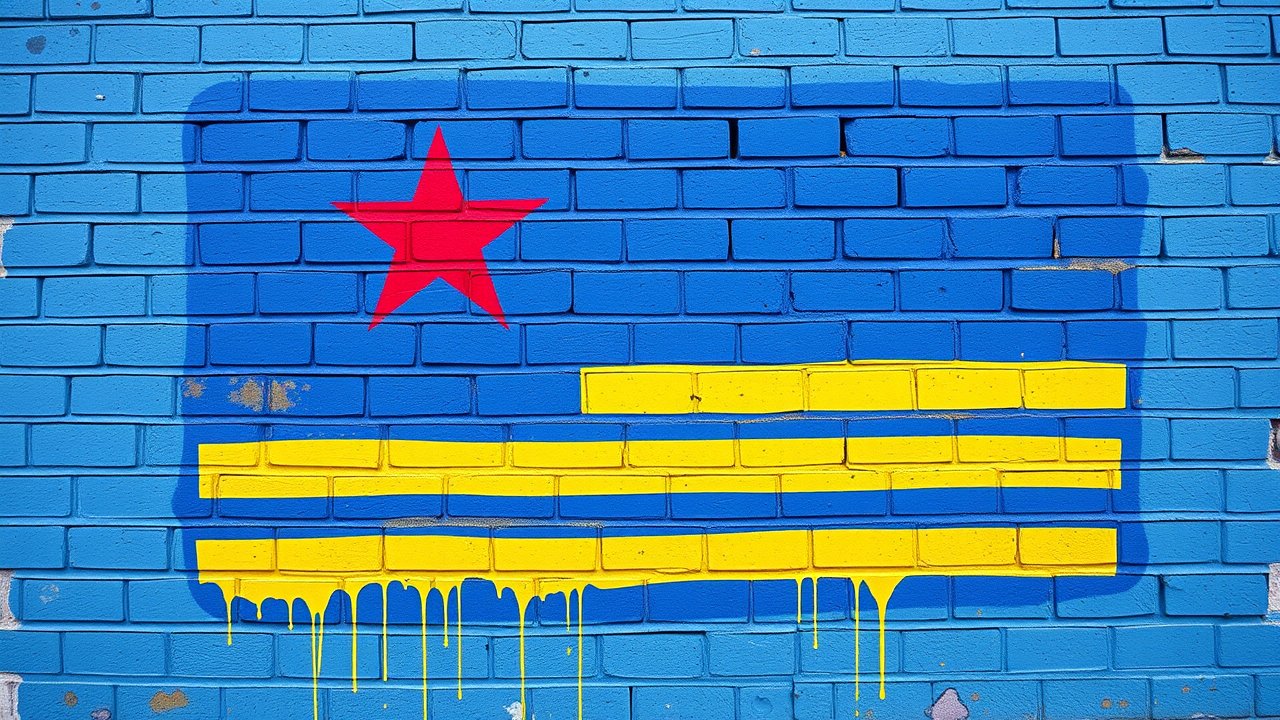
Street Art / Graffiti — Blue field with two narrow yellow horizontal stripes near the bottom and a red four-pointed star in the upper hoist. The flag of Aruba as vibrant street art spray-painted on a brick wall. Blue field with two narrow yellow horizontal stripes near the bottom and a red four-pointed star in the upper hoist. Bold spray paint, dripping edges, stencil layers, overspray halos. The flag design is faithful and immediately recognizable — exact colors and symbols, just rendered in spray paint on urban concrete. No text, no letters, no words, no writing of any kind. No tags, no graffiti lettering.
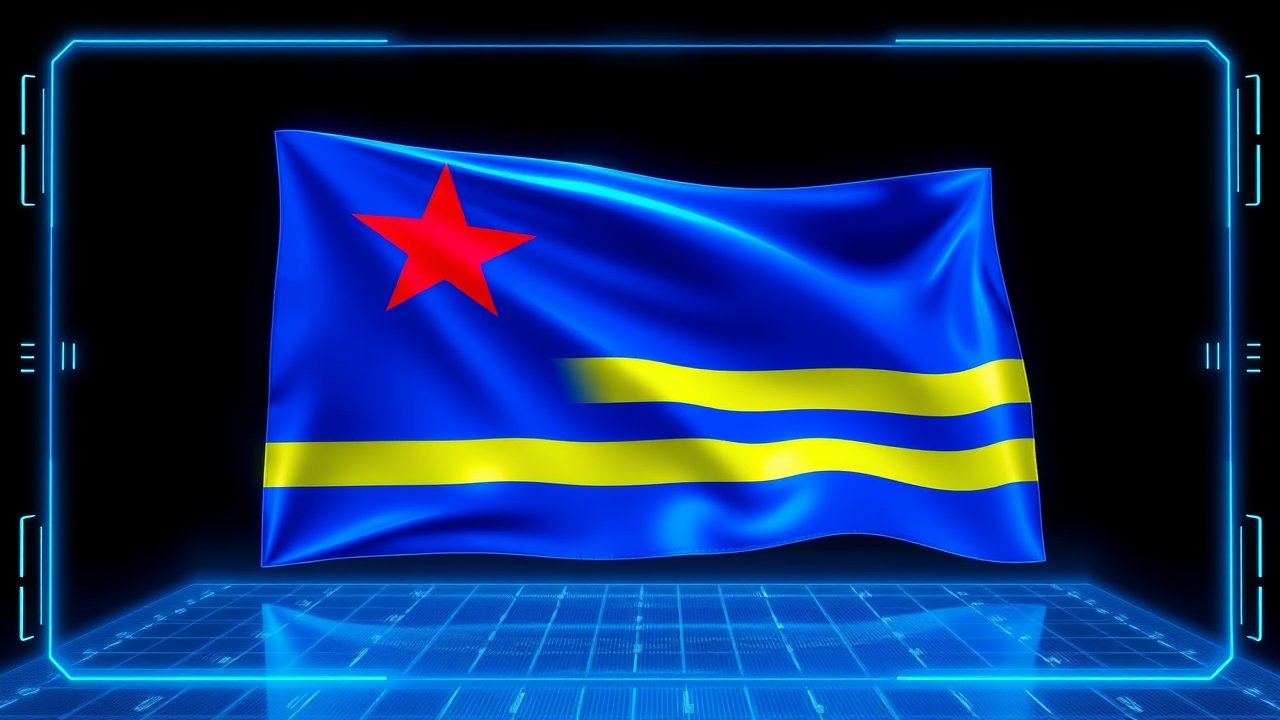
Sci-Fi Hologram — Blue field with two narrow yellow horizontal stripes near the bottom and a red four-pointed star in the upper hoist. The flag of Aruba projected as a futuristic holographic display. Blue field with two narrow yellow horizontal stripes near the bottom and a red four-pointed star in the upper hoist. Translucent blue-white projection with scan lines, floating in dark space. Glitching edges, particle effects, data streams. The flag design is completely faithful and recognizable. Cyberpunk HUD elements framing the projection. No text, no letters, no words, no writing of any kind.
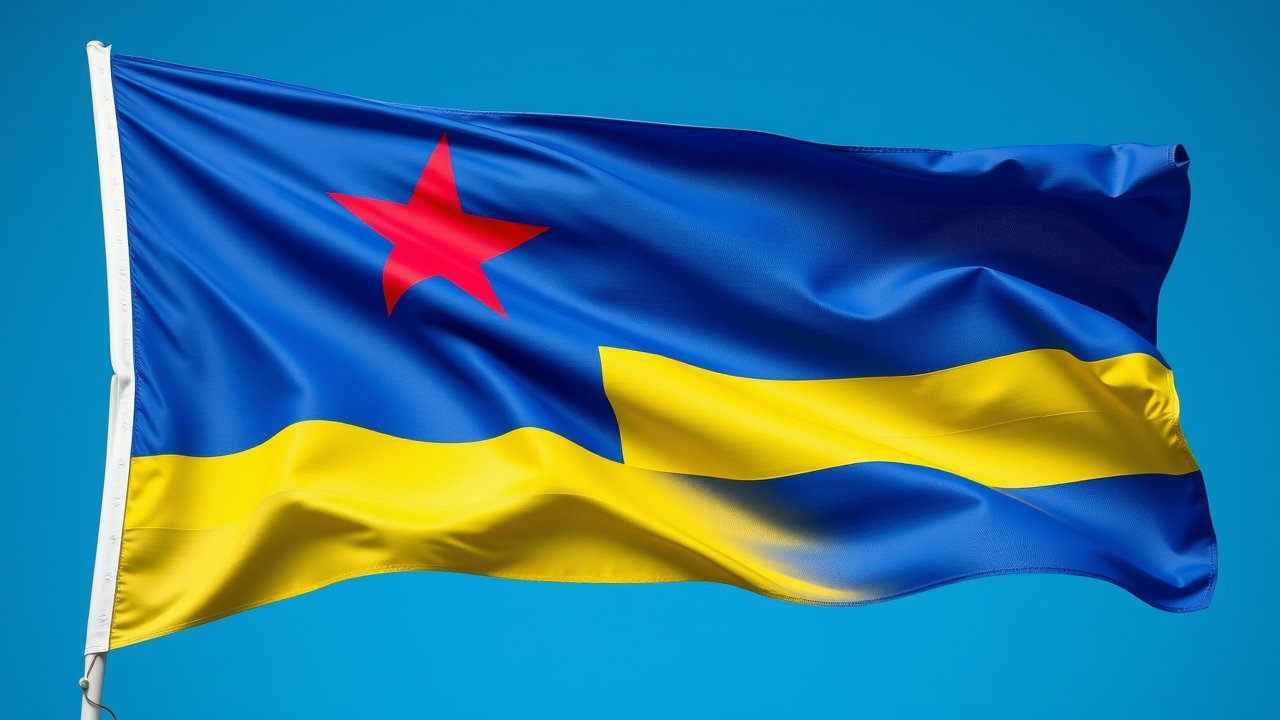
Hyperrealistic Wind — Blue field with two narrow yellow horizontal stripes near the bottom and a red four-pointed star in the upper hoist. Ultra-hyperrealistic photograph of the Aruba flag caught in a dramatic gust of wind. Blue field with two narrow yellow horizontal stripes near the bottom and a red four-pointed star in the upper hoist. Macro-level fabric detail — individual threads visible, fabric folds and tension lines crisp. Colors and design completely faithful to the real Aruba flag. High-speed shutter, razor-sharp focus, studio lighting. No text, no letters, no words, no writing of any kind.
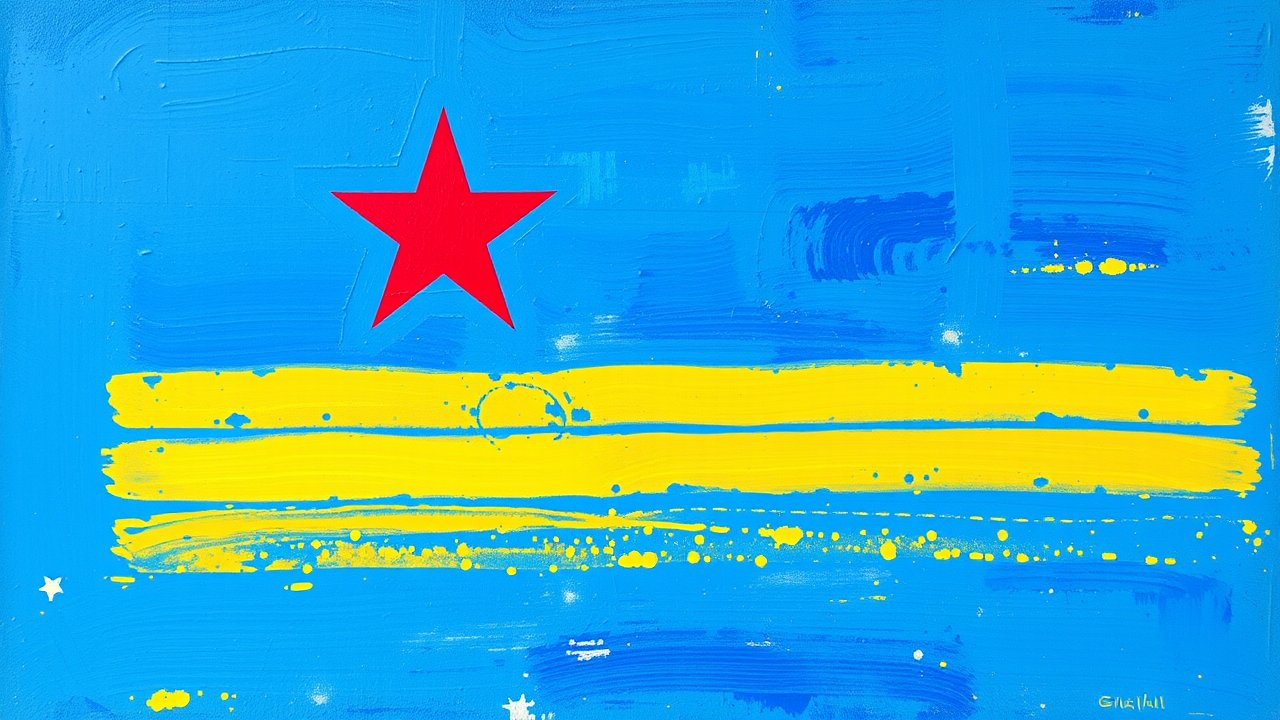
Impressionist Oil — Blue field with two narrow yellow horizontal stripes near the bottom and a red four-pointed star in the upper hoist. The flag of Aruba painted in French Impressionist oil on canvas. Blue field with two narrow yellow horizontal stripes near the bottom and a red four-pointed star in the upper hoist. Thick impasto brushstrokes, dappled light, vibrant broken color technique in the style of Monet. The flag is instantly recognizable — colors and design faithful to the real Aruba flag, interpreted with impressionist light and texture. No text, no letters, no words, no writing of any kind.
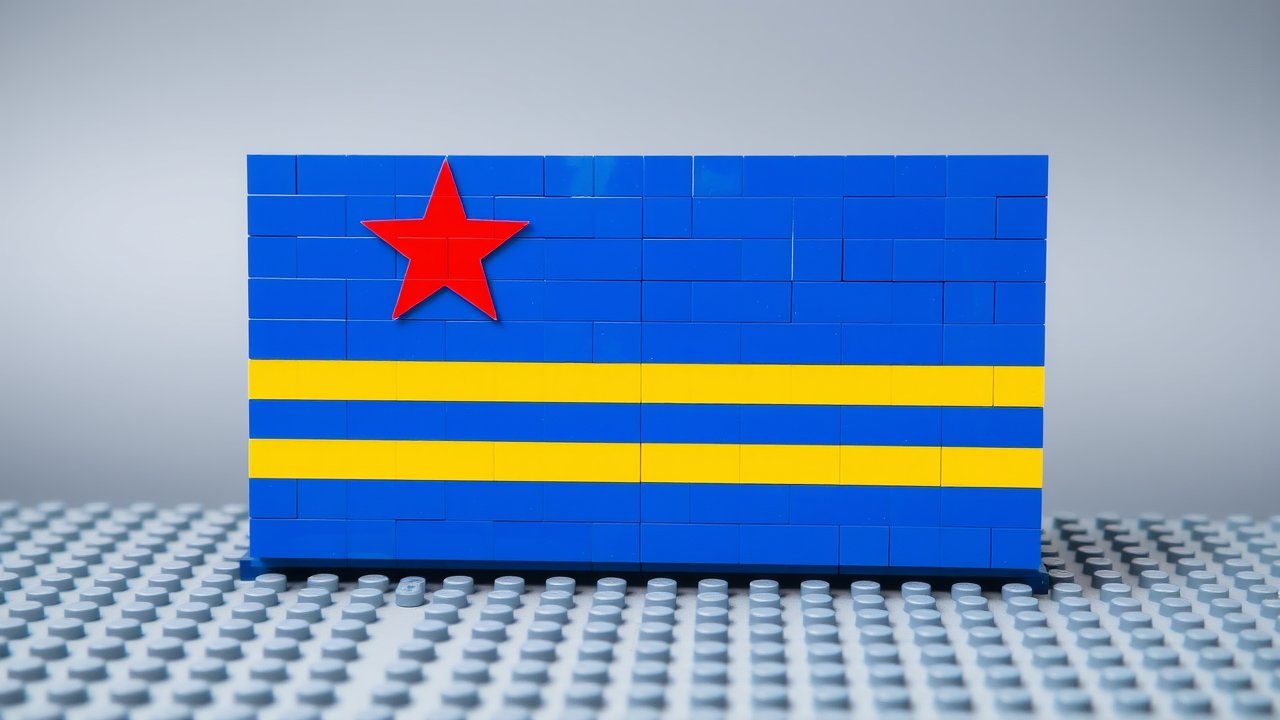
Lego Bricks — Blue field with two narrow yellow horizontal stripes near the bottom and a red four-pointed star in the upper hoist. The flag of Aruba built from Lego bricks, photographed as a real physical construction. Blue field with two narrow yellow horizontal stripes near the bottom and a red four-pointed star in the upper hoist. Visible studs and brick seams, slight plastic sheen. Standard Lego colors approximate the flag’s palette. Built on a gray Lego baseplate. Dramatic angle showing the three-dimensional brick texture. No text, no letters, no words, no writing of any kind.
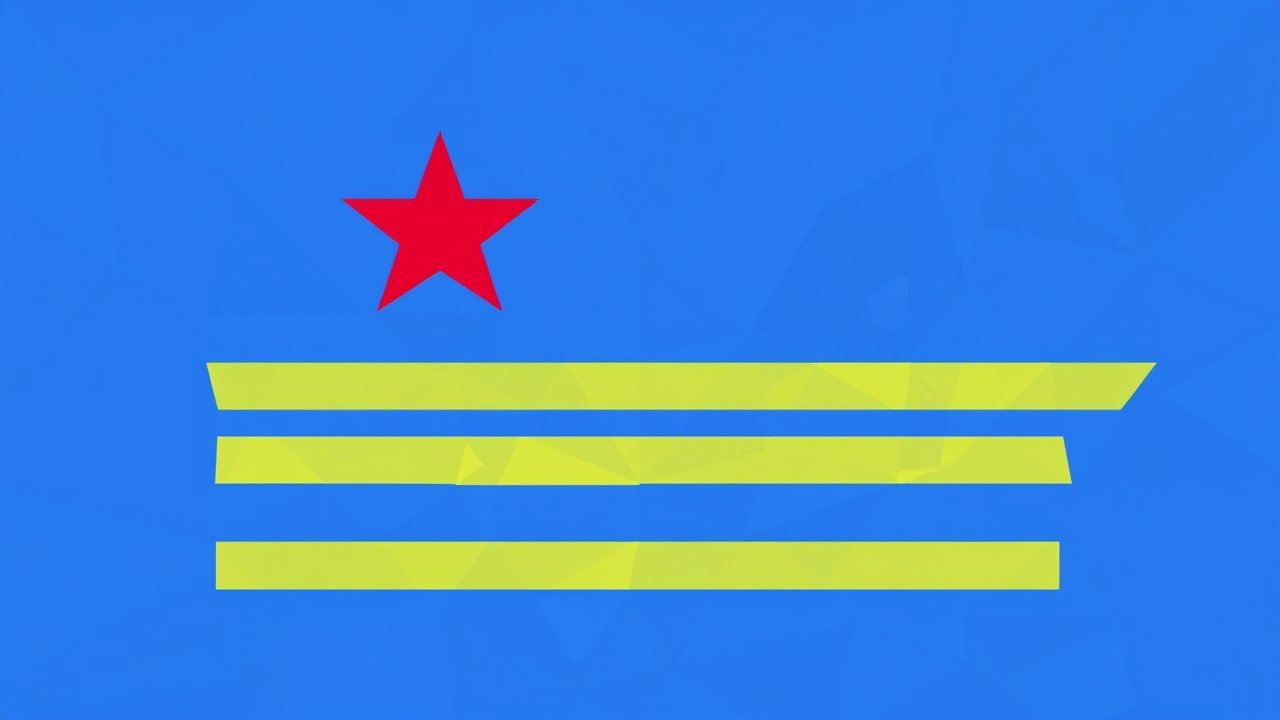
Low-Poly Geometric — Blue field with two narrow yellow horizontal stripes near the bottom and a red four-pointed star in the upper hoist. The flag of Aruba constructed from low-polygon geometric triangles. Blue field with two narrow yellow horizontal stripes near the bottom and a red four-pointed star in the upper hoist. Aggressively faceted — each region broken into many visible triangular faces with subtle color variation across each polygon, creating real depth and dimensionality even in flat-color areas of the flag. Crystal-like, contemporary computational design. The flag is completely faithful and immediately recognizable. No text, no letters, no words, no writing of any kind.
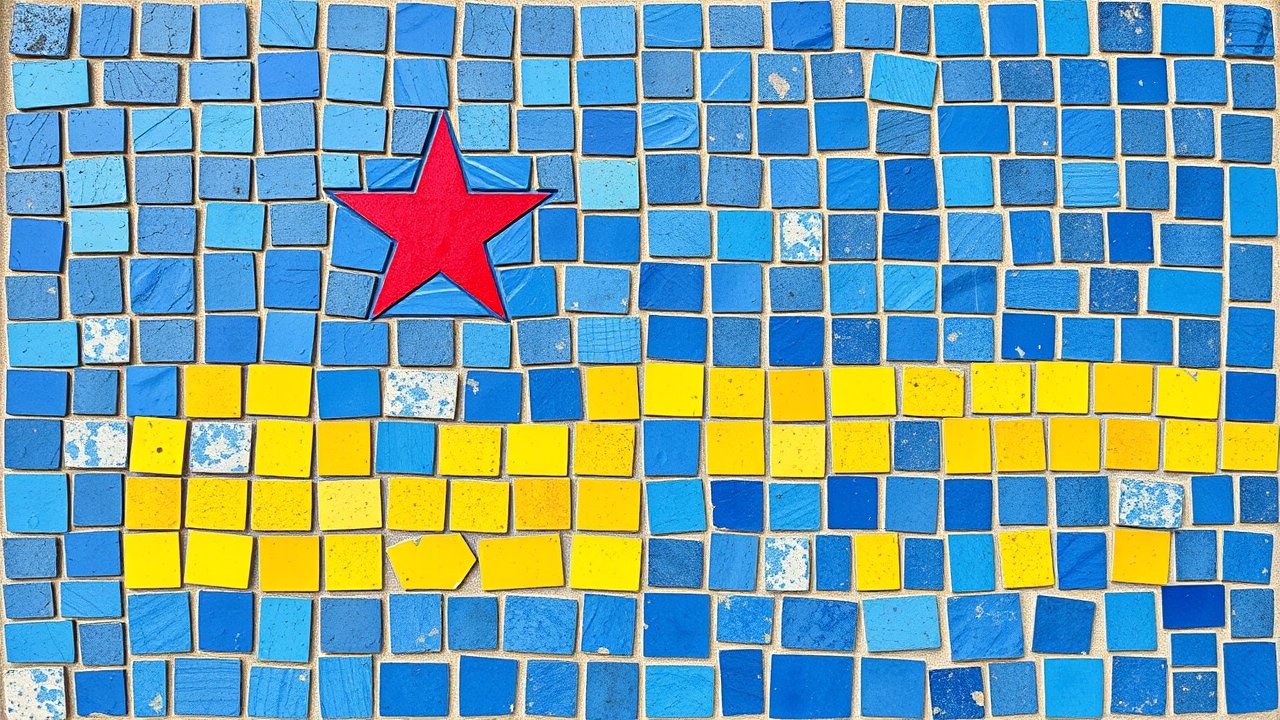
Mosaic Tiles — Blue field with two narrow yellow horizontal stripes near the bottom and a red four-pointed star in the upper hoist. The flag of Aruba assembled as a Roman-style mosaic. Blue field with two narrow yellow horizontal stripes near the bottom and a red four-pointed star in the upper hoist. The flag is completely faithful to the real Aruba flag — exact proportions, colors, and all symbols, rendered in thousands of small stone and glass tesserae. Visible grout lines, rich earthy tones mixed with brilliant glass, slight historical weathering. No text, no letters, no words, no writing of any kind.
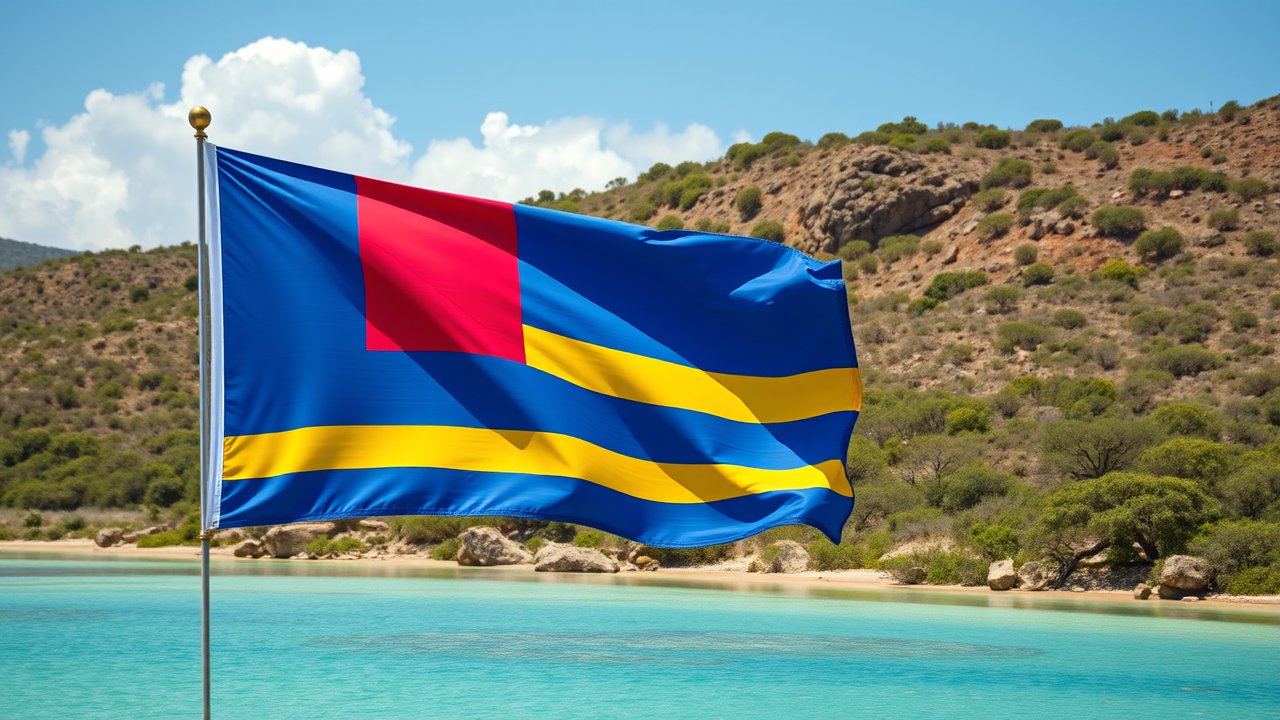
Native Landscape — Blue field with two narrow yellow horizontal stripes near the bottom and a red four-pointed star in the upper hoist. Photorealistic photograph of the Aruba flag flying in an iconic natural landscape native to Aruba — the terrain, flora, and environment characteristic of that country. Blue field with two narrow yellow horizontal stripes near the bottom and a red four-pointed star in the upper hoist. The flag is prominent and its colors are faithful and vivid. Remote, uninhabited wilderness. National Geographic photography style. No text, no letters, no words, no writing of any kind.
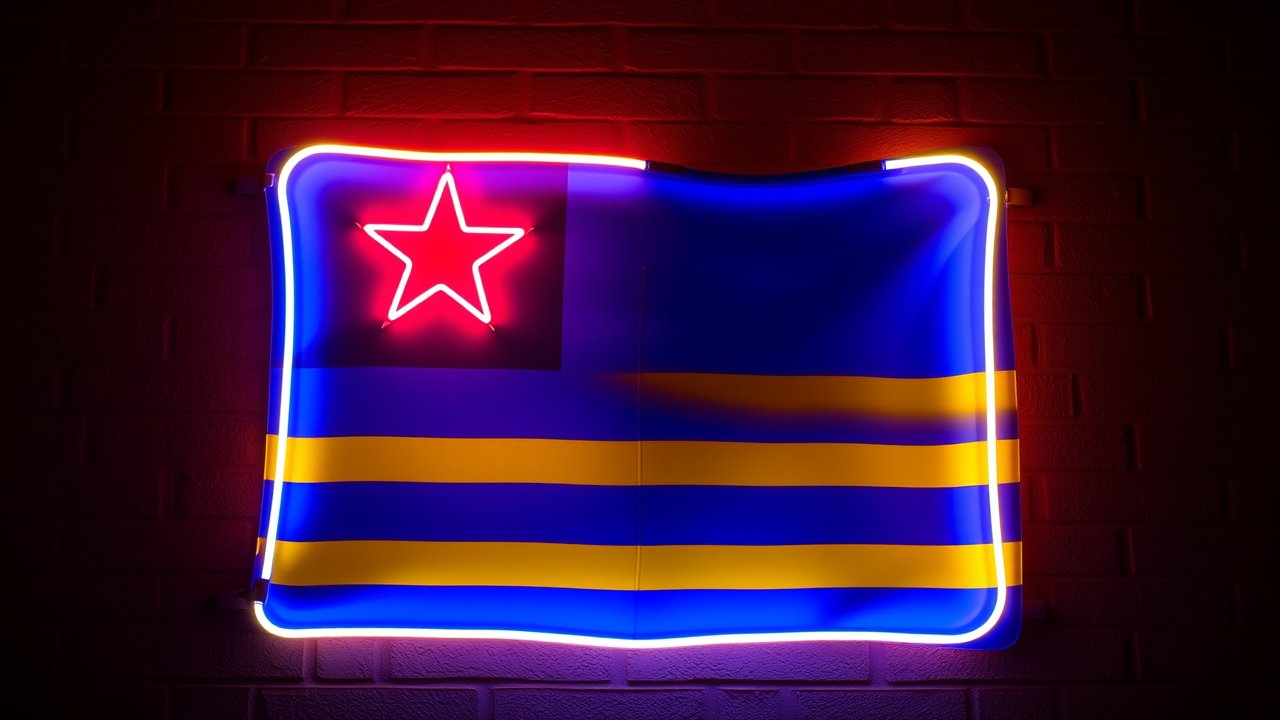
Neon Sign — Blue field with two narrow yellow horizontal stripes near the bottom and a red four-pointed star in the upper hoist. The flag of Aruba recreated as a real neon sign mounted on a dark wall. Blue field with two narrow yellow horizontal stripes near the bottom and a red four-pointed star in the upper hoist. Glowing glass neon tubes bent into the flag’s shapes — the colors of the flag rendered in actual neon light. Visible glass tube bends, metal mounting brackets on the wall. Warm neon glow and light bloom. Real neon, not digital. Photographed in a dark room. No text, no letters, no words, no writing of any kind.
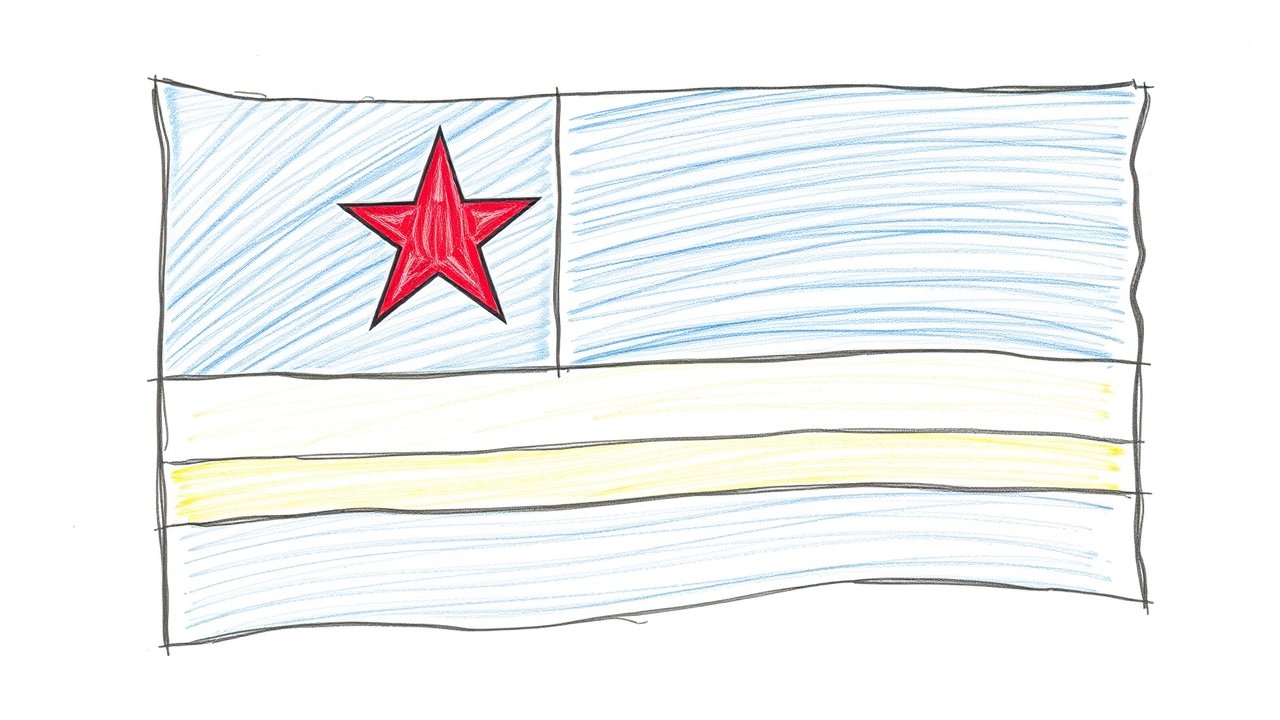
Pencil Sketch — Blue field with two narrow yellow horizontal stripes near the bottom and a red four-pointed star in the upper hoist. The flag of Aruba as a bold, confident pencil sketch. Blue field with two narrow yellow horizontal stripes near the bottom and a red four-pointed star in the upper hoist. Strong graphite lines on cream paper — not delicate but bold and decisive. Heavy pressure on key outlines, dramatic cross-hatching for deep shadows and shading. Immediately recognizable as the Aruba flag. Artist’s confident hand, not tentative. No text, no letters, no words, no writing of any kind.
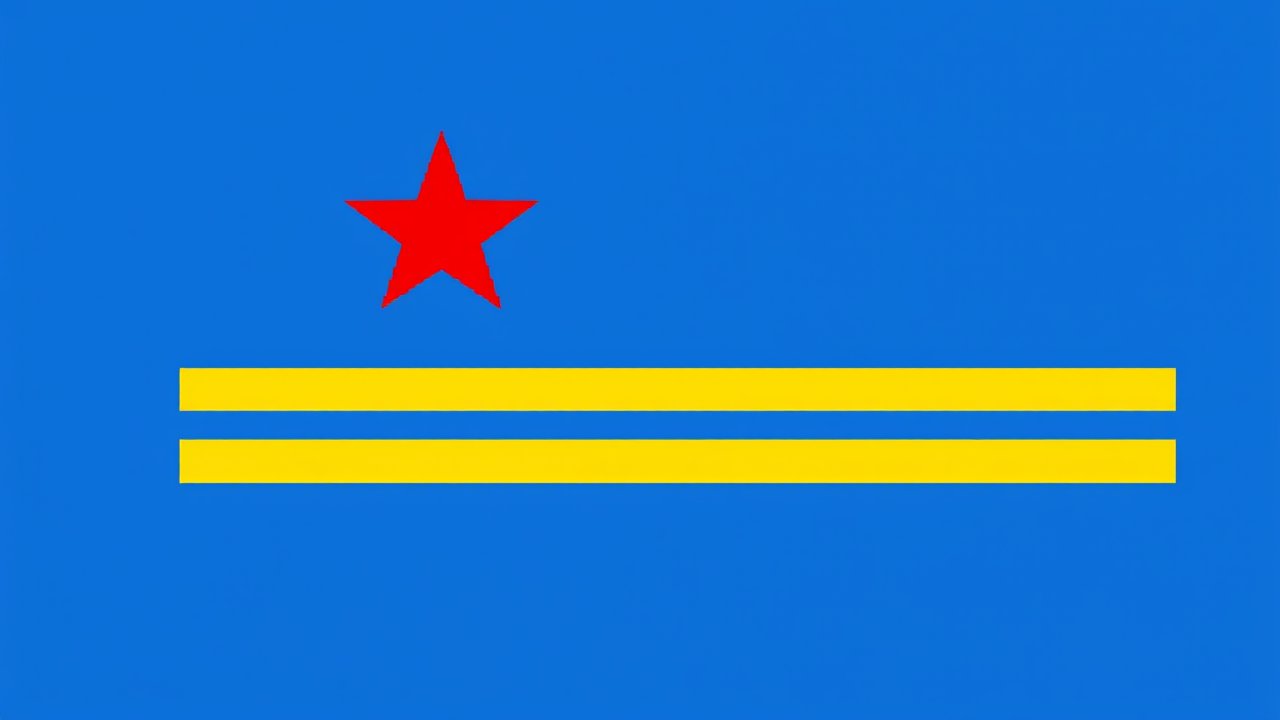
Pixel Art — Blue field with two narrow yellow horizontal stripes near the bottom and a red four-pointed star in the upper hoist. The flag of Aruba as detailed 16-bit pixel art. Blue field with two narrow yellow horizontal stripes near the bottom and a red four-pointed star in the upper hoist. Crisp pixel grid, limited palette with careful dithering, nostalgic retro game aesthetic. Clean grid-aligned design with subtle shading. Every element of the flag faithfully reproduced in pixels. No text, no letters, no words, no writing of any kind.
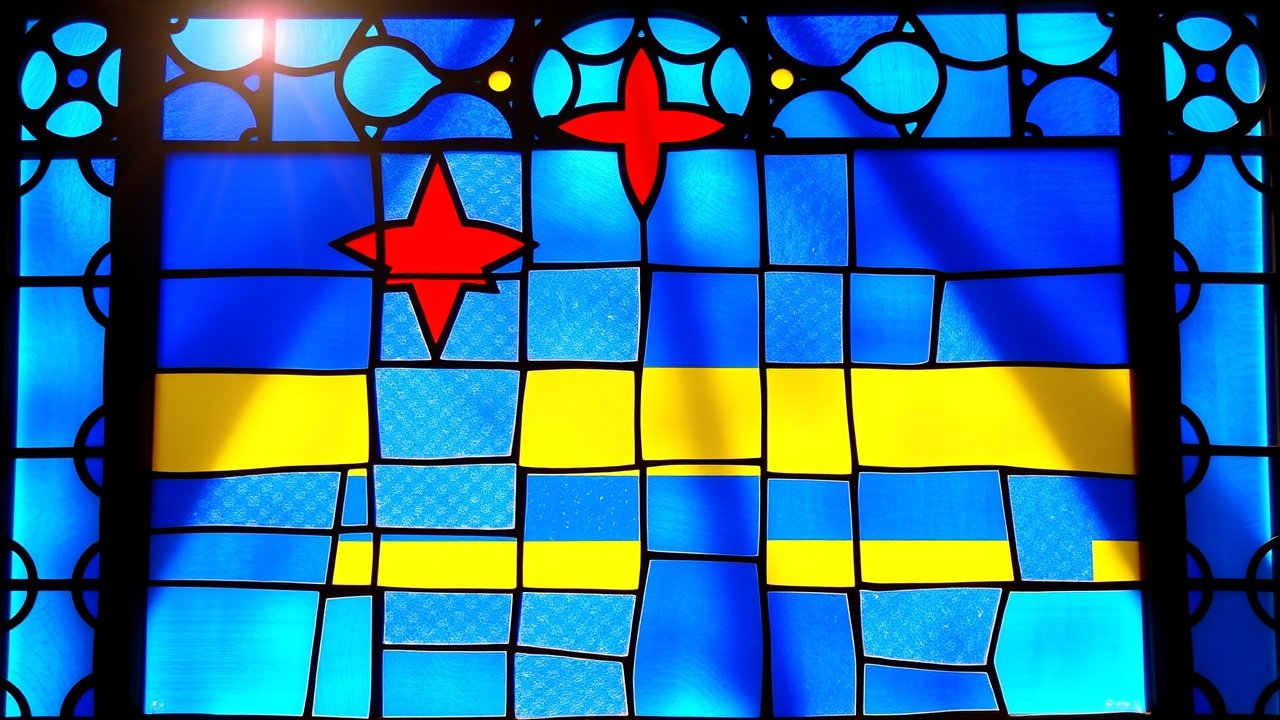
Stained Glass — Blue field with two narrow yellow horizontal stripes near the bottom and a red four-pointed star in the upper hoist. The flag of Aruba rendered as an ornate stained glass window. Blue field with two narrow yellow horizontal stripes near the bottom and a red four-pointed star in the upper hoist. The design is completely faithful to the real Aruba flag — exact colors, geometry, and all symbols preserved. Brilliant jewel-toned glass pieces separated by dark lead came lines. Warm sunlight streaming through, casting colored light. Gothic cathedral craftsmanship. No text, no letters, no words, no writing of any kind.
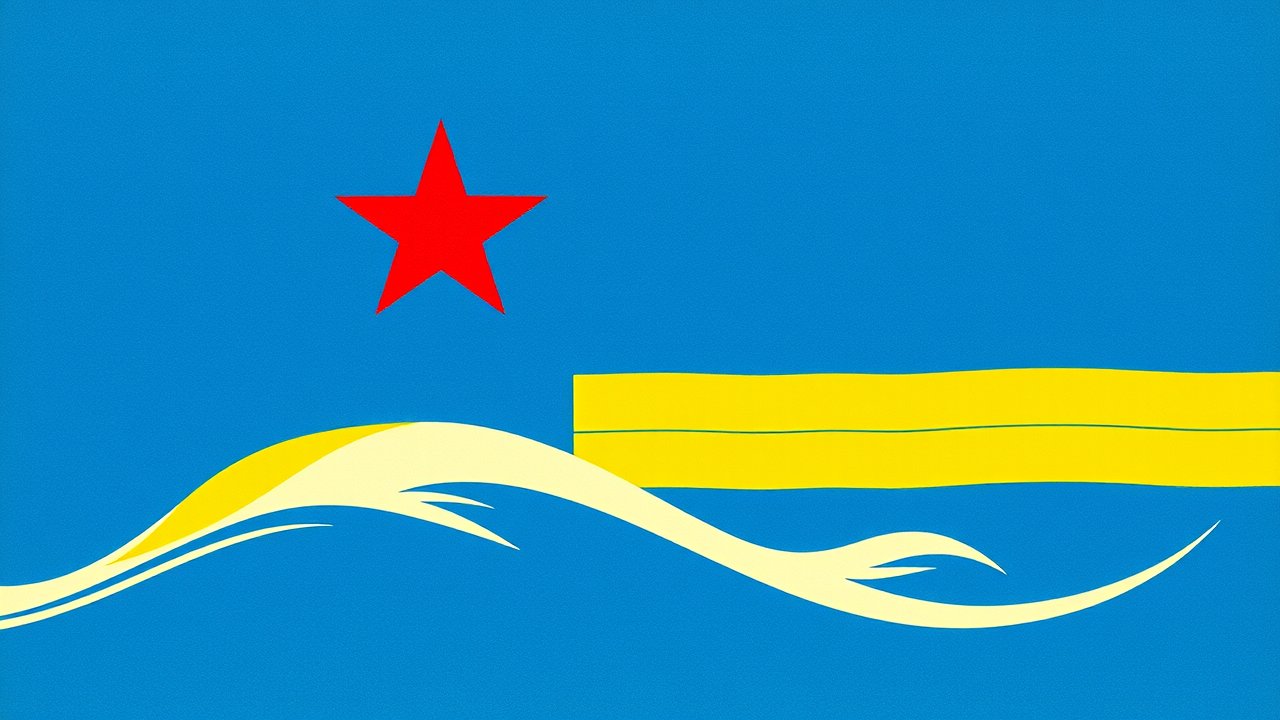
Ukiyo-e Woodblock — Blue field with two narrow yellow horizontal stripes near the bottom and a red four-pointed star in the upper hoist. The flag of Aruba as a traditional Japanese ukiyo-e woodblock print. Blue field with two narrow yellow horizontal stripes near the bottom and a red four-pointed star in the upper hoist. Bold outlines, flat areas of rich color, flowing organic forms. Wind and waves incorporated into the composition. Printed on washi paper with visible wood grain texture. The flag is the central focus and instantly recognizable. No text, no letters, no words, no writing of any kind.
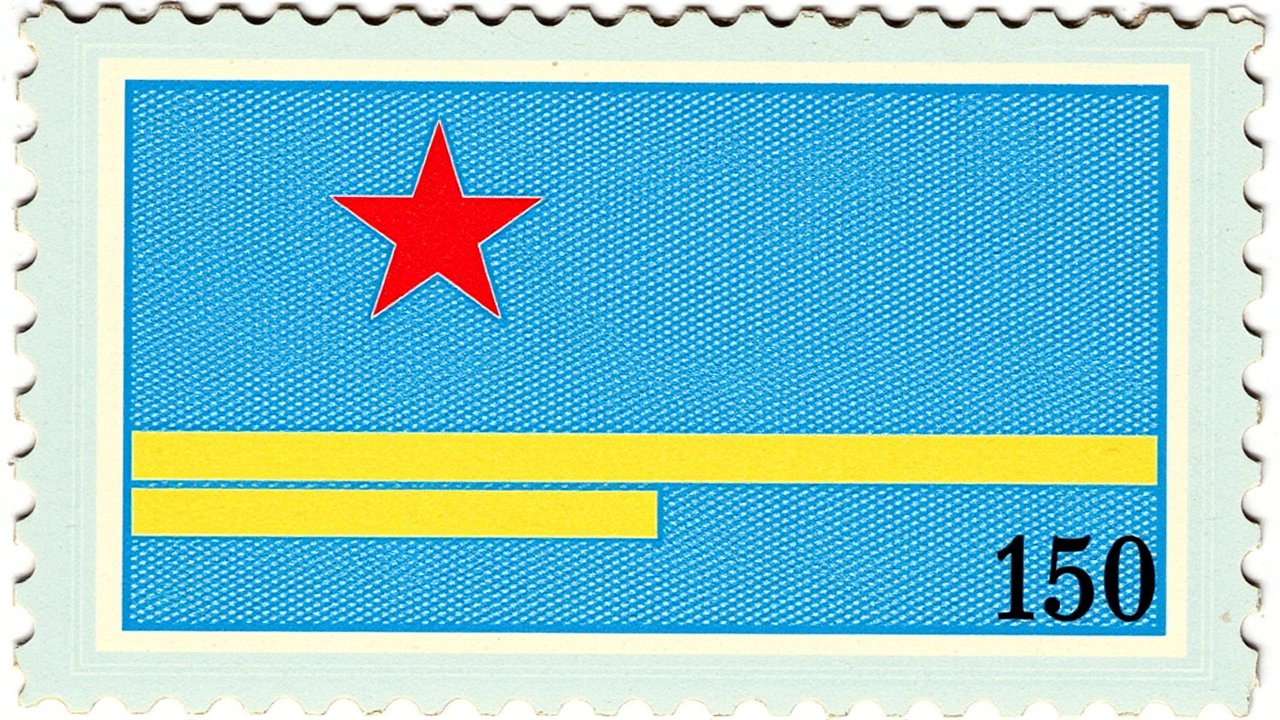
Vintage Postage Stamp — Blue field with two narrow yellow horizontal stripes near the bottom and a red four-pointed star in the upper hoist. The flag of Aruba as a vintage 1950s postage stamp. Blue field with two narrow yellow horizontal stripes near the bottom and a red four-pointed star in the upper hoist. The flag fills most of the stamp — it is the primary subject, faithfully rendered in fine engraved intaglio style. Perforated edges, aged paper with slight foxing. The stamp may show a denomination numeral only — absolutely no other text or country names.
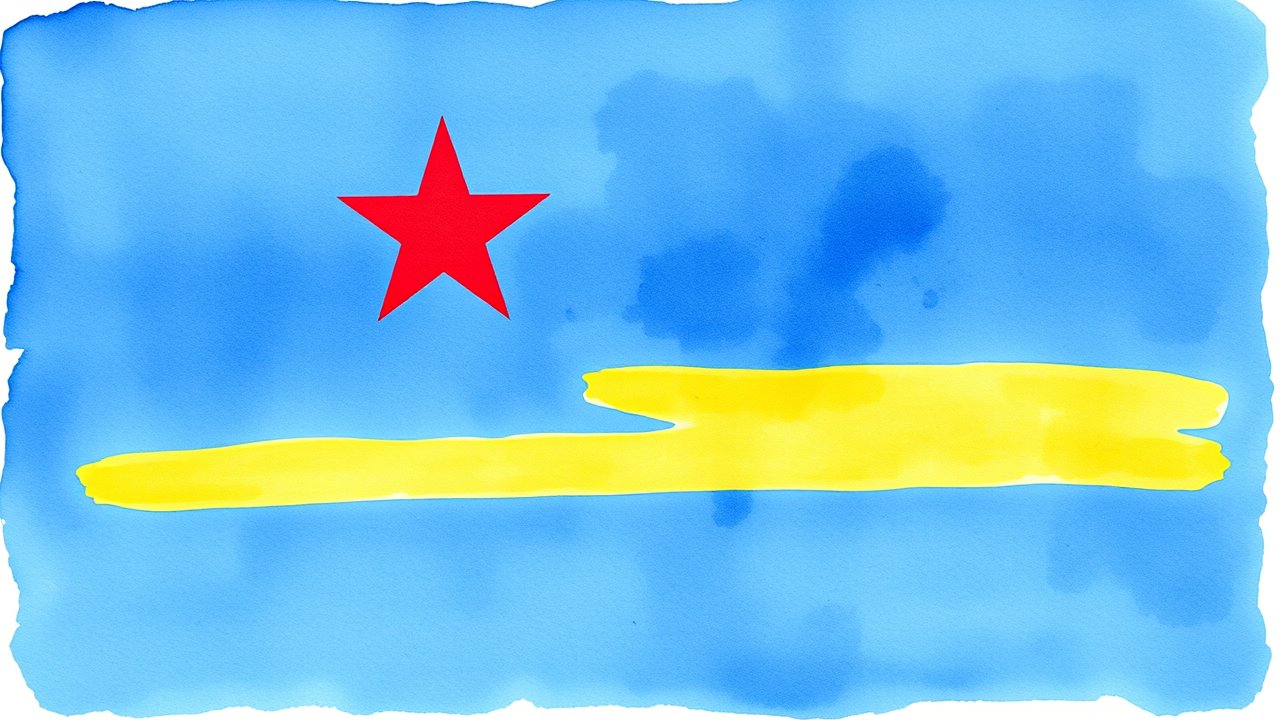
Watercolor — Blue field with two narrow yellow horizontal stripes near the bottom and a red four-pointed star in the upper hoist. The flag of Aruba painted in loose, expressive watercolor. Blue field with two narrow yellow horizontal stripes near the bottom and a red four-pointed star in the upper hoist. Wet-on-wet technique with soft color bleeds, visible brushstrokes, natural paper texture. Delicate splashes and drips at the edges. Luminous, translucent layers of pigment. No text, no letters, no words, no writing of any kind.
Aruba’s flag—a striking combination of light blue, yellow, and red with a distinctive four-pointed star—represents far more than just national identity; it embodies the island’s journey toward autonomy, its cultural diversity, and its aspirations for prosperity and unity. Adopted on March 18, 1976, the same momentous date when Aruba achieved autonomous status within the Kingdom of the Netherlands, the flag marks a pivotal transformation in Aruban history. Unlike many flags that evolved over centuries, Aruba’s flag was deliberately designed through a competitive process, carefully crafted to symbolize the unique character and values of the Aruban people at a crucial moment of self-determination.
The Path to a National Flag: Autonomy and Design
For much of its modern history, Aruba lacked its own national flag, instead using the symbols of the Netherlands and later the Netherlands Antilles—the political organization to which it belonged. However, as Aruban nationalism grew during the 1970s and the island pursued greater autonomy from Dutch colonial administration, leaders recognized that a distinctly Aruban flag would serve as both a symbol of national identity and a declaration of political self-determination. In 1976, at the very moment when Aruba was granted autonomous status within the Kingdom of the Netherlands—transforming it from a colonial possession into a self-governing constituent country—the island unveiled its new national flag. The timing was no accident: the flag’s adoption on March 18, 1976, coincided precisely with the achievement of autonomy, making the flag an enduring symbol of that transformative moment in Aruban history.
The design process was both democratic and meticulous. In 1976, Aruban authorities organized a national flag design competition, inviting citizens and designers to submit proposals for what their national flag should be. The response was overwhelming: the competition received 693 design entries, demonstrating the passionate engagement of the Aruban people in creating their national symbol. A selection committee carefully reviewed all submissions, narrowing the field to 157 designs that met basic criteria before identifying three finalists. However, when it came time to produce the final flag, the originally selected design proved impractical to manufacture. At this critical juncture, renowned vexillologist Whitney Smith—an international expert in flag design and symbolism—was brought in to create an alternative proposal. Smith’s design, which ultimately became the official flag, successfully balanced artistic vision with practical manufacturability, resulting in a flag that was not only symbolic but also enduring and effective as a national emblem.
The Visual Design and Composition
Aruba’s flag follows the standard rectangular proportions of 2:3 (width to length), but its design is far from conventional in its deployment of symbolism. The flag’s upper two-thirds consist of a light blue field that covers most of the canton and the entire fly side of the flag. In the upper hoist corner, positioned prominently yet integrated into the overall composition, sits a red four-pointed star outlined in white, creating a striking focal point. Below this blue field, the lower third of the flag is divided into two narrow horizontal stripes of equal width: one of bright yellow, then the blue field, and finally another yellow stripe at the very bottom of the flag. The overall effect is one of elegant simplicity—a design that avoids the complexity of many national flags while achieving remarkable symbolic depth through its careful use of color and geometric form. The proportions and colors were chosen with deliberate intent, ensuring that the flag would be easily recognizable and meaningful to both Arubans and international observers alike.
Symbolism of the Four-Pointed Star
The most distinctive element of Aruba’s flag is undoubtedly the red four-pointed star outlined in white, positioned in the upper hoist corner. This star carries multiple layers of symbolic meaning that encapsulate the identity and diversity of the Aruban nation. Most fundamentally, the four points of the star represent the four cardinal directions of the compass—north, south, east, and west—symbolizing Aruba’s position as a crossroads and the diverse origins of its people. Aruba is a remarkably multicultural society, home to more than 40 different nationalities who have immigrated to the island seeking opportunity and a better life. The four-pointed star serves as a visual representation of this extraordinary diversity, honoring the reality that modern Aruba is built upon the contributions and heritage of peoples from around the globe. Additionally, the four points are said to represent the four main languages spoken on the island: Papiamento (the native Creole language), Dutch (the legacy of colonial administration), Spanish (reflecting Caribbean regional ties), and English (the language of international commerce and tourism). This linguistic symbolism reinforces the flag’s message of inclusivity and cross-cultural communication.
The red color of the star itself carries profound historical and emotional significance. Red symbolizes love and devotion, expressing the patriotic feelings of the Aruban people toward their island home. However, the color also carries a more somber historical meaning: it is chosen to honor and pay tribute to the indigenous Aruban people who lost their lives during historical conflicts, particularly in the confrontation with French forces at Frenchman’s Pass. By incorporating this historical memory into the national flag, Arubans ensure that the sacrifices of their ancestors remain visible in the national symbol, transforming the flag into a memorial as well as an emblem of identity. The white outline surrounding the red star further enriches the symbolism, representing peace, purity, and the noble aspirations of the Aruban people in their quest for justice, order, and liberty within a peaceful, democratic framework.
The Meaning of Blue and Yellow
The light blue field that dominates Aruba’s flag carries multiple interconnected meanings that reflect the island’s geography, culture, and international standing. Most directly, blue represents the Caribbean Sea that surrounds the island, emphasizing Aruba’s maritime identity and its dependence upon the ocean for commerce, sustenance, and connection to the wider world. The specific shade of blue chosen for the flag was deliberately selected to match the color used in the flag of the United Nations, reflecting Aruba’s commitment to international cooperation, multilateralism, and the principles of the United Nations Charter. This deliberate choice connects Aruba’s national symbol to the broader community of nations and expresses the island’s values of global solidarity and peaceful international relations.
The two narrow yellow stripes positioned in the lower portion of the flag represent abundance and solidarity. Historically, yellow symbolizes the gold that was once a significant part of Aruba’s economy during the colonial period, when the island’s mineral wealth made it economically important to the Dutch crown. The yellow stripes also celebrate the economic prosperity that modern Aruba has achieved through tourism and commerce, representing the island’s vibrant economy and the aspirations of the Aruban people for continued economic growth and well-being. Beyond economics, yellow also evokes the warmth, sunshine, and optimistic spirit of the Aruban people themselves. The island’s famously pleasant climate, with abundant sunshine year-round, is reflected in this sunny hue. The yellow also represents the beauty of Aruba’s natural environment—its pristine beaches, clear skies, and natural attractions that draw visitors from around the world. In this way, the color becomes a celebration of both the physical environment and the character of the people who call the island home.
Autonomy and National Pride
Since its adoption in 1976, Aruba’s flag has become the enduring symbol of the nation’s sovereignty and self-determination. March 18 is celebrated annually as National Anthem and Flag Day, a significant national holiday marked by patriotic ceremonies, parades, and public celebrations across the island. On this day, Aruban flags are displayed proudly on government buildings, homes, schools, and businesses throughout the island, and citizens gather to commemorate both the flag and the anthem as symbols of national identity. The flag’s presence at international sporting events, diplomatic functions, and cultural festivals worldwide serves as a visual declaration of Aruba’s status as a distinct political entity within the Kingdom of the Netherlands, commanding respect and recognition on the global stage. Whether raised at official ceremonies or carried by Aruban athletes competing in international competitions, the flag continues to inspire pride and unity among the Aruban people, serving as a tangible connection to the momentous decision to pursue autonomy and self-governance that transformed the island’s political status in 1976.
Today, Aruba’s flag stands as a testament to thoughtful national design and the power of symbolic representation. Created through democratic participation, expertly refined by a vexillological master, and officially adopted at a pivotal moment of political transformation, the flag encapsulates the values, history, and aspirations of the Aruban nation. Its combination of geographic symbolism (the sea), cultural diversity (the four-pointed star and its meanings), economic vitality (the yellow stripes), and international commitment (the UN-colored blue) creates a multidimensional symbol that continues to resonate with Aruban citizens and communicate the island’s identity to the world. The flag is far more than mere bunting—it is a carefully crafted narrative of an island’s journey toward self-determination and a visual pledge to the principles of unity, diversity, and peaceful prosperity that define the Aruban national character.
Free Printable: Flags of the World Reference Card
Get a beautiful printable poster with 50 flag emojis, Unicode codes, and fun facts. Perfect for classrooms and desks!
No spam, ever. Unsubscribe anytime.