
Flags are more than just designs – they tell stories about nations’ identities and histories. If you’re preparing for a flag quiz or want to recognize flags faster, here’s a simple 5-step guide to help:
- Identify Key Elements: Focus on colors, patterns, and symbols. Recognize tricolors, crosses, or unique shapes like Nepal’s triangles.
- Use Memory Tricks: Create mnemonics or vivid stories (e.g., Japan’s red circle = rising sun).
- Practice Regionally: Study flags by continent to spot common trends and reduce confusion.
- Leverage Online Tools: Use quizzes for instant feedback and track progress over time.
- Review Regularly: Space out study sessions and revisit tricky flags often to improve retention.
These steps will sharpen your recognition skills and make learning fun. Dive into each step for more tips and examples!
Guess All the 195 Flags of the World 🚩 | Guess the Country Flag Quiz 2024
Step 1: Spot Key Flag Elements
The first step in mastering flag identification is to focus on recognizing the essential elements of each flag. Instead of trying to memorize entire designs, break them down into their core parts. This makes it much easier to remember and identify them later.
Study Colors and Patterns
Colors and patterns are often the first thing you notice when looking at a flag, and they can provide valuable clues. While many countries use similar color schemes, the way these colors are arranged creates distinct patterns. Some of the most common arrangements include horizontal, vertical, and diagonal stripes.
Tricolor flags are particularly common worldwide and feature three bands of color, either horizontally or vertically. Take France and Germany as examples: France’s vertical blue-white-red stripes contrast with Germany’s horizontal black-red-gold design. Pay close attention to the direction of the stripes and the order of the colors – they’re key to distinguishing these flags.
Cross patterns are a defining feature of Scandinavian flags, making them instantly recognizable. Denmark’s white cross on red, Sweden’s yellow cross on blue, and Norway’s blue and white cross on red all share the Nordic cross design. Once you’re familiar with this style, the color combinations will help you pinpoint the specific country.
Regional color schemes can also simplify identification. The Pan-African colors – red, yellow, and green – are used in various combinations by countries like Ghana, Mali, and Guinea. Similarly, the Pan-Arab colors – black, white, red, and green – are common in flags from nations such as Jordan, Palestine, and the United Arab Emirates.
Some flags stand out because of their unique geometric designs. South Africa’s Y-shaped layout, Nepal’s double-triangle shape, and Switzerland’s square format break away from the traditional rectangular template. These distinctive shapes make these flags easier to recognize and remember.
Learn What Symbols Mean
Beyond colors and patterns, symbols on flags carry deep historical and cultural significance. These symbols often reflect a country’s identity, making them powerful tools for recognition.
Leaf and plant symbols often highlight a nation’s natural resources or heritage. Canada’s red maple leaf, Lebanon’s cedar tree, and Cyprus’ copper-colored island above olive branches all tie directly to their respective countries’ environments and histories.
Star patterns vary widely and often have specific meanings. For example, the United States flag features 50 stars, each representing a state. Brazil’s flag includes 27 stars arranged to mirror the night sky over Rio de Janeiro on November 15, 1889. Meanwhile, Australia and New Zealand both display the Southern Cross constellation, but Australia adds the Commonwealth Star, making it distinct from New Zealand’s design.
Religious and cultural symbols also play a significant role. Turkey’s crescent moon and star reflect its Islamic heritage, while Israel’s Star of David symbolizes Jewish identity. The Union Jack, found in the corner of flags like those of Australia, New Zealand, and Fiji, points to these nations’ historical ties to the United Kingdom.
Flags featuring animals often symbolize national traits or local wildlife. For instance, Sri Lanka’s lion represents bravery, Albania’s double-headed eagle signifies strength and independence, and Mexico’s eagle perched on a cactus recalls an ancient Aztec legend about the founding of its capital.
Understanding the meaning behind these symbols strengthens the connection between a flag’s design and the country it represents. When you know that the maple leaf signifies Canada’s forests or that the cedar tree highlights Lebanon’s heritage, these elements become more than just shapes – they transform into memorable stories that stick with you far better than abstract designs ever could.
Step 2: Use Memory Tricks for Better Recall
Once you’ve identified the key features of a flag, the next step is to lock them into your memory. This is where mnemonics come in handy. These memory aids make recalling flag details much easier by connecting them to concepts or images already familiar to you. The goal is to build on the elements you’ve identified and turn them into something your brain won’t forget.
Build Mental Connections
One of the best ways to remember flags is by creating vivid mental stories that link their features to their countries. Your brain naturally holds onto stories better than random facts.
Take Japan’s flag, for example. Picture the red circle as the rising sun, tying it to Japan’s nickname, "The Land of the Rising Sun." This simple connection makes the red-and-white design hard to forget. Similarly, for Bangladesh’s flag, imagine the red circle as the sun rising over lush green rice fields, symbolizing the country’s agricultural roots.
Color associations are another effective trick. For Germany’s black-red-gold horizontal stripes, remember the phrase "Black Ravens Grab" – the first letter of each word matches the flag’s colors from top to bottom. For the Netherlands’ red-white-blue design, try "Red Wine Bottles" to keep the color sequence straight in your mind.
Symbols can also spark memorable stories. Canada’s maple leaf becomes unforgettable if you picture red autumn leaves falling on a snowy white ground. Lebanon’s cedar tree might stick better if you imagine green cedar branches standing tall against snowy mountain peaks, reflecting both the flag’s colors and the country’s landscape.
Sometimes, the sillier the association, the better it works. Turkey’s crescent moon and star might remind you of "Turkey dinner under the stars" – completely unrelated to the flag’s meaning, but quirky enough to make it memorable. These creative tricks can improve both your recall speed and accuracy during quizzes.
Add Flashcards to Your Study
Flashcards are a great way to reinforce these mental connections. But instead of just writing the country name on the back, include your memory tricks. This adds an extra layer of reinforcement and helps you connect the flag’s design with its story.
On the front of each flashcard, place a clear image of the flag. On the back, write your memory trick along with the country name. For Italy’s green-white-red vertical stripes, you could note "Green Grass, White Snow, Red Tomatoes = Italy" before listing the country. This way, you’re practicing both visual recognition and the mnemonic.
To make flashcards even more effective, try Strategic Incremental Rehearsal. This method focuses more on the flags you struggle with while occasionally revisiting the ones you already know. Studies show this approach helps you learn faster and retain information longer.
Start small with sets of 10-15 flags, mixing in review sessions throughout your study time instead of cramming. Combine flags you’re still learning with ones you’ve already mastered. Once you can identify 90% of a set consistently, add new flags while keeping the old ones in rotation.
If certain flags keep tripping you up, create stronger memory tricks. For instance, if you confuse Chad and Romania’s nearly identical blue-yellow-red designs, come up with something like "Chad Challenges Romania" to remember Chad’s slightly darker blue. Write these refined tricks directly on your flashcards for repeated reinforcement. With regular, focused practice, your flag recognition skills will improve dramatically.
Step 3: Practice with Regional and Global Quizzes
Sharpen your flag identification skills by diving into quiz practice. Quizzes turn passive learning into active recall, helping you recognize flags faster and more accurately. The trick is to practice strategically – start with a single region before expanding to global challenges.
Start with One Region at a Time
Focusing on one geographic region at a time makes the learning process more manageable and highlights design trends influenced by history and local traditions. For instance, concentrating on Europe, Africa, or Asia allows you to spot patterns unique to each area. This method reduces confusion between similar flags and lays a strong foundation for identifying flags from all over the world later. Digital tools can make this focused practice even more effective.
Try Flag Emoji Quizzes for Targeted Practice
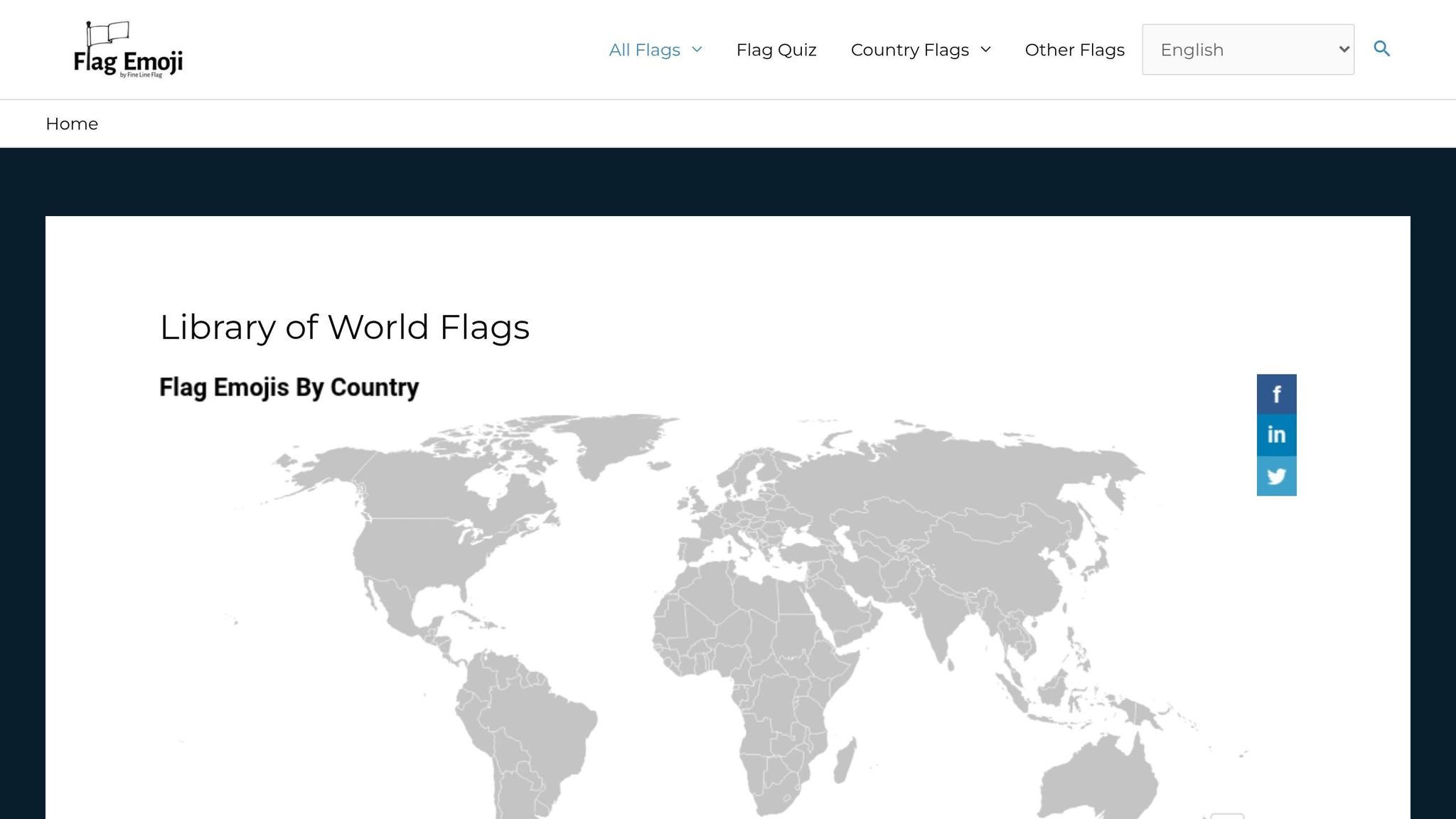
Flag Emoji Quizzes is a great resource for honing your regional flag knowledge. It offers quizzes organized by region – such as North America, South America, Europe, Asia, Africa, and Oceania – so you can concentrate your efforts where needed.
The platform provides instant feedback, helping you pinpoint which flags you’ve mastered and which require more attention. Plus, with retake options, you can track your progress and refine your skills. For an added challenge, try timed quizzes to boost your speed and accuracy under pressure.
sbb-itb-c170c49
Step 4: Use Online Tools for Quick Feedback
Online quiz platforms can give you instant and detailed feedback, helping you zero in on areas where you need improvement. Instead of guessing which flags are tripping you up, these tools provide clear performance data, making your study sessions more focused and productive.
Learn from Interactive Features
Flag Emoji Quizzes offers detailed performance tracking that goes well beyond a simple score. After each quiz, you’ll get a breakdown of your match accuracy, total time spent, and your longest streak of correct answers. This helps you see not only what you got wrong but also patterns in how you’re learning. Incorrect matches are flagged in red, and a full performance summary – including correct and incorrect answers, completion time, and a percentage score – pinpoints exactly which flags need more attention. One standout feature is the platform’s ability to highlight flags that are commonly missed by all users. By creating an account, you can track your progress over time, see where you’ve improved, and identify flags that consistently cause issues. With this data-driven feedback, timed quizzes can further refine both your speed and accuracy.
Add Timed Quizzes for Speed Practice
Speed is key when it comes to flag identification, especially if you’re preparing for competitive quizzes or classroom activities. Tracking your average time per question can reveal whether you need to work on recognition speed in addition to accuracy. Timed quizzes replicate real-world pressure, testing both your speed and precision. This allows you to fine-tune your practice sessions to strike the perfect balance between being quick and staying accurate.
Step 5: Strengthen Learning with Regular Review
Regular review is the key to locking in your flag-identification skills. While immediate feedback from quizzes is helpful, memory fades over time. A consistent review schedule helps reinforce what you’ve learned and turns weak spots into strengths.
Use Spaced Review Techniques
Instead of cramming, space out your study sessions to retain information for the long haul. Start reviewing at least a week before your quiz, dedicating a small amount of time each day. Go over your notes while the material is still fresh, and after learning new flags, review them right away. Then revisit them every other day to help shift the information into your long-term memory. To keep things interesting, try drawing flags from memory, creating stories about their symbols, or coming up with mnemonics to remember tricky details. These spaced sessions build on your earlier practice, making flag details feel like second nature.
Focus on Tricky Flags
Pair your online practice with targeted self-assessments to zero in on the flags that give you trouble. Regular quizzes can reveal gaps in your knowledge and highlight specific flags that need extra attention. Many platforms, like the 7Sage LSAT tool, allow you to mark difficult questions so you can revisit them later if time permits. If you often mix up similar flags – like Chad and Romania – spend extra time studying their unique features. After each quiz, take a moment to review your results. This helps you identify what’s working and where you need to adjust your study approach.
Conclusion
Mastering flag quizzes becomes much easier when you follow a few key steps. Start by breaking down the flags into identifiable elements, using mnemonics or flashcards to reinforce your memory. Gradually build your confidence by tackling regional quizzes, and use online tools to get instant feedback that highlights areas for improvement. To ensure long-term retention, incorporate spaced repetition into your routine. This combination of strategies helps sharpen both your speed and accuracy.
"Flag quizzes aren’t just entertaining – they’re powerful educational tools that help improve visual memory, cultural awareness, and geographical knowledge." – General Knowledge Quiz
Studies reveal that visual learning aids, like flag quizzes, can boost retention rates by as much as 400% compared to traditional text-based methods. Engaging in these exercises strengthens visual memory, pattern recognition, and associative learning, all of which enhance your ability to recall information.
Platforms like Flag Emoji Quizzes are great for applying these strategies. With interactive quizzes grouped by regions – such as North America, Europe, Asia, Africa, and Oceania – you can start with familiar areas and gradually expand your expertise. The instant feedback provided after each quiz pinpoints weak spots, helping you focus your efforts where they’re needed most.
Stick with it and be consistent. Regular practice, combined with tracking your progress, will help you master even the trickiest flags. Over time, your recognition skills and confidence will soar.
FAQs
What are some easy memory tricks to tell similar-looking flags apart?
One effective trick for recalling flags that look alike is using mnemonics – simple memory aids that help you connect a flag’s features to something familiar. For instance, you could craft a short phrase or sentence based on the flag’s colors, shapes, or symbols to make it stick.
Another approach is to zero in on subtle yet distinct details, like the number of stars, how the stripes are arranged, or even the specific shade of a color. Tying these features to something personal or memorable can make them much easier to bring to mind when you need them, like during a quiz.
What are common mistakes when identifying flags, and how can I avoid them?
One frequent slip-up is confusing flags that share similar designs, whether it’s matching color schemes or patterns. It’s also easy to miss subtle but important details, like the exact number of stars, how symbols are arranged, or slight differences in color tones. Another challenge comes from not grasping the historical or cultural significance tied to a flag, which can make it harder to stick in your memory.
To steer clear of these mistakes, try breaking flags down into smaller elements – think shapes, colors, and symbols. Leverage mnemonic devices to craft memorable connections, and group flags by regions to uncover patterns more effectively. Regularly testing yourself with regional or global flag quizzes can sharpen your recognition skills and boost memory over time. Paying close attention to the finer details will make all the difference!
How does Flag Emoji Quizzes help improve flag identification skills?
Flag Emoji Quizzes turns learning flags into an enjoyable and effective experience with its interactive tools designed to sharpen your memory and recognition skills. By taking part in engaging quizzes, you’ll practice spotting key details like colors, patterns, and symbols, all while getting instant feedback to monitor your progress.
The platform also offers a range of regional and global flag challenges, letting you zero in on specific areas or broaden your understanding of flags from around the world. This thoughtful setup makes it easier and more fun for geography lovers and learners to build their confidence and master the art of identifying flags.
Related Blog Posts
- How to Memorize World Flags Fast
- Complete Guide to Learning World Flags
- Flag Recognition Test
- Flag Knowledge Checker
Free Printable: Flags of the World Reference Card
Get a beautiful printable poster with 50 flag emojis, Unicode codes, and fun facts. Perfect for classrooms and desks!
No spam, ever. Unsubscribe anytime.