
How To
How To
Time needed: 1 minute
How to copy and paste the Flag of Georgia Emoji to any device.
- Copy the Georgian Flag Emoji
Go to flagemoji.com and press the copy button (above). This works on any device.
- Paste the Emoji
Go to your email/iMessage/SMS texting service/document and paste the emoji.
For mobile devices
— double-tap or tap-hold, then paste should appear. Tap it.
For desktop and laptops on Apple devices
— command-P / ⌘-P
For desktop and laptops on Windows devices
— control-p
Codes
Emoji Codes
Flag emojis are unicode symbols, like any other letter or number on your keyboard. This means you can copy and paste the emoji itself into your code, whatever the language (click the button above).
They actually count as two characters: the two-letter country code (the ISO international standard). The unicode and shortcode both represent country data which devices can interpret and display the emoji.
| Country Code | Unicode | Shortcode |
| GE | U+1F1EC U+1F1EA | :flag_GE: :GE: |
Emoji shortcodes are used on some platforms as a way for users to type in emojis from the keyboard. If you type the emoji shortcode on Github or Slack, the emoji will appear.
*The official name of the emoji is only the country name, not ‘Georgia Flag’, for example.
Description
Description
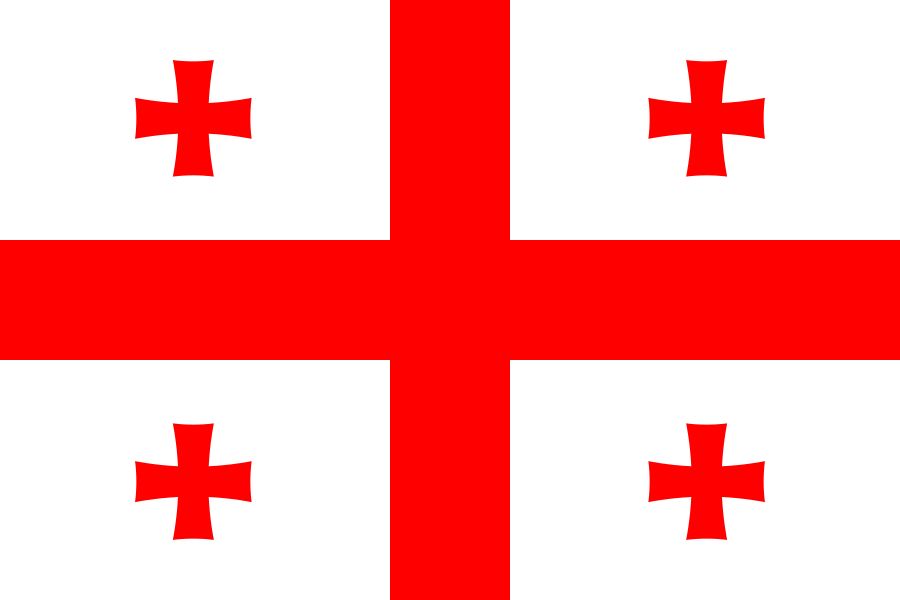
The flag of Georgia consists of a white rectangle with a central red cross extending to all four sides of the flag. Each of the four quadrants displays a small red bolnur-katskhuri cross. Sometimes referred to as the Five-Cross Flag. Although adopted as the official Georgian flag in 2004, the five-cross design appears to date back to the 14th century.
Map
Map
Check out the map of Kenya!
Weather
Anthem
National Anthem
| Title | Tavisupleba (Liberty) |
| Composer | Davit Magradse / Zakaria Paliashvili (adapted by Joseb Ketschakmadse) |
FAQ
FAQs
The country of Georgia observes Independence Day May 26th.
The flag of Georgia is sometimes referred to as the Five-Cross Flag.
The Georgian flag was adopted in 2004.
Georgia is governed by Semi-Presidential Republic.
Discover more fun facts of Haiti.
Printable
Printable Georgian Flag
Print another really cool flag. Why not the flag of South Africa?
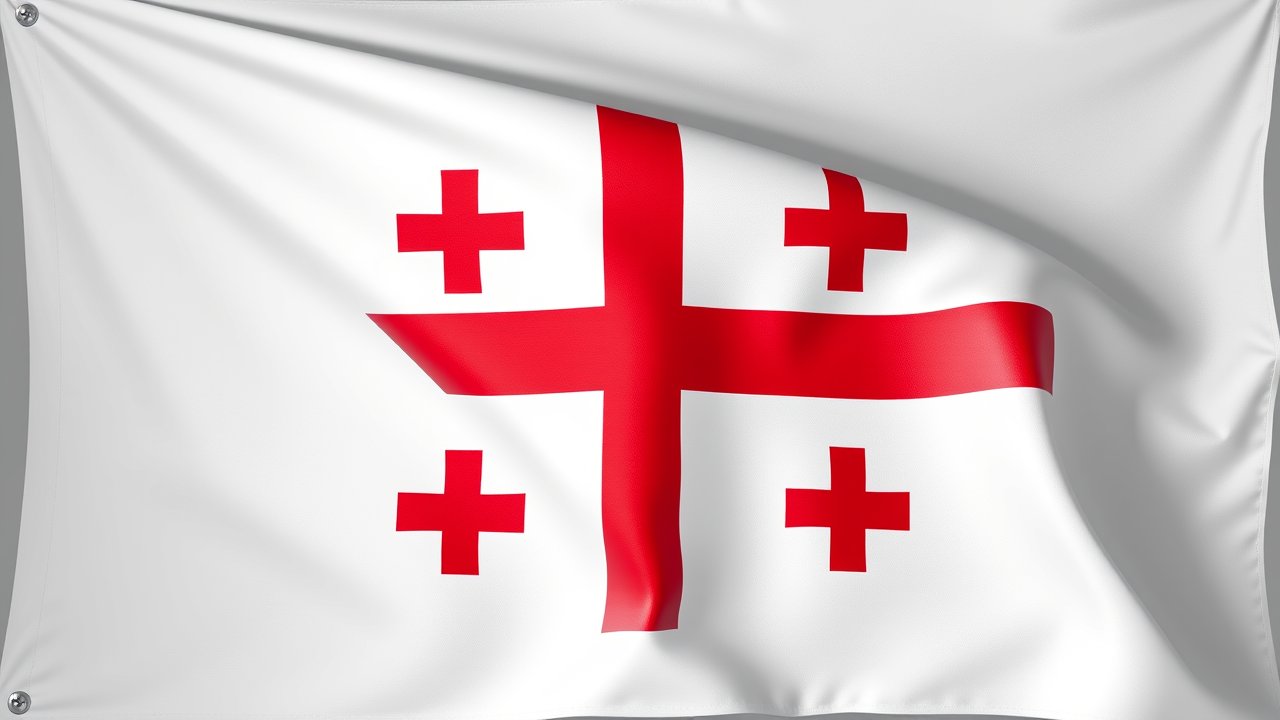
3D Glossy Render — White field with a large red cross and four smaller red crosses in each quadrant. The flag of Georgia as a photorealistic 3D render. White field with a large red cross and four smaller red crosses in each quadrant. The flag fabric hangs or drapes naturally but preserves exact proportions, colors, and all symbols perfectly — completely faithful to the real Georgia flag. Dramatic studio lighting, glossy silk material, soft shadows, subsurface scattering, perfect specular highlights. No text, no letters, no words, no writing of any kind.
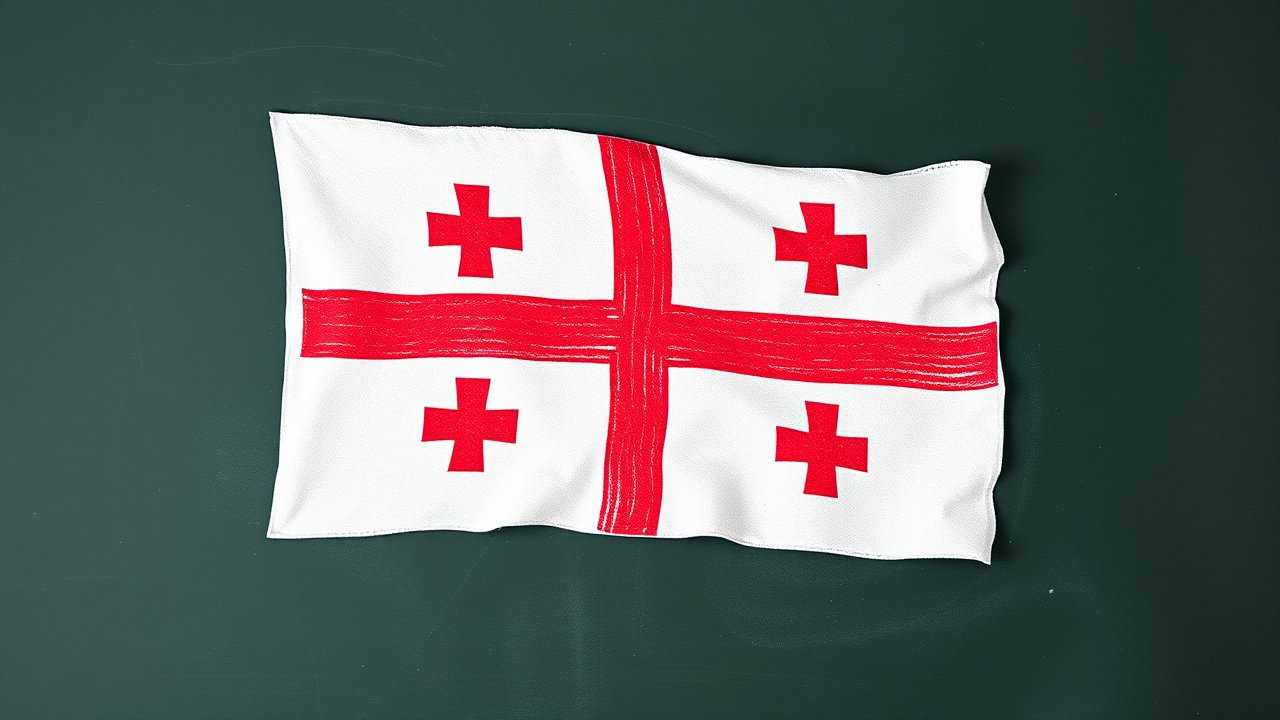
Chalk on Blackboard — White field with a large red cross and four smaller red crosses in each quadrant. The flag of Georgia drawn in chalk on a real blackboard. White field with a large red cross and four smaller red crosses in each quadrant. Authentic blackboard — dark slate green surface with chalk dust and smudge marks. Soft, dusty white and colored chalk lines, imperfect edges, hand-drawn quality. Chalk dust particles visible in the air. The flag is immediately recognizable. No text, no letters, no words, no writing of any kind.
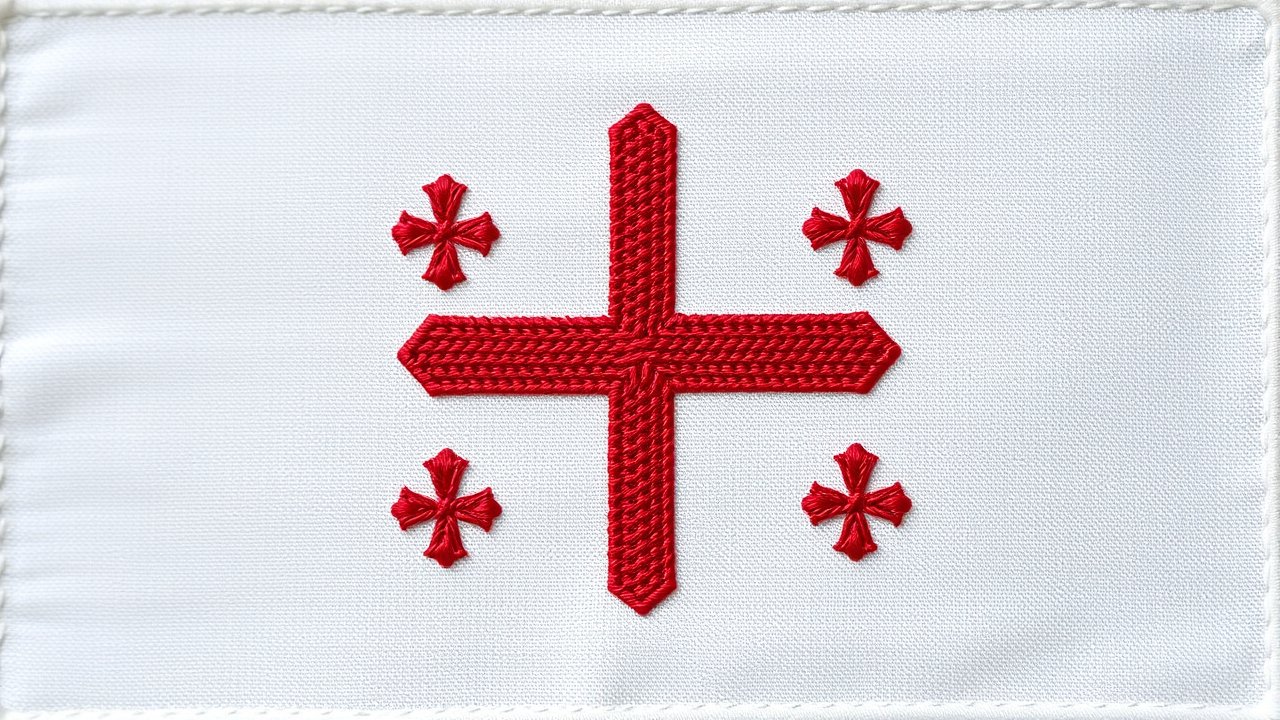
Embroidered Textile — White field with a large red cross and four smaller red crosses in each quadrant. The flag of Georgia as intricate embroidery on linen fabric. White field with a large red cross and four smaller red crosses in each quadrant. Dense satin stitches, French knots, chain stitch detail. The flag design is completely faithful — exact colors, geometry, and all symbols faithfully stitched, immediately recognizable as the Georgia flag. Visible thread texture, dimensional quality, warm handcrafted feel. No text, no letters, no words, no writing of any kind.
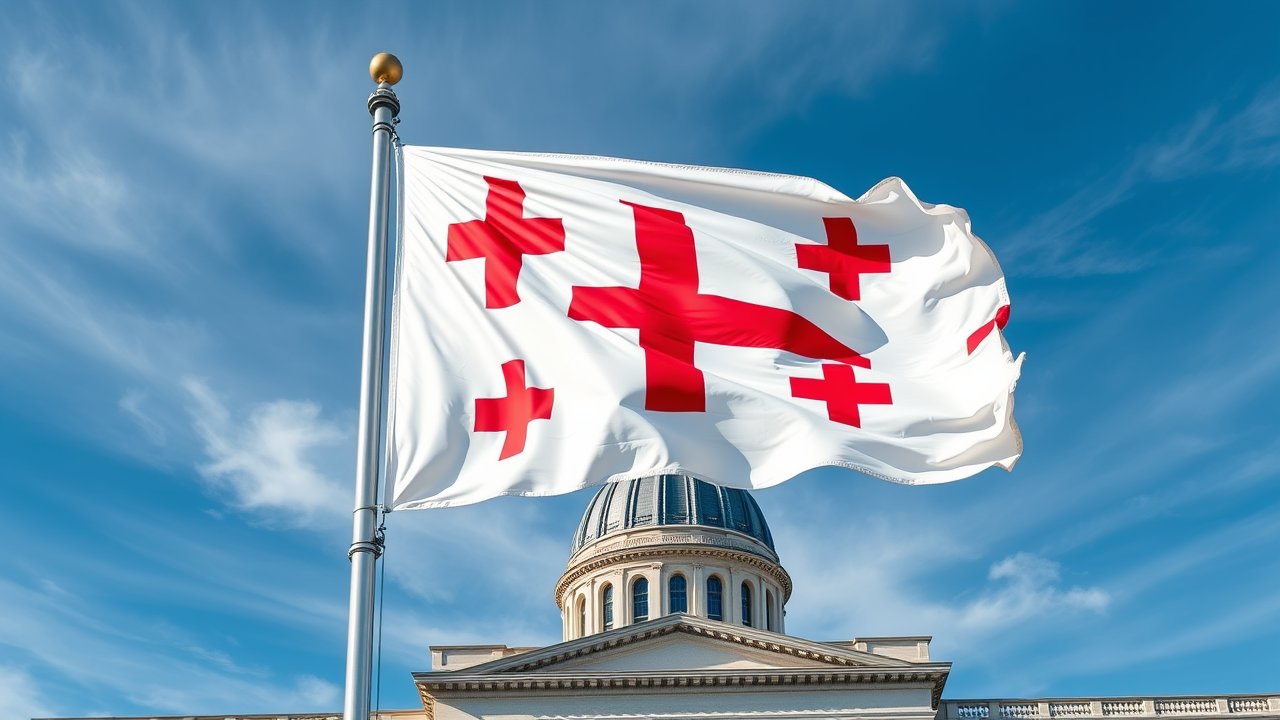
Flagpole in Capital — White field with a large red cross and four smaller red crosses in each quadrant. Photorealistic photograph of the Georgia flag flying on a tall flagpole in front of an iconic government building in the capital city. White field with a large red cross and four smaller red crosses in each quadrant. The flag ripples naturally in the wind, colors vivid and exact. Documentary photography style, sharp and realistic. Grand architecture in the background. Blue sky, dramatic clouds. No text, no letters, no words, no writing of any kind.

Golden Hour Reflection — White field with a large red cross and four smaller red crosses in each quadrant. Photorealistic photograph of the Georgia flag reflected in still water at golden hour. White field with a large red cross and four smaller red crosses in each quadrant. The flag flies on a pole at the water’s edge, its reflection shimmering on the surface below. Warm amber and orange sunset light. The flag colors and design are faithful and vivid. Serene, cinematic landscape photography. No text, no letters, no words, no writing of any kind.

Street Art / Graffiti — White field with a large red cross and four smaller red crosses in each quadrant. The flag of Georgia as vibrant street art spray-painted on a brick wall. White field with a large red cross and four smaller red crosses in each quadrant. Bold spray paint, dripping edges, stencil layers, overspray halos. The flag design is faithful and immediately recognizable — exact colors and symbols, just rendered in spray paint on urban concrete. No text, no letters, no words, no writing of any kind. No tags, no graffiti lettering.
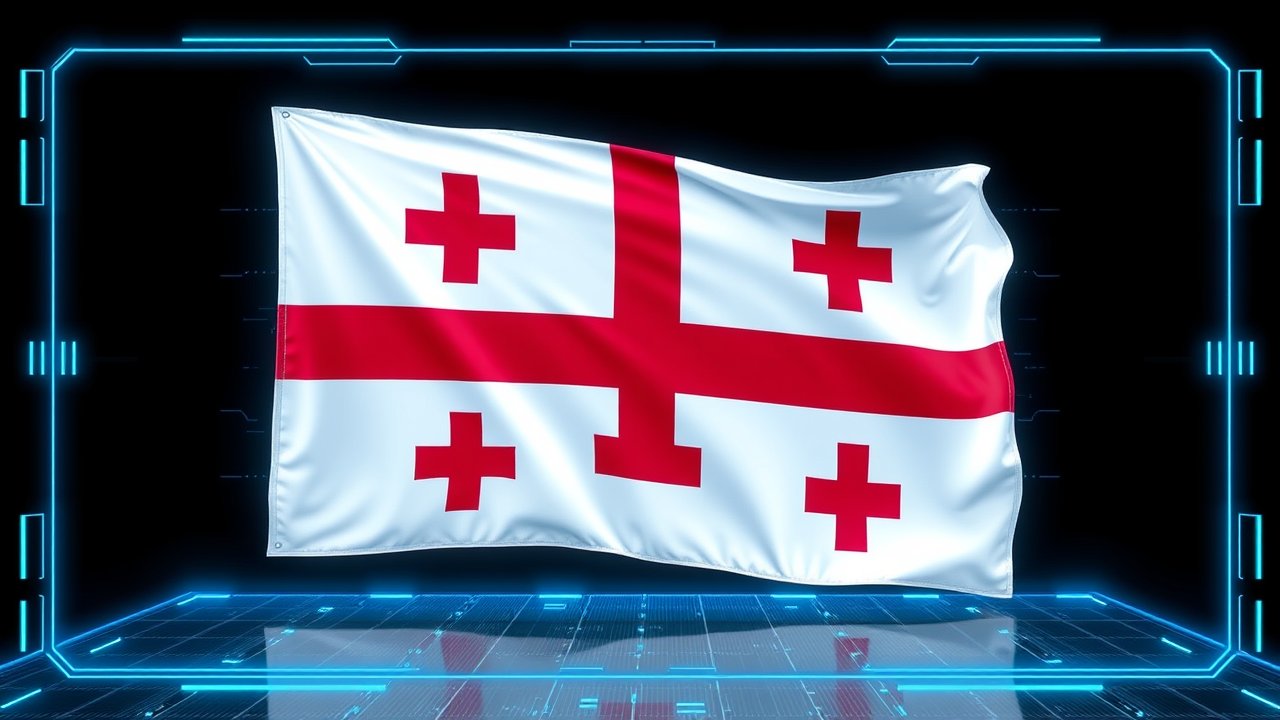
Sci-Fi Hologram — White field with a large red cross and four smaller red crosses in each quadrant. The flag of Georgia projected as a futuristic holographic display. White field with a large red cross and four smaller red crosses in each quadrant. Translucent blue-white projection with scan lines, floating in dark space. Glitching edges, particle effects, data streams. The flag design is completely faithful and recognizable. Cyberpunk HUD elements framing the projection. No text, no letters, no words, no writing of any kind.
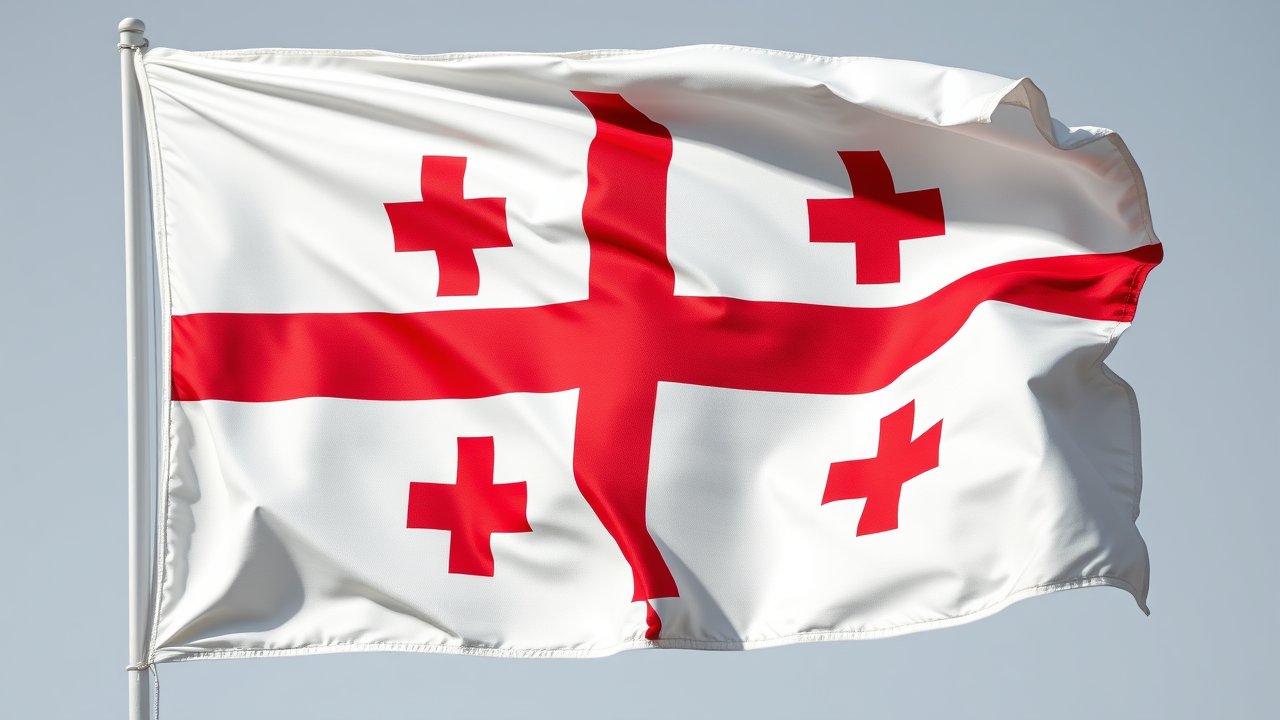
Hyperrealistic Wind — White field with a large red cross and four smaller red crosses in each quadrant. Ultra-hyperrealistic photograph of the Georgia flag caught in a dramatic gust of wind. White field with a large red cross and four smaller red crosses in each quadrant. Macro-level fabric detail — individual threads visible, fabric folds and tension lines crisp. Colors and design completely faithful to the real Georgia flag. High-speed shutter, razor-sharp focus, studio lighting. No text, no letters, no words, no writing of any kind.
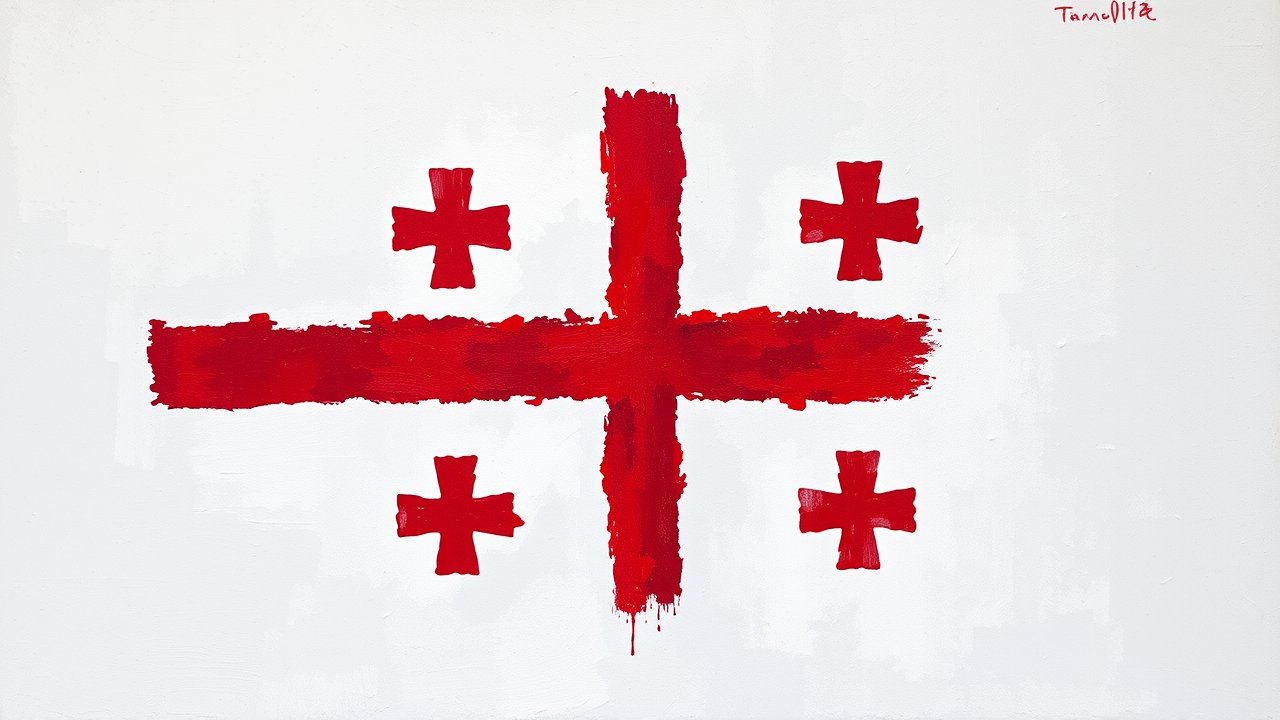
Impressionist Oil — White field with a large red cross and four smaller red crosses in each quadrant. The flag of Georgia painted in French Impressionist oil on canvas. White field with a large red cross and four smaller red crosses in each quadrant. Thick impasto brushstrokes, dappled light, vibrant broken color technique in the style of Monet. The flag is instantly recognizable — colors and design faithful to the real Georgia flag, interpreted with impressionist light and texture. No text, no letters, no words, no writing of any kind.

Lego Bricks — White field with a large red cross and four smaller red crosses in each quadrant. The flag of Georgia built from Lego bricks, photographed as a real physical construction. White field with a large red cross and four smaller red crosses in each quadrant. Visible studs and brick seams, slight plastic sheen. Standard Lego colors approximate the flag’s palette. Built on a gray Lego baseplate. Dramatic angle showing the three-dimensional brick texture. No text, no letters, no words, no writing of any kind.

Low-Poly Geometric — White field with a large red cross and four smaller red crosses in each quadrant. The flag of Georgia constructed from low-polygon geometric triangles. White field with a large red cross and four smaller red crosses in each quadrant. Aggressively faceted — each region broken into many visible triangular faces with subtle color variation across each polygon, creating real depth and dimensionality even in flat-color areas of the flag. Crystal-like, contemporary computational design. The flag is completely faithful and immediately recognizable. No text, no letters, no words, no writing of any kind.
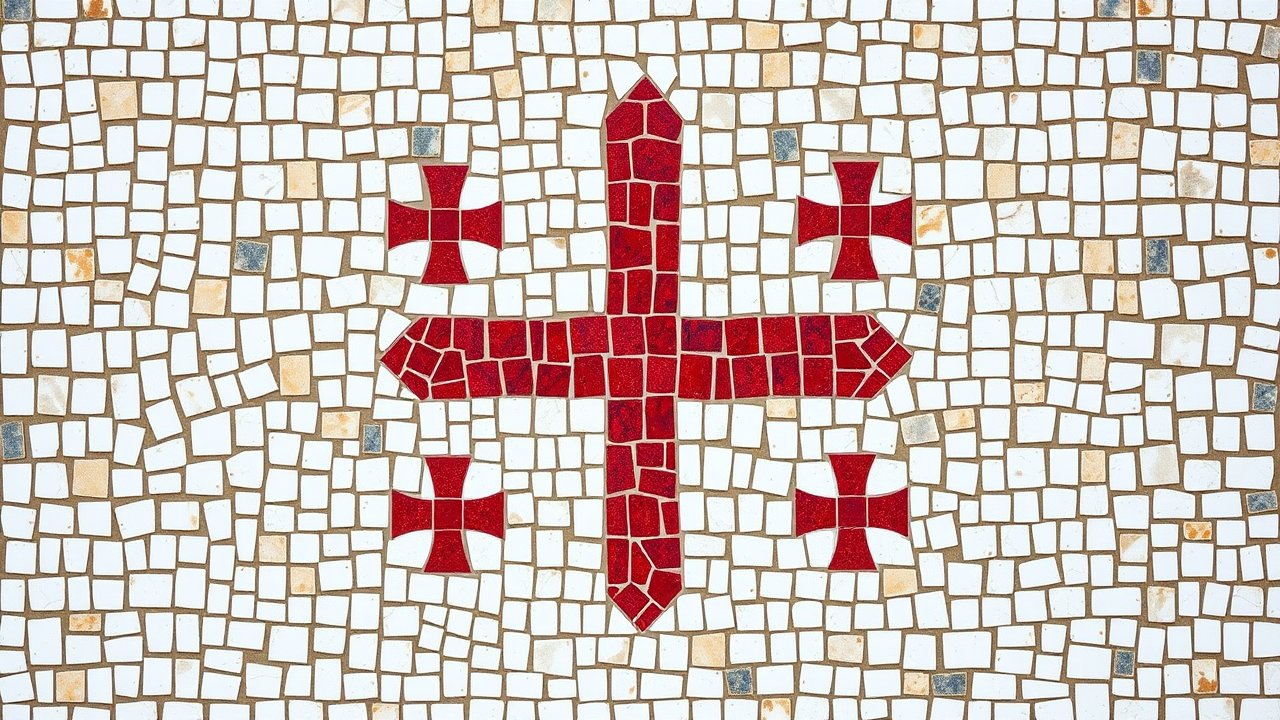
Mosaic Tiles — White field with a large red cross and four smaller red crosses in each quadrant. The flag of Georgia assembled as a Roman-style mosaic. White field with a large red cross and four smaller red crosses in each quadrant. The flag is completely faithful to the real Georgia flag — exact proportions, colors, and all symbols, rendered in thousands of small stone and glass tesserae. Visible grout lines, rich earthy tones mixed with brilliant glass, slight historical weathering. No text, no letters, no words, no writing of any kind.
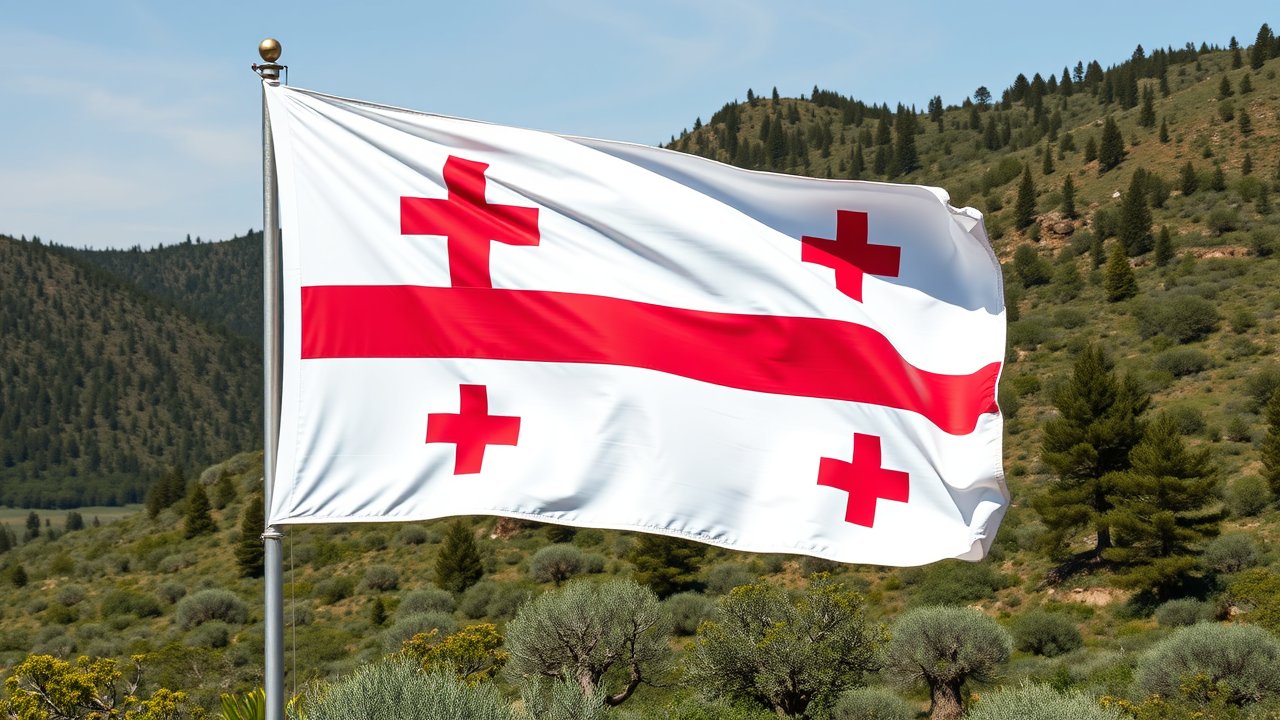
Native Landscape — White field with a large red cross and four smaller red crosses in each quadrant. Photorealistic photograph of the Georgia flag flying in an iconic natural landscape native to Georgia — the terrain, flora, and environment characteristic of that country. White field with a large red cross and four smaller red crosses in each quadrant. The flag is prominent and its colors are faithful and vivid. Remote, uninhabited wilderness. National Geographic photography style. No text, no letters, no words, no writing of any kind.
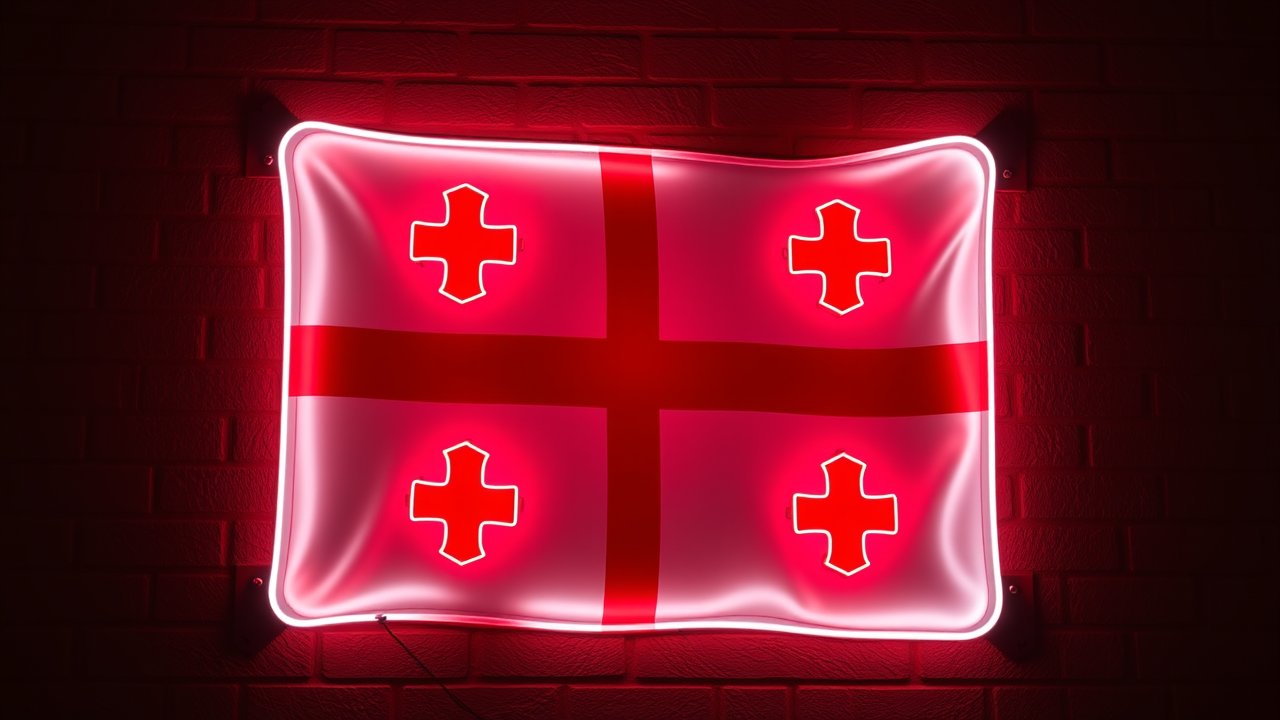
Neon Sign — White field with a large red cross and four smaller red crosses in each quadrant. The flag of Georgia recreated as a real neon sign mounted on a dark wall. White field with a large red cross and four smaller red crosses in each quadrant. Glowing glass neon tubes bent into the flag’s shapes — the colors of the flag rendered in actual neon light. Visible glass tube bends, metal mounting brackets on the wall. Warm neon glow and light bloom. Real neon, not digital. Photographed in a dark room. No text, no letters, no words, no writing of any kind.
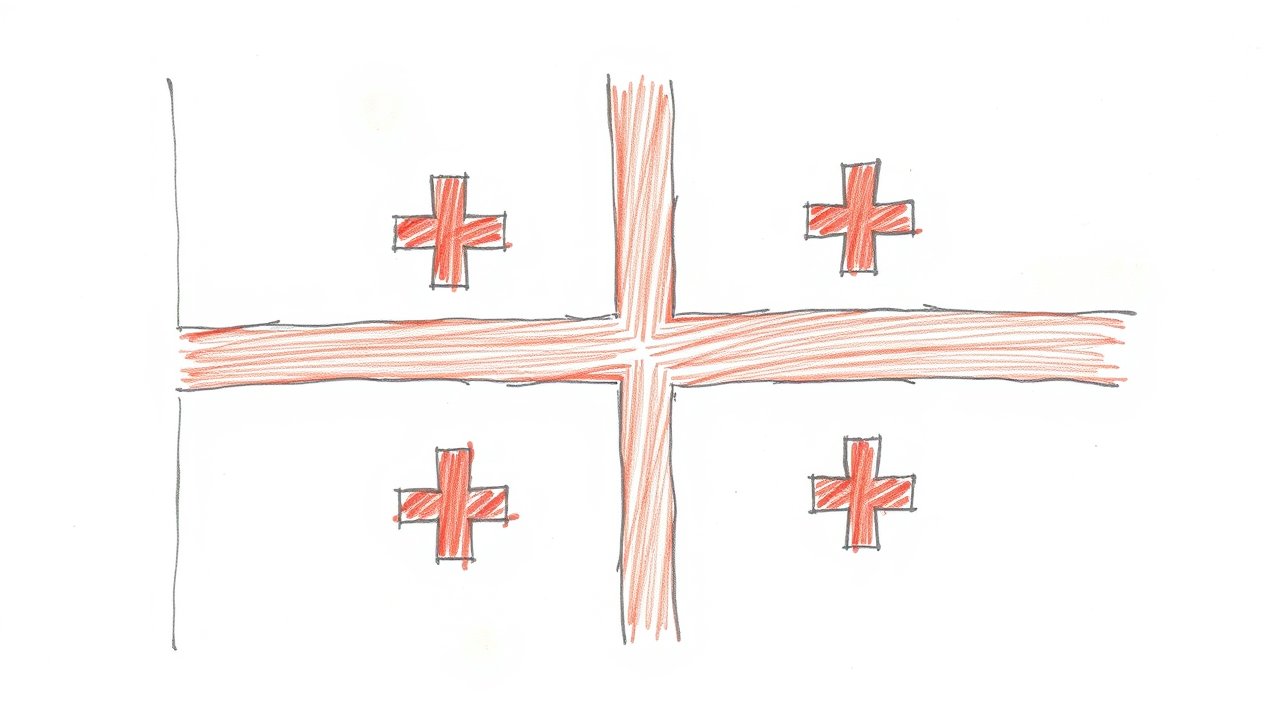
Pencil Sketch — White field with a large red cross and four smaller red crosses in each quadrant. The flag of Georgia as a bold, confident pencil sketch. White field with a large red cross and four smaller red crosses in each quadrant. Strong graphite lines on cream paper — not delicate but bold and decisive. Heavy pressure on key outlines, dramatic cross-hatching for deep shadows and shading. Immediately recognizable as the Georgia flag. Artist’s confident hand, not tentative. No text, no letters, no words, no writing of any kind.

Pixel Art — White field with a large red cross and four smaller red crosses in each quadrant. The flag of Georgia as detailed 16-bit pixel art. White field with a large red cross and four smaller red crosses in each quadrant. Crisp pixel grid, limited palette with careful dithering, nostalgic retro game aesthetic. Clean grid-aligned design with subtle shading. Every element of the flag faithfully reproduced in pixels. No text, no letters, no words, no writing of any kind.
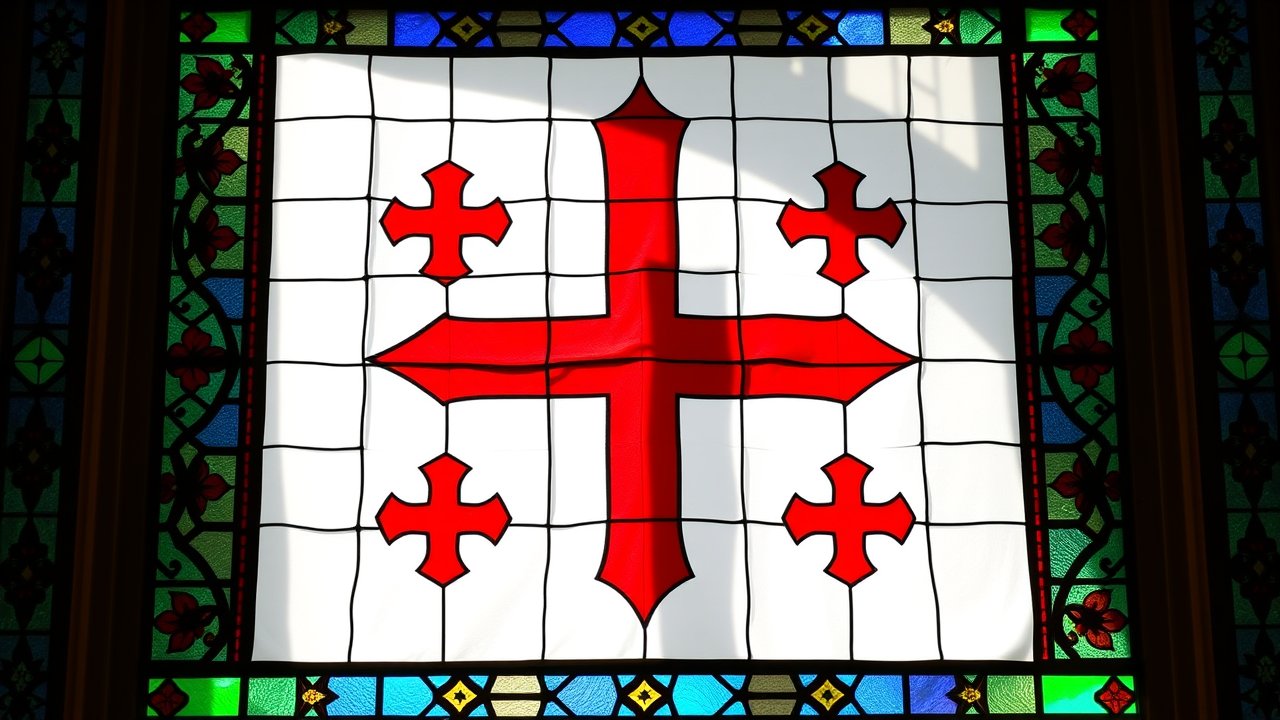
Stained Glass — White field with a large red cross and four smaller red crosses in each quadrant. The flag of Georgia rendered as an ornate stained glass window. White field with a large red cross and four smaller red crosses in each quadrant. The design is completely faithful to the real Georgia flag — exact colors, geometry, and all symbols preserved. Brilliant jewel-toned glass pieces separated by dark lead came lines. Warm sunlight streaming through, casting colored light. Gothic cathedral craftsmanship. No text, no letters, no words, no writing of any kind.
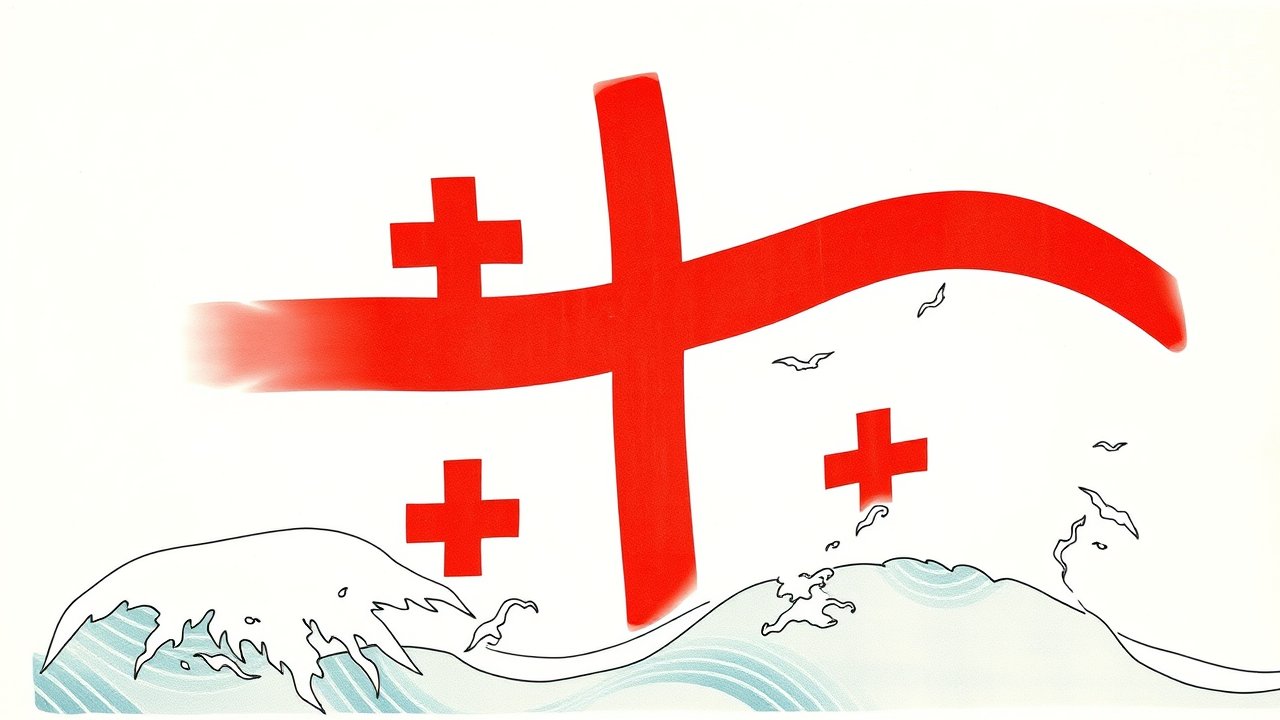
Ukiyo-e Woodblock — White field with a large red cross and four smaller red crosses in each quadrant. The flag of Georgia as a traditional Japanese ukiyo-e woodblock print. White field with a large red cross and four smaller red crosses in each quadrant. Bold outlines, flat areas of rich color, flowing organic forms. Wind and waves incorporated into the composition. Printed on washi paper with visible wood grain texture. The flag is the central focus and instantly recognizable. No text, no letters, no words, no writing of any kind.
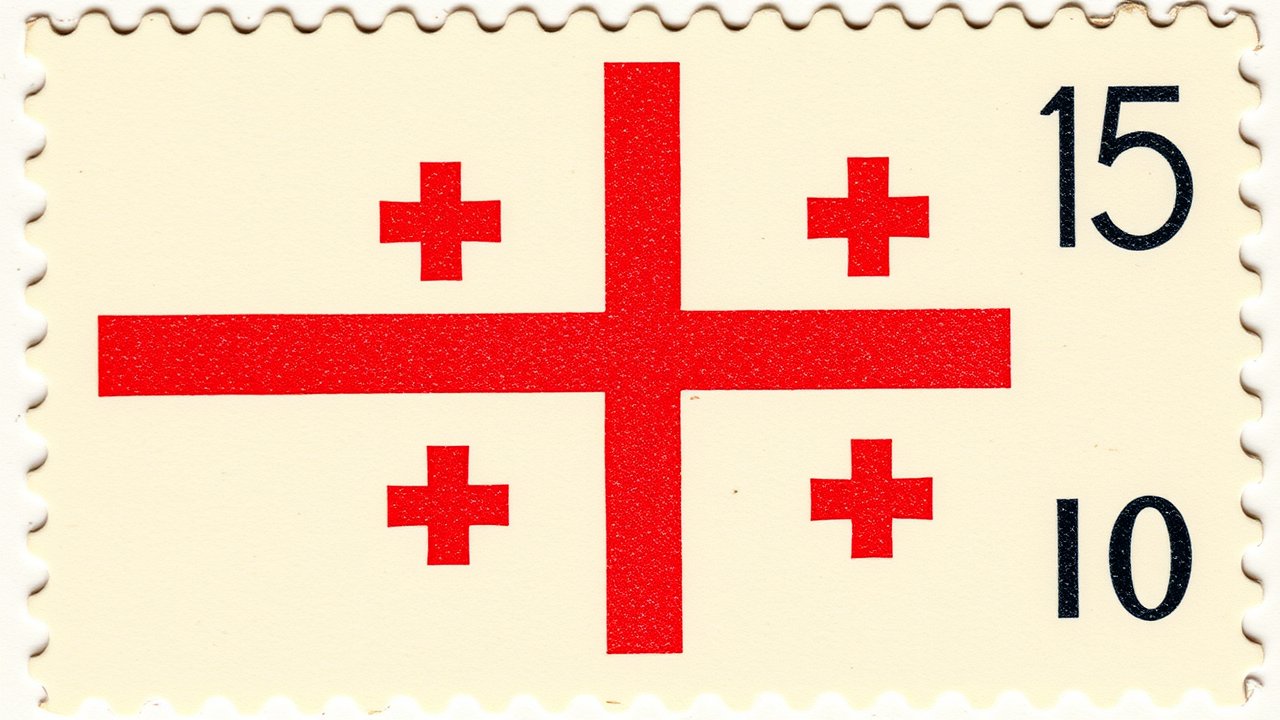
Vintage Postage Stamp — White field with a large red cross and four smaller red crosses in each quadrant. The flag of Georgia as a vintage 1950s postage stamp. White field with a large red cross and four smaller red crosses in each quadrant. The flag fills most of the stamp — it is the primary subject, faithfully rendered in fine engraved intaglio style. Perforated edges, aged paper with slight foxing. The stamp may show a denomination numeral only — absolutely no other text or country names.
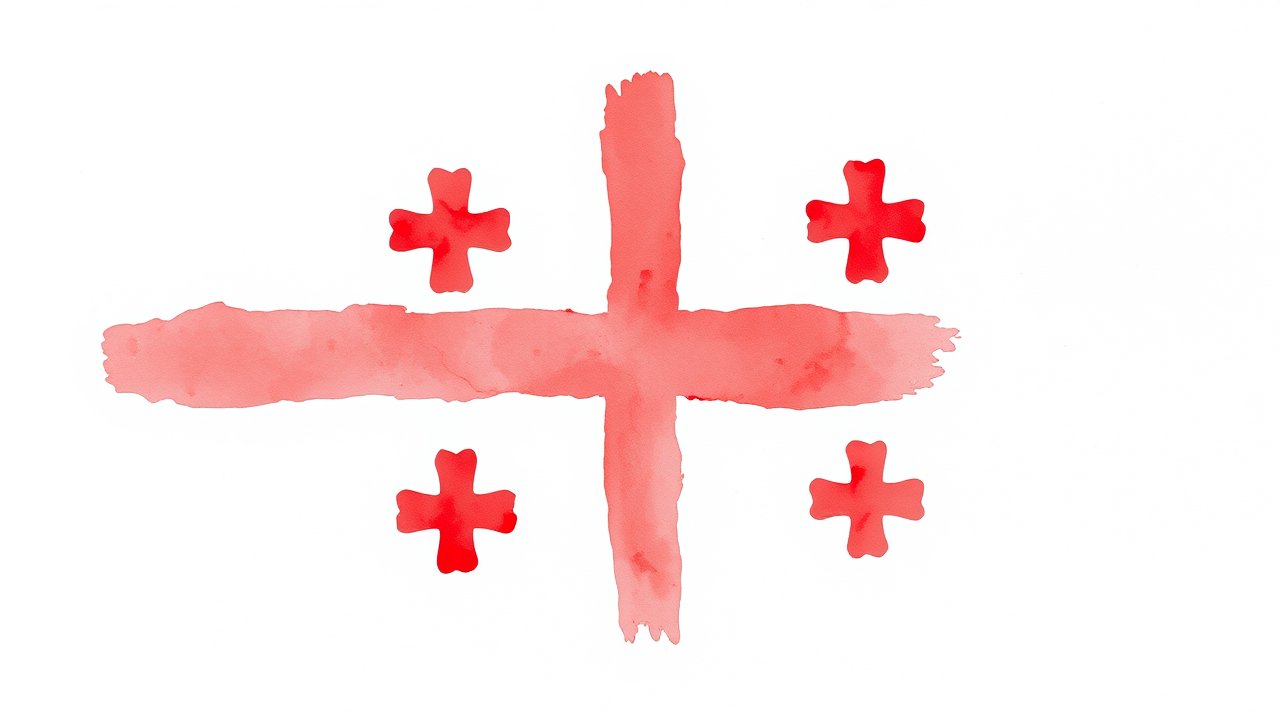
Watercolor — White field with a large red cross and four smaller red crosses in each quadrant. The flag of Georgia painted in loose, expressive watercolor. White field with a large red cross and four smaller red crosses in each quadrant. Wet-on-wet technique with soft color bleeds, visible brushstrokes, natural paper texture. Delicate splashes and drips at the edges. Luminous, translucent layers of pigment. No text, no letters, no words, no writing of any kind.
The Five-Cross Flag: Georgia’s Ancient Symbol of Faith and National Identity
The flag of Georgia stands as one of the most distinctive and symbolically rich flags in the world, instantly recognizable by its striking design of a white field adorned with five red crosses—one large cross at the center and four smaller crosses positioned in each quadrant. This deceptively simple composition conceals centuries of religious significance, medieval heritage, and modern political struggle. The flag represents more than mere national identity; it embodies Georgia’s unique position at the crossroads of Christian faith and geopolitical complexity, serving as a powerful emblem of resilience during periods of foreign domination and national revival. Understanding the Georgian flag requires examining its deep historical roots in medieval Georgia, decoding the profound religious symbolism embedded in its crosses, tracing its suppression and renaissance across centuries of transformation, and recognizing its pivotal role in the modern democratic movements that reshaped the nation in the 21st century.
Medieval Origins: The Jerusalem Cross and Divine Protection
The origins of Georgia’s five-cross flag trace back to the medieval Kingdom of Georgia, a period of remarkable cultural and political flourishing spanning roughly the 9th to 15th centuries. During this golden age, Georgia emerged as a significant Christian kingdom, strategically positioned between the Byzantine Empire to the west and the Islamic caliphates to the south. The flag’s design, known as the Five-Cross Flag or Jerusalem Cross, was not created in a vacuum but rather emerged from Georgia’s deep commitment to Orthodox Christianity and its role as a bastion of Christian faith in the Near East. Historical records and vexillological research, including examination of 14th-century maps by Domenico and Francesco Pizzigano, have confirmed that the red-on-white Jerusalem cross design was indeed used as the banner of medieval Georgia, though its use was largely eclipsed during subsequent centuries of foreign rule.
The central large red cross represents the apostle Saint George, one of the most venerated figures in Georgian Orthodox Christianity. Saint George has served as the patron saint of Georgia since ancient times and holds special significance in Georgian national consciousness. The cross itself, known as the St. George Cross, extends to the edges of the flag, creating a visual division that separates the field into four distinct quadrants. This central cross carries layers of Christian symbolism: it represents Christ and redemption, a universal symbol in Christian iconography that would have resonated profoundly with medieval Georgian rulers and populations. The positioning of this large cross as the dominant element reflects the centrality of Orthodox Christianity to Georgian identity and governance during the medieval period.
The Four Smaller Crosses: The Apostolic Tradition
The four smaller red crosses positioned in each quadrant of the flag carry equally profound religious significance. These crosses, known as Georgian Crosses, represent the four Gospel writers and apostles: Matthew, Mark, Luke, and John. In Orthodox Christian tradition, these four evangelists hold paramount importance as the authors of the New Testament gospels and as foundational figures who spread Christian teachings throughout the known world. By incorporating these four crosses into the national flag, medieval Georgia was making a profound theological statement: the nation itself was aligned with apostolic Christianity, grounded in the authentic traditions of the early Church. This design choice reflected the Georgian Church’s strong connection to Orthodox Christianity and its claim to apostolic succession—the belief that the Georgian Christian tradition descended directly from the teachings of Jesus Christ’s apostles.
The symmetrical arrangement of these four crosses—one in each quadrant—creates a sense of balance and harmony that medieval designers deliberately cultivated. This geometric perfection was understood not merely as aesthetic principle but as theological statement, reflecting divine order and the completeness of Christian revelation as transmitted through the four gospels. Medieval Georgia saw itself as a Christian commonwealth sanctioned by divine authority, and its flag embodied this sacred mission through its carefully constructed symbolism.
Symbolism of Colors: Red and White
The color palette of Georgia’s flag carries distinct symbolic weight. The red crosses represent bravery, courage, love, and sacrifice—qualities that medieval and modern Georgians have consistently emphasized as central to national character. Red also symbolizes the blood shed by Christian martyrs and, more broadly, the willingness to sacrifice for faith and nation. Saint George himself, the patron saint central to the flag’s symbolism, is traditionally depicted as a warrior martyr, which reinforces the association between red and both spiritual and physical courage. In the context of Georgian history, red takes on additional meaning through reference to the countless conflicts through which Georgia has defended its territory and independence.
The white field provides visual contrast while carrying its own symbolic weight. White represents purity, righteousness, peace, and wisdom. In Christian symbolism, white often signifies divine light and spiritual illumination. The white background of the Georgian flag thus suggests that the nation’s religious and political aspirations are grounded in spiritual truth and divine guidance. The stark contrast between the red crosses and white field creates a powerful visual impact that makes the flag immediately recognizable while reinforcing the religious dualism of earthly struggle (red) and spiritual triumph (white).
Ottoman Occupation and Symbolic Dormancy
Following the medieval period, Georgia experienced centuries of external domination, primarily under Ottoman and Persian rule. During this long period of occupation, from roughly the 16th century through the 19th century, the five-cross flag faded from official use. The Ottoman Empire, which controlled large portions of Georgia, promoted its own imperial symbols and Islamic heraldry. However, the flag never entirely disappeared from Georgian consciousness. Among educated elites, clergy, and nationalist-minded citizens, the symbol of the five crosses persisted in literature, religious contexts, and popular memory as a link to Georgia’s independent past and Christian heritage. The flag remained particularly prominent in religious settings, where the crosses held spiritual significance independent of political applications.
National Awakening and Modern Adoption
The late 20th century witnessed a dramatic revival of Georgian nationalism and national consciousness. Following Georgia’s incorporation into the Soviet Union, a growing movement toward independence and national revival gained momentum, particularly during the final decades of communist rule. As Soviet power weakened in the late 1980s and early 1990s, various nationalist and pro-democracy movements throughout the former Soviet republics began reasserting historical national symbols. For Georgia, this meant returning to the five-cross flag as the embodiment of national aspirations and cultural continuity.
The flag gained particular prominence during the Rose Revolution of 2003, a peaceful political uprising that challenged authoritarian governance and asserted democratic values. The five-cross flag became the central symbol of pro-democracy movements and popular resistance. A majority of Georgians, supported by influential figures including the Catholicos-Patriarch of the Georgian Orthodox Church, championed the restoration of the historic flag as an expression of Georgian identity and sovereignty. While Parliament passed legislation in 1999 to change the flag, it was not officially adopted until January 14, 2004, under the new government that came to power through the Rose Revolution. The flag was officially reinstated as Georgia’s national symbol, representing both historical continuity and modern democratic aspirations.
Conclusion: Continuity and Resilience
The flag of Georgia, with its five red crosses on a white field, represents one of the world’s most historically significant national symbols. From its medieval origins as the banner of a Christian kingdom through centuries of suppression, dormancy, and revival, the flag has continuously symbolized Georgian identity, faith, and aspiration toward independence and self-determination. Its crosses encode Christian theology, national values, and historical memory. Today, the five-cross flag flies as a symbol of modern Georgia’s commitment to democratic governance, European integration, and the preservation of a distinct national identity rooted in ancient Christian traditions. For Georgians at home and throughout diaspora communities worldwide, the flag remains a powerful emblem of a nation that has endured through centuries of challenge while maintaining its unique cultural and spiritual heritage.
Free Printable: Flags of the World Reference Card
Get a beautiful printable poster with 50 flag emojis, Unicode codes, and fun facts. Perfect for classrooms and desks!
No spam, ever. Unsubscribe anytime.