
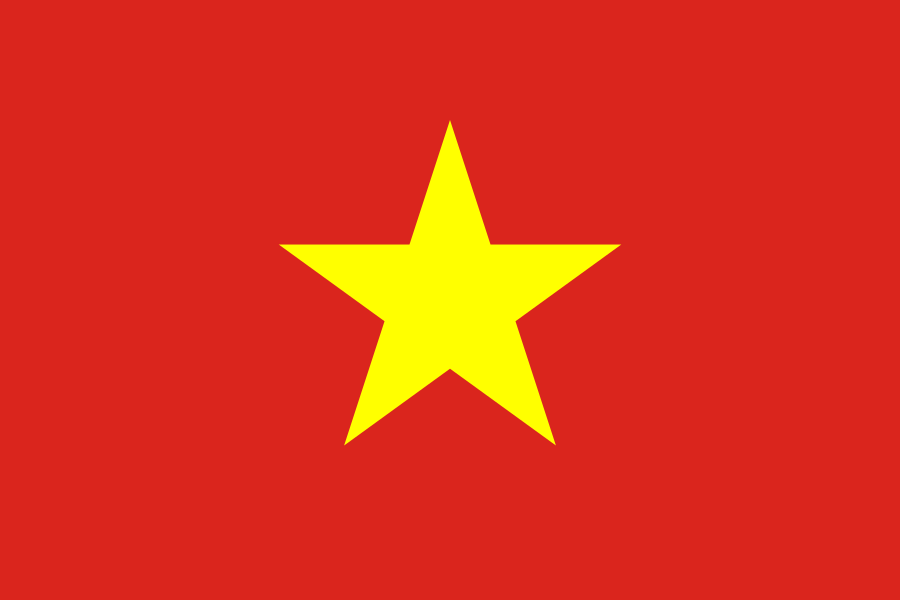
How To
How To
Time needed: 1 minute
How to copy and paste the Flag of Vietnam Emoji to any device.
- Copy the Vietnamese Flag Emoji
Go to flagemoji.com and press the copy button (above). This works on any device.
- Paste the Emoji
Go to your email/iMessage/SMS texting service/document and paste the emoji.
For mobile devices
— double-tap or tap-hold, then paste should appear. Tap it.
For desktop and laptops on Apple devices
— command-P / ⌘-P
For desktop and laptops on Windows devices
— control-p
Codes
Emoji Codes
Flag emojis are unicode symbols, like any other letter or number on your keyboard. This means you can copy and paste the emoji itself into your code, whatever the language (click the button above).
They actually count as two characters: the two-letter country code (the ISO international standard). The unicode and shortcode both represent country data which devices can interpret and display the emoji.
| Country Code | Unicode | Shortcode |
| VN | U+1F1FB U+1F1F3 | :flag_VN: :VN: |
Emoji shortcodes are used on some platforms as a way for users to type in emojis from the keyboard. If you type the emoji shortcode on Github or Slack, the emoji will appear.
*The official name of the emoji is only the country name, not ‘Vietnam Flag’, for example.
Description
Description
The Vietnam flag is comprised of a red field with a large yellow five-pointed star in the center. Red symbolizes revolution and blood, the five-pointed star represents the five elements of the populace—peasants, workers, intellectuals, traders, and soldiers—that unite to build socialism.
Map
Map
Check out the map of Barbados!
Weather
Anthem
National Anthem
| Title | Tien quan ca (The Song of the Marching Troops) |
| Composer | Nguyen Van Cao |
FAQ
FAQs
The National Day in Vietnam is observed every 2nd of September, commemorating the Declarations of Independence of Vietnam on September 2nd, 1945.
Red symbolizes revolution and blood, the five-pointed star represents the five elements of the populace – peasants, workers, intellectuals, traders, and soldiers – that unite to build socialism.
The flag of Vietnam was officially adopted on November 30, 1955.
The government type of Vietnam is communist state.
Discover more fun facts of Saint Kitts and Nevis.
Printable
Printable Vietnamese Flag
Print another really cool flag. Why not the flag of Switzerland?

3D Glossy Render — Red field with a large yellow five-pointed star centered. The flag of Vietnam as a photorealistic 3D render. Red field with a large yellow five-pointed star centered. The flag fabric hangs or drapes naturally but preserves exact proportions, colors, and all symbols perfectly — completely faithful to the real Vietnam flag. Dramatic studio lighting, glossy silk material, soft shadows, subsurface scattering, perfect specular highlights. No text, no letters, no words, no writing of any kind.
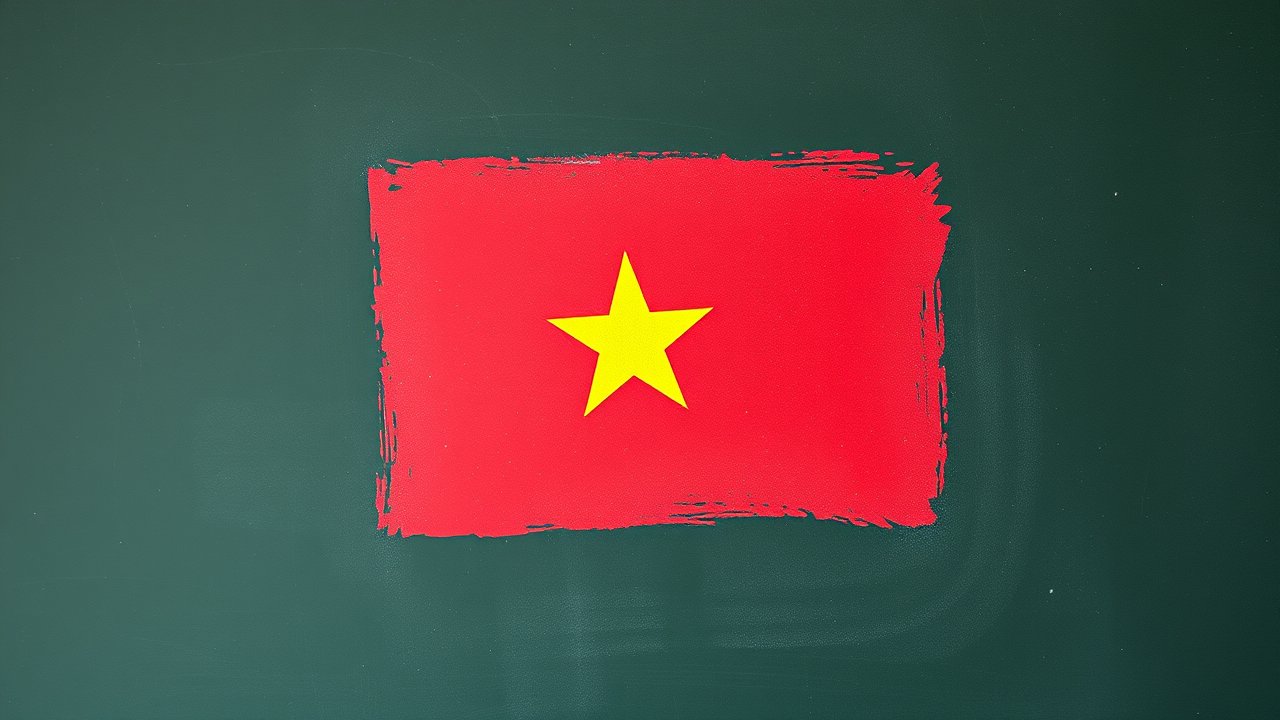
Chalk on Blackboard — Red field with a large yellow five-pointed star centered. The flag of Vietnam drawn in chalk on a real blackboard. Red field with a large yellow five-pointed star centered. Authentic blackboard — dark slate green surface with chalk dust and smudge marks. Soft, dusty white and colored chalk lines, imperfect edges, hand-drawn quality. Chalk dust particles visible in the air. The flag is immediately recognizable. No text, no letters, no words, no writing of any kind.
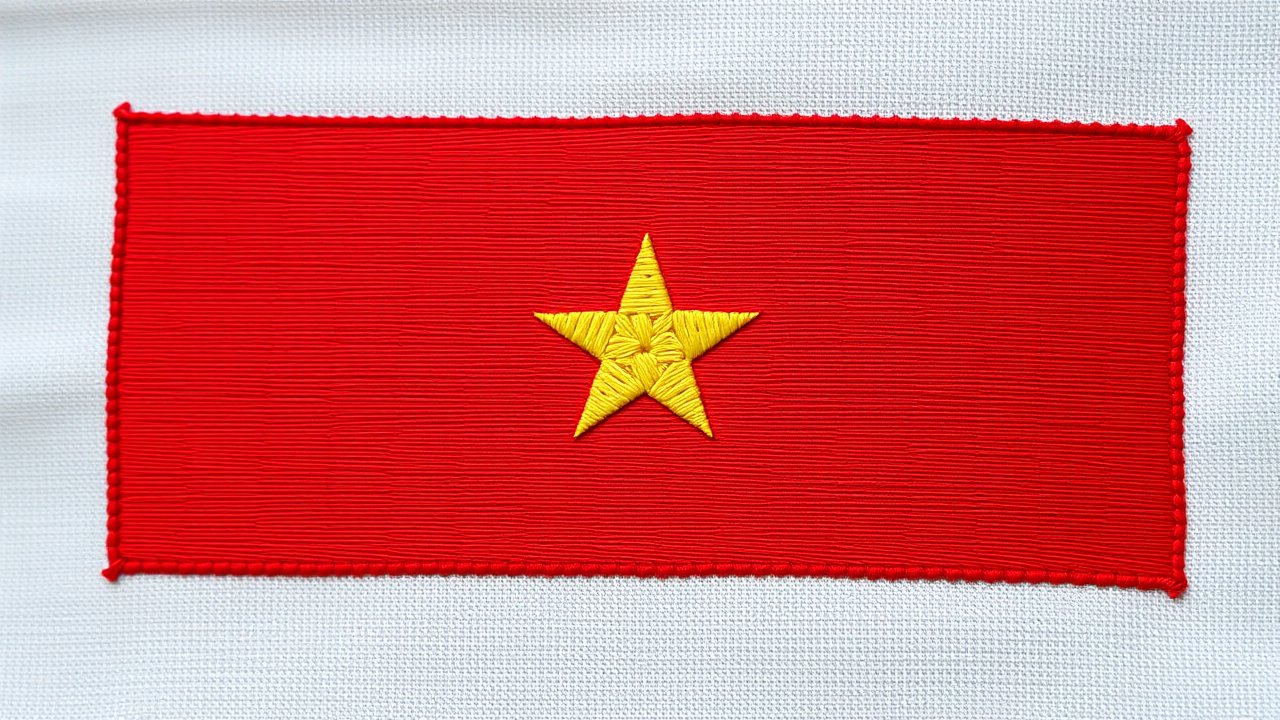
Embroidered Textile — Red field with a large yellow five-pointed star centered. The flag of Vietnam as intricate embroidery on linen fabric. Red field with a large yellow five-pointed star centered. Dense satin stitches, French knots, chain stitch detail. The flag design is completely faithful — exact colors, geometry, and all symbols faithfully stitched, immediately recognizable as the Vietnam flag. Visible thread texture, dimensional quality, warm handcrafted feel. No text, no letters, no words, no writing of any kind.

Flagpole in Capital — Red field with a large yellow five-pointed star centered. Photorealistic photograph of the Vietnam flag flying on a tall flagpole in front of an iconic government building in the capital city. Red field with a large yellow five-pointed star centered. The flag ripples naturally in the wind, colors vivid and exact. Documentary photography style, sharp and realistic. Grand architecture in the background. Blue sky, dramatic clouds. No text, no letters, no words, no writing of any kind.

Golden Hour Reflection — Red field with a large yellow five-pointed star centered. Photorealistic photograph of the Vietnam flag reflected in still water at golden hour. Red field with a large yellow five-pointed star centered. The flag flies on a pole at the water’s edge, its reflection shimmering on the surface below. Warm amber and orange sunset light. The flag colors and design are faithful and vivid. Serene, cinematic landscape photography. No text, no letters, no words, no writing of any kind.
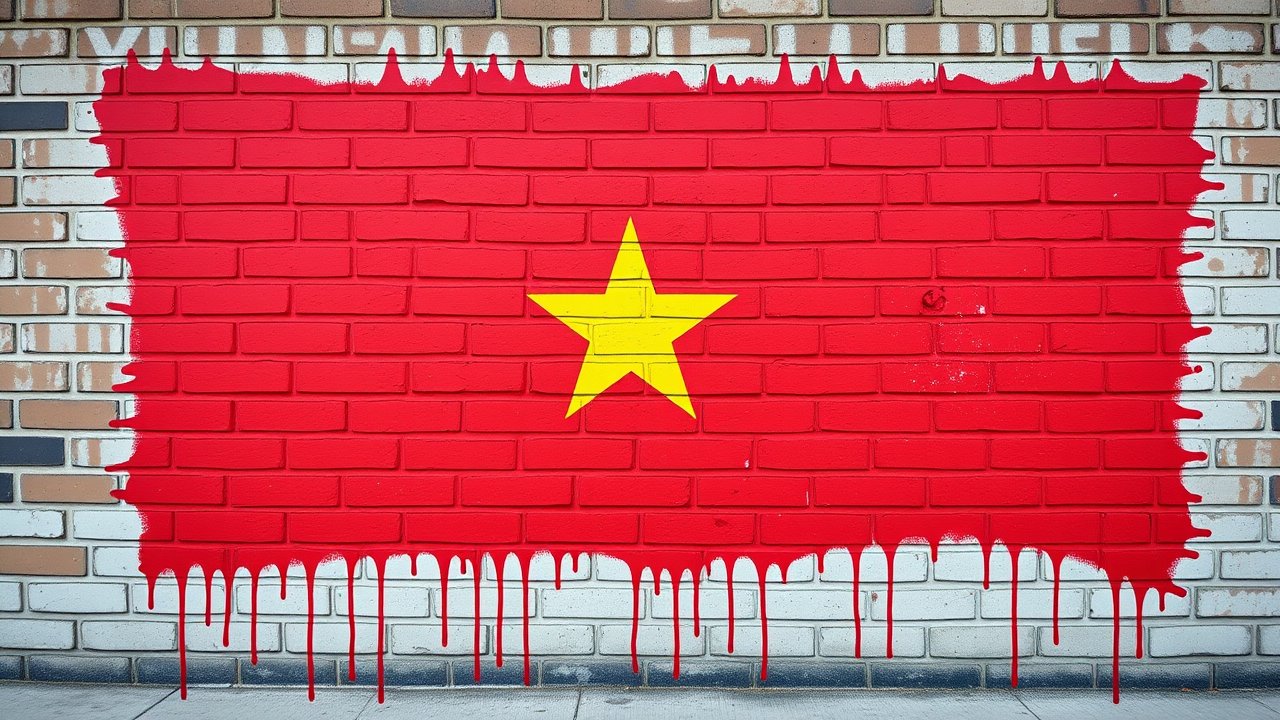
Street Art / Graffiti — Red field with a large yellow five-pointed star centered. The flag of Vietnam as vibrant street art spray-painted on a brick wall. Red field with a large yellow five-pointed star centered. Bold spray paint, dripping edges, stencil layers, overspray halos. The flag design is faithful and immediately recognizable — exact colors and symbols, just rendered in spray paint on urban concrete. No text, no letters, no words, no writing of any kind. No tags, no graffiti lettering.

Sci-Fi Hologram — Red field with a large yellow five-pointed star centered. The flag of Vietnam projected as a futuristic holographic display. Red field with a large yellow five-pointed star centered. Translucent blue-white projection with scan lines, floating in dark space. Glitching edges, particle effects, data streams. The flag design is completely faithful and recognizable. Cyberpunk HUD elements framing the projection. No text, no letters, no words, no writing of any kind.

Hyperrealistic Wind — Red field with a large yellow five-pointed star centered. Ultra-hyperrealistic photograph of the Vietnam flag caught in a dramatic gust of wind. Red field with a large yellow five-pointed star centered. Macro-level fabric detail — individual threads visible, fabric folds and tension lines crisp. Colors and design completely faithful to the real Vietnam flag. High-speed shutter, razor-sharp focus, studio lighting. No text, no letters, no words, no writing of any kind.
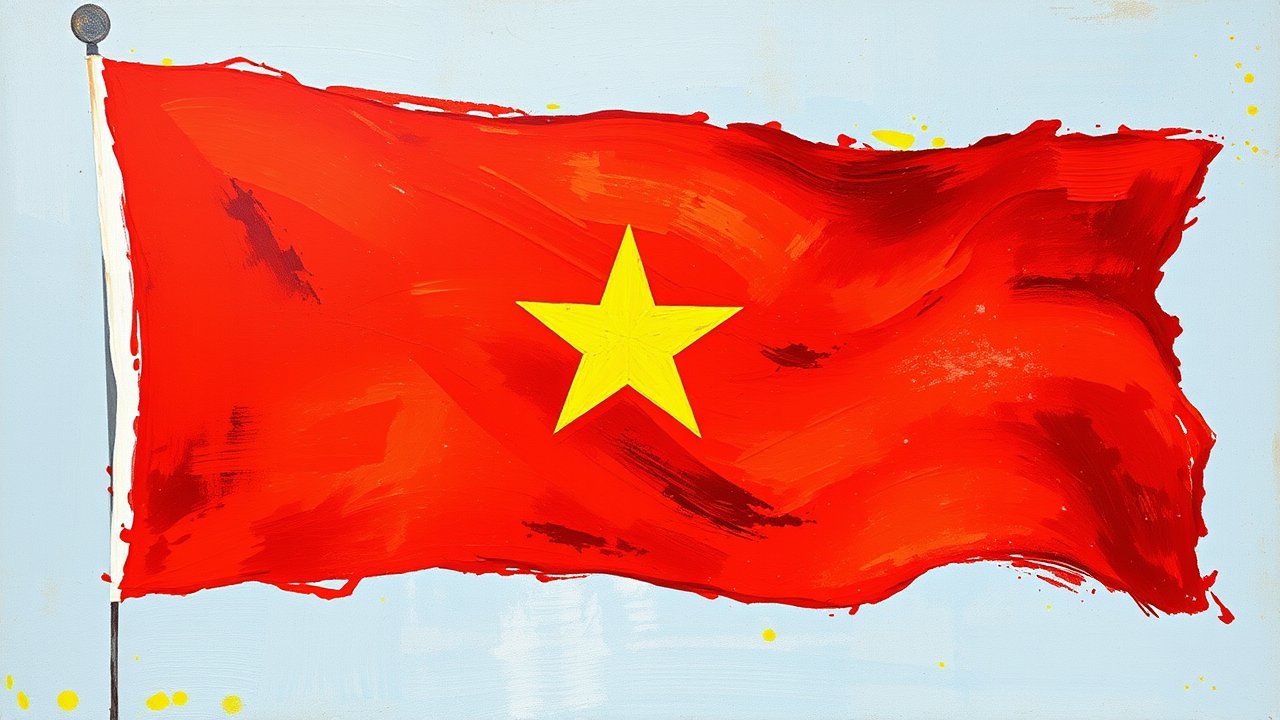
Impressionist Oil — Red field with a large yellow five-pointed star centered. The flag of Vietnam painted in French Impressionist oil on canvas. Red field with a large yellow five-pointed star centered. Thick impasto brushstrokes, dappled light, vibrant broken color technique in the style of Monet. The flag is instantly recognizable — colors and design faithful to the real Vietnam flag, interpreted with impressionist light and texture. No text, no letters, no words, no writing of any kind.

Lego Bricks — Red field with a large yellow five-pointed star centered. The flag of Vietnam built from Lego bricks, photographed as a real physical construction. Red field with a large yellow five-pointed star centered. Visible studs and brick seams, slight plastic sheen. Standard Lego colors approximate the flag’s palette. Built on a gray Lego baseplate. Dramatic angle showing the three-dimensional brick texture. No text, no letters, no words, no writing of any kind.

Low-Poly Geometric — Red field with a large yellow five-pointed star centered. The flag of Vietnam constructed from low-polygon geometric triangles. Red field with a large yellow five-pointed star centered. Aggressively faceted — each region broken into many visible triangular faces with subtle color variation across each polygon, creating real depth and dimensionality even in flat-color areas of the flag. Crystal-like, contemporary computational design. The flag is completely faithful and immediately recognizable. No text, no letters, no words, no writing of any kind.
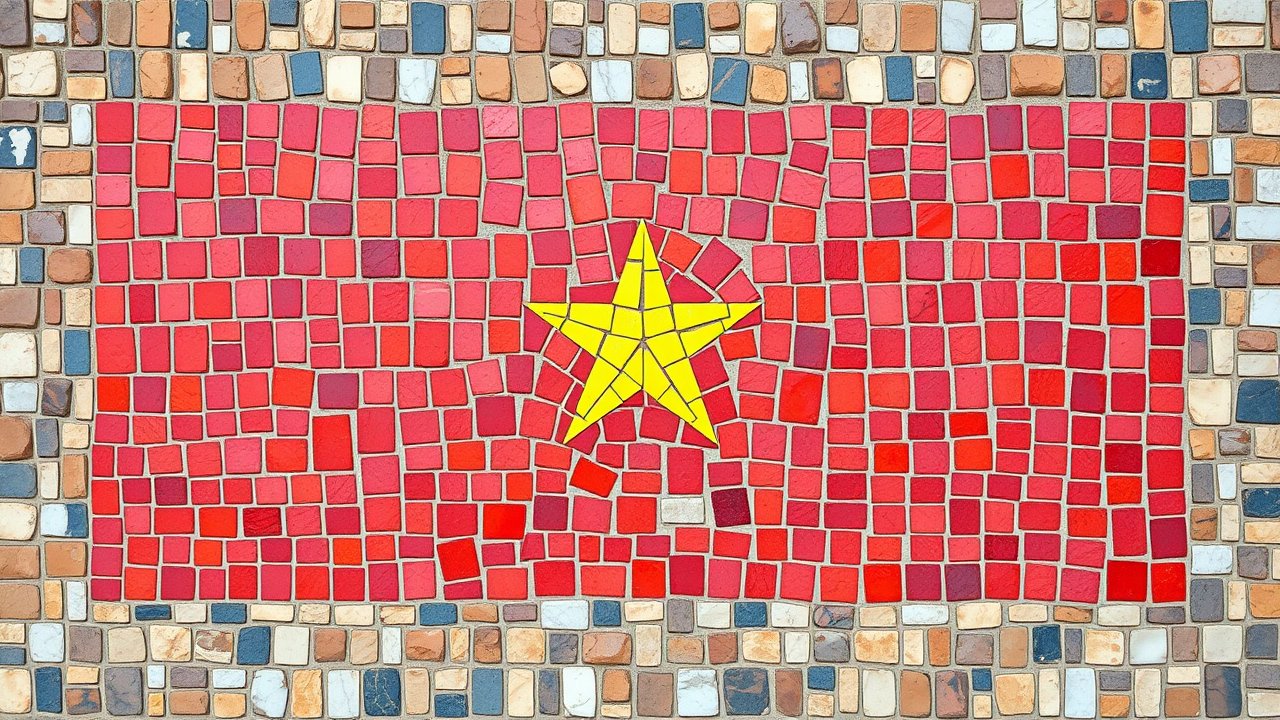
Mosaic Tiles — Red field with a large yellow five-pointed star centered. The flag of Vietnam assembled as a Roman-style mosaic. Red field with a large yellow five-pointed star centered. The flag is completely faithful to the real Vietnam flag — exact proportions, colors, and all symbols, rendered in thousands of small stone and glass tesserae. Visible grout lines, rich earthy tones mixed with brilliant glass, slight historical weathering. No text, no letters, no words, no writing of any kind.

Native Landscape — Red field with a large yellow five-pointed star centered. Photorealistic photograph of the Vietnam flag flying in an iconic natural landscape native to Vietnam — the terrain, flora, and environment characteristic of that country. Red field with a large yellow five-pointed star centered. The flag is prominent and its colors are faithful and vivid. Remote, uninhabited wilderness. National Geographic photography style. No text, no letters, no words, no writing of any kind.

Neon Sign — Red field with a large yellow five-pointed star centered. The flag of Vietnam recreated as a real neon sign mounted on a dark wall. Red field with a large yellow five-pointed star centered. Glowing glass neon tubes bent into the flag’s shapes — the colors of the flag rendered in actual neon light. Visible glass tube bends, metal mounting brackets on the wall. Warm neon glow and light bloom. Real neon, not digital. Photographed in a dark room. No text, no letters, no words, no writing of any kind.
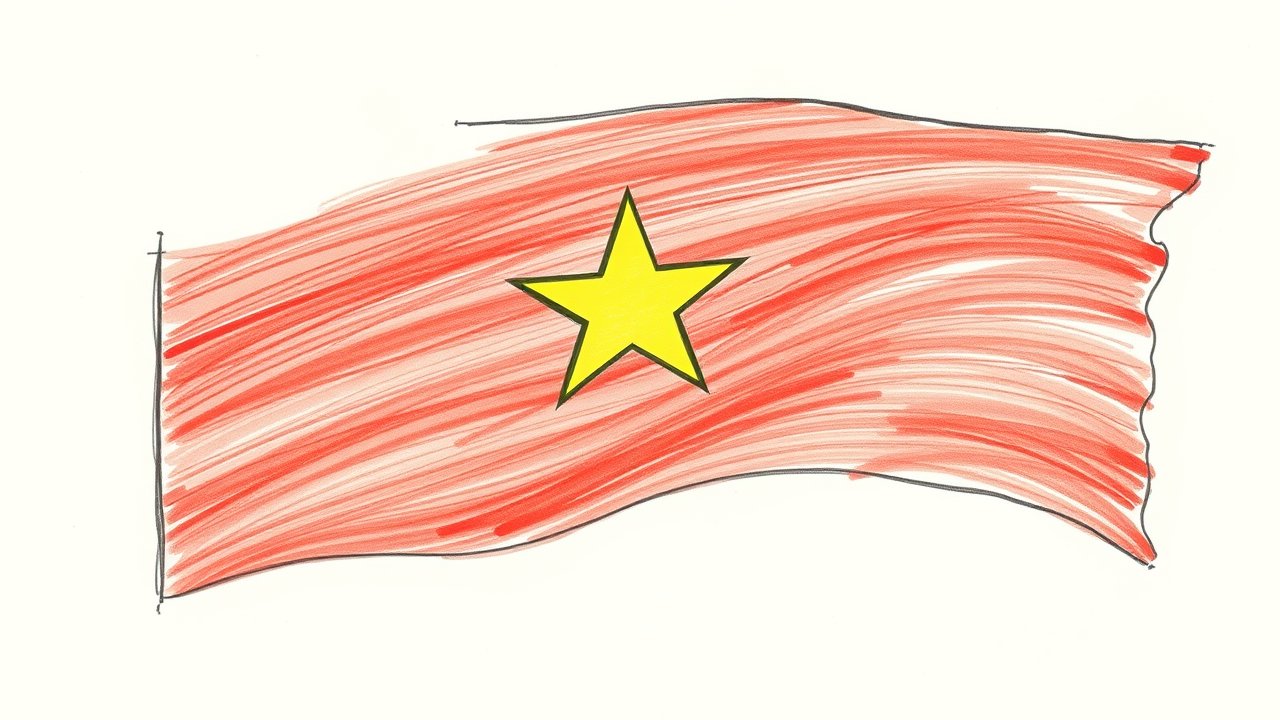
Pencil Sketch — Red field with a large yellow five-pointed star centered. The flag of Vietnam as a bold, confident pencil sketch. Red field with a large yellow five-pointed star centered. Strong graphite lines on cream paper — not delicate but bold and decisive. Heavy pressure on key outlines, dramatic cross-hatching for deep shadows and shading. Immediately recognizable as the Vietnam flag. Artist’s confident hand, not tentative. No text, no letters, no words, no writing of any kind.
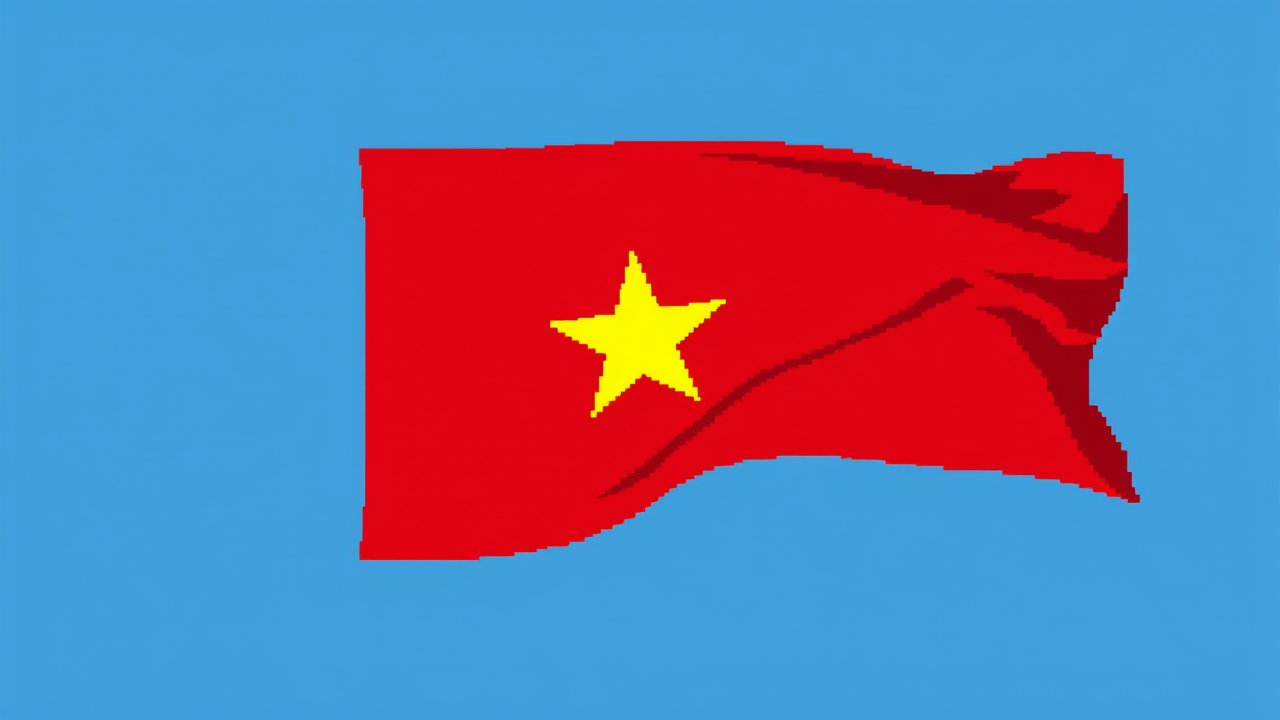
Pixel Art — Red field with a large yellow five-pointed star centered. The flag of Vietnam as detailed 16-bit pixel art. Red field with a large yellow five-pointed star centered. Crisp pixel grid, limited palette with careful dithering, nostalgic retro game aesthetic. Clean grid-aligned design with subtle shading. Every element of the flag faithfully reproduced in pixels. No text, no letters, no words, no writing of any kind.
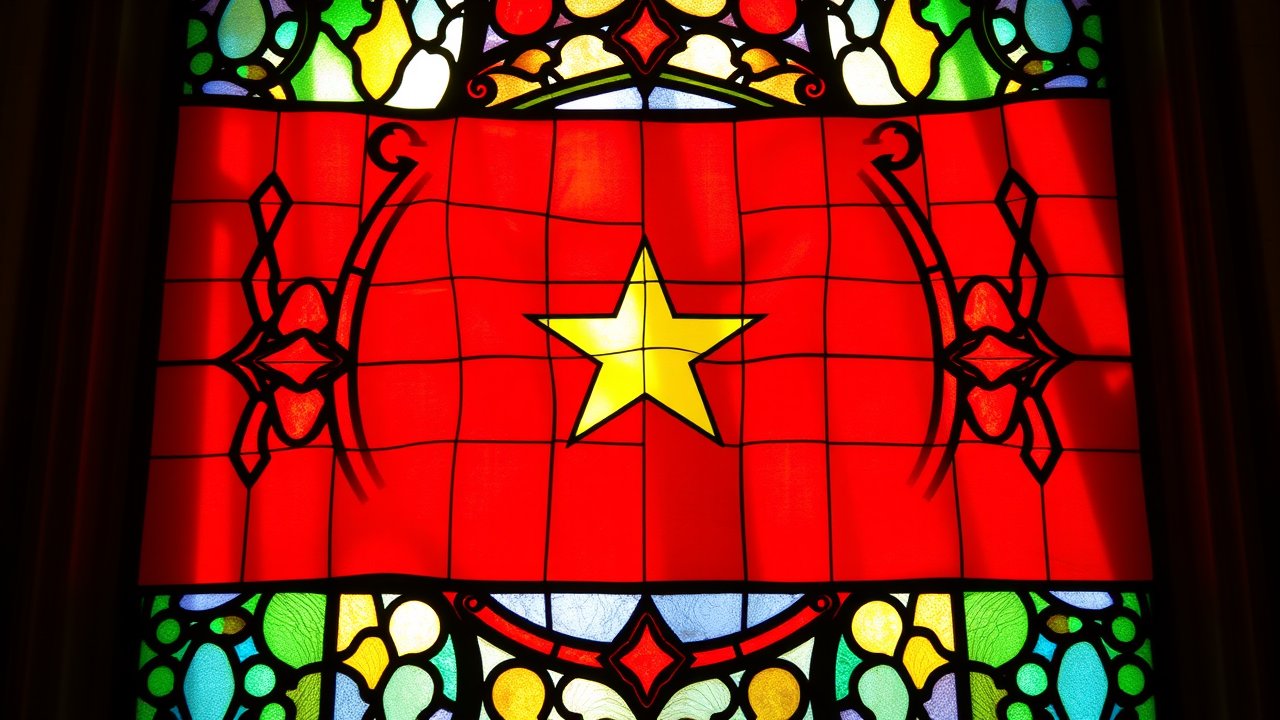
Stained Glass — Red field with a large yellow five-pointed star centered. The flag of Vietnam rendered as an ornate stained glass window. Red field with a large yellow five-pointed star centered. The design is completely faithful to the real Vietnam flag — exact colors, geometry, and all symbols preserved. Brilliant jewel-toned glass pieces separated by dark lead came lines. Warm sunlight streaming through, casting colored light. Gothic cathedral craftsmanship. No text, no letters, no words, no writing of any kind.
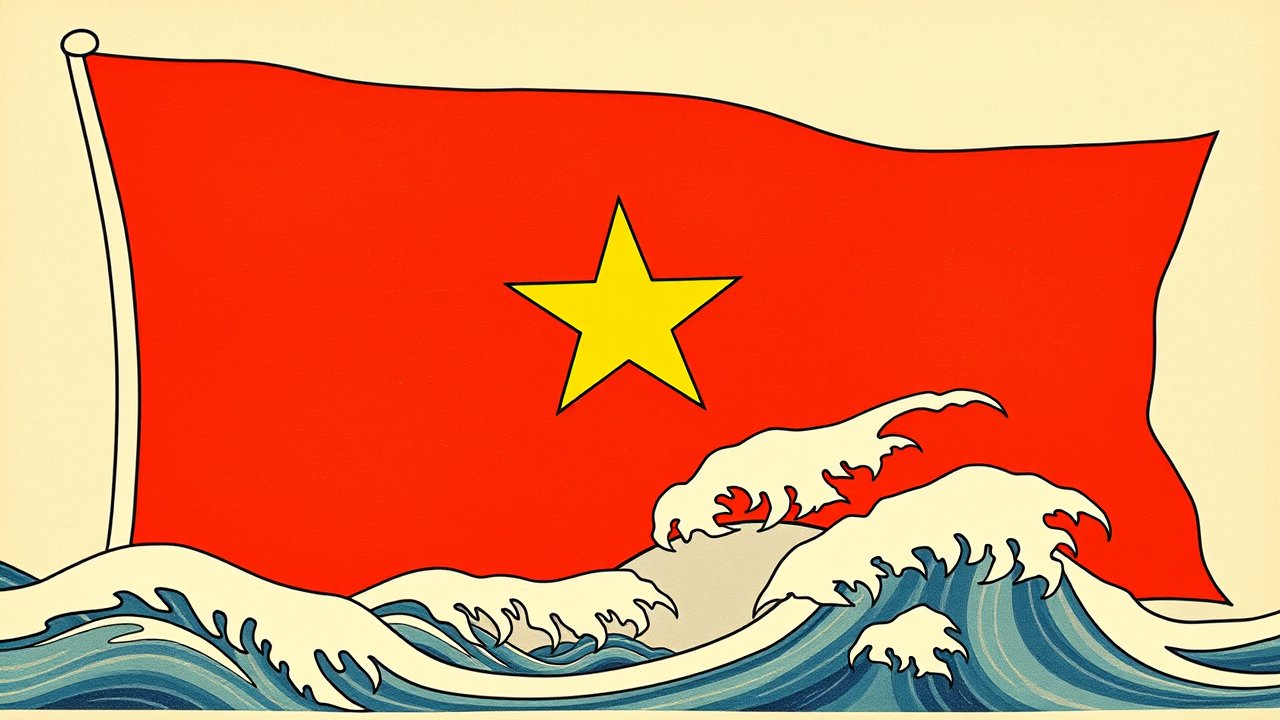
Ukiyo-e Woodblock — Red field with a large yellow five-pointed star centered. The flag of Vietnam as a traditional Japanese ukiyo-e woodblock print. Red field with a large yellow five-pointed star centered. Bold outlines, flat areas of rich color, flowing organic forms. Wind and waves incorporated into the composition. Printed on washi paper with visible wood grain texture. The flag is the central focus and instantly recognizable. No text, no letters, no words, no writing of any kind.
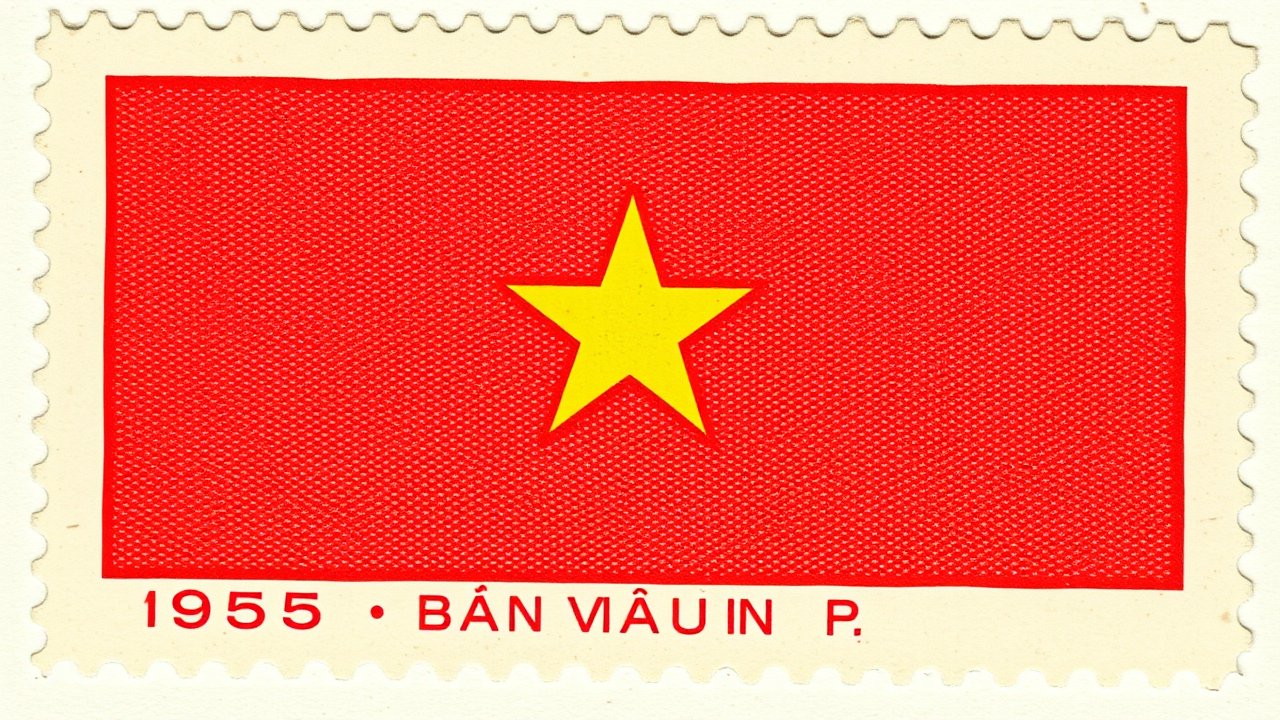
Vintage Postage Stamp — Red field with a large yellow five-pointed star centered. The flag of Vietnam as a vintage 1950s postage stamp. Red field with a large yellow five-pointed star centered. The flag fills most of the stamp — it is the primary subject, faithfully rendered in fine engraved intaglio style. Perforated edges, aged paper with slight foxing. The stamp may show a denomination numeral only — absolutely no other text or country names.
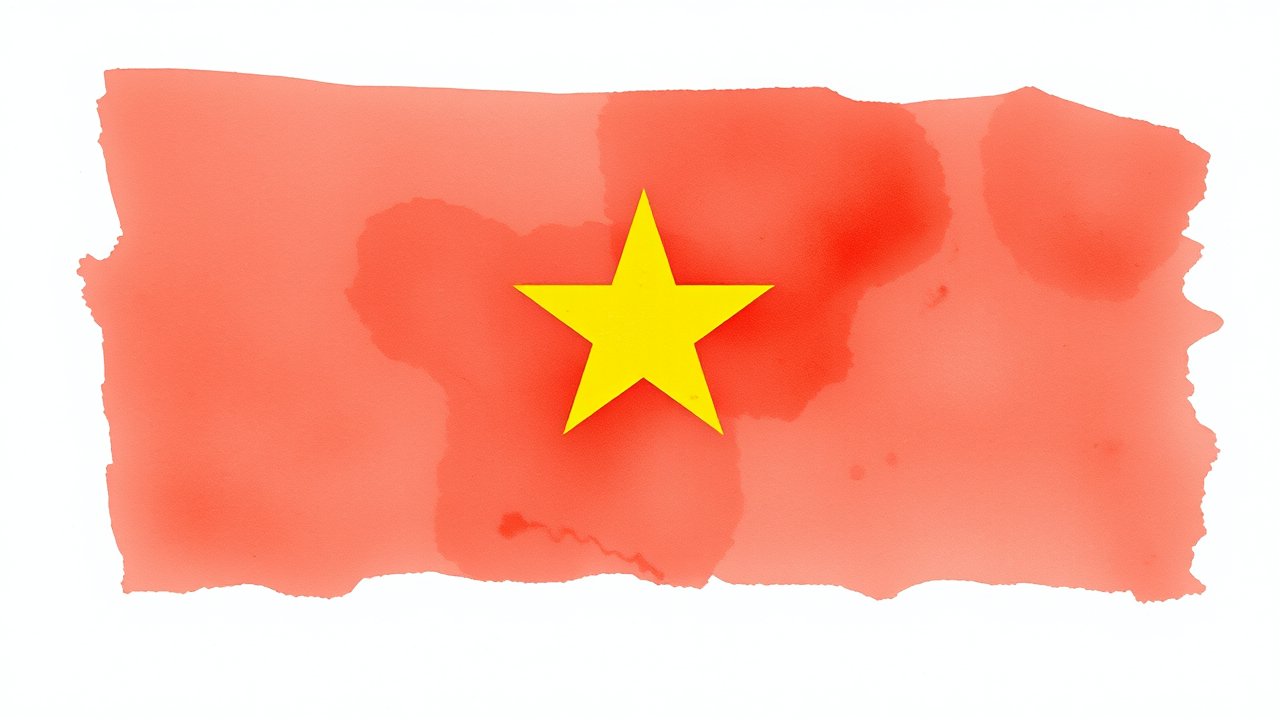
Watercolor — Red field with a large yellow five-pointed star centered. The flag of Vietnam painted in loose, expressive watercolor. Red field with a large yellow five-pointed star centered. Wet-on-wet technique with soft color bleeds, visible brushstrokes, natural paper texture. Delicate splashes and drips at the edges. Luminous, translucent layers of pigment. No text, no letters, no words, no writing of any kind.
The Golden Star: Vietnam’s Flag and the Path to National Independence
The flag of Vietnam, featuring a striking red field with a single large yellow five-pointed star centered in the middle, stands as one of Southeast Asia’s most recognizable national symbols. This elegant yet powerful design carries profound historical significance, embodying centuries of Vietnamese resistance against foreign domination, the struggles of the independence movement, and the nation’s journey toward sovereignty and reunification. The flag represents not merely a political emblem but a symbol of the Vietnamese people’s determination, sacrifice, and enduring national identity. Understanding Vietnam’s flag requires examining its origins during the anti-colonial struggle, decoding the symbolism embedded in its simple but striking design, tracing its evolution through the nation’s tumultuous twentieth century, and recognizing its current role as a unifying symbol for over one hundred million Vietnamese citizens.
Origins in the Anti-Colonial Struggle and the Viet Minh
The origins of Vietnam’s contemporary flag are inextricably linked to the struggle against French colonial rule and the rise of Ho Chi Minh’s nationalist movement in the early twentieth century. Vietnam had been under French colonial administration since the late nineteenth century, with France consolidating control over the region (known as French Indochina) and imposing direct foreign rule over Vietnamese territories. This colonial period, spanning nearly a century, witnessed the exploitation of Vietnamese resources, the suppression of Vietnamese cultural identity, and the systematic subordination of the Vietnamese people to French administrative and economic interests. By the 1930s and 1940s, nationalist sentiment among Vietnamese intellectuals and resistance fighters had reached a critical point, seeking to reclaim independence and restore Vietnamese sovereignty.
The Viet Minh, a nationalist coalition led by Ho Chi Minh and founded in 1941, emerged as the primary resistance organization against both French colonial rule and Japanese occupation during World War II. The red flag with the yellow star became the symbol of the Viet Minh movement, representing the party’s commitment to communist ideology and the unity of the Vietnamese people in their fight for independence. The red color symbolized the blood spilled by countless Vietnamese resistance fighters and civilians suffering under colonialism, while the single yellow star represented the unified Vietnamese nation and the Communist Party’s vision of a single, indivisible state under one political leadership. This flag was not officially adopted as a national symbol immediately, but rather emerged organically from the nationalist resistance movement as a powerful rallying symbol that unified disparate regions and social groups around the cause of independence.
The Flag’s Adoption and Early National Use
When France attempted to reassert colonial control after World War II, the Viet Minh launched a full-scale independence war that lasted from 1946 to 1954. During this fierce conflict, often known as the First Indochina War, the red flag with the yellow star became increasingly associated with the nationalist cause and the promise of a free Vietnam. As the Viet Minh gained military and political momentum, the flag gained international recognition as the symbol of the emerging Vietnamese nation. The decisive Viet Minh victory at Dien Bien Phu in 1954, where Vietnamese forces defeated the French army in a stunning military triumph, effectively ended French colonial rule and vindicated the nationalist movement that had carried the flag.
In 1955, following the Geneva Accords that formally ended French colonial rule, the red flag with the yellow star was officially adopted as the national flag of North Vietnam, the Democratic Republic of Vietnam established under Ho Chi Minh’s leadership. This official adoption transformed a revolutionary symbol into a state emblem, marking the culmination of decades of struggle and sacrifice. The flag now flew over government buildings, was displayed at international forums, and appeared on military uniforms and official documents. For North Vietnamese citizens, the flag represented the achievement of independence—a tangible symbol of national aspirations finally realized after generations of resistance and struggle against external domination.
Division and the Flag During Vietnam’s Cold War Era
The Geneva Accords that established North Vietnam also created a temporary division of the country, with South Vietnam emerging as a separate political entity under anti-communist leadership. This division, intended to be temporary pending nationwide elections for reunification in 1956, hardened into a permanent split as Cold War tensions intensified and elections never occurred. South Vietnam adopted a different flag, while North Vietnam retained the red flag with the yellow star. For two decades, between 1954 and 1975, Vietnam was effectively two nations with competing flags, each claiming to represent the true Vietnamese nation and people.
The Vietnam War (1955-1975), known to North Vietnam as the American War, became one of the twentieth century’s most devastating conflicts. The red flag with the yellow star became the symbol of North Vietnamese resistance during this extended conflict, carried into battle by soldiers, displayed at anti-war rallies internationally, and recognized worldwide as the symbol of Vietnamese nationalism and the struggle against American military intervention. Throughout the war years, this flag represented North Vietnam’s determination to reunify the country under communist leadership, regardless of the enormous human and material costs of the conflict. The flag appeared in photographs and films documenting the war, becoming deeply embedded in global consciousness as a symbol of Vietnamese defiance and determination.
Symbolism: The Red and the Yellow Star
The symbolism of Vietnam’s flag operates on multiple levels, combining communist ideological significance with broader nationalist meaning. The red field represents the blood shed by Vietnamese ancestors and contemporary resistance fighters in their long struggle for national independence and freedom from foreign rule. This red carries emotional and historical weight, evoking the sacrifices of countless soldiers, resistance fighters, and civilian victims who suffered under colonialism and during the brutal war for reunification. The red encompasses centuries of Vietnamese struggle against foreign powers, from ancient resistance against Chinese dominion through French colonialism and American intervention.
The single large yellow five-pointed star centered on the red field carries equally significant symbolism. The five points of the star have been interpreted in various ways, with the most common explanation being that they represent the five social classes united under communism: workers, peasants, intellectuals, soldiers, and youth. The star’s unity and prominence symbolize the indivisibility of the Vietnamese nation and people, the goal of bringing all Vietnamese under one government and one national identity. The yellow color of the star contrasts strikingly with the red background, creating visual impact and suggesting brightness, hope, and the promise of a better future—ideals central to the Vietnamese revolutionary vision. Unlike some flags that accumulate multiple symbols or undergo frequent modifications, Vietnam’s flag maintains elegant simplicity: just the red field and one yellow star, a design so fundamental and clean that it cannot be easily modified or compromised.
Reunification and the Modern Flag
The North Vietnamese military victory in 1975 and the fall of Saigon marked the end of the Vietnam War and the beginning of national reunification. On May 1, 1975, following the collapse of South Vietnamese government and the surrender of South Vietnamese forces, North Vietnam’s flag was raised over the captured city, now renamed Ho Chi Minh City in honor of the revolutionary leader. The red flag with the yellow star, which had represented North Vietnam and the nationalist cause, became the official flag of the unified nation—the Socialist Republic of Vietnam established in 1976. This moment represented the ultimate vindication of the flag’s symbolism: after decades of struggle, sacrifice, and warfare, the flag of the revolutionary movement had triumphed and now represented an entire reunified nation.
Since reunification, Vietnam’s flag has remained unchanged in design, maintaining the same red field and yellow five-pointed star that emerged from the independence struggle. Unlike many nations that modify their flags to reflect changing political circumstances or values, Vietnam has preserved the exact design from the Viet Minh era, demonstrating the enduring symbolic power of this simple yet profound design. The flag today represents not merely a communist state but the identity of the entire Vietnamese nation, encompassing citizens of varied political views and perspectives. The flag serves as the symbol under which all Vietnamese, regardless of individual political beliefs or family histories during the war era, gather as members of a unified nation.
Conclusion: A Symbol of Struggle and Unity
The red flag with the yellow star stands as one of the world’s most historically significant national flags, encoding within its simple design nearly a century of Vietnamese struggle for independence, national dignity, and self-determination. From its origins in the Viet Minh resistance movement through decades of colonial war and Cold War conflict to its ultimate triumph with national reunification, the flag has symbolized the Vietnamese people’s unwavering commitment to independence and unity. The red represents sacrifice, struggle, and the price paid for national sovereignty, while the yellow star represents hope, unity, and the promise of a nation indivisible and free to determine its own destiny. Today, whether displayed at official ceremonies, carried by diaspora communities worldwide, or flown during national celebrations, Vietnam’s flag remains a powerful reminder of how a unified people, armed with a compelling national vision and symbol, can overcome centuries of external domination and achieve their aspirations for independence and national greatness.
Free Printable: Flags of the World Reference Card
Get a beautiful printable poster with 50 flag emojis, Unicode codes, and fun facts. Perfect for classrooms and desks!
No spam, ever. Unsubscribe anytime.