Standard Emoji:
How To
Time needed: 1 minute
How to copy and paste the Pride Flag Emoji to any device.
- Copy the Rainbow (Pride) Flag Emoji
Go to flagemoji.com and press the copy button (above). This works on any device.
- Paste the Emoji
Go to your email/iMessage/SMS texting service/document and paste the emoji.
For mobile devices
— double-tap or tap-hold, then paste should appear. Tap it.
For desktop and laptops on Apple devices
— Command-V (⌘-V)
For desktop and laptops on Windows devices
— Ctrl-V
Description
Want the full printable classroom pack?
Take the flag reference from your screen to an offline pack for lessons, practice, and quiz time.
- Printable atlas with 230+ high-resolution flag flats
- Four regional quizzes with answer keys
- Flag Bingo boards and caller sheet
Flag Description
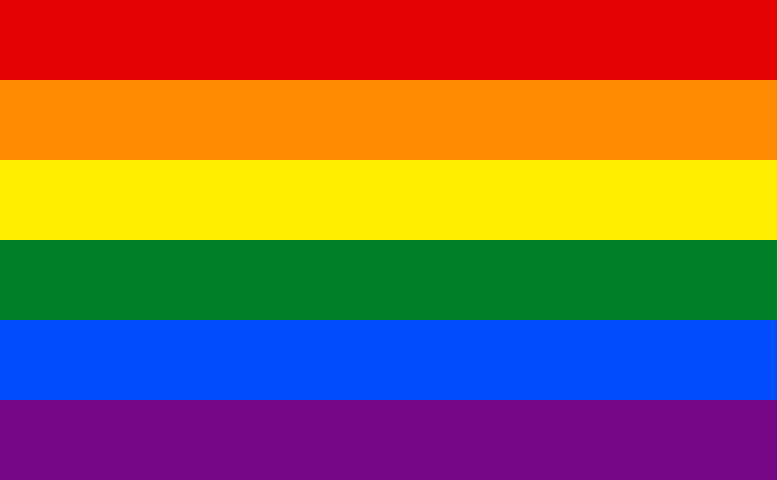
A Pride flag refers to a flag that represents any segment of the LGBTQ (lesbian, gay, bisexual, transgender, queer) community. The most recognizable is the Rainbow flag. The LGBTQ community generally celebrates pride, diversity, individuality, and sexuality. The rainbow flag features six horizontal stripes in bright colors from top to bottom: red, orange, yellow, green, blue, and purple.
FAQ
FAQs
Gay pride is celebrated all through the year, but especially in the month of June.
On November 2, 1969, Craig Rodwell, his partner Fred Sargeant, Ellen Broidy, and Linda Rhodes proposed the first pride march to be held in New York City.
There are six colors in the Rainbow flag. From top to bottom they are: red, orange, yellow, green, blue, and purple.
The original Gay Pride flag was first displayed at the San Francisco Gay Freedom Day Parade in 1978 and had eight stripes.
Anthem
Pride Anthems
| Title | I Will Survive, I’m Coming Out, Born This Way |
| Author | Gloria Gaynor, Diana Ross, Lady Gaga |
Codes
Emoji Codes
| Unicode | 🏳: U+1F3F3 Variation Selector-16: U+FE0F ZWJ: U+200D 🌈: U+1F308 |
| Shortcode | :rainbow_flag: |
| HTML hex | 🏳️🌈 |
| HTML dec | 🏳️🌈 |
| URL Escape Code | %F0%9F%8F%B3%EF%B8%8F%E2%80%8D%F0%9F%8C%88 |
| JavaScript & JSON | \ud83c\udff3\ufe0f\u200d\ud83c\udf08 |
| C, C++ & Java | \ud83c\udff3\ufe0f\u200d\ud83c\udf08 |
Printable
Printable Pride Flag
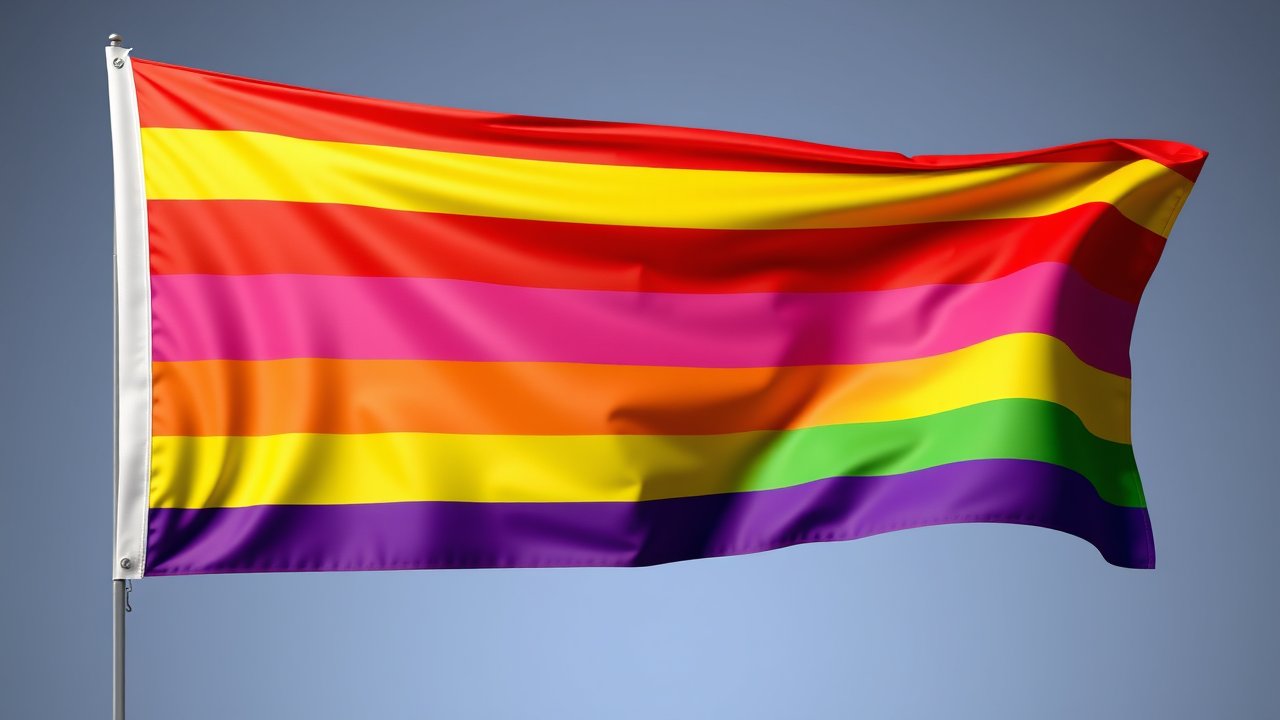
3D Glossy Render — Six horizontal stripes: red, orange, yellow, green, blue, and violet — the rainbow Pride flag representing LGBTQ+ communities. The flag of Pride as a photorealistic 3D render. Six horizontal stripes: red, orange, yellow, green, blue, and violet — the rainbow Pride flag representing LGBTQ+ communities. The flag fabric hangs or drapes naturally but preserves exact proportions, colors, and all symbols perfectly — completely faithful to the real Pride flag. Dramatic studio lighting, glossy silk material, soft shadows, subsurface scattering, perfect specular highlights. No text, no letters, no words, no writing of any kind.
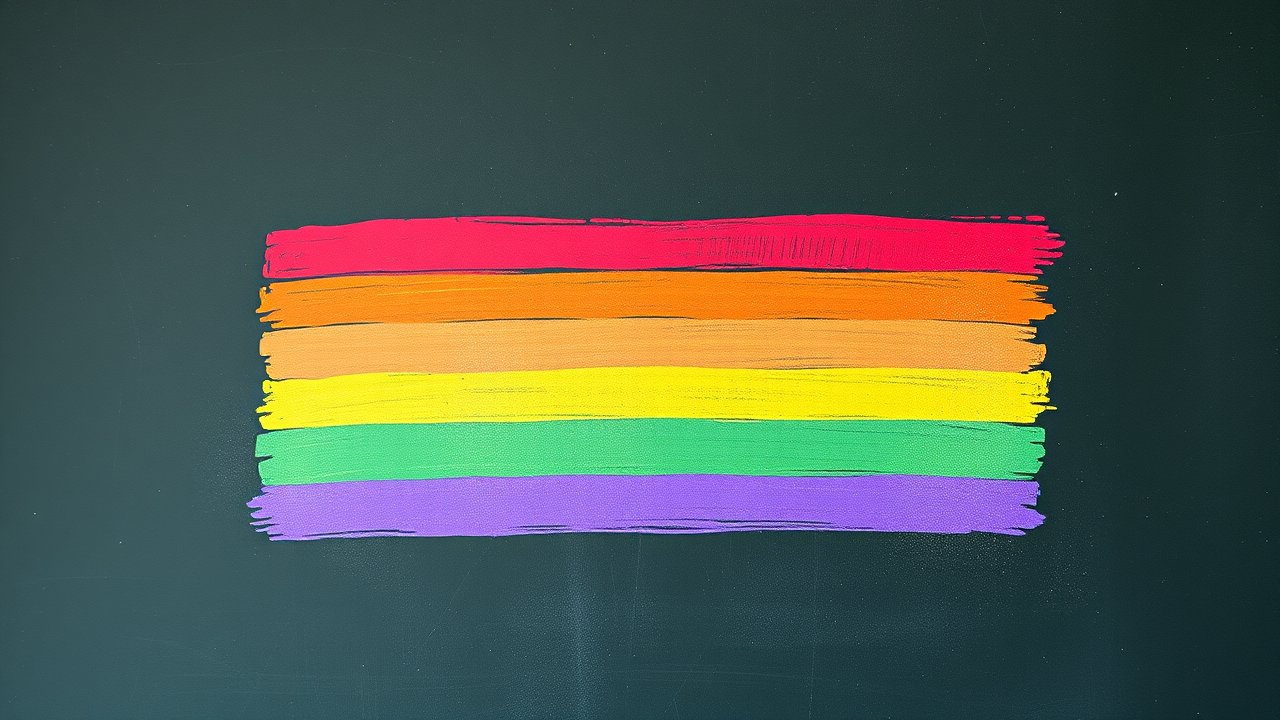
Chalk on Blackboard — Six horizontal stripes: red, orange, yellow, green, blue, and violet — the rainbow Pride flag representing LGBTQ+ communities. The flag of Pride drawn in chalk on a real blackboard. Six horizontal stripes: red, orange, yellow, green, blue, and violet — the rainbow Pride flag representing LGBTQ+ communities. Authentic blackboard — dark slate green surface with chalk dust and smudge marks. Soft, dusty white and colored chalk lines, imperfect edges, hand-drawn quality. Chalk dust particles visible in the air. The flag is immediately recognizable. No text, no letters, no words, no writing of any kind.
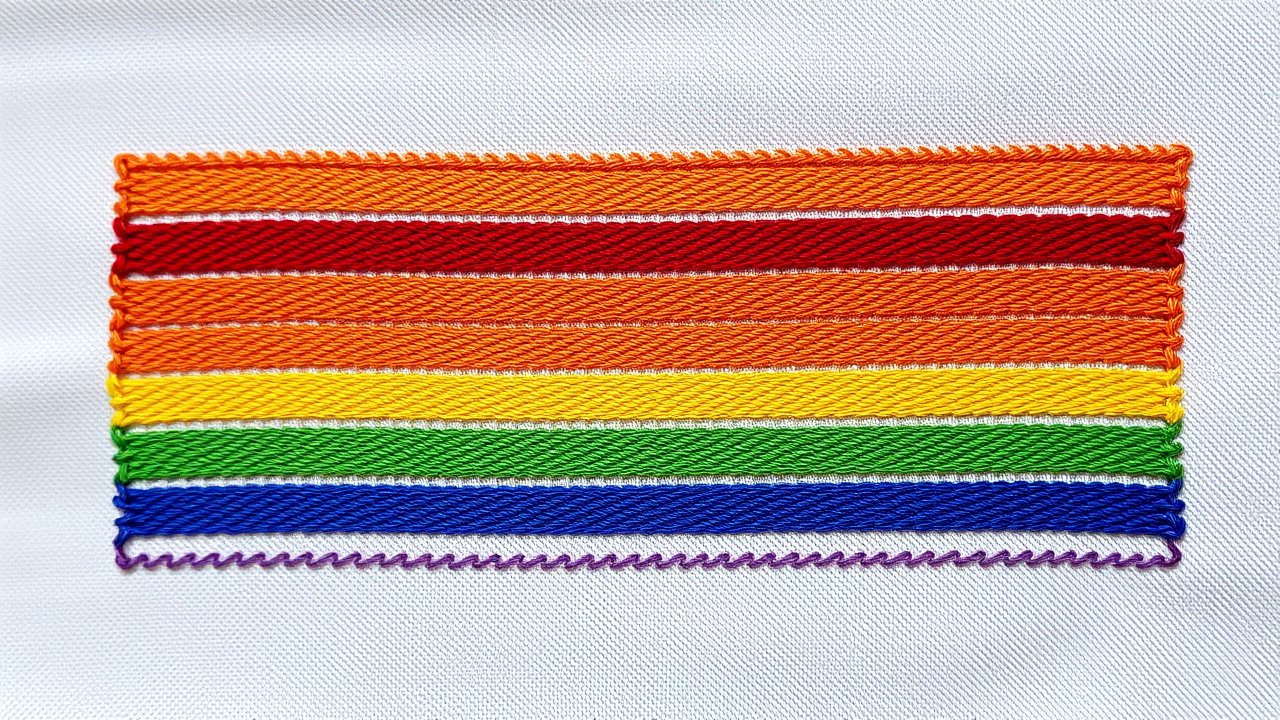
Embroidered Textile — Six horizontal stripes: red, orange, yellow, green, blue, and violet — the rainbow Pride flag representing LGBTQ+ communities. The flag of Pride as intricate embroidery on linen fabric. Six horizontal stripes: red, orange, yellow, green, blue, and violet — the rainbow Pride flag representing LGBTQ+ communities. Dense satin stitches, French knots, chain stitch detail. The flag design is completely faithful — exact colors, geometry, and all symbols faithfully stitched, immediately recognizable as the Pride flag. Visible thread texture, dimensional quality, warm handcrafted feel. No text, no letters, no words, no writing of any kind.
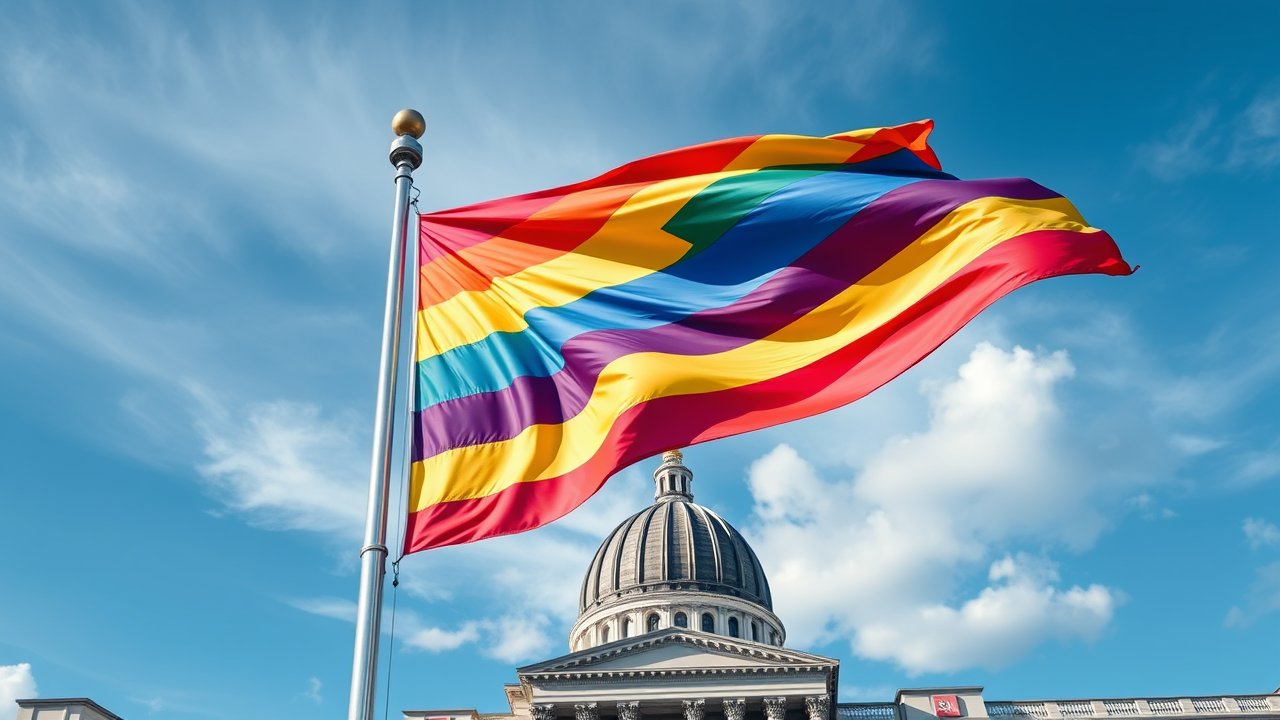
Flagpole in Capital — Six horizontal stripes: red, orange, yellow, green, blue, and violet — the rainbow Pride flag representing LGBTQ+ communities. Photorealistic photograph of the Pride flag flying on a tall flagpole in front of an iconic government building in the capital city. Six horizontal stripes: red, orange, yellow, green, blue, and violet — the rainbow Pride flag representing LGBTQ+ communities. The flag ripples naturally in the wind, colors vivid and exact. Documentary photography style, sharp and realistic. Grand architecture in the background. Blue sky, dramatic clouds. No text, no letters, no words, no writing of any kind.
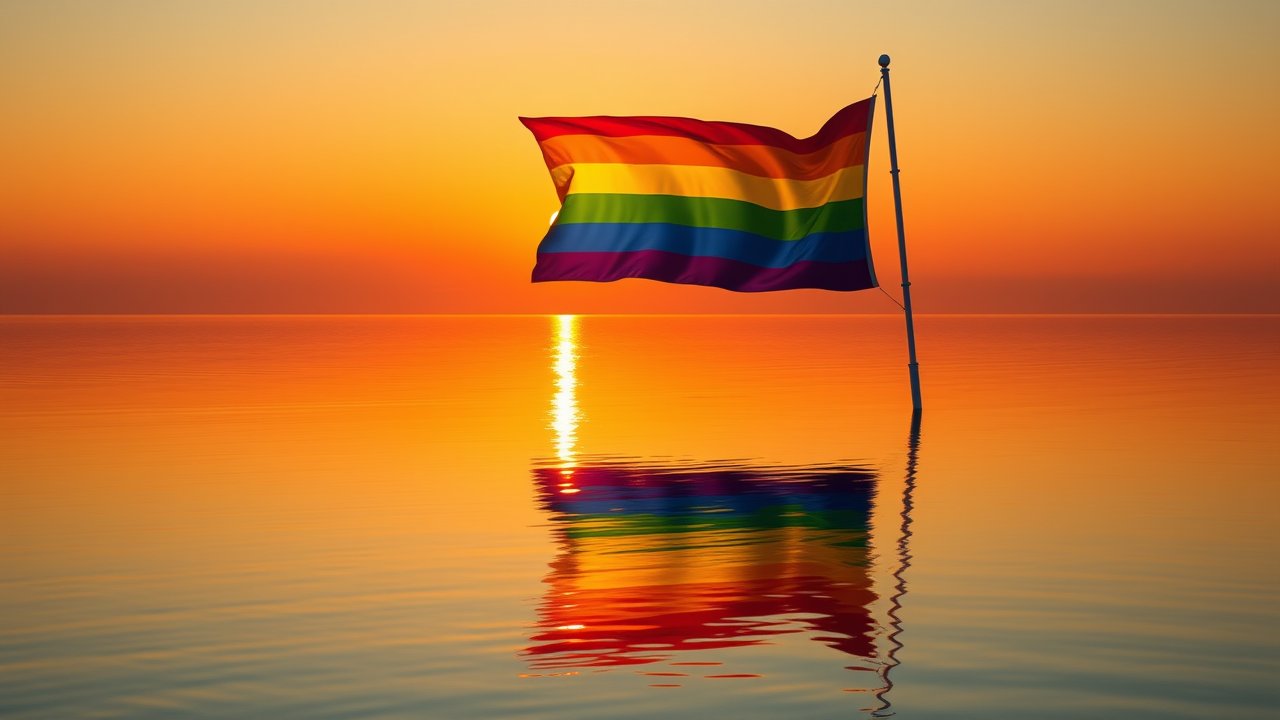
Golden Hour Reflection — Six horizontal stripes: red, orange, yellow, green, blue, and violet — the rainbow Pride flag representing LGBTQ+ communities. Photorealistic photograph of the Pride flag reflected in still water at golden hour. Six horizontal stripes: red, orange, yellow, green, blue, and violet — the rainbow Pride flag representing LGBTQ+ communities. The flag flies on a pole at the water’s edge, its reflection shimmering on the surface below. Warm amber and orange sunset light. The flag colors and design are faithful and vivid. Serene, cinematic landscape photography. No text, no letters, no words, no writing of any kind.
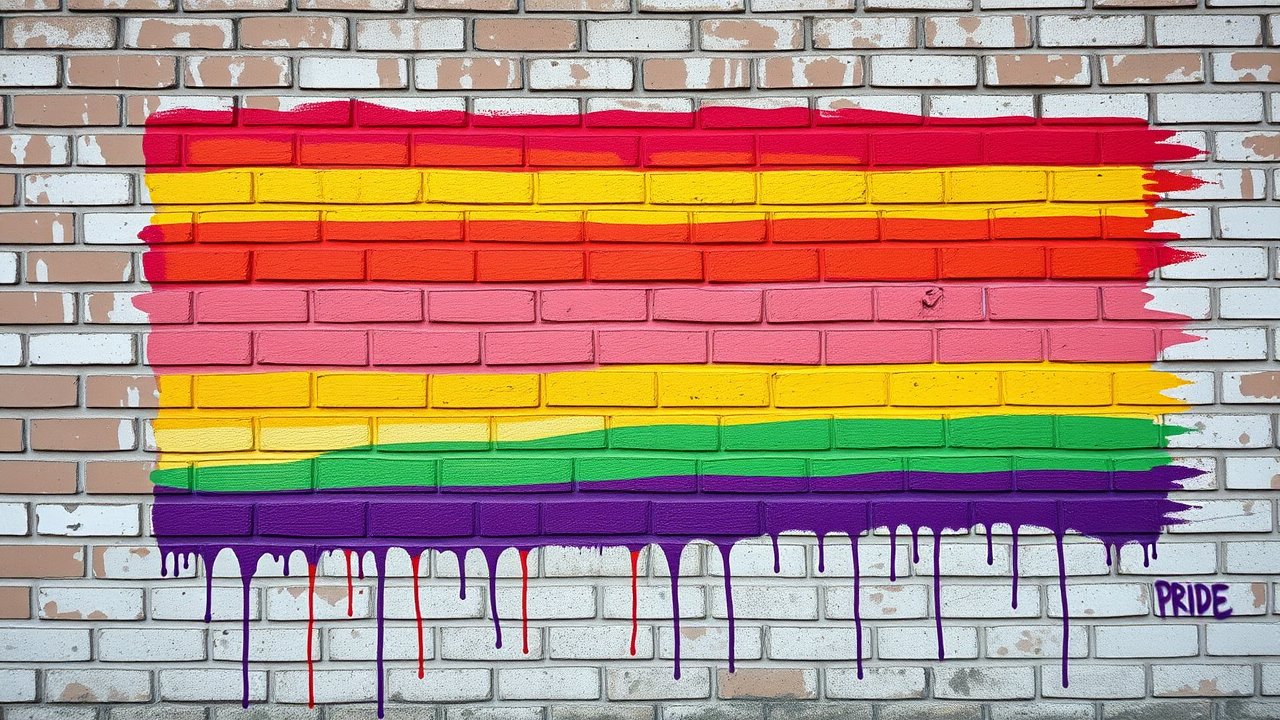
Street Art / Graffiti — Six horizontal stripes: red, orange, yellow, green, blue, and violet — the rainbow Pride flag representing LGBTQ+ communities. The flag of Pride as vibrant street art spray-painted on a brick wall. Six horizontal stripes: red, orange, yellow, green, blue, and violet — the rainbow Pride flag representing LGBTQ+ communities. Bold spray paint, dripping edges, stencil layers, overspray halos. The flag design is faithful and immediately recognizable — exact colors and symbols, just rendered in spray paint on urban concrete. No text, no letters, no words, no writing of any kind. No tags, no graffiti lettering.
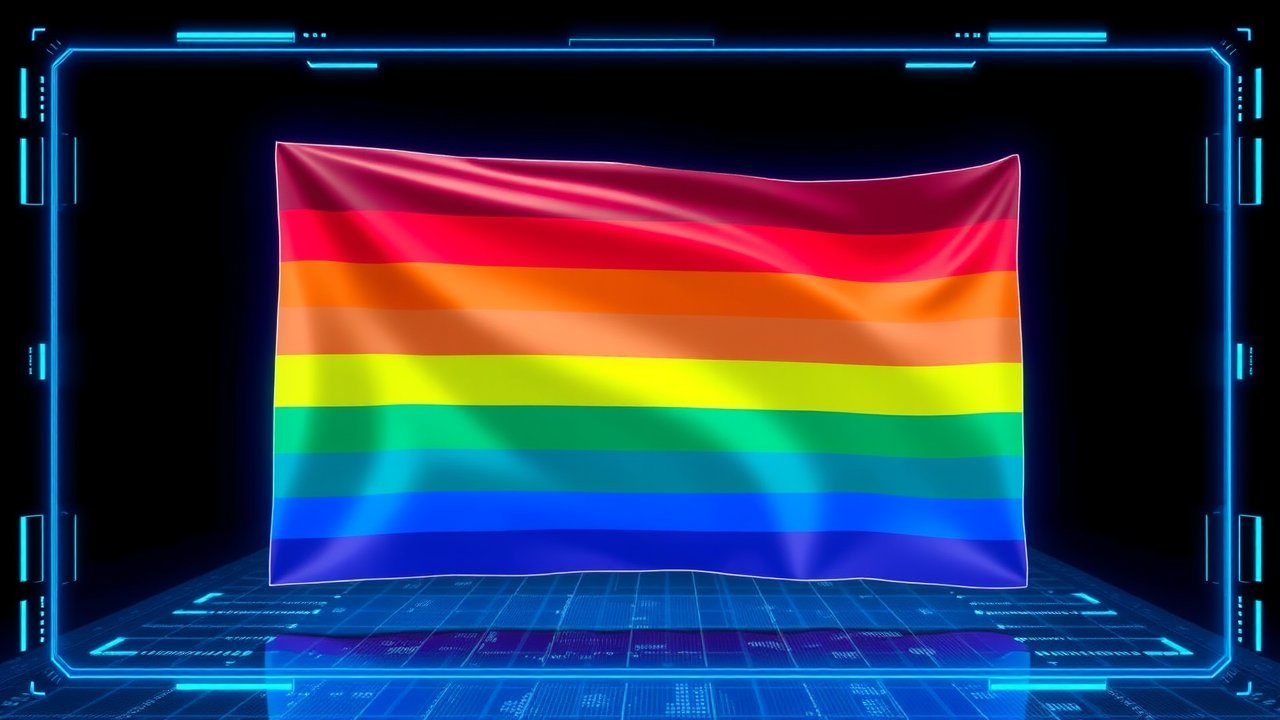
Sci-Fi Hologram — Six horizontal stripes: red, orange, yellow, green, blue, and violet — the rainbow Pride flag representing LGBTQ+ communities. The flag of Pride projected as a futuristic holographic display. Six horizontal stripes: red, orange, yellow, green, blue, and violet — the rainbow Pride flag representing LGBTQ+ communities. Translucent blue-white projection with scan lines, floating in dark space. Glitching edges, particle effects, data streams. The flag design is completely faithful and recognizable. Cyberpunk HUD elements framing the projection. No text, no letters, no words, no writing of any kind.
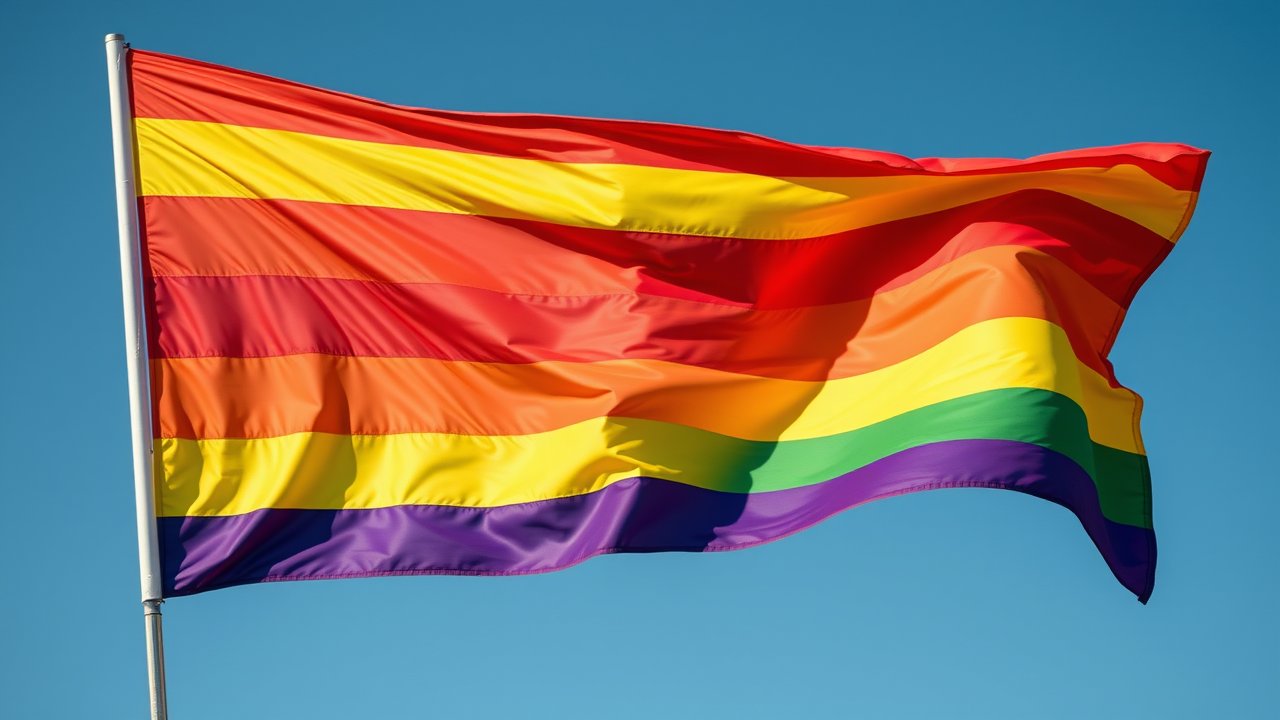
Hyperrealistic Wind — Six horizontal stripes: red, orange, yellow, green, blue, and violet — the rainbow Pride flag representing LGBTQ+ communities. Ultra-hyperrealistic photograph of the Pride flag caught in a dramatic gust of wind. Six horizontal stripes: red, orange, yellow, green, blue, and violet — the rainbow Pride flag representing LGBTQ+ communities. Macro-level fabric detail — individual threads visible, fabric folds and tension lines crisp. Colors and design completely faithful to the real Pride flag. High-speed shutter, razor-sharp focus, studio lighting. No text, no letters, no words, no writing of any kind.
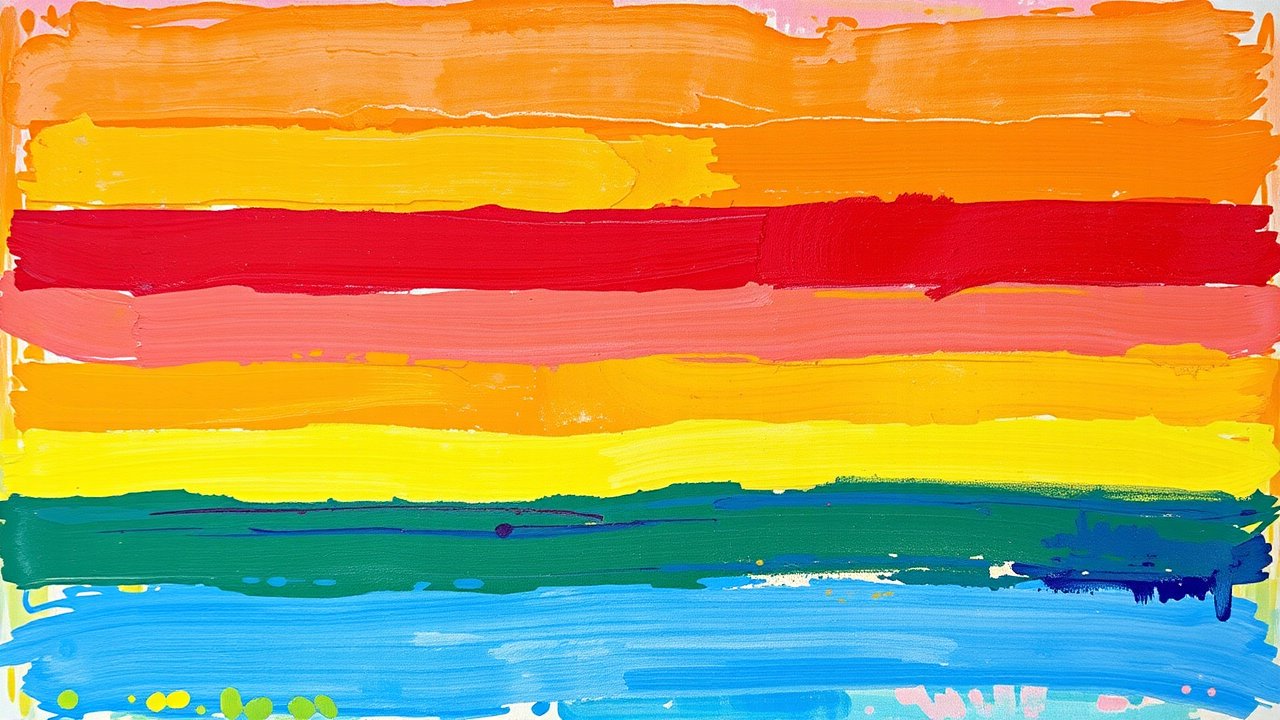
Impressionist Oil — Six horizontal stripes: red, orange, yellow, green, blue, and violet — the rainbow Pride flag representing LGBTQ+ communities. The flag of Pride painted in French Impressionist oil on canvas. Six horizontal stripes: red, orange, yellow, green, blue, and violet — the rainbow Pride flag representing LGBTQ+ communities. Thick impasto brushstrokes, dappled light, vibrant broken color technique in the style of Monet. The flag is instantly recognizable — colors and design faithful to the real Pride flag, interpreted with impressionist light and texture. No text, no letters, no words, no writing of any kind.
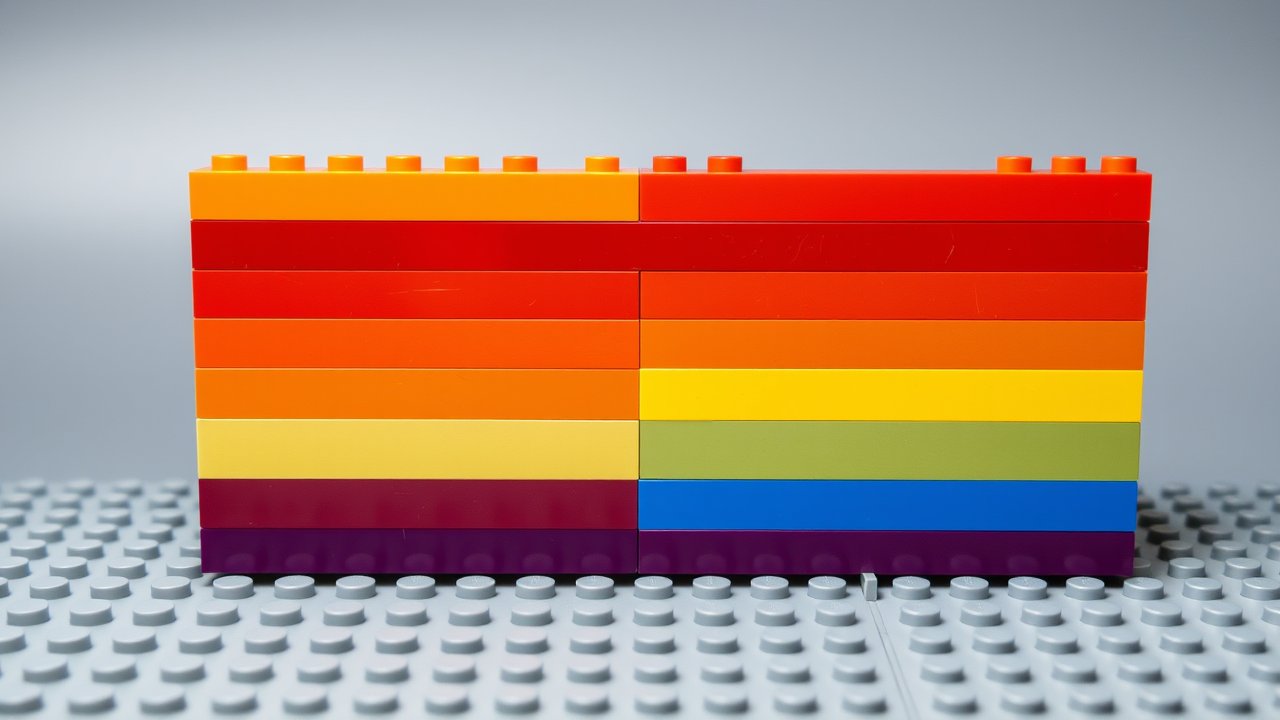
Lego Bricks — Six horizontal stripes: red, orange, yellow, green, blue, and violet — the rainbow Pride flag representing LGBTQ+ communities. The flag of Pride built from Lego bricks, photographed as a real physical construction. Six horizontal stripes: red, orange, yellow, green, blue, and violet — the rainbow Pride flag representing LGBTQ+ communities. Visible studs and brick seams, slight plastic sheen. Standard Lego colors approximate the flag’s palette. Built on a gray Lego baseplate. Dramatic angle showing the three-dimensional brick texture. No text, no letters, no words, no writing of any kind.
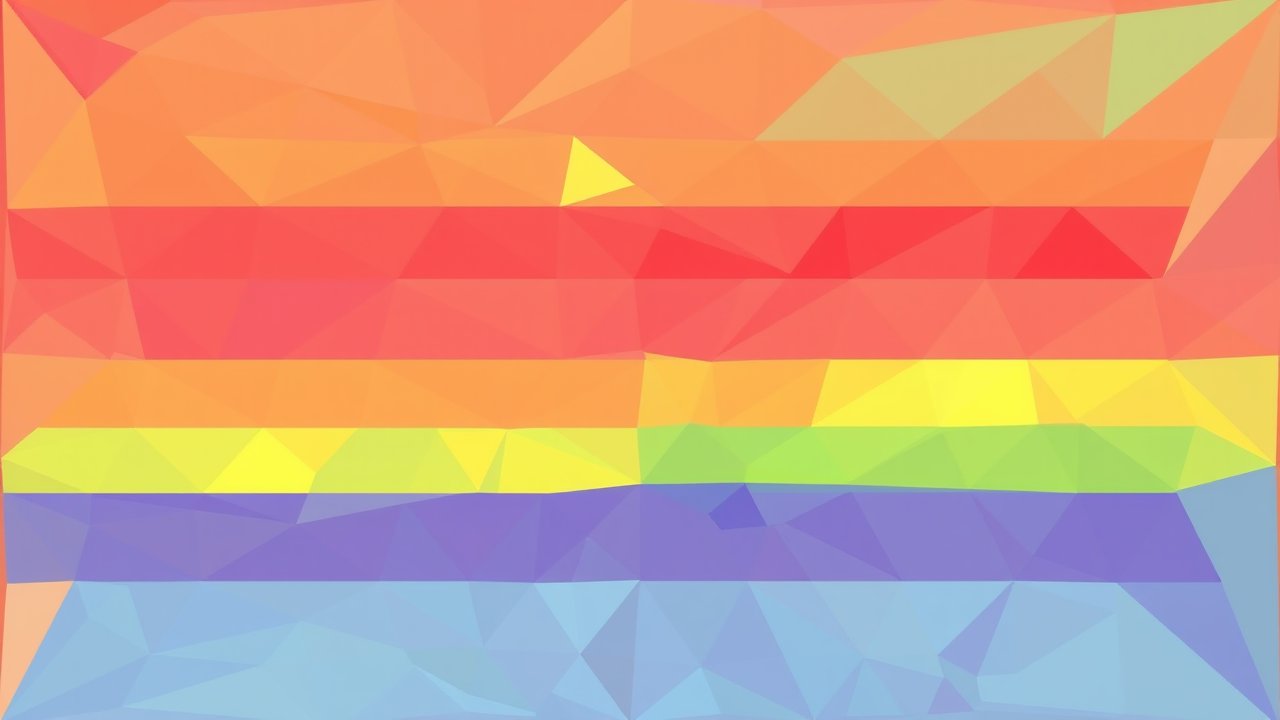
Low-Poly Geometric — Six horizontal stripes: red, orange, yellow, green, blue, and violet — the rainbow Pride flag representing LGBTQ+ communities. The flag of Pride constructed from low-polygon geometric triangles. Six horizontal stripes: red, orange, yellow, green, blue, and violet — the rainbow Pride flag representing LGBTQ+ communities. Aggressively faceted — each region broken into many visible triangular faces with subtle color variation across each polygon, creating real depth and dimensionality even in flat-color areas of the flag. Crystal-like, contemporary computational design. The flag is completely faithful and immediately recognizable. No text, no letters, no words, no writing of any kind.
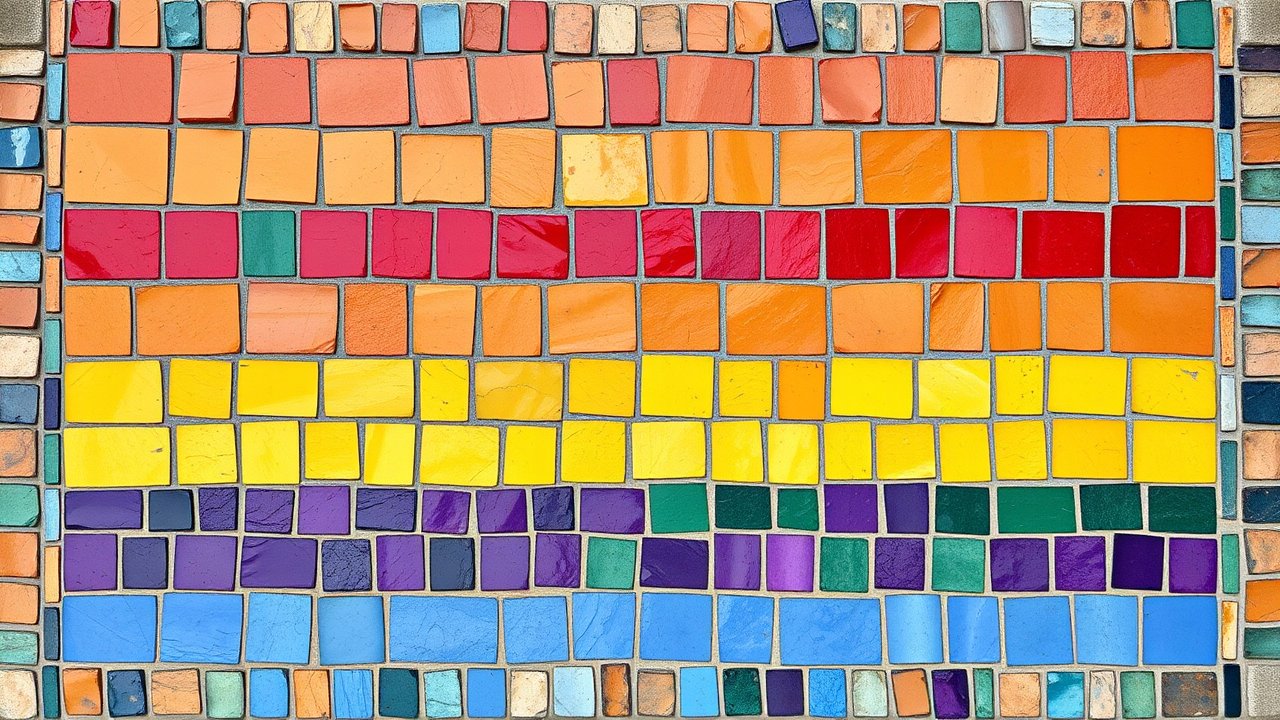
Mosaic Tiles — Six horizontal stripes: red, orange, yellow, green, blue, and violet — the rainbow Pride flag representing LGBTQ+ communities. The flag of Pride assembled as a Roman-style mosaic. Six horizontal stripes: red, orange, yellow, green, blue, and violet — the rainbow Pride flag representing LGBTQ+ communities. The flag is completely faithful to the real Pride flag — exact proportions, colors, and all symbols, rendered in thousands of small stone and glass tesserae. Visible grout lines, rich earthy tones mixed with brilliant glass, slight historical weathering. No text, no letters, no words, no writing of any kind.
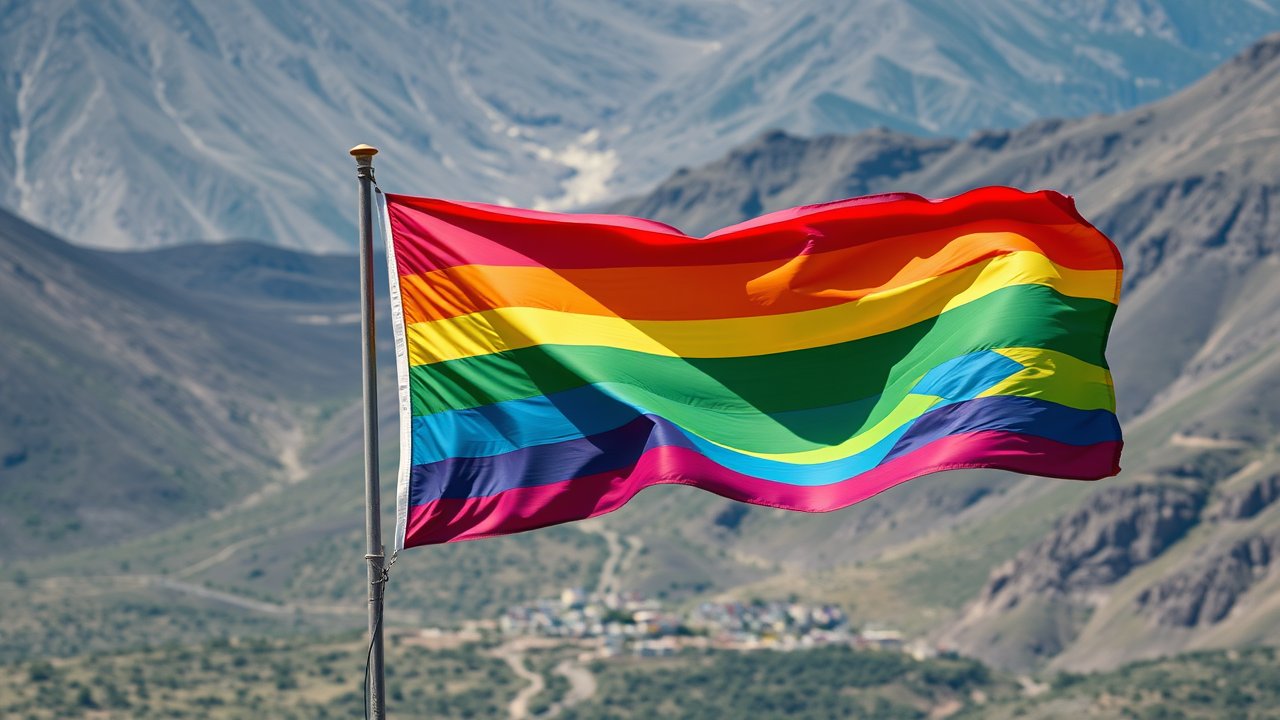
Native Landscape — Six horizontal stripes: red, orange, yellow, green, blue, and violet — the rainbow Pride flag representing LGBTQ+ communities. Photorealistic photograph of the Pride flag flying in an iconic natural landscape native to Pride — the terrain, flora, and environment characteristic of that country. Six horizontal stripes: red, orange, yellow, green, blue, and violet — the rainbow Pride flag representing LGBTQ+ communities. The flag is prominent and its colors are faithful and vivid. Remote, uninhabited wilderness. National Geographic photography style. No text, no letters, no words, no writing of any kind.
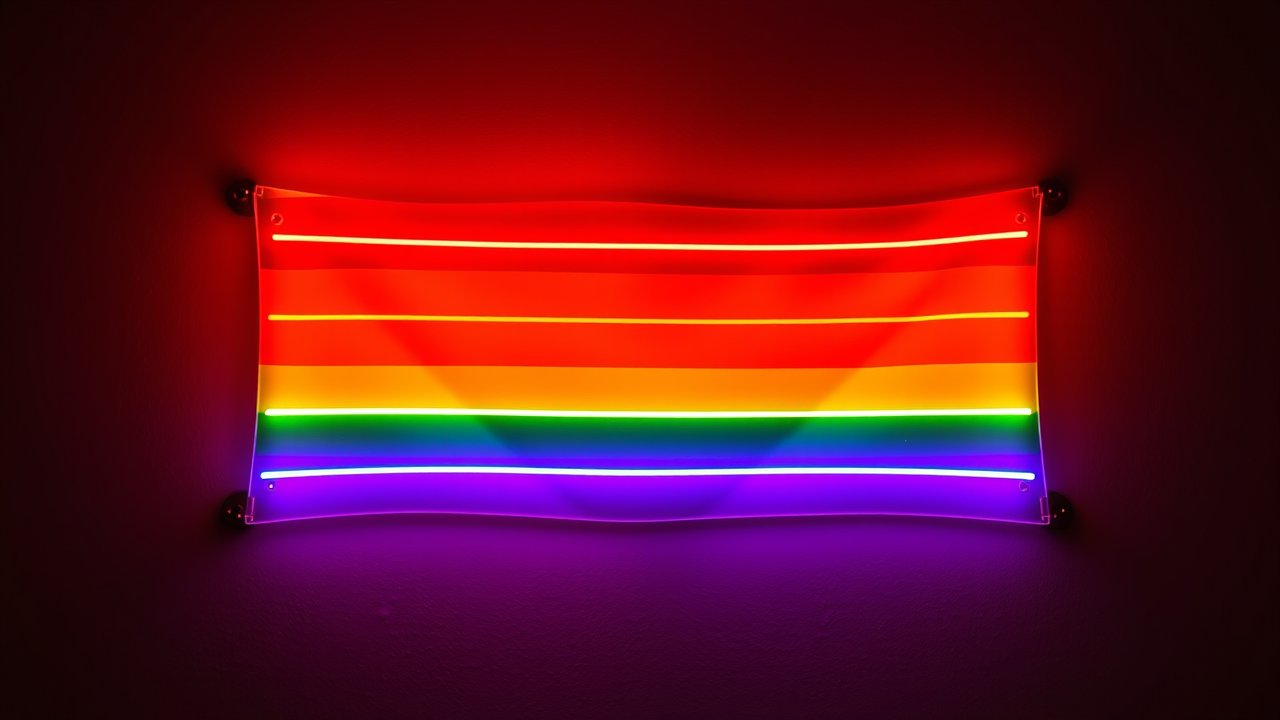
Neon Sign — Six horizontal stripes: red, orange, yellow, green, blue, and violet — the rainbow Pride flag representing LGBTQ+ communities. The flag of Pride recreated as a real neon sign mounted on a dark wall. Six horizontal stripes: red, orange, yellow, green, blue, and violet — the rainbow Pride flag representing LGBTQ+ communities. Glowing glass neon tubes bent into the flag’s shapes — the colors of the flag rendered in actual neon light. Visible glass tube bends, metal mounting brackets on the wall. Warm neon glow and light bloom. Real neon, not digital. Photographed in a dark room. No text, no letters, no words, no writing of any kind.
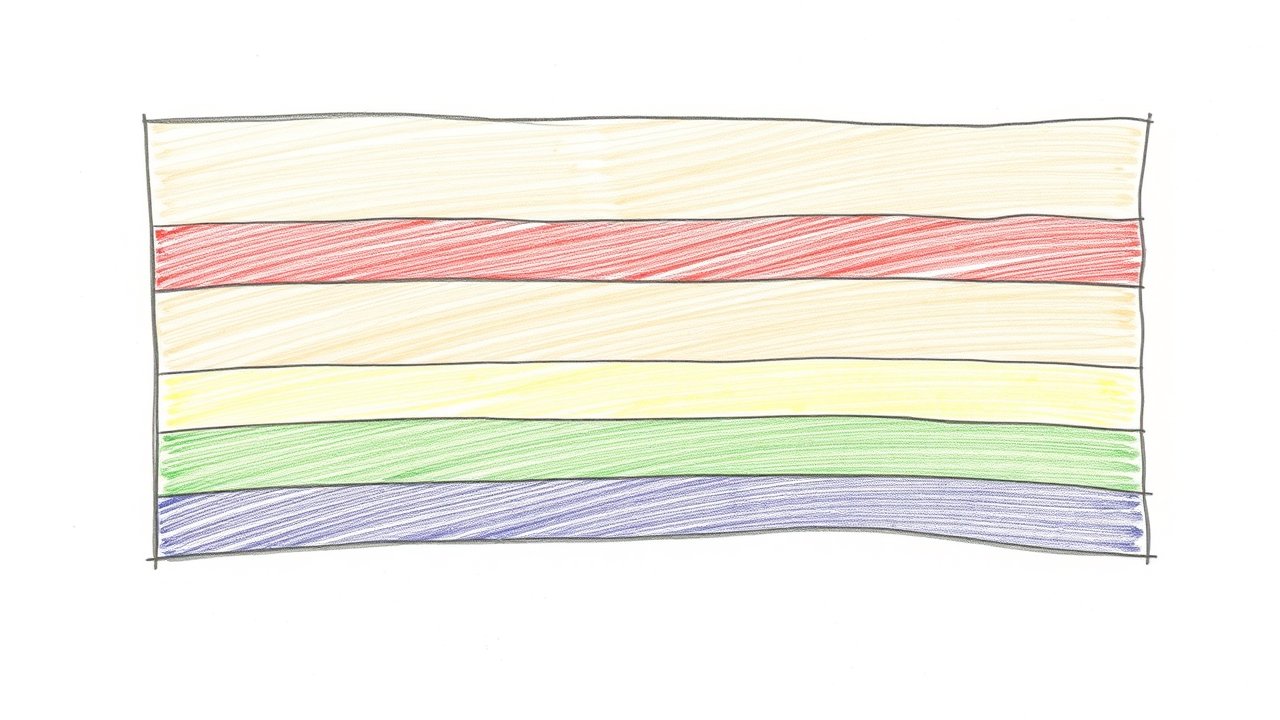
Pencil Sketch — Six horizontal stripes: red, orange, yellow, green, blue, and violet — the rainbow Pride flag representing LGBTQ+ communities. The flag of Pride as a bold, confident pencil sketch. Six horizontal stripes: red, orange, yellow, green, blue, and violet — the rainbow Pride flag representing LGBTQ+ communities. Strong graphite lines on cream paper — not delicate but bold and decisive. Heavy pressure on key outlines, dramatic cross-hatching for deep shadows and shading. Immediately recognizable as the Pride flag. Artist’s confident hand, not tentative. No text, no letters, no words, no writing of any kind.
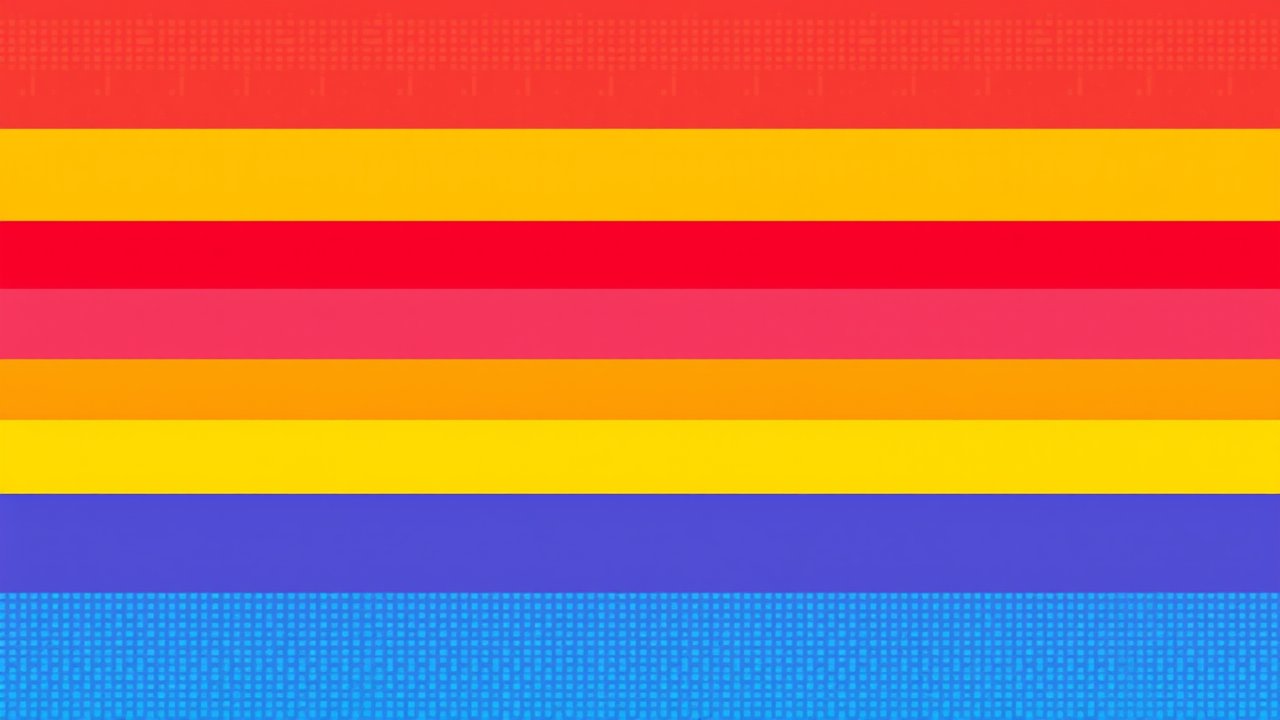
Pixel Art — Six horizontal stripes: red, orange, yellow, green, blue, and violet — the rainbow Pride flag representing LGBTQ+ communities. The flag of Pride as detailed 16-bit pixel art. Six horizontal stripes: red, orange, yellow, green, blue, and violet — the rainbow Pride flag representing LGBTQ+ communities. Crisp pixel grid, limited palette with careful dithering, nostalgic retro game aesthetic. Clean grid-aligned design with subtle shading. Every element of the flag faithfully reproduced in pixels. No text, no letters, no words, no writing of any kind.
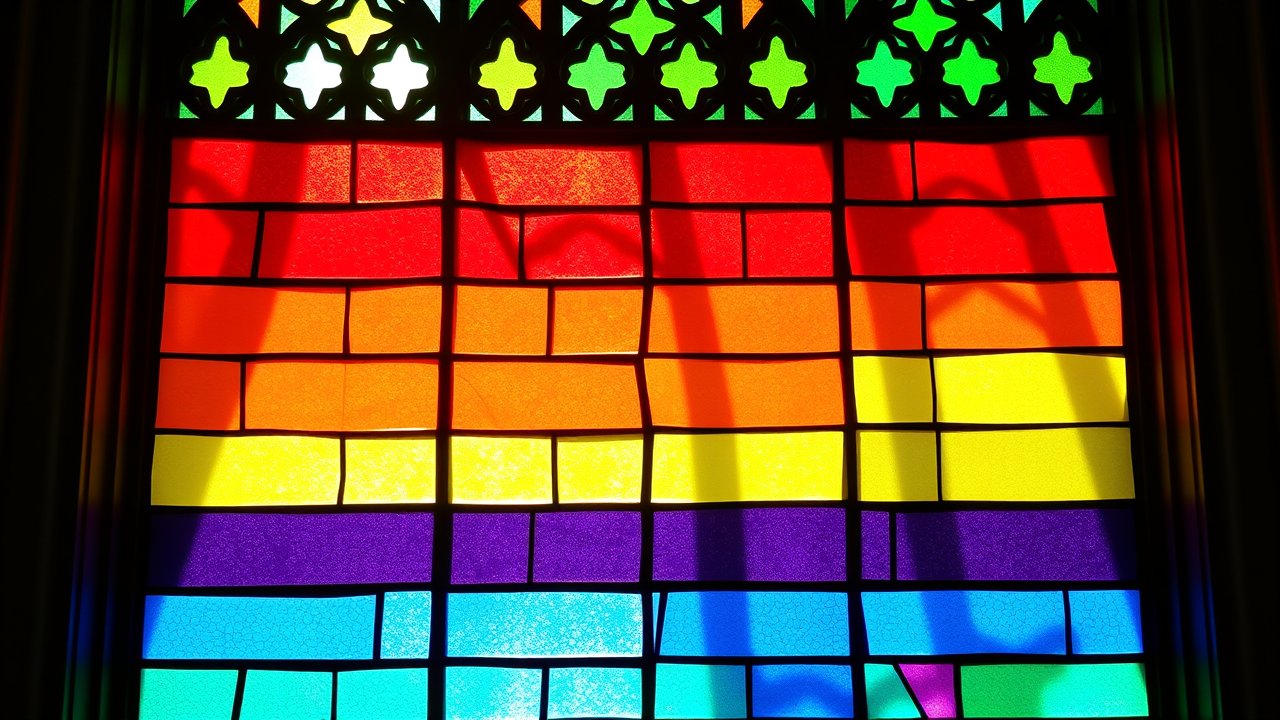
Stained Glass — Six horizontal stripes: red, orange, yellow, green, blue, and violet — the rainbow Pride flag representing LGBTQ+ communities. The flag of Pride rendered as an ornate stained glass window. Six horizontal stripes: red, orange, yellow, green, blue, and violet — the rainbow Pride flag representing LGBTQ+ communities. The design is completely faithful to the real Pride flag — exact colors, geometry, and all symbols preserved. Brilliant jewel-toned glass pieces separated by dark lead came lines. Warm sunlight streaming through, casting colored light. Gothic cathedral craftsmanship. No text, no letters, no words, no writing of any kind.
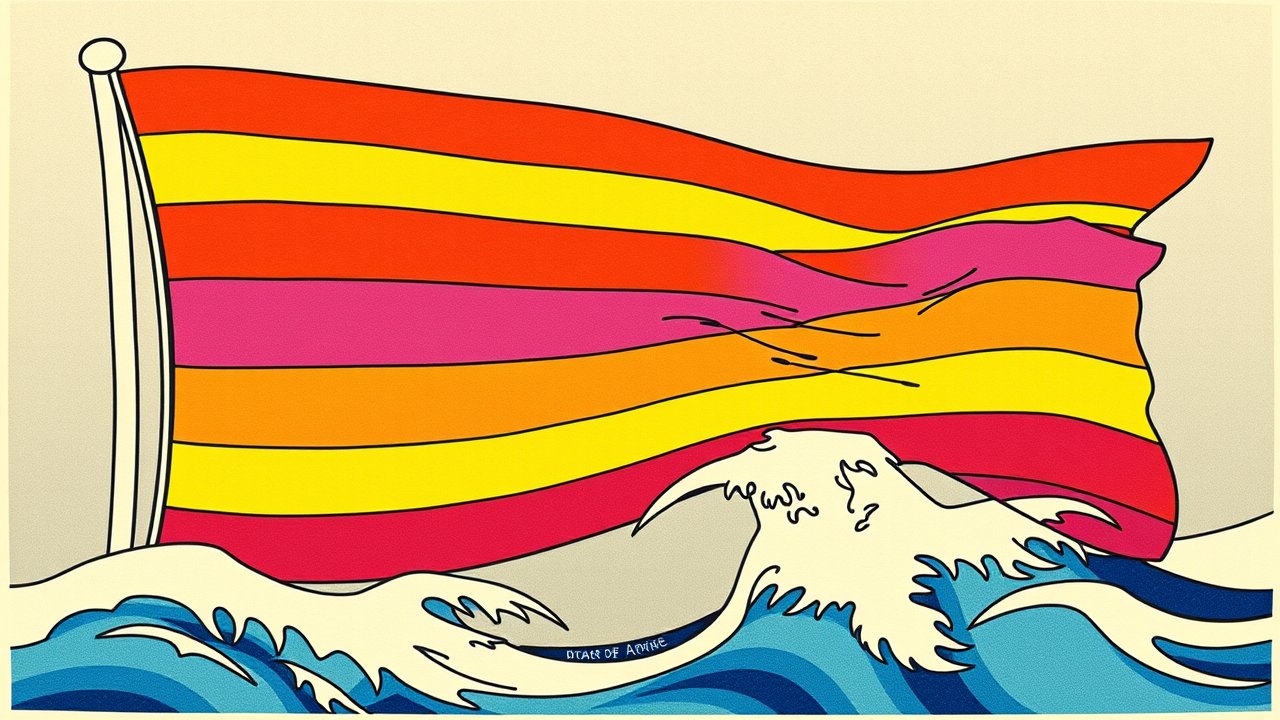
Ukiyo-e Woodblock — Six horizontal stripes: red, orange, yellow, green, blue, and violet — the rainbow Pride flag representing LGBTQ+ communities. The flag of Pride as a traditional Japanese ukiyo-e woodblock print. Six horizontal stripes: red, orange, yellow, green, blue, and violet — the rainbow Pride flag representing LGBTQ+ communities. Bold outlines, flat areas of rich color, flowing organic forms. Wind and waves incorporated into the composition. Printed on washi paper with visible wood grain texture. The flag is the central focus and instantly recognizable. No text, no letters, no words, no writing of any kind.
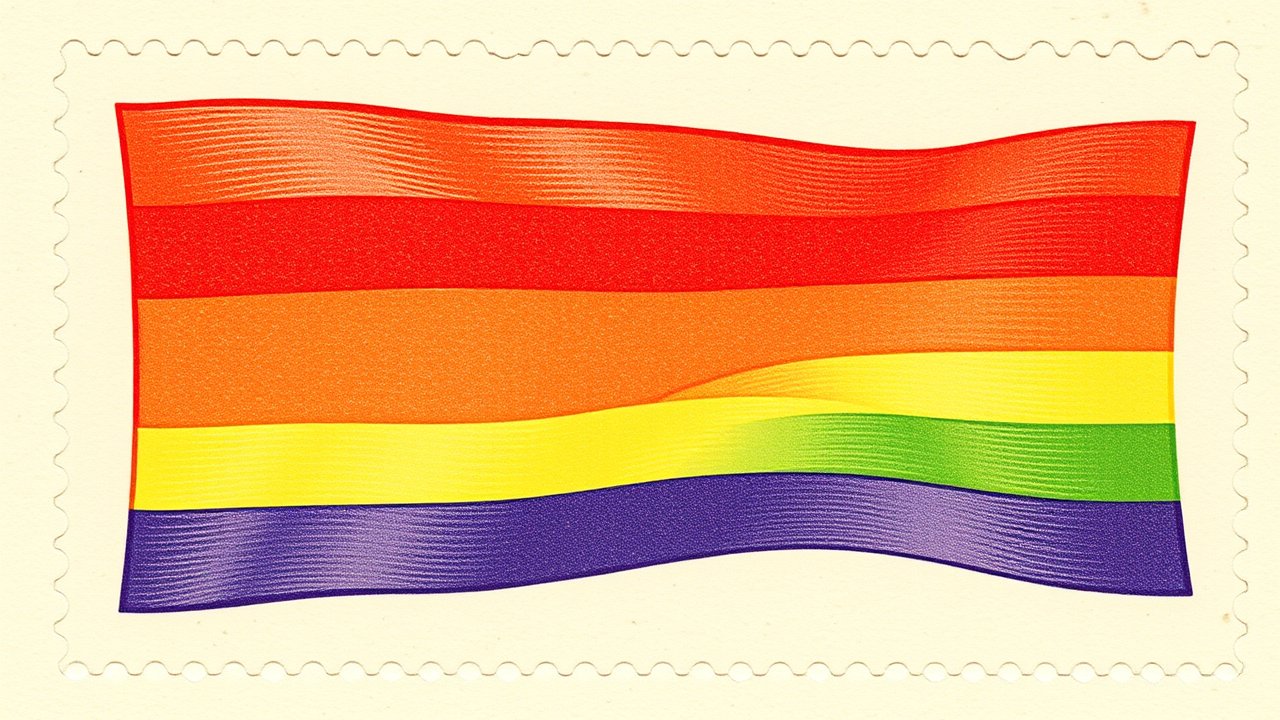
Vintage Postage Stamp — Six horizontal stripes: red, orange, yellow, green, blue, and violet — the rainbow Pride flag representing LGBTQ+ communities. The flag of Pride as a vintage 1950s postage stamp. Six horizontal stripes: red, orange, yellow, green, blue, and violet — the rainbow Pride flag representing LGBTQ+ communities. The flag fills most of the stamp — it is the primary subject, faithfully rendered in fine engraved intaglio style. Perforated edges, aged paper with slight foxing. The stamp may show a denomination numeral only — absolutely no other text or country names.
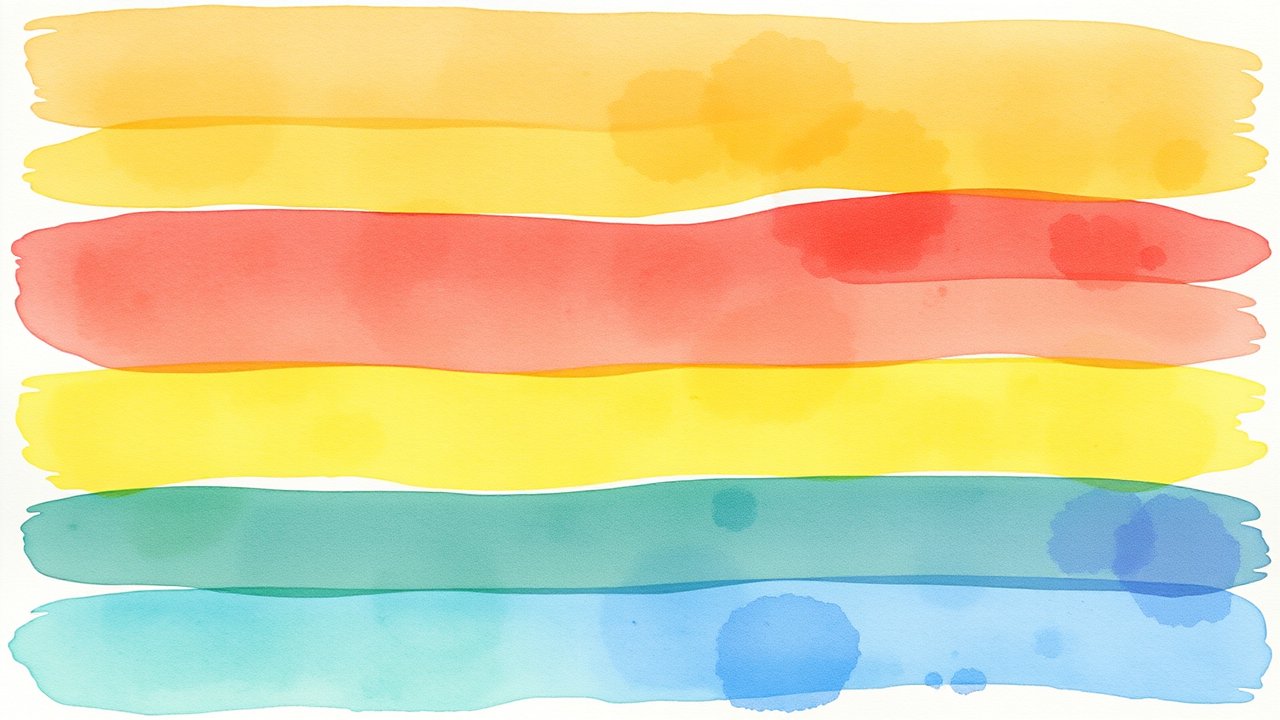
Watercolor — Six horizontal stripes: red, orange, yellow, green, blue, and violet — the rainbow Pride flag representing LGBTQ+ communities. The flag of Pride painted in loose, expressive watercolor. Six horizontal stripes: red, orange, yellow, green, blue, and violet — the rainbow Pride flag representing LGBTQ+ communities. Wet-on-wet technique with soft color bleeds, visible brushstrokes, natural paper texture. Delicate splashes and drips at the edges. Luminous, translucent layers of pigment. No text, no letters, no words, no writing of any kind.
The Rainbow Flag: A Symbol of Pride, Diversity, and LGBTQ+ Liberation
The Pride flag, with its vibrant horizontal stripes of red, orange, yellow, green, blue, and violet, stands as one of the most recognizable symbols of the modern era, representing the global LGBTQ+ movement. Designed in 1978 by artist and activist Gilbert Baker, this simple design carries profound meaning rooted in the struggle for acceptance, rights, and celebration of human diversity. Understanding the Pride flag requires exploring its creation, decoding the symbolism of each color, and recognizing how a flag designed nearly fifty years ago became a universal emblem of freedom and dignity for millions worldwide.
Gilbert Baker and the Creation of a Symbol
The Pride flag emerged from San Francisco’s thriving LGBTQ+ activist scene in the late 1970s. Gilbert Baker, an artist and activist, created the flag in 1978 at the community’s request for a symbol to represent their movement. The modern gay liberation movement had existed for less than a decade following the 1969 Stonewall uprising in New York, and communities were organizing to assert their existence and demand recognition. However, no unified visual symbol existed to represent these diverse communities globally.
Baker understood the power of symbolism and designed something distinctly new rather than adopting existing protest banners. He hand-stitched the original flag in his San Francisco studio and organized production for the 1978 Pride celebration, which took place days after Harvey Milk’s assassination. The flag’s debut at this event, attended by approximately 375,000 people, marked the beginning of its journey from local symbol to global icon.
The Evolution of Color and Design
The original 1978 Pride flag designed by Baker contained eight horizontal stripes, each with specific symbolic meaning: hot pink (sexuality), red (life), orange (healing), yellow (sunlight), green (serenity), turquoise (magic), blue (harmony), and violet (spirit). This design was deliberately rooted in the rainbow—nature’s universal symbol of beauty and diversity—affirming that LGBTQ+ identity is natural and inevitable.
However, practical challenges emerged during mass production. Hot pink proved expensive and difficult to source consistently, while aesthetic considerations about symmetry led Baker to modify the design in 1979. He removed the hot pink and turquoise stripes, creating the six-stripe flag recognized worldwide today: red, orange, yellow (top half) and green, blue, violet (bottom half). This version provides perfect visual balance and has remained the standard for nearly five decades.
Each color carries intentional meaning: Red represents life itself and living communities. Orange symbolizes healing from violence and discrimination. Yellow represents sunlight and hope for a better future. Green affirms that LGBTQ+ identity is as natural as any aspect of the biological world. Blue represents harmony and peaceful coexistence. Violet represents spirit and transcendence, acknowledging that LGBTQ+ people exist across all cultures, religions, and spiritual traditions.
Symbolism and Global Recognition
The Pride flag’s genius lies in its elegant simplicity and universal visual language. Unlike national flags tied to specific territories and histories, the Pride flag communicates through colors and the rainbow—a natural phenomenon understood and appreciated across all cultures and continents. This universality allowed it to be adopted by LGBTQ+ communities worldwide without losing meaning or requiring translation.
Rainbows traditionally symbolize hope and renewal after storms. For LGBTQ+ communities enduring violence, discrimination, and disease—particularly during the AIDS crisis of the 1980s—the rainbow flag expressed resilience and conviction that a brighter future was possible. The flag’s visibility in public spaces transformed urban landscapes, making LGBTQ+ existence impossible to ignore and reclaiming spaces from marginalization to affirmation and joy.
The Pride flag provided unified visual identity for extraordinarily diverse communities spanning different sexual orientations, gender identities, races, ethnicities, religions, and abilities. The flag’s simplicity allowed it to represent and unite all these people under a single symbol without erasing specific experiences. This inclusive nature made it a symbol of both protest and celebration, visibility and pride in identity.
Global Adoption and Modern Legacy
From its 1978-1979 San Francisco origins, the Pride flag’s adoption was remarkably rapid. By the 1980s, it became the standard symbol of Pride celebrations across North America, Europe, and Australia. As global LGBTQ+ movements strengthened and international communication accelerated, the flag spread to nearly every country. Today it appears in Pride celebrations from São Paulo to Bangkok to Tel Aviv, often with complementary flags like the transgender flag and bisexual flag representing specific communities.
The flag’s adoption extended far beyond Pride marches into mainstream spaces. Corporations display it during Pride Month, governments fly it from official buildings in countries with legal recognition of same-sex relationships, and architects incorporate rainbow symbolism into public designs. This mainstreaming reflects decades of activism and social change, though it raises questions about commercialization and meaning dilution.
In countries where LGBTQ+ people face criminalization or severe discrimination, displaying the flag remains a dangerous act of resistance and declaration of existence. Stories of activists displaying the flag despite threats of arrest or violence reinforce its association with courage and defiance. The flag continues to evolve, with variations like the 2018 Progress flag incorporating additional symbolism while maintaining Baker’s foundational vision. The Pride flag remains a living, dynamic symbol that communities adapt to reflect changing contexts while preserving its core meaning and power.
Conclusion: A Flag for the Future
The Pride flag, designed by Gilbert Baker in 1978, represents a vision of a world where diversity is celebrated, where each person’s identity is honored, and where human experience is welcomed in its full spectrum. Its journey from a locally-created symbol to a globally recognized emblem displayed on every continent demonstrates the power of visual symbolism to transcend language, culture, and geography. Each color carries intentional meaning—red for life, orange for healing, yellow for sunlight, green for nature, blue for peace, and violet for spirit—that continues to resonate decades after creation. The Rainbow flag remains a powerful reminder that diversity is strength, pride is appropriate self-respect, and all people deserve to see themselves reflected in the symbols of their societies.
Related Products
Vivid 6-stripe rainbow pride flag.
Assorted pride stickers for laptops and notebooks.
Illustrated guide to queer history and theory.
As an Amazon Associate, we earn from qualifying purchases.