
How To
How To
Time needed: 1 minute
How to copy and paste the Flag of Lithuania Emoji to any device.
- Copy the Lithuanian Flag Emoji
Go to flagemoji.com and press the copy button (above). This works on any device.
- Paste the Emoji
Go to your email/iMessage/SMS texting service/document and paste the emoji.
For mobile devices
— double-tap or tap-hold, then paste should appear. Tap it.
For desktop and laptops on Apple devices
— command-P / ⌘-P
For desktop and laptops on Windows devices
— control-p
Codes
Emoji Codes
Flag emojis are unicode symbols, like any other letter or number on your keyboard. This means you can copy and paste the emoji itself into your code, whatever the language (click the button above).
They actually count as two characters: the two-letter country code (the ISO international standard). The unicode and shortcode both represent country data which devices can interpret and display the emoji.
| Country Code | Unicode | Shortcode |
| LT | U+1F1F1 U+1F1F9 | :flag_LT: :LT: |
Emoji shortcodes are used on some platforms as a way for users to type in emojis from the keyboard. If you type the emoji shortcode on Github or Slack, the emoji will appear.
*The official name of the emoji is only the country name, not ‘Lithuania Flag’, for example.
Description
Description
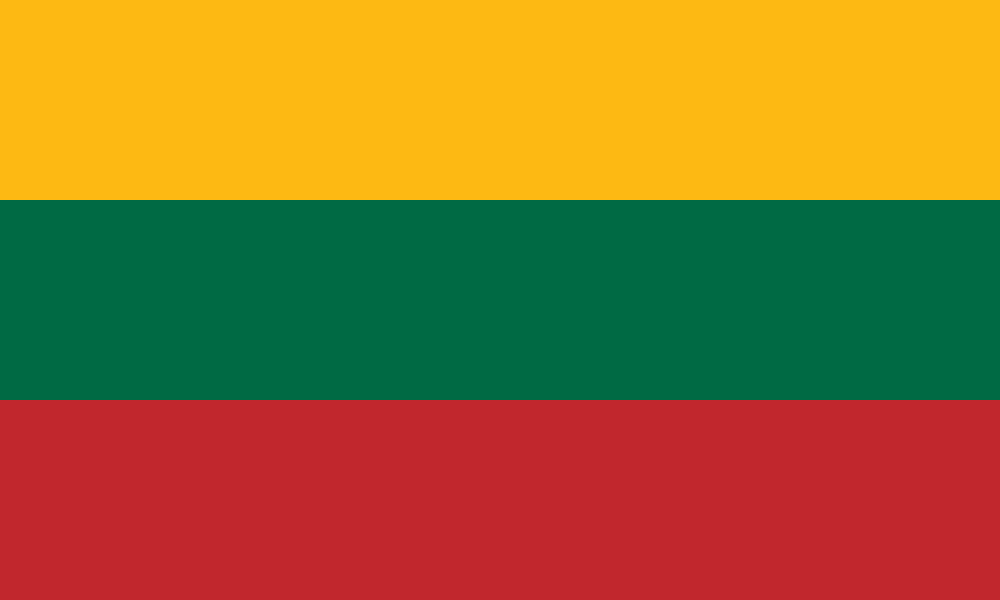
The flag of Lithuania consists of three equal horizontal bands of yellow (top), green, and red. Yellow symbolizes golden fields, as well as the sun, light, and goodness. Green represents the forests of the countryside, in addition to nature, freedom, and hope. Red stands for courage and the blood spilled in defense of the homeland.
Map
Map
Check out the map of Timor-Leste!
Weather
Anthem
National Anthem
| Title | Tautiska giesme (The National Song) |
| Composer | Vincas Kudirka |
FAQ
FAQs
Lithuania declared independence on February 16, 1918.
Yellow symbolizes golden fields, as well as the sun, light, and goodness. Green represents the forests of the countryside, in addition to nature, freedom, and hope. Red stands for courage and the blood spilled in defense of the homeland.
The flag of Lithuania was formally adopted on March 20, 1989.
Lithuania is governed by a semi-presidential republic.
Discover more fun facts of Bangladesh.
Printable
Printable Lithuanian Flag
Print another really cool flag. Why not the flag of United Arab Emirates?
3D Glossy Render — Three horizontal stripes of yellow, green, and red. The flag of Lithuania as a photorealistic 3D render. Three horizontal stripes of yellow, green, and red. The flag fabric hangs or drapes naturally but preserves exact proportions, colors, and all symbols perfectly — completely faithful to the real Lithuania flag. Dramatic studio lighting, glossy silk material, soft shadows, subsurface scattering, perfect specular highlights. No text, no letters, no words, no writing of any kind.
Chalk on Blackboard — Three horizontal stripes of yellow, green, and red. The flag of Lithuania drawn in chalk on a real blackboard. Three horizontal stripes of yellow, green, and red. Authentic blackboard — dark slate green surface with chalk dust and smudge marks. Soft, dusty white and colored chalk lines, imperfect edges, hand-drawn quality. Chalk dust particles visible in the air. The flag is immediately recognizable. No text, no letters, no words, no writing of any kind.
Embroidered Textile — Three horizontal stripes of yellow, green, and red. The flag of Lithuania as intricate embroidery on linen fabric. Three horizontal stripes of yellow, green, and red. Dense satin stitches, French knots, chain stitch detail. The flag design is completely faithful — exact colors, geometry, and all symbols faithfully stitched, immediately recognizable as the Lithuania flag. Visible thread texture, dimensional quality, warm handcrafted feel. No text, no letters, no words, no writing of any kind.
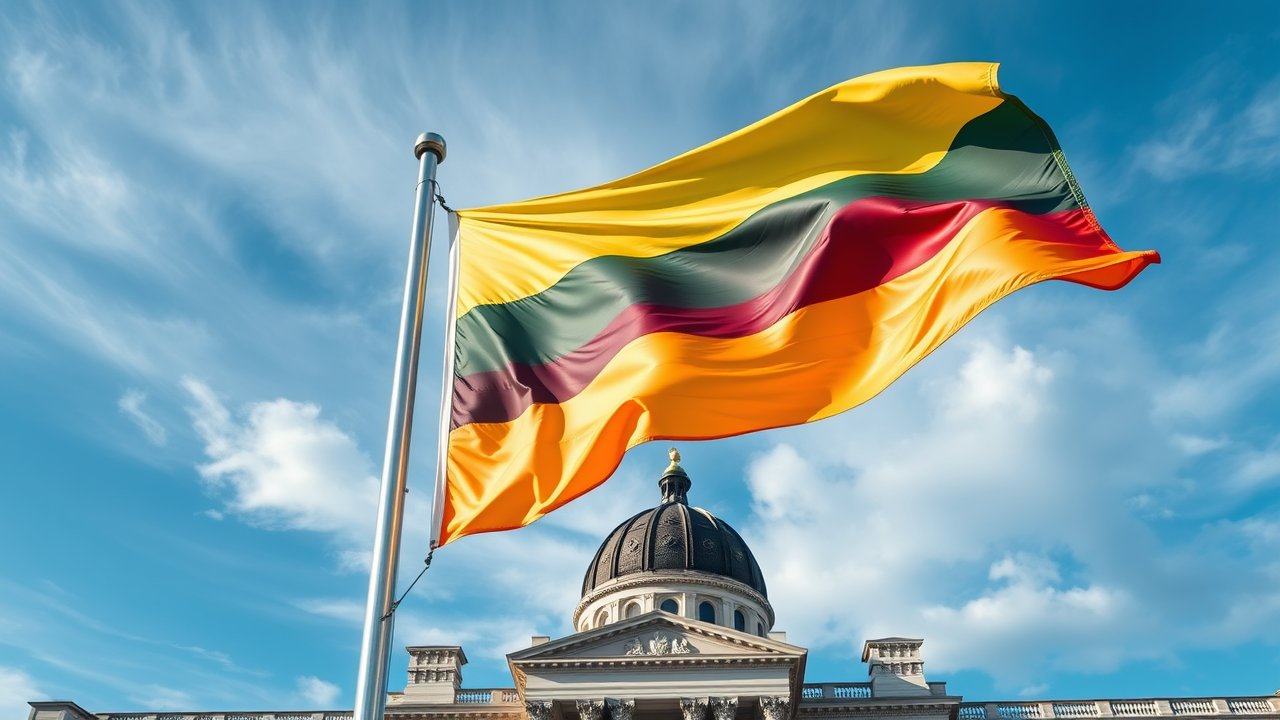
Flagpole in Capital — Three horizontal stripes of yellow, green, and red. Photorealistic photograph of the Lithuania flag flying on a tall flagpole in front of an iconic government building in the capital city. Three horizontal stripes of yellow, green, and red. The flag ripples naturally in the wind, colors vivid and exact. Documentary photography style, sharp and realistic. Grand architecture in the background. Blue sky, dramatic clouds. No text, no letters, no words, no writing of any kind.
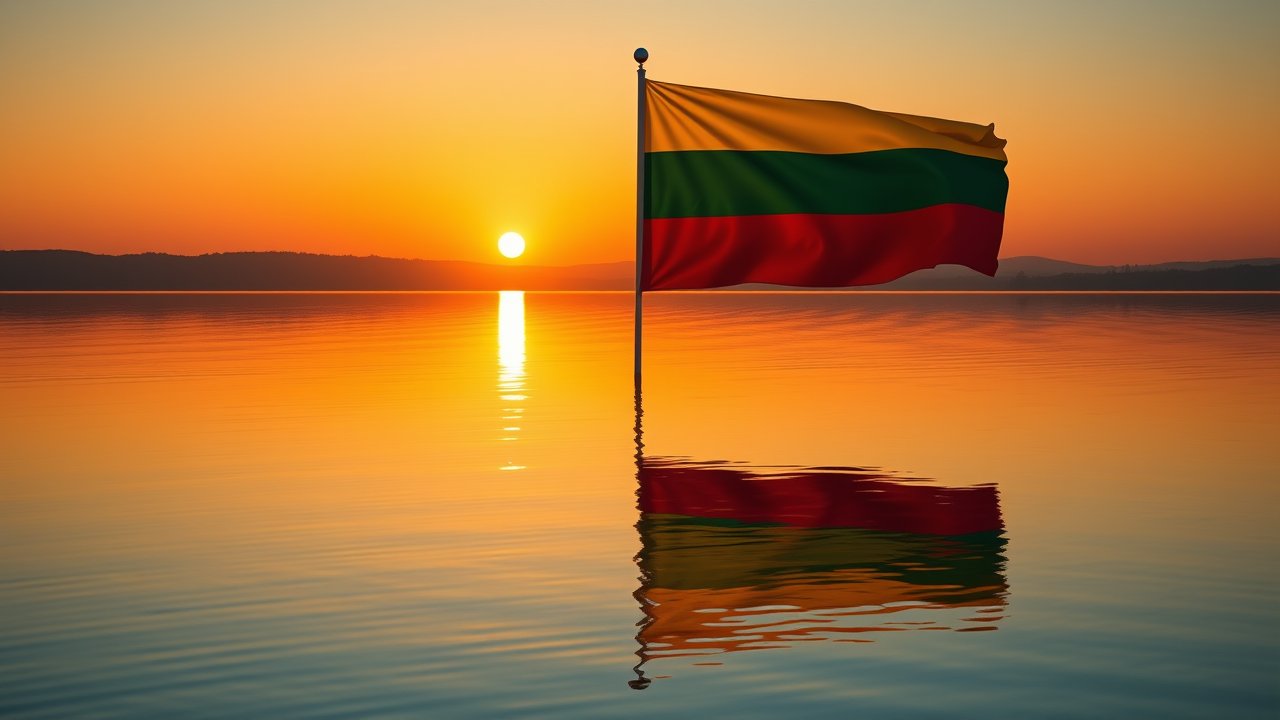
Golden Hour Reflection — Three horizontal stripes of yellow, green, and red. Photorealistic photograph of the Lithuania flag reflected in still water at golden hour. Three horizontal stripes of yellow, green, and red. The flag flies on a pole at the water’s edge, its reflection shimmering on the surface below. Warm amber and orange sunset light. The flag colors and design are faithful and vivid. Serene, cinematic landscape photography. No text, no letters, no words, no writing of any kind.
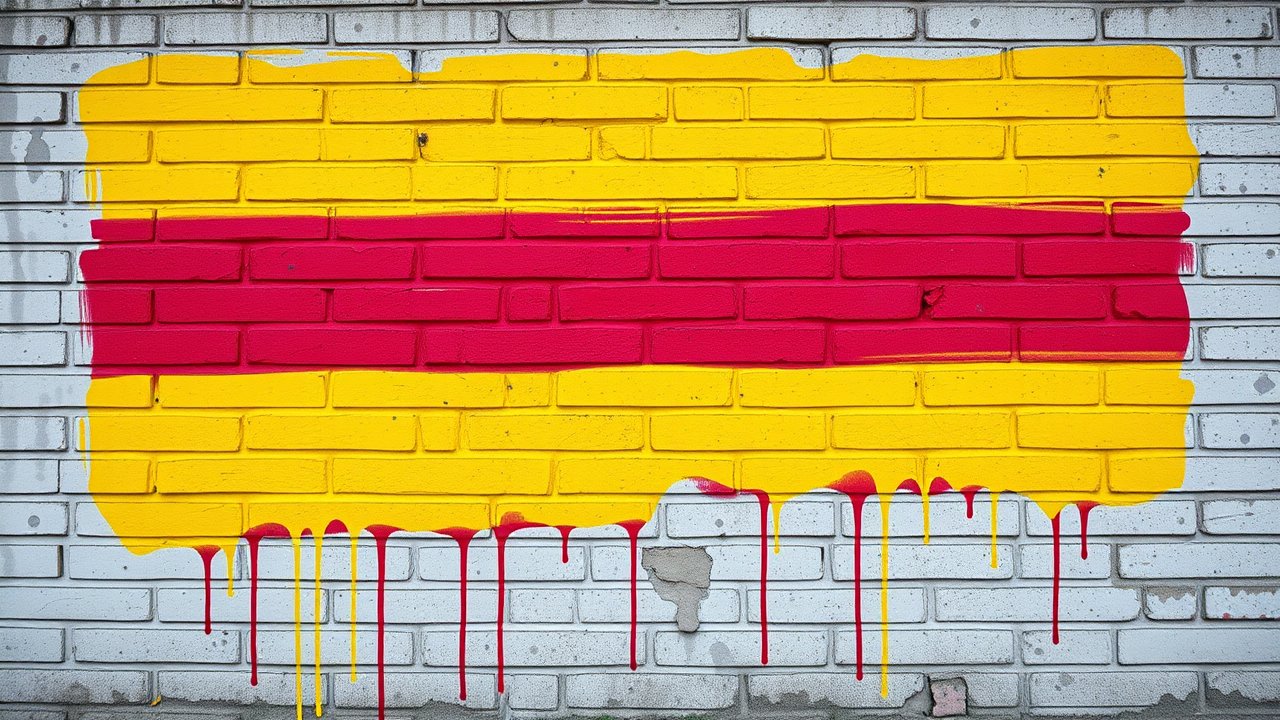
Street Art / Graffiti — Three horizontal stripes of yellow, green, and red. The flag of Lithuania as vibrant street art spray-painted on a brick wall. Three horizontal stripes of yellow, green, and red. Bold spray paint, dripping edges, stencil layers, overspray halos. The flag design is faithful and immediately recognizable — exact colors and symbols, just rendered in spray paint on urban concrete. No text, no letters, no words, no writing of any kind. No tags, no graffiti lettering.
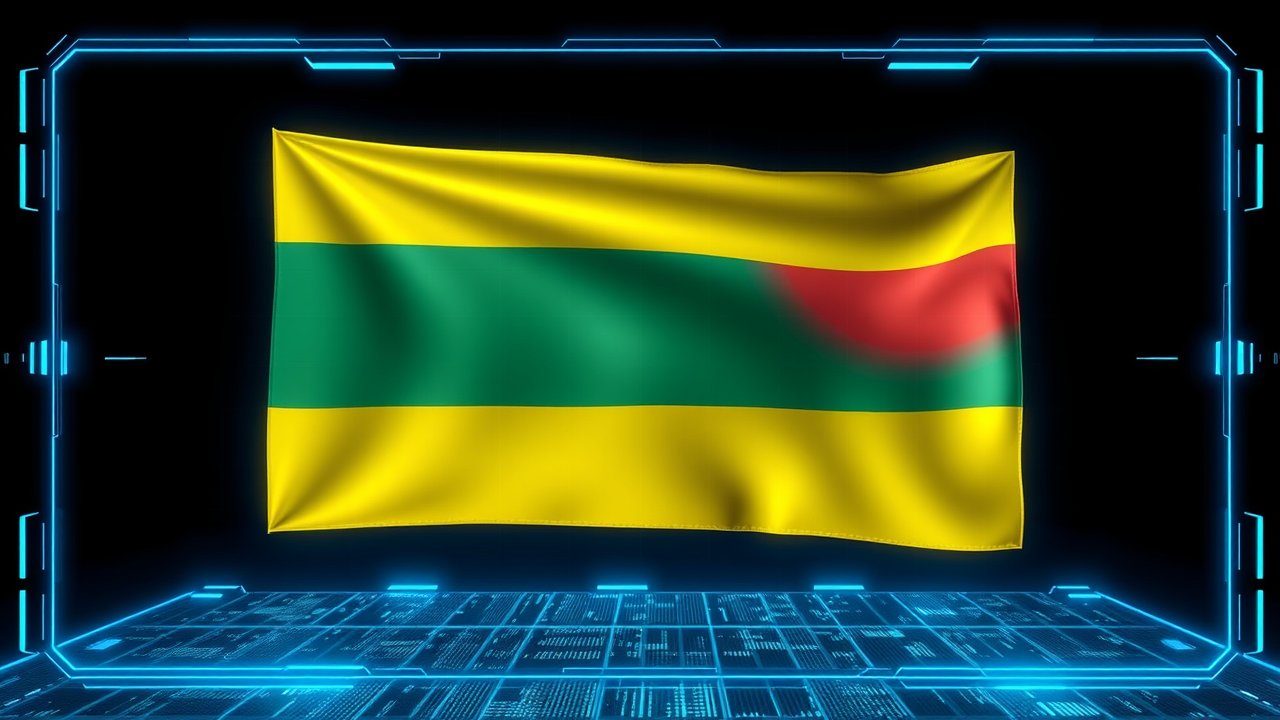
Sci-Fi Hologram — Three horizontal stripes of yellow, green, and red. The flag of Lithuania projected as a futuristic holographic display. Three horizontal stripes of yellow, green, and red. Translucent blue-white projection with scan lines, floating in dark space. Glitching edges, particle effects, data streams. The flag design is completely faithful and recognizable. Cyberpunk HUD elements framing the projection. No text, no letters, no words, no writing of any kind.
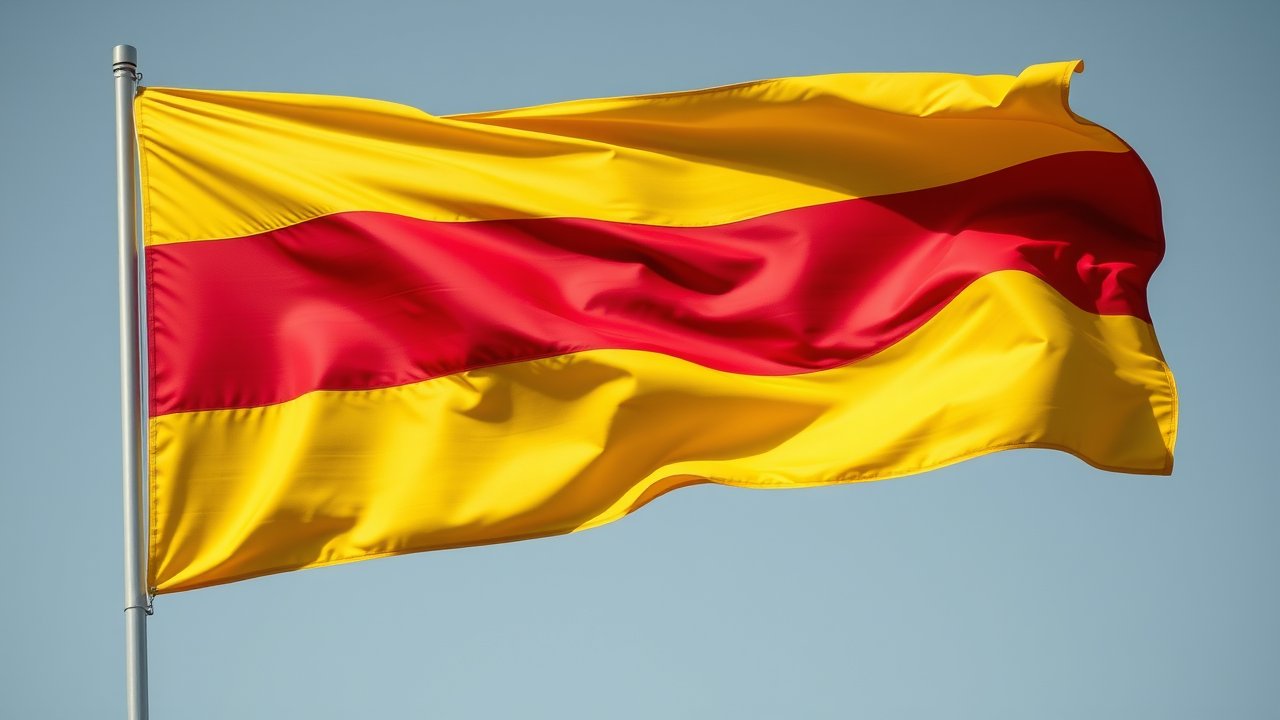
Hyperrealistic Wind — Three horizontal stripes of yellow, green, and red. Ultra-hyperrealistic photograph of the Lithuania flag caught in a dramatic gust of wind. Three horizontal stripes of yellow, green, and red. Macro-level fabric detail — individual threads visible, fabric folds and tension lines crisp. Colors and design completely faithful to the real Lithuania flag. High-speed shutter, razor-sharp focus, studio lighting. No text, no letters, no words, no writing of any kind.
Impressionist Oil — Three horizontal stripes of yellow, green, and red. The flag of Lithuania painted in French Impressionist oil on canvas. Three horizontal stripes of yellow, green, and red. Thick impasto brushstrokes, dappled light, vibrant broken color technique in the style of Monet. The flag is instantly recognizable — colors and design faithful to the real Lithuania flag, interpreted with impressionist light and texture. No text, no letters, no words, no writing of any kind.

Lego Bricks — Three horizontal stripes of yellow, green, and red. The flag of Lithuania built from Lego bricks, photographed as a real physical construction. Three horizontal stripes of yellow, green, and red. Visible studs and brick seams, slight plastic sheen. Standard Lego colors approximate the flag’s palette. Built on a gray Lego baseplate. Dramatic angle showing the three-dimensional brick texture. No text, no letters, no words, no writing of any kind.

Low-Poly Geometric — Three horizontal stripes of yellow, green, and red. The flag of Lithuania constructed from low-polygon geometric triangles. Three horizontal stripes of yellow, green, and red. Aggressively faceted — each region broken into many visible triangular faces with subtle color variation across each polygon, creating real depth and dimensionality even in flat-color areas of the flag. Crystal-like, contemporary computational design. The flag is completely faithful and immediately recognizable. No text, no letters, no words, no writing of any kind.
Mosaic Tiles — Three horizontal stripes of yellow, green, and red. The flag of Lithuania assembled as a Roman-style mosaic. Three horizontal stripes of yellow, green, and red. The flag is completely faithful to the real Lithuania flag — exact proportions, colors, and all symbols, rendered in thousands of small stone and glass tesserae. Visible grout lines, rich earthy tones mixed with brilliant glass, slight historical weathering. No text, no letters, no words, no writing of any kind.
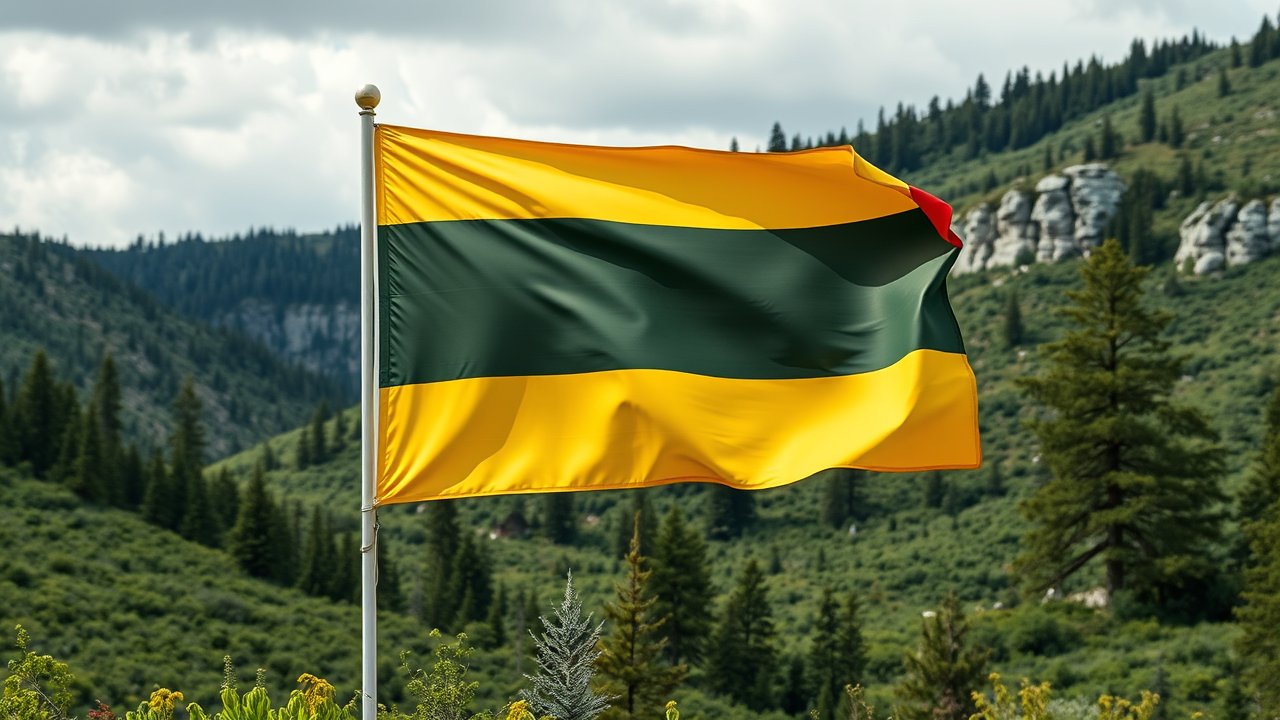
Native Landscape — Three horizontal stripes of yellow, green, and red. Photorealistic photograph of the Lithuania flag flying in an iconic natural landscape native to Lithuania — the terrain, flora, and environment characteristic of that country. Three horizontal stripes of yellow, green, and red. The flag is prominent and its colors are faithful and vivid. Remote, uninhabited wilderness. National Geographic photography style. No text, no letters, no words, no writing of any kind.

Neon Sign — Three horizontal stripes of yellow, green, and red. The flag of Lithuania recreated as a real neon sign mounted on a dark wall. Three horizontal stripes of yellow, green, and red. Glowing glass neon tubes bent into the flag’s shapes — the colors of the flag rendered in actual neon light. Visible glass tube bends, metal mounting brackets on the wall. Warm neon glow and light bloom. Real neon, not digital. Photographed in a dark room. No text, no letters, no words, no writing of any kind.
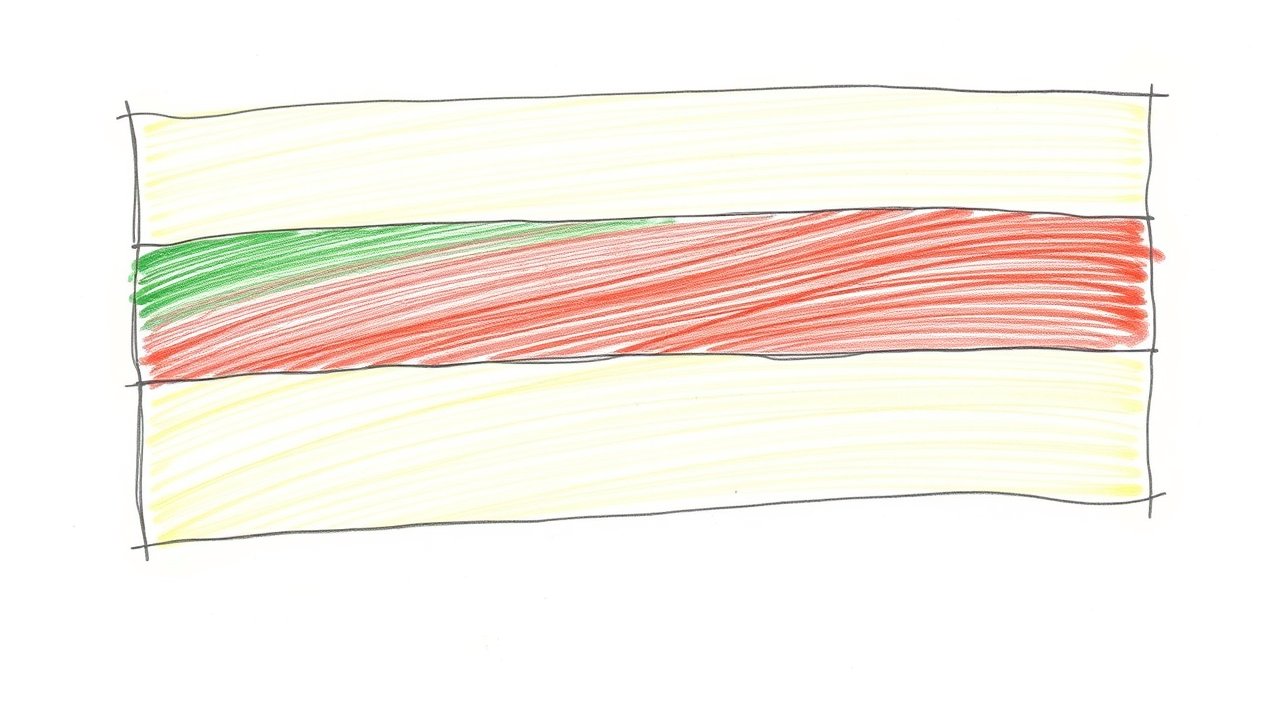
Pencil Sketch — Three horizontal stripes of yellow, green, and red. The flag of Lithuania as a bold, confident pencil sketch. Three horizontal stripes of yellow, green, and red. Strong graphite lines on cream paper — not delicate but bold and decisive. Heavy pressure on key outlines, dramatic cross-hatching for deep shadows and shading. Immediately recognizable as the Lithuania flag. Artist’s confident hand, not tentative. No text, no letters, no words, no writing of any kind.
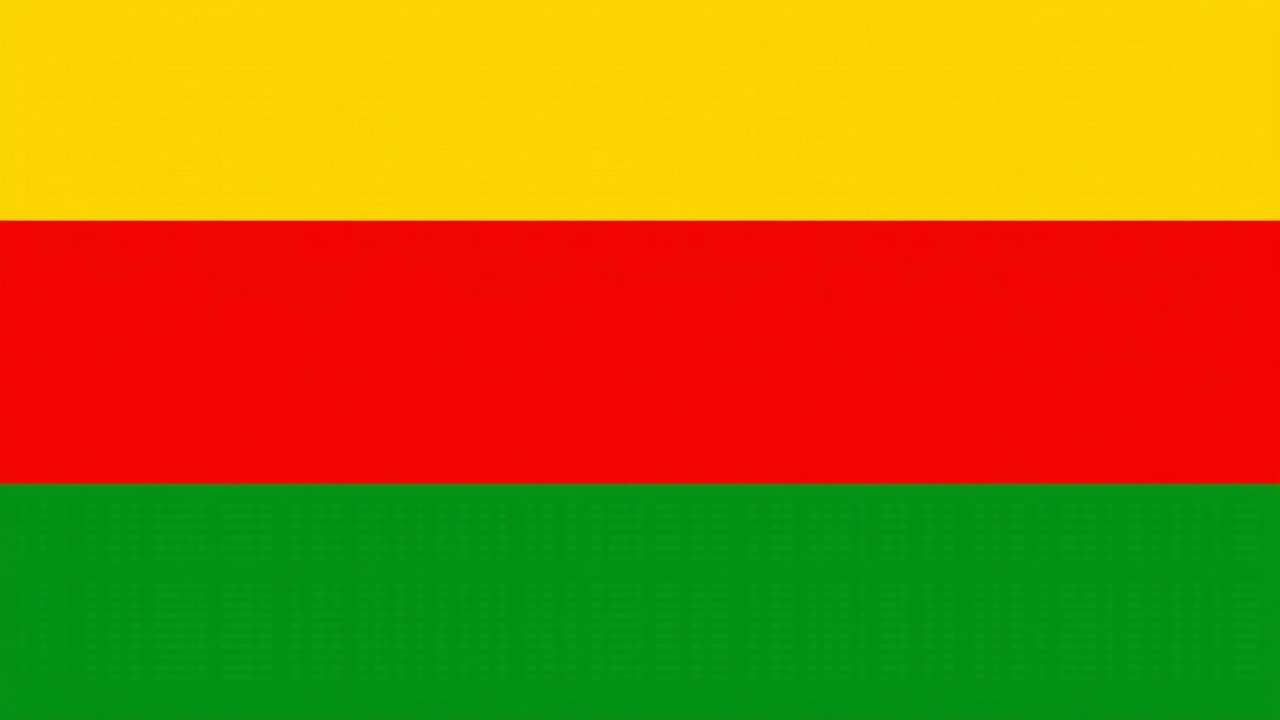
Pixel Art — Three horizontal stripes of yellow, green, and red. The flag of Lithuania as detailed 16-bit pixel art. Three horizontal stripes of yellow, green, and red. Crisp pixel grid, limited palette with careful dithering, nostalgic retro game aesthetic. Clean grid-aligned design with subtle shading. Every element of the flag faithfully reproduced in pixels. No text, no letters, no words, no writing of any kind.

Stained Glass — Three horizontal stripes of yellow, green, and red. The flag of Lithuania rendered as an ornate stained glass window. Three horizontal stripes of yellow, green, and red. The design is completely faithful to the real Lithuania flag — exact colors, geometry, and all symbols preserved. Brilliant jewel-toned glass pieces separated by dark lead came lines. Warm sunlight streaming through, casting colored light. Gothic cathedral craftsmanship. No text, no letters, no words, no writing of any kind.

Ukiyo-e Woodblock — Three horizontal stripes of yellow, green, and red. The flag of Lithuania as a traditional Japanese ukiyo-e woodblock print. Three horizontal stripes of yellow, green, and red. Bold outlines, flat areas of rich color, flowing organic forms. Wind and waves incorporated into the composition. Printed on washi paper with visible wood grain texture. The flag is the central focus and instantly recognizable. No text, no letters, no words, no writing of any kind.
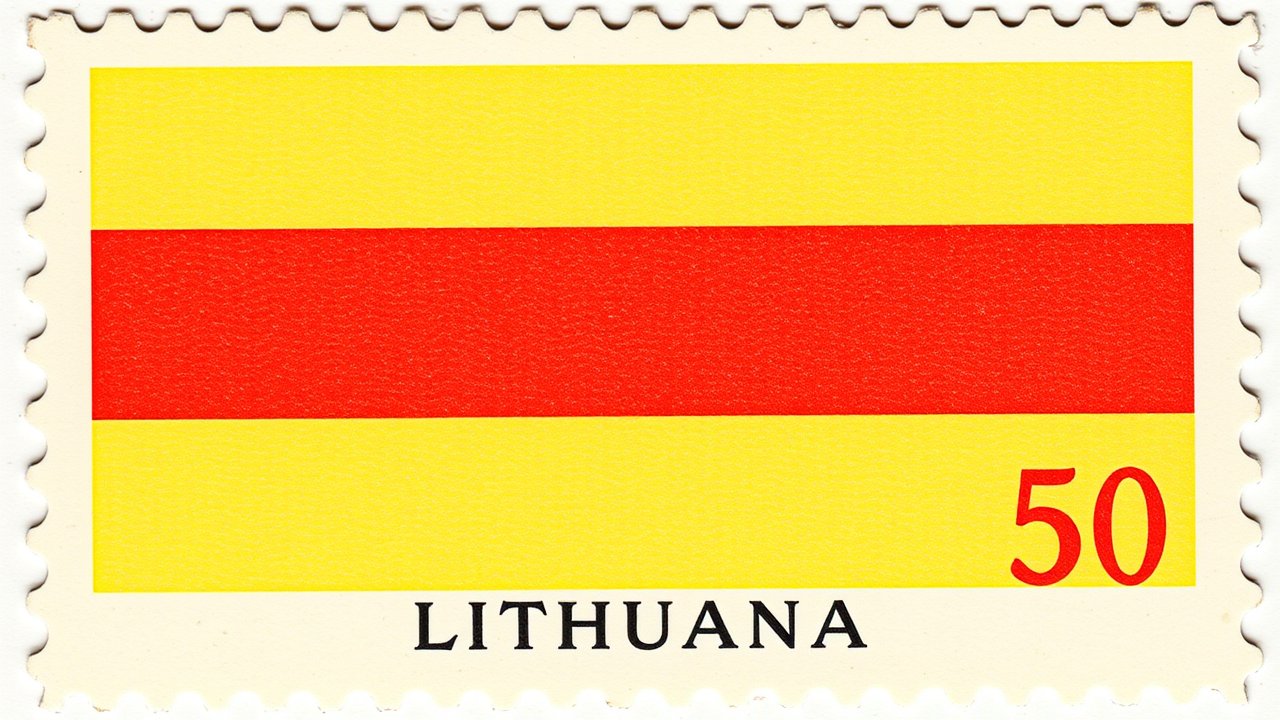
Vintage Postage Stamp — Three horizontal stripes of yellow, green, and red. The flag of Lithuania as a vintage 1950s postage stamp. Three horizontal stripes of yellow, green, and red. The flag fills most of the stamp — it is the primary subject, faithfully rendered in fine engraved intaglio style. Perforated edges, aged paper with slight foxing. The stamp may show a denomination numeral only — absolutely no other text or country names.
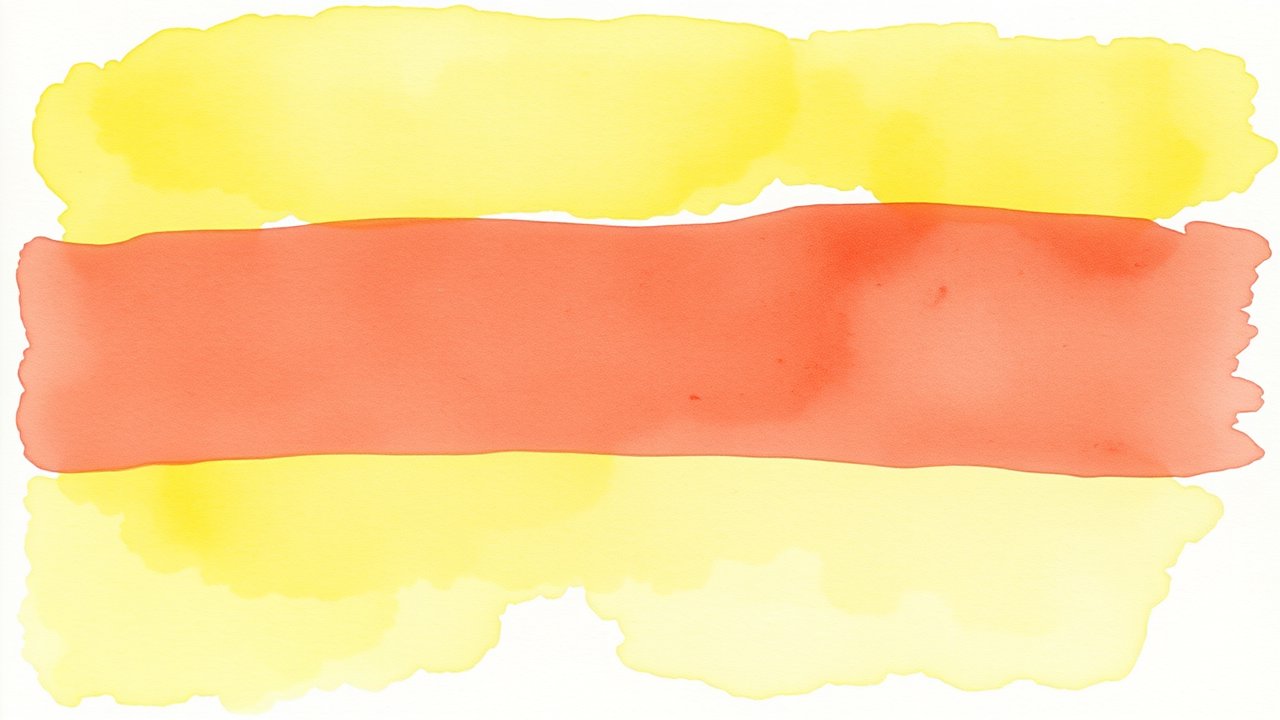
Watercolor — Three horizontal stripes of yellow, green, and red. The flag of Lithuania painted in loose, expressive watercolor. Three horizontal stripes of yellow, green, and red. Wet-on-wet technique with soft color bleeds, visible brushstrokes, natural paper texture. Delicate splashes and drips at the edges. Luminous, translucent layers of pigment. No text, no letters, no words, no writing of any kind.
Lithuania’s Tricolor: A Symbol of Independence, Sovereignty, and National Pride
The flag of Lithuania stands as a modern emblem of Baltic independence and cultural identity, consisting of three equal horizontal stripes of yellow, red, and green. This seemingly simple design carries profound historical significance rooted in the medieval Grand Duchy of Lithuania, the traumatic experience of imperial domination, and the ultimately successful struggle for twentieth-century independence. The Lithuanian flag represents more than a national symbol; it embodies centuries of resistance, survival, and the unwavering determination of the Lithuanian people to maintain their distinct identity despite repeated attempts at cultural suppression and territorial conquest. Understanding this flag requires examining its medieval precedents, decoding the intricate symbolism of its colors, and tracing how a nation twice lost its independence and twice reclaimed it through the power of national symbols and organized resistance.
Medieval Roots and the Grand Duchy Period
The origins of Lithuanian national symbolism reach back to the medieval period, specifically to the fourteenth and fifteenth centuries when the Grand Duchy of Lithuania represented one of Europe’s most powerful and geographically expansive states. At its height under Grand Duke Vytautas (1392-1430), Lithuania controlled vast territories stretching from the Baltic Sea to the Black Sea, encompassing parts of modern-day Belarus, Ukraine, and Poland. The medieval Lithuanian state employed various heraldic symbols, most notably the Vytis—a distinctive armored knight on horseback wielding a sword or saber. This symbol, officially adopted as the state emblem, represented military prowess, noble virtues, and Lithuanian sovereignty during centuries when the nation played a crucial role in Eastern European politics and served as a bulwark against both the Teutonic Knights and the expanding Muscovite state.
However, the union of Lithuania with Poland in 1569 through the Union of Lublin marked a turning point in Lithuanian history. Rather than representing equal partners, the union effectively subordinated Lithuania to Polish control, diminishing its political autonomy and beginning a process of cultural integration that would intensify over subsequent centuries. The medieval symbols of Lithuanian independence—including the Vytis and other heraldic emblems—gradually faded from official use, relegated to historical memory among the Lithuanian nobility and educated classes who maintained knowledge of their nation’s former glory.
Imperial Domination and the Suppression of Lithuanian Identity
The situation for Lithuania deteriorated further with the partitions of Poland in the late eighteenth century. In 1795, the Russian Empire absorbed the Lithuanian territories that had been under Polish control, initiating more than a century of harsh Russian imperial rule. The Russian authorities pursued an aggressive policy of Russification, aiming to eliminate Lithuanian national consciousness and absorb the Lithuanian population into the Russian state and Orthodox Christian sphere of influence. Religious persecution, educational restrictions, and cultural suppression became tools of imperial domination. Most dramatically, the Russian authorities banned the publication and importation of books printed in the Lithuanian language using Latin characters, a prohibition that lasted from 1864 until 1904 and aimed to erase Lithuanian as a living literary language.
Yet this very repression paradoxically strengthened Lithuanian national identity. Underground publishing networks—known as the “Knygnešiai” or book smugglers—circulated forbidden Lithuanian literature across the border from Prussia, keeping the language alive and nurturing nationalist sentiment. The Lithuanian Catholic Church, despite Orthodox pressure, continued to serve as a refuge for Lithuanian cultural traditions. Among the educated classes and nationalist intellectuals, stories of medieval Lithuanian greatness—particularly the reign of Vytautas and the Vytis symbol—were preserved and celebrated as evidence of Lithuanian capability for self-governance and cultural distinctiveness.
The National Awakening and the Emergence of Modern Lithuanian Symbols
The late nineteenth and early twentieth centuries witnessed an extraordinary awakening of Lithuanian nationalism. Intellectuals, clergy, and activists organized cultural societies, published newspapers despite Russian censorship, and developed a comprehensive vision of Lithuanian independence. This nationalist movement, while drawing inspiration from medieval historical symbols like the Vytis, created distinctly modern national emblems that reflected contemporary values and represented aspirations for the future rather than nostalgia for the past. The tricolor of yellow, red, and green emerged during this period as the unofficial symbol of the Lithuanian independence movement.
The origins of the specific color combination remain somewhat debated among historians, but several interpretations have become widely accepted within Lithuanian national consciousness. The yellow is said to represent the fields of Lithuania, its agricultural heritage, and the golden sunshine of freedom. The red symbolizes the blood shed by ancestors in defense of the nation and the courage required for liberation from imperial rule. The green represents hope, renewal, and the forests that cover much of Lithuania’s landscape—deeply significant in Lithuanian cultural tradition and national identity. Together, these three colors form a cohesive national palette that, like the Albanian and many other European flags, draws from natural symbolism and emotional resonance to create a powerful emblem of national feeling.
Independence, Soviet Occupation, and the Power of Symbolic Resistance
When Lithuania declared independence from the Russian Empire on February 16, 1918, in the chaos following the Russian Revolution and World War I’s conclusion, the three-stripe flag became the official national symbol. For the first time in more than a century, Lithuanians could publicly display their national colors without fear of imperial punishment. The interwar period (1918-1940) witnessed a flowering of Lithuanian culture, literature, and national institutions, with the tricolor flag serving as the visible emblem of recovered sovereignty. During these two decades, Lithuanians rebuilt their educational system, established universities, and developed a robust civil society—all under the banner of the yellow, red, and green tricolor.
This independence proved tragically short-lived. In 1940, the Soviet Union, acting under the secret protocols of the Molotov-Ribbentrop (Nazi-Soviet) Pact, occupied Lithuania and incorporated it as the Lithuanian Soviet Socialist Republic. For nearly fifty years, Lithuanian independence existed only in the memory of its people and in the hearts of the diaspora communities that had escaped Soviet rule. During this period, displaying the Lithuanian tricolor flag was forbidden; doing so could result in arrest, deportation, or imprisonment. The Soviet authorities attempted to erase Lithuanian national consciousness, imposing Russian language education, collectivizing agriculture, and suppressing any public expression of Lithuanian identity.
Yet remarkably, the Lithuanian flag endured as a symbol of resistance and hope. In exile communities—in the United States, Canada, Australia, and Western Europe—the tricolor continued to be displayed at cultural events and nationalist gatherings, keeping the flame of Lithuanian independence alive. Within Lithuania itself, despite the risks, underground nationalist networks preserved the flag’s design and meaning, passing knowledge of Lithuania’s true symbols from generation to generation. The tricolor became not merely a flag but a subversive act of defiance—a silent assertion that Lithuania was not truly Russian and that Lithuanian identity would survive Soviet occupation.
The Singing Revolution and Restoration of Independence
The Soviet system’s weakening in the late 1980s created an extraordinary opportunity for Baltic nations to reclaim their independence. Lithuania led this movement through what became known as the “Singing Revolution”—mass demonstrations and cultural expressions that asserted Lithuanian identity through song, flags, and peaceful resistance rather than military confrontation. On August 23, 1989, on the fiftieth anniversary of the Molotov-Ribbentrop Pact, Lithuanians formed a human chain stretching across the three Baltic republics, visible from space and broadcast to the world. Crucially, participants carried the forbidden tricolor flags, transforming the yellow, red, and green into a symbol of peaceful resistance and determination.
The success of this movement culminated in Lithuania’s declaration of independence on March 11, 1990, making it the first Soviet republic to openly declare independence from the USSR. When Lithuania reclaimed its sovereignty, the tricolor flag was immediately restored as the official national symbol, legally confirmed by the Seimas (Lithuanian parliament). The flag’s restoration represented far more than the adoption of a national emblem; it signified the return of Lithuania to the community of independent nations and the vindication of decades of sacrifice by those who had kept the flame of Lithuanian identity alive through the darkest period of Soviet rule.
Modern Symbolism and Contemporary Significance
Today, the Lithuanian flag remains one of the nation’s most powerful symbols, displayed with pride at government buildings, flown by Lithuanian communities worldwide, and worn during national celebrations and commemorations. The tricolor’s three stripes have become inseparable from Lithuanian national consciousness and identity. For Lithuanians, the flag represents not only the nation-state but also the spiritual and cultural essence of Lithuania—its connection to the land, its history of resistance against domination, and its unwavering commitment to freedom and self-determination.
The flag’s design, while simple, carries layers of meaning that continue to resonate in contemporary Lithuanian society. It serves as a daily reminder of the sacrifices made to achieve and maintain independence, as well as a beacon of hope for national unity and progress. For younger generations of Lithuanians who did not experience Soviet occupation, the flag connects them to the historical struggles of their ancestors and reinforces the understanding that freedom and independence are not guaranteed but must be actively cherished and defended. In the context of Lithuania’s integration into the European Union (2004) and NATO (2004), the tricolor flag continues to symbolize Lithuanian distinctiveness and national pride while the nation participates in broader European and Western institutions.
Conclusion: An Enduring Symbol of Resilience and Freedom
The Lithuanian flag, with its bold tricolor of yellow, red, and green, embodies nearly a century of modern Lithuanian history marked by extraordinary resilience, sacrifice, and ultimate triumph. From its emergence during the nationalist awakening of the late nineteenth century, through the tragedy of Soviet occupation and the triumphant restoration of independence, the flag has served as Lithuania’s most recognizable symbol of national identity. Its colors speak to natural beauty, historical suffering, and hope for the future—a powerful combination that has sustained Lithuanian consciousness through periods of oppression and continues to inspire national unity in the present era. Whether displayed during state ceremonies, carried in cultural parades, or worn by diaspora communities maintaining connections to their homeland, the Lithuanian tricolor remains a testament to the enduring power of national symbols and the human capacity to preserve identity and aspiration across generations and despite seemingly insurmountable odds.
Free Printable: Flags of the World Reference Card
Get a beautiful printable poster with 50 flag emojis, Unicode codes, and fun facts. Perfect for classrooms and desks!
No spam, ever. Unsubscribe anytime.