

How To
How To
Time needed: 1 minute
How to copy and paste the Flag of Peru Emoji to any device.
- Copy the Peruvian Flag Emoji
Go to flagemoji.com and press the copy button (above). This works on any device.
- Paste the Emoji
Go to your email/iMessage/SMS texting service/document and paste the emoji.
For mobile devices
— double-tap or tap-hold, then paste should appear. Tap it.
For desktop and laptops on Apple devices
— command-P / ⌘-P
For desktop and laptops on Windows devices
— control-p
Codes
Emoji Codes
Flag emojis are unicode symbols, like any other letter or number on your keyboard. This means you can copy and paste the emoji itself into your code, whatever the language (click the button above).
They actually count as two characters: the two-letter country code (the ISO international standard). The unicode and shortcode both represent country data which devices can interpret and display the emoji.
| Country Code | Unicode | Shortcode |
| PE | U+1F1F5 U+1F1EA | :flag_PE: :PE: |
Emoji shortcodes are used on some platforms as a way for users to type in emojis from the keyboard. If you type the emoji shortcode on Github or Slack, the emoji will appear.
*The official name of the emoji is only the country name, not ‘Peru Flag’, for example.
Description
Description
The flag of Peru is made up of three equal vertical bands of red (hoist side), white, and red. The coat of arms is centered in the white band. The coat of arms features a shield bearing a vicuna (representing fauna), a cinchona tree (the source of quinine, signifying flora), and a yellow cornucopia spilling out coins (denoting mineral wealth). Red refers to blood shed for independence, and white symbolizes peace.
Map
Map
Check out the map of Austria!
Weather
Anthem
National Anthem
| Title | Himno Nacional del Peru (National Anthem of Peru) |
| Composer | Jose De La Torre Ugarte / Jose Bernardo Alzedo |
FAQ
FAQs
Peru proclaimed its independence from Spain on July 28, 1821.
Red recalls blood shed for independence, while white symbolizes peace.
The flag of Peru was formally adopted on February 25, 1825.
Peru is governed by a presidential republic.
Discover more fun facts of Italy.
Printable
Printable Peruvian Flag
Print another really cool flag. Why not the flag of Qatar?
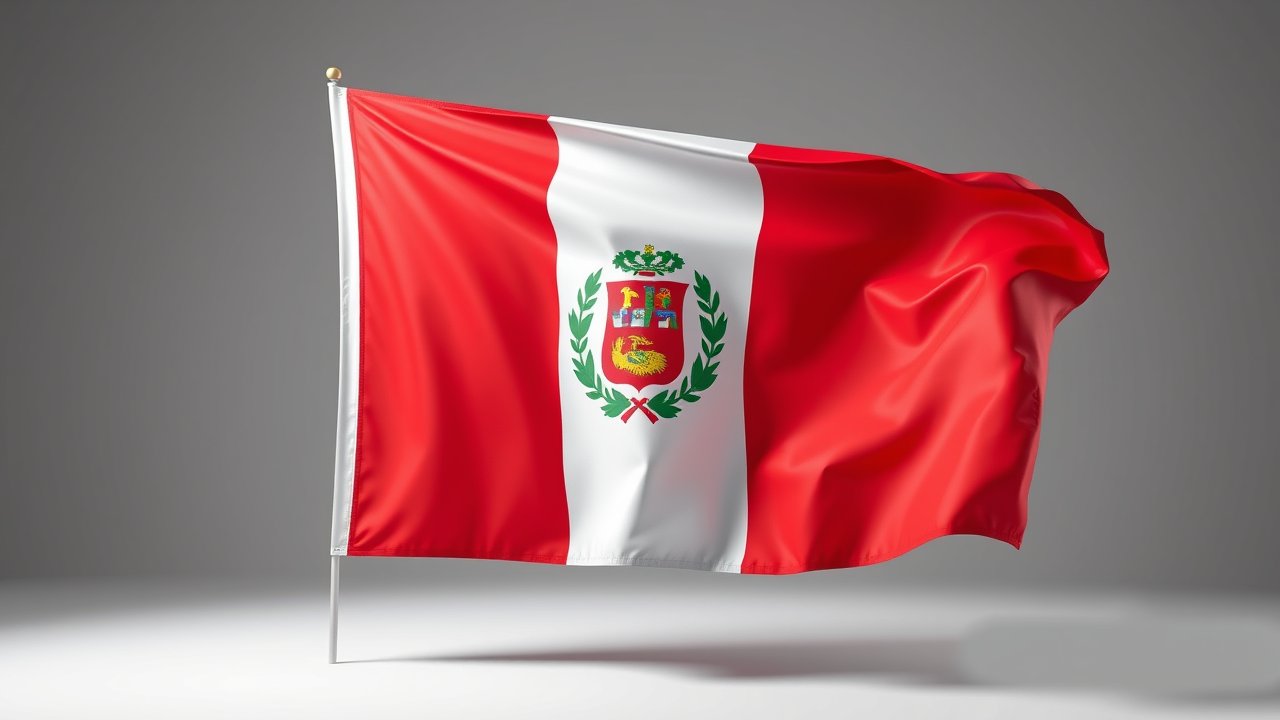
3D Glossy Render — Three vertical stripes of red, white, and red with the coat of arms centered. The flag of Peru as a photorealistic 3D render. Three vertical stripes of red, white, and red with the coat of arms centered. The flag fabric hangs or drapes naturally but preserves exact proportions, colors, and all symbols perfectly — completely faithful to the real Peru flag. Dramatic studio lighting, glossy silk material, soft shadows, subsurface scattering, perfect specular highlights. No text, no letters, no words, no writing of any kind.
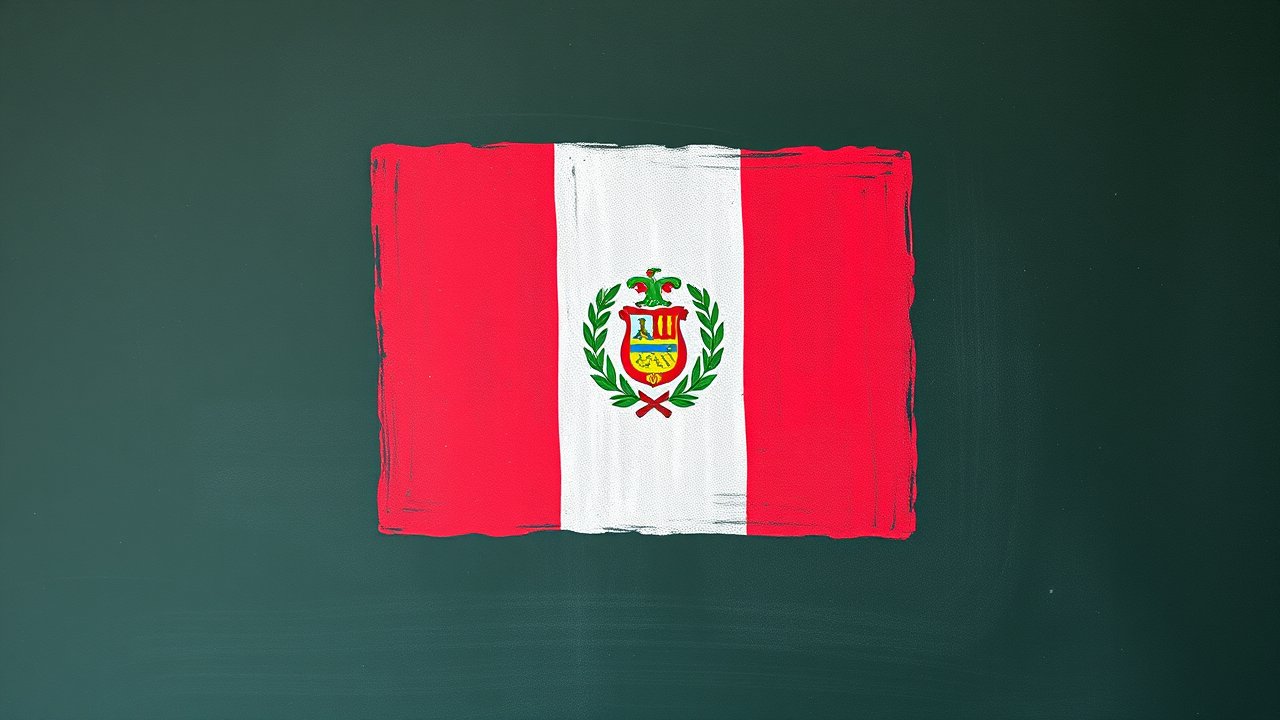
Chalk on Blackboard — Three vertical stripes of red, white, and red with the coat of arms centered. The flag of Peru drawn in chalk on a real blackboard. Three vertical stripes of red, white, and red with the coat of arms centered. Authentic blackboard — dark slate green surface with chalk dust and smudge marks. Soft, dusty white and colored chalk lines, imperfect edges, hand-drawn quality. Chalk dust particles visible in the air. The flag is immediately recognizable. No text, no letters, no words, no writing of any kind.
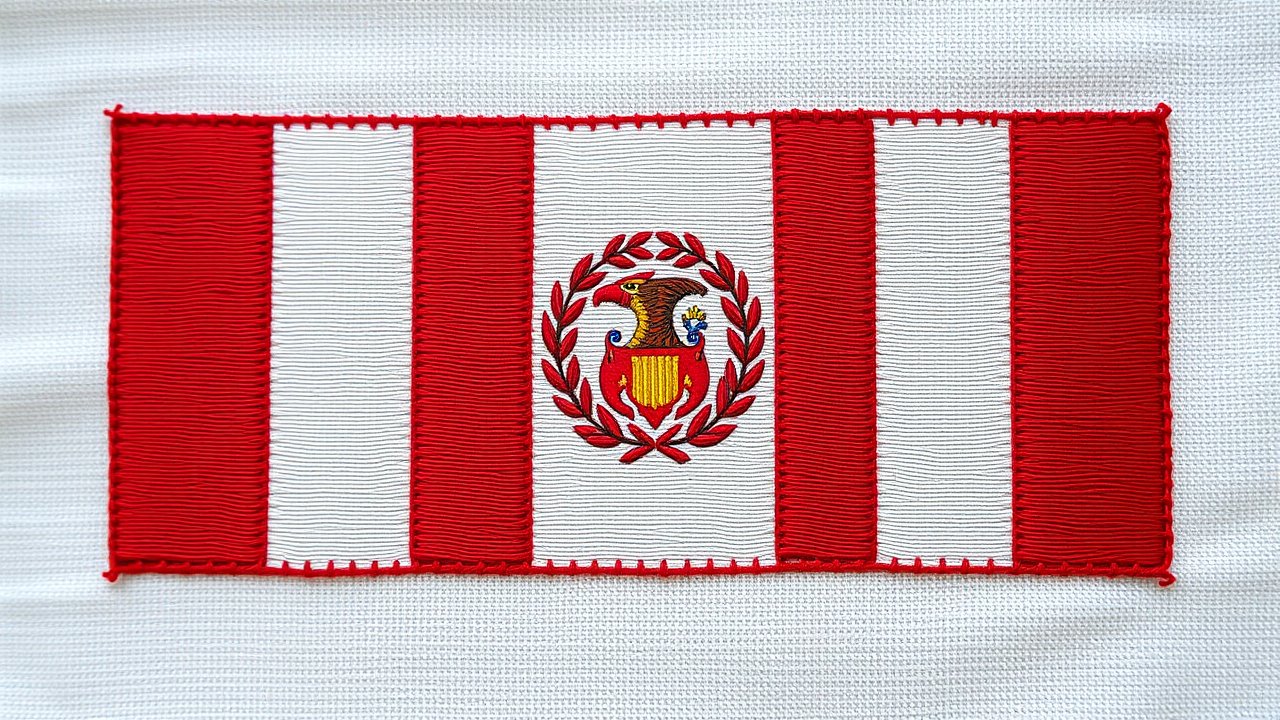
Embroidered Textile — Three vertical stripes of red, white, and red with the coat of arms centered. The flag of Peru as intricate embroidery on linen fabric. Three vertical stripes of red, white, and red with the coat of arms centered. Dense satin stitches, French knots, chain stitch detail. The flag design is completely faithful — exact colors, geometry, and all symbols faithfully stitched, immediately recognizable as the Peru flag. Visible thread texture, dimensional quality, warm handcrafted feel. No text, no letters, no words, no writing of any kind.
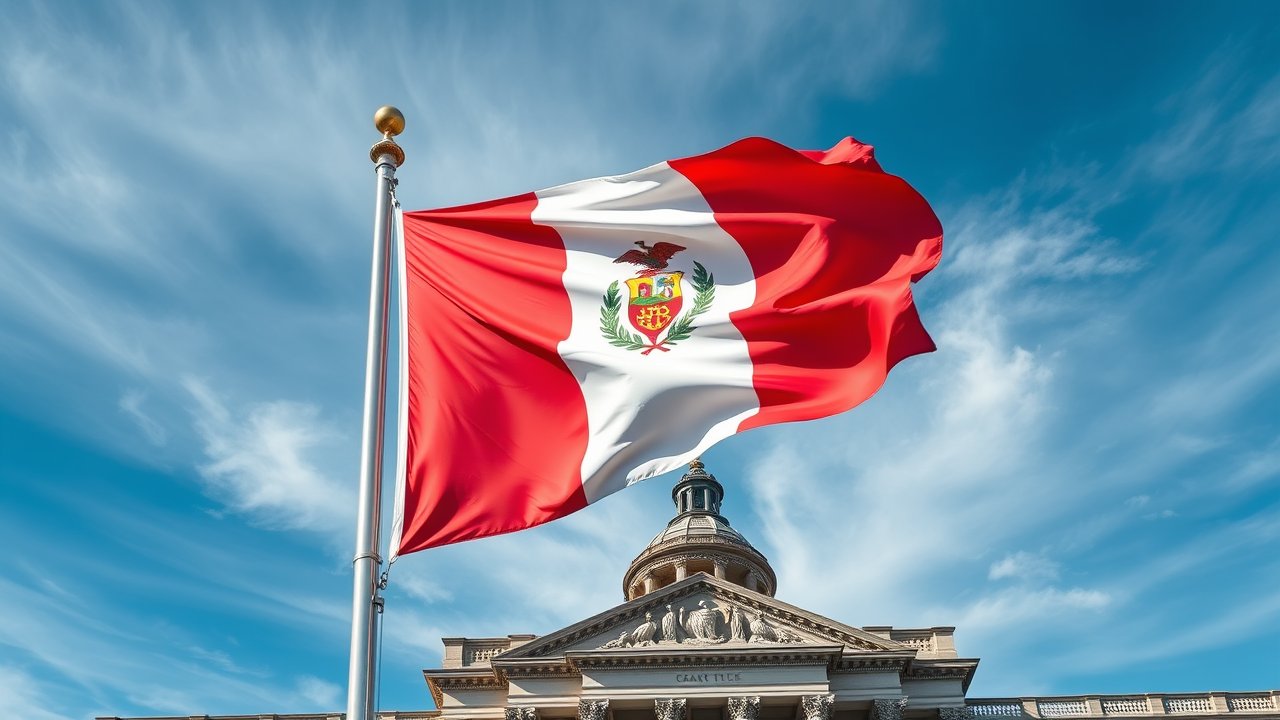
Flagpole in Capital — Three vertical stripes of red, white, and red with the coat of arms centered. Photorealistic photograph of the Peru flag flying on a tall flagpole in front of an iconic government building in the capital city. Three vertical stripes of red, white, and red with the coat of arms centered. The flag ripples naturally in the wind, colors vivid and exact. Documentary photography style, sharp and realistic. Grand architecture in the background. Blue sky, dramatic clouds. No text, no letters, no words, no writing of any kind.
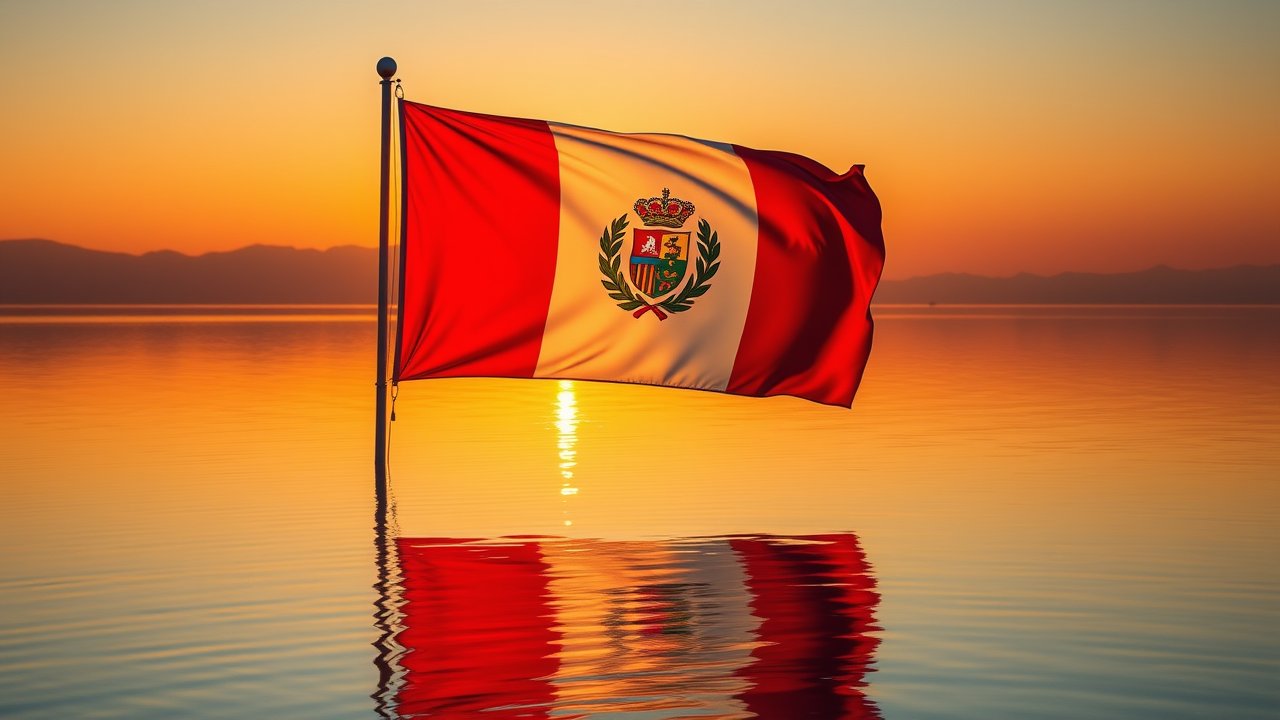
Golden Hour Reflection — Three vertical stripes of red, white, and red with the coat of arms centered. Photorealistic photograph of the Peru flag reflected in still water at golden hour. Three vertical stripes of red, white, and red with the coat of arms centered. The flag flies on a pole at the water’s edge, its reflection shimmering on the surface below. Warm amber and orange sunset light. The flag colors and design are faithful and vivid. Serene, cinematic landscape photography. No text, no letters, no words, no writing of any kind.
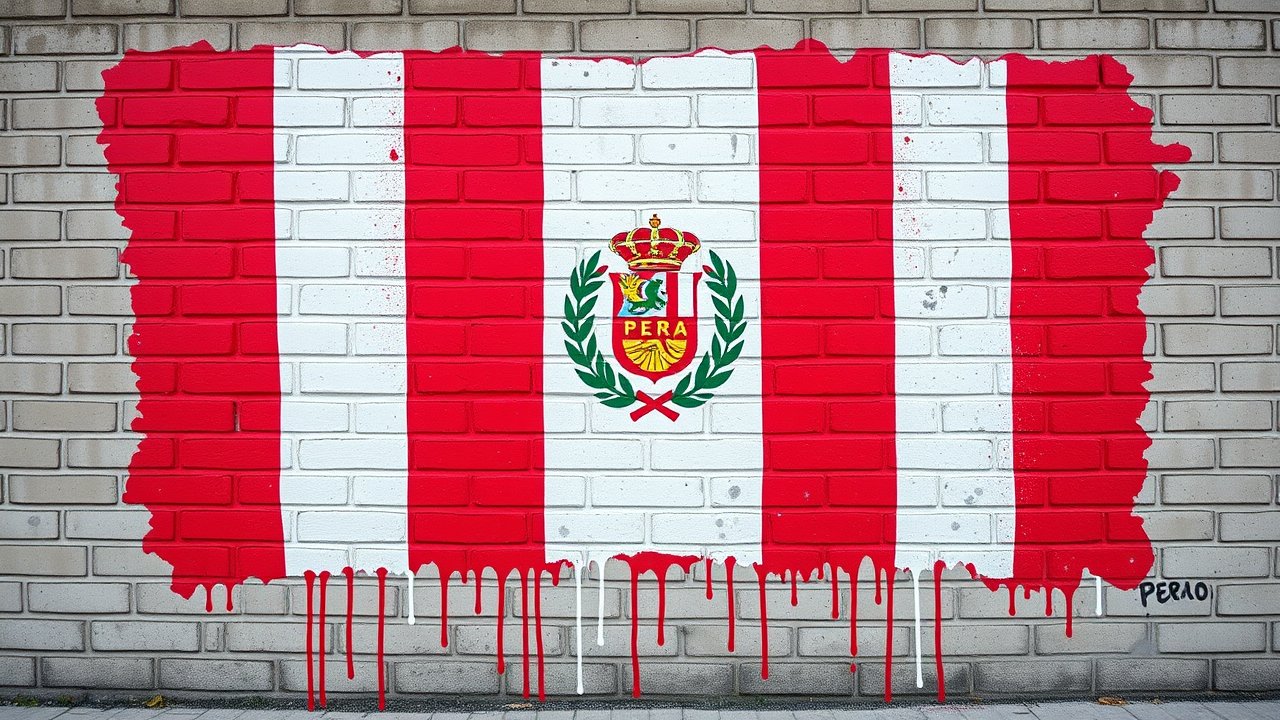
Street Art / Graffiti — Three vertical stripes of red, white, and red with the coat of arms centered. The flag of Peru as vibrant street art spray-painted on a brick wall. Three vertical stripes of red, white, and red with the coat of arms centered. Bold spray paint, dripping edges, stencil layers, overspray halos. The flag design is faithful and immediately recognizable — exact colors and symbols, just rendered in spray paint on urban concrete. No text, no letters, no words, no writing of any kind. No tags, no graffiti lettering.
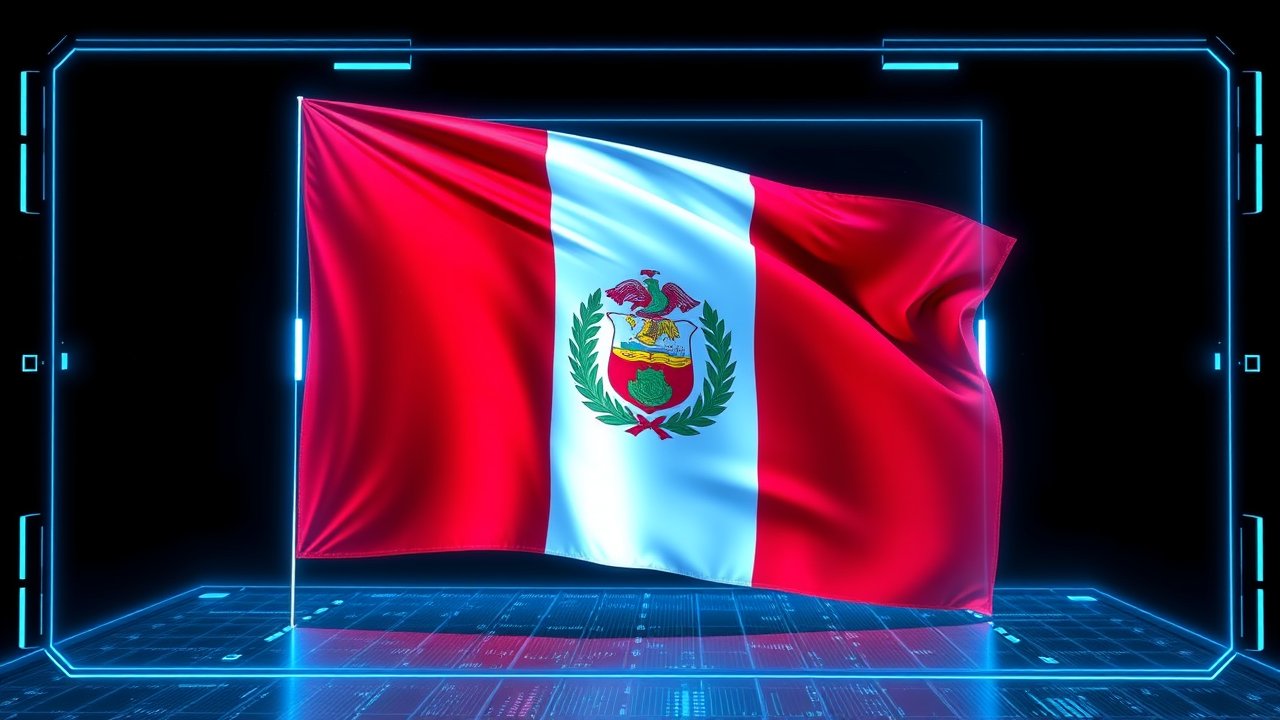
Sci-Fi Hologram — Three vertical stripes of red, white, and red with the coat of arms centered. The flag of Peru projected as a futuristic holographic display. Three vertical stripes of red, white, and red with the coat of arms centered. Translucent blue-white projection with scan lines, floating in dark space. Glitching edges, particle effects, data streams. The flag design is completely faithful and recognizable. Cyberpunk HUD elements framing the projection. No text, no letters, no words, no writing of any kind.
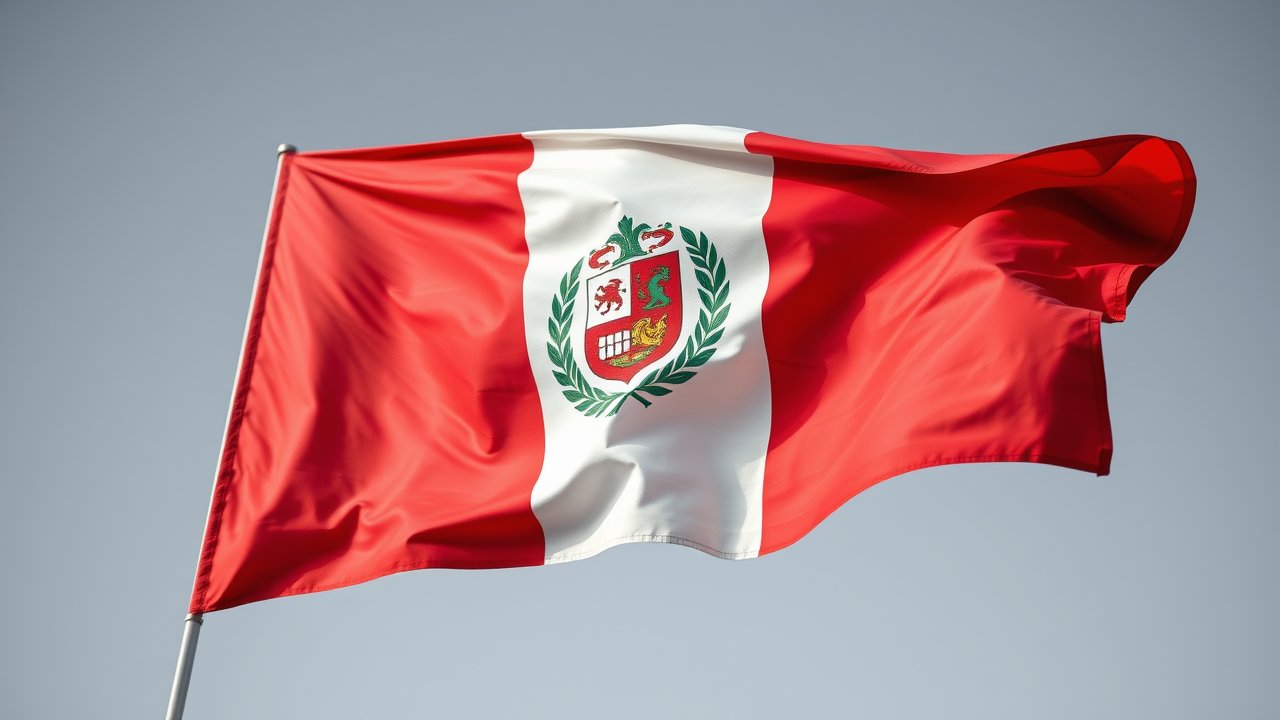
Hyperrealistic Wind — Three vertical stripes of red, white, and red with the coat of arms centered. Ultra-hyperrealistic photograph of the Peru flag caught in a dramatic gust of wind. Three vertical stripes of red, white, and red with the coat of arms centered. Macro-level fabric detail — individual threads visible, fabric folds and tension lines crisp. Colors and design completely faithful to the real Peru flag. High-speed shutter, razor-sharp focus, studio lighting. No text, no letters, no words, no writing of any kind.
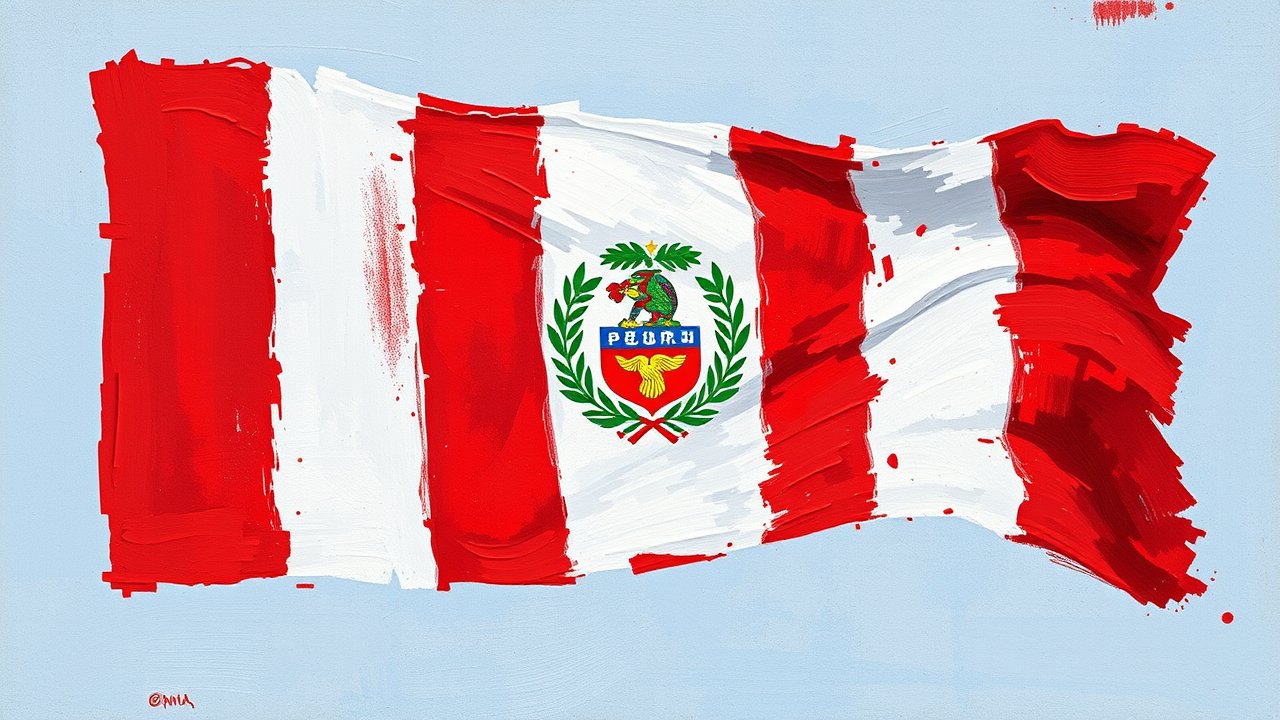
Impressionist Oil — Three vertical stripes of red, white, and red with the coat of arms centered. The flag of Peru painted in French Impressionist oil on canvas. Three vertical stripes of red, white, and red with the coat of arms centered. Thick impasto brushstrokes, dappled light, vibrant broken color technique in the style of Monet. The flag is instantly recognizable — colors and design faithful to the real Peru flag, interpreted with impressionist light and texture. No text, no letters, no words, no writing of any kind.
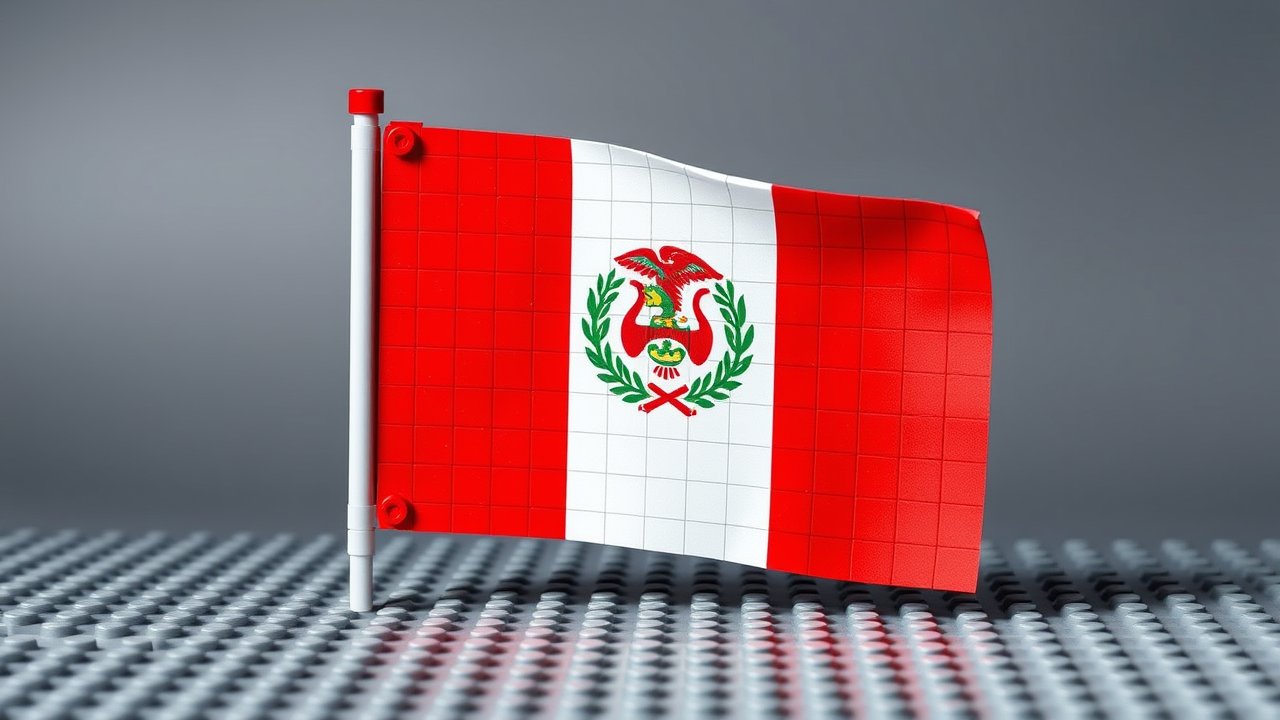
Lego Bricks — Three vertical stripes of red, white, and red with the coat of arms centered. The flag of Peru built from Lego bricks, photographed as a real physical construction. Three vertical stripes of red, white, and red with the coat of arms centered. Visible studs and brick seams, slight plastic sheen. Standard Lego colors approximate the flag’s palette. Built on a gray Lego baseplate. Dramatic angle showing the three-dimensional brick texture. No text, no letters, no words, no writing of any kind.
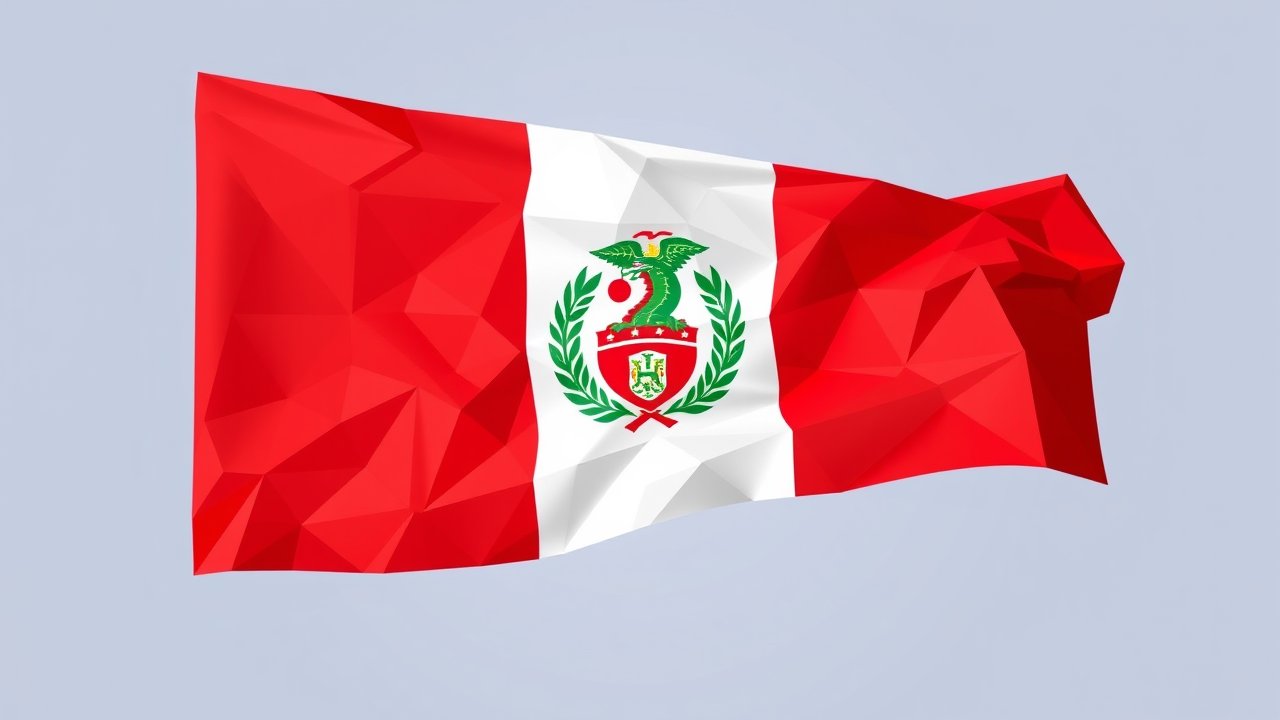
Low-Poly Geometric — Three vertical stripes of red, white, and red with the coat of arms centered. The flag of Peru constructed from low-polygon geometric triangles. Three vertical stripes of red, white, and red with the coat of arms centered. Aggressively faceted — each region broken into many visible triangular faces with subtle color variation across each polygon, creating real depth and dimensionality even in flat-color areas of the flag. Crystal-like, contemporary computational design. The flag is completely faithful and immediately recognizable. No text, no letters, no words, no writing of any kind.
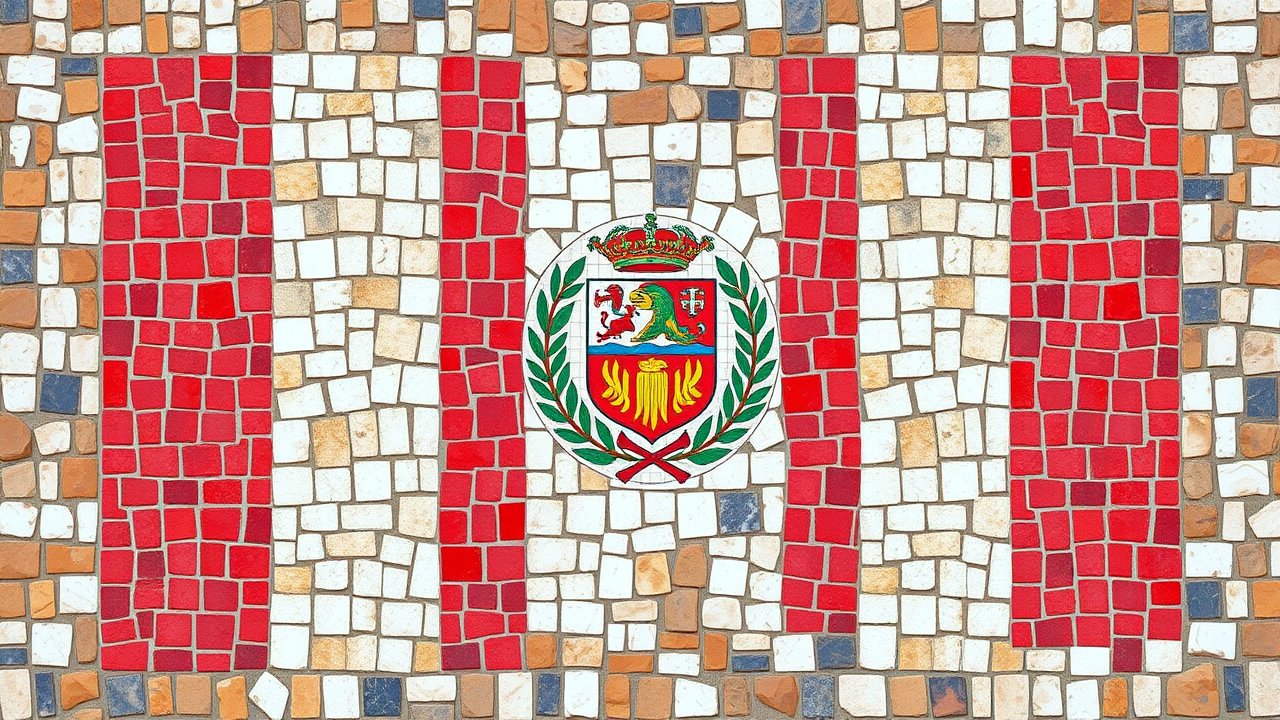
Mosaic Tiles — Three vertical stripes of red, white, and red with the coat of arms centered. The flag of Peru assembled as a Roman-style mosaic. Three vertical stripes of red, white, and red with the coat of arms centered. The flag is completely faithful to the real Peru flag — exact proportions, colors, and all symbols, rendered in thousands of small stone and glass tesserae. Visible grout lines, rich earthy tones mixed with brilliant glass, slight historical weathering. No text, no letters, no words, no writing of any kind.
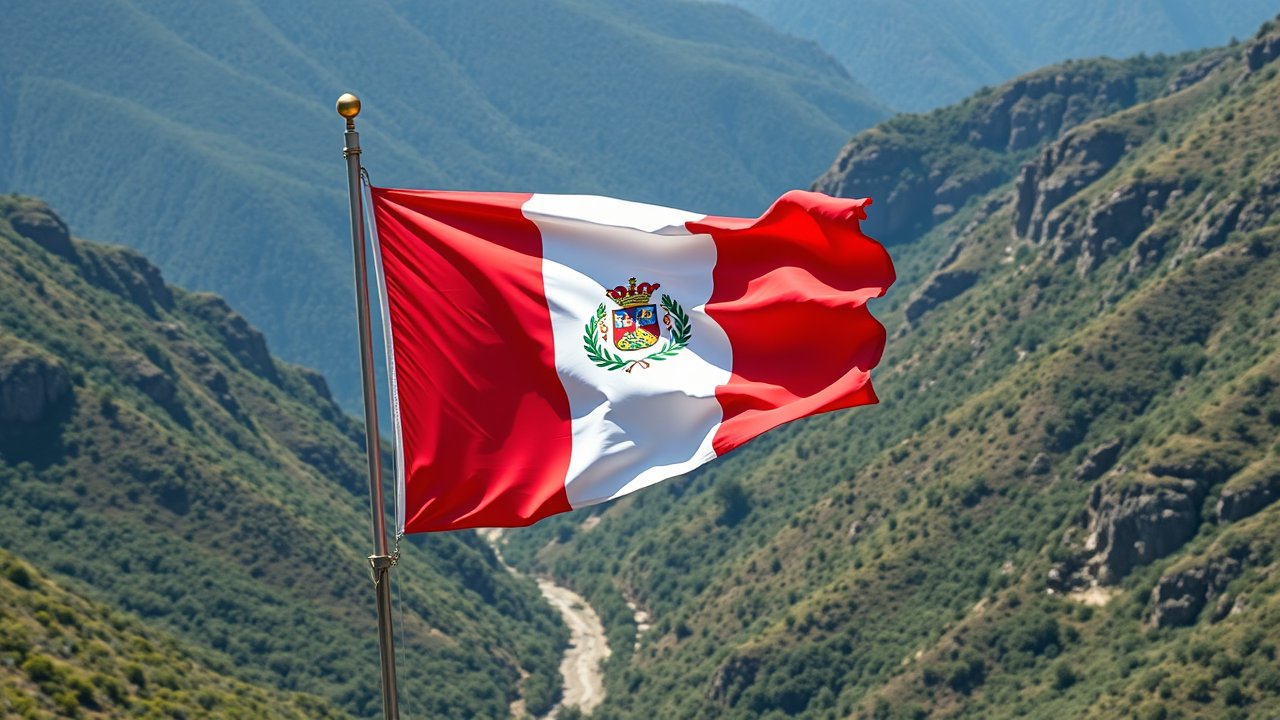
Native Landscape — Three vertical stripes of red, white, and red with the coat of arms centered. Photorealistic photograph of the Peru flag flying in an iconic natural landscape native to Peru — the terrain, flora, and environment characteristic of that country. Three vertical stripes of red, white, and red with the coat of arms centered. The flag is prominent and its colors are faithful and vivid. Remote, uninhabited wilderness. National Geographic photography style. No text, no letters, no words, no writing of any kind.
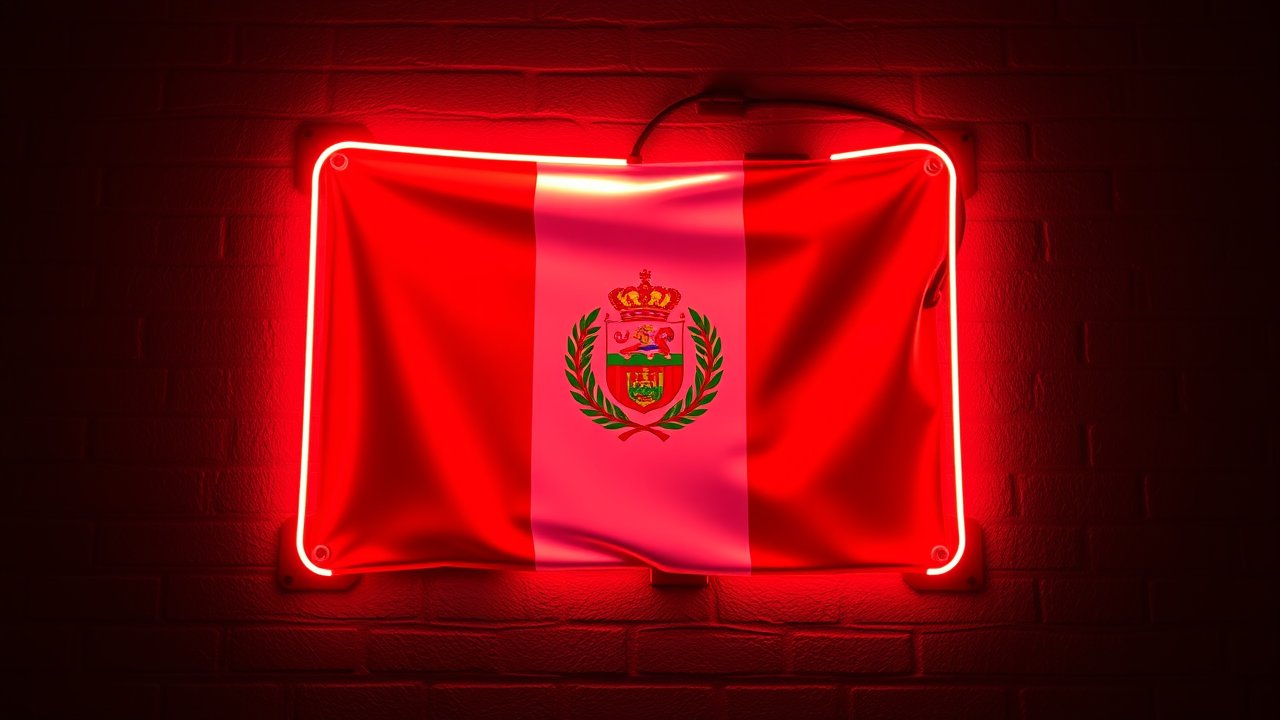
Neon Sign — Three vertical stripes of red, white, and red with the coat of arms centered. The flag of Peru recreated as a real neon sign mounted on a dark wall. Three vertical stripes of red, white, and red with the coat of arms centered. Glowing glass neon tubes bent into the flag’s shapes — the colors of the flag rendered in actual neon light. Visible glass tube bends, metal mounting brackets on the wall. Warm neon glow and light bloom. Real neon, not digital. Photographed in a dark room. No text, no letters, no words, no writing of any kind.
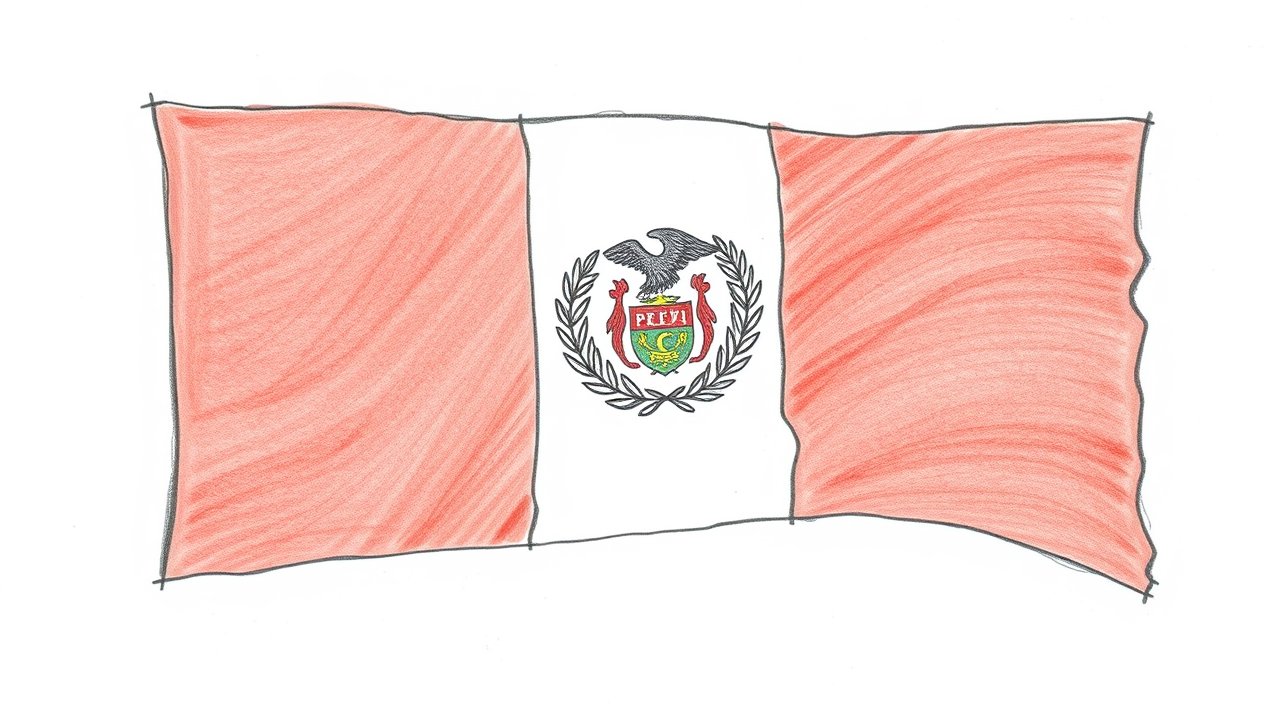
Pencil Sketch — Three vertical stripes of red, white, and red with the coat of arms centered. The flag of Peru as a bold, confident pencil sketch. Three vertical stripes of red, white, and red with the coat of arms centered. Strong graphite lines on cream paper — not delicate but bold and decisive. Heavy pressure on key outlines, dramatic cross-hatching for deep shadows and shading. Immediately recognizable as the Peru flag. Artist’s confident hand, not tentative. No text, no letters, no words, no writing of any kind.
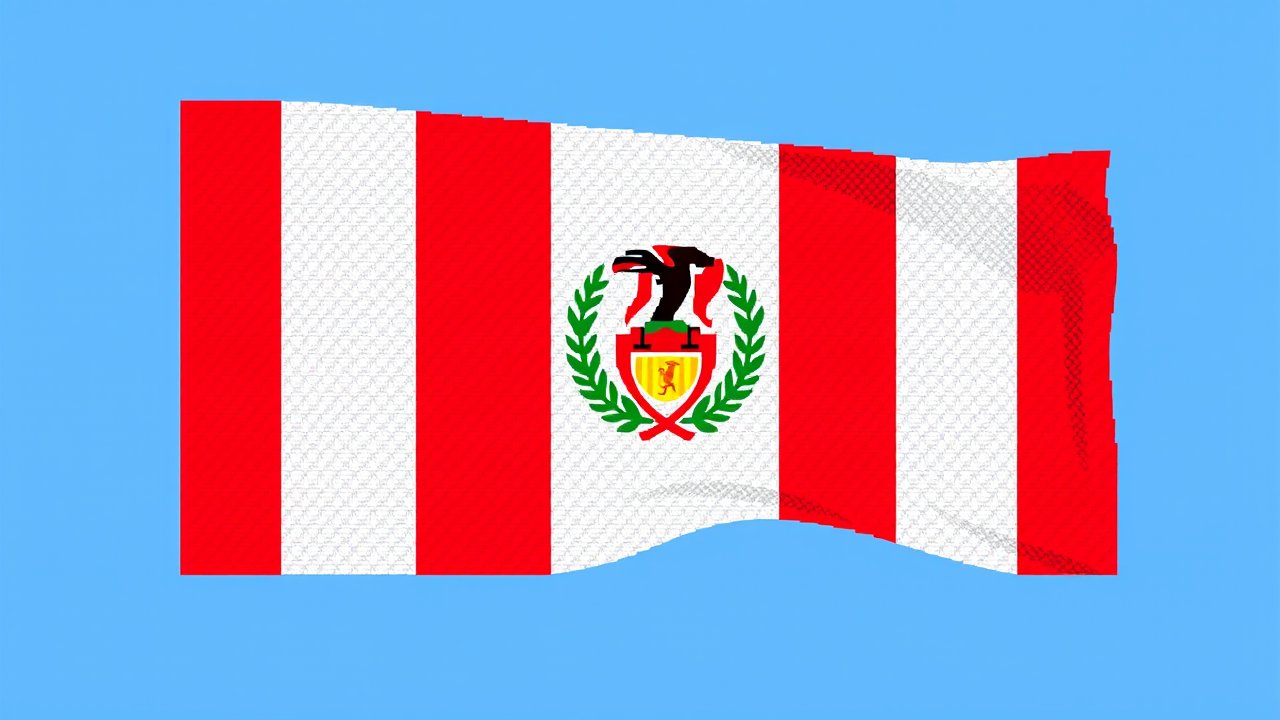
Pixel Art — Three vertical stripes of red, white, and red with the coat of arms centered. The flag of Peru as detailed 16-bit pixel art. Three vertical stripes of red, white, and red with the coat of arms centered. Crisp pixel grid, limited palette with careful dithering, nostalgic retro game aesthetic. Clean grid-aligned design with subtle shading. Every element of the flag faithfully reproduced in pixels. No text, no letters, no words, no writing of any kind.
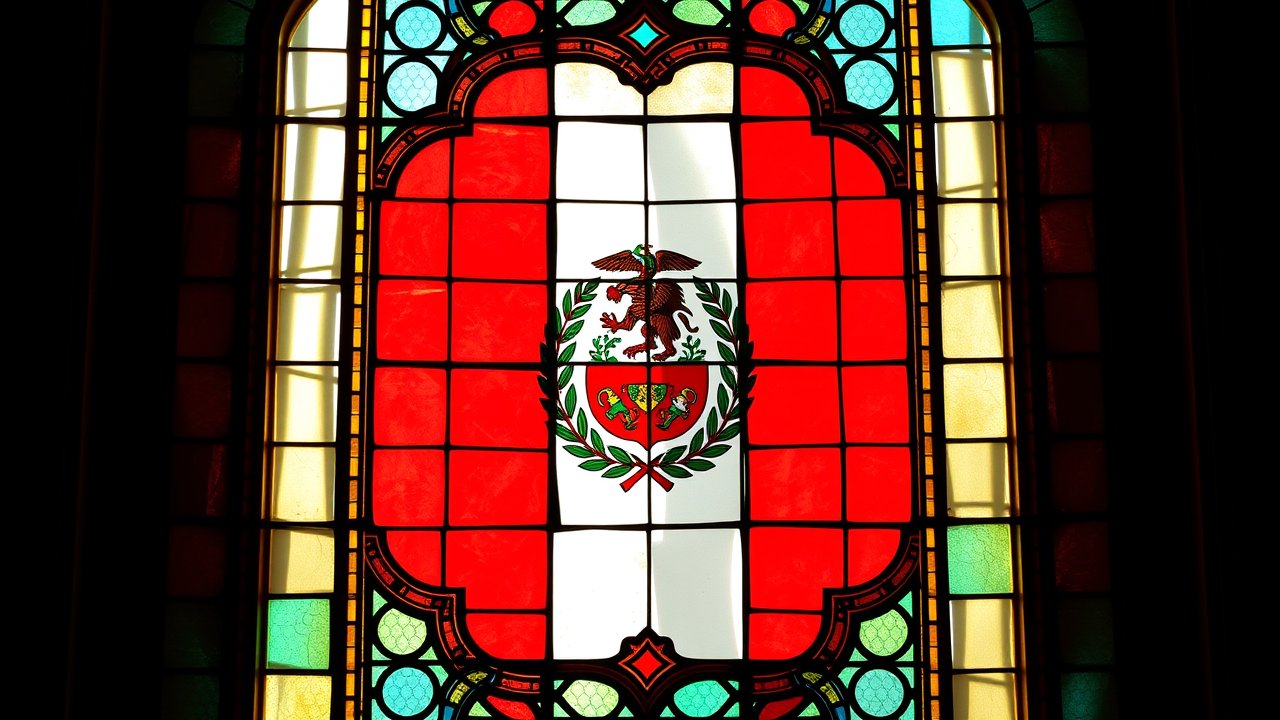
Stained Glass — Three vertical stripes of red, white, and red with the coat of arms centered. The flag of Peru rendered as an ornate stained glass window. Three vertical stripes of red, white, and red with the coat of arms centered. The design is completely faithful to the real Peru flag — exact colors, geometry, and all symbols preserved. Brilliant jewel-toned glass pieces separated by dark lead came lines. Warm sunlight streaming through, casting colored light. Gothic cathedral craftsmanship. No text, no letters, no words, no writing of any kind.
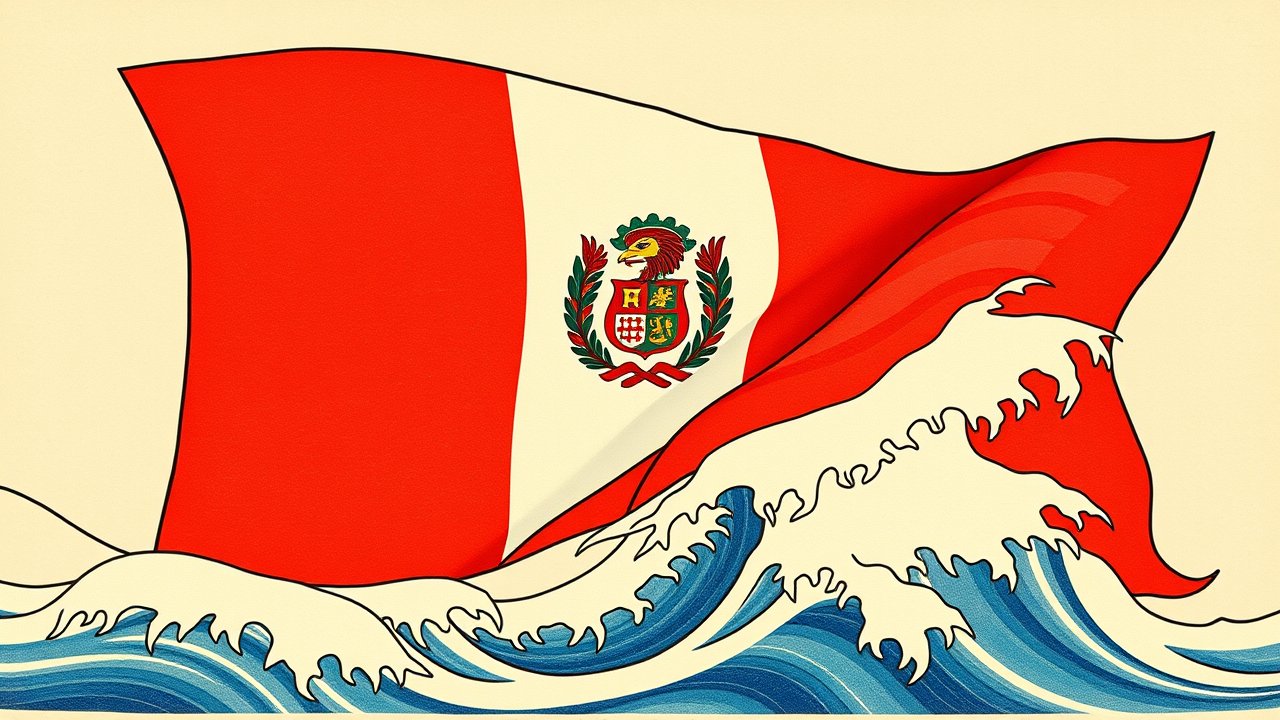
Ukiyo-e Woodblock — Three vertical stripes of red, white, and red with the coat of arms centered. The flag of Peru as a traditional Japanese ukiyo-e woodblock print. Three vertical stripes of red, white, and red with the coat of arms centered. Bold outlines, flat areas of rich color, flowing organic forms. Wind and waves incorporated into the composition. Printed on washi paper with visible wood grain texture. The flag is the central focus and instantly recognizable. No text, no letters, no words, no writing of any kind.
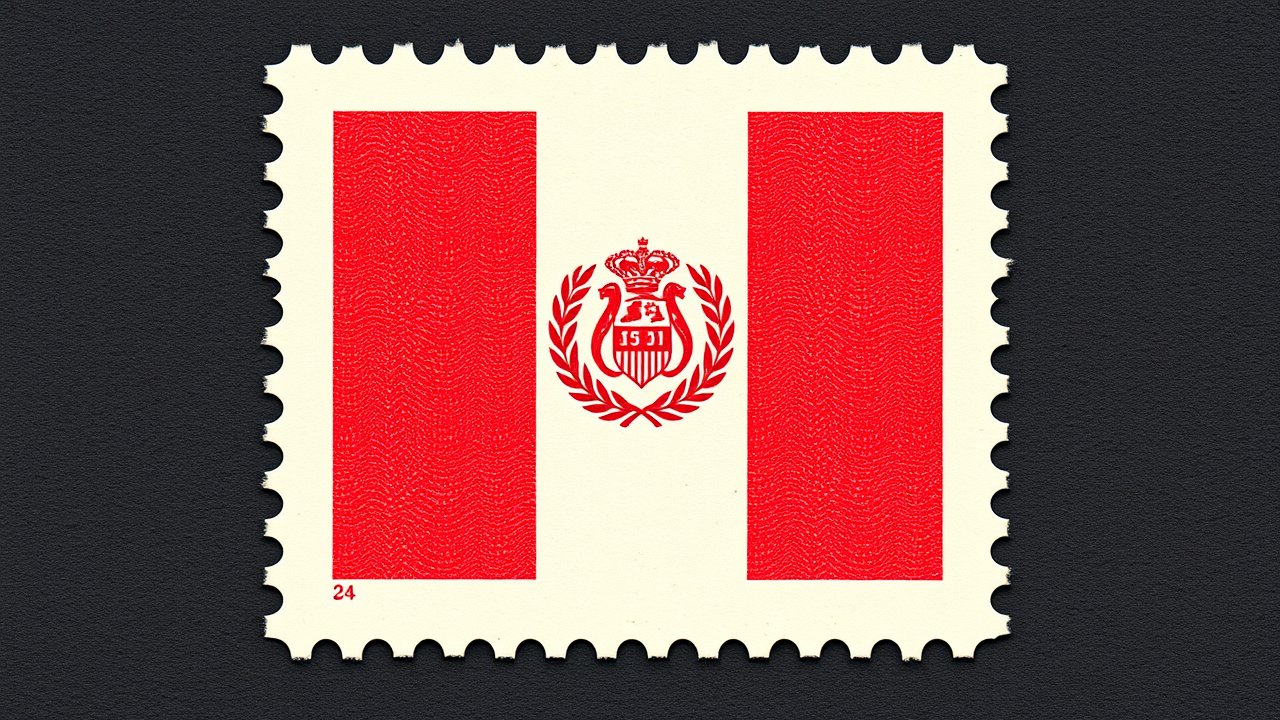
Vintage Postage Stamp — Three vertical stripes of red, white, and red with the coat of arms centered. The flag of Peru as a vintage 1950s postage stamp. Three vertical stripes of red, white, and red with the coat of arms centered. The flag fills most of the stamp — it is the primary subject, faithfully rendered in fine engraved intaglio style. Perforated edges, aged paper with slight foxing. The stamp may show a denomination numeral only — absolutely no other text or country names.
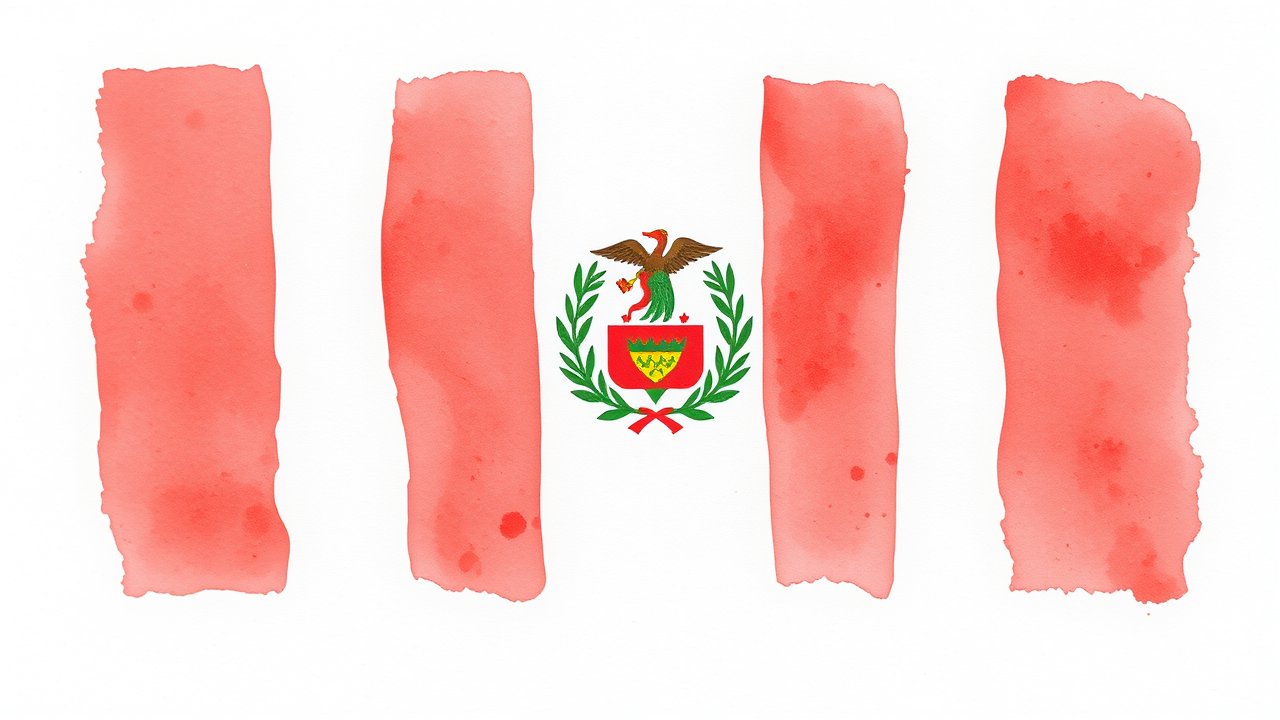
Watercolor — Three vertical stripes of red, white, and red with the coat of arms centered. The flag of Peru painted in loose, expressive watercolor. Three vertical stripes of red, white, and red with the coat of arms centered. Wet-on-wet technique with soft color bleeds, visible brushstrokes, natural paper texture. Delicate splashes and drips at the edges. Luminous, translucent layers of pigment. No text, no letters, no words, no writing of any kind.
Flag History and Design Origins
Peru’s national flag stands as one of South America’s most recognizable and symbolically significant flags, representing a nation rich in history, natural resources, and indigenous heritage. The flag features three vertical stripes of distinctive red-white-red design, with the outer red bands flanking a central white stripe. This striking tricolored arrangement emerged from Peru’s struggle for independence in the early nineteenth century and has remained fundamentally stable through subsequent modifications and refinements. The current official form of the flag, as established on February 25, 1825, during Simón Bolívar’s administration of Peru, incorporates a national coat of arms at the center, while the civil flag version, used by private citizens and established in its modern form in 1950, displays only the tricolored stripes without the coat of arms. The flag’s vertical stripe configuration places Peru among the distinctive group of South American nations that adopted this design pattern during their independence movements.
Historical Background: The Origins of Peruvian Independence Colors
Peru’s flag history began with the nation’s declaration of independence and the arrival of General José de San Martín, one of South America’s greatest military leaders and liberators. The first official Peruvian flag was created and decreed on October 21, 1820, by General San Martín himself, establishing the foundation for all subsequent national flag designs. According to one traditional legend, the colors of the flag were inspired by San Martín’s observation upon arriving on Peru’s coast near the town of Pisco—he witnessed a magnificent flock of parihuanas, magnificent red-and-white flamingos native to the region, which inspired the selection of red and white as the flag’s dominant colors. This romantic narrative has become part of Peruvian national lore and reflects the deep connection between Peru’s flag and its unique fauna and natural environment.
However, some historians offer alternative explanations for the flag’s color selection. Scholars such as Leguía y Martínez and Pareja Paz Soldán have suggested that General San Martín deliberately chose red from the flag of Chile and white from the flag of Argentina, honoring the soldiers from those nations who fought alongside Peruvian patriots in the liberation campaign. This interpretation emphasizes the international and collaborative nature of South America’s independence movements, acknowledging that the soldiers who shed blood for Peru’s freedom came from across the continent. Regardless of which origin story holds greater historical accuracy, the red and white colors became permanently embedded in Peruvian national consciousness and remain central to the nation’s identity.
Evolution of Flag Design: From Diagonal to Vertical Stripes
San Martín’s original 1820 flag design departed significantly from the modern vertical-stripe format that Peru would eventually adopt. The first Peruvian flag featured a diagonal quartered design, with white occupying the upper and lower fields while red occupied the lateral sides. The design was further adorned with an oval-shaped laurel crown positioned at the center, within which appeared the image of a sun rising behind mountains meeting the sea—a symbolically rich image incorporating Peru’s diverse geography and its position between the Andes mountains and the Pacific Ocean. This design served as Peru’s national symbol during the crucial early years of independence and represented the revolutionary aspirations of the emerging nation.
The flag underwent significant modification in March 1822, when José Bernardo de Tagle decreed a new design consisting of a horizontal triband arrangement. This redesign replaced the diagonal pattern with horizontal stripes of red-white-red and replaced the mountain-and-sun imagery with a golden Inti—the Incan sun god—positioned at the center. This modification represented a deliberate embrace of Peru’s pre-Columbian heritage and indigenous cultural elements, incorporating the Inti sun symbol that had held profound spiritual and cultural significance in Incan civilization. However, this horizontal design created unexpected difficulties: battlefield confusion with the Spanish flag created ambiguity during military engagements, necessitating yet another revision.
In May 1822, just months after the horizontal design’s adoption, Tagle modified the flag once again, this time adopting the vertical triband format that would become Peru’s permanent design. The new vertical arrangement featured red outer bands and a white middle band, with the golden Inti sun continuing as the central symbol. This vertical configuration provided clearer visual distinction from other flags and prevented the battlefield confusion that had plagued the earlier horizontal version. The design proved effective and achieved broader acceptance, establishing the foundational stripe pattern that would persist through all subsequent modifications.
The 1825 Redesign and the National Coat of Arms
The most significant refinement to Peru’s flag occurred on February 25, 1825, when the Constituent Congress under Simón Bolívar’s administration approved a definitive new design. Rather than continuing with the golden Inti sun at the flag’s center, this redesign replaced the sun with an entirely new coat of arms, specially designed by artists José Gregorio Paredes and Francisco Javier Cortés. This coat of arms, which appears on the official state flag to the present day, transformed Peru’s flag into a more complex heraldic symbol reflecting the nation’s natural wealth and biological diversity.
The coat of arms consists of three distinct sections arranged vertically within a shield. The upper section displays a vicuña, a wild South American camelid indigenous to the Andes mountains, representing Peru’s fauna, national pride, and the principle of freedom. The middle section features a cinchona tree, whose bark produces quinine, a plant of immense historical importance to Peruvian and global medicine, representing Peru’s significant botanical and pharmaceutical contributions to world civilization. The lower section depicts a cornucopia—an overflowing horn of plenty—overflowing with gold and silver coins, representing Peru’s extraordinary mineral wealth and rich natural resources. Together, these three elements create a sophisticated symbol representing Peru’s biodiversity, medicinal heritage, and economic wealth.
Symbolism of Colors and Modern Flag Forms
The red and white colors of Peru’s flag carry profound symbolic significance rooted in the nation’s revolutionary history and national values. The red color represents the blood shed by countless patriots, soldiers, and ordinary citizens who fought and died during Peru’s liberation war against Spanish colonial rule. It symbolizes the courage, sacrifice, and determination of the Peruvian people in their struggle for independence and self-determination. The white color represents purity, peace, justice, and equality—the ideals that the independence movement aimed to establish within a free Peruvian state. Together, these colors tell a story of liberation purchased through sacrifice and dedicated to noble principles.
Peru maintains two official forms of its flag, each serving distinct purposes in national life. The state flag, displayed on government buildings, official documents, and by the military, features the three vertical stripes with the coat of arms prominently centered on the white middle band. The civil flag, established in its current form in 1950 through a constitutional amendment, displays only the three vertical stripes without the coat of arms, reserved for use by private citizens, commercial entities, and non-governmental organizations. The width-to-length ratio of Peru’s flag is standardized at 2 to 3, ensuring consistency in all official representations and maintaining visual uniformity across different contexts and scales.
Flag Stability and Contemporary Significance
Remarkably, Peru’s fundamental flag design—the vertical red-white-red triband pattern—has remained essentially unchanged since its adoption in May 1822, nearly two centuries ago. The only substantial modification since that time was the refinement of the coat of arms in 1825 and the 1950 distinction between civil and state versions. This exceptional longevity and stability of design reflects deep national consensus regarding Peru’s flag symbolism and demonstrates the flag’s successful integration into Peruvian national identity across generations.
Over two centuries of use, Peru’s flag has become an enduring symbol of national unity, independence, and pride. It appears prominently throughout Peruvian society—on government buildings, military uniforms, schools, public spaces, and in international diplomatic settings. The flag has served as a unifying symbol across Peru’s remarkably diverse population, transcending regional, ethnic, and socioeconomic divisions to represent a shared national identity rooted in independence, sacrifice, and shared values. Peru’s flag represents one of South America’s most stable and historically significant national symbols, embodying the nation’s journey from colonial subjugation to independence and reflecting its commitment to the principles for which its patriots fought.
Free Printable: Flags of the World Reference Card
Get a beautiful printable poster with 50 flag emojis, Unicode codes, and fun facts. Perfect for classrooms and desks!
No spam, ever. Unsubscribe anytime.