
How To
How To
Time needed: 1 minute
Want the full printable classroom pack?
Take the flag reference from your screen to an offline pack for lessons, practice, and quiz time.
- Printable atlas with 230+ high-resolution flag flats
- Four regional quizzes with answer keys
- Flag Bingo boards and caller sheet
How to copy and paste the Flag of Ecuador Emoji to any device.
- Copy the Ecuadorian Flag Emoji
Go to flagemoji.com and press the copy button (above). This works on any device.
- Paste the Emoji
Go to your email/iMessage/SMS texting service/document and paste the emoji.
For mobile devices
— double-tap or tap-hold, then paste should appear. Tap it.
For desktop and laptops on Apple devices
— command-P / ⌘-P
For desktop and laptops on Windows devices
— control-p
Codes
Emoji Codes
Flag emojis are unicode symbols, like any other letter or number on your keyboard. This means you can copy and paste the emoji itself into your code, whatever the language (click the button above).
They actually count as two characters: the two-letter country code (the ISO international standard). The unicode and shortcode both represent country data which devices can interpret and display the emoji.
| Country Code | Unicode | Shortcode |
| EC | U+1F1EA U+1F1E8 | :flag_EC: :EC: |
Emoji shortcodes are used on some platforms as a way for users to type in emojis from the keyboard. If you type the emoji shortcode on Github or Slack, the emoji will appear.
*The official name of the emoji is only the country name, not ‘Ecuador Flag’, for example.
Description
Description
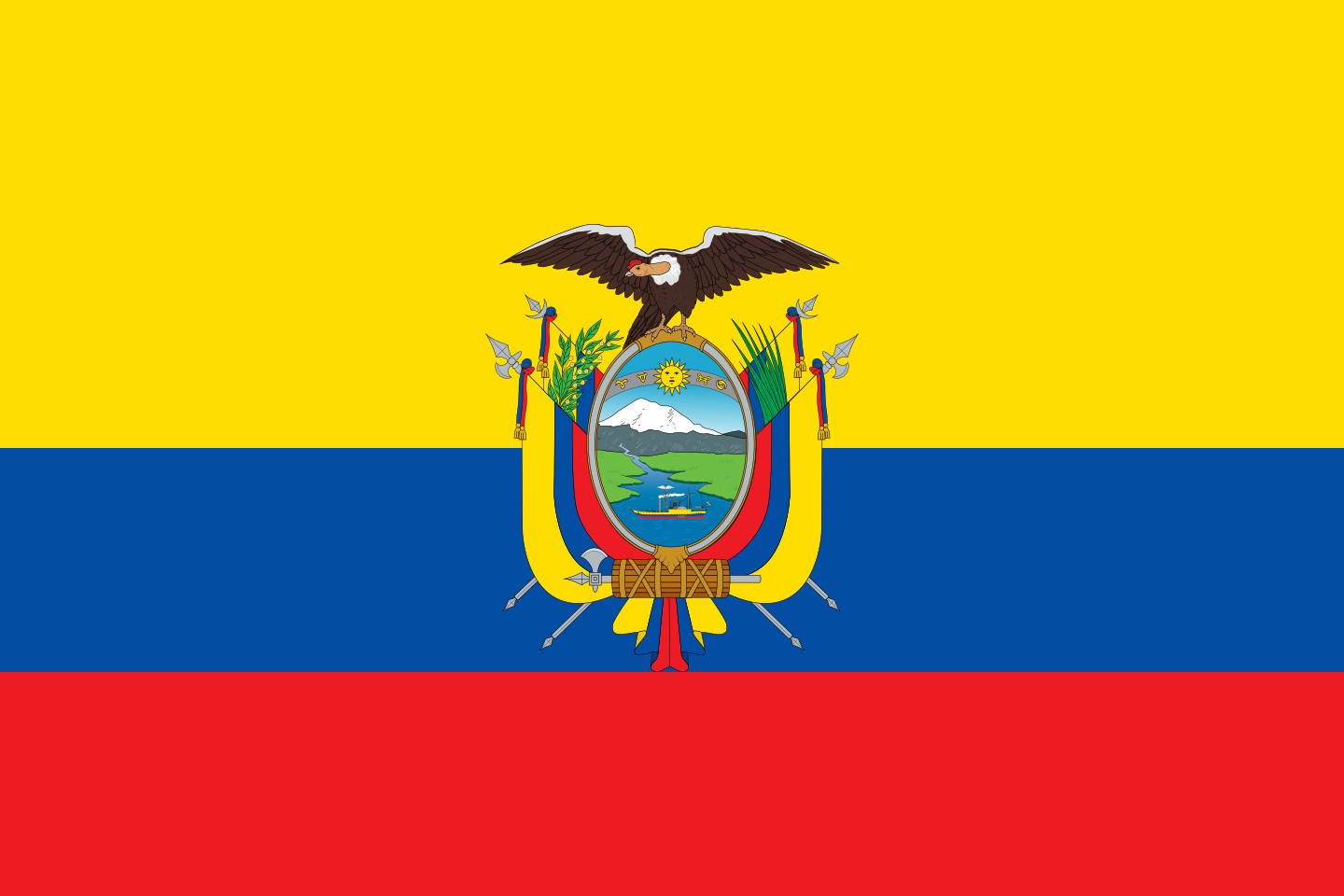
The flag of Ecuador consists of three horizontal bands of yellow, blue, and red with the coat of arms superimposed at the center of the flag. The flag retains the three main colors of the banner of Gran Colombia (a state existing from 1819 to 1831 in northern South America). The yellow color represents sunshine, grain, and mineral wealth, blue the sky, sea, and rivers, and red the blood of patriots spilled in the struggle for freedom and justice.
Map
Map
Check out the map of Albania!
Weather
Anthem
National Anthem
| Title | Salve, Oh Patria! (We Salute You, Our Homeland) |
| Composer | Juan Leon Mera / Antonio Neumane |
FAQ
FAQs
Ecuador declared independence from Spanish rule on May 24, 1822.
The yellow color represents sunshine, grain, and mineral wealth. Blue refers to the the sky, sea, and rivers, and red the blood of patriots spilled in the struggle for freedom and justice.
The current flag of Ecuador was officially adopted on September 26, 1860.
Ecuador is governed by Presidential Republic.
Discover more fun facts of Australia.
Printable
Printable Ecuadorian Flag
Print another really cool flag. Why not the flag of Sudan?
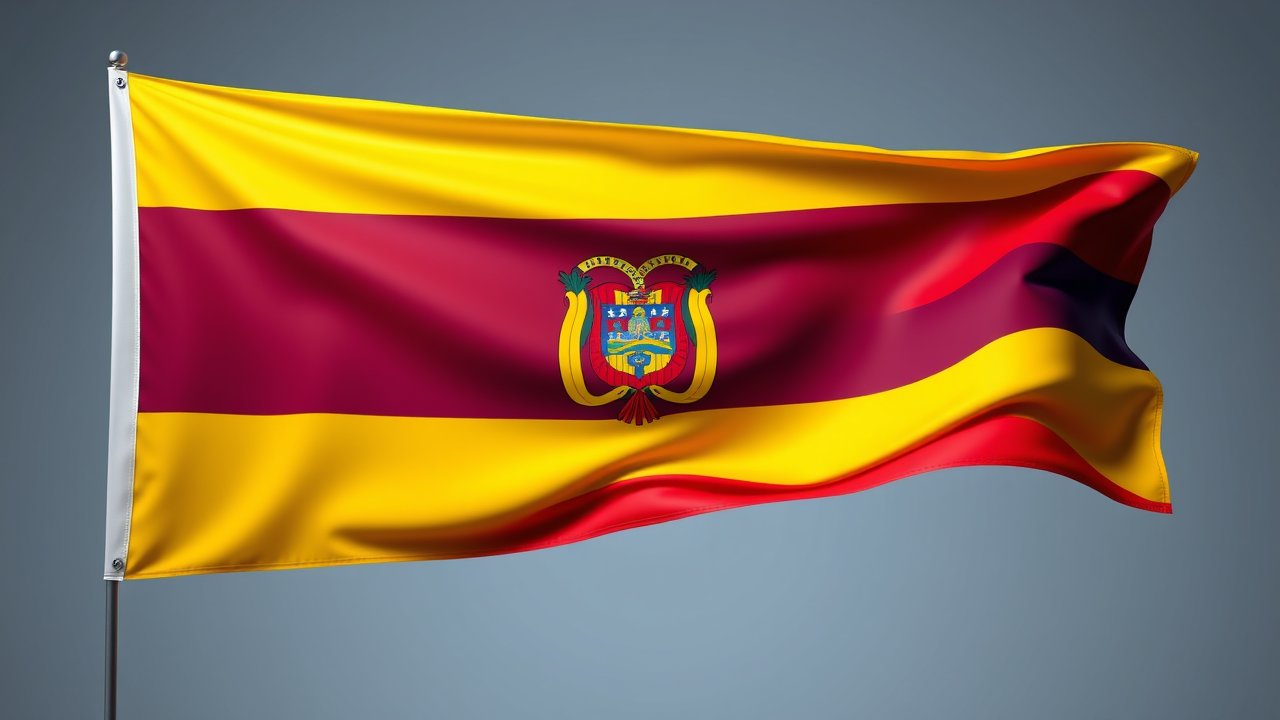
3D Glossy Render — Three horizontal stripes of yellow, blue, and red with the coat of arms centered. The flag of Ecuador as a photorealistic 3D render. Three horizontal stripes of yellow, blue, and red with the coat of arms centered. The flag fabric hangs or drapes naturally but preserves exact proportions, colors, and all symbols perfectly — completely faithful to the real Ecuador flag. Dramatic studio lighting, glossy silk material, soft shadows, subsurface scattering, perfect specular highlights. No text, no letters, no words, no writing of any kind.
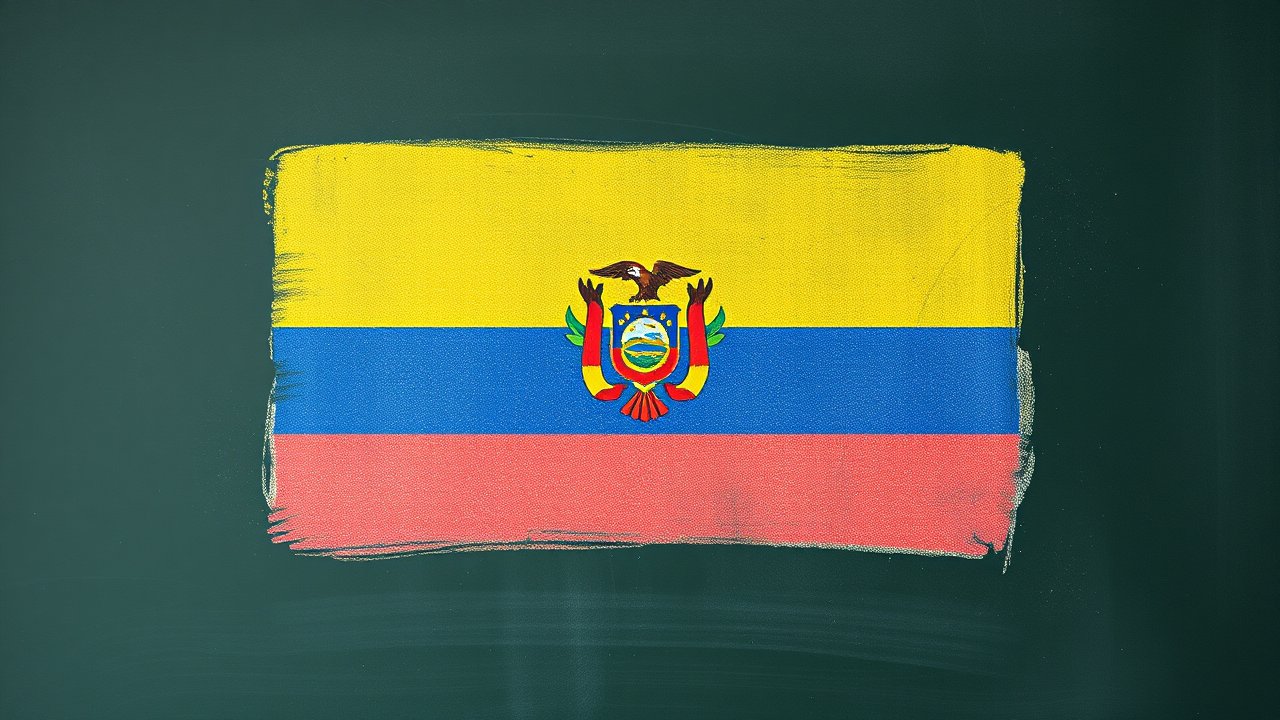
Chalk on Blackboard — Three horizontal stripes of yellow, blue, and red with the coat of arms centered. The flag of Ecuador drawn in chalk on a real blackboard. Three horizontal stripes of yellow, blue, and red with the coat of arms centered. Authentic blackboard — dark slate green surface with chalk dust and smudge marks. Soft, dusty white and colored chalk lines, imperfect edges, hand-drawn quality. Chalk dust particles visible in the air. The flag is immediately recognizable. No text, no letters, no words, no writing of any kind.
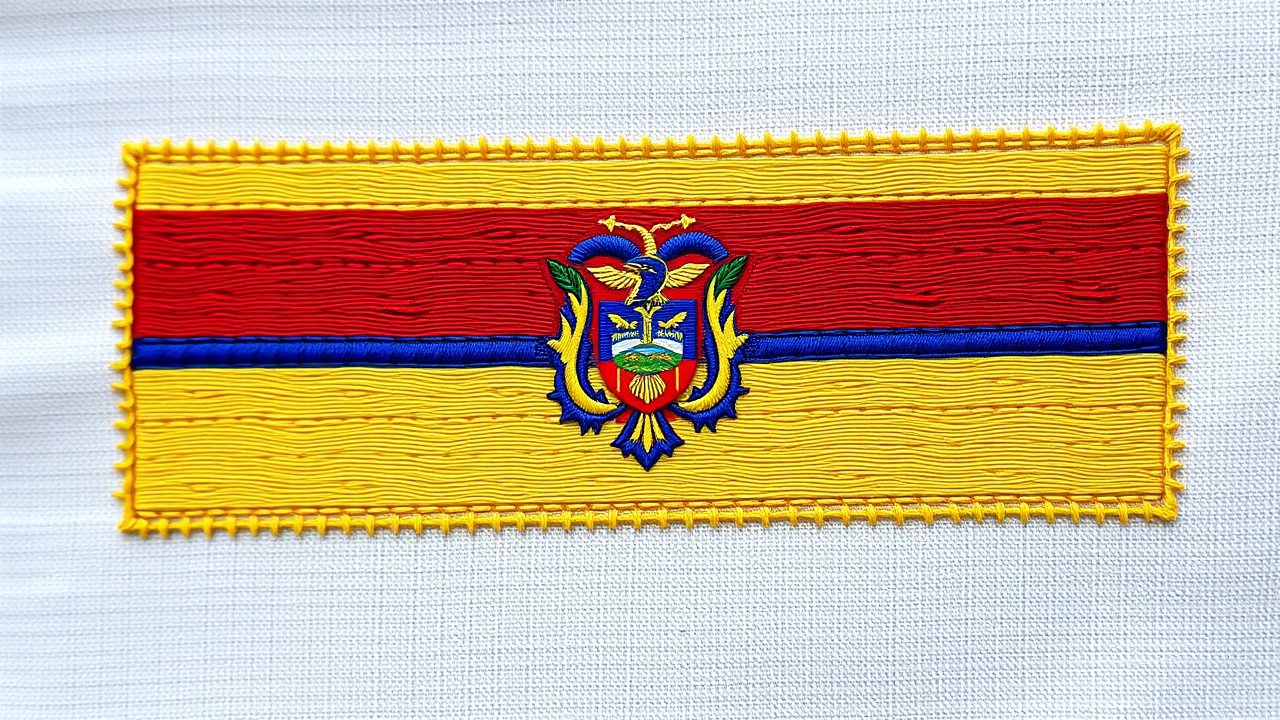
Embroidered Textile — Three horizontal stripes of yellow, blue, and red with the coat of arms centered. The flag of Ecuador as intricate embroidery on linen fabric. Three horizontal stripes of yellow, blue, and red with the coat of arms centered. Dense satin stitches, French knots, chain stitch detail. The flag design is completely faithful — exact colors, geometry, and all symbols faithfully stitched, immediately recognizable as the Ecuador flag. Visible thread texture, dimensional quality, warm handcrafted feel. No text, no letters, no words, no writing of any kind.
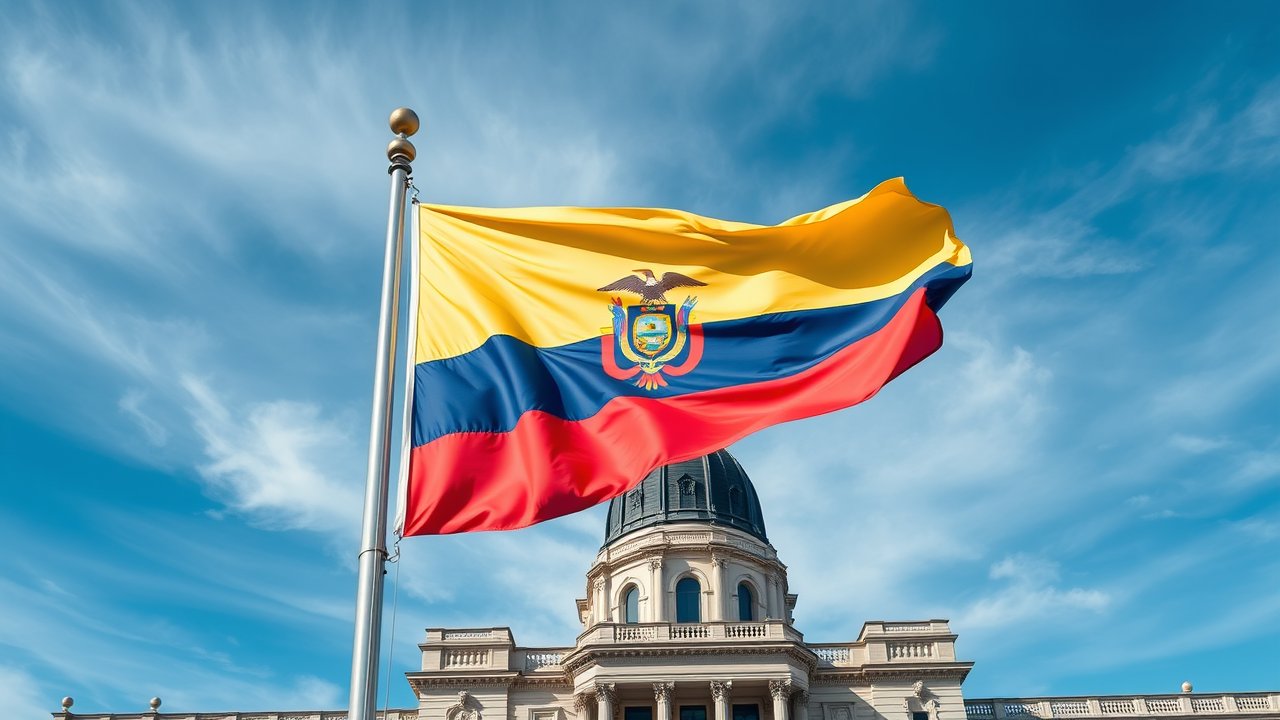
Flagpole in Capital — Three horizontal stripes of yellow, blue, and red with the coat of arms centered. Photorealistic photograph of the Ecuador flag flying on a tall flagpole in front of an iconic government building in the capital city. Three horizontal stripes of yellow, blue, and red with the coat of arms centered. The flag ripples naturally in the wind, colors vivid and exact. Documentary photography style, sharp and realistic. Grand architecture in the background. Blue sky, dramatic clouds. No text, no letters, no words, no writing of any kind.
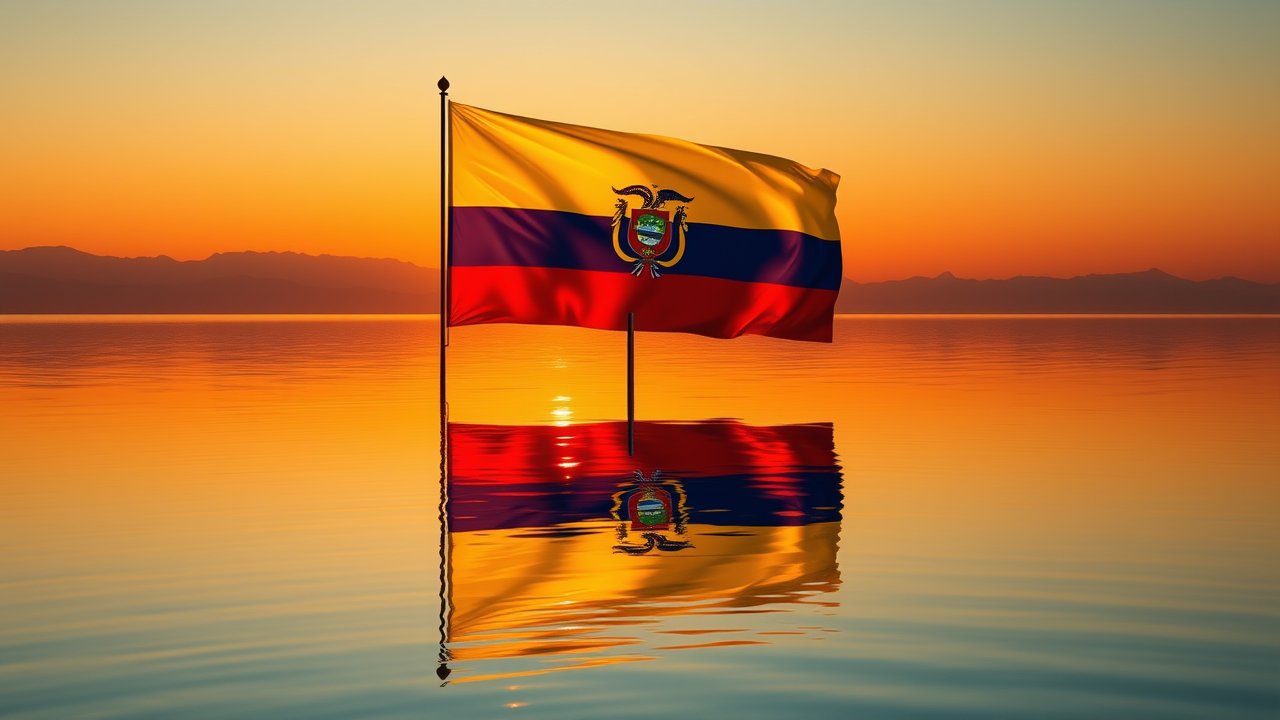
Golden Hour Reflection — Three horizontal stripes of yellow, blue, and red with the coat of arms centered. Photorealistic photograph of the Ecuador flag reflected in still water at golden hour. Three horizontal stripes of yellow, blue, and red with the coat of arms centered. The flag flies on a pole at the water’s edge, its reflection shimmering on the surface below. Warm amber and orange sunset light. The flag colors and design are faithful and vivid. Serene, cinematic landscape photography. No text, no letters, no words, no writing of any kind.
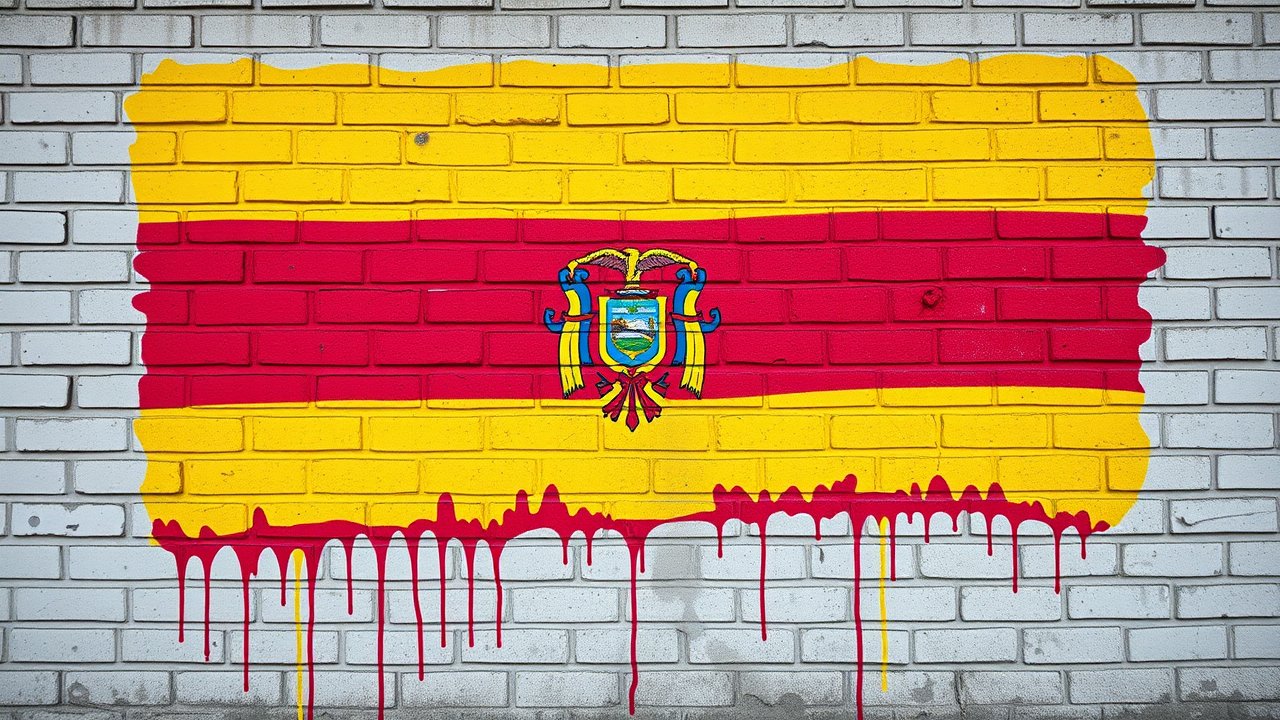
Street Art / Graffiti — Three horizontal stripes of yellow, blue, and red with the coat of arms centered. The flag of Ecuador as vibrant street art spray-painted on a brick wall. Three horizontal stripes of yellow, blue, and red with the coat of arms centered. Bold spray paint, dripping edges, stencil layers, overspray halos. The flag design is faithful and immediately recognizable — exact colors and symbols, just rendered in spray paint on urban concrete. No text, no letters, no words, no writing of any kind. No tags, no graffiti lettering.
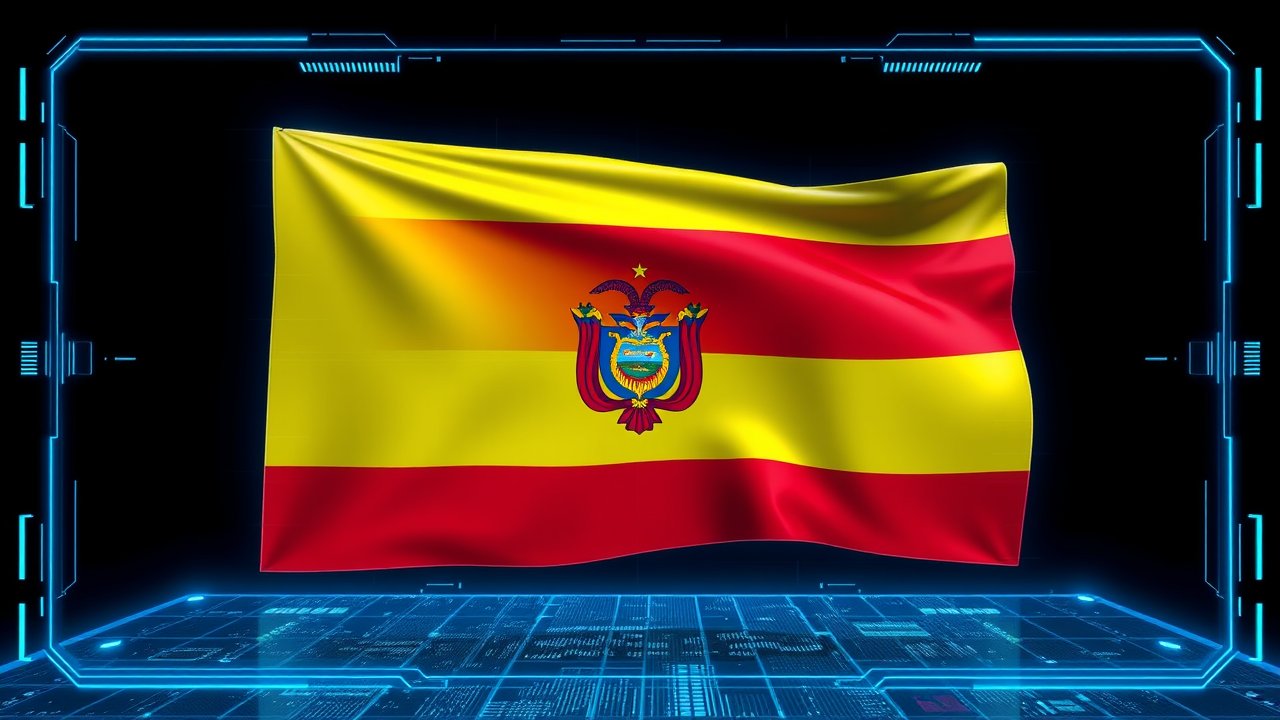
Sci-Fi Hologram — Three horizontal stripes of yellow, blue, and red with the coat of arms centered. The flag of Ecuador projected as a futuristic holographic display. Three horizontal stripes of yellow, blue, and red with the coat of arms centered. Translucent blue-white projection with scan lines, floating in dark space. Glitching edges, particle effects, data streams. The flag design is completely faithful and recognizable. Cyberpunk HUD elements framing the projection. No text, no letters, no words, no writing of any kind.
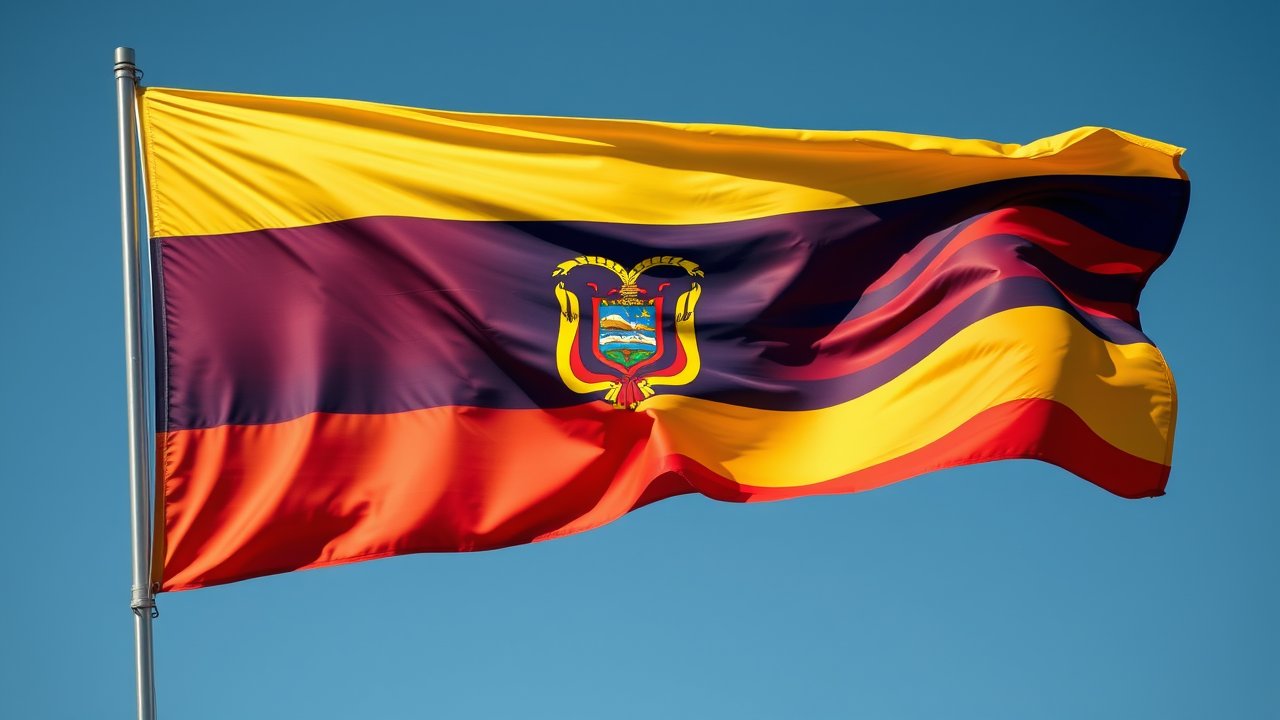
Hyperrealistic Wind — Three horizontal stripes of yellow, blue, and red with the coat of arms centered. Ultra-hyperrealistic photograph of the Ecuador flag caught in a dramatic gust of wind. Three horizontal stripes of yellow, blue, and red with the coat of arms centered. Macro-level fabric detail — individual threads visible, fabric folds and tension lines crisp. Colors and design completely faithful to the real Ecuador flag. High-speed shutter, razor-sharp focus, studio lighting. No text, no letters, no words, no writing of any kind.
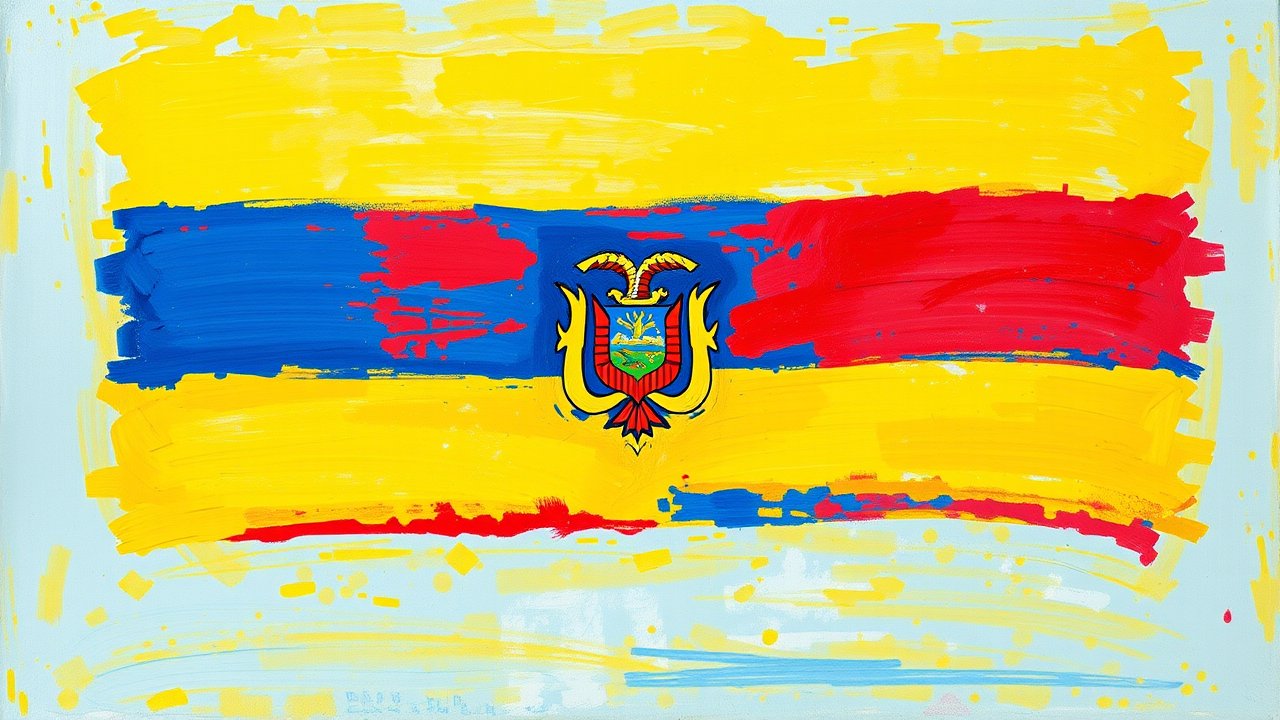
Impressionist Oil — Three horizontal stripes of yellow, blue, and red with the coat of arms centered. The flag of Ecuador painted in French Impressionist oil on canvas. Three horizontal stripes of yellow, blue, and red with the coat of arms centered. Thick impasto brushstrokes, dappled light, vibrant broken color technique in the style of Monet. The flag is instantly recognizable — colors and design faithful to the real Ecuador flag, interpreted with impressionist light and texture. No text, no letters, no words, no writing of any kind.
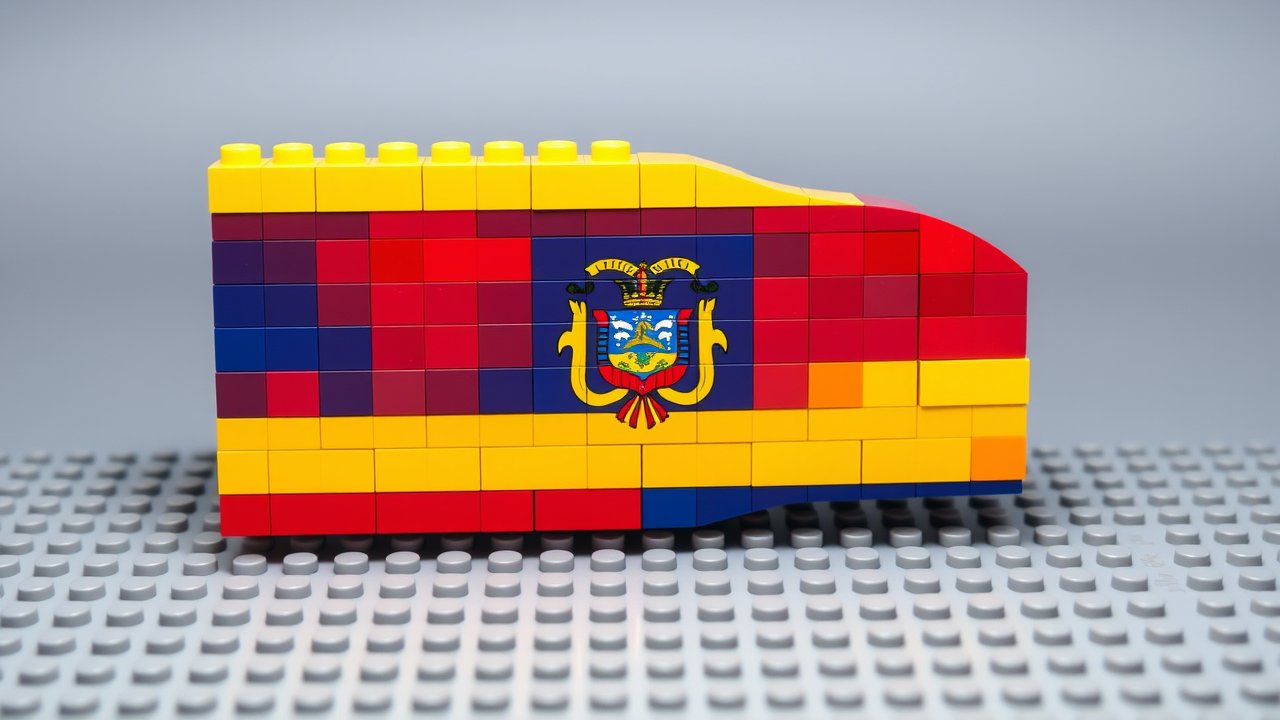
Lego Bricks — Three horizontal stripes of yellow, blue, and red with the coat of arms centered. The flag of Ecuador built from Lego bricks, photographed as a real physical construction. Three horizontal stripes of yellow, blue, and red with the coat of arms centered. Visible studs and brick seams, slight plastic sheen. Standard Lego colors approximate the flag’s palette. Built on a gray Lego baseplate. Dramatic angle showing the three-dimensional brick texture. No text, no letters, no words, no writing of any kind.
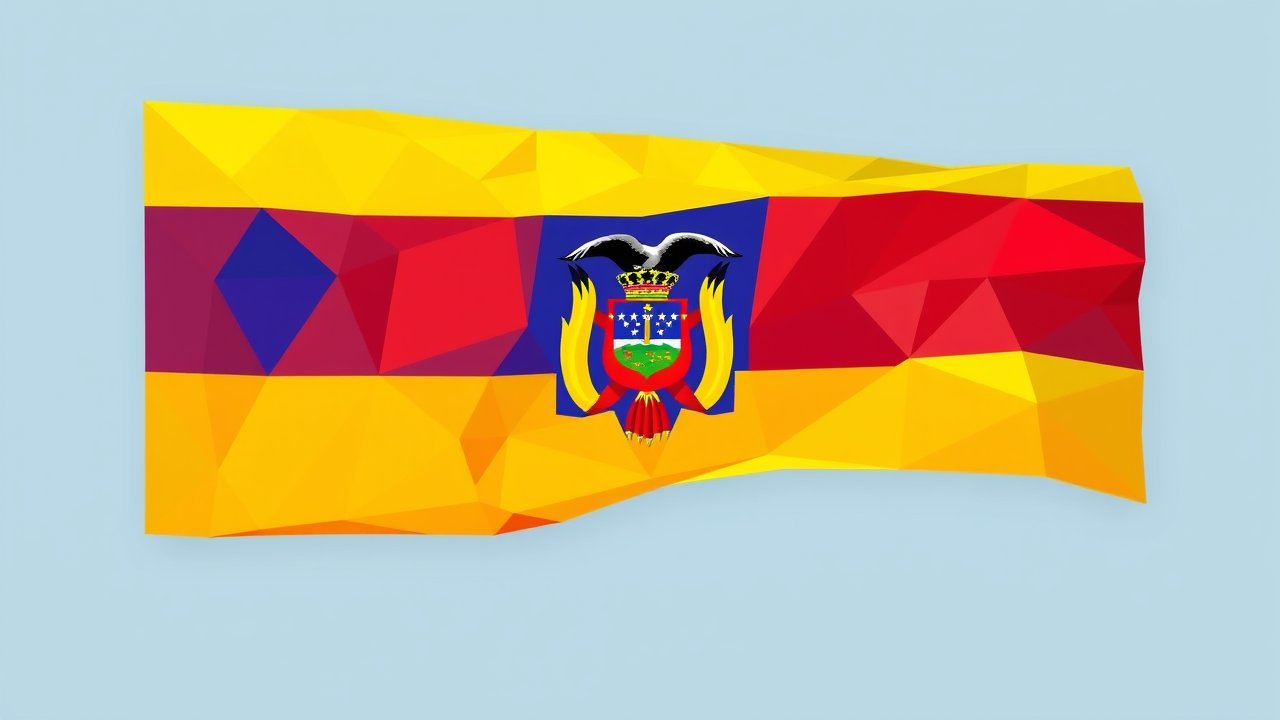
Low-Poly Geometric — Three horizontal stripes of yellow, blue, and red with the coat of arms centered. The flag of Ecuador constructed from low-polygon geometric triangles. Three horizontal stripes of yellow, blue, and red with the coat of arms centered. Aggressively faceted — each region broken into many visible triangular faces with subtle color variation across each polygon, creating real depth and dimensionality even in flat-color areas of the flag. Crystal-like, contemporary computational design. The flag is completely faithful and immediately recognizable. No text, no letters, no words, no writing of any kind.
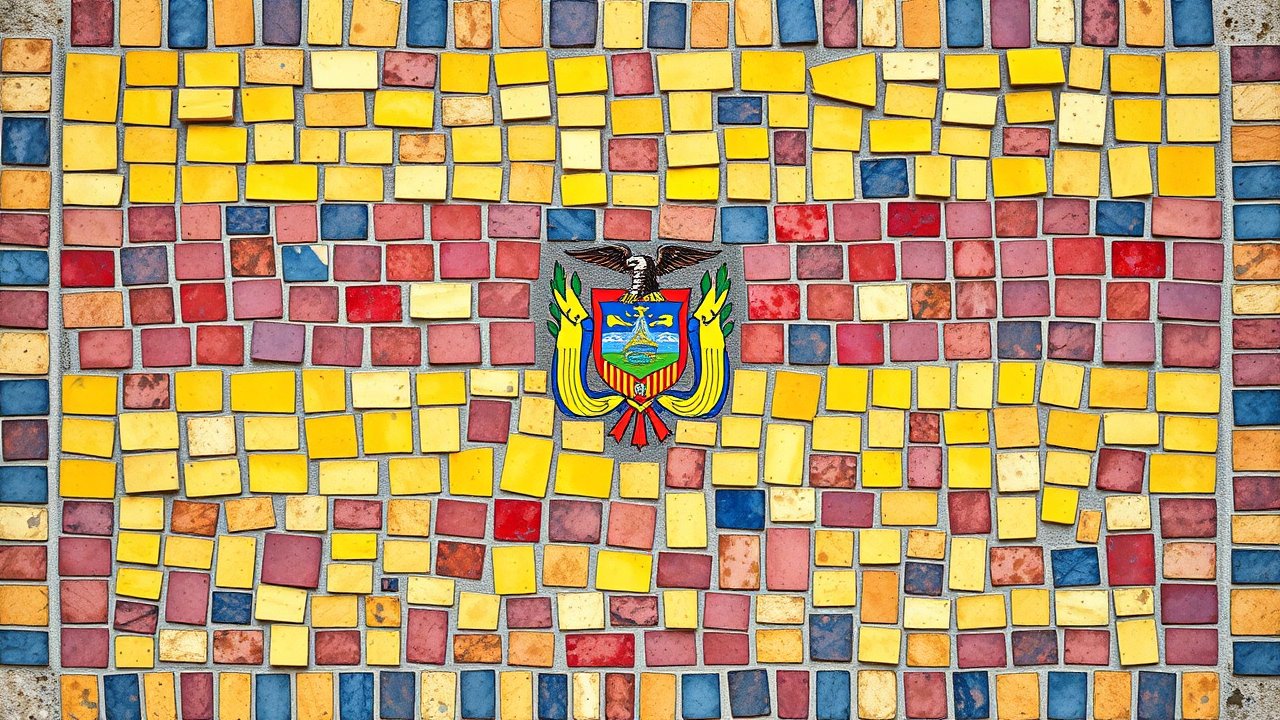
Mosaic Tiles — Three horizontal stripes of yellow, blue, and red with the coat of arms centered. The flag of Ecuador assembled as a Roman-style mosaic. Three horizontal stripes of yellow, blue, and red with the coat of arms centered. The flag is completely faithful to the real Ecuador flag — exact proportions, colors, and all symbols, rendered in thousands of small stone and glass tesserae. Visible grout lines, rich earthy tones mixed with brilliant glass, slight historical weathering. No text, no letters, no words, no writing of any kind.
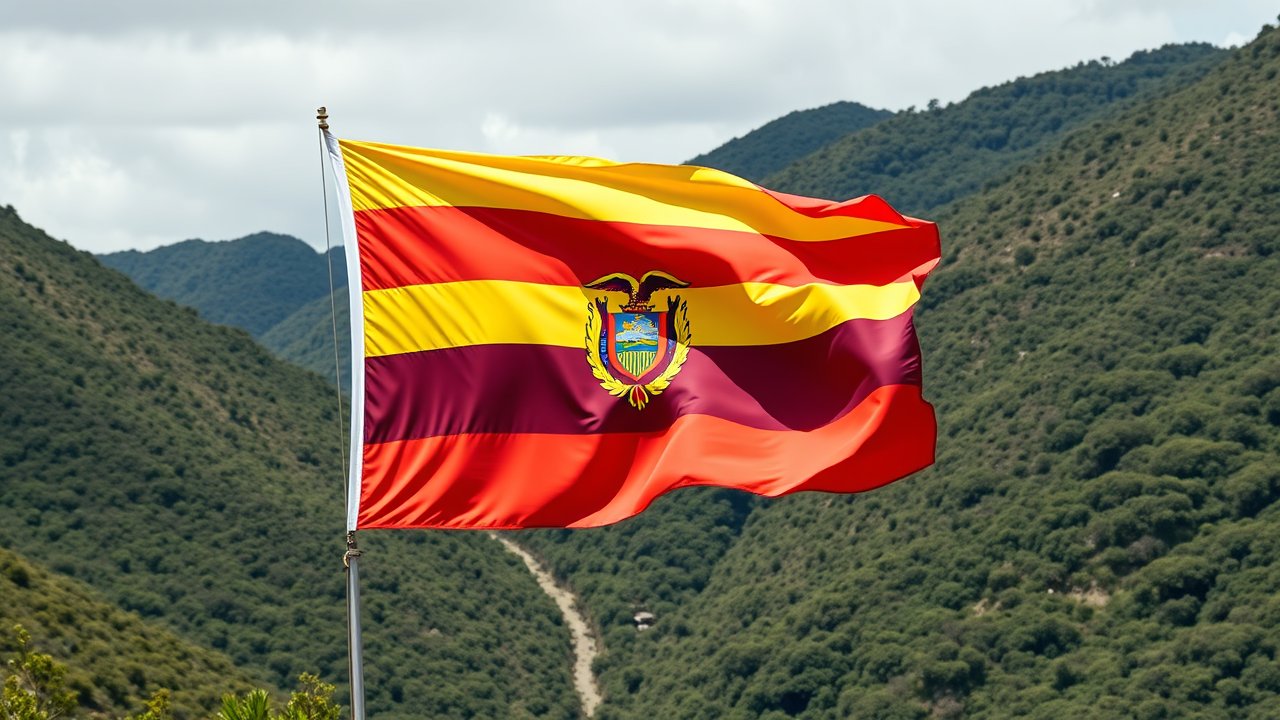
Native Landscape — Three horizontal stripes of yellow, blue, and red with the coat of arms centered. Photorealistic photograph of the Ecuador flag flying in an iconic natural landscape native to Ecuador — the terrain, flora, and environment characteristic of that country. Three horizontal stripes of yellow, blue, and red with the coat of arms centered. The flag is prominent and its colors are faithful and vivid. Remote, uninhabited wilderness. National Geographic photography style. No text, no letters, no words, no writing of any kind.
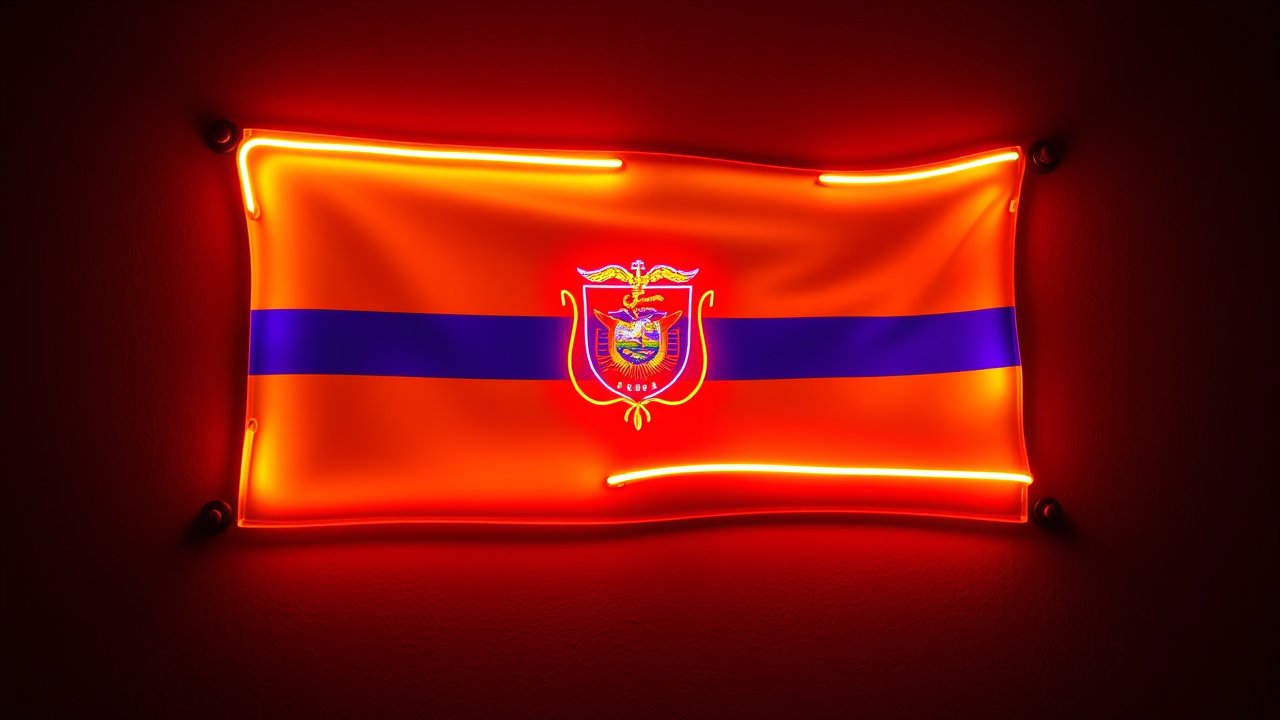
Neon Sign — Three horizontal stripes of yellow, blue, and red with the coat of arms centered. The flag of Ecuador recreated as a real neon sign mounted on a dark wall. Three horizontal stripes of yellow, blue, and red with the coat of arms centered. Glowing glass neon tubes bent into the flag’s shapes — the colors of the flag rendered in actual neon light. Visible glass tube bends, metal mounting brackets on the wall. Warm neon glow and light bloom. Real neon, not digital. Photographed in a dark room. No text, no letters, no words, no writing of any kind.
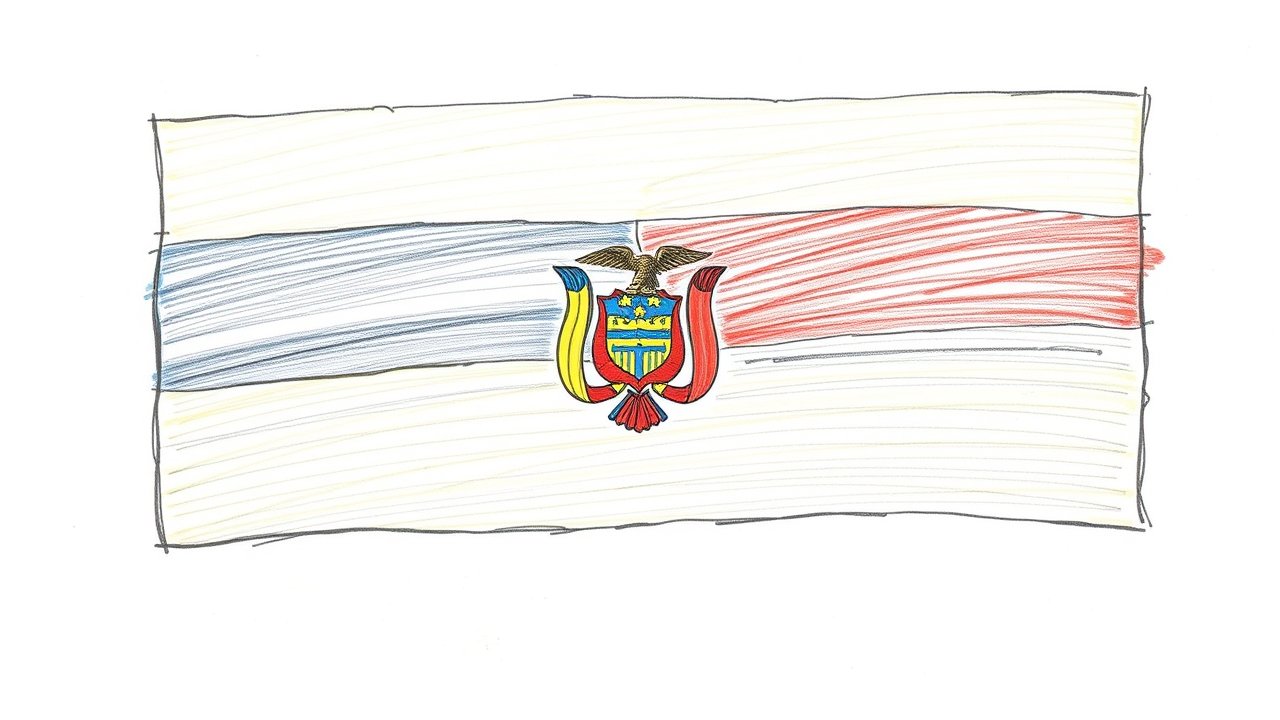
Pencil Sketch — Three horizontal stripes of yellow, blue, and red with the coat of arms centered. The flag of Ecuador as a bold, confident pencil sketch. Three horizontal stripes of yellow, blue, and red with the coat of arms centered. Strong graphite lines on cream paper — not delicate but bold and decisive. Heavy pressure on key outlines, dramatic cross-hatching for deep shadows and shading. Immediately recognizable as the Ecuador flag. Artist’s confident hand, not tentative. No text, no letters, no words, no writing of any kind.
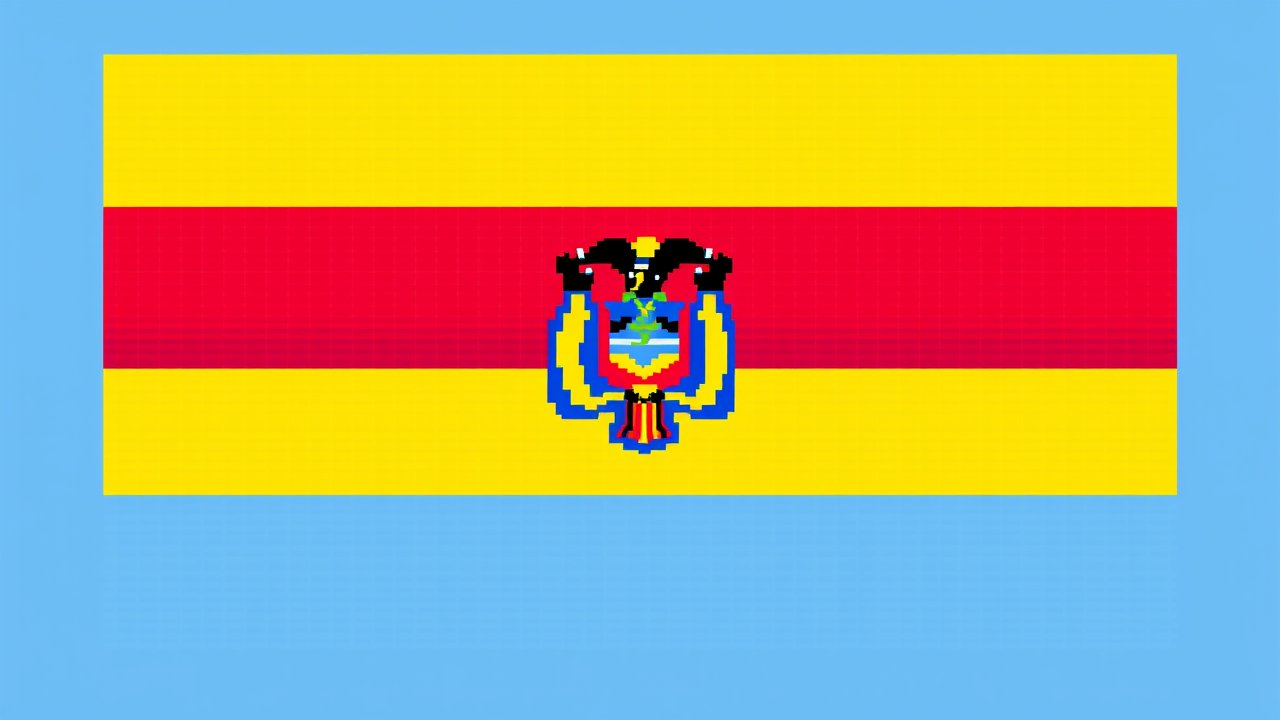
Pixel Art — Three horizontal stripes of yellow, blue, and red with the coat of arms centered. The flag of Ecuador as detailed 16-bit pixel art. Three horizontal stripes of yellow, blue, and red with the coat of arms centered. Crisp pixel grid, limited palette with careful dithering, nostalgic retro game aesthetic. Clean grid-aligned design with subtle shading. Every element of the flag faithfully reproduced in pixels. No text, no letters, no words, no writing of any kind.
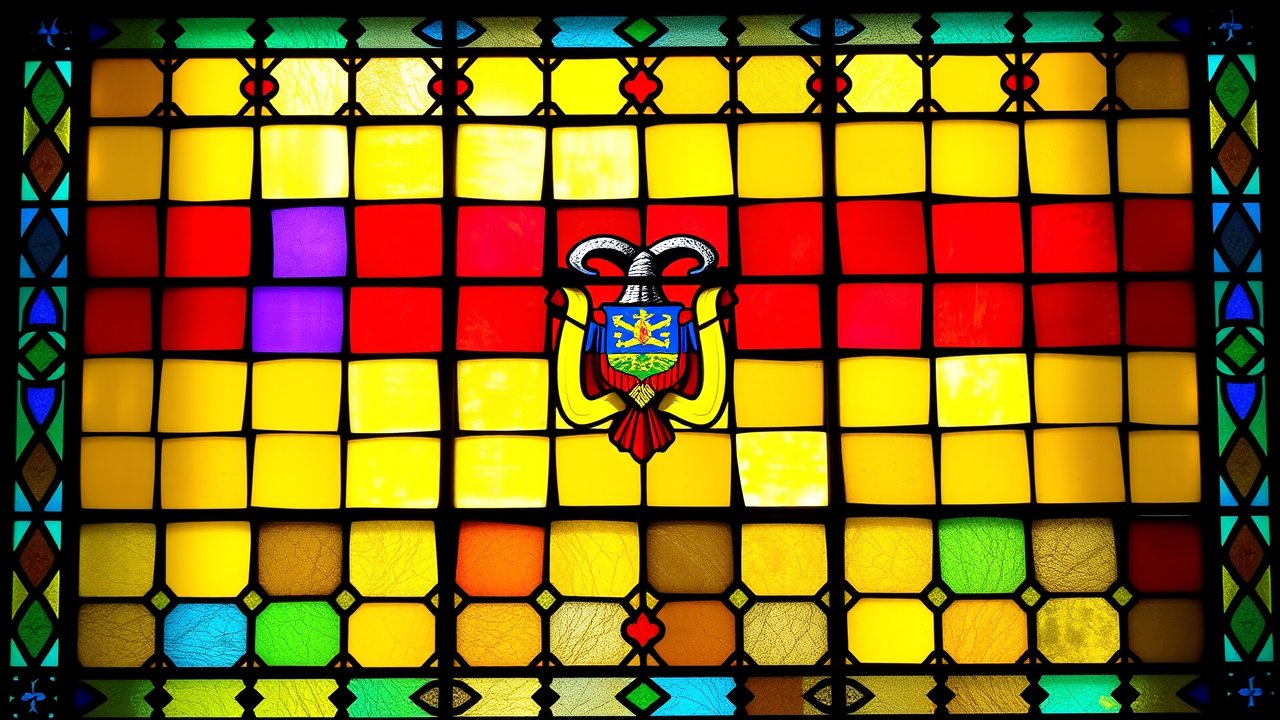
Stained Glass — Three horizontal stripes of yellow, blue, and red with the coat of arms centered. The flag of Ecuador rendered as an ornate stained glass window. Three horizontal stripes of yellow, blue, and red with the coat of arms centered. The design is completely faithful to the real Ecuador flag — exact colors, geometry, and all symbols preserved. Brilliant jewel-toned glass pieces separated by dark lead came lines. Warm sunlight streaming through, casting colored light. Gothic cathedral craftsmanship. No text, no letters, no words, no writing of any kind.
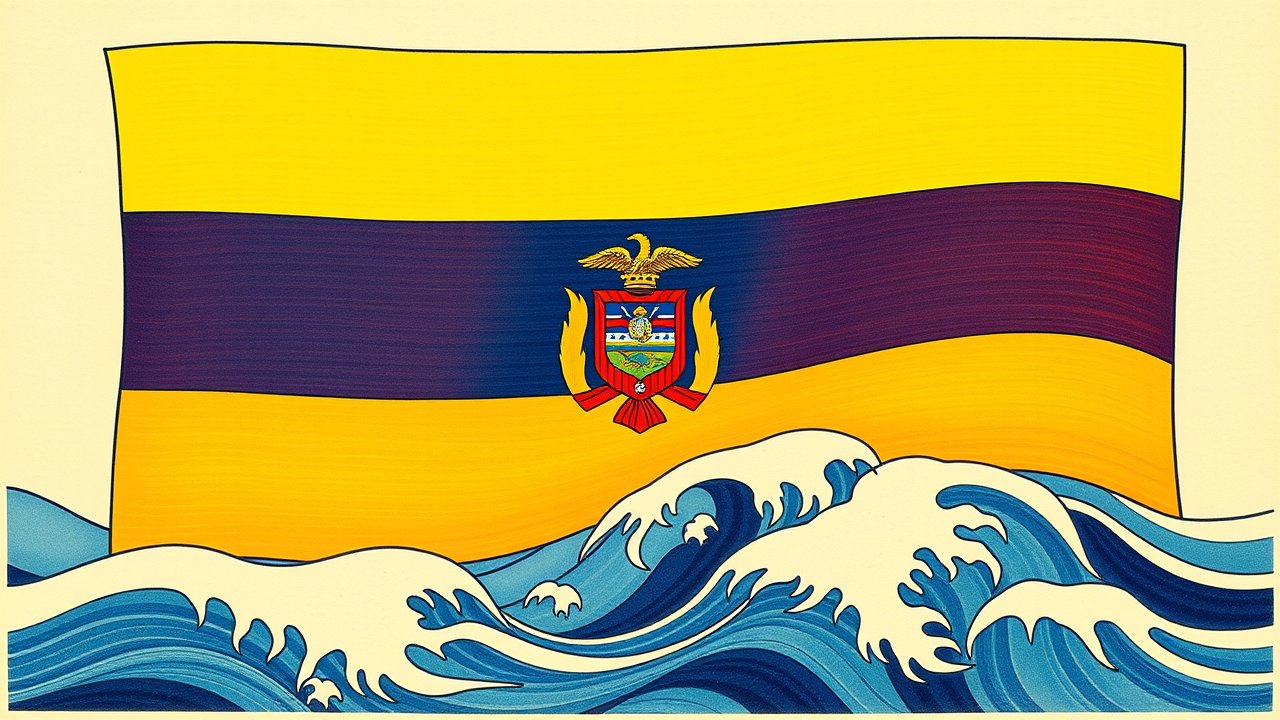
Ukiyo-e Woodblock — Three horizontal stripes of yellow, blue, and red with the coat of arms centered. The flag of Ecuador as a traditional Japanese ukiyo-e woodblock print. Three horizontal stripes of yellow, blue, and red with the coat of arms centered. Bold outlines, flat areas of rich color, flowing organic forms. Wind and waves incorporated into the composition. Printed on washi paper with visible wood grain texture. The flag is the central focus and instantly recognizable. No text, no letters, no words, no writing of any kind.
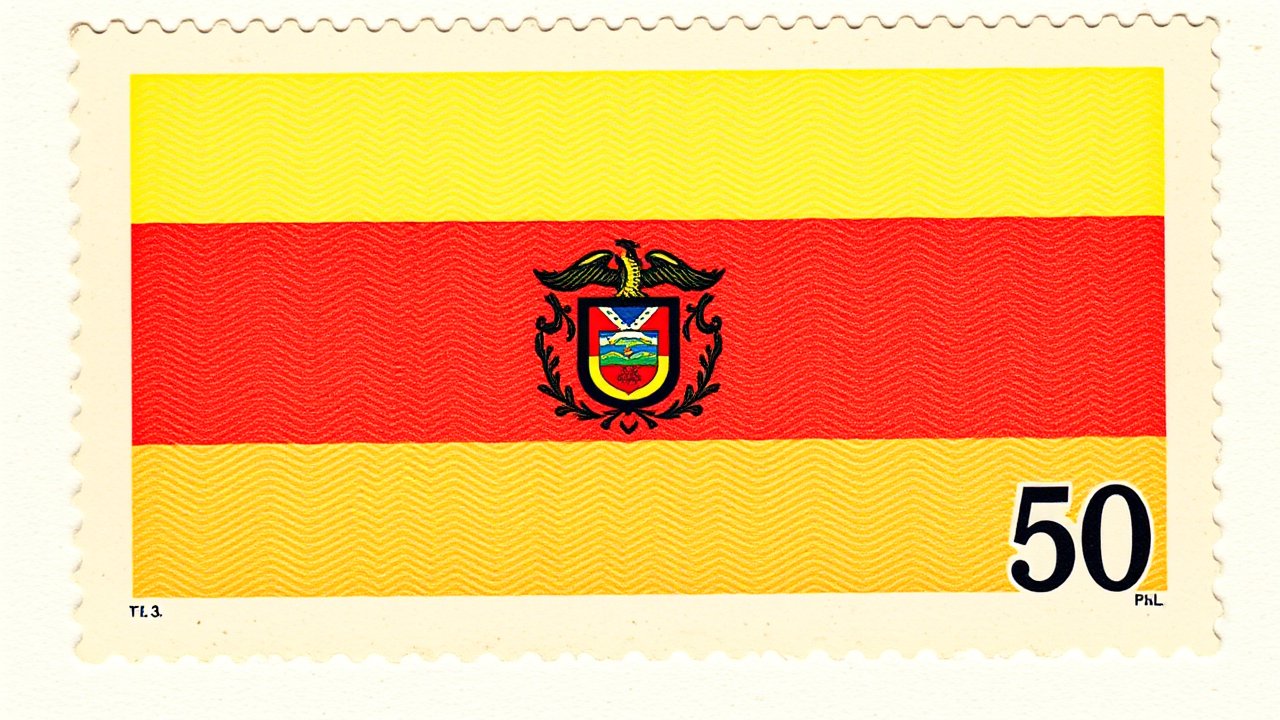
Vintage Postage Stamp — Three horizontal stripes of yellow, blue, and red with the coat of arms centered. The flag of Ecuador as a vintage 1950s postage stamp. Three horizontal stripes of yellow, blue, and red with the coat of arms centered. The flag fills most of the stamp — it is the primary subject, faithfully rendered in fine engraved intaglio style. Perforated edges, aged paper with slight foxing. The stamp may show a denomination numeral only — absolutely no other text or country names.
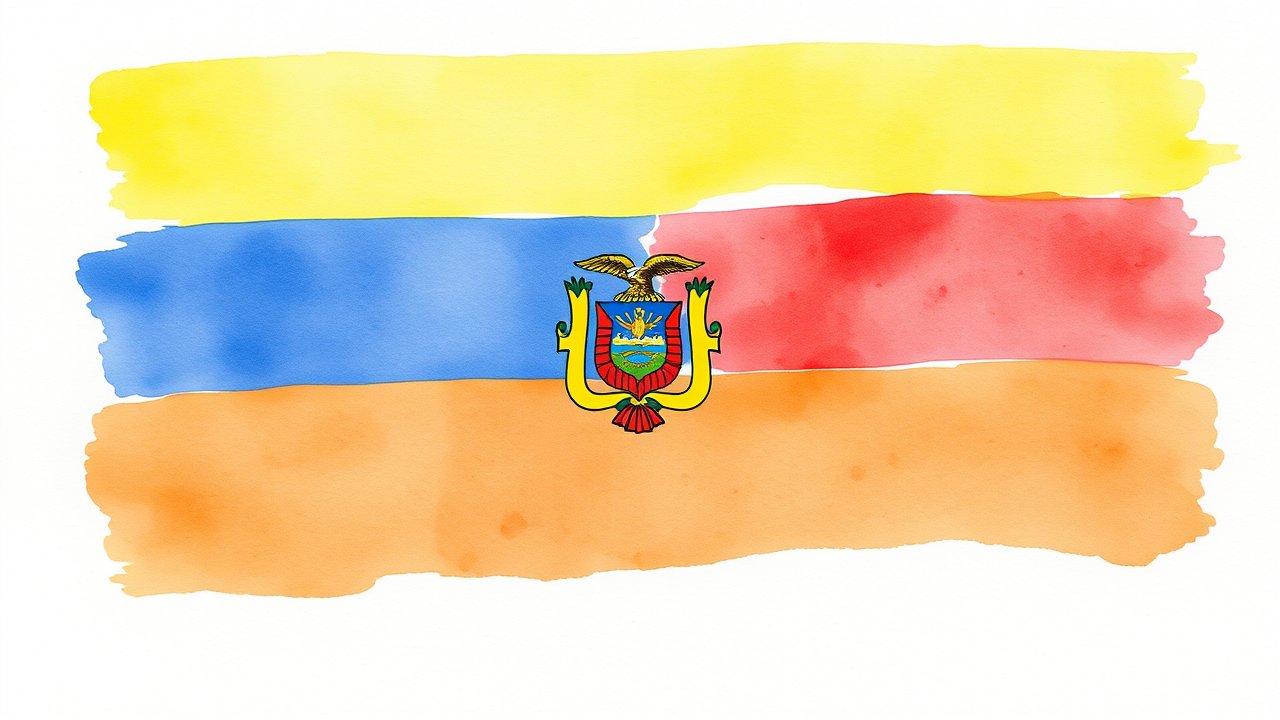
Watercolor — Three horizontal stripes of yellow, blue, and red with the coat of arms centered. The flag of Ecuador painted in loose, expressive watercolor. Three horizontal stripes of yellow, blue, and red with the coat of arms centered. Wet-on-wet technique with soft color bleeds, visible brushstrokes, natural paper texture. Delicate splashes and drips at the edges. Luminous, translucent layers of pigment. No text, no letters, no words, no writing of any kind.
The flag of Ecuador consists of three horizontal bands of color: a yellow band spanning half the flag’s width, followed by bands of blue and red, each comprising one-quarter of the width. This distinctive design, officially adopted by law in 1835 and later standardized definitively in 1900, represents the nation’s evolution from colonial rule to independent statehood. The flag’s proportions were standardized at 1:2 (width to length), though the government version includes the national coat of arms centered on the design.
The origins of Ecuador’s flag trace directly to Venezuelan General Francisco de Miranda, a revolutionary whose vision for the independence of Spanish American colonies materialized in a tricolor design that would eventually define three nations. Miranda first flew the yellow, blue, and red horizontal flag in 1806 aboard the ship Leander when confronting Spanish forces off the coast of Jacmel, Haiti. According to historical accounts, Miranda’s color choices were inspired by Johann Wolfgang von Goethe’s theory of primary colors, lending the flag a philosophical foundation rooted in European Enlightenment thought. After the successful Battle of Pichincha on May 24, 1822, General Antonio José de Sucre hoisted this same tricolor flag to celebrate Ecuador’s victory over Spanish forces, forever cementing Miranda’s design into the nation’s identity.
Symbolism of Colors and Elements
Each color of the Ecuadorian flag carries profound symbolic meaning that reflects the nation’s values, geography, and historical experience. The yellow band, occupying half the flag’s width, represents “the crops and the fertile soil”—a fitting tribute to a nation whose economy and culture have long been rooted in agriculture and natural abundance. The blue band symbolizes both “the ocean and the clear skies,” acknowledging Ecuador’s Pacific coastline and the clarity of purpose that defines its aspirations. The red band carries the most solemn symbolism, representing “the blood spilled by the heroes who died in the name of their countrymen’s Fatherland and Freedom.” This crimson represents not merely abstract patriotism but the actual sacrifice of those who fought for independence and national sovereignty.
When used as the official flag of the government, Ecuador’s design is distinguished by a central coat of arms that uniquely differentiates it from the flags of Colombia and Venezuela, which share the same three-color bands but without identical iconography. This coat of arms, finalized in its current form in 1900 based on earlier versions from 1845, is a complex heraldic representation of Ecuador’s geography, resources, and values. The shield features Chimborazo, Ecuador’s highest mountain and the point on Earth’s surface furthest from the planet’s center, dominating the background. From Chimborazo flows the Guayas River, and upon its waters sails a steamship named Guayas—a deliberate historical reference to the first seaworthy steamship built in Ecuador and all of South America, launched in 1841 in the port city of Guayaquil. This maritime symbol represents Ecuador’s economic connectivity and technological advancement.
Crowning the shield is the magnificent Andean condor, Peru’s national bird and a symbol throughout Latin American cultures. The condor stretches its wings to symbolize “power, greatness and strength of Ecuador,” and in traditional symbolism, represents both the nation’s readiness to defend itself against external threats and its protection against foreign aggression. Above the shield glows a golden sun surrounded by the zodiac signs for Aries, Taurus, Gemini, and Cancer—representing the months of March through July. These astrological symbols commemorate the March Revolution of 1845, a pivotal moment when Ecuadorian patriots overthrew General Juan José Flores and altered the course of the nation’s political development. Flanking the shield are laurel branches on the left and palm fronds on the right, traditional symbols representing the victories and the martyrs of independence respectively.
Historical Evolution and Notable Facts
The path to Ecuador’s modern flag was not direct but evolved through several distinct iterations, reflecting the nation’s complex journey toward stable independence. The earliest flag bearing nationalist symbolism appeared on August 10, 1809, when independence rebels flew a plain red flag—a simple but defiant statement against Spanish colonial authority. This initial effort at rebellion, known as the Quito Uprising, proved premature, but it established a tradition of resistance that would eventually succeed.
A more elaborate design emerged on October 9, 1820, when patriots raised a new flag consisting of five equal horizontal alternating stripes of light blue and white, with three white stars arranged in the central stripe. This design drew inspiration from Argentine flags and represented a different vision of independence—one informed by the successes of the Southern Cone’s liberation movements. However, this flag’s tenure would be brief, superseded by events in 1822.
The transformative year was 1822, when General Antonio José de Sucre’s military victory at the Battle of Pichincha opened the way for Ecuador to join the revolutionary confederation of Gran Colombia, which united the territories of present-day Ecuador, Colombia, and Venezuela from 1822 until its dissolution in 1830. The adoption of Miranda’s tricolor flag marked Ecuador’s alignment with this broader pan-Colombian movement and symbolized a vision of unified Latin American independence. While Gran Colombia itself would not survive the century’s political turbulence, the three nations that emerged from it retained the flag design that had united them, making Miranda’s 1806 vision one of Latin America’s most enduring legacies.
Between 1835 and 1860, Ecuador experimented with various flag arrangements, including vertical white-blue-white stripes with different star configurations, reflecting the political instability that characterized the early republican period. However, on September 26, 1860, President Gabriel García Moreno formally reinstated the yellow-blue-red horizontal tricolor, returning to the design that had become synonymous with Ecuadorian identity. This decision proved definitive; when Ecuador adopted a new constitution in 1900, it affirmed the horizontal tricolor with the addition of the elaborate coat of arms for official governmental use, establishing the flag design that endures today.
The Ecuadorian flag thus represents far more than mere national symbolism—it embodies a nation’s agricultural heritage, its geographical diversity spanning from the Andes to the Pacific, its martyrs and heroes, and its place within the broader history of Latin American independence. From a simple red banner of rebellion through the experimentation of early republicanism to its sophisticated modern form, the flag traces Ecuador’s passage from colony to nation, and from aspiration to established identity.
Sources
- Flag of Ecuador – Wikipedia
- Flag of Ecuador | History, Design & Meaning | Britannica
- Coat of arms of Ecuador – Wikipedia
- The Ecuadorian Flag – Ecuador’s Coat of Arms – don Quijote
- Ecuador – Coat of Arms
Free Printable: Flags of the World Reference Card
Get a beautiful printable poster with 50 flag emojis, Unicode codes, and fun facts. Perfect for classrooms and desks!
No spam, ever. Unsubscribe anytime.