
How To
How To
Time needed: 1 minute
How to copy and paste the Flag of Liechtenstein Emoji to any device.
- Copy the Liechtenstein Flag Emoji
Go to flagemoji.com and press the copy button (above). This works on any device.
- Paste the Emoji
Go to your email/iMessage/SMS texting service/document and paste the emoji.
For mobile devices
— double-tap or tap-hold, then paste should appear. Tap it.
For desktop and laptops on Apple devices
— command-P / ⌘-P
For desktop and laptops on Windows devices
— control-p
Codes
Emoji Codes
Flag emojis are unicode symbols, like any other letter or number on your keyboard. This means you can copy and paste the emoji itself into your code, whatever the language (click the button above).
They actually count as two characters: the two-letter country code (the ISO international standard). The unicode and shortcode both represent country data which devices can interpret and display the emoji.
| Country Code | Unicode | Shortcode |
| LI | U+1F1F1 U+1F1EE | :flag_LI: :LI: |
Emoji shortcodes are used on some platforms as a way for users to type in emojis from the keyboard. If you type the emoji shortcode on Github or Slack, the emoji will appear.
*The official name of the emoji is only the country name, not ‘Liechtenstein Flag’, for example.
Description
Description
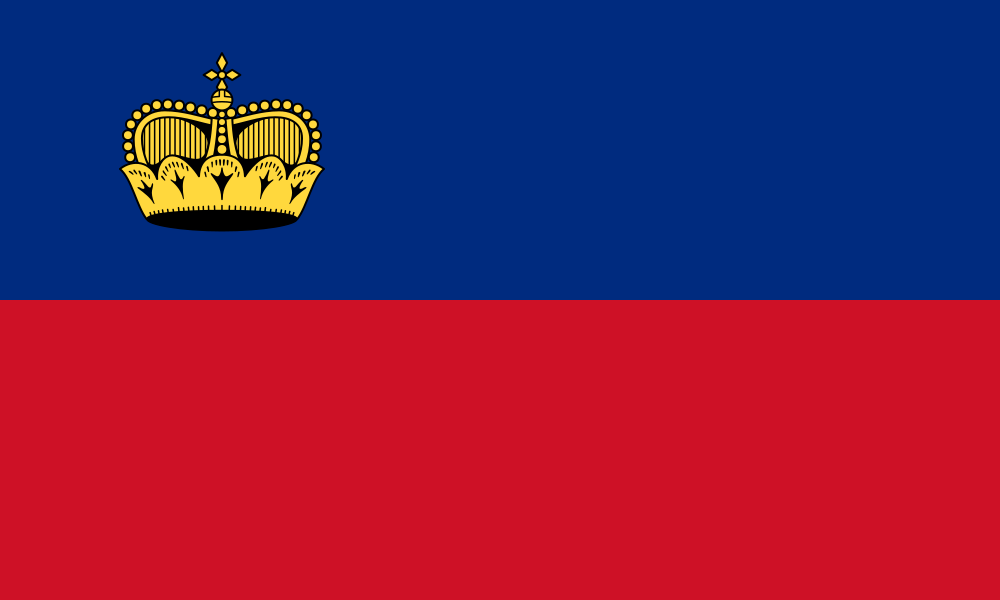
The flag of Liechtenstein has two equal horizontal bands of blue (top) and red with a gold crown on the hoist side of the blue band. The colors may derive from the blue and red livery design used in the principality’s household in the 18th century. The prince’s crown was introduced in 1937 to distinguish the flag from that of Haiti.
Map
Map
Check out the map of Israel!
Weather
Anthem
National Anthem
| Title | Oben am jungen Rhein (High Above the Young Rhine) |
| Composer | Jakob Joseph Jauch / Josef Frommelt |
FAQ
FAQs
Liechtenstein National Day is celebrated every August 15th, closely connected to the birthday of Prince Franz-Josef II on August 16th.
The colors may derive from the blue and red livery design used in the principality’s household in the 18th century. The prince’s crown was introduced in 1937 to distinguish the flag from that of Haiti.
Liechtenstein’s flag was formally adopted on June 24, 1937.
Liechtenstein is governed by a constitutional monarchy.
Discover more fun facts of Saint Vincent and the Grenadines.
Printable
Printable Liechtenstein Flag
Print another really cool flag. Why not the flag of Norway?
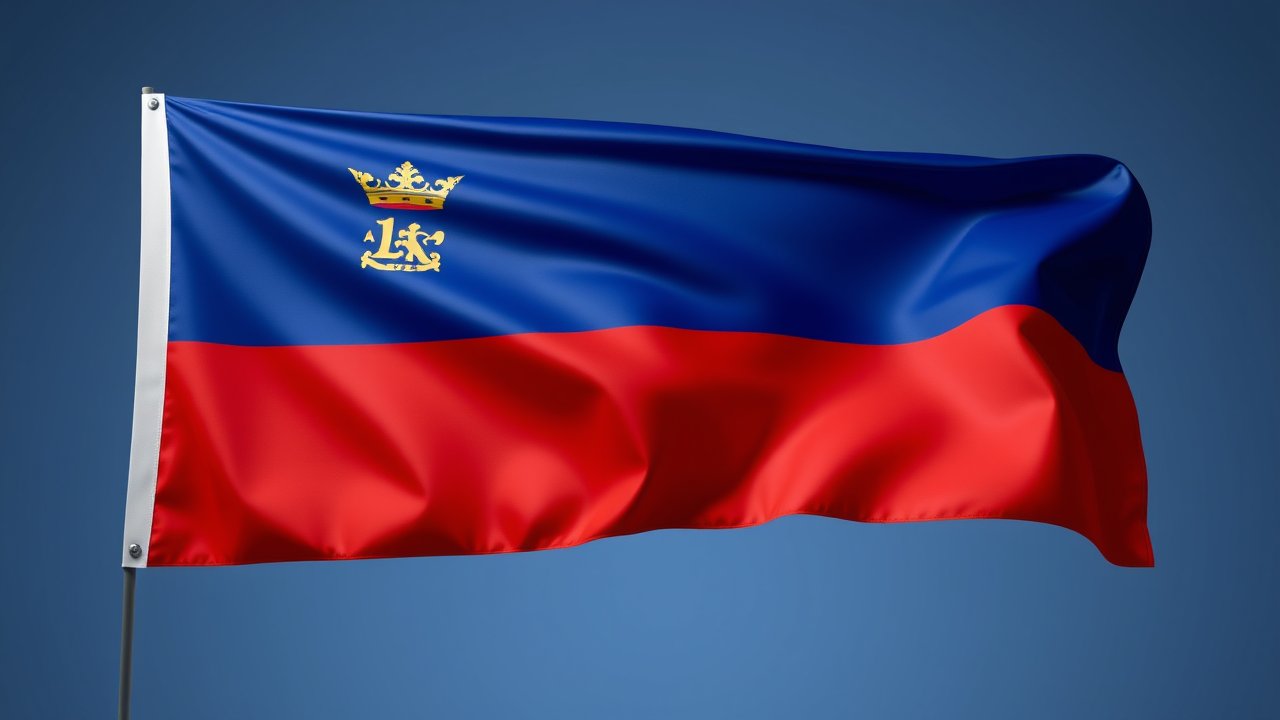
3D Glossy Render — Two horizontal bands of blue and red with a gold crown in the upper left. The flag of Liechtenstein as a photorealistic 3D render. Two horizontal bands of blue and red with a gold crown in the upper left. The flag fabric hangs or drapes naturally but preserves exact proportions, colors, and all symbols perfectly — completely faithful to the real Liechtenstein flag. Dramatic studio lighting, glossy silk material, soft shadows, subsurface scattering, perfect specular highlights. No text, no letters, no words, no writing of any kind.
Chalk on Blackboard — Two horizontal bands of blue and red with a gold crown in the upper left. The flag of Liechtenstein drawn in chalk on a real blackboard. Two horizontal bands of blue and red with a gold crown in the upper left. Authentic blackboard — dark slate green surface with chalk dust and smudge marks. Soft, dusty white and colored chalk lines, imperfect edges, hand-drawn quality. Chalk dust particles visible in the air. The flag is immediately recognizable. No text, no letters, no words, no writing of any kind.
Embroidered Textile — Two horizontal bands of blue and red with a gold crown in the upper left. The flag of Liechtenstein as intricate embroidery on linen fabric. Two horizontal bands of blue and red with a gold crown in the upper left. Dense satin stitches, French knots, chain stitch detail. The flag design is completely faithful — exact colors, geometry, and all symbols faithfully stitched, immediately recognizable as the Liechtenstein flag. Visible thread texture, dimensional quality, warm handcrafted feel. No text, no letters, no words, no writing of any kind.
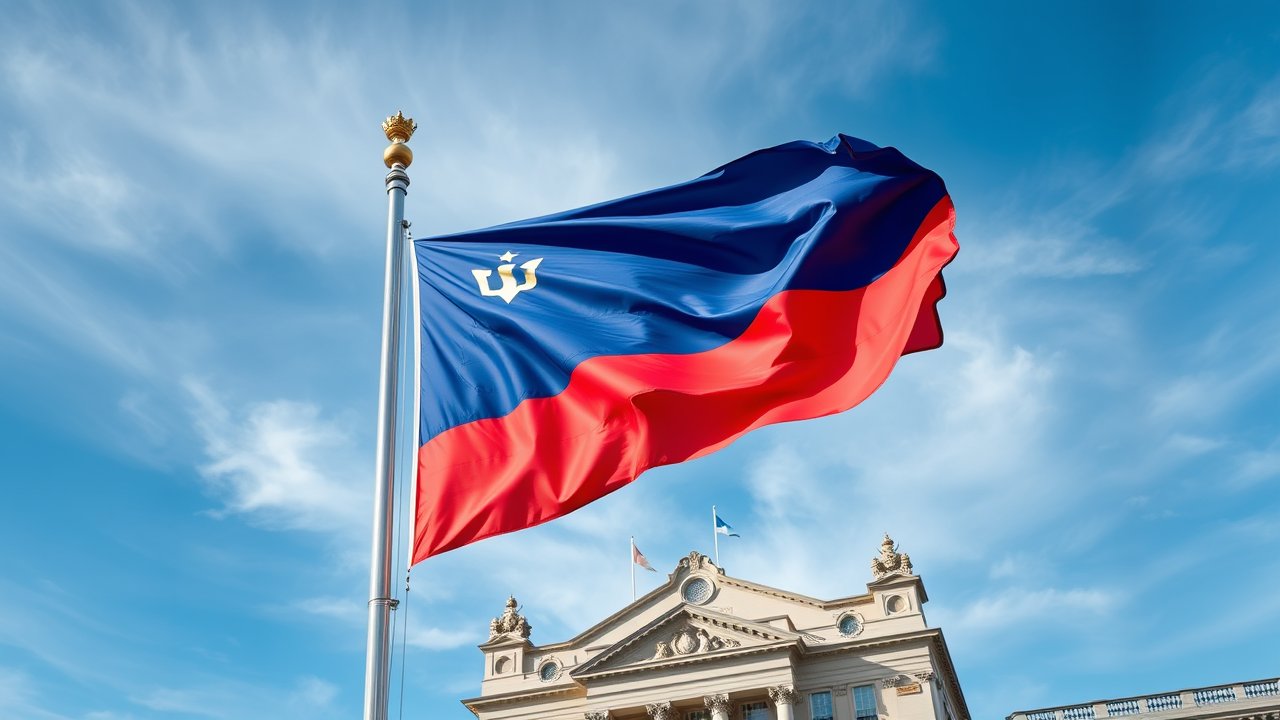
Flagpole in Capital — Two horizontal bands of blue and red with a gold crown in the upper left. Photorealistic photograph of the Liechtenstein flag flying on a tall flagpole in front of an iconic government building in the capital city. Two horizontal bands of blue and red with a gold crown in the upper left. The flag ripples naturally in the wind, colors vivid and exact. Documentary photography style, sharp and realistic. Grand architecture in the background. Blue sky, dramatic clouds. No text, no letters, no words, no writing of any kind.

Golden Hour Reflection — Two horizontal bands of blue and red with a gold crown in the upper left. Photorealistic photograph of the Liechtenstein flag reflected in still water at golden hour. Two horizontal bands of blue and red with a gold crown in the upper left. The flag flies on a pole at the water’s edge, its reflection shimmering on the surface below. Warm amber and orange sunset light. The flag colors and design are faithful and vivid. Serene, cinematic landscape photography. No text, no letters, no words, no writing of any kind.
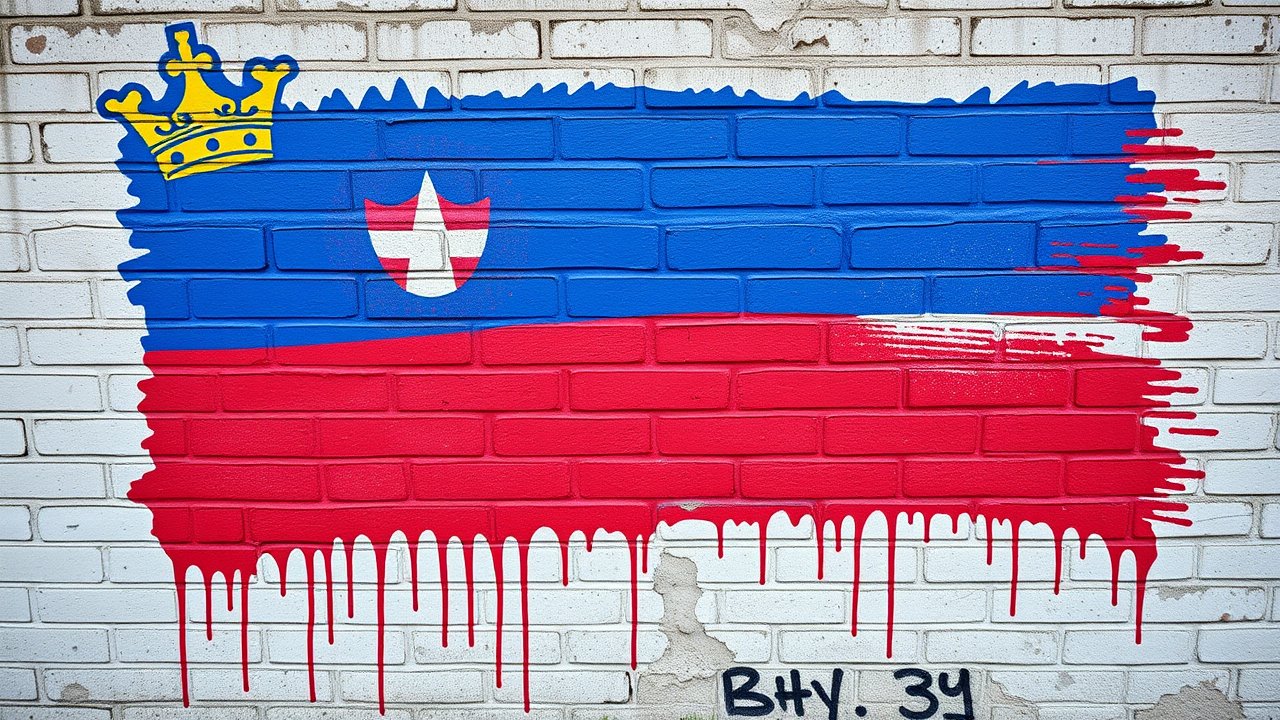
Street Art / Graffiti — Two horizontal bands of blue and red with a gold crown in the upper left. The flag of Liechtenstein as vibrant street art spray-painted on a brick wall. Two horizontal bands of blue and red with a gold crown in the upper left. Bold spray paint, dripping edges, stencil layers, overspray halos. The flag design is faithful and immediately recognizable — exact colors and symbols, just rendered in spray paint on urban concrete. No text, no letters, no words, no writing of any kind. No tags, no graffiti lettering.
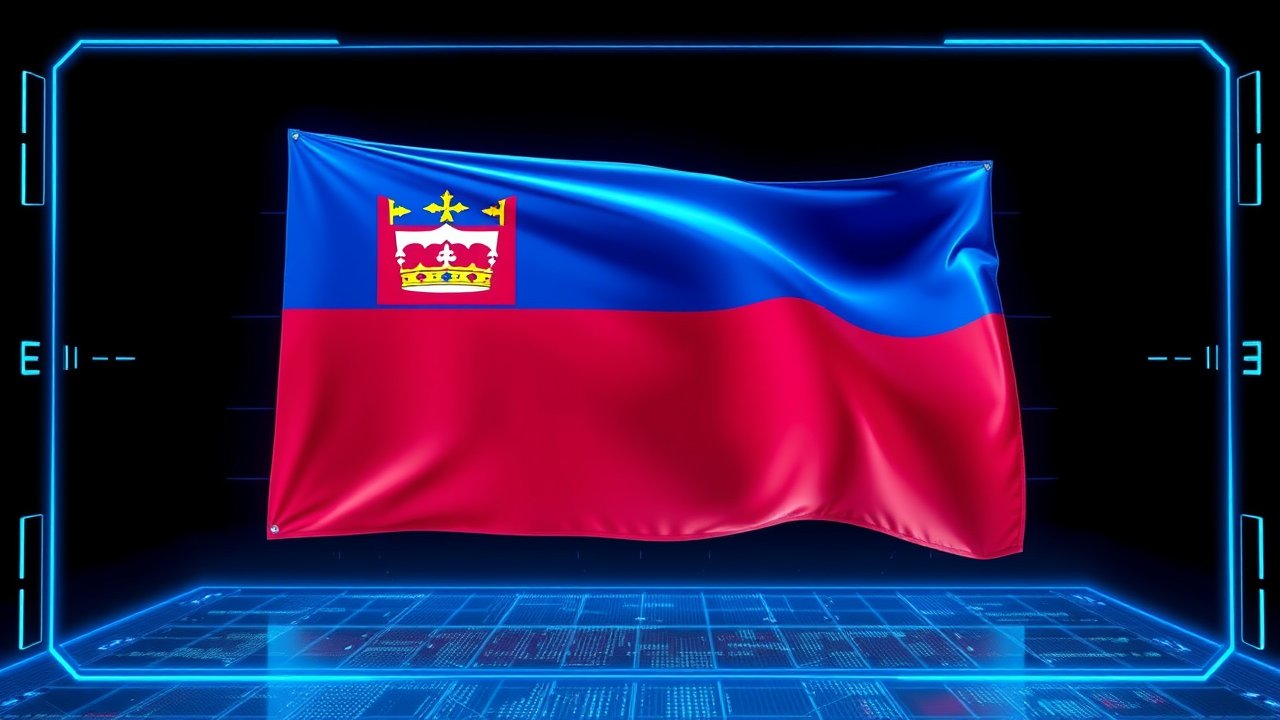
Sci-Fi Hologram — Two horizontal bands of blue and red with a gold crown in the upper left. The flag of Liechtenstein projected as a futuristic holographic display. Two horizontal bands of blue and red with a gold crown in the upper left. Translucent blue-white projection with scan lines, floating in dark space. Glitching edges, particle effects, data streams. The flag design is completely faithful and recognizable. Cyberpunk HUD elements framing the projection. No text, no letters, no words, no writing of any kind.

Hyperrealistic Wind — Two horizontal bands of blue and red with a gold crown in the upper left. Ultra-hyperrealistic photograph of the Liechtenstein flag caught in a dramatic gust of wind. Two horizontal bands of blue and red with a gold crown in the upper left. Macro-level fabric detail — individual threads visible, fabric folds and tension lines crisp. Colors and design completely faithful to the real Liechtenstein flag. High-speed shutter, razor-sharp focus, studio lighting. No text, no letters, no words, no writing of any kind.
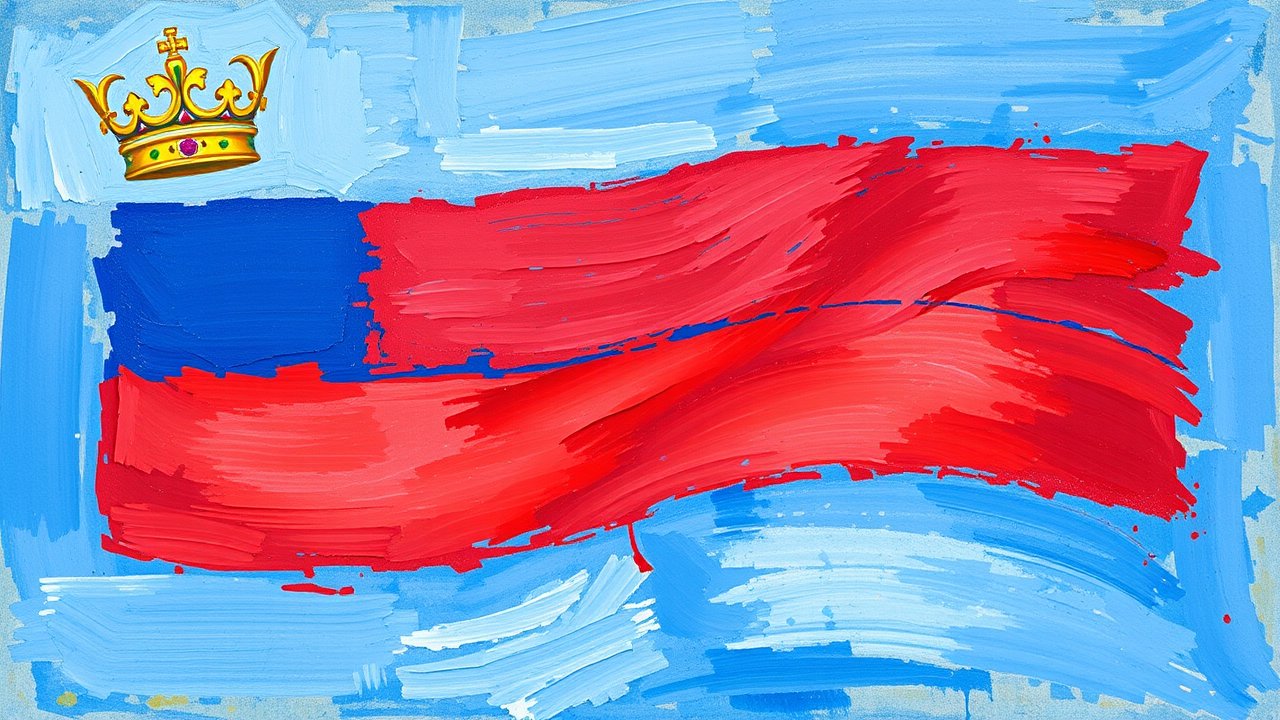
Impressionist Oil — Two horizontal bands of blue and red with a gold crown in the upper left. The flag of Liechtenstein painted in French Impressionist oil on canvas. Two horizontal bands of blue and red with a gold crown in the upper left. Thick impasto brushstrokes, dappled light, vibrant broken color technique in the style of Monet. The flag is instantly recognizable — colors and design faithful to the real Liechtenstein flag, interpreted with impressionist light and texture. No text, no letters, no words, no writing of any kind.

Lego Bricks — Two horizontal bands of blue and red with a gold crown in the upper left. The flag of Liechtenstein built from Lego bricks, photographed as a real physical construction. Two horizontal bands of blue and red with a gold crown in the upper left. Visible studs and brick seams, slight plastic sheen. Standard Lego colors approximate the flag’s palette. Built on a gray Lego baseplate. Dramatic angle showing the three-dimensional brick texture. No text, no letters, no words, no writing of any kind.

Low-Poly Geometric — Two horizontal bands of blue and red with a gold crown in the upper left. The flag of Liechtenstein constructed from low-polygon geometric triangles. Two horizontal bands of blue and red with a gold crown in the upper left. Aggressively faceted — each region broken into many visible triangular faces with subtle color variation across each polygon, creating real depth and dimensionality even in flat-color areas of the flag. Crystal-like, contemporary computational design. The flag is completely faithful and immediately recognizable. No text, no letters, no words, no writing of any kind.
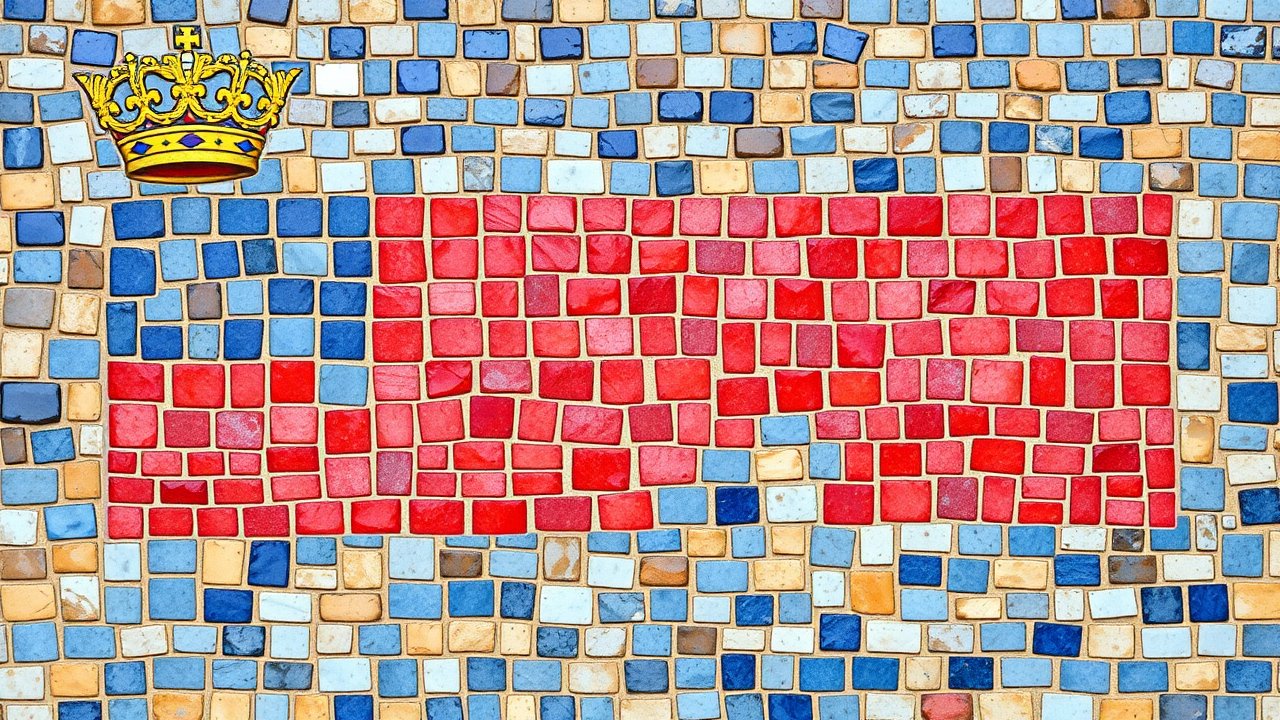
Mosaic Tiles — Two horizontal bands of blue and red with a gold crown in the upper left. The flag of Liechtenstein assembled as a Roman-style mosaic. Two horizontal bands of blue and red with a gold crown in the upper left. The flag is completely faithful to the real Liechtenstein flag — exact proportions, colors, and all symbols, rendered in thousands of small stone and glass tesserae. Visible grout lines, rich earthy tones mixed with brilliant glass, slight historical weathering. No text, no letters, no words, no writing of any kind.
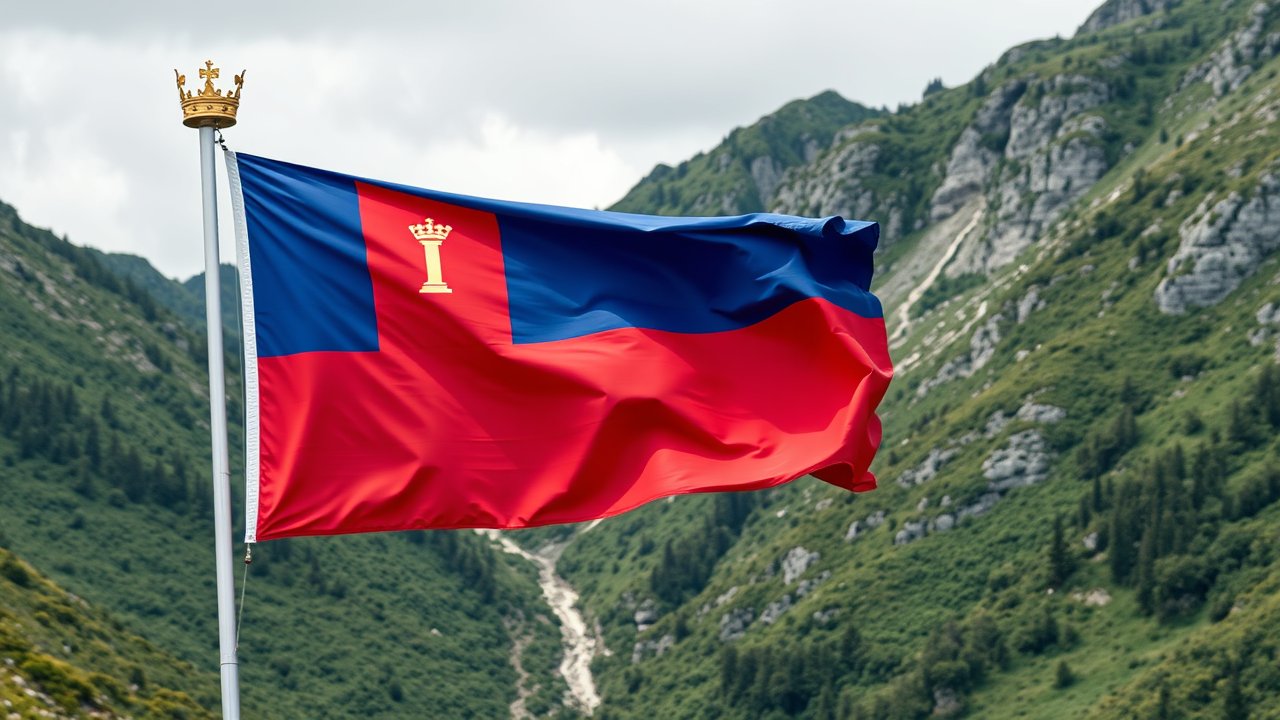
Native Landscape — Two horizontal bands of blue and red with a gold crown in the upper left. Photorealistic photograph of the Liechtenstein flag flying in an iconic natural landscape native to Liechtenstein — the terrain, flora, and environment characteristic of that country. Two horizontal bands of blue and red with a gold crown in the upper left. The flag is prominent and its colors are faithful and vivid. Remote, uninhabited wilderness. National Geographic photography style. No text, no letters, no words, no writing of any kind.
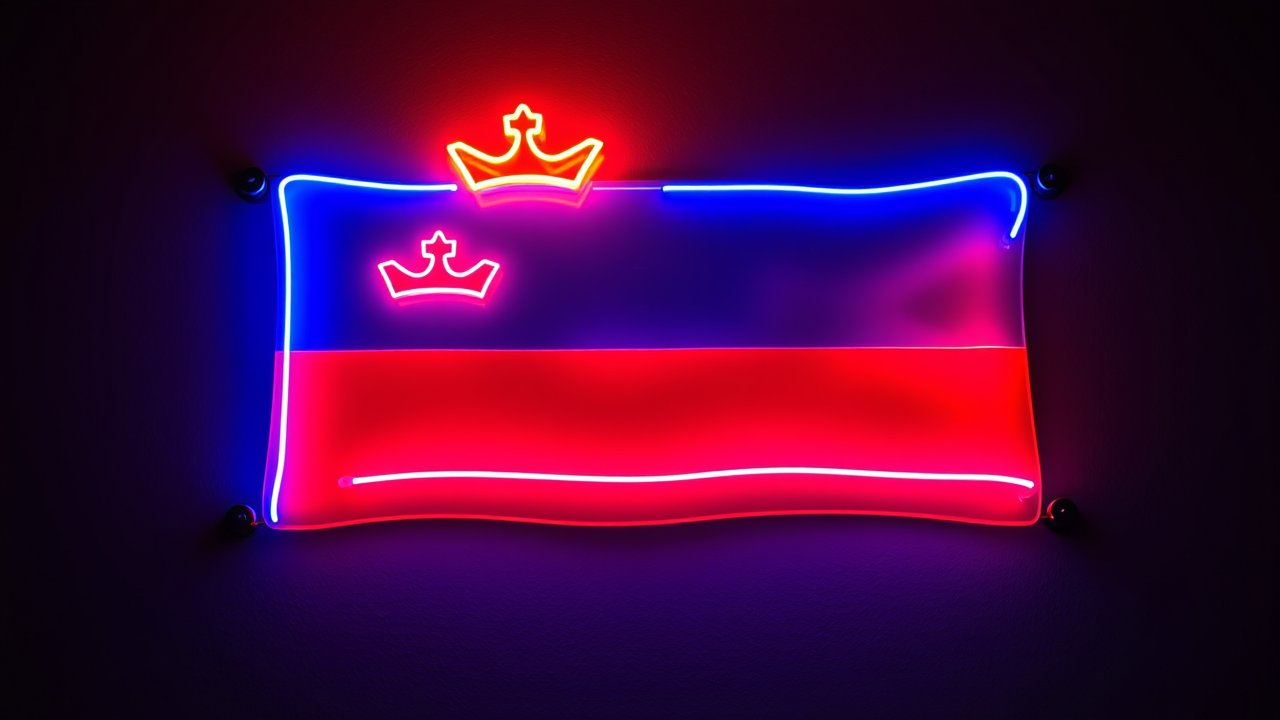
Neon Sign — Two horizontal bands of blue and red with a gold crown in the upper left. The flag of Liechtenstein recreated as a real neon sign mounted on a dark wall. Two horizontal bands of blue and red with a gold crown in the upper left. Glowing glass neon tubes bent into the flag’s shapes — the colors of the flag rendered in actual neon light. Visible glass tube bends, metal mounting brackets on the wall. Warm neon glow and light bloom. Real neon, not digital. Photographed in a dark room. No text, no letters, no words, no writing of any kind.
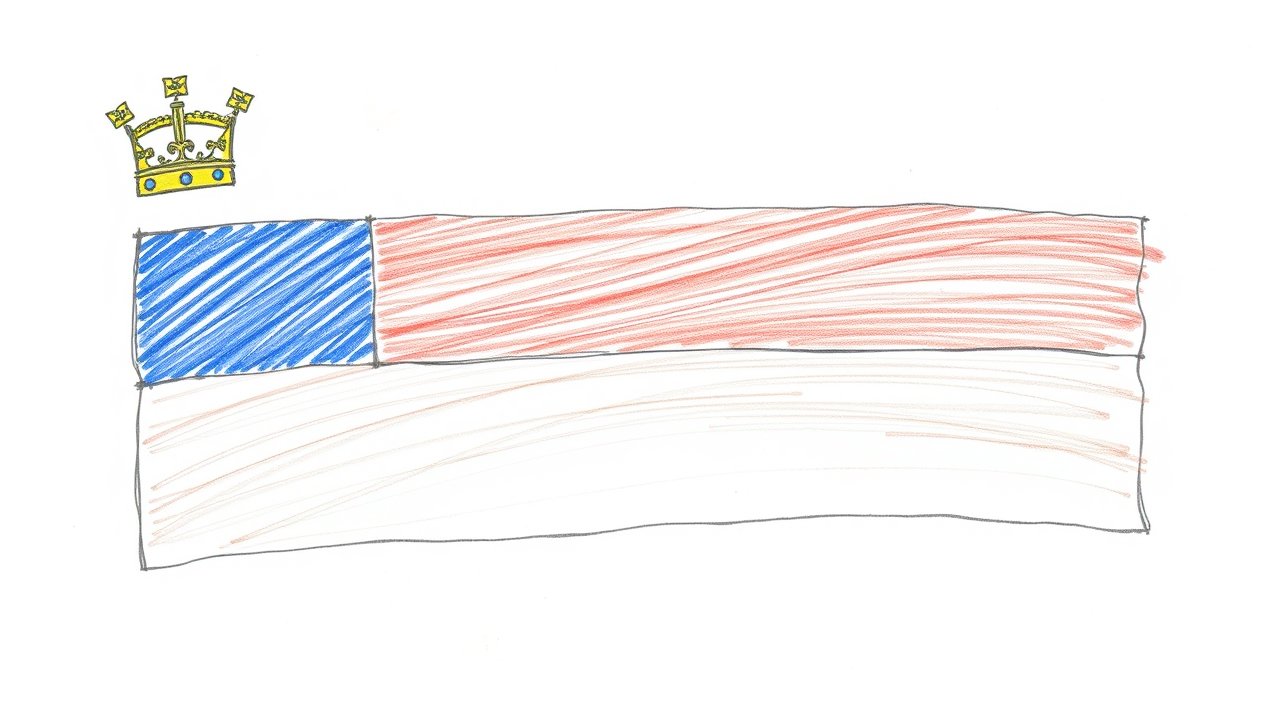
Pencil Sketch — Two horizontal bands of blue and red with a gold crown in the upper left. The flag of Liechtenstein as a bold, confident pencil sketch. Two horizontal bands of blue and red with a gold crown in the upper left. Strong graphite lines on cream paper — not delicate but bold and decisive. Heavy pressure on key outlines, dramatic cross-hatching for deep shadows and shading. Immediately recognizable as the Liechtenstein flag. Artist’s confident hand, not tentative. No text, no letters, no words, no writing of any kind.
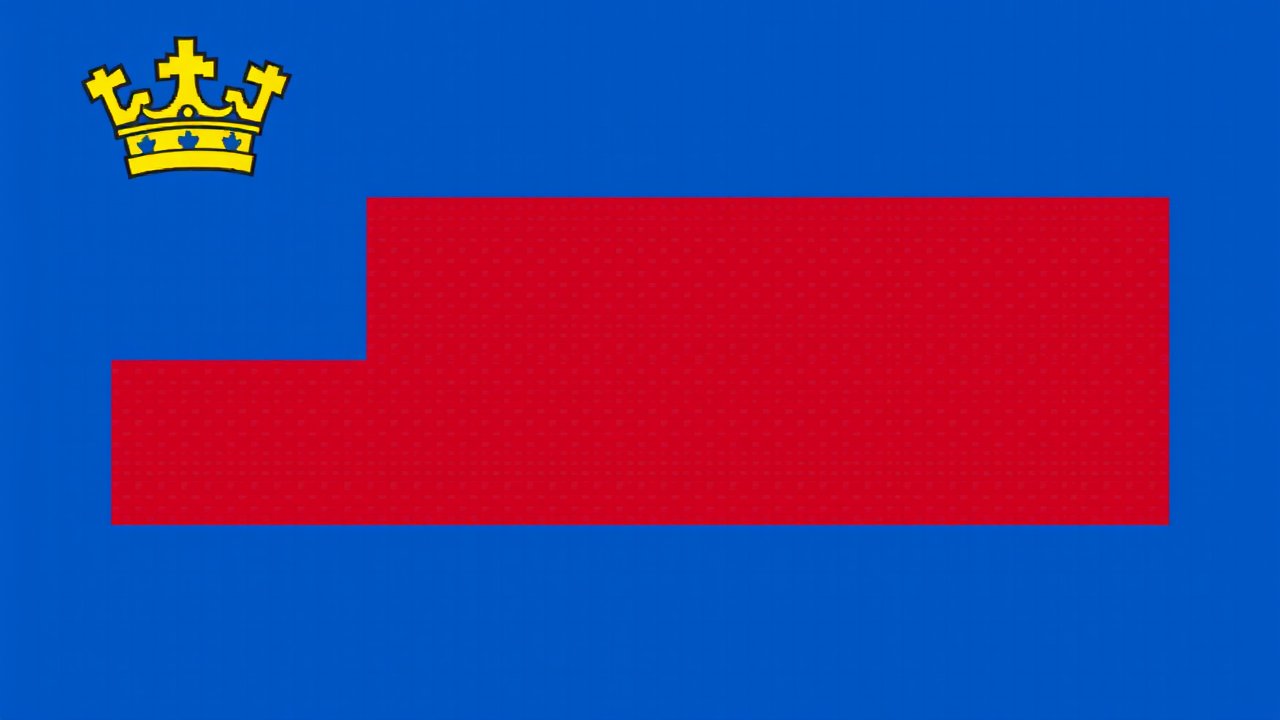
Pixel Art — Two horizontal bands of blue and red with a gold crown in the upper left. The flag of Liechtenstein as detailed 16-bit pixel art. Two horizontal bands of blue and red with a gold crown in the upper left. Crisp pixel grid, limited palette with careful dithering, nostalgic retro game aesthetic. Clean grid-aligned design with subtle shading. Every element of the flag faithfully reproduced in pixels. No text, no letters, no words, no writing of any kind.

Stained Glass — Two horizontal bands of blue and red with a gold crown in the upper left. The flag of Liechtenstein rendered as an ornate stained glass window. Two horizontal bands of blue and red with a gold crown in the upper left. The design is completely faithful to the real Liechtenstein flag — exact colors, geometry, and all symbols preserved. Brilliant jewel-toned glass pieces separated by dark lead came lines. Warm sunlight streaming through, casting colored light. Gothic cathedral craftsmanship. No text, no letters, no words, no writing of any kind.
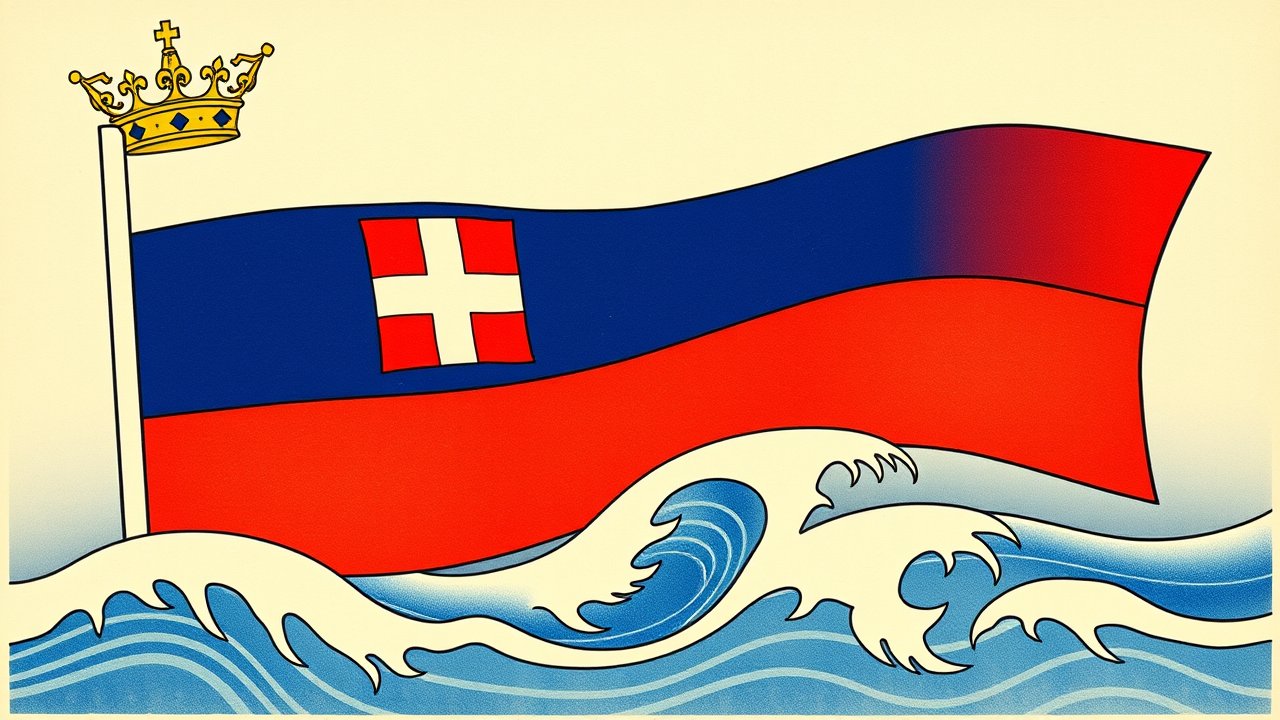
Ukiyo-e Woodblock — Two horizontal bands of blue and red with a gold crown in the upper left. The flag of Liechtenstein as a traditional Japanese ukiyo-e woodblock print. Two horizontal bands of blue and red with a gold crown in the upper left. Bold outlines, flat areas of rich color, flowing organic forms. Wind and waves incorporated into the composition. Printed on washi paper with visible wood grain texture. The flag is the central focus and instantly recognizable. No text, no letters, no words, no writing of any kind.
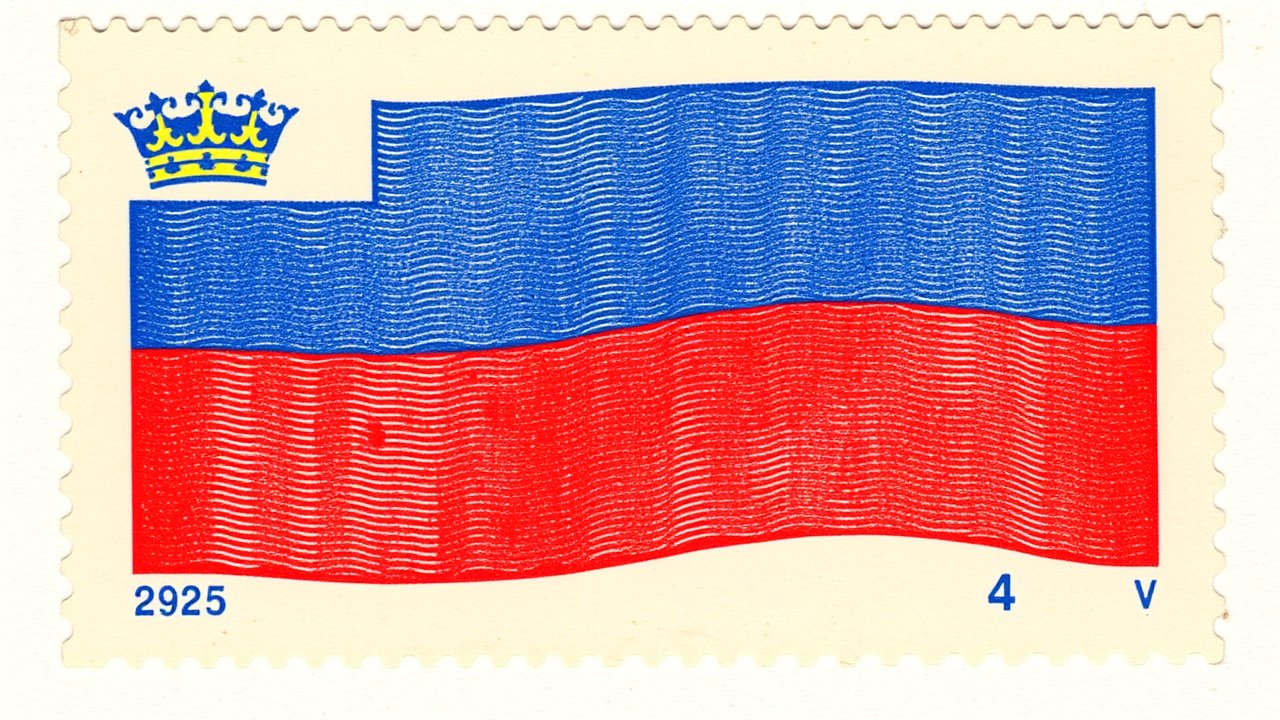
Vintage Postage Stamp — Two horizontal bands of blue and red with a gold crown in the upper left. The flag of Liechtenstein as a vintage 1950s postage stamp. Two horizontal bands of blue and red with a gold crown in the upper left. The flag fills most of the stamp — it is the primary subject, faithfully rendered in fine engraved intaglio style. Perforated edges, aged paper with slight foxing. The stamp may show a denomination numeral only — absolutely no other text or country names.
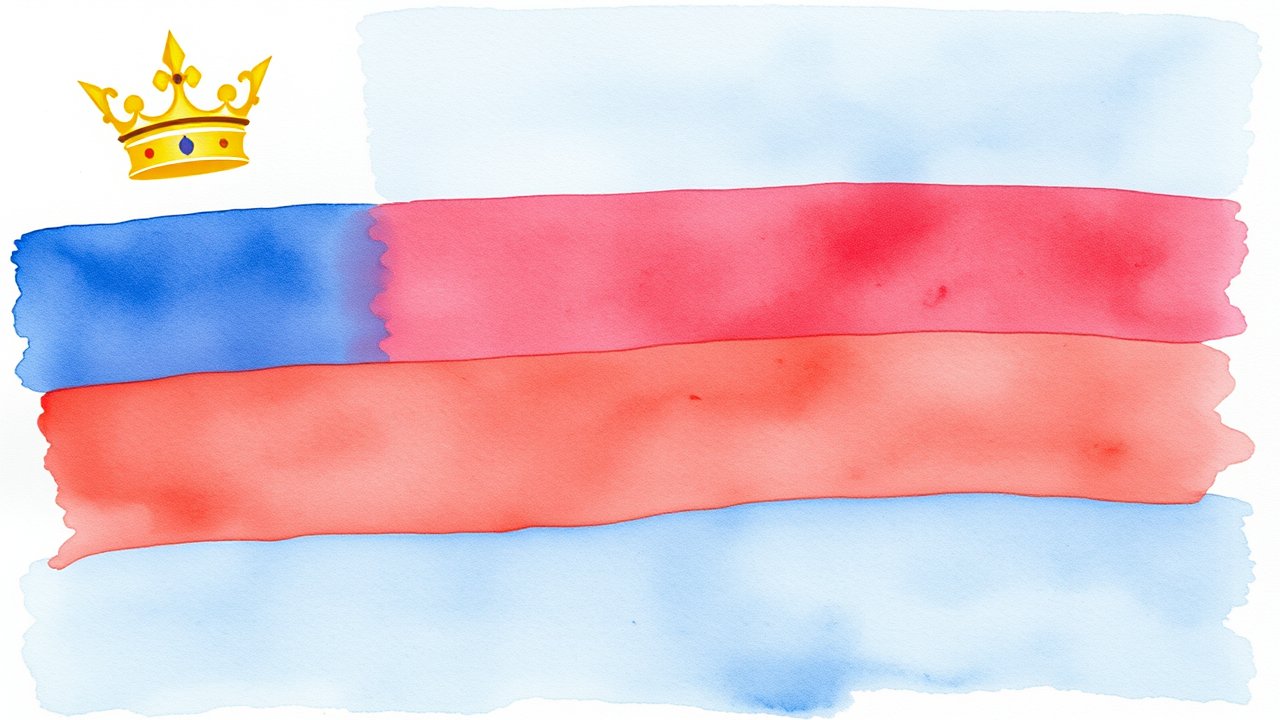
Watercolor — Two horizontal bands of blue and red with a gold crown in the upper left. The flag of Liechtenstein painted in loose, expressive watercolor. Two horizontal bands of blue and red with a gold crown in the upper left. Wet-on-wet technique with soft color bleeds, visible brushstrokes, natural paper texture. Delicate splashes and drips at the edges. Luminous, translucent layers of pigment. No text, no letters, no words, no writing of any kind.
The Crown and the Colors: Liechtenstein’s Flag and the Symbol of Alpine Sovereignty
The flag of Liechtenstein stands as one of Europe’s most distinctive national emblems, featuring a striking composition of horizontal blue and red bands topped by a golden crown positioned in the upper hoist corner. This seemingly simple design belies a rich historical narrative spanning centuries of Alpine politics, the challenges of national identity in a microstate, and a practical solution to an unusual international dilemma. Liechtenstein’s flag represents not merely a territorial claim but an assertion of sovereignty and independence in a region long dominated by larger powers. Understanding this symbol requires examining its medieval heraldic origins, the evolution of its design across nearly two centuries, the unusual problem that led to its modern form, and the deep cultural significance it holds for one of Europe’s smallest yet wealthiest nations.
Medieval Origins and the Liechtenstein Principality
The origins of Liechtenstein’s flag are rooted in the heraldic traditions of the Holy Roman Empire and the medieval principalities of the Alpine region. The territory that would become modern Liechtenstein emerged from the fragmentation of the Holy Roman Empire during the Middle Ages. The Liechtenstein family, a noble dynasty that originated in the region around present-day Austria, gradually accumulated lands and titles throughout the medieval period. In 1699 and 1712, the family acquired the territories of Schellenberg and Vaduz respectively, which together would form the foundation of the modern Principality of Liechtenstein.
The blue and red colors used in Liechtenstein’s flag have medieval heraldic roots, derived from the coats of arms of these constituent territories. The blue represents the region’s connection to the greater German-speaking Alpine world, while the red symbolizes sovereignty and legitimacy within the Holy Roman Empire’s complex feudal hierarchy. Before Liechtenstein became an independent entity, these colors appeared in various heraldic forms across the territories governed by the Liechtenstein family, serving as visual markers of noble authority and territorial claim.
Independence and the Development of National Symbols
Liechtenstein’s path to independence differs markedly from that of its European neighbors. Rather than emerging through revolutionary upheaval or violent conflict, Liechtenstein evolved from its status as a principality within the Holy Roman Empire to full sovereignty through the Napoleonic Wars and the subsequent Congress of Vienna in 1815. With the dissolution of the Holy Roman Empire in 1806, Liechtenstein joined the German Confederation as an independent member state. This relatively peaceful transition to independence allowed Liechtenstein to develop its national symbols gradually and deliberately, rather than in the urgency of revolutionary fervor.
The flag that Liechtenstein adopted following independence consisted simply of two equal horizontal bands: blue on top and red below. This straightforward design, while clear and distinctive, drew upon the medieval heraldic traditions of the Liechtenstein family and the constituent territories. For more than a century, from approximately 1815 through the 1930s, this simple blue-and-red flag served as Liechtenstein’s national emblem. The design was practical, memorable, and served its purpose of identifying the small principality on the international stage. During this period, Liechtenstein developed into a stable constitutional monarchy, particularly after adopting its first written constitution in 1862.
The Flag Crisis of 1936 and the Crown Solution
In 1936, the Principality of Liechtenstein faced an unprecedented international embarrassment. At the Berlin Olympic Games, athletes competing under Liechtenstein’s flag—the simple blue and red bands—were visually indistinguishable from athletes representing Haiti, which used an identical flag design. This coincidence was not merely cosmetic; it created genuine confusion in international competition, with judges and observers struggling to differentiate between the two nations. The problem was compounded by the fact that flags play crucial diplomatic and ceremonial roles; having an indistinguishable flag was not merely awkward but represented a failure to clearly assert national sovereignty and identity on the world stage.
Faced with this dilemma, Liechtenstein’s leadership made a decisive choice: they would modify the flag to establish clear visual distinction without fundamentally altering its character. In 1937, the Principality adopted a constitutional amendment formally adding a golden crown to the upper hoist corner of the flag. This crown, rendered in gold (sometimes described as yellow in official descriptions), sits centrally in the upper left section of the blue band, occupying roughly the upper third of the hoist side.
The Crown: Symbolism of Sovereignty and Principality
The golden crown that distinguishes Liechtenstein’s flag carries profound symbolic weight. In heraldic tradition, a crown represents sovereignty, legitimacy, and the right to rule. For a small nation in a region historically dominated by larger powers, this crown asserts Liechtenstein’s status as an independent principality rather than a provincial territory or region of another state. The crown serves as an explicit visual declaration that Liechtenstein is ruled by a reigning Prince and is sovereign in its own affairs, despite its diminutive size.
The specific design of the crown—typically rendered as a traditional European coronet with multiple points—reflects the constitutional monarchy system of government that has characterized Liechtenstein since 1862. Unlike many European monarchies, Liechtenstein’s ruler actually exercises meaningful constitutional powers; the Prince is not merely a ceremonial figurehead but an active participant in governance. The crown on the flag thus represents not merely historical legitimacy but actual, contemporary political authority.
The gold color itself carries additional significance. Gold traditionally symbolizes nobility, wealth, and prestige in heraldic tradition. While Liechtenstein was historically a modest Alpine principality, the use of gold in the crown anticipated the nation’s remarkable economic transformation in the late 20th century. Today, Liechtenstein has one of the world’s highest standards of living, driven by a sophisticated financial services sector and precision manufacturing industries. The golden crown that once asserted sovereignty now also seems to reflect the nation’s exceptional prosperity.
Colors and Their Meanings
The blue and red bands of Liechtenstein’s flag each carry specific symbolic weight. The blue, positioned at the top of the flag, represents fidelity, perseverance, and steadfastness—qualities that have characterized Liechtenstein’s approach to governance and diplomacy across centuries of European upheaval. The red band below symbolizes courage, strength, and the vitality of the Liechtenstein people. Together, these colors create a balanced composition that reflects the equilibrium Liechtenstein has maintained between competing regional powers and interests.
The positioning of blue above red also reflects geographical and political symbolism. Blue is often associated with the skies and mountains of the Alpine region, while red represents the fertile valleys and human communities that inhabit them. For a nation whose territory consists largely of mountainous terrain in the Vorarlberg Alps, this division of the flag between upper and lower registers mirrors the landscape itself.
Modern Liechtenstein and the Flag’s Enduring Significance
Since its adoption in 1937, Liechtenstein’s flag has become an iconic symbol of the principality on the world stage. It appears on government buildings, diplomatic missions, and international sporting events. For Liechtenstein’s approximately 39,000 citizens, the flag represents more than mere territorial identity; it embodies a sense of distinct national pride in a nation whose existence and independence might otherwise be overlooked in discussions of European geopolitics.
Liechtenstein’s flag is notably visible during the Winter Olympic Games, where the nation’s small but competitive athletic contingent competes under its distinctive blue-and-red-with-crown standard. The flag also features prominently in Liechtenstein’s thorough integration into international organizations, from the United Nations to the European Free Trade Association. Despite its size—at just 160 square kilometers, Liechtenstein is smaller than most U.S. counties—the nation has successfully asserted itself as a full participant in the international community, a status visually affirmed every time its flag is raised.
Conclusion: A Symbol of Continuity and Clarity
The flag of Liechtenstein, with its blue and red bands surmounted by a golden crown, represents an elegant solution to the challenge of establishing clear national identity in a crowded European landscape. Born from medieval heraldic traditions, refined through centuries of independent development, and perfected through a practical response to international confusion, the flag embodies Liechtenstein’s journey from a modest Alpine principality to a globally recognized and respected nation state. The crown that adorns it asserts sovereignty; the colors reflect both landscape and character. Today, as Liechtenstein continues to thrive as a center of financial services and quality manufacturing, its flag stands as a proud symbol of an independent people determined to maintain their distinct identity despite their small size. In an era of globalization and political consolidation, Liechtenstein’s flag serves as a reminder that even the smallest nations can establish and maintain their own clear, distinctive identity on the world stage.
Free Printable: Flags of the World Reference Card
Get a beautiful printable poster with 50 flag emojis, Unicode codes, and fun facts. Perfect for classrooms and desks!
No spam, ever. Unsubscribe anytime.