How To
How To
Time needed: 1 minute
How to copy and paste the Flag of Germany Emoji to any device.
- Copy the German Flag Emoji
Go to flagemoji.com and press the copy button (above). This works on any device.
- Paste the Emoji
Go to your email/iMessage/SMS texting service/document and paste the emoji.
For mobile devices
— double-tap or tap-hold, then paste should appear. Tap it.
For desktop and laptops on Apple devices
— command-P / ⌘-P
For desktop and laptops on Windows devices
— control-p
Codes
Emoji Codes
Flag emojis are unicode symbols, like any other letter or number on your keyboard. This means you can copy and paste the emoji itself into your code, whatever the language (click the button above).
They actually count as two characters: the two-letter country code (the ISO international standard). The unicode and shortcode both represent country data which devices can interpret and display the emoji.
| Country Code | Unicode | Shortcode |
| DE | U+1F1E9 U+1F1EA | :flag_DE: :DE: |
Emoji shortcodes are used on some platforms as a way for users to type in emojis from the keyboard. If you type the emoji shortcode on Github or Slack, the emoji will appear.
*The official name of the emoji is only the country name, not ‘Germany Flag’, for example.
Description
Description
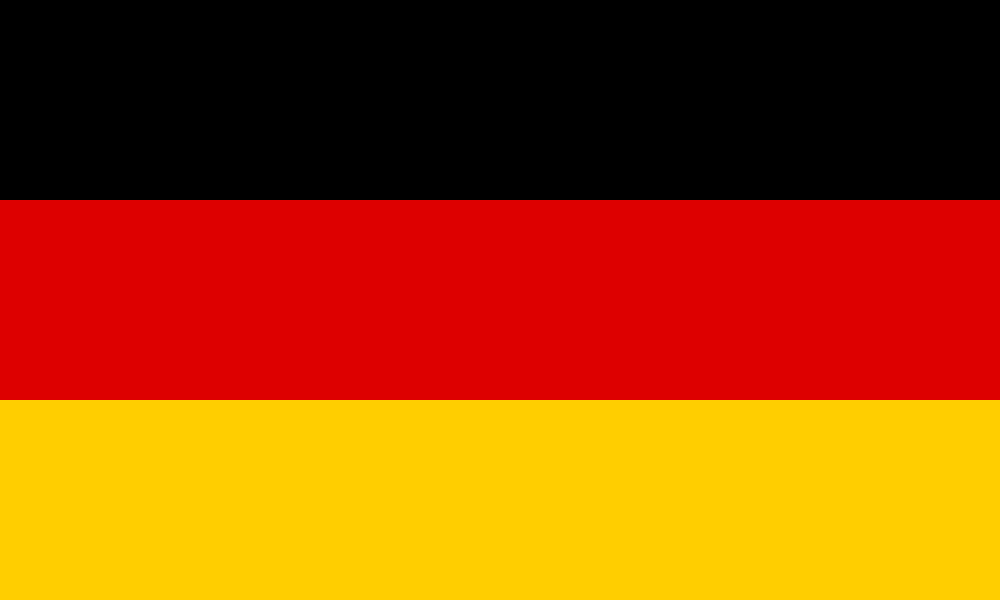
The flag of Germany is comprised of three equal horizontal bands of black (top), red, and gold. These colors have played an important role in German history and can be traced back to the medieval banner of the Holy Roman Emperor—a black eagle with red claws and beak on a gold field.
Map
Map
Check out the map of Bosnia and Herzegovina!
Weather
Anthem
National Anthem
| Title | Das Lied der Deutschen (Song of the Germans) |
| Composer | August Heinrich Hoffmann Von Fallersleben / Franz Joseph Haydn |
FAQ
FAQs
The establishment of German Empire was officially proclaimed on January 18, 1871.
The German flag is a tricolore. Black, red and gold were taken from the uniforms of German soldiers during the Napoleonic Wars.
The German flag was designed in 1832.
Germany is governed by Federal Parliamentary Republic.
Discover more fun facts of Mauritius.
Printable
Printable German Flag
Print another really cool flag. Why not the flag of Nigeria?
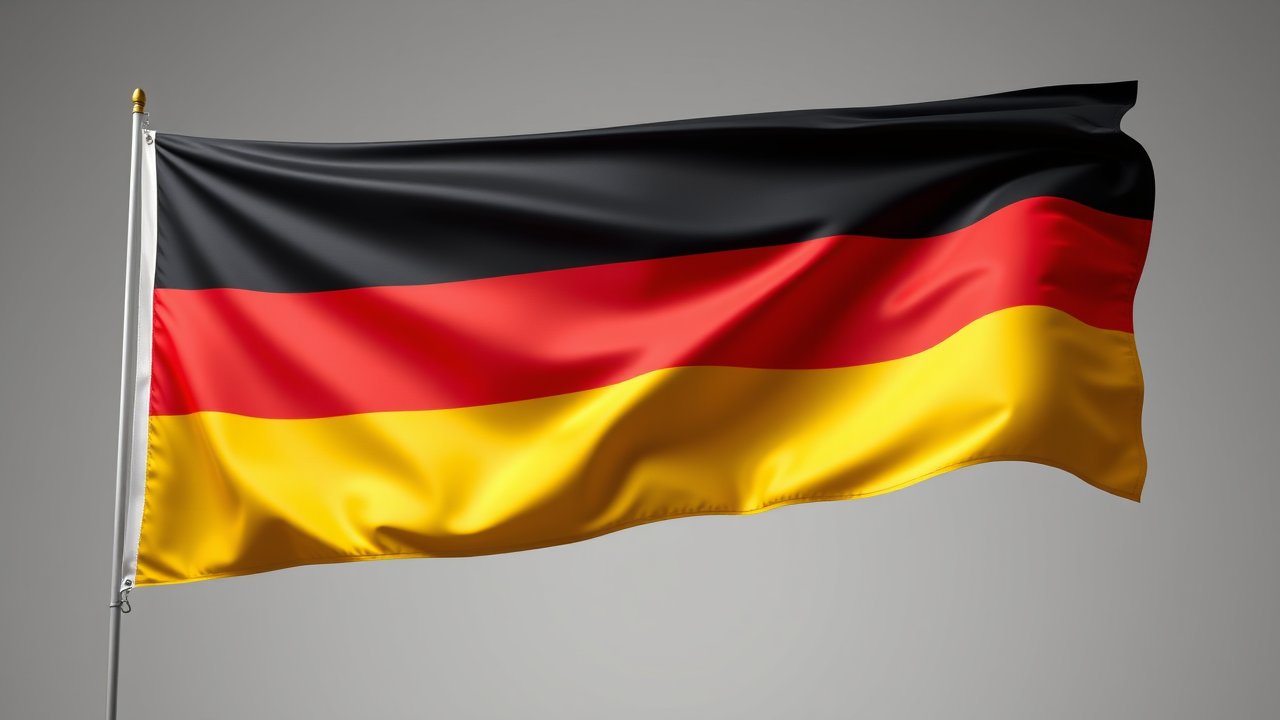
3D Glossy Render — The modern Bundesflagge: three horizontal stripes of black, red, and gold — no eagle, no iron cross, no swastika, no Imperial or Nazi-era symbols. The flag of Germany as a photorealistic 3D render. The modern Bundesflagge: three horizontal stripes of black, red, and gold — no eagle, no iron cross, no swastika, no Imperial or Nazi-era symbols. The flag fabric hangs or drapes naturally but preserves exact proportions, colors, and all symbols perfectly — completely faithful to the real Germany flag. Dramatic studio lighting, glossy silk material, soft shadows, subsurface scattering, perfect specular highlights. No text, no letters, no words, no writing of any kind.
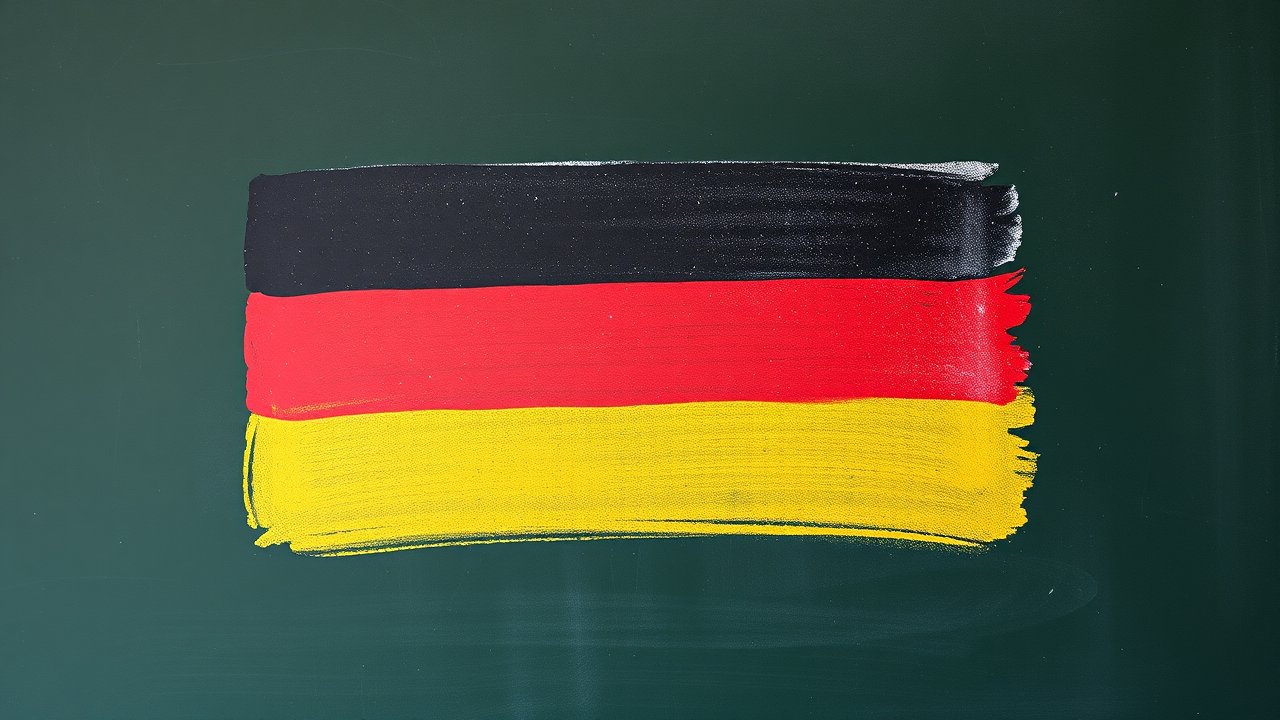
Chalk on Blackboard — The modern Bundesflagge: three horizontal stripes of black, red, and gold — no eagle, no iron cross, no swastika, no Imperial or Nazi-era symbols. The flag of Germany drawn in chalk on a real blackboard. The modern Bundesflagge: three horizontal stripes of black, red, and gold — no eagle, no iron cross, no swastika, no Imperial or Nazi-era symbols. Authentic blackboard — dark slate green surface with chalk dust and smudge marks. Soft, dusty white and colored chalk lines, imperfect edges, hand-drawn quality. Chalk dust particles visible in the air. The flag is immediately recognizable. No text, no letters, no words, no writing of any kind.
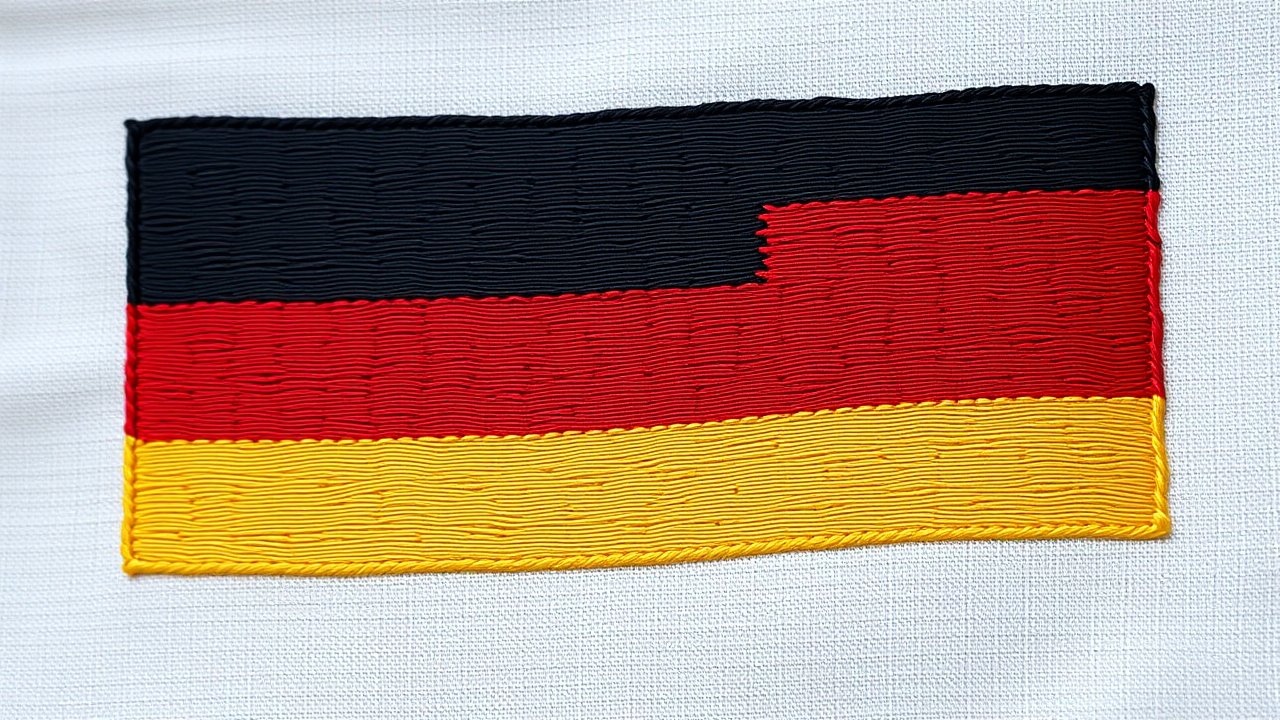
Embroidered Textile — The modern Bundesflagge: three horizontal stripes of black, red, and gold — no eagle, no iron cross, no swastika, no Imperial or Nazi-era symbols. The flag of Germany as intricate embroidery on linen fabric. The modern Bundesflagge: three horizontal stripes of black, red, and gold — no eagle, no iron cross, no swastika, no Imperial or Nazi-era symbols. Dense satin stitches, French knots, chain stitch detail. The flag design is completely faithful — exact colors, geometry, and all symbols faithfully stitched, immediately recognizable as the Germany flag. Visible thread texture, dimensional quality, warm handcrafted feel. No text, no letters, no words, no writing of any kind.
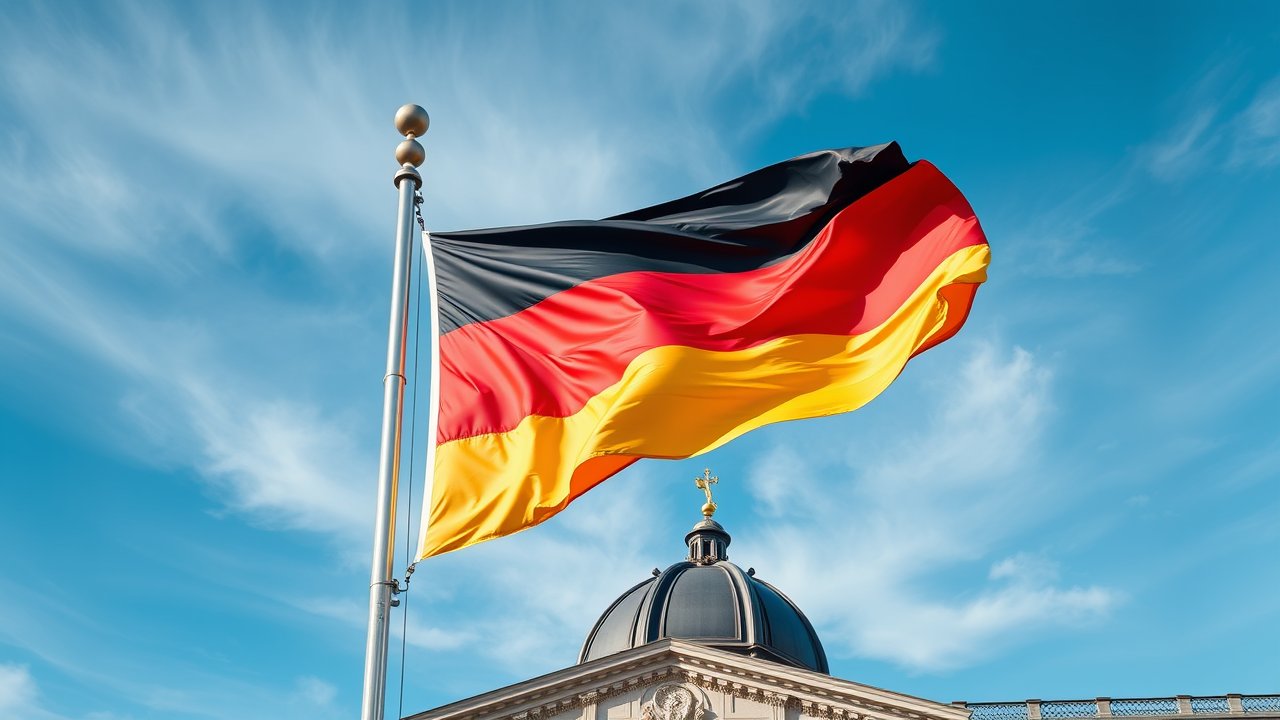
Flagpole in Capital — The modern Bundesflagge: three horizontal stripes of black, red, and gold — no eagle, no iron cross, no swastika, no Imperial or Nazi-era symbols. Photorealistic photograph of the Germany flag flying on a tall flagpole in front of an iconic government building in the capital city. The modern Bundesflagge: three horizontal stripes of black, red, and gold — no eagle, no iron cross, no swastika, no Imperial or Nazi-era symbols. The flag ripples naturally in the wind, colors vivid and exact. Documentary photography style, sharp and realistic. Grand architecture in the background. Blue sky, dramatic clouds. No text, no letters, no words, no writing of any kind.
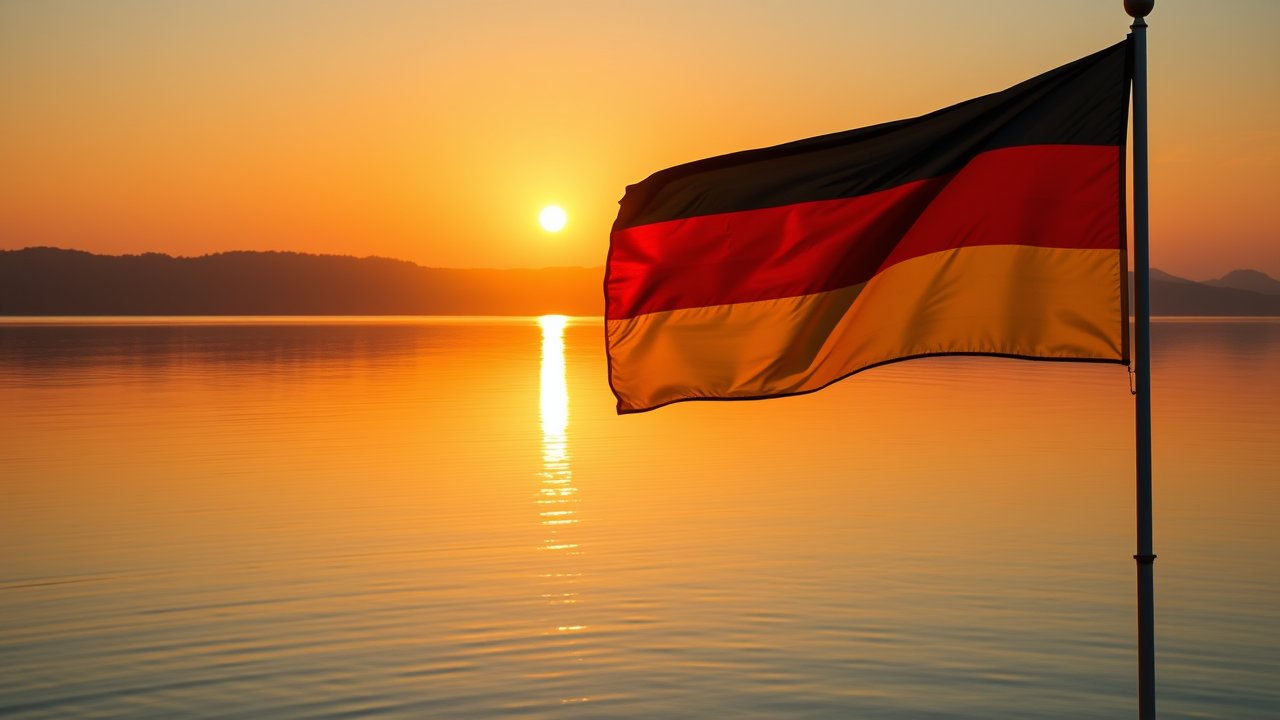
Golden Hour Reflection — The modern Bundesflagge: three horizontal stripes of black, red, and gold — no eagle, no iron cross, no swastika, no Imperial or Nazi-era symbols. Photorealistic photograph of the Germany flag reflected in still water at golden hour. The modern Bundesflagge: three horizontal stripes of black, red, and gold — no eagle, no iron cross, no swastika, no Imperial or Nazi-era symbols. The flag flies on a pole at the water’s edge, its reflection shimmering on the surface below. Warm amber and orange sunset light. The flag colors and design are faithful and vivid. Serene, cinematic landscape photography. No text, no letters, no words, no writing of any kind.
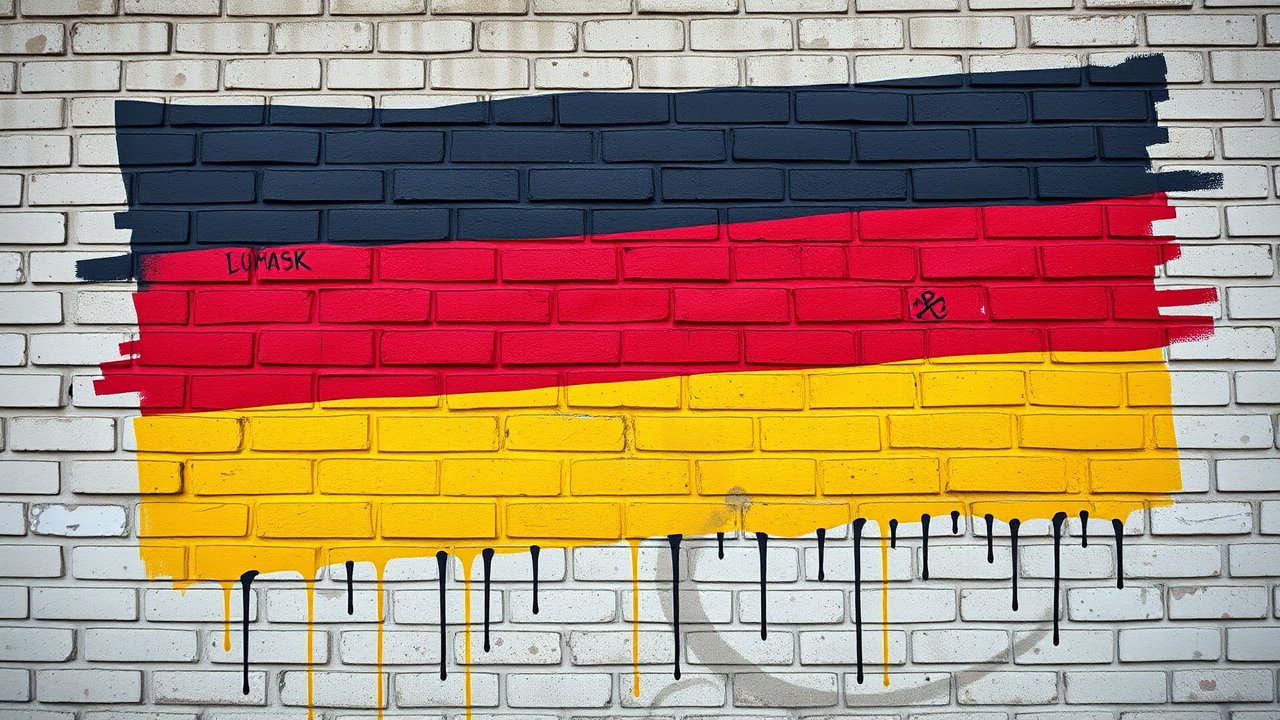
Street Art / Graffiti — The modern Bundesflagge: three horizontal stripes of black, red, and gold — no eagle, no iron cross, no swastika, no Imperial or Nazi-era symbols. The flag of Germany as vibrant street art spray-painted on a brick wall. The modern Bundesflagge: three horizontal stripes of black, red, and gold — no eagle, no iron cross, no swastika, no Imperial or Nazi-era symbols. Bold spray paint, dripping edges, stencil layers, overspray halos. The flag design is faithful and immediately recognizable — exact colors and symbols, just rendered in spray paint on urban concrete. No text, no letters, no words, no writing of any kind. No tags, no graffiti lettering.
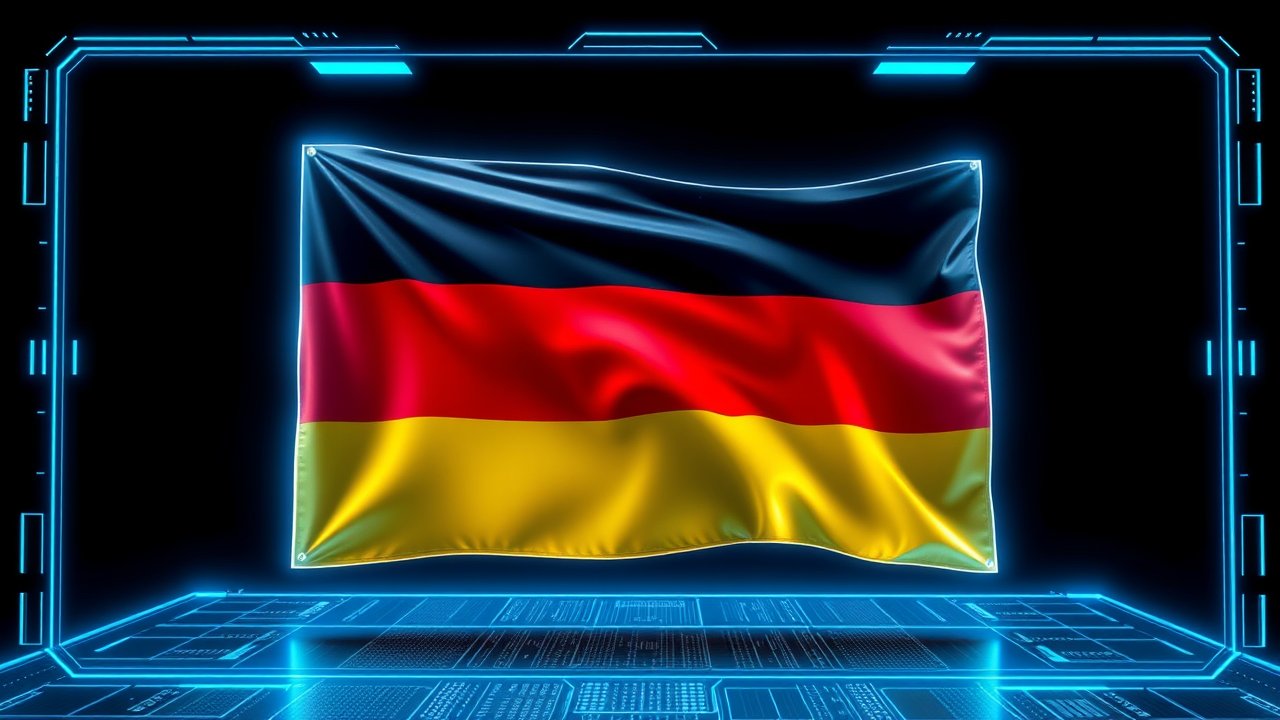
Sci-Fi Hologram — The modern Bundesflagge: three horizontal stripes of black, red, and gold — no eagle, no iron cross, no swastika, no Imperial or Nazi-era symbols. The flag of Germany projected as a futuristic holographic display. The modern Bundesflagge: three horizontal stripes of black, red, and gold — no eagle, no iron cross, no swastika, no Imperial or Nazi-era symbols. Translucent blue-white projection with scan lines, floating in dark space. Glitching edges, particle effects, data streams. The flag design is completely faithful and recognizable. Cyberpunk HUD elements framing the projection. No text, no letters, no words, no writing of any kind.
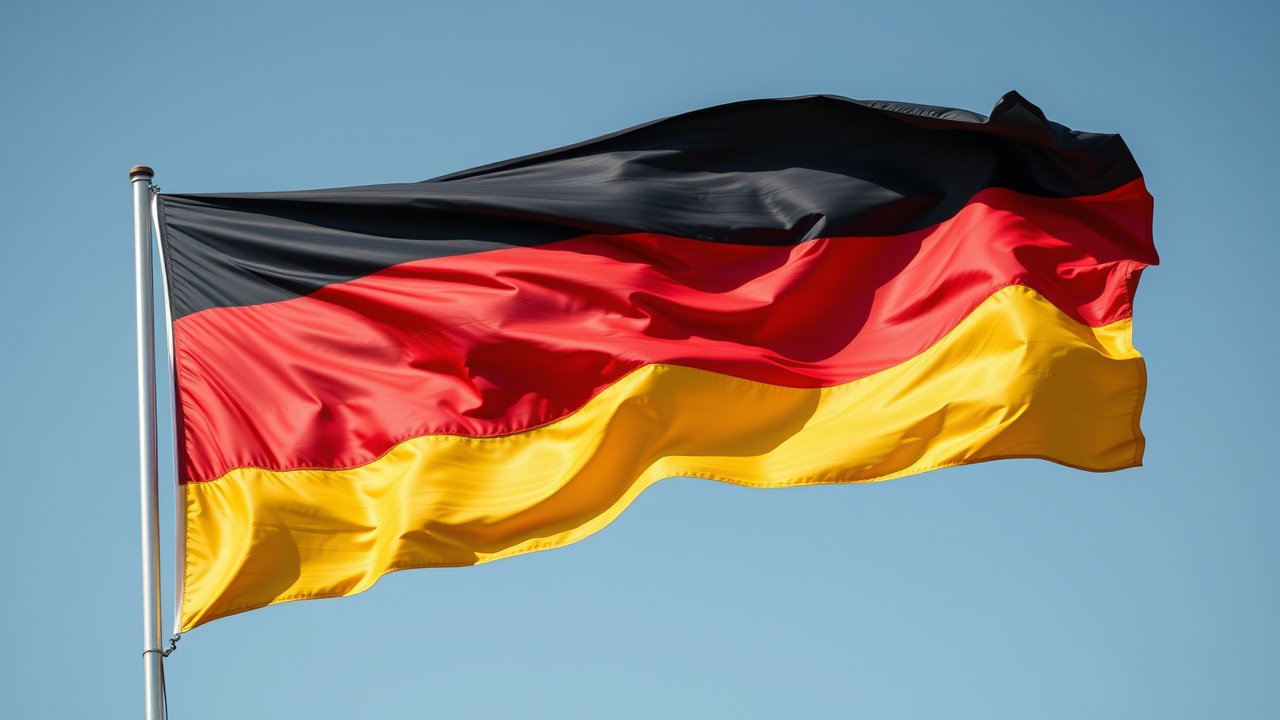
Hyperrealistic Wind — The modern Bundesflagge: three horizontal stripes of black, red, and gold — no eagle, no iron cross, no swastika, no Imperial or Nazi-era symbols. Ultra-hyperrealistic photograph of the Germany flag caught in a dramatic gust of wind. The modern Bundesflagge: three horizontal stripes of black, red, and gold — no eagle, no iron cross, no swastika, no Imperial or Nazi-era symbols. Macro-level fabric detail — individual threads visible, fabric folds and tension lines crisp. Colors and design completely faithful to the real Germany flag. High-speed shutter, razor-sharp focus, studio lighting. No text, no letters, no words, no writing of any kind.
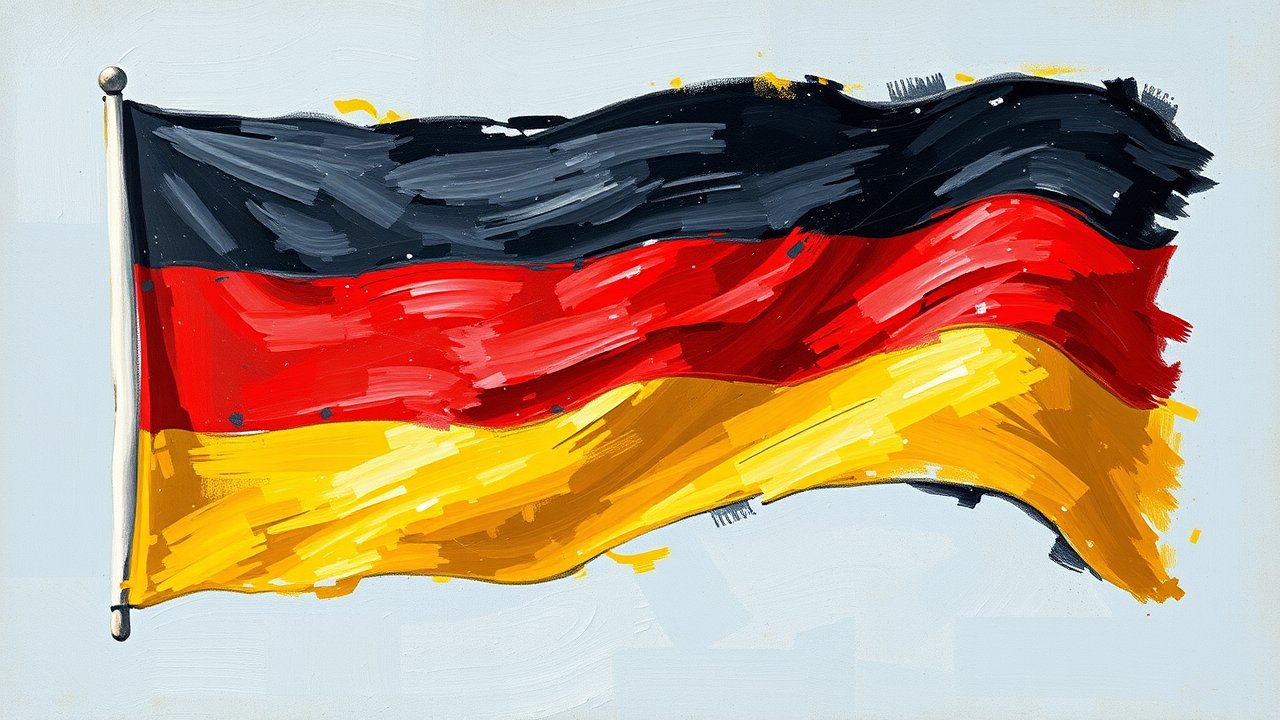
Impressionist Oil — The modern Bundesflagge: three horizontal stripes of black, red, and gold — no eagle, no iron cross, no swastika, no Imperial or Nazi-era symbols. The flag of Germany painted in French Impressionist oil on canvas. The modern Bundesflagge: three horizontal stripes of black, red, and gold — no eagle, no iron cross, no swastika, no Imperial or Nazi-era symbols. Thick impasto brushstrokes, dappled light, vibrant broken color technique in the style of Monet. The flag is instantly recognizable — colors and design faithful to the real Germany flag, interpreted with impressionist light and texture. No text, no letters, no words, no writing of any kind.
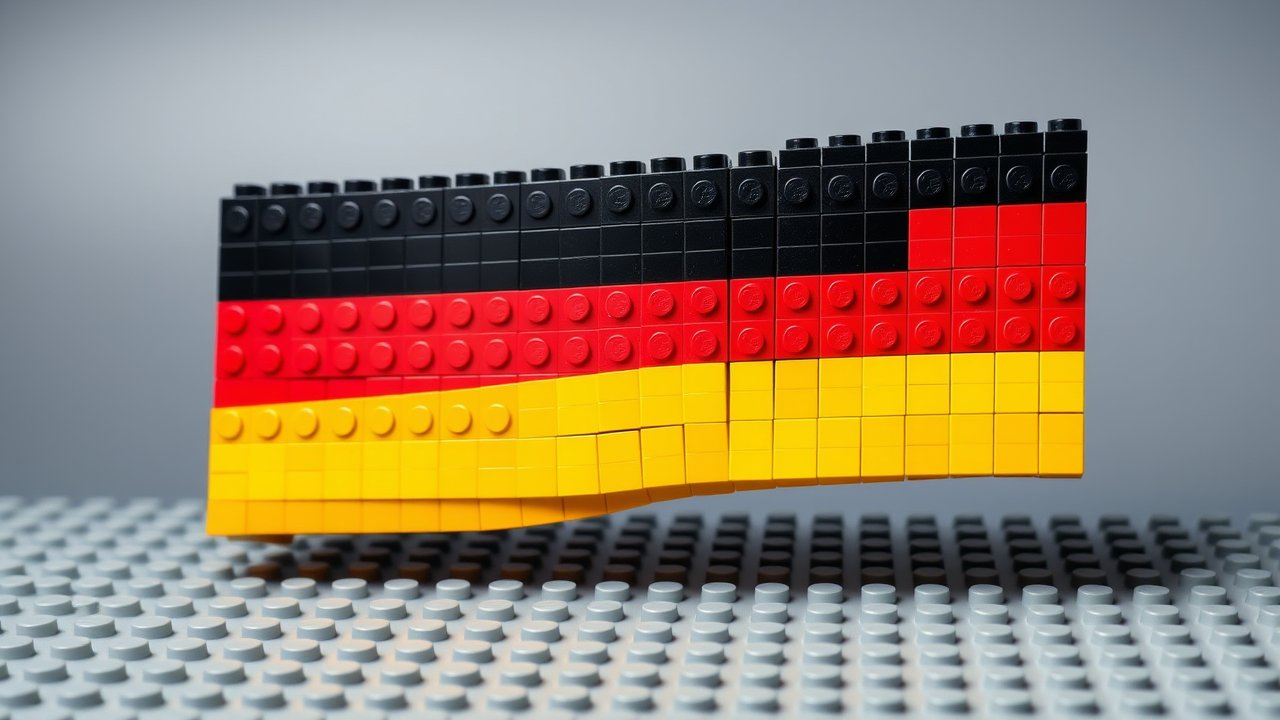
Lego Bricks — The modern Bundesflagge: three horizontal stripes of black, red, and gold — no eagle, no iron cross, no swastika, no Imperial or Nazi-era symbols. The flag of Germany built from Lego bricks, photographed as a real physical construction. The modern Bundesflagge: three horizontal stripes of black, red, and gold — no eagle, no iron cross, no swastika, no Imperial or Nazi-era symbols. Visible studs and brick seams, slight plastic sheen. Standard Lego colors approximate the flag’s palette. Built on a gray Lego baseplate. Dramatic angle showing the three-dimensional brick texture. No text, no letters, no words, no writing of any kind.
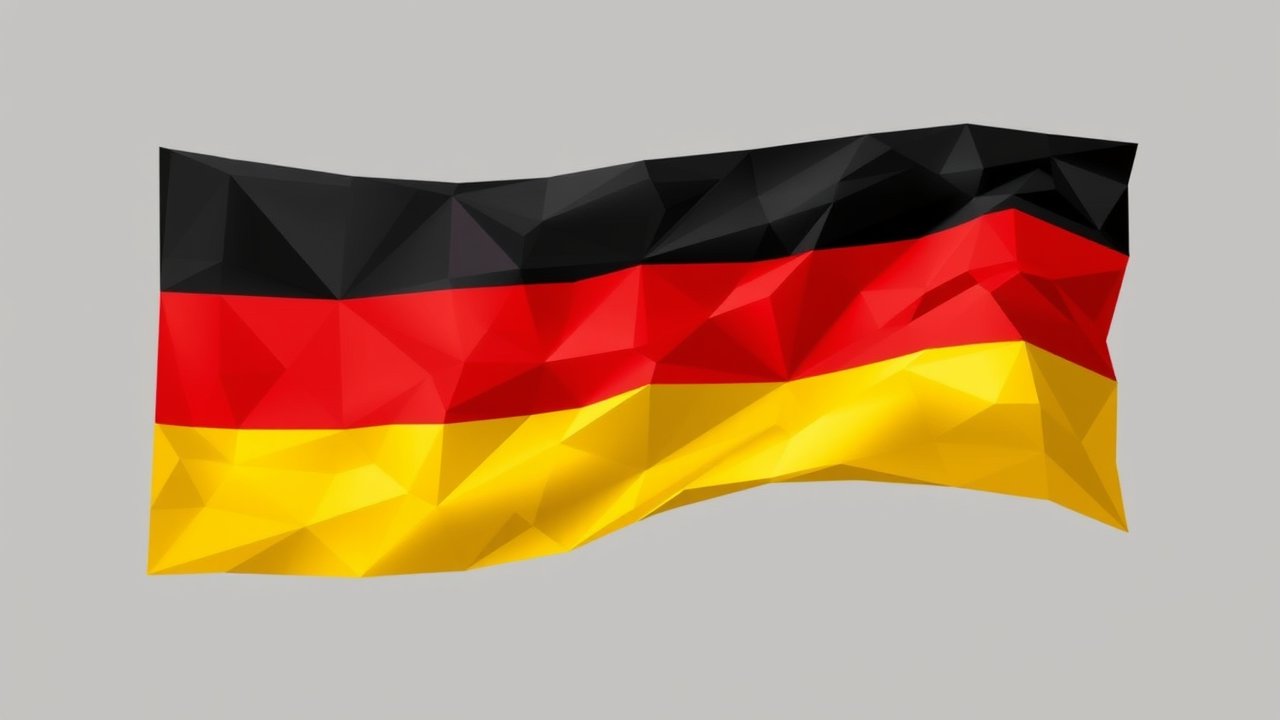
Low-Poly Geometric — The modern Bundesflagge: three horizontal stripes of black, red, and gold — no eagle, no iron cross, no swastika, no Imperial or Nazi-era symbols. The flag of Germany constructed from low-polygon geometric triangles. The modern Bundesflagge: three horizontal stripes of black, red, and gold — no eagle, no iron cross, no swastika, no Imperial or Nazi-era symbols. Aggressively faceted — each region broken into many visible triangular faces with subtle color variation across each polygon, creating real depth and dimensionality even in flat-color areas of the flag. Crystal-like, contemporary computational design. The flag is completely faithful and immediately recognizable. No text, no letters, no words, no writing of any kind.
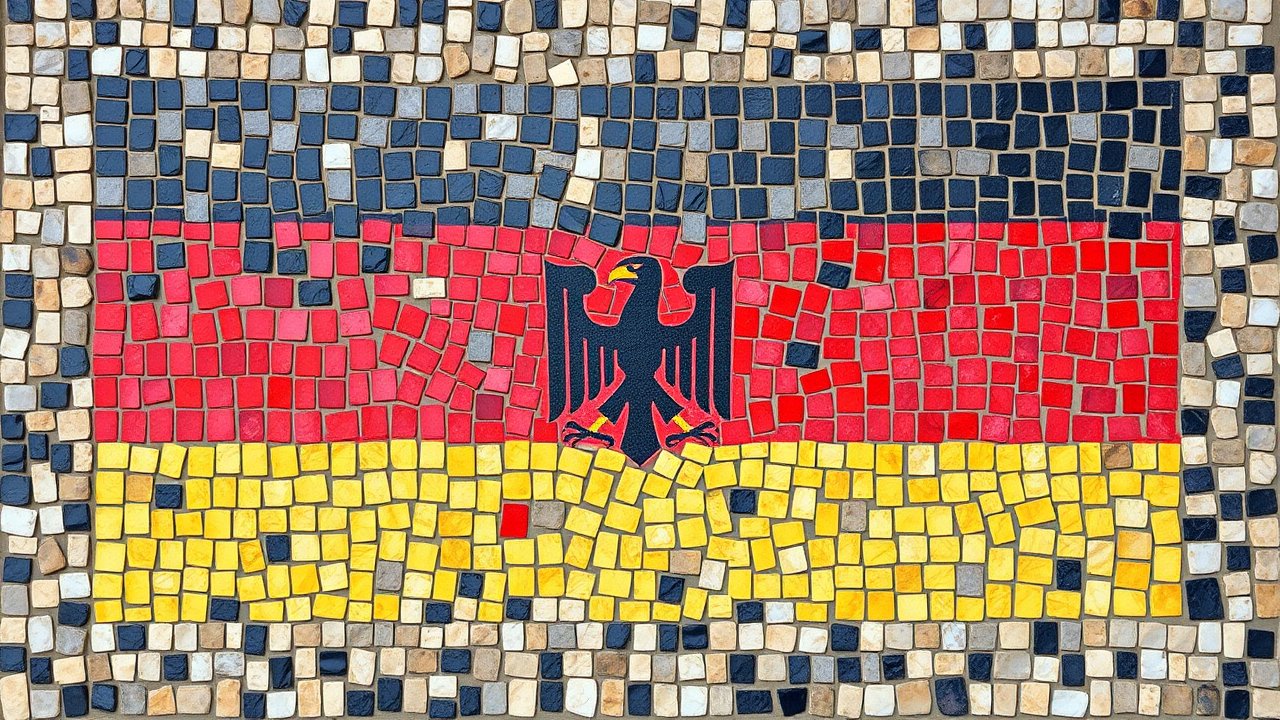
Mosaic Tiles — The modern Bundesflagge: three horizontal stripes of black, red, and gold — no eagle, no iron cross, no swastika, no Imperial or Nazi-era symbols. The flag of Germany assembled as a Roman-style mosaic. The modern Bundesflagge: three horizontal stripes of black, red, and gold — no eagle, no iron cross, no swastika, no Imperial or Nazi-era symbols. The flag is completely faithful to the real Germany flag — exact proportions, colors, and all symbols, rendered in thousands of small stone and glass tesserae. Visible grout lines, rich earthy tones mixed with brilliant glass, slight historical weathering. No text, no letters, no words, no writing of any kind.
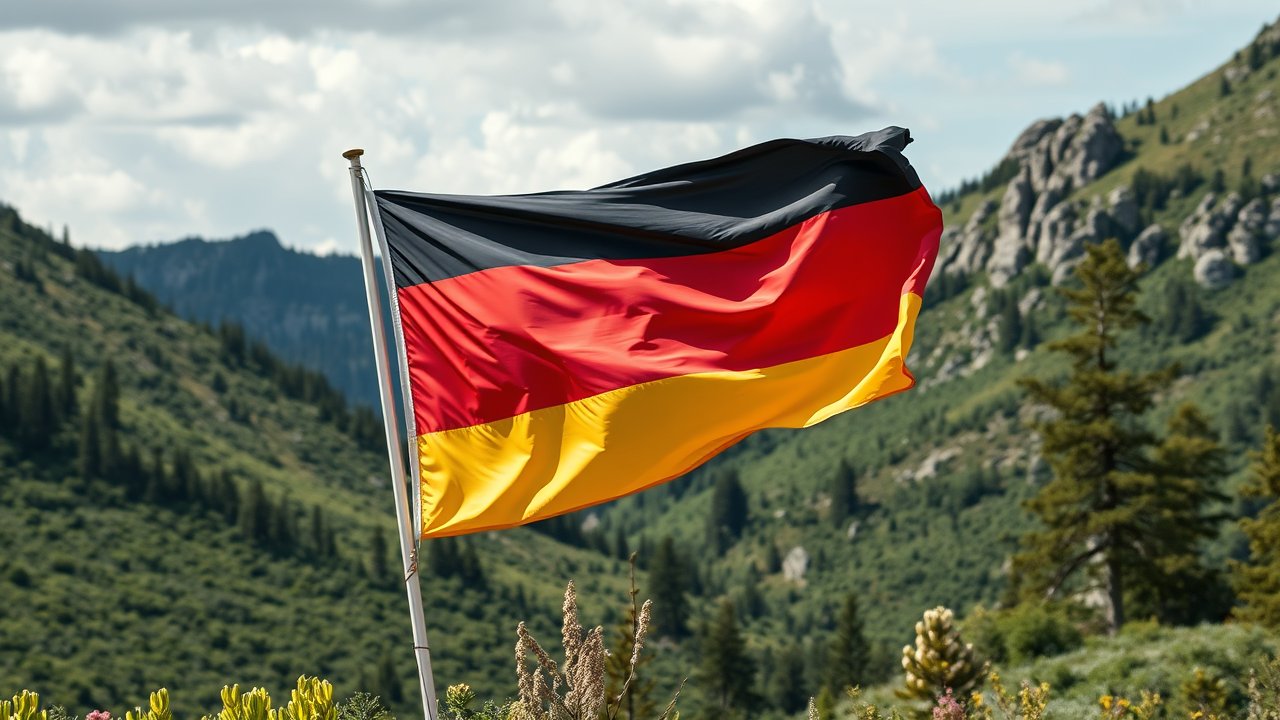
Native Landscape — The modern Bundesflagge: three horizontal stripes of black, red, and gold — no eagle, no iron cross, no swastika, no Imperial or Nazi-era symbols. Photorealistic photograph of the Germany flag flying in an iconic natural landscape native to Germany — the terrain, flora, and environment characteristic of that country. The modern Bundesflagge: three horizontal stripes of black, red, and gold — no eagle, no iron cross, no swastika, no Imperial or Nazi-era symbols. The flag is prominent and its colors are faithful and vivid. Remote, uninhabited wilderness. National Geographic photography style. No text, no letters, no words, no writing of any kind.
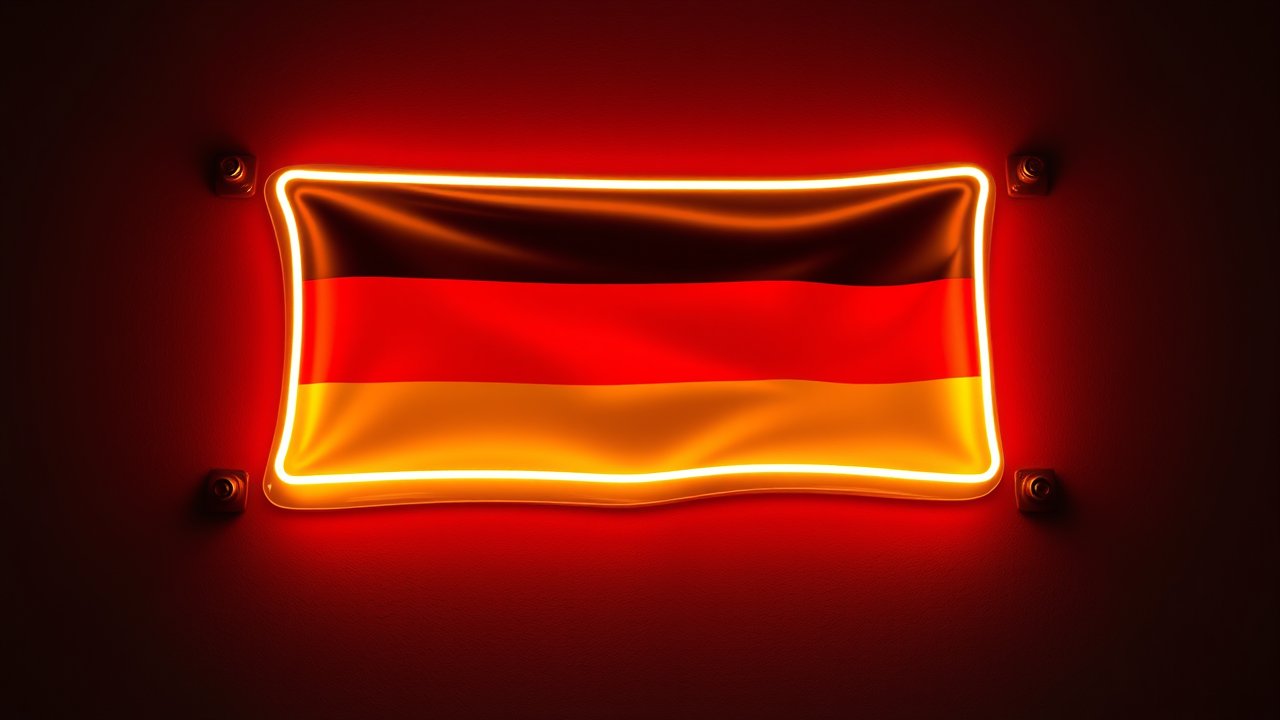
Neon Sign — The modern Bundesflagge: three horizontal stripes of black, red, and gold — no eagle, no iron cross, no swastika, no Imperial or Nazi-era symbols. The flag of Germany recreated as a real neon sign mounted on a dark wall. The modern Bundesflagge: three horizontal stripes of black, red, and gold — no eagle, no iron cross, no swastika, no Imperial or Nazi-era symbols. Glowing glass neon tubes bent into the flag’s shapes — the colors of the flag rendered in actual neon light. Visible glass tube bends, metal mounting brackets on the wall. Warm neon glow and light bloom. Real neon, not digital. Photographed in a dark room. No text, no letters, no words, no writing of any kind.
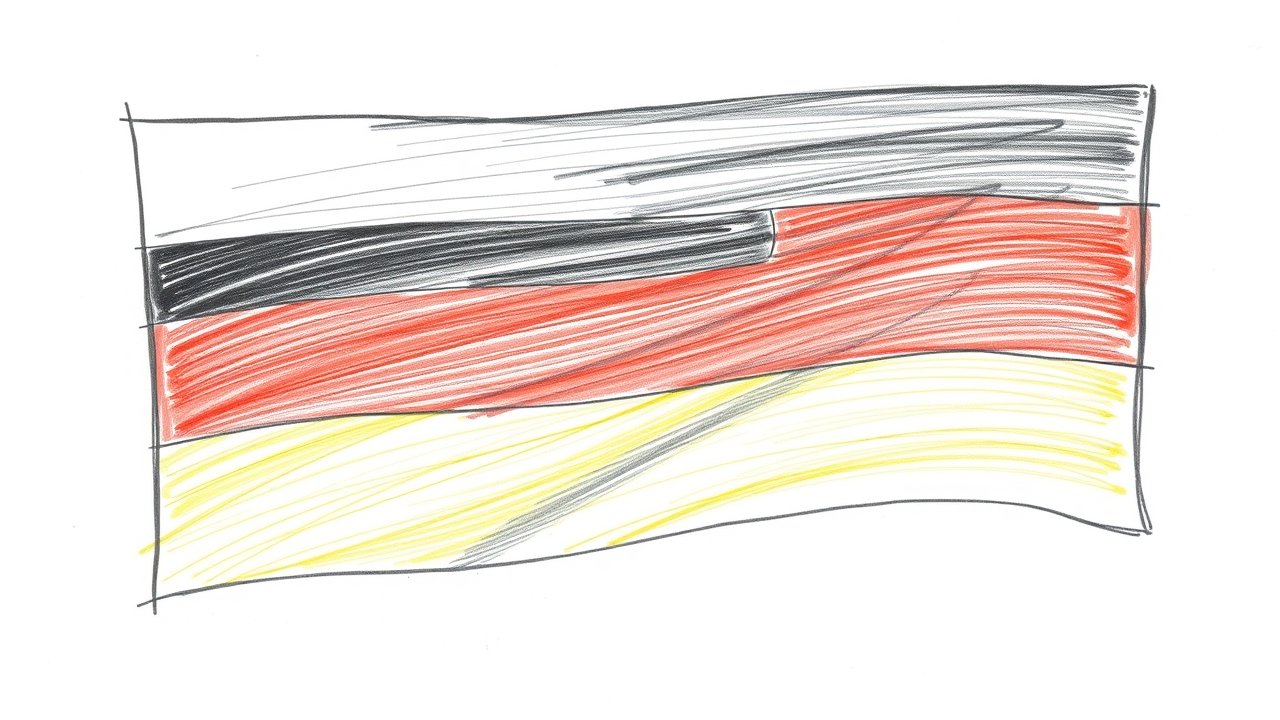
Pencil Sketch — The modern Bundesflagge: three horizontal stripes of black, red, and gold — no eagle, no iron cross, no swastika, no Imperial or Nazi-era symbols. The flag of Germany as a bold, confident pencil sketch. The modern Bundesflagge: three horizontal stripes of black, red, and gold — no eagle, no iron cross, no swastika, no Imperial or Nazi-era symbols. Strong graphite lines on cream paper — not delicate but bold and decisive. Heavy pressure on key outlines, dramatic cross-hatching for deep shadows and shading. Immediately recognizable as the Germany flag. Artist’s confident hand, not tentative. No text, no letters, no words, no writing of any kind.
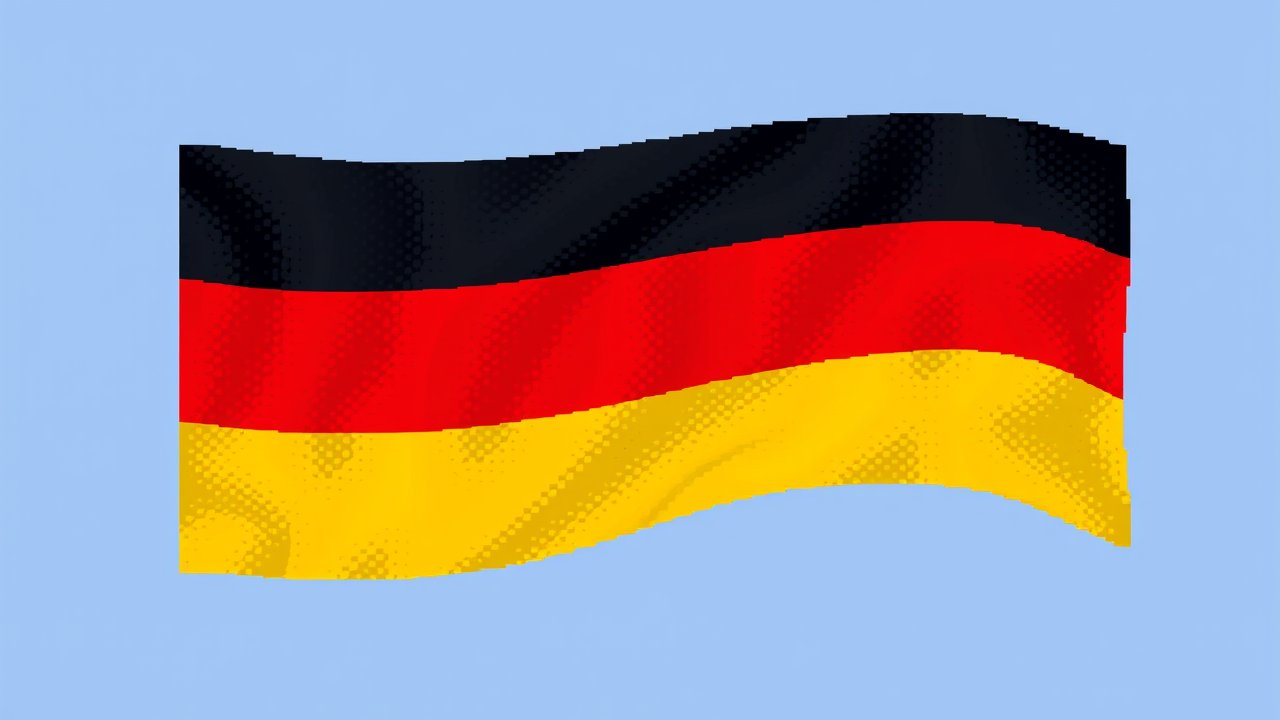
Pixel Art — The modern Bundesflagge: three horizontal stripes of black, red, and gold — no eagle, no iron cross, no swastika, no Imperial or Nazi-era symbols. The flag of Germany as detailed 16-bit pixel art. The modern Bundesflagge: three horizontal stripes of black, red, and gold — no eagle, no iron cross, no swastika, no Imperial or Nazi-era symbols. Crisp pixel grid, limited palette with careful dithering, nostalgic retro game aesthetic. Clean grid-aligned design with subtle shading. Every element of the flag faithfully reproduced in pixels. No text, no letters, no words, no writing of any kind.
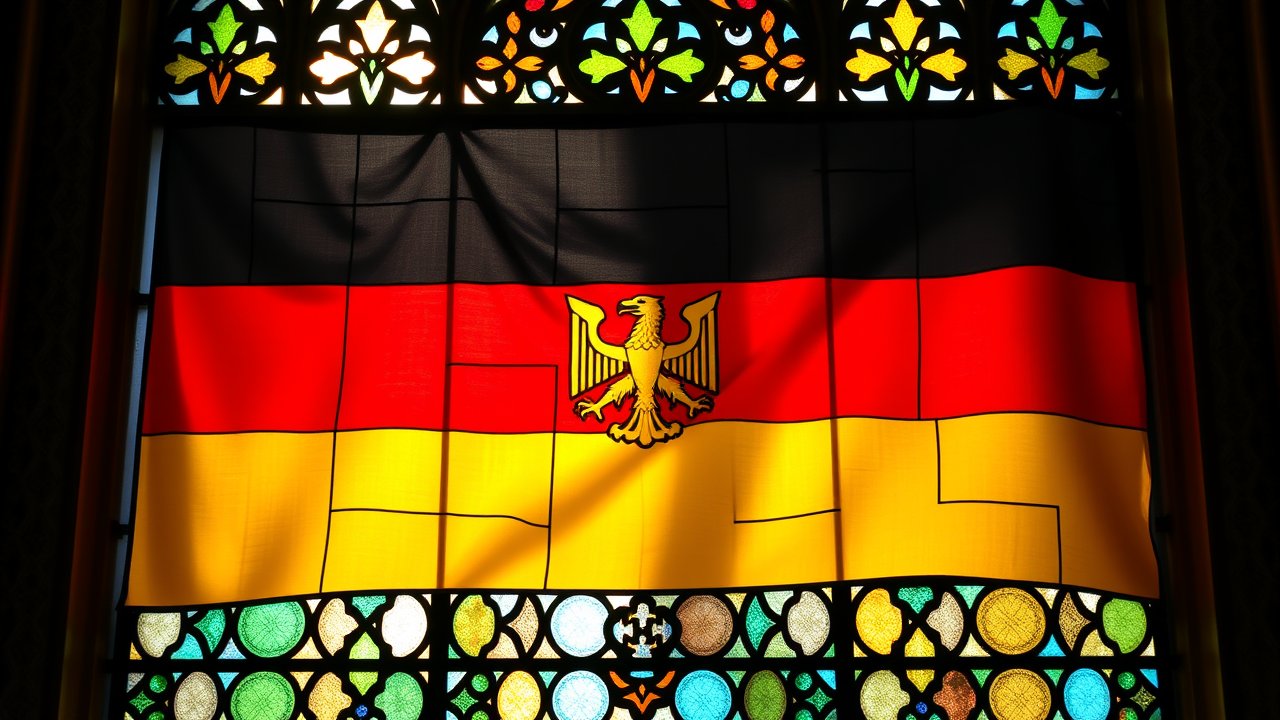
Stained Glass — The modern Bundesflagge: three horizontal stripes of black, red, and gold — no eagle, no iron cross, no swastika, no Imperial or Nazi-era symbols. The flag of Germany rendered as an ornate stained glass window. The modern Bundesflagge: three horizontal stripes of black, red, and gold — no eagle, no iron cross, no swastika, no Imperial or Nazi-era symbols. The design is completely faithful to the real Germany flag — exact colors, geometry, and all symbols preserved. Brilliant jewel-toned glass pieces separated by dark lead came lines. Warm sunlight streaming through, casting colored light. Gothic cathedral craftsmanship. No text, no letters, no words, no writing of any kind.
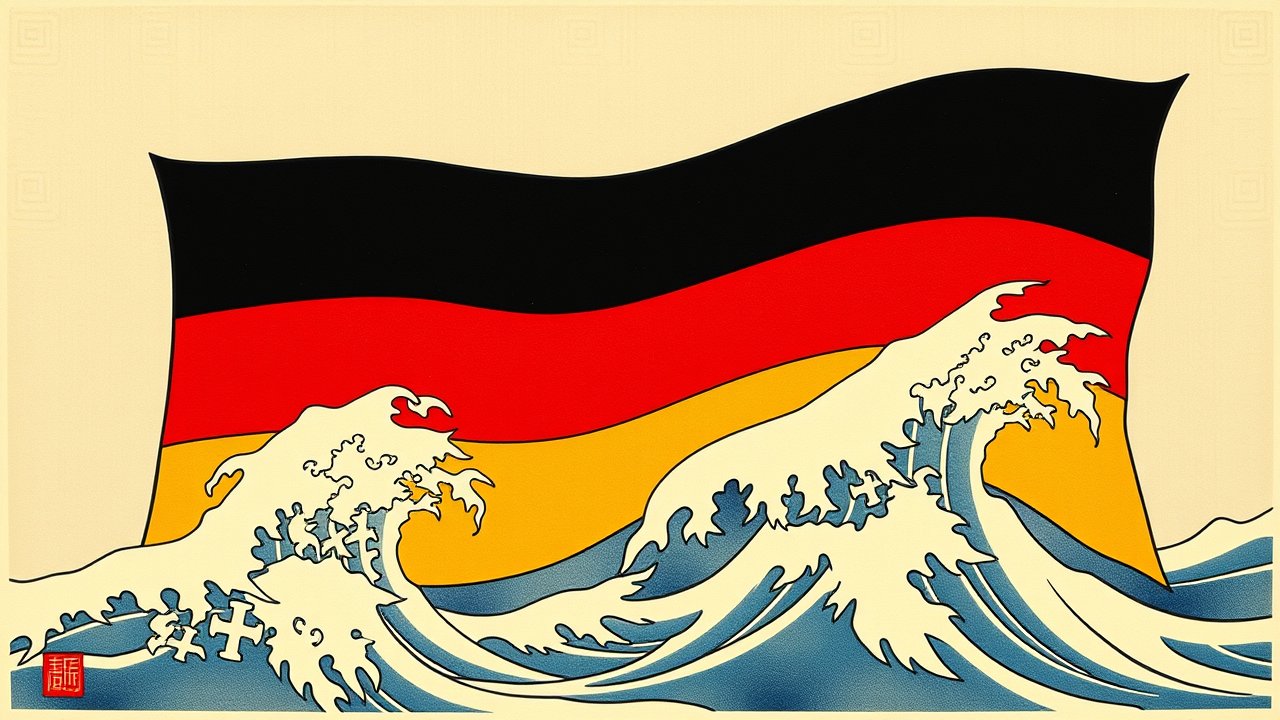
Ukiyo-e Woodblock — The modern Bundesflagge: three horizontal stripes of black, red, and gold — no eagle, no iron cross, no swastika, no Imperial or Nazi-era symbols. The flag of Germany as a traditional Japanese ukiyo-e woodblock print. The modern Bundesflagge: three horizontal stripes of black, red, and gold — no eagle, no iron cross, no swastika, no Imperial or Nazi-era symbols. Bold outlines, flat areas of rich color, flowing organic forms. Wind and waves incorporated into the composition. Printed on washi paper with visible wood grain texture. The flag is the central focus and instantly recognizable. No text, no letters, no words, no writing of any kind.
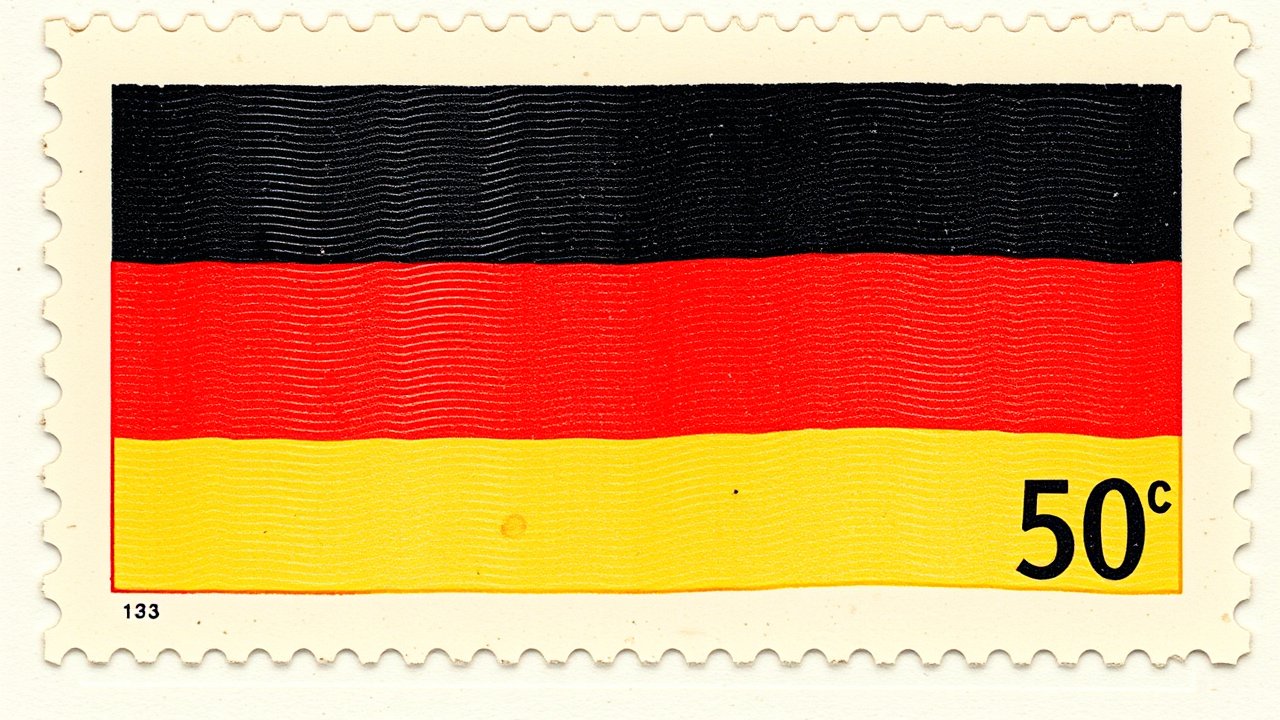
Vintage Postage Stamp — The modern Bundesflagge: three horizontal stripes of black, red, and gold — no eagle, no iron cross, no swastika, no Imperial or Nazi-era symbols. The flag of Germany as a vintage 1950s postage stamp. The modern Bundesflagge: three horizontal stripes of black, red, and gold — no eagle, no iron cross, no swastika, no Imperial or Nazi-era symbols. The flag fills most of the stamp — it is the primary subject, faithfully rendered in fine engraved intaglio style. Perforated edges, aged paper with slight foxing. The stamp may show a denomination numeral only — absolutely no other text or country names.
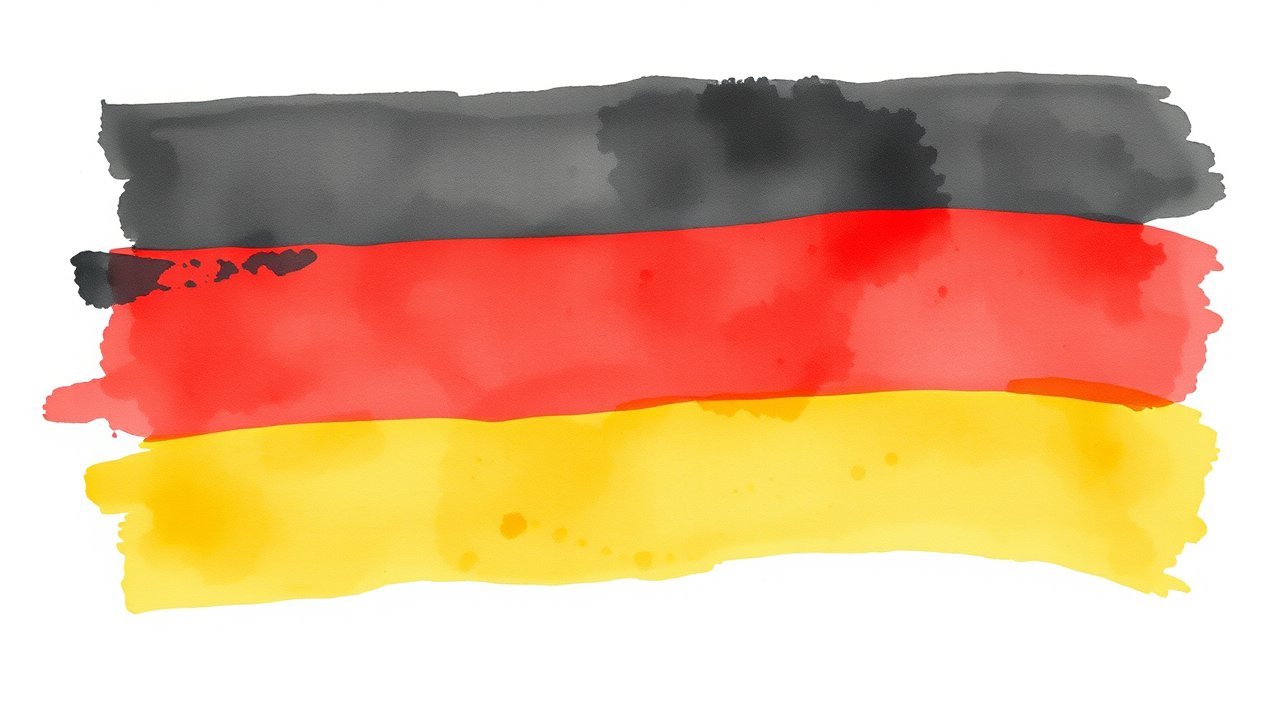
Watercolor — The modern Bundesflagge: three horizontal stripes of black, red, and gold — no eagle, no iron cross, no swastika, no Imperial or Nazi-era symbols. The flag of Germany painted in loose, expressive watercolor. The modern Bundesflagge: three horizontal stripes of black, red, and gold — no eagle, no iron cross, no swastika, no Imperial or Nazi-era symbols. Wet-on-wet technique with soft color bleeds, visible brushstrokes, natural paper texture. Delicate splashes and drips at the edges. Luminous, translucent layers of pigment. No text, no letters, no words, no writing of any kind.
The flag of Germany—three equal horizontal stripes of black, red, and gold—stands as one of Europe’s most historically significant symbols, representing the nation’s democratic identity and commitment to liberal values. The modern Bundesflagge, adopted after World War II, carries profound meaning rooted in nineteenth-century liberal movements and contemporary democracy. Unlike many national flags that emerge from medieval heraldry or royal symbolism, Germany’s tricolor emerged from democratic revolution, making it a uniquely powerful emblem of popular sovereignty. The black-red-gold combination represents a convergence of historical movements, philosophical ideals, and deliberate political choices that shaped modern German national identity over nearly two centuries.
Origins and Historical Development
The origins of Germany’s tricolor trace to the Napoleonic Wars and the nineteenth-century movement for German unification. Prior to unification, German territories lacked a single national flag, instead displaying individual kingdoms’ and principalities’ heraldic symbols. The black-red-gold combination gained prominence during the Wartburg Festival of 1817, when students advocating for liberal reforms and German national unity adopted these colors—derived from the Holy Roman Empire’s black eagle, the Hanseatic League’s red banners, and gold from the imperial coat of arms. The Frankfurt Parliament of 1848-1849, assembled to draft a constitution for a unified German nation, formally adopted black-red-gold as the national flag of their proposed democratic state. Although the Parliament failed to achieve its goals due to opposition from conservative monarchies, the colors had become inseparably linked with German liberal nationalism and democratic ideals. When Otto von Bismarck unified Germany in 1871, however, he deliberately rejected the liberal tricolor, establishing the German Empire’s flag as black-white-red, symbolizing the triumph of monarchical authority over democratic aspirations.
Imperial Germany and the Weimar Era
The black-white-red imperial flag remained Germany’s official symbol throughout the Second German Empire (1871-1918), representing the authoritarian militaristic values of Prussian-dominated rule. When Germany suffered devastating defeat in World War I and revolution toppled the monarchy, the Weimar Republic (1919-1933) consciously readopted the black-red-gold tricolor as a symbolic rejection of monarchical authoritarianism and reclamation of 1848’s liberal nationalist ideals. This flag change represented far more than aesthetic choice; it embodied commitment to democratic governance. The Weimar flag, however, became increasingly controversial during the economic turmoil and political polarization of the 1920s and 1930s. Right-wing nationalists and the Nazi Party explicitly rejected the black-red-gold colors, viewing them as symbols of weak democracy and national humiliation. When the Nazis consolidated power in 1933, they abolished the Weimar flag and replaced it with the red flag bearing the swastika and Iron Cross, representing not merely aesthetic change but categorical rejection of democratic governance and embrace of genocidal authoritarianism.
The Modern Bundesflagge and Symbolism
Following Germany’s total defeat in World War II, the question of the national flag became a matter of intense historical significance. When the Federal Republic of Germany (West Germany) was established in 1949, its leaders made a deliberately meaningful choice: readopting the black-red-gold tricolor of the Weimar Republic, thereby symbolically reclaiming democratic traditions interrupted by Nazi rule and explicitly rejecting both the imperial black-white-red and the Nazi flag. When Germany reunified in 1990, the unified nation confirmed black-red-gold as its exclusive national flag, with black positioned at the top, red in the middle, and gold at the bottom. This modern Bundesflagge continues as Germany’s official flag, displayed prominently at government buildings, diplomatic institutions, and during national celebrations.
The symbolism of the modern German flag carries profound democratic meaning. Black represents the strength and determination of the German people; red symbolizes courage, sacrifice, and bloodshed throughout German history; gold represents generosity, hope, and the enlightenment values central to German intellectual traditions. Collectively, the three colors represent Germany’s commitment to democracy, justice, and human dignity—values emerging from dictatorship’s ashes. The flag’s proportions are precisely defined as two units width to three units height, with three equal horizontal stripes and no additional ornamentation, reflecting an embrace of simplicity and clarity that ensures immediate global recognizability.
Notable Facts and Contemporary Significance
The German flag’s resurgence as a symbol of democracy following World War II represents one of history’s most remarkable acts of symbolic reclamation. By deliberately choosing to resurrect colors associated with failed 1848 revolution and Weimar democracy, post-war German leaders distanced their nation from totalitarianism and reoriented German identity toward democratic values. This choice echoed globally: the black-red-gold tricolor became recognized as a symbol of German democracy and European integration, particularly after 1990 unification and subsequent EU and NATO membership. Germany’s relationship with its flag reflects broader historical trajectory and commitment to democratic accountability. Flag changes mark critical political ruptures: rejection of monarchy in 1919, Nazi repudiation of democracy in 1933, and restoration of democracy after 1945 through symbolic color restoration. This history makes the German flag uniquely laden with political significance, serving as a tangible reminder that symbols matter and that nations can consciously define themselves by aspirations toward justice rather than authoritarian traditions. Contemporary Germans display their flag with democratic pride rather than aggressive nationalism, understanding its history in the context of twentieth-century European tragedy and twenty-first century European integration.
Sources: Wikipedia – Flag of Germany; Britannica – Flag of Germany; German Federal Foreign Office – National Symbols of Germany
Free Printable: Flags of the World Reference Card
Get a beautiful printable poster with 50 flag emojis, Unicode codes, and fun facts. Perfect for classrooms and desks!
No spam, ever. Unsubscribe anytime.