
How To
How To
Time needed: 1 minute
Want the full printable classroom pack?
Take the flag reference from your screen to an offline pack for lessons, practice, and quiz time.
- Printable atlas with 230+ high-resolution flag flats
- Four regional quizzes with answer keys
- Flag Bingo boards and caller sheet
How to copy and paste the Flag of Afghanistan Emoji to any device.
- Copy the Islamic Republic of Afghanistan Flag Emoji
Go to flagemoji.com and press the copy button (above). This works on any device.
- Paste the Emoji
Go to your email/iMessage/SMS texting service/document and paste the emoji.
For mobile devices
— double-tap or tap-hold, then paste should appear. Tap it.
For desktop and laptops on Apple devices
— command-P / ⌘-P
For desktop and laptops on Windows devices
— control-p
Codes
Emoji Codes
Flag emojis are unicode symbols, like any other letter or number on your keyboard. This means you can copy and paste the emoji itself into your code, whatever the language (click the button above).
They actually count as two characters: the two-letter country code (the ISO international standard). The unicode and shortcode both represent country data which devices can interpret and display the emoji.
| Country Code | Unicode | Shortcode |
| AF | U+1F1E6 U+1F1EB | :flag_AF: :AF: |
Emoji shortcodes are used on some platforms as a way for users to type in emojis from the keyboard. If you type the emoji shortcode on Github or Slack, the emoji will appear.
*The official name of the emoji is only the country name, not ‘Afghanistan Flag’, for example.
Description
Description
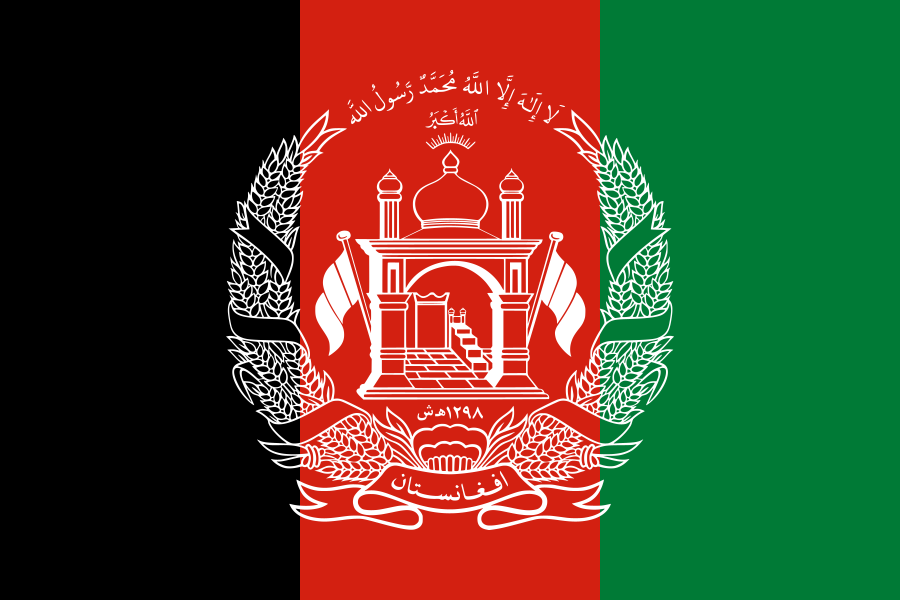
The flag of Afghanistan consists of three equal vertical bands in colors black, red, and green. The flag features the national emblem in the center which stretches into the outside vertical bands. The emblem is white and depicts a mosque with pulpit and flags on either side, circled by sheaves of wheat. On the top is an inscription of the Muslim creed, or Shahada. Below are the Arabic numerals 1298, the year of Independence from the UK.
Map
Map
Check out the map of Uruguay!
Weather
Anthem
National Anthem
| Title | “Milli Surood” (National Anthem) |
| Composer | Abdul Bari Jahani / Babrak Wasa |
FAQ
FAQs
Afghanistan gained its official independence on August 19, 1919.
Black signifies the past, red is used to represent the blood shed in achieving independence, and green is used to mean either hope for the future, agricultural prosperity, or Islam.
The Afghanistan flag was adopted on August 19, 2013.
The government of Afghanistan is structured as an Islamic Republic with three braches of power: executive, legislative, and judiciary.
Discover more fun facts of El Salvador.
Printable
Printable Islamic Republic of Afghanistan Flag
Print another really cool flag. Why not the flag of Benin?
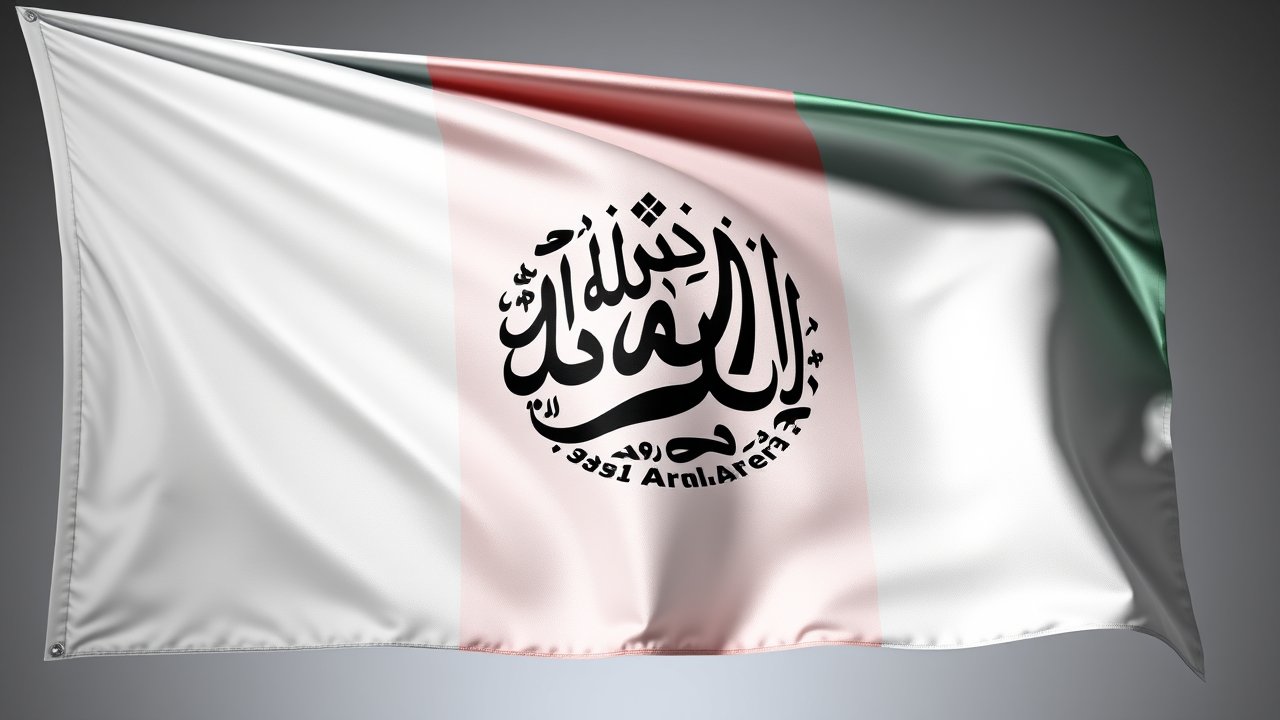
3D Glossy Render — The current Islamic Emirate flag: white field with the black Shahada (Islamic creed) inscription centered — the flag in use since 2021. The flag of Afghanistan as a photorealistic 3D render. The current Islamic Emirate flag: white field with the black Shahada (Islamic creed) inscription centered — the flag in use since 2021. The flag fabric hangs or drapes naturally but preserves exact proportions, colors, and all symbols perfectly — completely faithful to the real Afghanistan flag. Dramatic studio lighting, glossy silk material, soft shadows, subsurface scattering, perfect specular highlights. No text, no letters, no words, no writing of any kind.
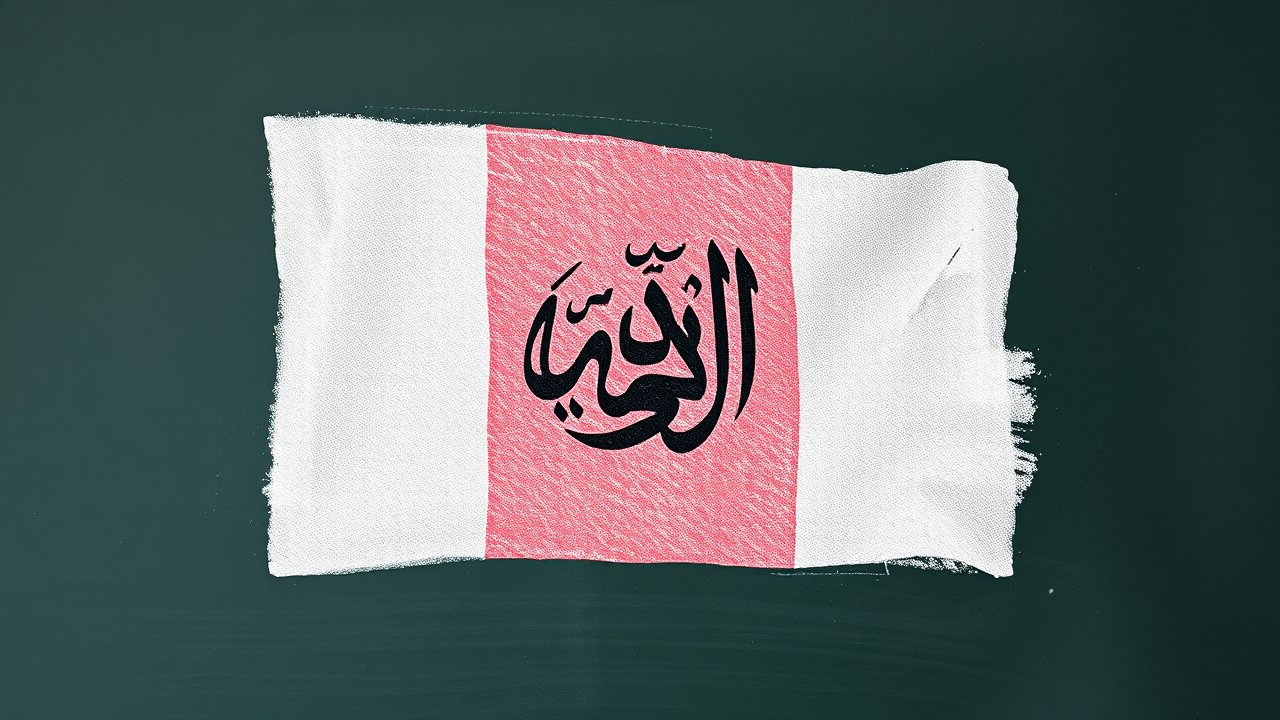
Chalk on Blackboard — The current Islamic Emirate flag: white field with the black Shahada (Islamic creed) inscription centered — the flag in use since 2021. The flag of Afghanistan drawn in chalk on a real blackboard. The current Islamic Emirate flag: white field with the black Shahada (Islamic creed) inscription centered — the flag in use since 2021. Authentic blackboard — dark slate green surface with chalk dust and smudge marks. Soft, dusty white and colored chalk lines, imperfect edges, hand-drawn quality. Chalk dust particles visible in the air. The flag is immediately recognizable. No text, no letters, no words, no writing of any kind.
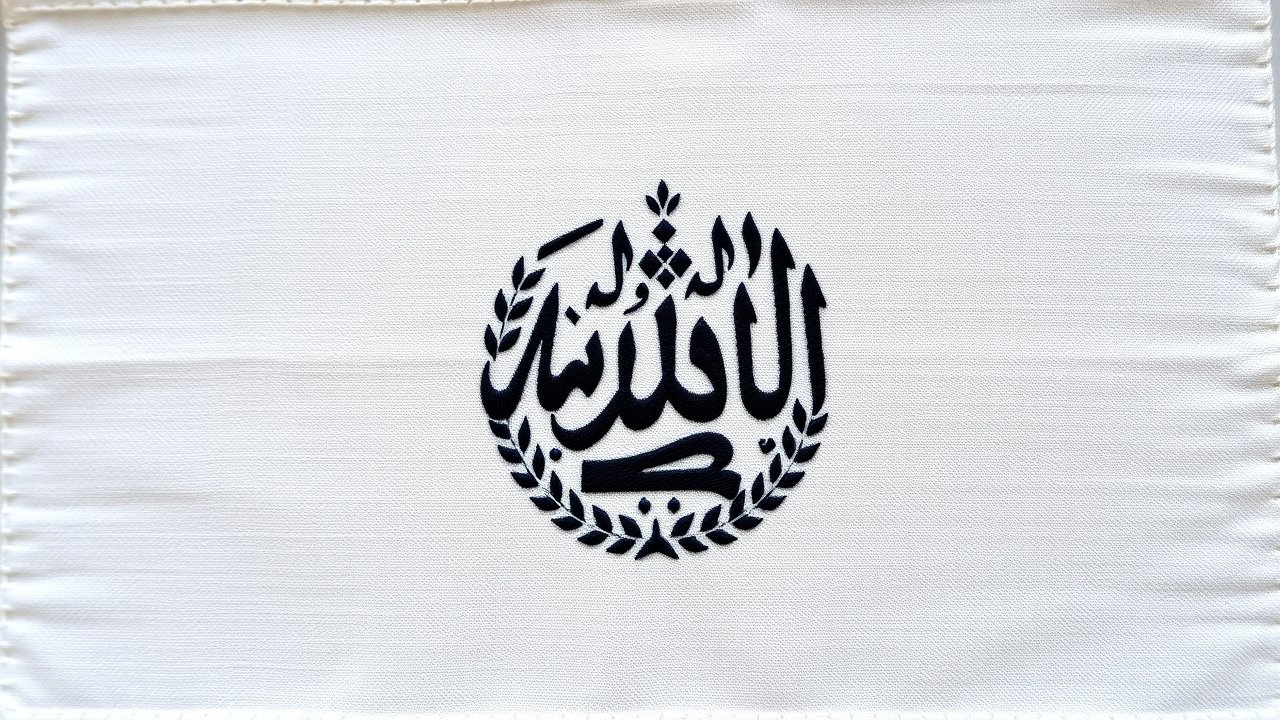
Embroidered Textile — The current Islamic Emirate flag: white field with the black Shahada (Islamic creed) inscription centered — the flag in use since 2021. The flag of Afghanistan as intricate embroidery on linen fabric. The current Islamic Emirate flag: white field with the black Shahada (Islamic creed) inscription centered — the flag in use since 2021. Dense satin stitches, French knots, chain stitch detail. The flag design is completely faithful — exact colors, geometry, and all symbols faithfully stitched, immediately recognizable as the Afghanistan flag. Visible thread texture, dimensional quality, warm handcrafted feel. No text, no letters, no words, no writing of any kind.
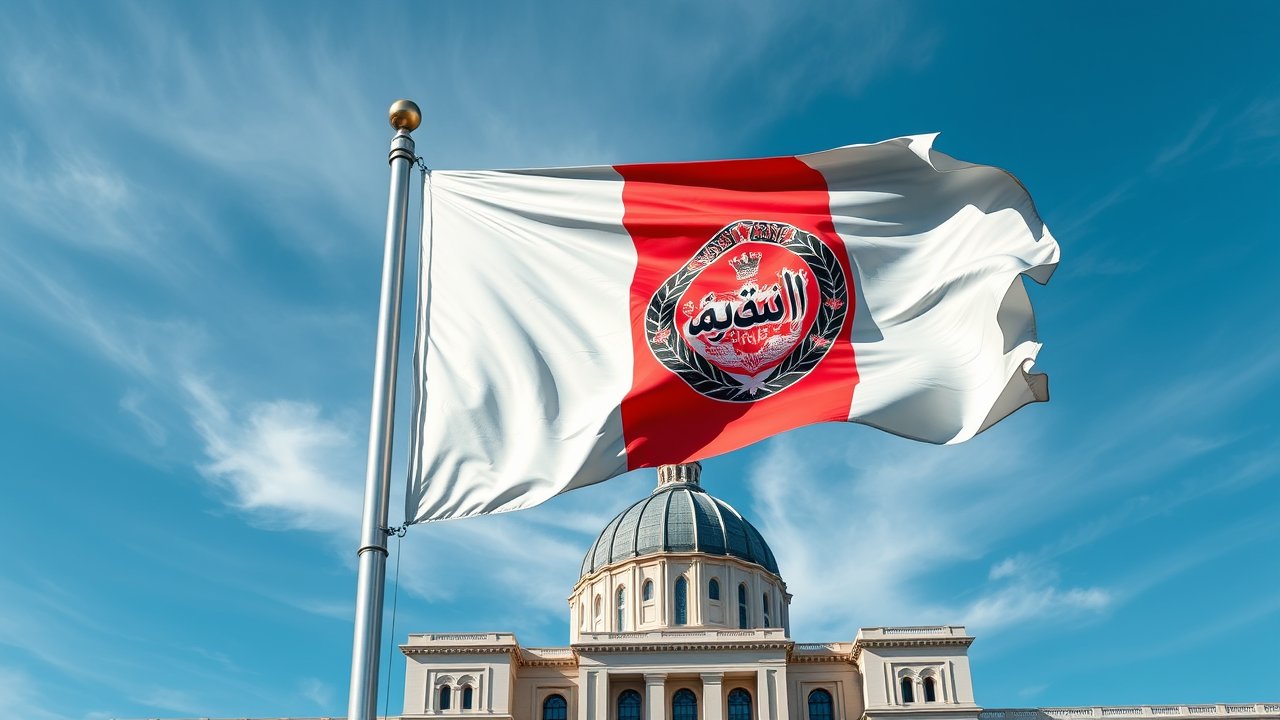
Flagpole in Capital — The current Islamic Emirate flag: white field with the black Shahada (Islamic creed) inscription centered — the flag in use since 2021. Photorealistic photograph of the Afghanistan flag flying on a tall flagpole in front of an iconic government building in the capital city. The current Islamic Emirate flag: white field with the black Shahada (Islamic creed) inscription centered — the flag in use since 2021. The flag ripples naturally in the wind, colors vivid and exact. Documentary photography style, sharp and realistic. Grand architecture in the background. Blue sky, dramatic clouds. No text, no letters, no words, no writing of any kind.
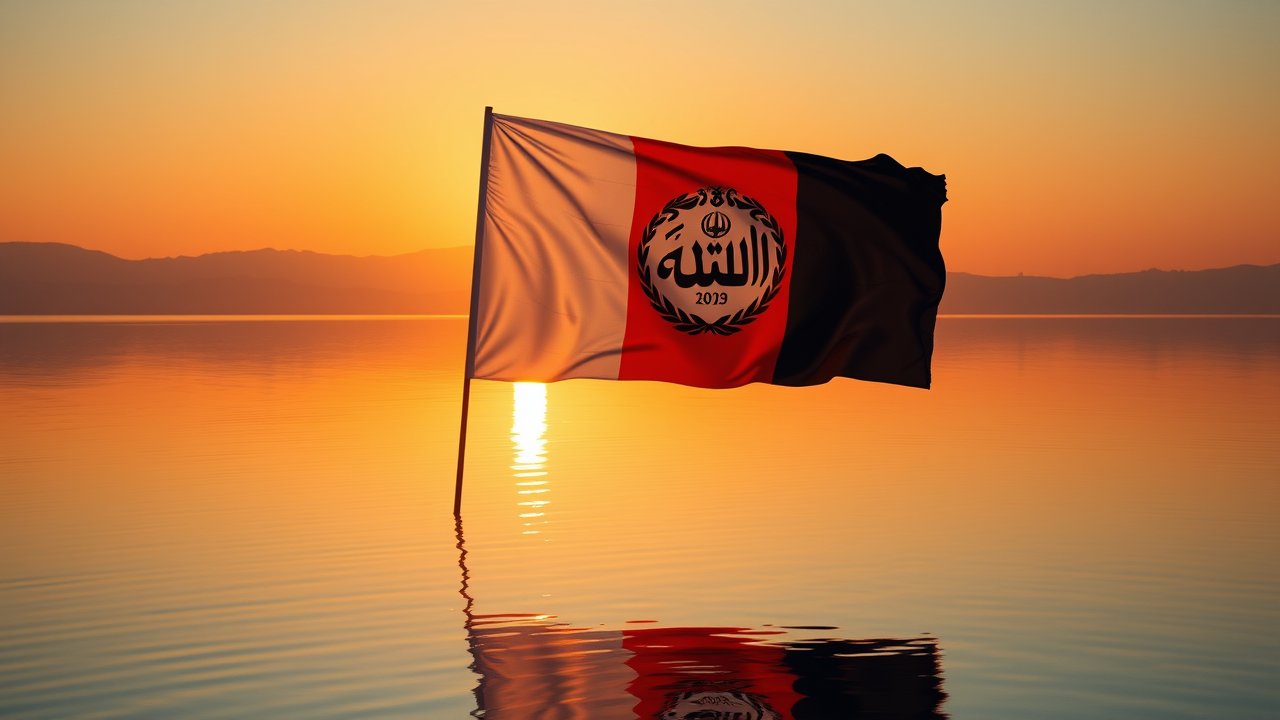
Golden Hour Reflection — The current Islamic Emirate flag: white field with the black Shahada (Islamic creed) inscription centered — the flag in use since 2021. Photorealistic photograph of the Afghanistan flag reflected in still water at golden hour. The current Islamic Emirate flag: white field with the black Shahada (Islamic creed) inscription centered — the flag in use since 2021. The flag flies on a pole at the water’s edge, its reflection shimmering on the surface below. Warm amber and orange sunset light. The flag colors and design are faithful and vivid. Serene, cinematic landscape photography. No text, no letters, no words, no writing of any kind.
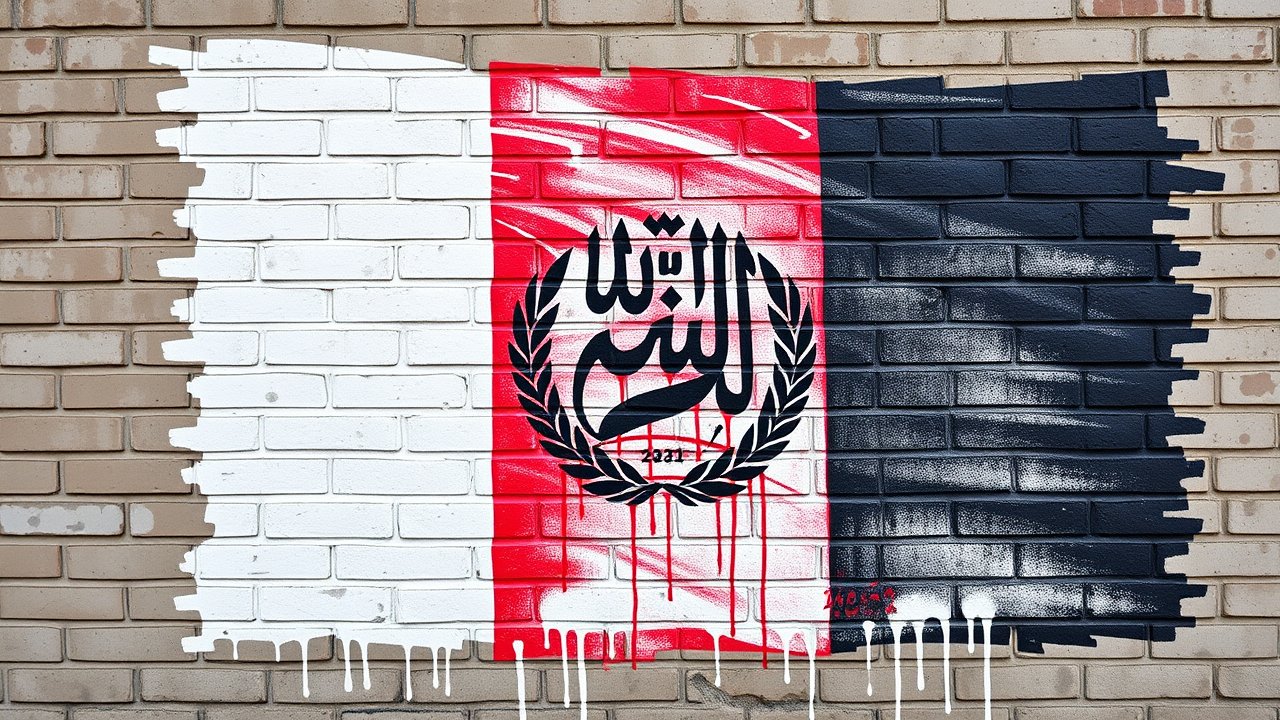
Street Art / Graffiti — The current Islamic Emirate flag: white field with the black Shahada (Islamic creed) inscription centered — the flag in use since 2021. The flag of Afghanistan as vibrant street art spray-painted on a brick wall. The current Islamic Emirate flag: white field with the black Shahada (Islamic creed) inscription centered — the flag in use since 2021. Bold spray paint, dripping edges, stencil layers, overspray halos. The flag design is faithful and immediately recognizable — exact colors and symbols, just rendered in spray paint on urban concrete. No text, no letters, no words, no writing of any kind. No tags, no graffiti lettering.
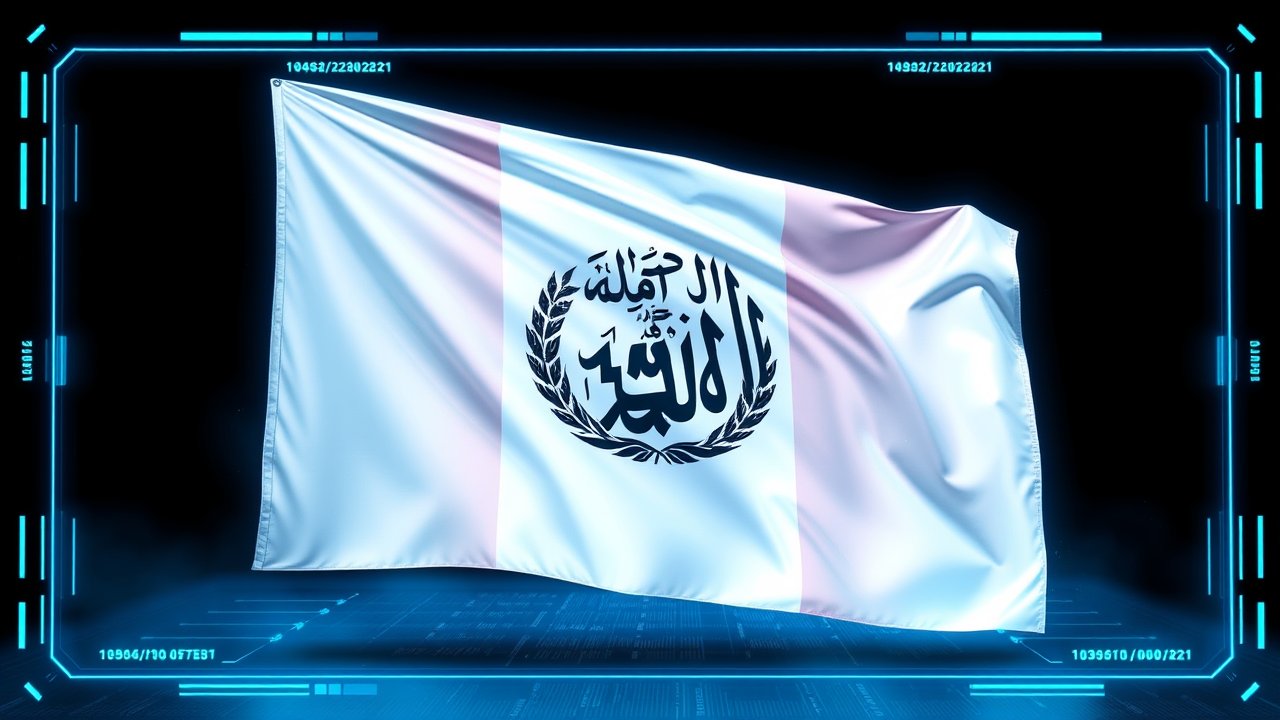
Sci-Fi Hologram — The current Islamic Emirate flag: white field with the black Shahada (Islamic creed) inscription centered — the flag in use since 2021. The flag of Afghanistan projected as a futuristic holographic display. The current Islamic Emirate flag: white field with the black Shahada (Islamic creed) inscription centered — the flag in use since 2021. Translucent blue-white projection with scan lines, floating in dark space. Glitching edges, particle effects, data streams. The flag design is completely faithful and recognizable. Cyberpunk HUD elements framing the projection. No text, no letters, no words, no writing of any kind.
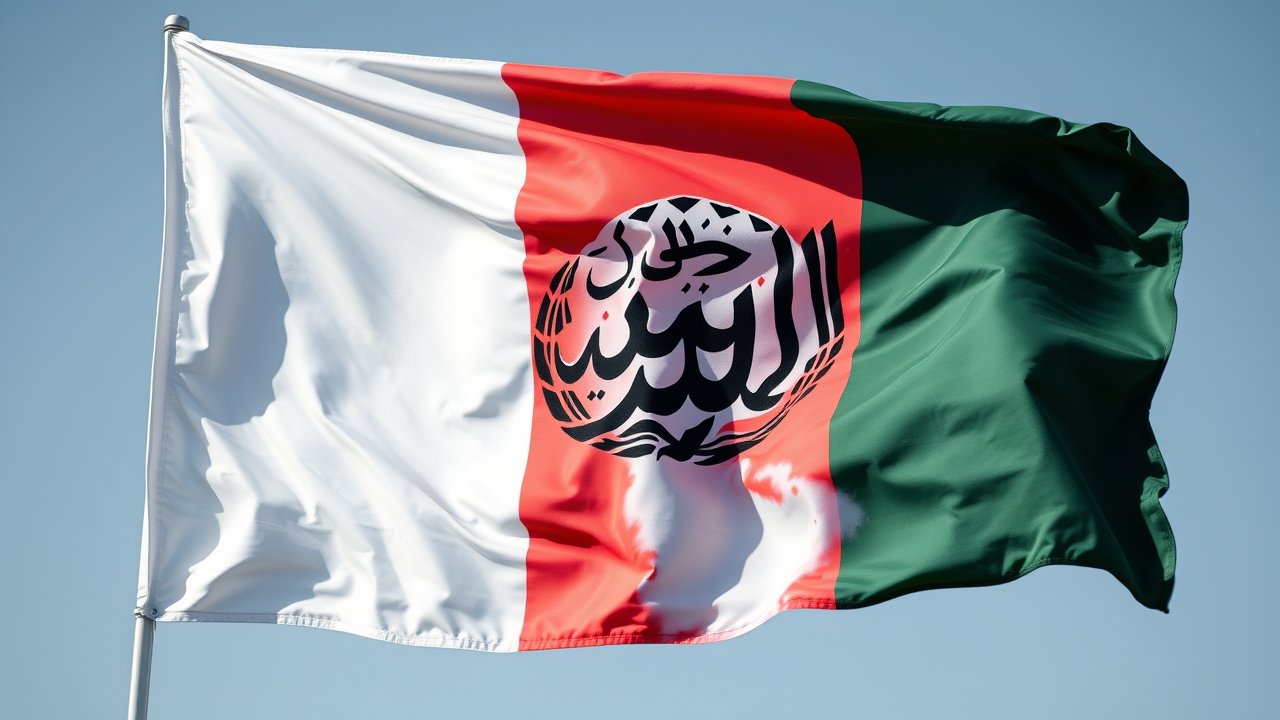
Hyperrealistic Wind — The current Islamic Emirate flag: white field with the black Shahada (Islamic creed) inscription centered — the flag in use since 2021. Ultra-hyperrealistic photograph of the Afghanistan flag caught in a dramatic gust of wind. The current Islamic Emirate flag: white field with the black Shahada (Islamic creed) inscription centered — the flag in use since 2021. Macro-level fabric detail — individual threads visible, fabric folds and tension lines crisp. Colors and design completely faithful to the real Afghanistan flag. High-speed shutter, razor-sharp focus, studio lighting. No text, no letters, no words, no writing of any kind.
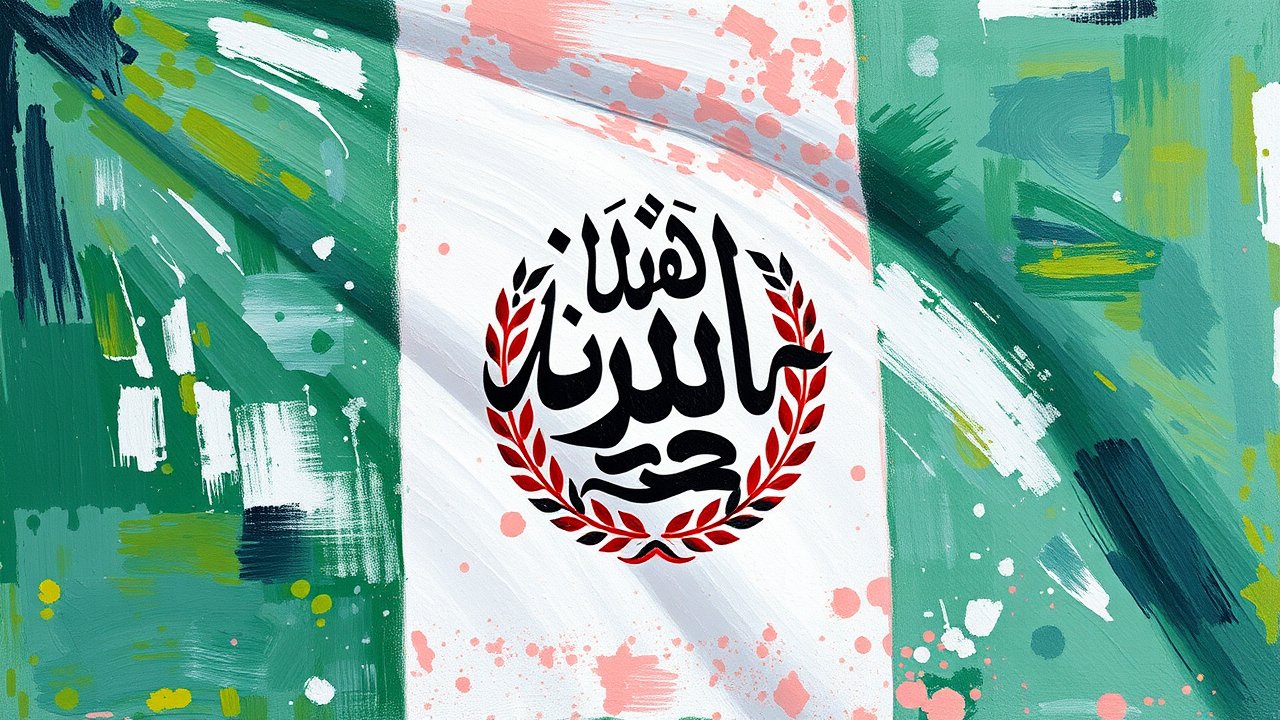
Impressionist Oil — The current Islamic Emirate flag: white field with the black Shahada (Islamic creed) inscription centered — the flag in use since 2021. The flag of Afghanistan painted in French Impressionist oil on canvas. The current Islamic Emirate flag: white field with the black Shahada (Islamic creed) inscription centered — the flag in use since 2021. Thick impasto brushstrokes, dappled light, vibrant broken color technique in the style of Monet. The flag is instantly recognizable — colors and design faithful to the real Afghanistan flag, interpreted with impressionist light and texture. No text, no letters, no words, no writing of any kind.
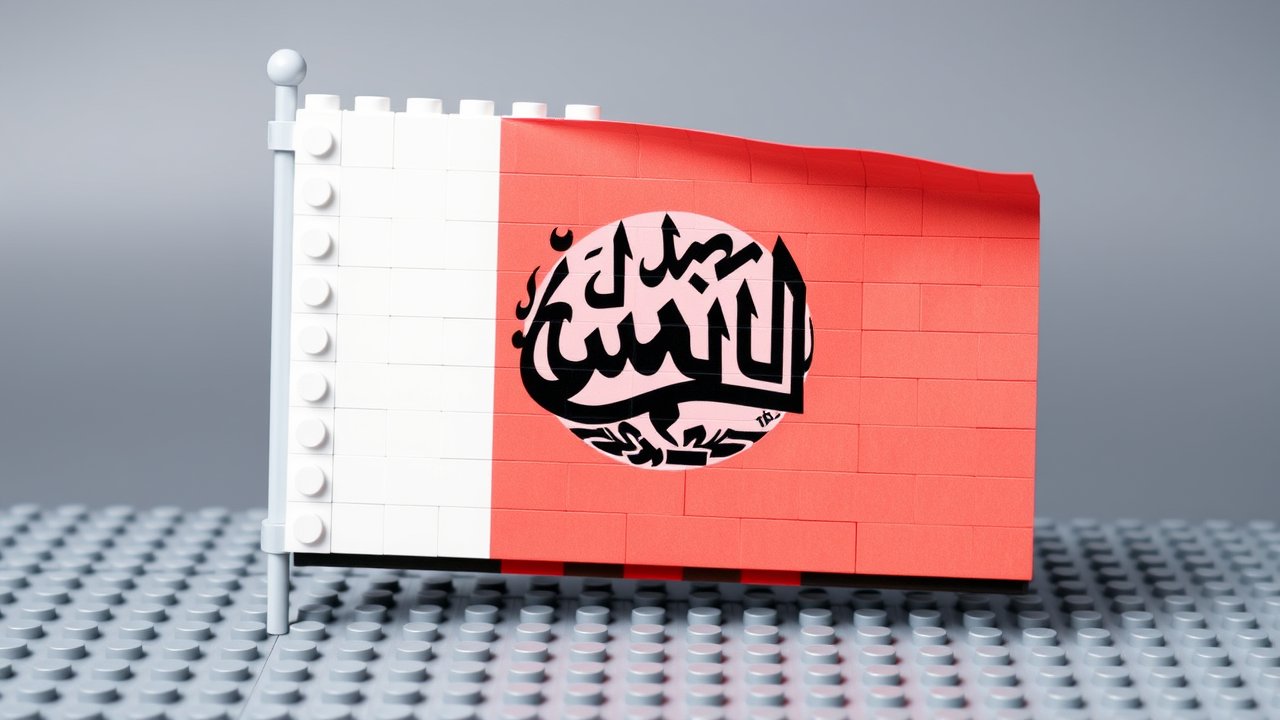
Lego Bricks — The current Islamic Emirate flag: white field with the black Shahada (Islamic creed) inscription centered — the flag in use since 2021. The flag of Afghanistan built from Lego bricks, photographed as a real physical construction. The current Islamic Emirate flag: white field with the black Shahada (Islamic creed) inscription centered — the flag in use since 2021. Visible studs and brick seams, slight plastic sheen. Standard Lego colors approximate the flag’s palette. Built on a gray Lego baseplate. Dramatic angle showing the three-dimensional brick texture. No text, no letters, no words, no writing of any kind.
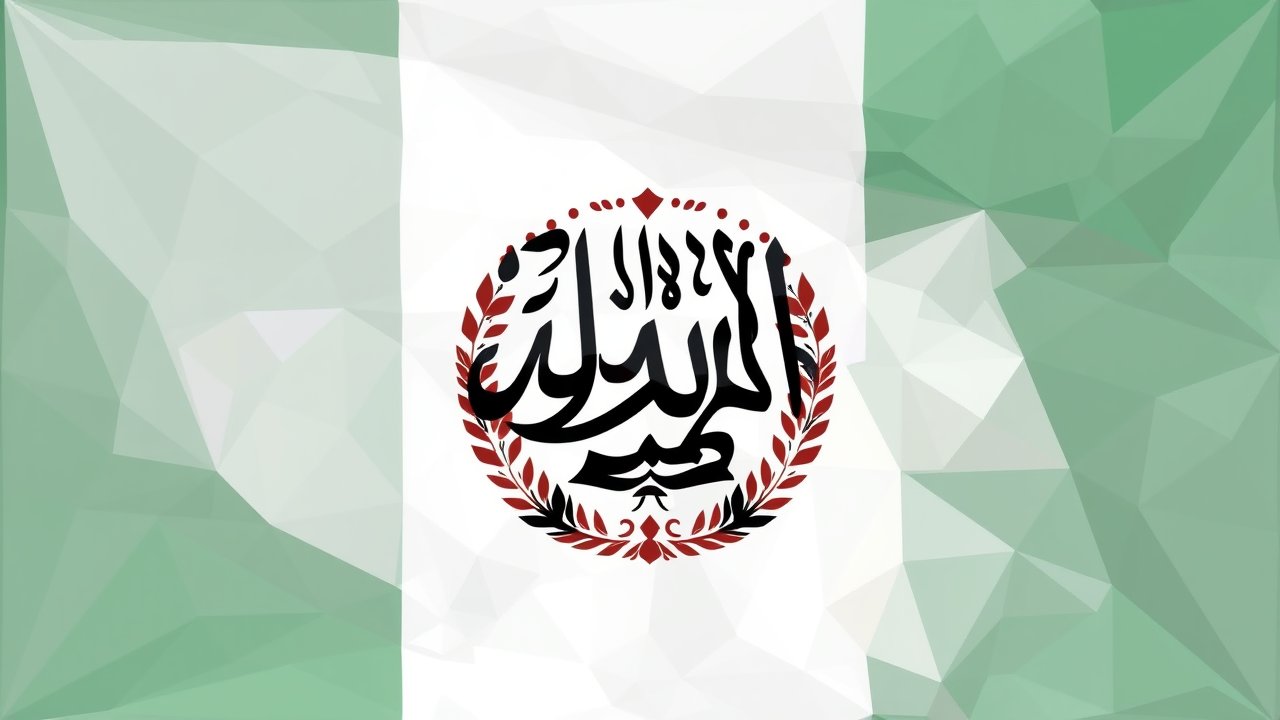
Low-Poly Geometric — The current Islamic Emirate flag: white field with the black Shahada (Islamic creed) inscription centered — the flag in use since 2021. The flag of Afghanistan constructed from low-polygon geometric triangles. The current Islamic Emirate flag: white field with the black Shahada (Islamic creed) inscription centered — the flag in use since 2021. Aggressively faceted — each region broken into many visible triangular faces with subtle color variation across each polygon, creating real depth and dimensionality even in flat-color areas of the flag. Crystal-like, contemporary computational design. The flag is completely faithful and immediately recognizable. No text, no letters, no words, no writing of any kind.
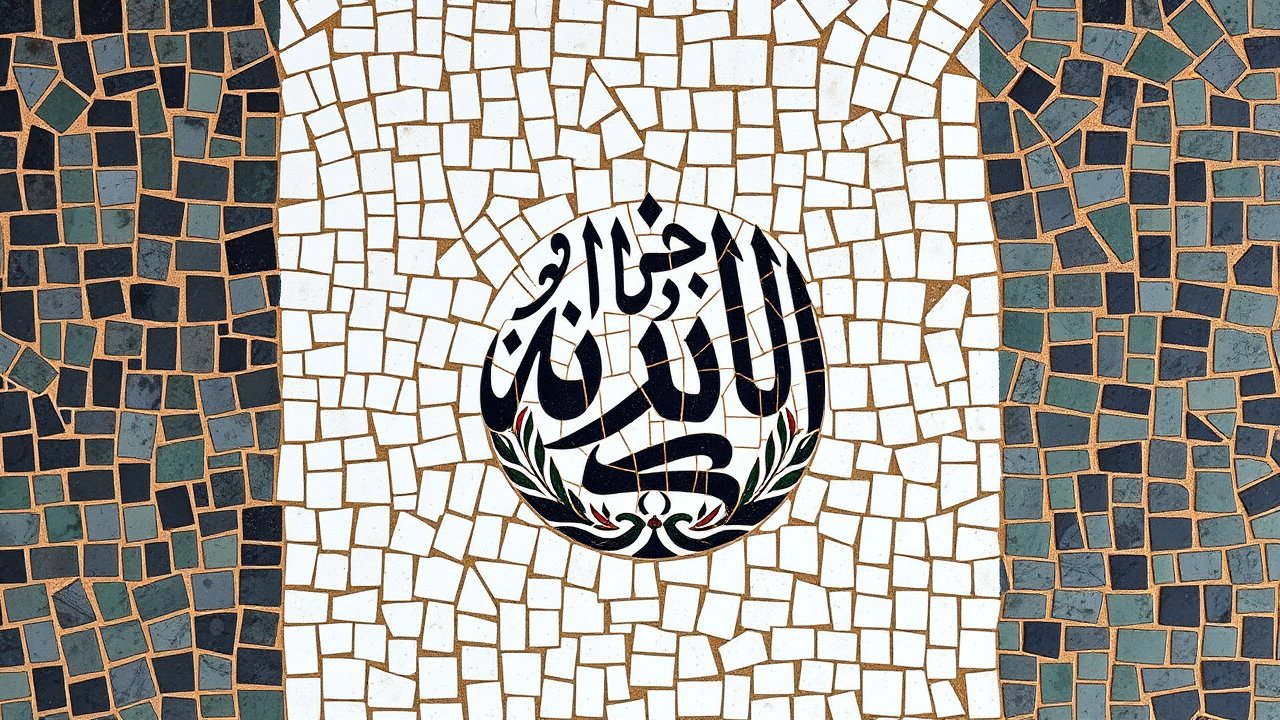
Mosaic Tiles — The current Islamic Emirate flag: white field with the black Shahada (Islamic creed) inscription centered — the flag in use since 2021. The flag of Afghanistan assembled as a Roman-style mosaic. The current Islamic Emirate flag: white field with the black Shahada (Islamic creed) inscription centered — the flag in use since 2021. The flag is completely faithful to the real Afghanistan flag — exact proportions, colors, and all symbols, rendered in thousands of small stone and glass tesserae. Visible grout lines, rich earthy tones mixed with brilliant glass, slight historical weathering. No text, no letters, no words, no writing of any kind.
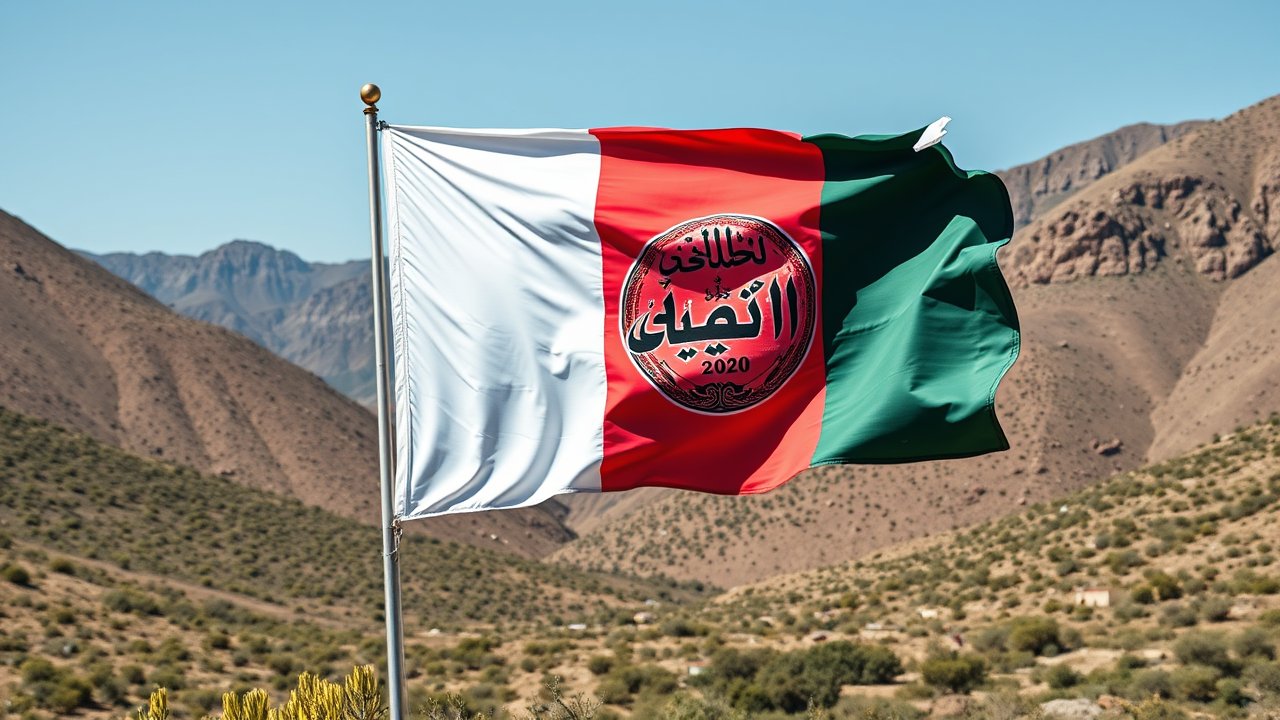
Native Landscape — The current Islamic Emirate flag: white field with the black Shahada (Islamic creed) inscription centered — the flag in use since 2021. Photorealistic photograph of the Afghanistan flag flying in an iconic natural landscape native to Afghanistan — the terrain, flora, and environment characteristic of that country. The current Islamic Emirate flag: white field with the black Shahada (Islamic creed) inscription centered — the flag in use since 2021. The flag is prominent and its colors are faithful and vivid. Remote, uninhabited wilderness. National Geographic photography style. No text, no letters, no words, no writing of any kind.
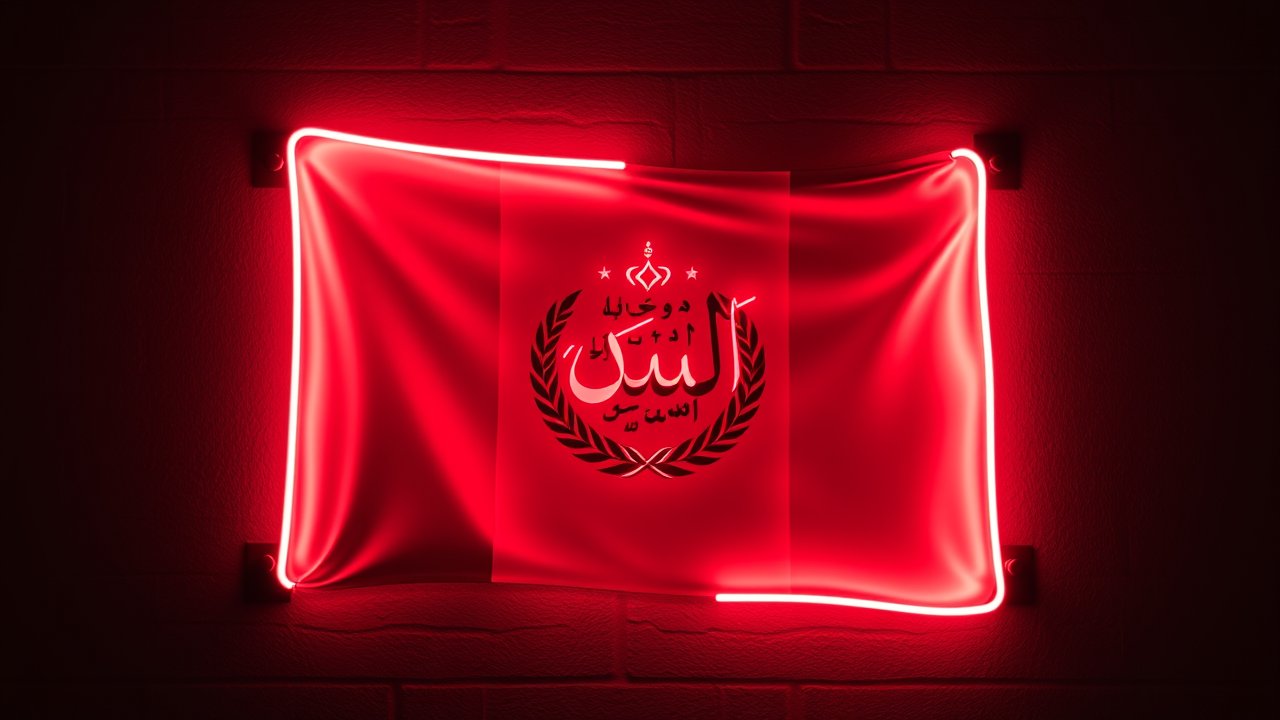
Neon Sign — The current Islamic Emirate flag: white field with the black Shahada (Islamic creed) inscription centered — the flag in use since 2021. The flag of Afghanistan recreated as a real neon sign mounted on a dark wall. The current Islamic Emirate flag: white field with the black Shahada (Islamic creed) inscription centered — the flag in use since 2021. Glowing glass neon tubes bent into the flag’s shapes — the colors of the flag rendered in actual neon light. Visible glass tube bends, metal mounting brackets on the wall. Warm neon glow and light bloom. Real neon, not digital. Photographed in a dark room. No text, no letters, no words, no writing of any kind.
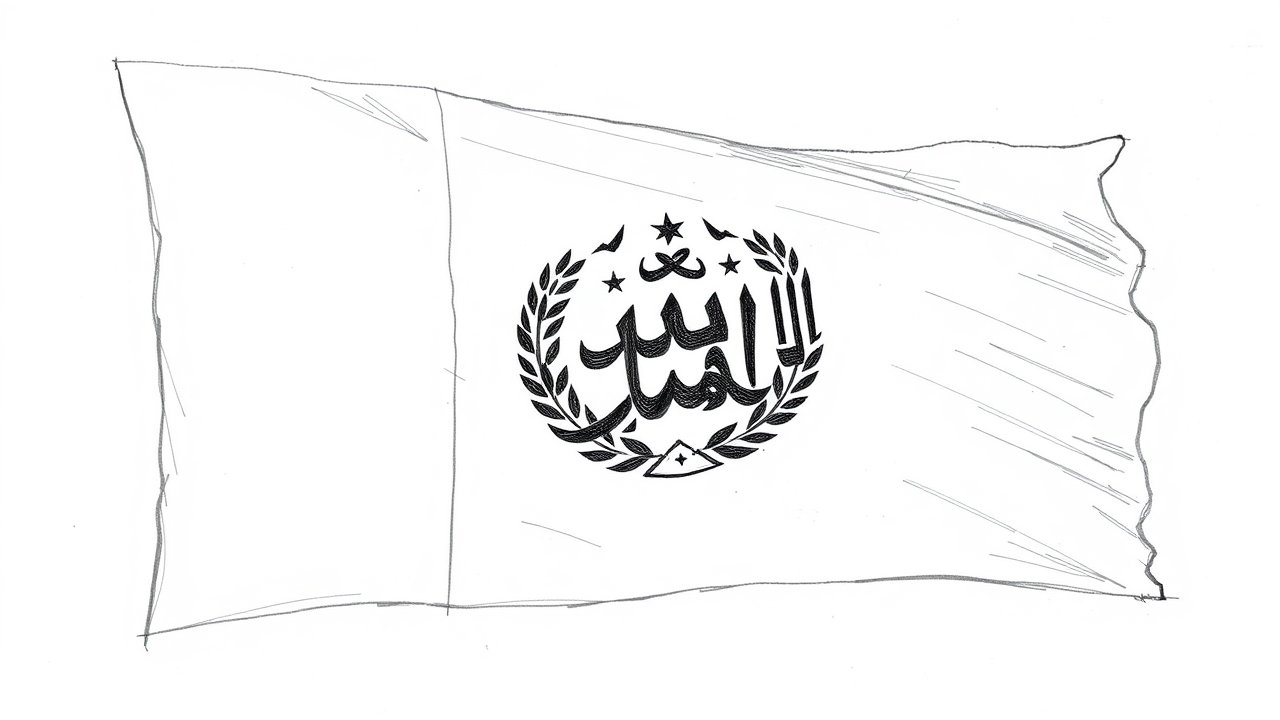
Pencil Sketch — The current Islamic Emirate flag: white field with the black Shahada (Islamic creed) inscription centered — the flag in use since 2021. The flag of Afghanistan as a bold, confident pencil sketch. The current Islamic Emirate flag: white field with the black Shahada (Islamic creed) inscription centered — the flag in use since 2021. Strong graphite lines on cream paper — not delicate but bold and decisive. Heavy pressure on key outlines, dramatic cross-hatching for deep shadows and shading. Immediately recognizable as the Afghanistan flag. Artist’s confident hand, not tentative. No text, no letters, no words, no writing of any kind.
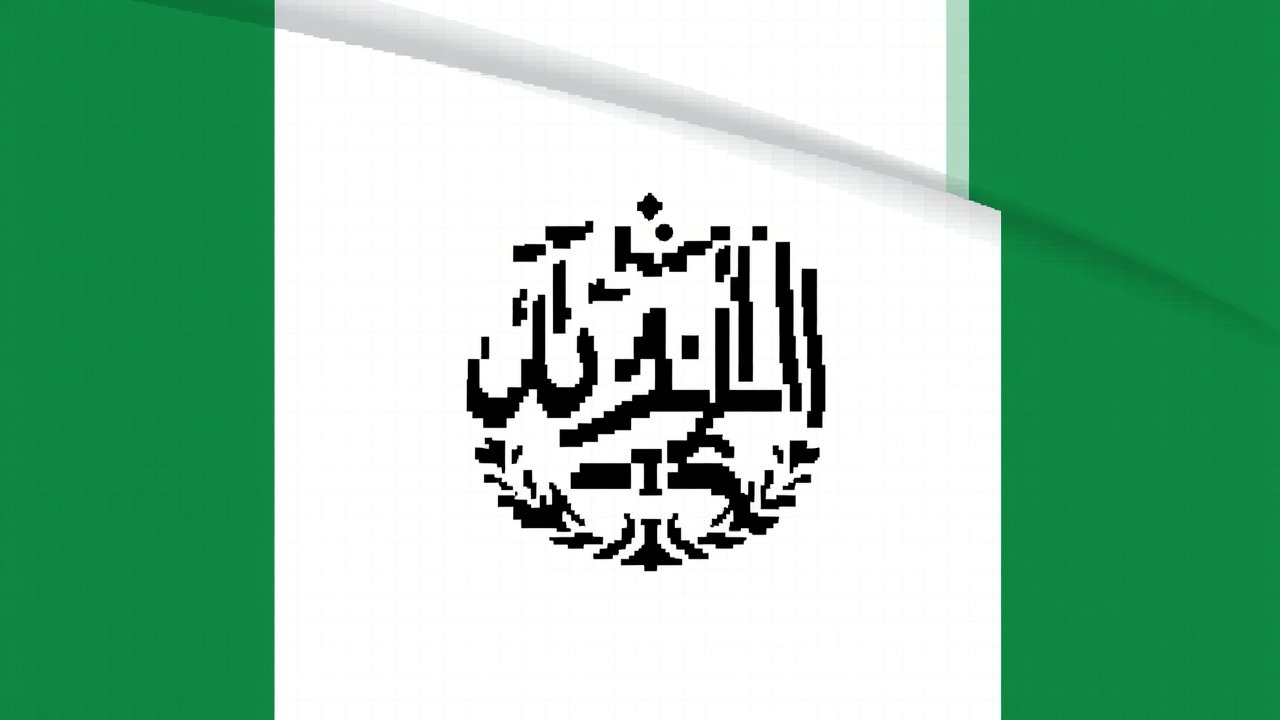
Pixel Art — The current Islamic Emirate flag: white field with the black Shahada (Islamic creed) inscription centered — the flag in use since 2021. The flag of Afghanistan as detailed 16-bit pixel art. The current Islamic Emirate flag: white field with the black Shahada (Islamic creed) inscription centered — the flag in use since 2021. Crisp pixel grid, limited palette with careful dithering, nostalgic retro game aesthetic. Clean grid-aligned design with subtle shading. Every element of the flag faithfully reproduced in pixels. No text, no letters, no words, no writing of any kind.
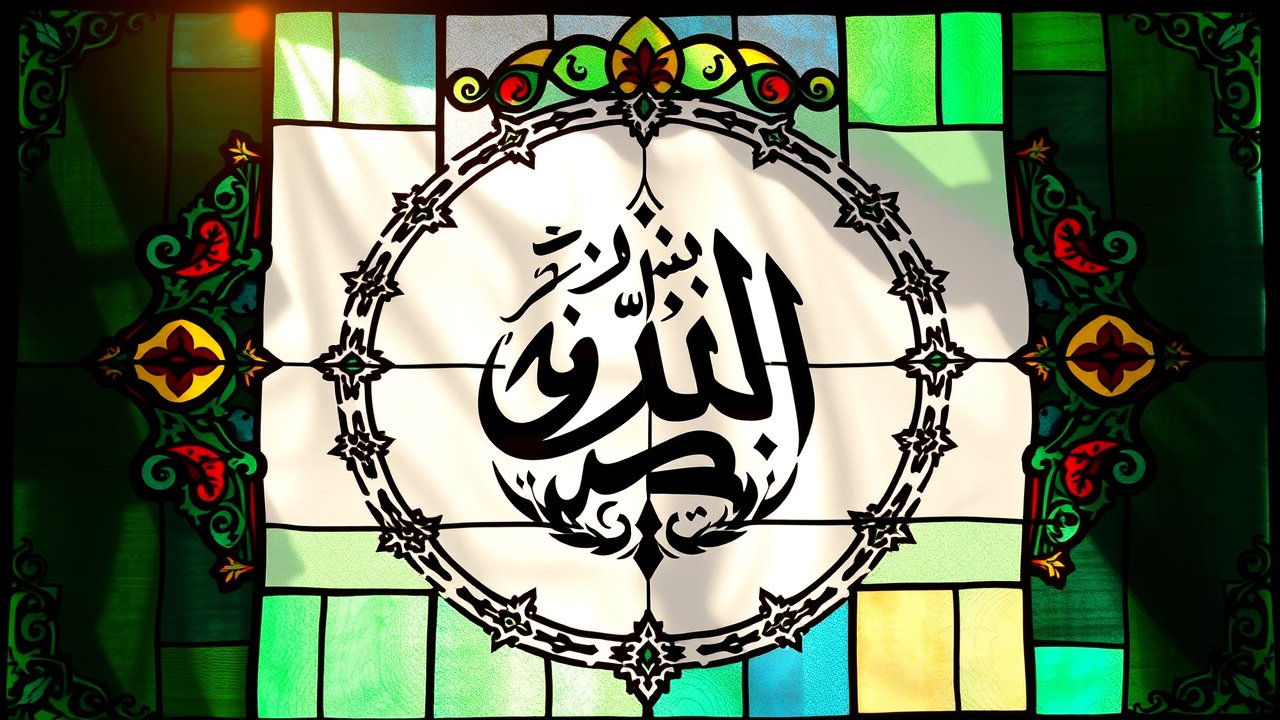
Stained Glass — The current Islamic Emirate flag: white field with the black Shahada (Islamic creed) inscription centered — the flag in use since 2021. The flag of Afghanistan rendered as an ornate stained glass window. The current Islamic Emirate flag: white field with the black Shahada (Islamic creed) inscription centered — the flag in use since 2021. The design is completely faithful to the real Afghanistan flag — exact colors, geometry, and all symbols preserved. Brilliant jewel-toned glass pieces separated by dark lead came lines. Warm sunlight streaming through, casting colored light. Gothic cathedral craftsmanship. No text, no letters, no words, no writing of any kind.
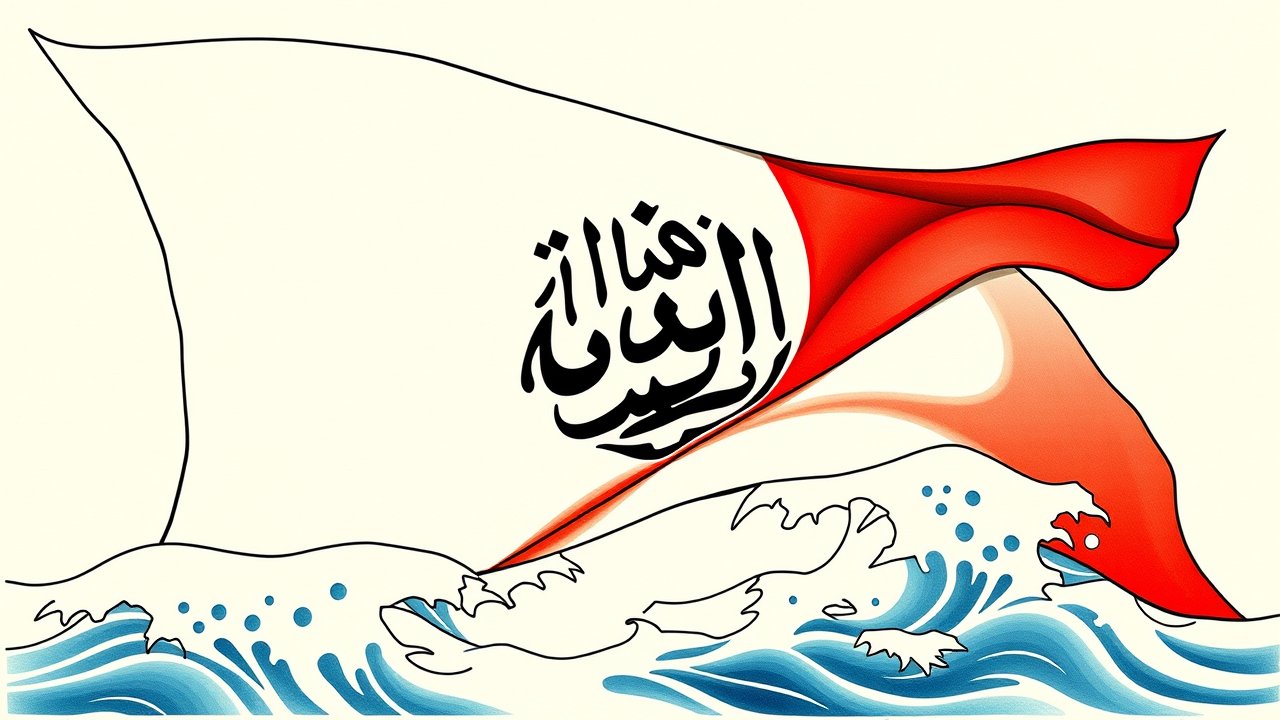
Ukiyo-e Woodblock — The current Islamic Emirate flag: white field with the black Shahada (Islamic creed) inscription centered — the flag in use since 2021. The flag of Afghanistan as a traditional Japanese ukiyo-e woodblock print. The current Islamic Emirate flag: white field with the black Shahada (Islamic creed) inscription centered — the flag in use since 2021. Bold outlines, flat areas of rich color, flowing organic forms. Wind and waves incorporated into the composition. Printed on washi paper with visible wood grain texture. The flag is the central focus and instantly recognizable. No text, no letters, no words, no writing of any kind.
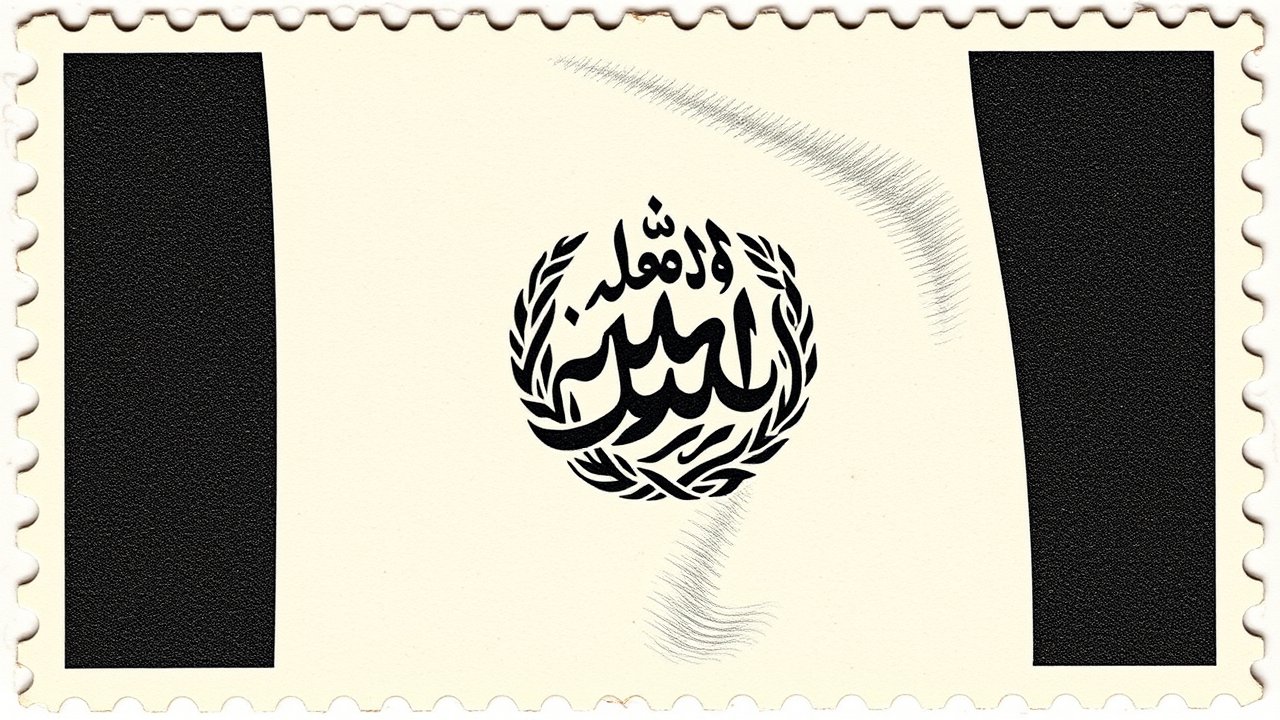
Vintage Postage Stamp — The current Islamic Emirate flag: white field with the black Shahada (Islamic creed) inscription centered — the flag in use since 2021. The flag of Afghanistan as a vintage 1950s postage stamp. The current Islamic Emirate flag: white field with the black Shahada (Islamic creed) inscription centered — the flag in use since 2021. The flag fills most of the stamp — it is the primary subject, faithfully rendered in fine engraved intaglio style. Perforated edges, aged paper with slight foxing. The stamp may show a denomination numeral only — absolutely no other text or country names.
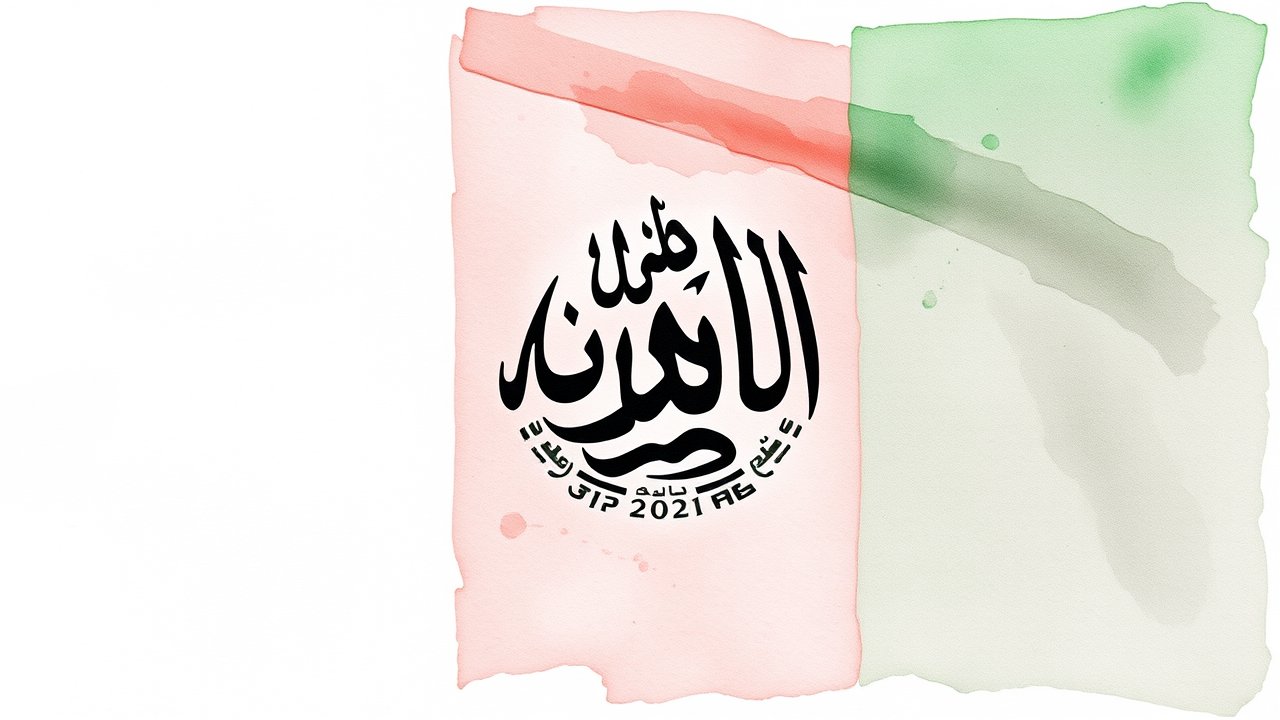
Watercolor — The current Islamic Emirate flag: white field with the black Shahada (Islamic creed) inscription centered — the flag in use since 2021. The flag of Afghanistan painted in loose, expressive watercolor. The current Islamic Emirate flag: white field with the black Shahada (Islamic creed) inscription centered — the flag in use since 2021. Wet-on-wet technique with soft color bleeds, visible brushstrokes, natural paper texture. Delicate splashes and drips at the edges. Luminous, translucent layers of pigment. No text, no letters, no words, no writing of any kind.
The White Field and Black Shahada: Afghanistan’s Evolving National Flag
The flag of Afghanistan represents one of the most dramatic transformations in contemporary vexillology, embodying the nation’s turbulent political history and the ideological shifts that have defined its modern existence. The current flag, adopted in 2021 following the Taliban’s return to power, features a stark white field bearing the black Shahada inscription—a profound departure from the horizontal tricolor design that characterized Afghanistan for nearly a century. This transformation encapsulates Afghanistan’s cyclical pattern of governance, the persistent influence of Islamic identity, and the ongoing struggle over how the nation’s symbols represent its people and values. Understanding Afghanistan’s flag requires tracing its evolution from the Durrani Empire through successive kingdoms and republics, examining the symbolism embedded in each iteration, and contextualizing the dramatic changes that have occurred as different political powers have sought to reshape national identity through vexillological means.
Ancient Roots and Early Heraldry
The concept of an Afghan national flag in its modern sense emerged during the late 19th century, though Afghanistan’s territories had been home to various dynasties and kingdoms for millennia. Before the standardization of national flags, the regions that constitute modern Afghanistan were governed by various empires—the Achaemenid Persian Empire, the Macedonian Greek Empire under Alexander, the Mauryan and Kushan dynasties, the Arab Caliphates, and the various Turkic and Mongol dynasties. Each of these powers brought their own insignia and heraldic traditions, but the concept of a unified Afghan national flag did not emerge until the modern nation-state began to take shape in the 18th and 19th centuries. The Durrani Empire, established by Ahmad Shah Abdali in 1747, represented the first cohesive political entity that could be identified as a precursor to modern Afghanistan. While the Durrani rulers utilized banners and flags, these were dynastic rather than national symbols, typically featuring Islamic calligraphy and geometric patterns rather than the distinctive national colors.
The Tricolor Era: Black, Red, and Green
The formal adoption of a national flag for Afghanistan occurred in the late 19th century during a period of significant modernization and state consolidation under the Durrani and subsequent rulers. The iconic tricolor design—featuring horizontal stripes of black, red, and green—became the standard representation of Afghan nationalism. This color scheme emerged gradually rather than through a single formal decree, becoming increasingly standardized during the reign of Amir Abdur Rahman Khan (1880-1901) and becoming officially codified during the reign of King Amanullah Khan (1919-1929). The horizontal tricolor design, featuring black at the top, red in the middle, and green at the bottom, would dominate Afghan vexillology for approximately one hundred years, from the late 19th century until its modification in 2013.
The symbolism of these colors carried specific meaning within Afghan and broader Islamic contexts. Black traditionally represented the struggles and history of the Afghan people, evoking both the military might of historical empires and the challenges overcome during Afghanistan’s formation as a nation-state. Red symbolized the blood spilled in defense of the nation, particularly during the conflicts with British colonial powers during the Anglo-Afghan Wars (1839-1842, 1878-1880, 1919). Green represented Islam and hope for the future, colors with deep religious significance throughout Islamic civilization. This tricolor design aligned Afghanistan with other Islamic nations adopting similar color schemes while maintaining a distinctly Afghan identity. The simplicity and clarity of the design made it immediately recognizable, facilitating national identity formation during a period when Afghanistan sought to assert itself as a sovereign state against imperial pressures from Britain and Russia.
Constitutional Periods and Design Evolution
Throughout the 20th century, Afghanistan’s flag underwent periodic modifications that reflected changing political circumstances and constitutional frameworks. During the constitutional monarchy period (1931-1973), the flag remained the basic tricolor, though various heraldic additions were experimented with, including eagles, emblem placements, and slight modifications to the stripe proportions. The Democratic Republic of Afghanistan (1978-1992), following the Soviet-backed communist coup, initially modified the flag by adding a golden emblem featuring an olive branch wreath and rising sun to the upper hoist side, symbols reflecting the regime’s ideology of development and socialist progress. However, even during this ideologically distinct period, the government maintained the underlying black, red, and green tricolor, recognizing that these colors had become so deeply embedded in Afghan national consciousness that eliminating them entirely would undermine legitimacy.
The transition from communism in 1992 brought new governments and periodic reversion to simpler tricolor designs, though some governments added national emblems or slight modifications. The Islamic State of Afghanistan (1992-2004) and the subsequent Islamic Emirate of Afghanistan (1996-2001) during the first Taliban period maintained variations of the tricolor, though the Taliban in their initial regime added Islamic inscriptions to reflect their interpretation of Islamic governance. When the Northern Alliance and subsequently the internationally-recognized government controlled Afghanistan from 2001 onwards, the standard tricolor was restored to its basic form, representing what was widely viewed as a secular, internationally-engaged Islamic democracy.
The Islamic Emirate Flag: Modern Meaning and Symbolism
Following the Taliban’s return to power in August 2021, Afghanistan adopted a radically new flag design that represented a fundamental shift in how the nation symbolized itself. The new flag abandons the horizontal tricolor entirely in favor of a white field bearing the Islamic Shahada—the most fundamental declaration in Islamic faith, stating “There is no god but God, and Muhammad is the messenger of God” (La ilaha illallah, Muhammad rasul Allah) written in black Kufic script. This design represents a dramatic statement of the Taliban’s ideological framework and their vision of Afghanistan as an Islamic Emirate defined primarily by Islamic religious authority rather than secular nationalism.
The white field carries specific religious and cultural significance. In Islamic tradition, white represents purity, holiness, and the divine light of Islamic truth. Throughout Islamic history, white flags have held special meaning—the Prophet Muhammad is reported to have used white flags in certain contexts, and various Islamic movements have adopted white as their primary color. The exclusivity of white as the flag’s base color, unadorned except for the Shahada inscription, emphasizes the centrality of Islamic ideology to the Islamic Emirate’s understanding of national identity. Where the previous tricolor represented a synthesis of historical struggle (black), sacrifice (red), and religious faith (green), the new design collapses these multiple meanings into a single overarching assertion: the supremacy of Islamic law and faith as the organizing principle of the state.
The black Kufic script of the Shahada itself deserves careful analysis. Kufic is one of the earliest forms of Arabic script, historically associated with the foundational Islamic texts and early Islamic civilization. The choice to use Kufic rather than modern Arabic calligraphy connects the Islamic Emirate’s vision to the earliest period of Islam, suggesting a desire to return to what adherents view as the pure origins of Islamic governance and practice. The formal, geometric qualities of Kufic script also create a striking visual contrast with the white background, ensuring that the religious message remains the flag’s primary visual feature.
Comparative Symbolism and International Context
Afghanistan’s flag transformation places the nation within a broader context of flags employing religious symbols and inscriptions. The flag of Iran features the word “Allah” integrated into its design, while various Islamic movements and organizations have adopted Shahada-inscribed banners. The adoption of the Shahada flag positions the Islamic Emirate within a global Islamic movement while simultaneously asserting a return to Islamic principles as the foundation of national governance. This represents a rejection of the post-2001 flags, which were designed to emphasize Afghanistan’s participation in an international community of nations and its commitment to constitutional, secular governance frameworks.
The psychological and diplomatic impact of the flag change cannot be understated. The white field with Shahada replaced not merely a design but a symbol of Afghanistan’s previous alignment with international governance norms. The old tricolor was recognized globally as representing Afghanistan within the United Nations and international community. The new flag visually announces Afghanistan’s departure from these frameworks and the Taliban’s prioritization of Islamic governance over international secular standards. This vexillological statement preceded and accompanied the Taliban’s rapid consolidation of power, the exclusion of women from many spheres of governance, and the implementation of strict Islamic law interpretations.
The Afghan People and Contested Symbolism
The shift from the tricolor to the Shahada flag remains deeply contested among Afghan populations. Many Afghans, particularly women, ethnic minorities, and those who benefited from the post-2001 constitutional order, view the new flag as symbolizing the loss of rights, freedoms, and pluralistic governance. The tricolor, having represented Afghanistan for nearly a century, maintains powerful symbolic resonance among those who identify with its historical legacy. Afghan diaspora communities continue to employ the tricolor in their symbolic expressions, maintaining the flag as a representation of Afghanistan as they remember it or hope it might become. The Afghan resistance groups opposing Taliban rule have retained the tricolor as their symbol, effectively creating two competing flags representing two competing visions of what Afghanistan is and should be.
This ongoing contestation reflects the reality that flags are never neutral symbols—they represent choices about national identity, values, and governance. The transformation of Afghanistan’s flag from a historically-rooted tricolor to an explicitly religious symbol demonstrates how profoundly the Taliban’s return altered the nation’s official self-representation. Where the black, red, and green could encompass multiple interpretations and appeal to various constituencies, the white field with Shahada presents a singular, theologically-grounded vision that inherently privileges Islamic identity over other potential sources of national belonging.
Conclusion: A Symbol of Transformation and Struggle
Afghanistan’s flag has evolved from the unified tricolor that represented the nation’s emergence as a modern state into the stark, theologically assertive Shahada flag of the Islamic Emirate. This transformation encapsulates Afghanistan’s complex relationship with modernity, Islamic identity, international engagement, and internal governance. The black, red, and green stripes that endured for approximately a century represented a balance—acknowledging historical struggle, celebrating sacrifice, and affirming Islamic faith while remaining compatible with participation in a secular international system. The white field with black Shahada represents a rejection of that compromise, asserting instead that Islamic governance principles should be the primary, indeed sole, source of national identity and state legitimacy. Whether this new flag will endure or whether Afghanistan’s symbolic landscape will again transform depends upon the nation’s political future and the ongoing struggles over governance, identity, and values that continue to define this historically significant nation.
Free Printable: Flags of the World Reference Card
Get a beautiful printable poster with 50 flag emojis, Unicode codes, and fun facts. Perfect for classrooms and desks!
No spam, ever. Unsubscribe anytime.