
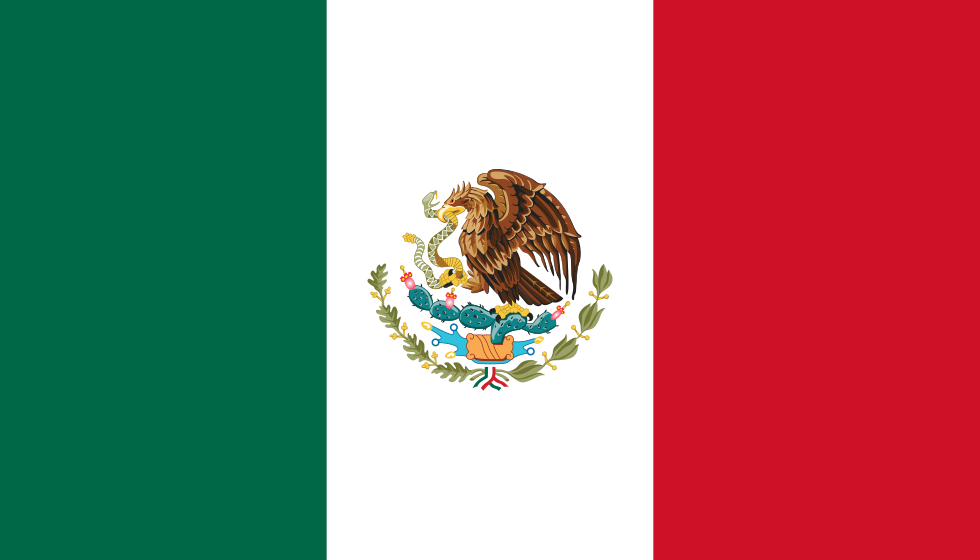
Standard Emoji:
How To
How To
Time needed: 1 minute
How to copy and paste the Flag of Mexico Emoji to any device.
- Copy the Mexican Flag Emoji
Go to flagemoji.com and press the copy button (above). This works on any device.
- Paste the Emoji
Go to your email/iMessage/SMS texting service/document and paste the emoji.
For mobile devices
— double-tap or tap-hold, then paste should appear. Tap it.
For desktop and laptops on Apple devices
— command-P / ⌘-P
For desktop and laptops on Windows devices
— control-p
Codes
Emoji Codes
Flag emojis are unicode symbols, like any other letter or number on your keyboard. This means you can copy and paste the emoji itself into your code, whatever the language (click the button above).
They actually count as two characters: the two-letter country code (the ISO international standard).
| Country Code | Unicode | Shortcode |
| MX | M: U+1F1F2 X: U+1F1FD | :flag_mx: :mx: |
Emoji shortcodes are used on some platforms as a way for users to type in emojis from the keyboard. If you type the emoji shortcode on Github or Slack, the emoji will appear.
*The official name of the emoji is only the country name, not ‘Mexican Flag’, for example.
Description
Flag Description
The flag of Mexico consists of three vertical bands in equal width. From the hoist side they are: green, white, and red. In the center is Mexico’s coat of arms (an eagle with a snake in its beak perched on a cactus).
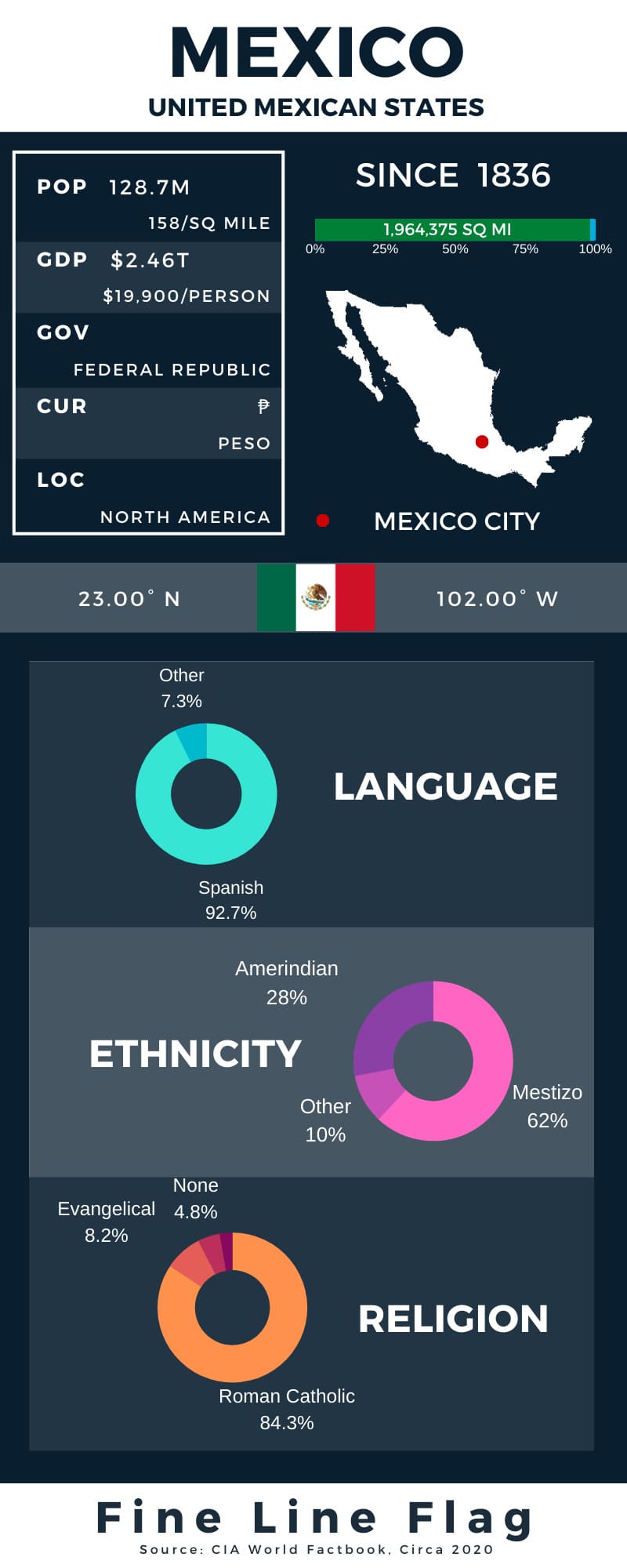
Map
Map
Weather
FAQ
FAQs
Mexico celebrates Independence Day September 16 (1810) and Día de la Bandera (“Flag Day”) is celebrated February 24.
(Cinco de Mayo, or the fifth of May, is a holiday that celebrates the Mexican army’s 1862 victory over France at the Battle of Puebla during the Franco-Mexican War.)
The current version of the flag of Mexico was adopted in 1968, but similar versions date back to 1821.
Several versions of the Flag of Mexico have been used dating back to 1821.
The flag of Mexico colors are green, white, and red. Over the years the meaning attributed to each color has changed. Green has symbolized hope and independence; white has signified religion, purity, and union, and red has been assigned union, religion, and the blood of heroes. In the center of the flag is the coat of arms of Mexico, which derives from a legend that the wandering Aztec people were to settle at a location where they would see an eagle on a cactus eating a snake. That city is now Mexico City.
Yes.
Spanish: Bandera de México, Legado de Nuestros Héroes, Símbolo de la Unidad de nuestros Padres y de nuestros Hermanos.
Te prometemos:
Ser siempre fieles a los principios de la libertad y la justicia, que hacen de Nuestra Patria la Nación Independiente, humana y generosa a la que entregamos nuestra existencia.
English translation: Mexican flag legacy from our heroes symbol of the unity of our parents and our brothers.
We promise you: To be always loyal to the principles of freedom and justice that makes this an independent, human and generous nation , to which we dedicate our existence.
Anthem
National Anthem
| Title | “Himno Nacional Mexicano” (National Anthem of Mexico) |
| Author | Francisco Gonzalez Bocanegra / Jaime Nuno Roca |
Printable
Printable Flag of Mexico
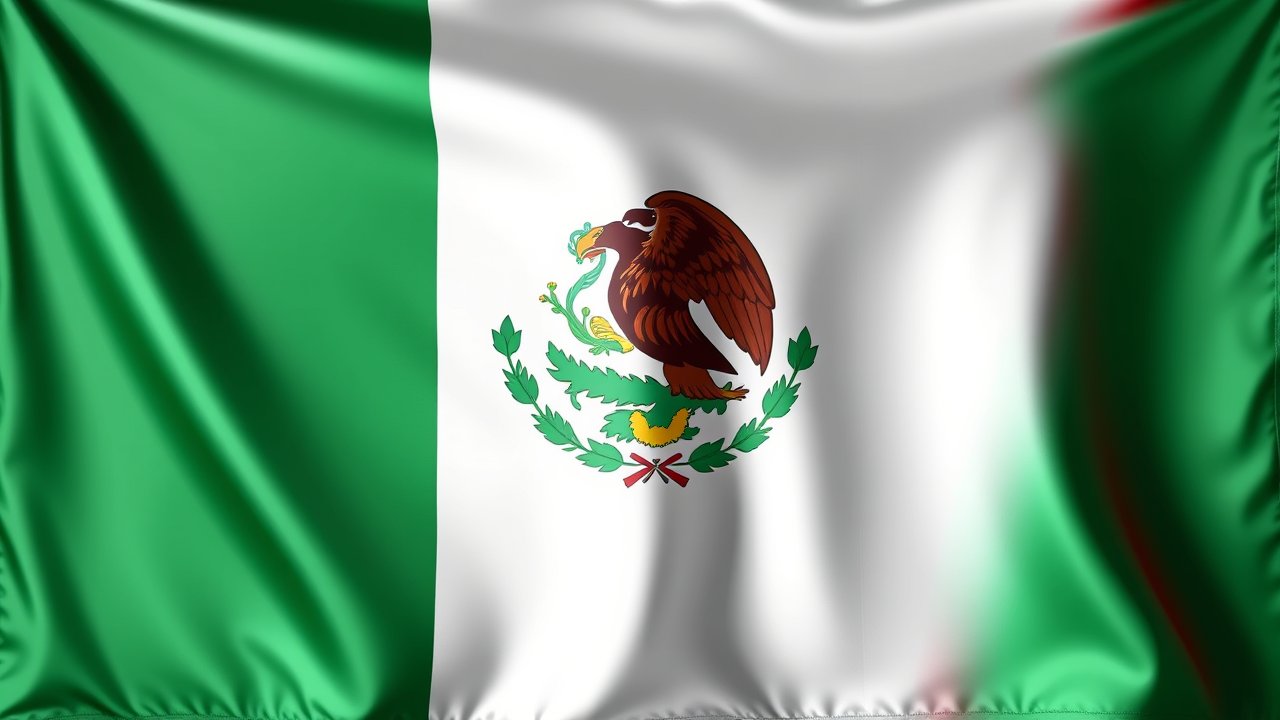
3D Glossy Render — Three vertical stripes of green, white, and red with the coat of arms (eagle on cactus) centered. The flag of Mexico as a photorealistic 3D render. Three vertical stripes of green, white, and red with the coat of arms (eagle on cactus) centered. The flag fabric hangs or drapes naturally but preserves exact proportions, colors, and all symbols perfectly — completely faithful to the real Mexico flag. Dramatic studio lighting, glossy silk material, soft shadows, subsurface scattering, perfect specular highlights. No text, no letters, no words, no writing of any kind.
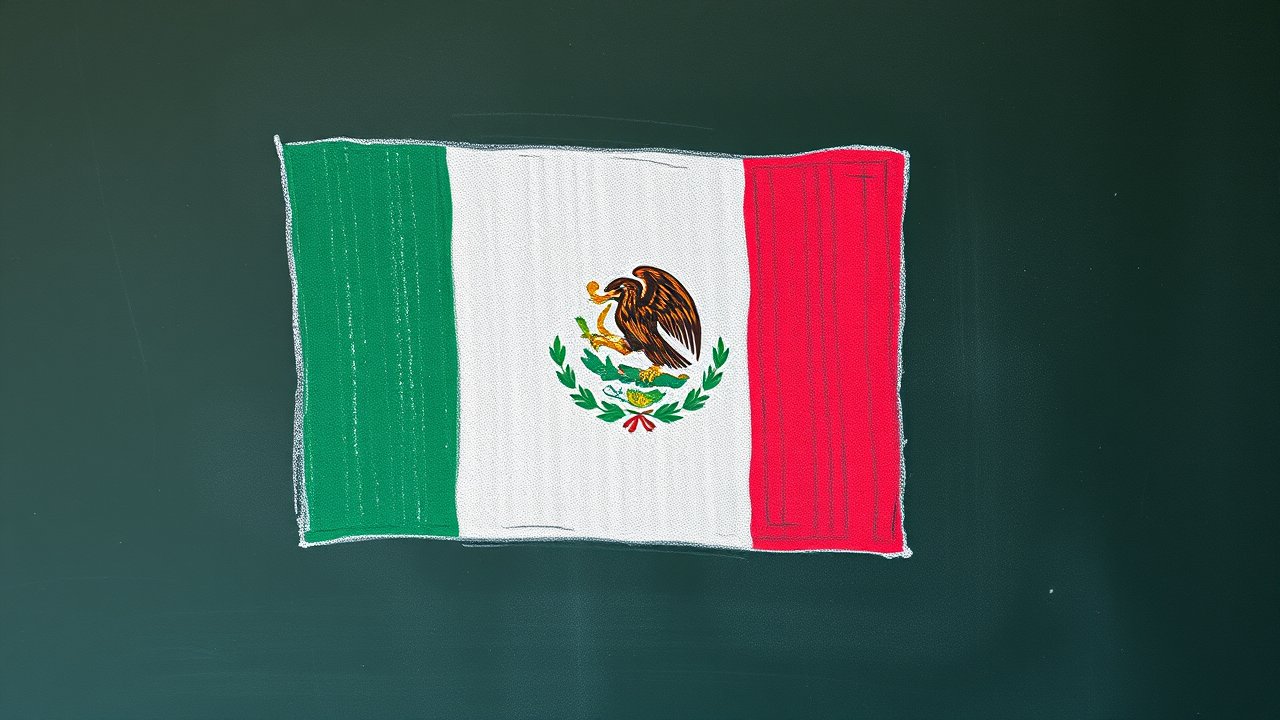
Chalk on Blackboard — Three vertical stripes of green, white, and red with the coat of arms (eagle on cactus) centered. The flag of Mexico drawn in chalk on a real blackboard. Three vertical stripes of green, white, and red with the coat of arms (eagle on cactus) centered. Authentic blackboard — dark slate green surface with chalk dust and smudge marks. Soft, dusty white and colored chalk lines, imperfect edges, hand-drawn quality. Chalk dust particles visible in the air. The flag is immediately recognizable. No text, no letters, no words, no writing of any kind.
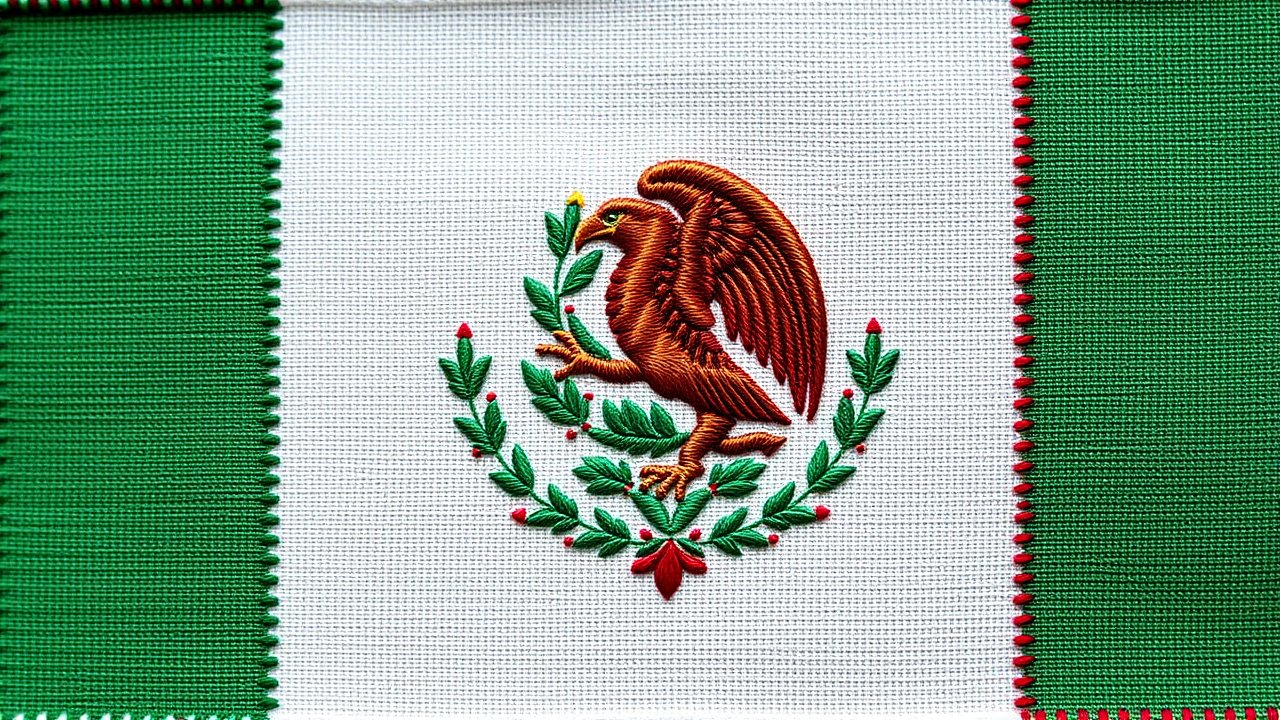
Embroidered Textile — Three vertical stripes of green, white, and red with the coat of arms (eagle on cactus) centered. The flag of Mexico as intricate embroidery on linen fabric. Three vertical stripes of green, white, and red with the coat of arms (eagle on cactus) centered. Dense satin stitches, French knots, chain stitch detail. The flag design is completely faithful — exact colors, geometry, and all symbols faithfully stitched, immediately recognizable as the Mexico flag. Visible thread texture, dimensional quality, warm handcrafted feel. No text, no letters, no words, no writing of any kind.
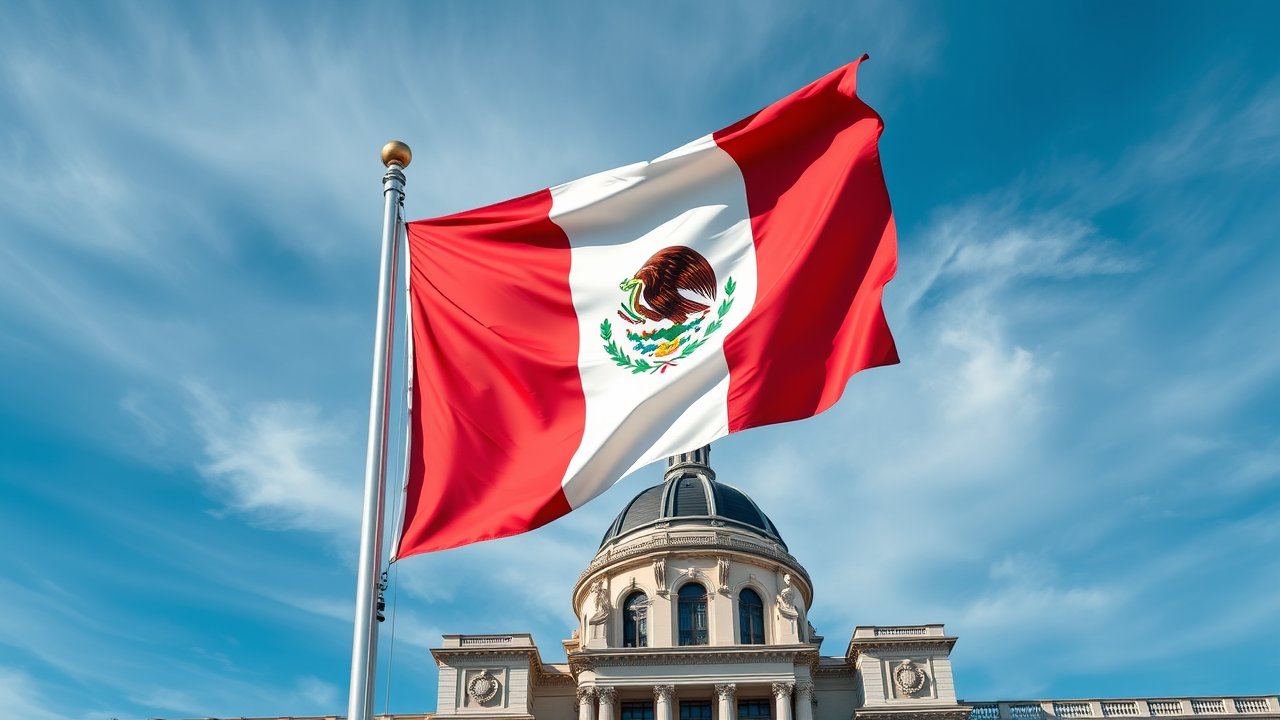
Flagpole in Capital — Three vertical stripes of green, white, and red with the coat of arms (eagle on cactus) centered. Photorealistic photograph of the Mexico flag flying on a tall flagpole in front of an iconic government building in the capital city. Three vertical stripes of green, white, and red with the coat of arms (eagle on cactus) centered. The flag ripples naturally in the wind, colors vivid and exact. Documentary photography style, sharp and realistic. Grand architecture in the background. Blue sky, dramatic clouds. No text, no letters, no words, no writing of any kind.
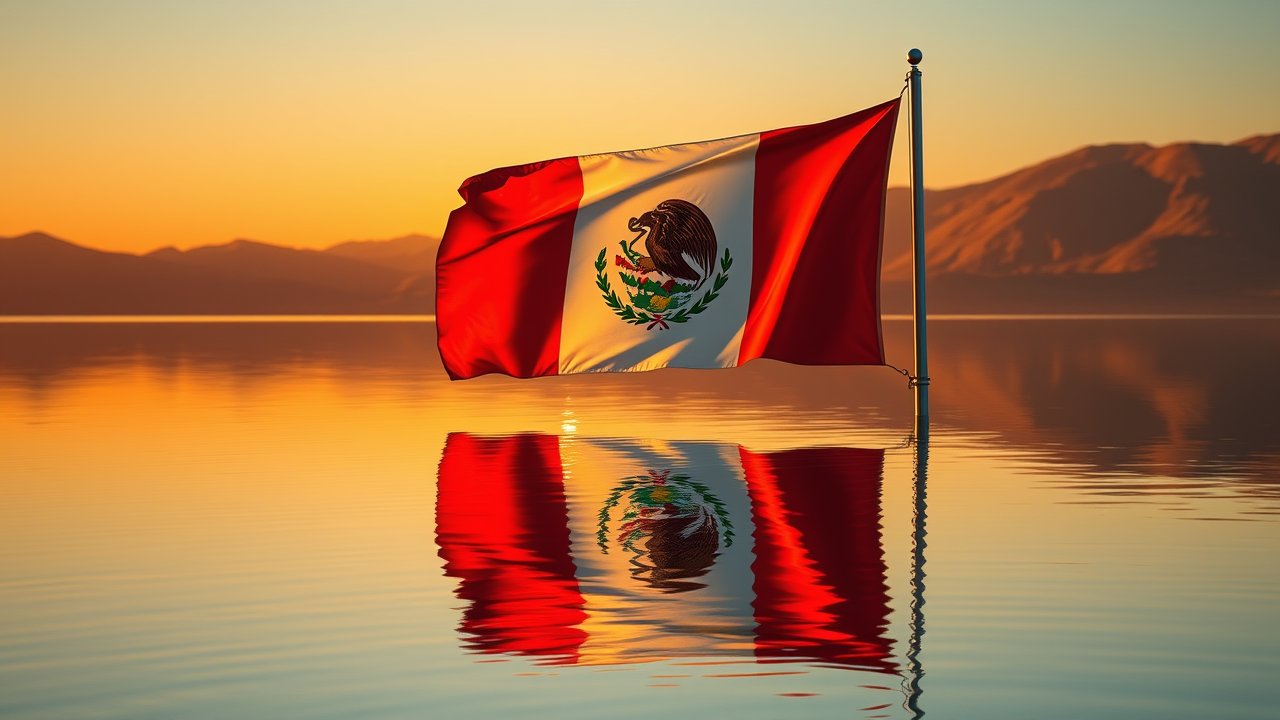
Golden Hour Reflection — Three vertical stripes of green, white, and red with the coat of arms (eagle on cactus) centered. Photorealistic photograph of the Mexico flag reflected in still water at golden hour. Three vertical stripes of green, white, and red with the coat of arms (eagle on cactus) centered. The flag flies on a pole at the water’s edge, its reflection shimmering on the surface below. Warm amber and orange sunset light. The flag colors and design are faithful and vivid. Serene, cinematic landscape photography. No text, no letters, no words, no writing of any kind.
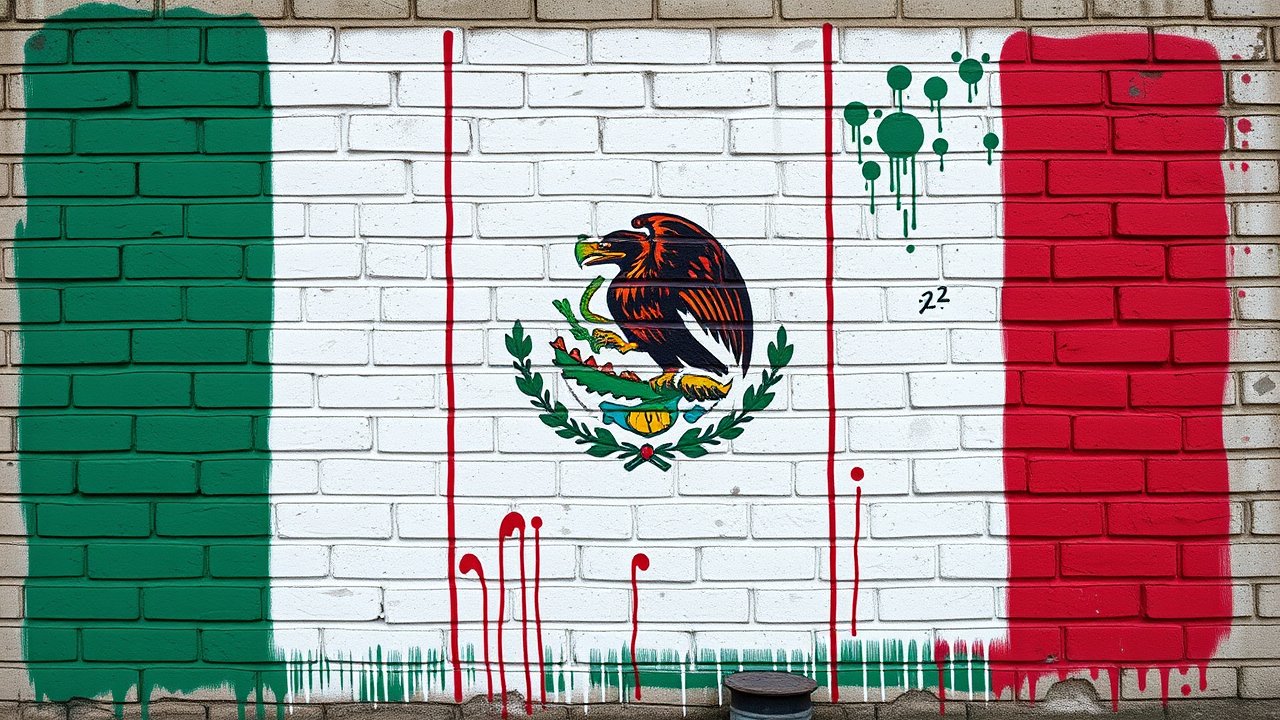
Street Art / Graffiti — Three vertical stripes of green, white, and red with the coat of arms (eagle on cactus) centered. The flag of Mexico as vibrant street art spray-painted on a brick wall. Three vertical stripes of green, white, and red with the coat of arms (eagle on cactus) centered. Bold spray paint, dripping edges, stencil layers, overspray halos. The flag design is faithful and immediately recognizable — exact colors and symbols, just rendered in spray paint on urban concrete. No text, no letters, no words, no writing of any kind. No tags, no graffiti lettering.
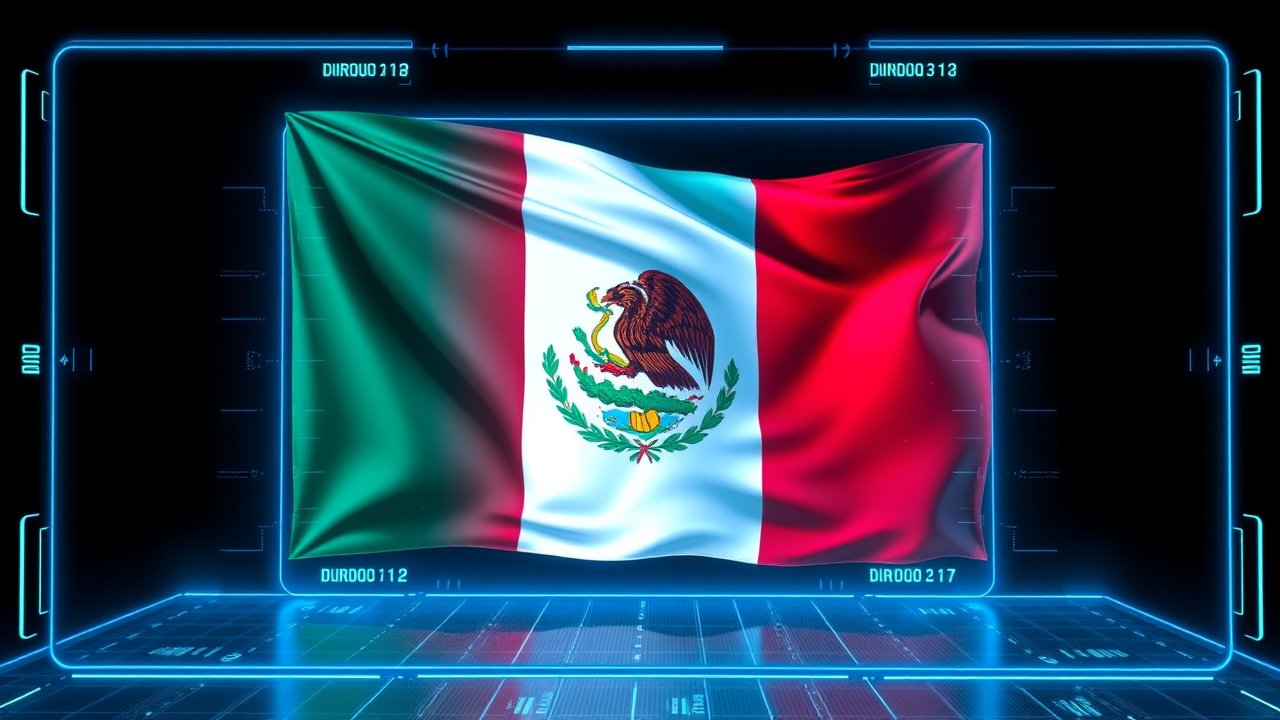
Sci-Fi Hologram — Three vertical stripes of green, white, and red with the coat of arms (eagle on cactus) centered. The flag of Mexico projected as a futuristic holographic display. Three vertical stripes of green, white, and red with the coat of arms (eagle on cactus) centered. Translucent blue-white projection with scan lines, floating in dark space. Glitching edges, particle effects, data streams. The flag design is completely faithful and recognizable. Cyberpunk HUD elements framing the projection. No text, no letters, no words, no writing of any kind.
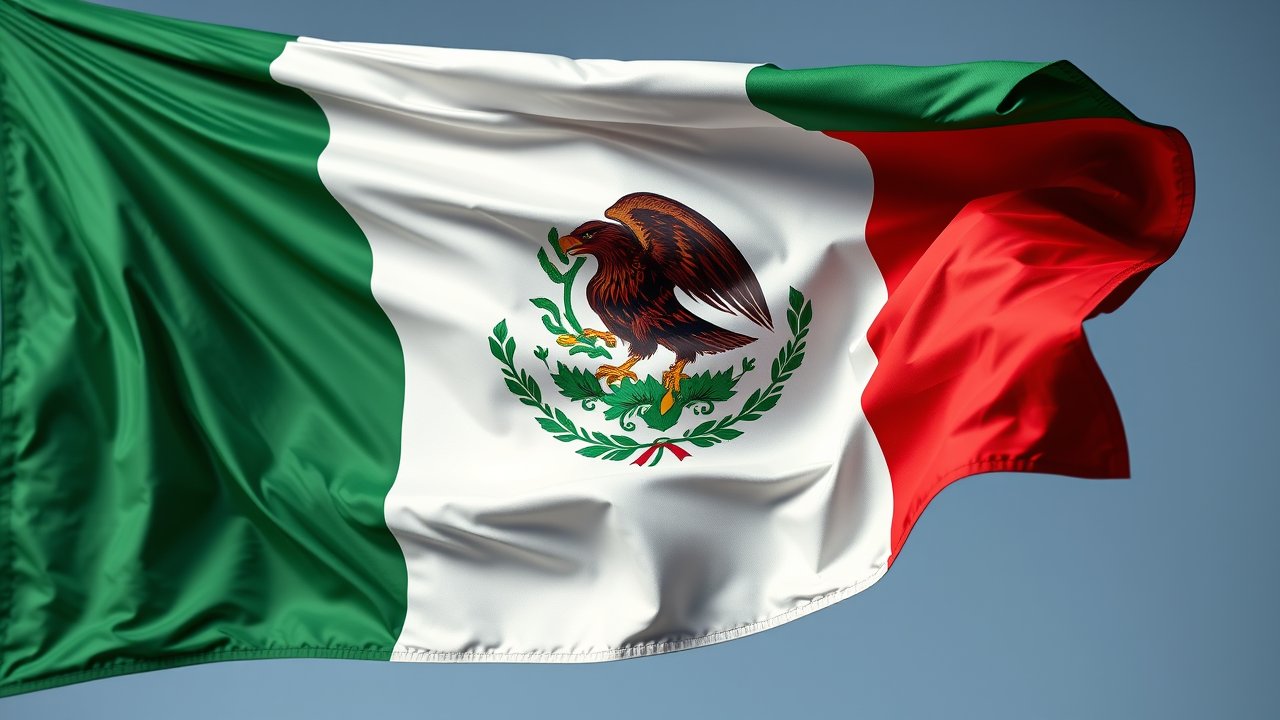
Hyperrealistic Wind — Three vertical stripes of green, white, and red with the coat of arms (eagle on cactus) centered. Ultra-hyperrealistic photograph of the Mexico flag caught in a dramatic gust of wind. Three vertical stripes of green, white, and red with the coat of arms (eagle on cactus) centered. Macro-level fabric detail — individual threads visible, fabric folds and tension lines crisp. Colors and design completely faithful to the real Mexico flag. High-speed shutter, razor-sharp focus, studio lighting. No text, no letters, no words, no writing of any kind.
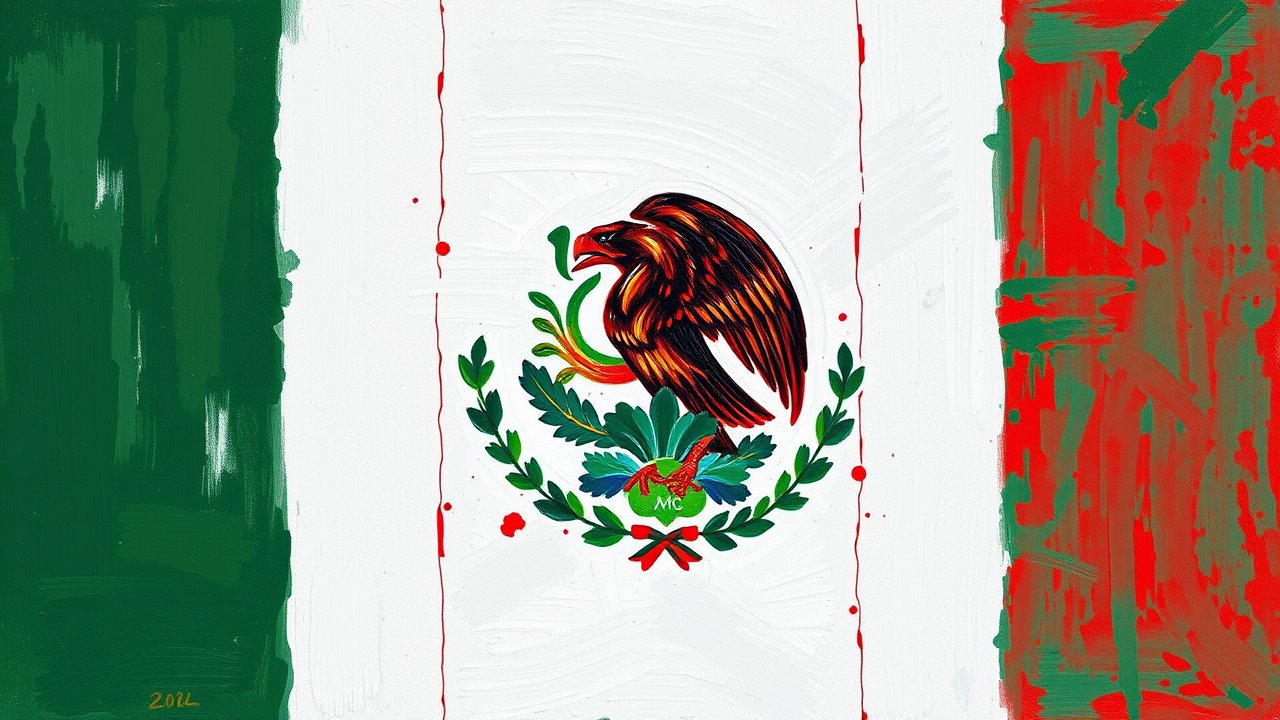
Impressionist Oil — Three vertical stripes of green, white, and red with the coat of arms (eagle on cactus) centered. The flag of Mexico painted in French Impressionist oil on canvas. Three vertical stripes of green, white, and red with the coat of arms (eagle on cactus) centered. Thick impasto brushstrokes, dappled light, vibrant broken color technique in the style of Monet. The flag is instantly recognizable — colors and design faithful to the real Mexico flag, interpreted with impressionist light and texture. No text, no letters, no words, no writing of any kind.
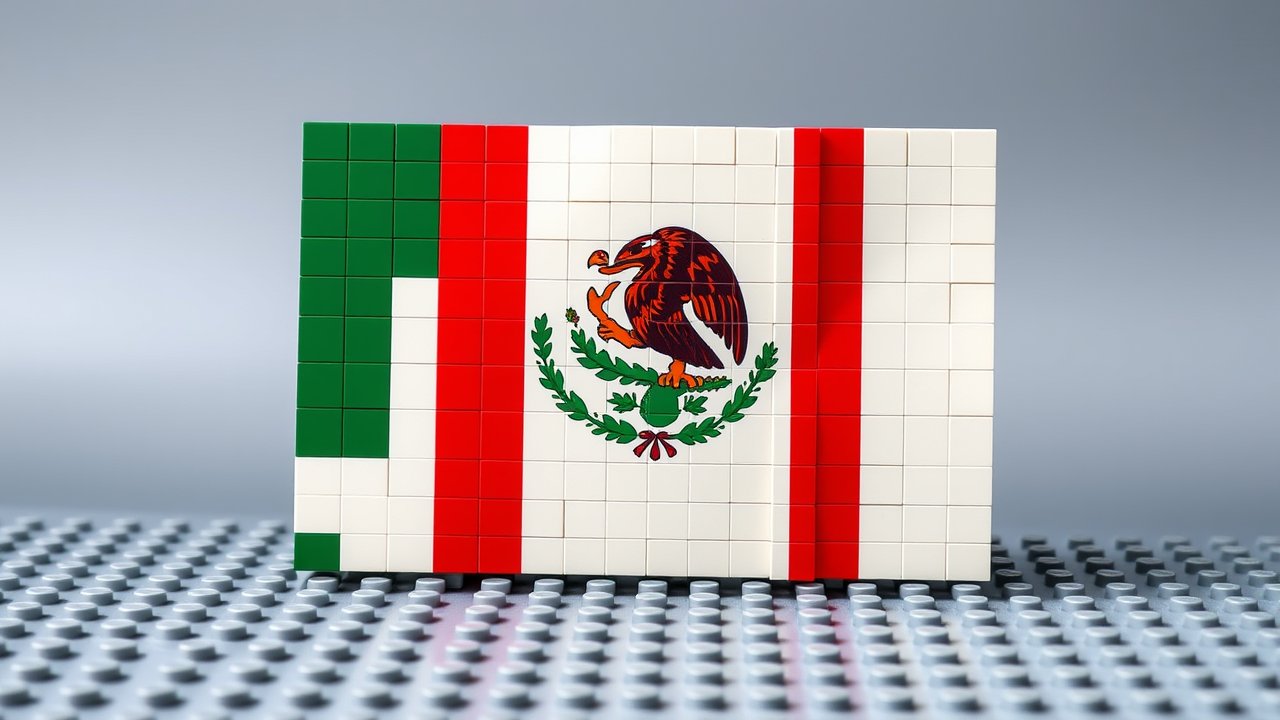
Lego Bricks — Three vertical stripes of green, white, and red with the coat of arms (eagle on cactus) centered. The flag of Mexico built from Lego bricks, photographed as a real physical construction. Three vertical stripes of green, white, and red with the coat of arms (eagle on cactus) centered. Visible studs and brick seams, slight plastic sheen. Standard Lego colors approximate the flag’s palette. Built on a gray Lego baseplate. Dramatic angle showing the three-dimensional brick texture. No text, no letters, no words, no writing of any kind.
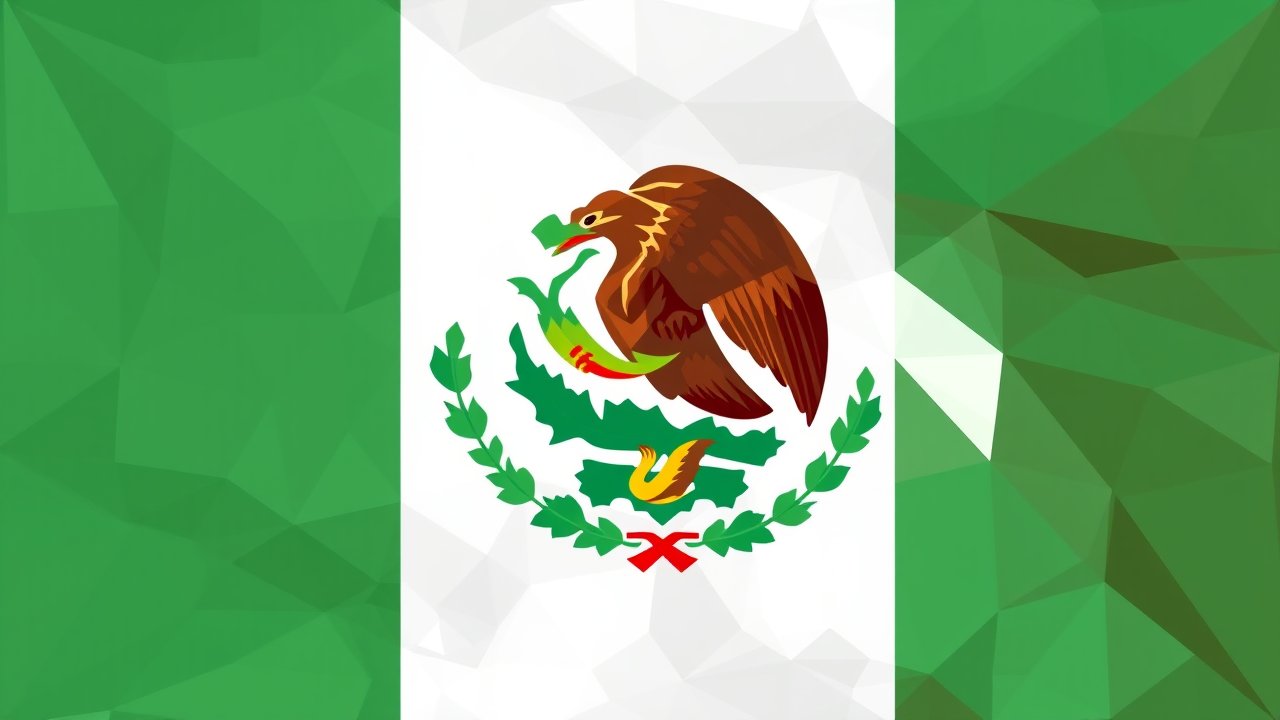
Low-Poly Geometric — Three vertical stripes of green, white, and red with the coat of arms (eagle on cactus) centered. The flag of Mexico constructed from low-polygon geometric triangles. Three vertical stripes of green, white, and red with the coat of arms (eagle on cactus) centered. Aggressively faceted — each region broken into many visible triangular faces with subtle color variation across each polygon, creating real depth and dimensionality even in flat-color areas of the flag. Crystal-like, contemporary computational design. The flag is completely faithful and immediately recognizable. No text, no letters, no words, no writing of any kind.
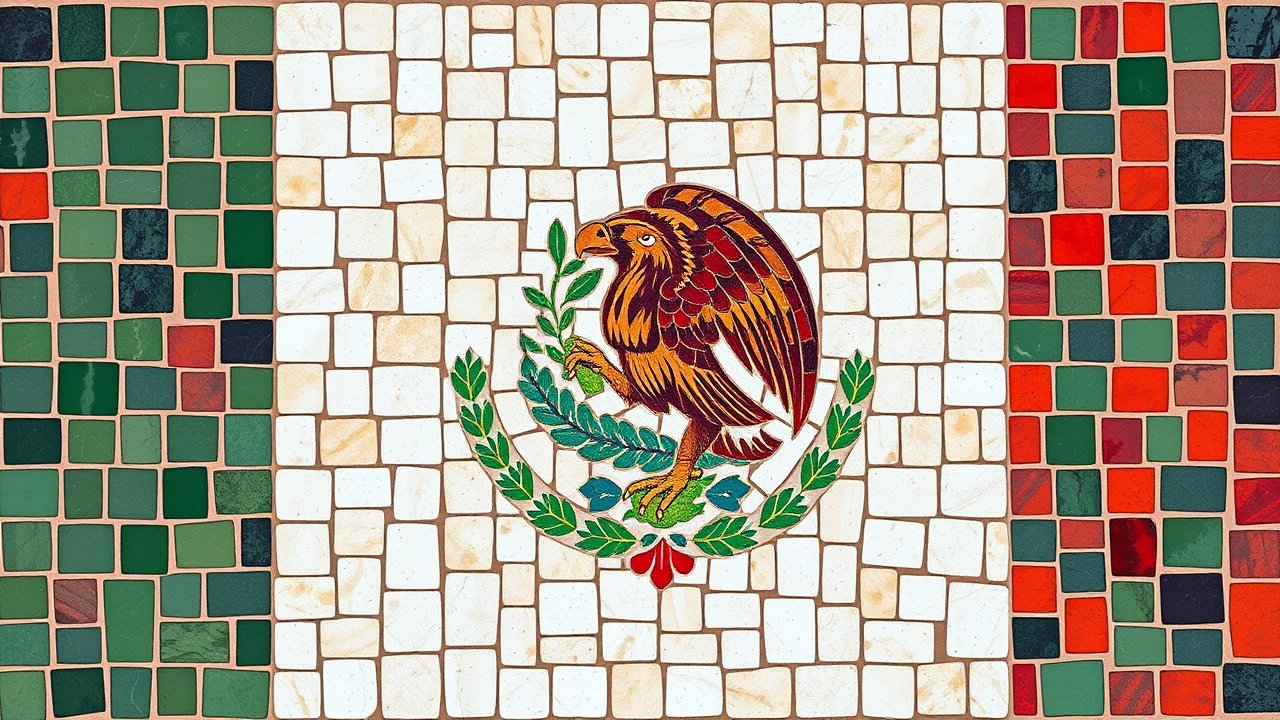
Mosaic Tiles — Three vertical stripes of green, white, and red with the coat of arms (eagle on cactus) centered. The flag of Mexico assembled as a Roman-style mosaic. Three vertical stripes of green, white, and red with the coat of arms (eagle on cactus) centered. The flag is completely faithful to the real Mexico flag — exact proportions, colors, and all symbols, rendered in thousands of small stone and glass tesserae. Visible grout lines, rich earthy tones mixed with brilliant glass, slight historical weathering. No text, no letters, no words, no writing of any kind.
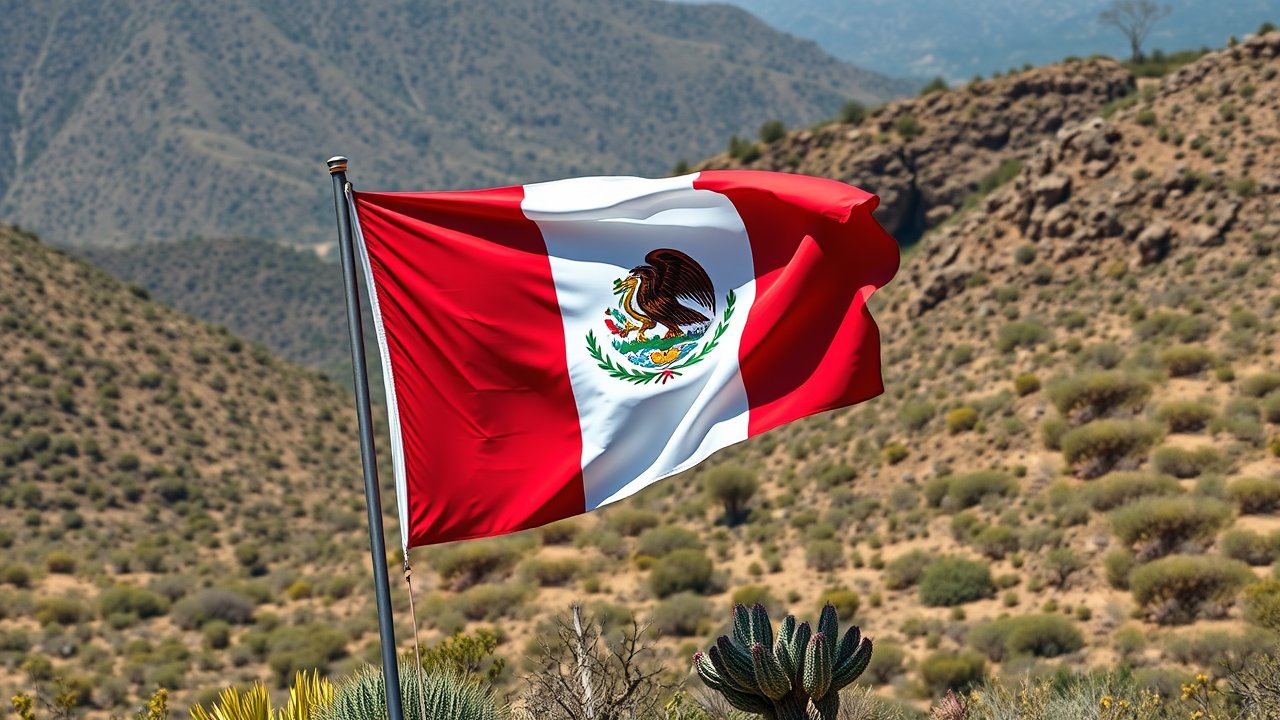
Native Landscape — Three vertical stripes of green, white, and red with the coat of arms (eagle on cactus) centered. Photorealistic photograph of the Mexico flag flying in an iconic natural landscape native to Mexico — the terrain, flora, and environment characteristic of that country. Three vertical stripes of green, white, and red with the coat of arms (eagle on cactus) centered. The flag is prominent and its colors are faithful and vivid. Remote, uninhabited wilderness. National Geographic photography style. No text, no letters, no words, no writing of any kind.
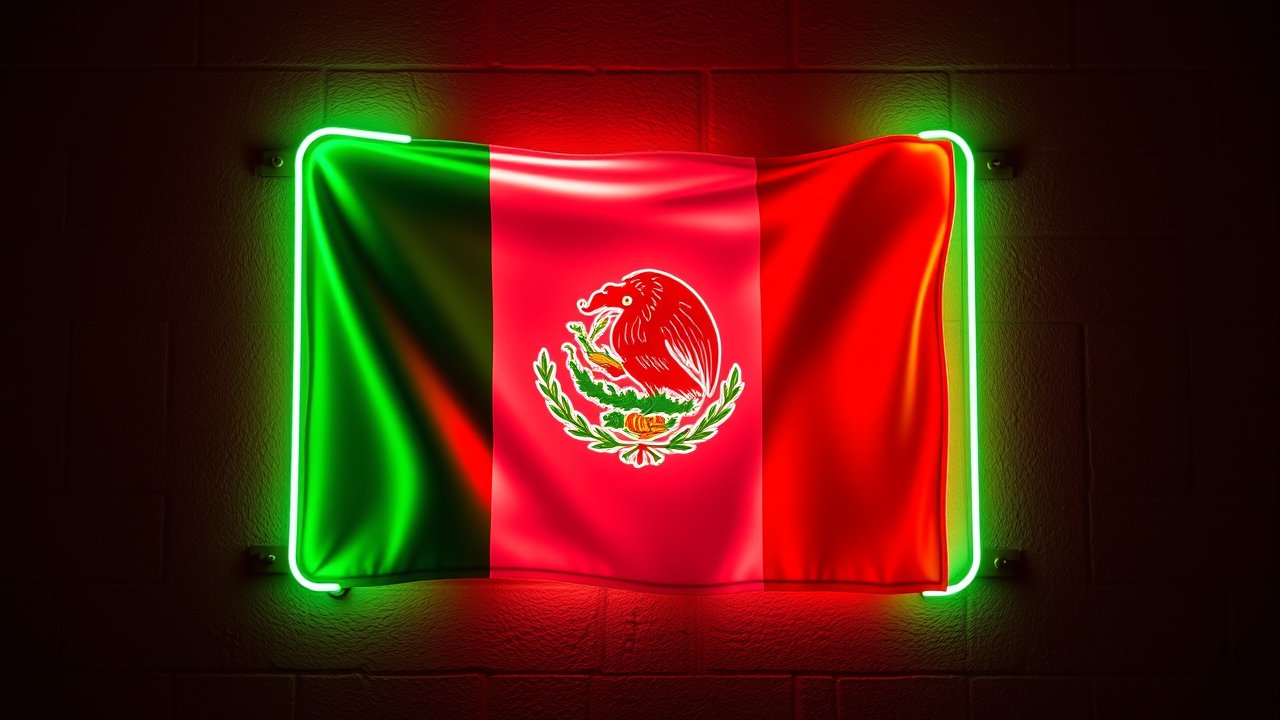
Neon Sign — Three vertical stripes of green, white, and red with the coat of arms (eagle on cactus) centered. The flag of Mexico recreated as a real neon sign mounted on a dark wall. Three vertical stripes of green, white, and red with the coat of arms (eagle on cactus) centered. Glowing glass neon tubes bent into the flag’s shapes — the colors of the flag rendered in actual neon light. Visible glass tube bends, metal mounting brackets on the wall. Warm neon glow and light bloom. Real neon, not digital. Photographed in a dark room. No text, no letters, no words, no writing of any kind.
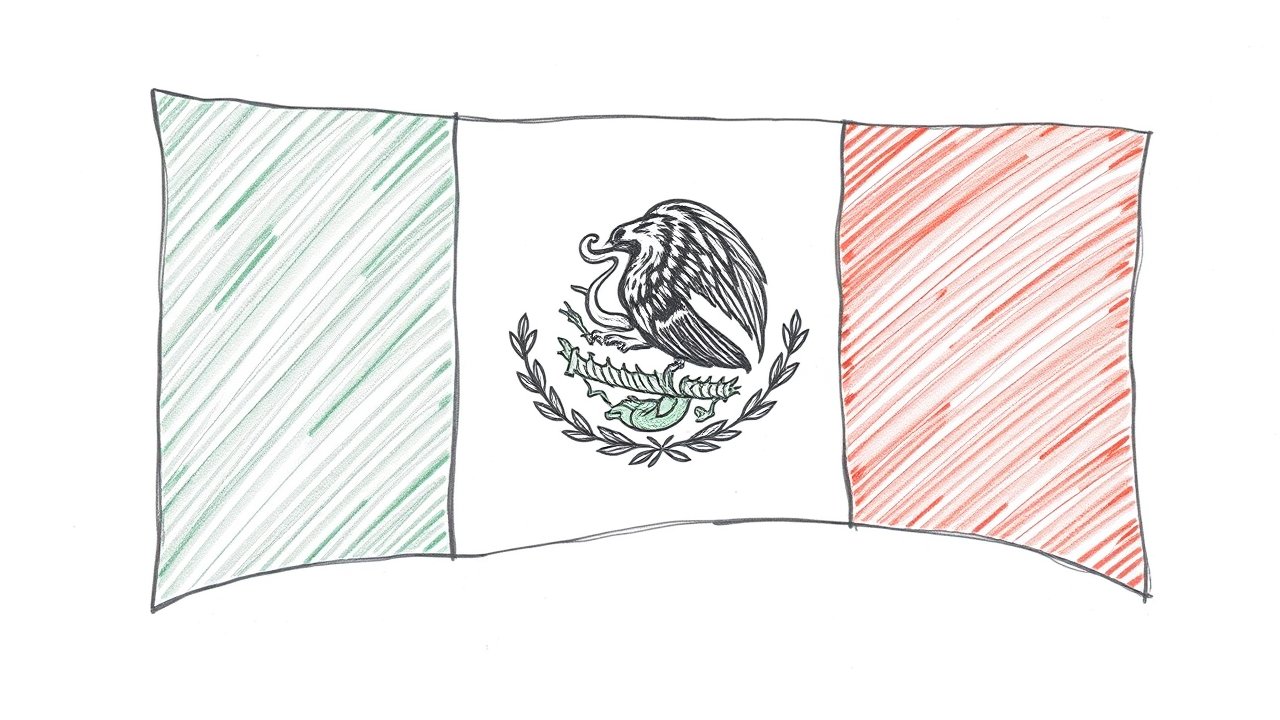
Pencil Sketch — Three vertical stripes of green, white, and red with the coat of arms (eagle on cactus) centered. The flag of Mexico as a bold, confident pencil sketch. Three vertical stripes of green, white, and red with the coat of arms (eagle on cactus) centered. Strong graphite lines on cream paper — not delicate but bold and decisive. Heavy pressure on key outlines, dramatic cross-hatching for deep shadows and shading. Immediately recognizable as the Mexico flag. Artist’s confident hand, not tentative. No text, no letters, no words, no writing of any kind.
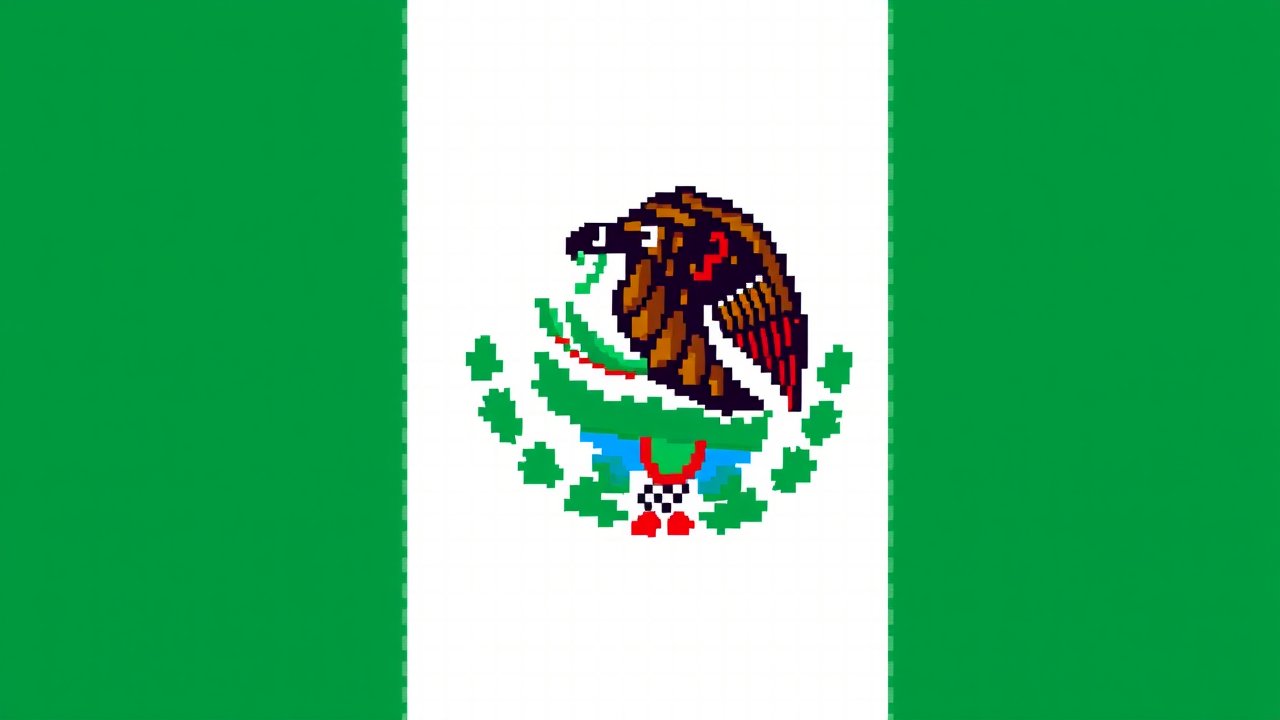
Pixel Art — Three vertical stripes of green, white, and red with the coat of arms (eagle on cactus) centered. The flag of Mexico as detailed 16-bit pixel art. Three vertical stripes of green, white, and red with the coat of arms (eagle on cactus) centered. Crisp pixel grid, limited palette with careful dithering, nostalgic retro game aesthetic. Clean grid-aligned design with subtle shading. Every element of the flag faithfully reproduced in pixels. No text, no letters, no words, no writing of any kind.
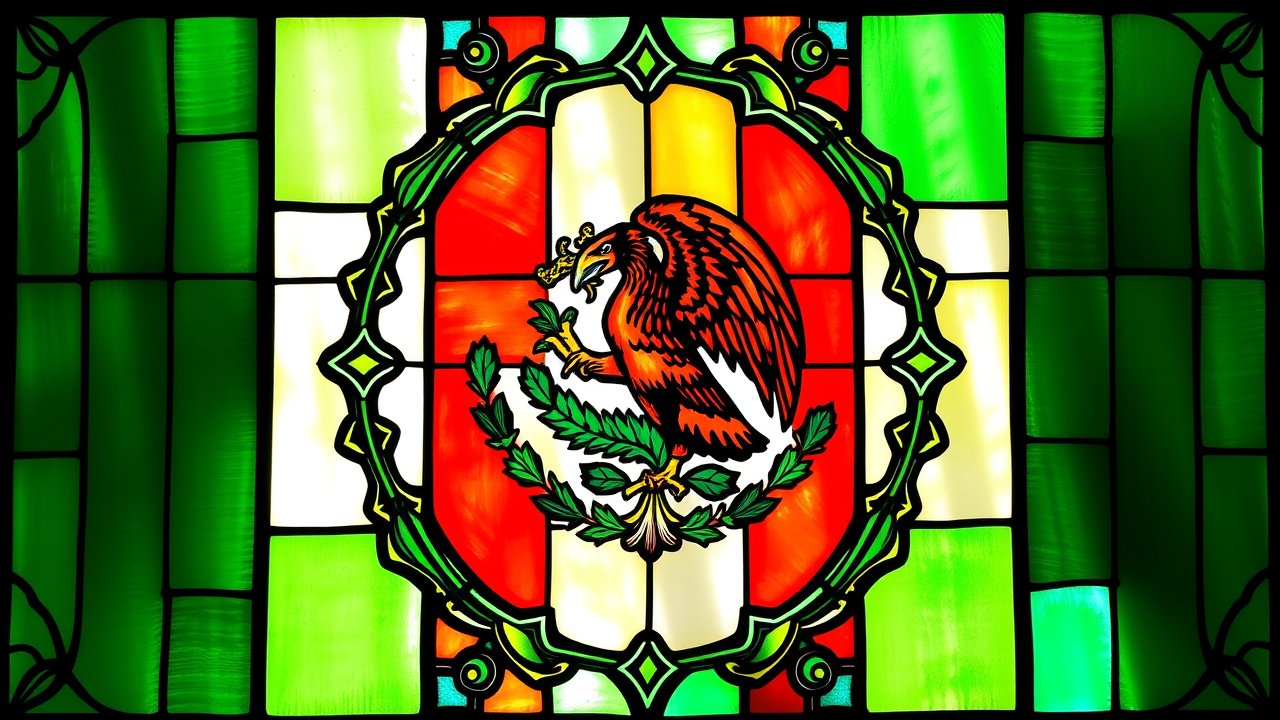
Stained Glass — Three vertical stripes of green, white, and red with the coat of arms (eagle on cactus) centered. The flag of Mexico rendered as an ornate stained glass window. Three vertical stripes of green, white, and red with the coat of arms (eagle on cactus) centered. The design is completely faithful to the real Mexico flag — exact colors, geometry, and all symbols preserved. Brilliant jewel-toned glass pieces separated by dark lead came lines. Warm sunlight streaming through, casting colored light. Gothic cathedral craftsmanship. No text, no letters, no words, no writing of any kind.
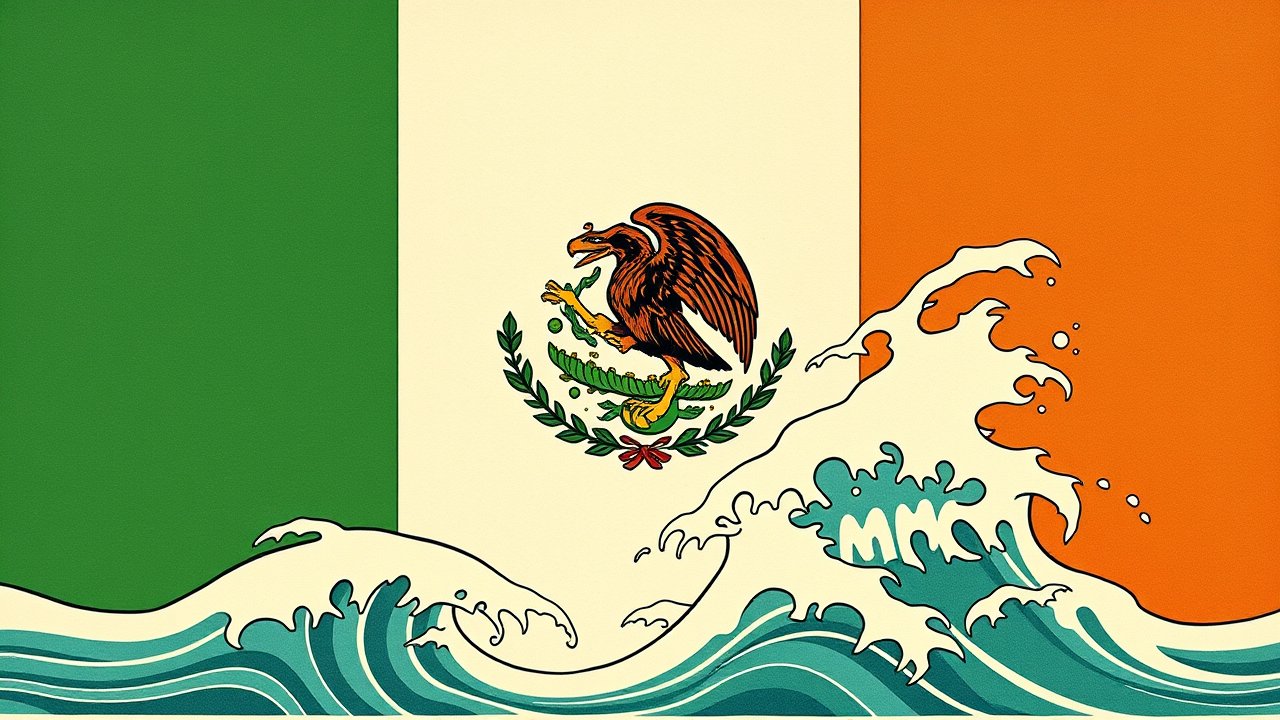
Ukiyo-e Woodblock — Three vertical stripes of green, white, and red with the coat of arms (eagle on cactus) centered. The flag of Mexico as a traditional Japanese ukiyo-e woodblock print. Three vertical stripes of green, white, and red with the coat of arms (eagle on cactus) centered. Bold outlines, flat areas of rich color, flowing organic forms. Wind and waves incorporated into the composition. Printed on washi paper with visible wood grain texture. The flag is the central focus and instantly recognizable. No text, no letters, no words, no writing of any kind.
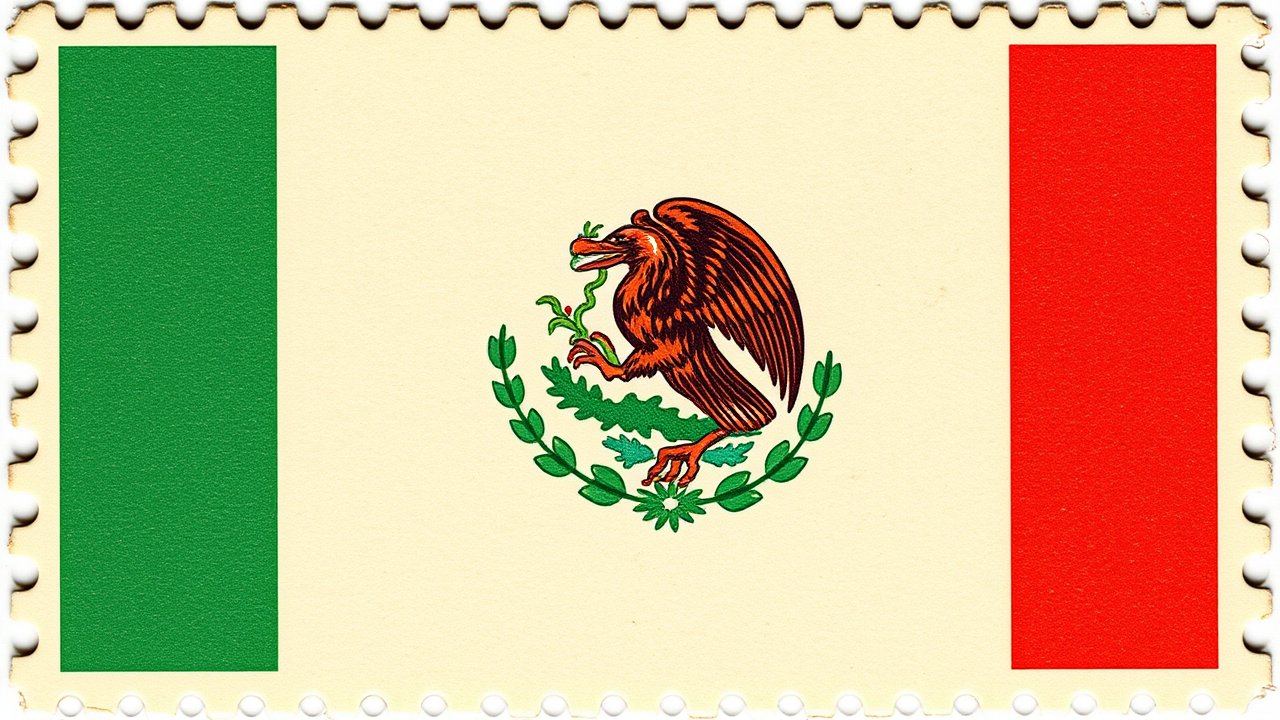
Vintage Postage Stamp — Three vertical stripes of green, white, and red with the coat of arms (eagle on cactus) centered. The flag of Mexico as a vintage 1950s postage stamp. Three vertical stripes of green, white, and red with the coat of arms (eagle on cactus) centered. The flag fills most of the stamp — it is the primary subject, faithfully rendered in fine engraved intaglio style. Perforated edges, aged paper with slight foxing. The stamp may show a denomination numeral only — absolutely no other text or country names.
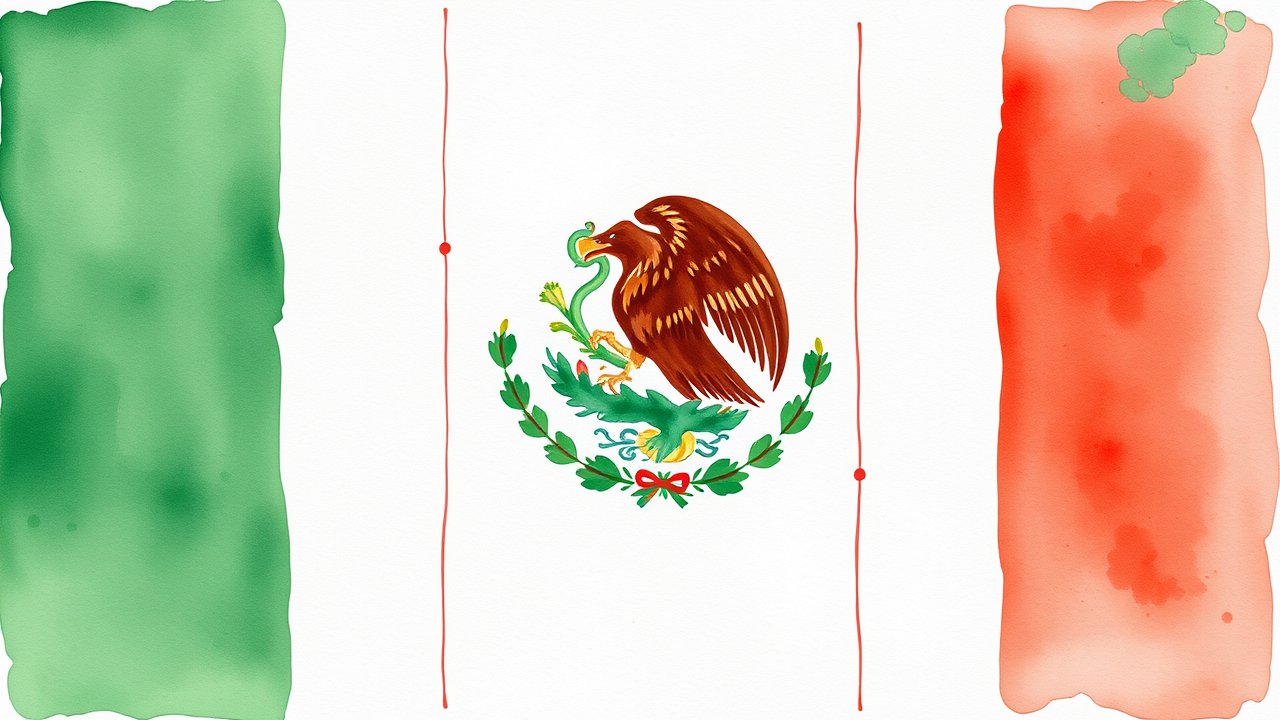
Watercolor — Three vertical stripes of green, white, and red with the coat of arms (eagle on cactus) centered. The flag of Mexico painted in loose, expressive watercolor. Three vertical stripes of green, white, and red with the coat of arms (eagle on cactus) centered. Wet-on-wet technique with soft color bleeds, visible brushstrokes, natural paper texture. Delicate splashes and drips at the edges. Luminous, translucent layers of pigment. No text, no letters, no words, no writing of any kind.
Mexico’s flag stands as one of the Americas’ most distinctive and symbolically profound national emblems, featuring three equal vertical stripes of green, white, and red with the nation’s coat of arms—an eagle perched on a cactus with a serpent in its beak—centered prominently on the white stripe. The flag’s design is intrinsically connected to Mexico’s foundational mythology, colonial history, and revolutionary transformation, serving as a powerful symbol of national identity, indigenous heritage, and the complex journey from Spanish dominion to independent sovereignty. The distinctive vertical triband design, combined with the iconic eagle imagery derived from Aztec legend, creates one of the world’s most recognizable flags and embodies centuries of Mexican cultural continuity, spiritual significance, and political aspiration. The flag’s adoption in 1821 marked Mexico’s definitive break from Spanish colonial rule and represented the establishment of a young nation determined to forge its own path in the Americas while honoring the ancient civilizations that had flourished on its lands long before European contact.
Origins and the Aztec Legend
The most captivating aspect of Mexico’s flag is the prominence of the national coat of arms featuring an eagle perched upon a cactus, clutching a serpent in its talons—an image drawn directly from Aztec mythology and the legendary founding narrative of Tenochtitlan, the magnificent capital of the Aztec Empire. According to the foundational myth preserved in indigenous codices and Spanish colonial chronicles, the Mexica people (ancestors of modern Mexicans) were commanded by their god Huitzilopochtli to wander in search of a new homeland, and they would know they had found the promised location when they encountered an eagle sitting upon a nopal cactus devouring a serpent. After generations of migration, the Mexica witnessed this celestial sign on an island in Lake Texcoco in approximately 1325 CE, and on that very spot they founded Tenochtitlan, which would eventually grow into one of the world’s largest and most sophisticated pre-Columbian cities. This ancient legend was revived and transformed into a symbol of national identity during Mexico’s independence movement in the early nineteenth century, when Mexican patriots deliberately incorporated the eagle, cactus, and serpent into the new nation’s coat of arms as a way of asserting continuity with Mexico’s indigenous past, celebrating pre-Columbian civilizations, and demonstrating that the new Mexican nation represented a fulfillment of ancient prophecy and destiny rather than merely a political successor state to Spanish colonial rule.
Symbolism of Colors
The three colours of Mexico’s flag—green, white, and red—carry profound symbolic significance rooted in both independence ideology and Catholic tradition, though their exact meanings have evolved considerably across nearly two centuries of Mexican history. When the flag was first adopted during the period of independence, the colours were primarily understood through the lens of the military Order of the Three Guarantees (Trigarante), a coalition of armed forces that united to expel Spanish colonial authorities and establish Mexican sovereignty. In this context, the colours represented the three core guarantees of the independence movement: green symbolised hope for Mexico’s future as an independent nation, white represented the unity and purity of purpose necessary to achieve independence, and red stood for the blood spilled and sacrifice made by Mexican patriots in their struggle against colonial domination. Over subsequent decades and throughout the nineteenth and twentieth centuries, the symbolism evolved to incorporate additional layers of meaning drawing from Catholic theology and indigenous tradition. Green has come to represent Mexico’s abundant natural resources, environmental wealth, and hopes for agricultural prosperity and national development; white symbolises the peace, justice, and integrity that the Mexican nation aspires to achieve both domestically and in international relations; and red commemorates the courage, strength, bloodshed, and determination of all Mexicans who contributed to national independence and shaped the nation’s ongoing historical trajectory. The integration of both patriotic and religious symbolism has enabled the flag to resonate across Mexico’s diverse population and persist as a unifying emblem across different historical periods and political systems.
Historical Development and Constitutional Evolution
The flag’s design was formally established following Mexico’s independence from Spain in 1821, though the precise specifications and artistic representation of the coat of arms underwent numerous refinements and standardizations across the subsequent century and a half as different administrations sought to clarify and codify the national symbol. The fundamental tricolour design—three vertical stripes of equal width in green, white, and red—remained constant, but the depiction of the eagle, cactus, and serpent on the white stripe evolved considerably in artistic style, proportions, and heraldic details as generations of Mexican artists and craftspeople interpreted the ancient legend. The flag achieved its modern standardized form through the adoption of the 1968 Flag Law, which established precise specifications for the coat of arms imagery and clarified the proportions of the flag itself as a ratio of 4:7 (height to width). This official codification represented a culmination of centuries of gradual refinement and ensured consistency in the representation of the flag across all official government documents, military uniforms, diplomatic correspondence, and public displays. The Flag Law of 1968 has remained the authoritative standard for the Mexican flag, and minor clarifications and updates have been issued periodically to address technical reproduction questions and ensure that modern manufacturing techniques—including digital printing, embroidery, and digital displays—accurately represent the flag’s prescribed design and colours.
The Coat of Arms Through History
The depiction of the eagle, cactus, and serpent on Mexico’s flag represents a deliberate effort by Mexican nationalism to reclaim and celebrate indigenous heritage following centuries of Spanish colonial suppression of Aztec culture and pre-Columbian traditions. During the colonial period spanning roughly four hundred years (1521-1821), indigenous religions, languages, and cultural practices were systematically suppressed in favor of Spanish Catholicism and European political authority, and pre-Columbian symbols were largely erased from official or public representation. The independence movement of the early nineteenth century reversed this trajectory and deliberately revived indigenous imagery as a source of nationalist legitimacy and cultural pride, asserting that the new Mexican nation represented not merely a political rupture from Spain but a spiritual and cultural reconnection with ancient Mexican civilizations. The eagle imagery, in particular, served the purposes of both nationalists and indigenous communities: it provided a powerful symbol of Mexican identity and sovereignty while simultaneously honoring Aztec heritage and asserting the dignity and permanence of indigenous cultural traditions. This recovery and celebration of indigenous symbolism has persisted across Mexican history, and the flag remains a primary vehicle through which Mexico affirms its multicultural identity and recognizes the foundational contributions of indigenous peoples to Mexican civilization, even as the nation continues to grapple with ongoing economic, social, and political challenges facing indigenous communities.
Contemporary Usage and Cultural Significance
Today, Mexico’s flag remains one of the world’s most iconic and instantly recognizable national symbols, prominently displayed at government buildings, embassies, public ceremonies, and celebrations of Mexican patriotism and identity throughout the nation and in diaspora communities worldwide. The flag features centrally in Mexican national holidays, particularly Independence Day (September 16), and is carried proudly by Mexican athletes at international sporting competitions including the Olympic Games and FIFA World Cups, where it serves as a unifying emblem of national pride and collective identity. The flag’s elegant yet distinctive design—with its vertical tricolour format and prominent heraldic eagle—has proven remarkably durable and adaptable across different artistic media and contexts, from traditional textile production to modern digital reproduction, and the flag has become so thoroughly embedded in Mexican cultural consciousness that it transcends political divisions and partisan disagreements to serve as a genuinely national symbol embraced across the political and ideological spectrum. The integration of pre-Columbian imagery with the colours of independence and Catholic tradition has enabled the flag to function as a symbol of multicultural Mexican identity that simultaneously honors indigenous heritage, celebrates the nation’s break from colonialism, and projects aspirations for peace, justice, and shared prosperity—a remarkable achievement for a single national emblem that continues to inspire Mexican citizens and command respect throughout the international community.
Sources: Wikipedia – Flag of Mexico; Britannica – Flag of Mexico; Mexico Tourism Board – The Mexican Flag: History and Symbolism; World Population Review – Mexico Flag; HistoryMexico.com – Mexican Independence and National Symbols; Encyclopedia of Mexico – Mexican Flag and National Identity
Free Printable: Flags of the World Reference Card
Get a beautiful printable poster with 50 flag emojis, Unicode codes, and fun facts. Perfect for classrooms and desks!
No spam, ever. Unsubscribe anytime.