
How To
How To
Time needed: 1 minute
Want the full printable classroom pack?
Take the flag reference from your screen to an offline pack for lessons, practice, and quiz time.
- Printable atlas with 230+ high-resolution flag flats
- Four regional quizzes with answer keys
- Flag Bingo boards and caller sheet
How to copy and paste the Flag of Timor-Leste Emoji to any device.
- Copy the Timorese Flag Emoji
Go to flagemoji.com and press the copy button (above). This works on any device.
- Paste the Emoji
Go to your email/iMessage/SMS texting service/document and paste the emoji.
For mobile devices
— double-tap or tap-hold, then paste should appear. Tap it.
For desktop and laptops on Apple devices
— command-P / ⌘-P
For desktop and laptops on Windows devices
— control-p
Codes
Emoji Codes
Flag emojis are unicode symbols, like any other letter or number on your keyboard. This means you can copy and paste the emoji itself into your code, whatever the language (click the button above).
They actually count as two characters: the two-letter country code (the ISO international standard). The unicode and shortcode both represent country data which devices can interpret and display the emoji.
| Country Code | Unicode | Shortcode |
| TL | U+1F1F9 U+1F1F1 | :flag_TL: :TL: |
Emoji shortcodes are used on some platforms as a way for users to type in emojis from the keyboard. If you type the emoji shortcode on Github or Slack, the emoji will appear.
*The official name of the emoji is only the country name, not ‘Timor-Leste Flag’, for example.
Description
Description
The flag of Timor-Leste is made up of red with a black isosceles triangle (based on the hoist side). Beneath the black triangle is a slightly longer yellow arrowhead that extends to the center of the flag. A white star—pointing to the upper hoist-side corner of the flag—is in the center of the black triangle. Yellow denotes the colonialism in Timor-Leste’s past, black represents the obscurantism that needs to be overcome, red stands for the nation’s struggle for liberation. The white star symbolizes peace and serves as a guiding light.
Map
Map
Check out the map of Guinea!
Weather
Anthem
National Anthem
| Title | Patria (Fatherland) |
| Composer | Fransisco Borja Da Costa / Afonso De Araujo |
FAQ
FAQs
Timor-Leste declared independence from Indonesia on May 20, 2002.
Yellow denotes the colonialism in Timor-Leste’s past, black represents the obscurantism that needs to be overcome, red stands for the national liberation struggle; the white star symbolizes peace and serves as a guiding light.
The Timor-Leste (East Timor) flag was first adopted on May 20, 2002, the day the country became a sovereign state.
Timor-Leste is governed by a semi-presidential republic.
Discover more fun facts of Sri Lanka.
Printable
Printable Timorese Flag
Print another really cool flag. Why not the flag of Kuwait?
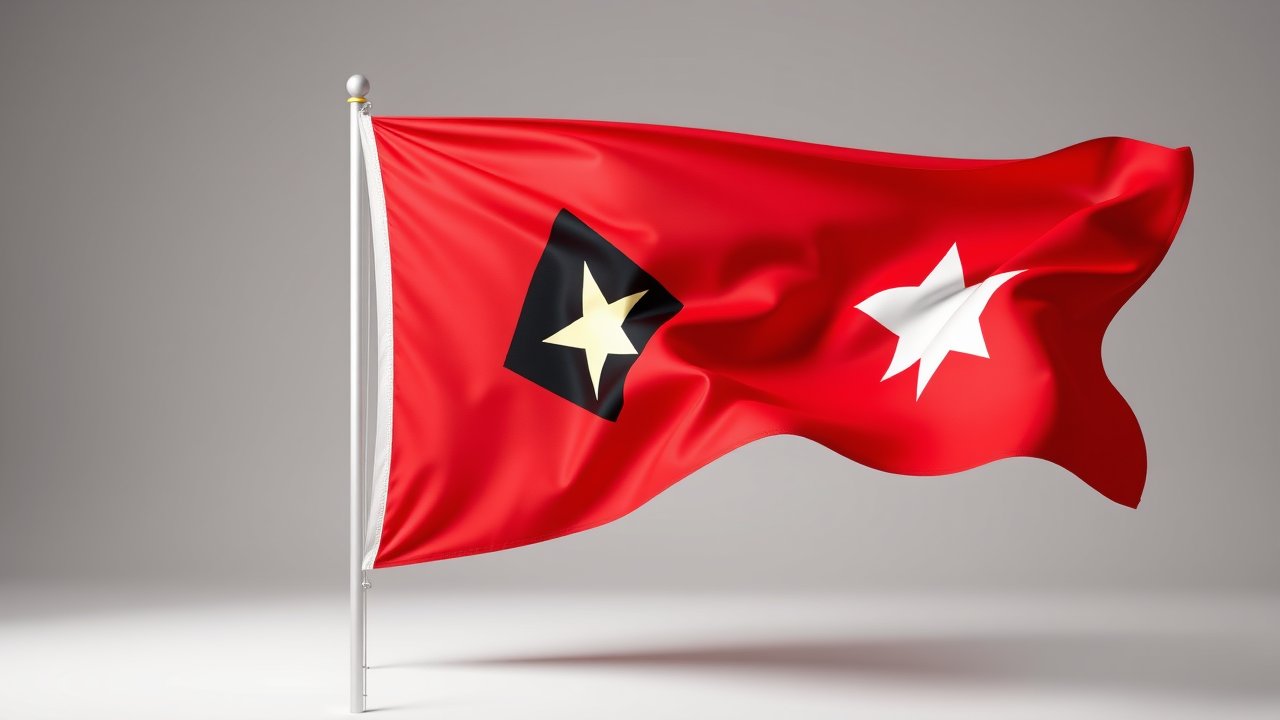
3D Glossy Render — Red field with black and yellow triangles at the hoist and a white star. The flag of East Timor as a photorealistic 3D render. Red field with black and yellow triangles at the hoist and a white star. The flag fabric hangs or drapes naturally but preserves exact proportions, colors, and all symbols perfectly — completely faithful to the real East Timor flag. Dramatic studio lighting, glossy silk material, soft shadows, subsurface scattering, perfect specular highlights. No text, no letters, no words, no writing of any kind.
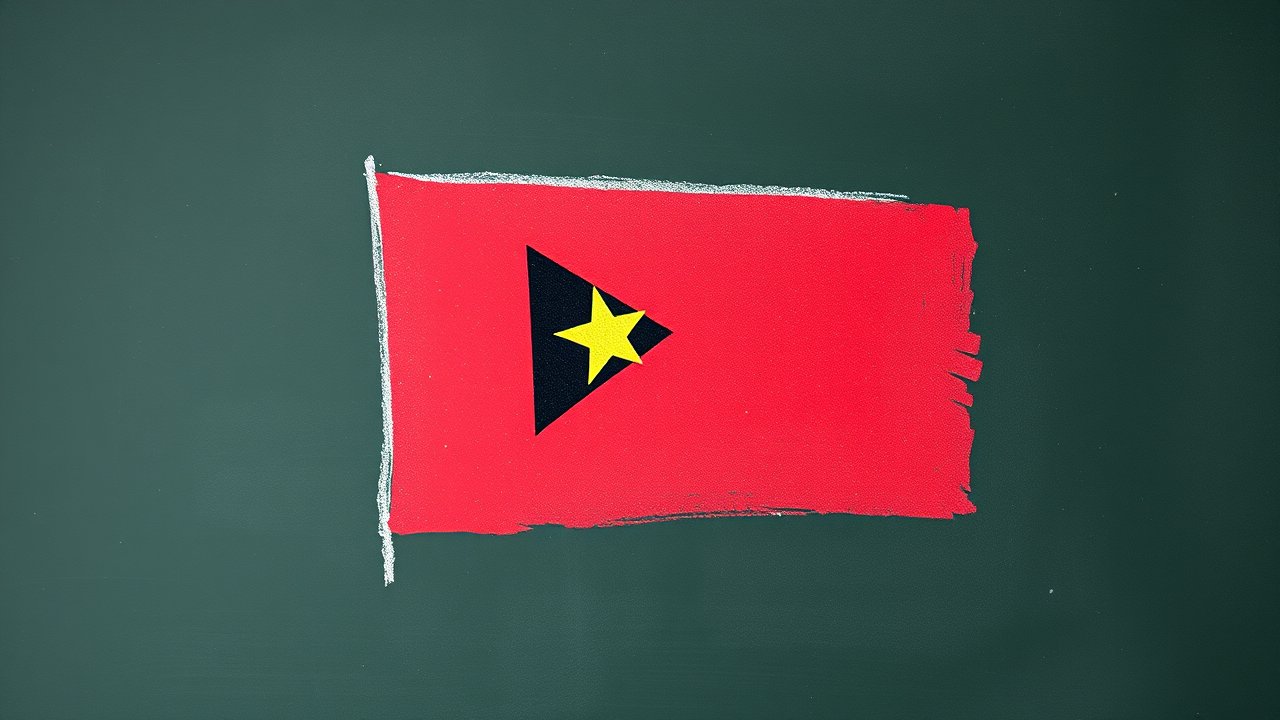
Chalk on Blackboard — Red field with black and yellow triangles at the hoist and a white star. The flag of East Timor drawn in chalk on a real blackboard. Red field with black and yellow triangles at the hoist and a white star. Authentic blackboard — dark slate green surface with chalk dust and smudge marks. Soft, dusty white and colored chalk lines, imperfect edges, hand-drawn quality. Chalk dust particles visible in the air. The flag is immediately recognizable. No text, no letters, no words, no writing of any kind.
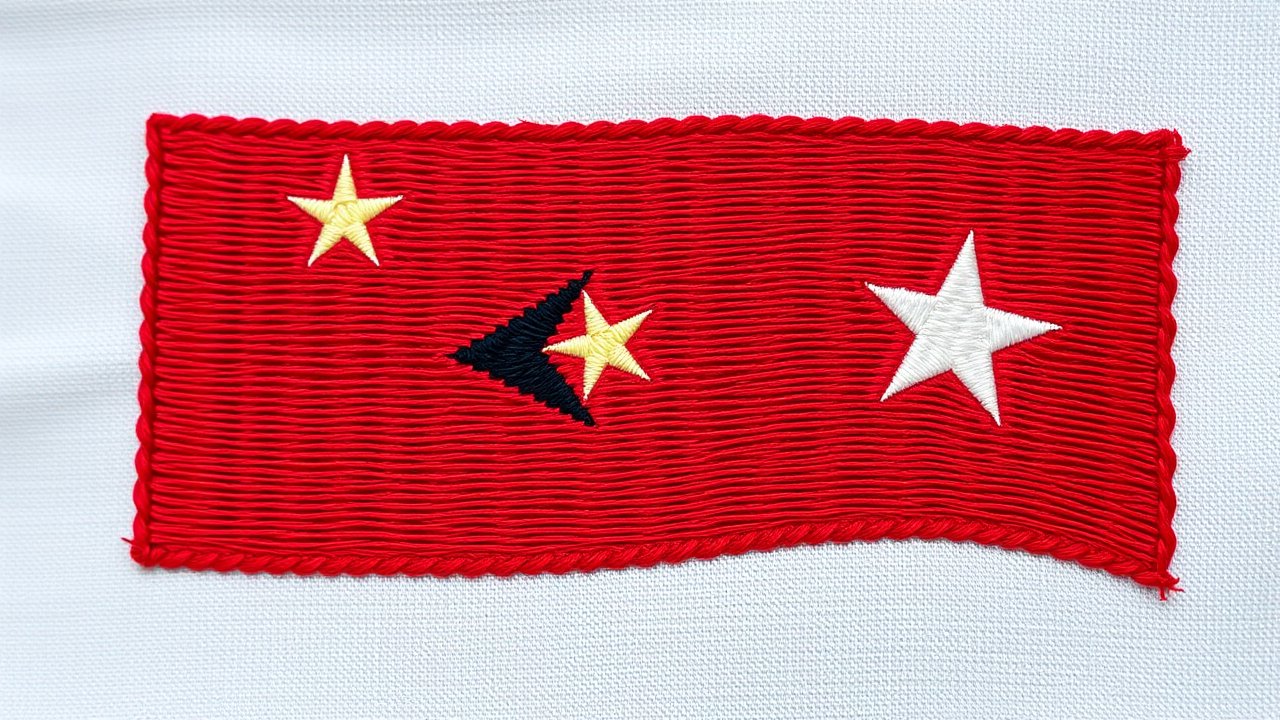
Embroidered Textile — Red field with black and yellow triangles at the hoist and a white star. The flag of East Timor as intricate embroidery on linen fabric. Red field with black and yellow triangles at the hoist and a white star. Dense satin stitches, French knots, chain stitch detail. The flag design is completely faithful — exact colors, geometry, and all symbols faithfully stitched, immediately recognizable as the East Timor flag. Visible thread texture, dimensional quality, warm handcrafted feel. No text, no letters, no words, no writing of any kind.
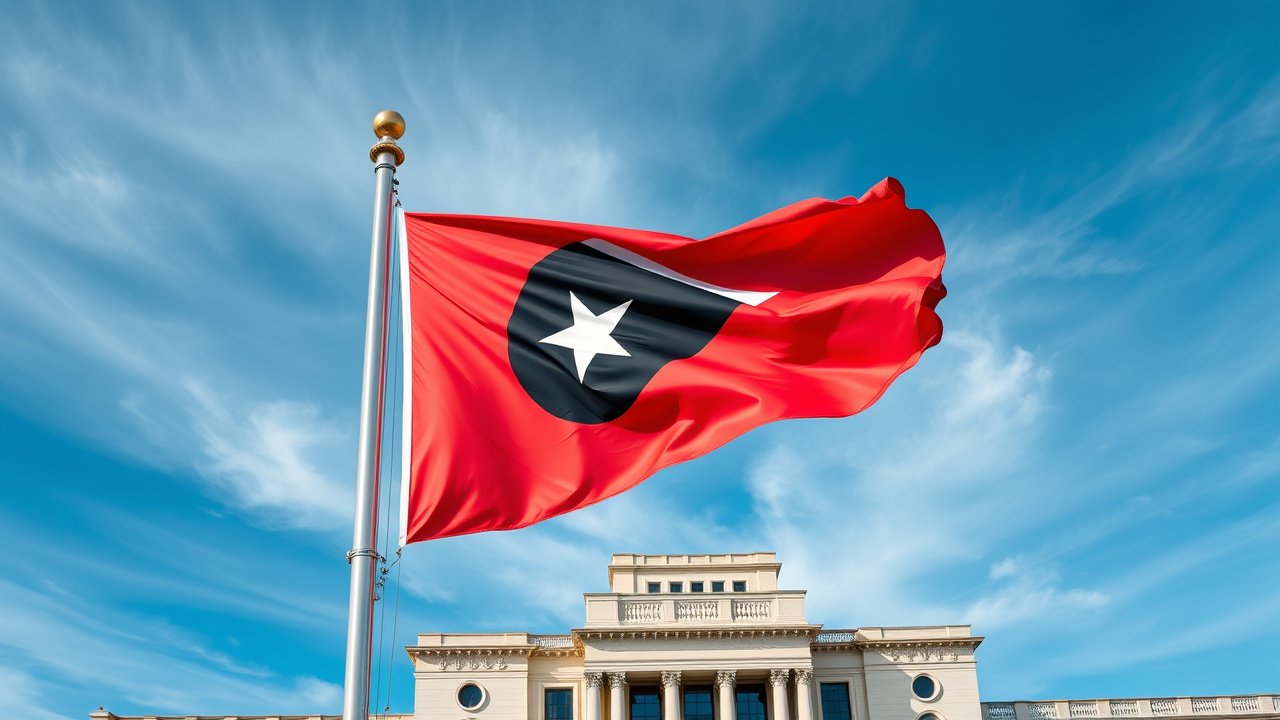
Flagpole in Capital — Red field with black and yellow triangles at the hoist and a white star. Photorealistic photograph of the East Timor flag flying on a tall flagpole in front of an iconic government building in the capital city. Red field with black and yellow triangles at the hoist and a white star. The flag ripples naturally in the wind, colors vivid and exact. Documentary photography style, sharp and realistic. Grand architecture in the background. Blue sky, dramatic clouds. No text, no letters, no words, no writing of any kind.

Golden Hour Reflection — Red field with black and yellow triangles at the hoist and a white star. Photorealistic photograph of the East Timor flag reflected in still water at golden hour. Red field with black and yellow triangles at the hoist and a white star. The flag flies on a pole at the water’s edge, its reflection shimmering on the surface below. Warm amber and orange sunset light. The flag colors and design are faithful and vivid. Serene, cinematic landscape photography. No text, no letters, no words, no writing of any kind.
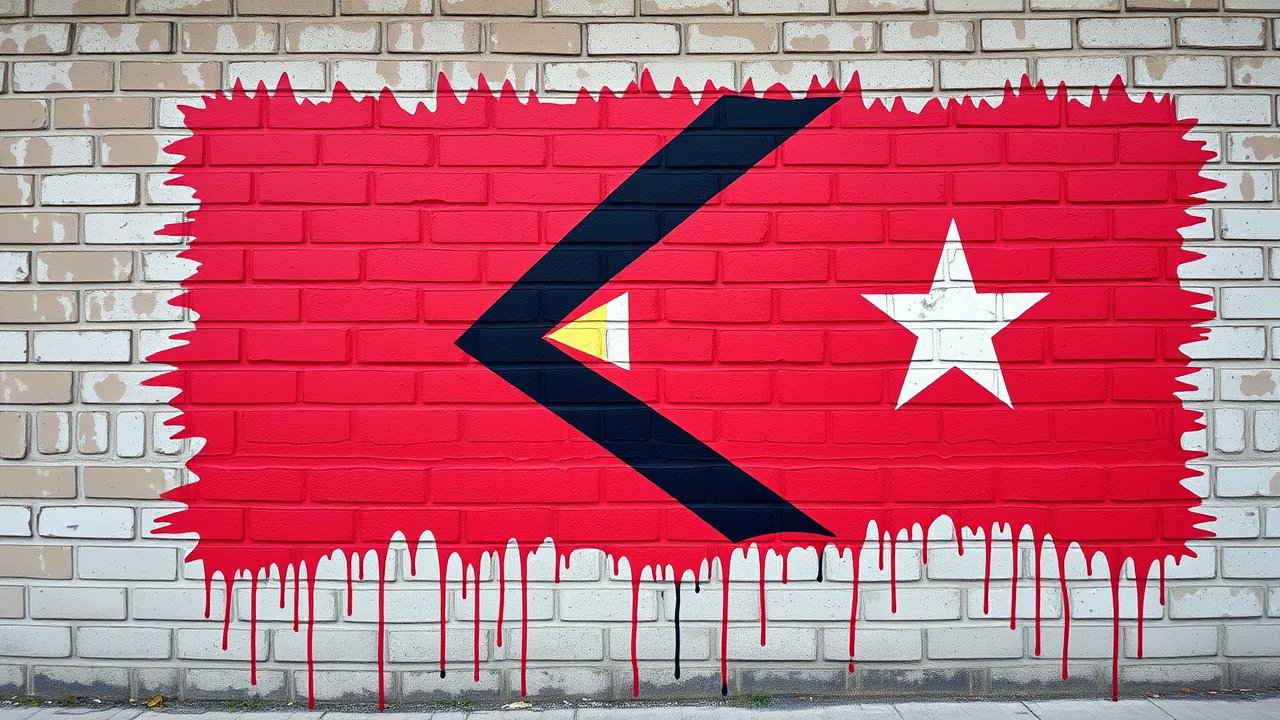
Street Art / Graffiti — Red field with black and yellow triangles at the hoist and a white star. The flag of East Timor as vibrant street art spray-painted on a brick wall. Red field with black and yellow triangles at the hoist and a white star. Bold spray paint, dripping edges, stencil layers, overspray halos. The flag design is faithful and immediately recognizable — exact colors and symbols, just rendered in spray paint on urban concrete. No text, no letters, no words, no writing of any kind. No tags, no graffiti lettering.
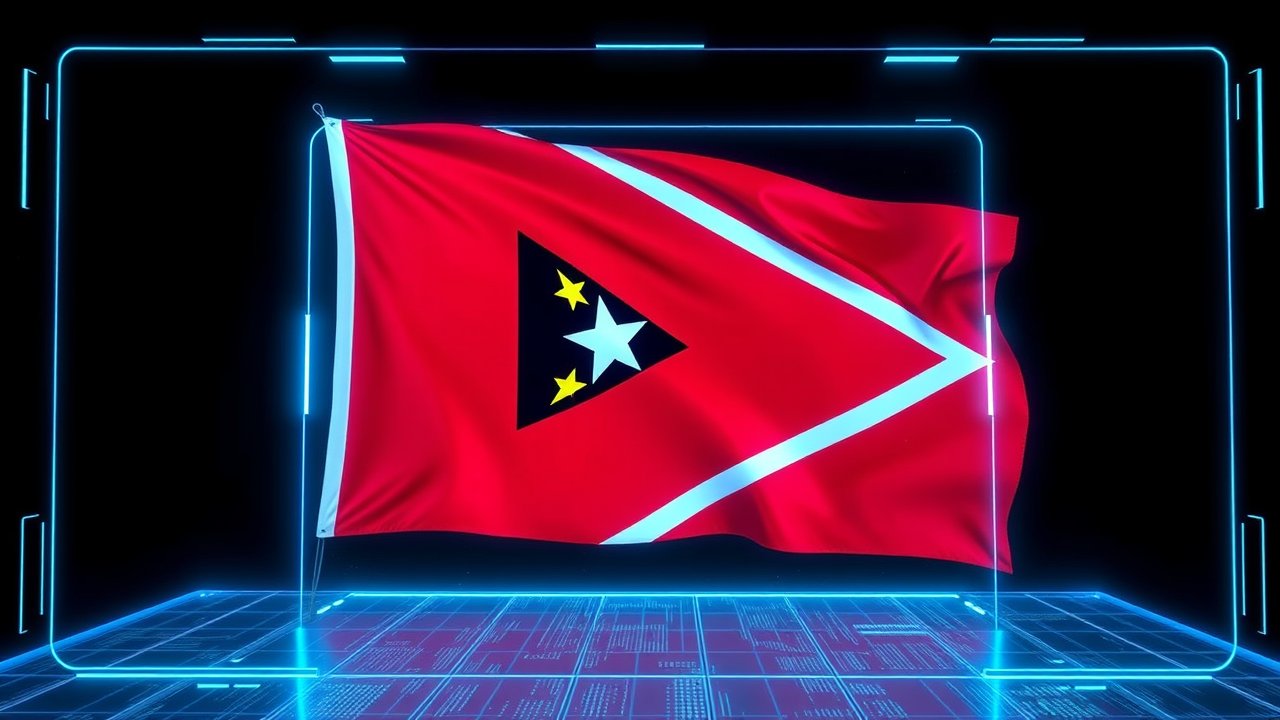
Sci-Fi Hologram — Red field with black and yellow triangles at the hoist and a white star. The flag of East Timor projected as a futuristic holographic display. Red field with black and yellow triangles at the hoist and a white star. Translucent blue-white projection with scan lines, floating in dark space. Glitching edges, particle effects, data streams. The flag design is completely faithful and recognizable. Cyberpunk HUD elements framing the projection. No text, no letters, no words, no writing of any kind.
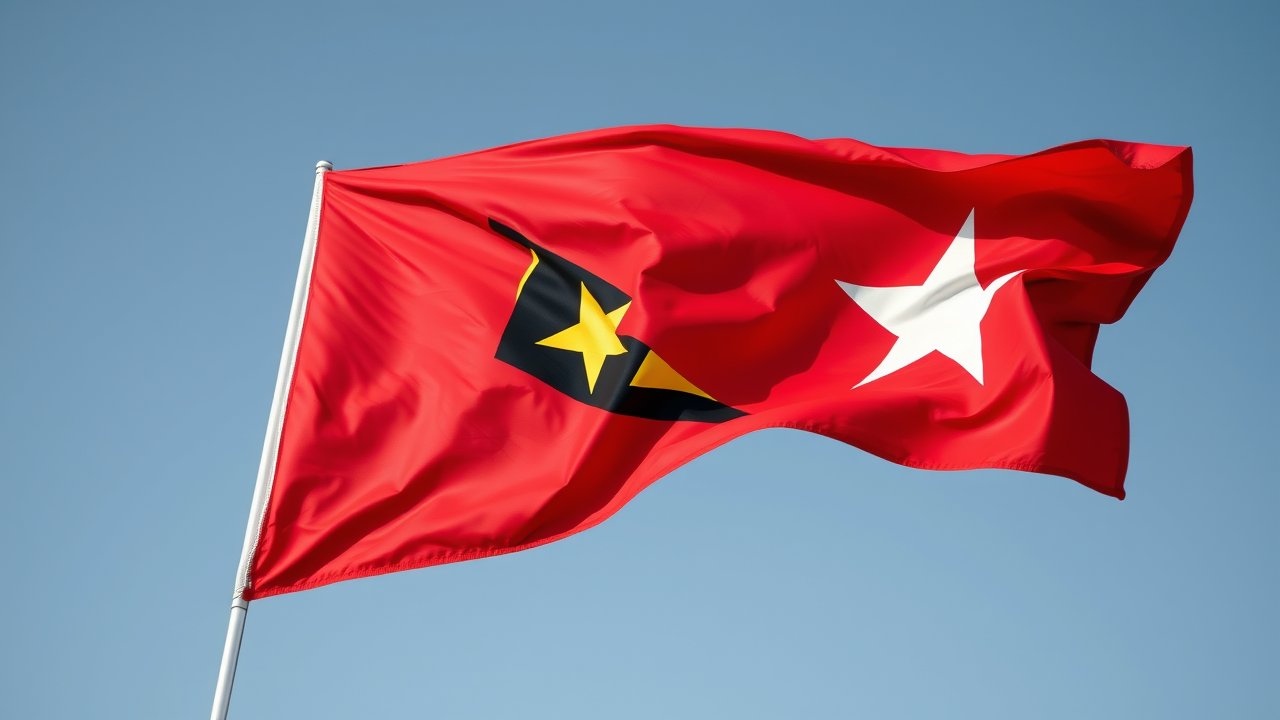
Hyperrealistic Wind — Red field with black and yellow triangles at the hoist and a white star. Ultra-hyperrealistic photograph of the East Timor flag caught in a dramatic gust of wind. Red field with black and yellow triangles at the hoist and a white star. Macro-level fabric detail — individual threads visible, fabric folds and tension lines crisp. Colors and design completely faithful to the real East Timor flag. High-speed shutter, razor-sharp focus, studio lighting. No text, no letters, no words, no writing of any kind.
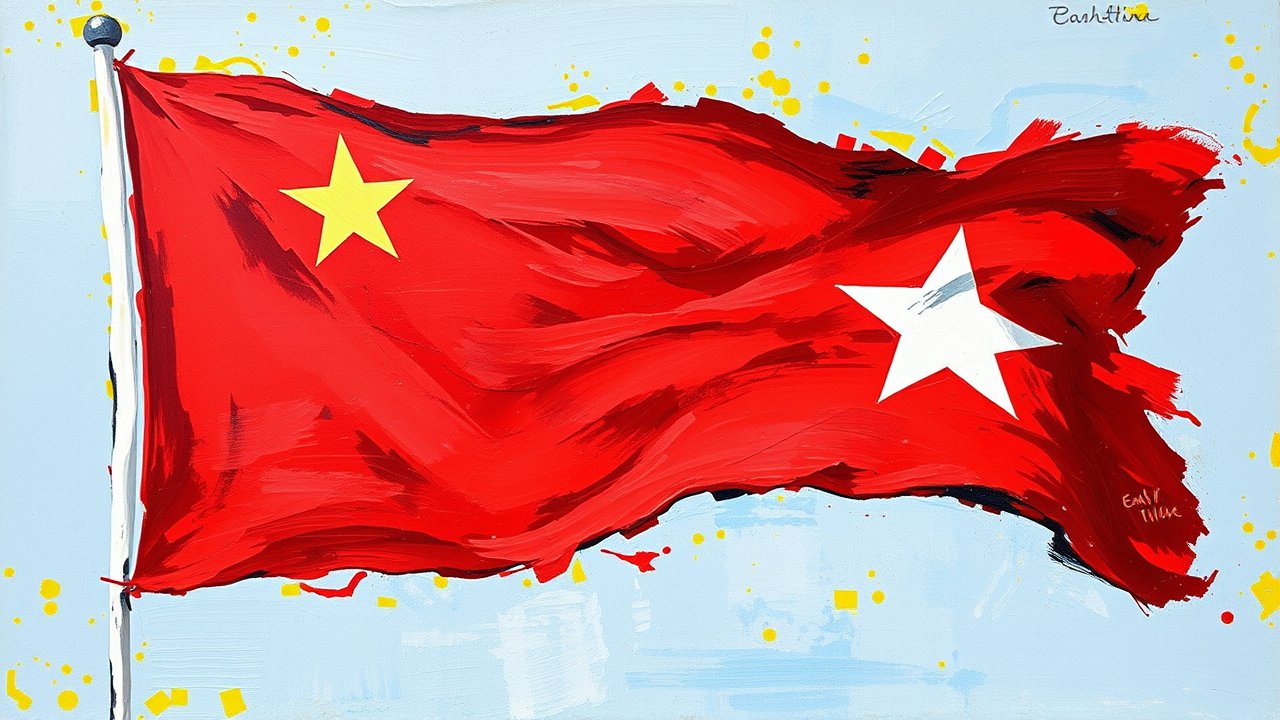
Impressionist Oil — Red field with black and yellow triangles at the hoist and a white star. The flag of East Timor painted in French Impressionist oil on canvas. Red field with black and yellow triangles at the hoist and a white star. Thick impasto brushstrokes, dappled light, vibrant broken color technique in the style of Monet. The flag is instantly recognizable — colors and design faithful to the real East Timor flag, interpreted with impressionist light and texture. No text, no letters, no words, no writing of any kind.
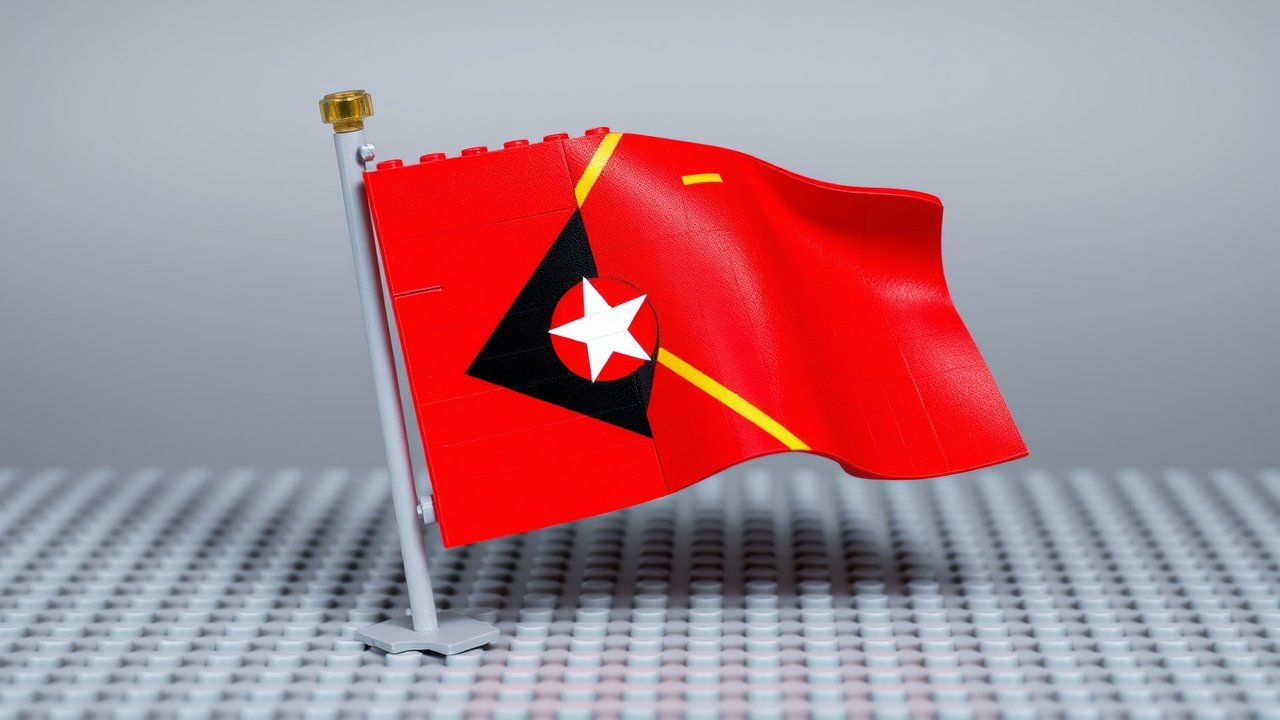
Lego Bricks — Red field with black and yellow triangles at the hoist and a white star. The flag of East Timor built from Lego bricks, photographed as a real physical construction. Red field with black and yellow triangles at the hoist and a white star. Visible studs and brick seams, slight plastic sheen. Standard Lego colors approximate the flag’s palette. Built on a gray Lego baseplate. Dramatic angle showing the three-dimensional brick texture. No text, no letters, no words, no writing of any kind.
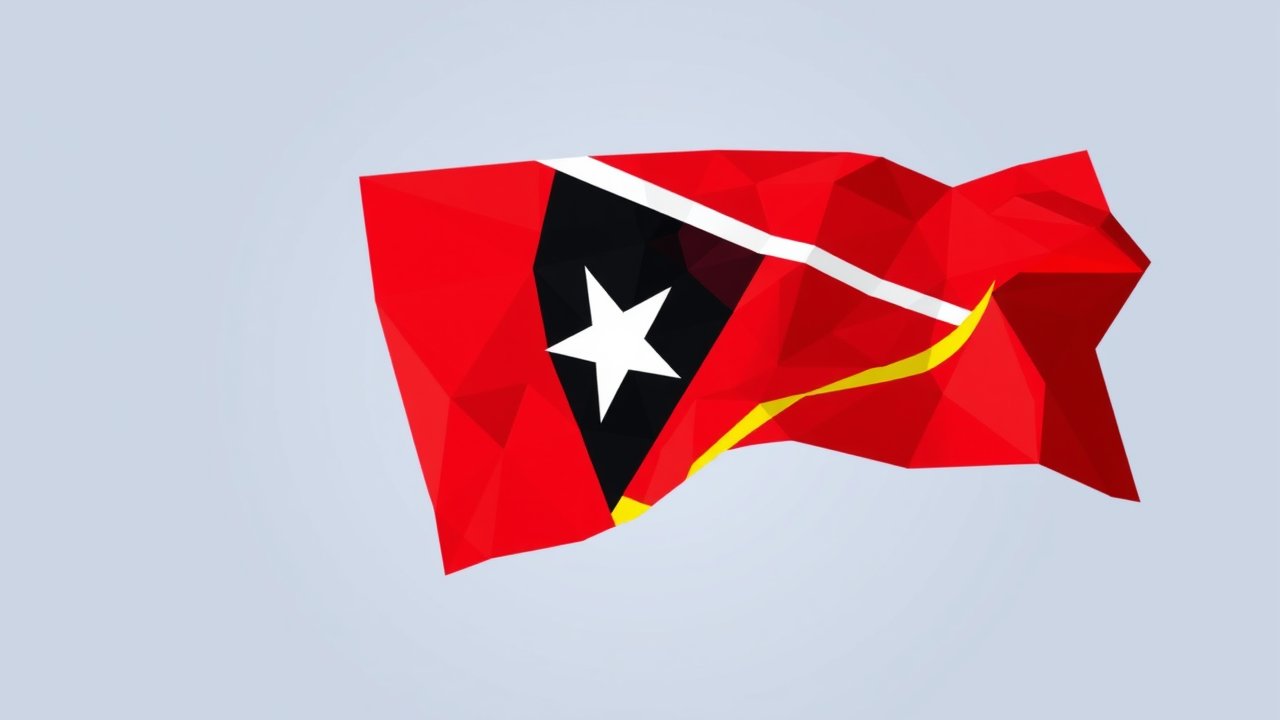
Low-Poly Geometric — Red field with black and yellow triangles at the hoist and a white star. The flag of East Timor constructed from low-polygon geometric triangles. Red field with black and yellow triangles at the hoist and a white star. Aggressively faceted — each region broken into many visible triangular faces with subtle color variation across each polygon, creating real depth and dimensionality even in flat-color areas of the flag. Crystal-like, contemporary computational design. The flag is completely faithful and immediately recognizable. No text, no letters, no words, no writing of any kind.
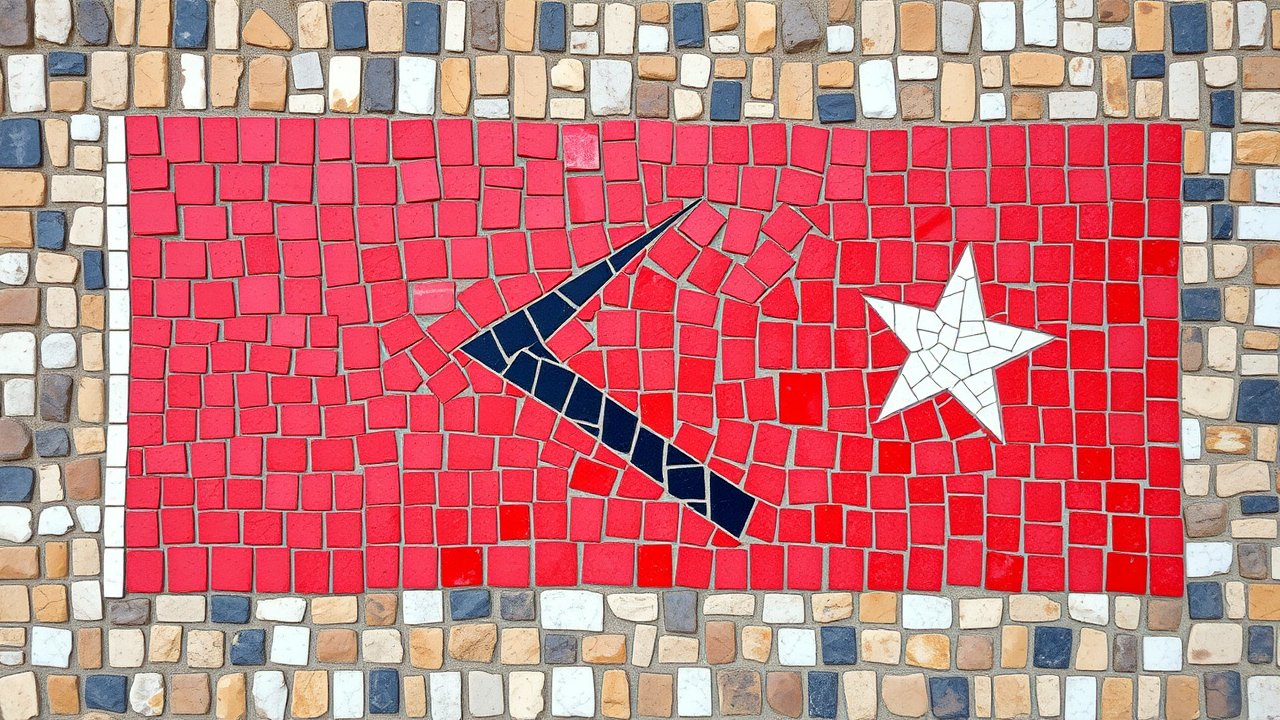
Mosaic Tiles — Red field with black and yellow triangles at the hoist and a white star. The flag of East Timor assembled as a Roman-style mosaic. Red field with black and yellow triangles at the hoist and a white star. The flag is completely faithful to the real East Timor flag — exact proportions, colors, and all symbols, rendered in thousands of small stone and glass tesserae. Visible grout lines, rich earthy tones mixed with brilliant glass, slight historical weathering. No text, no letters, no words, no writing of any kind.
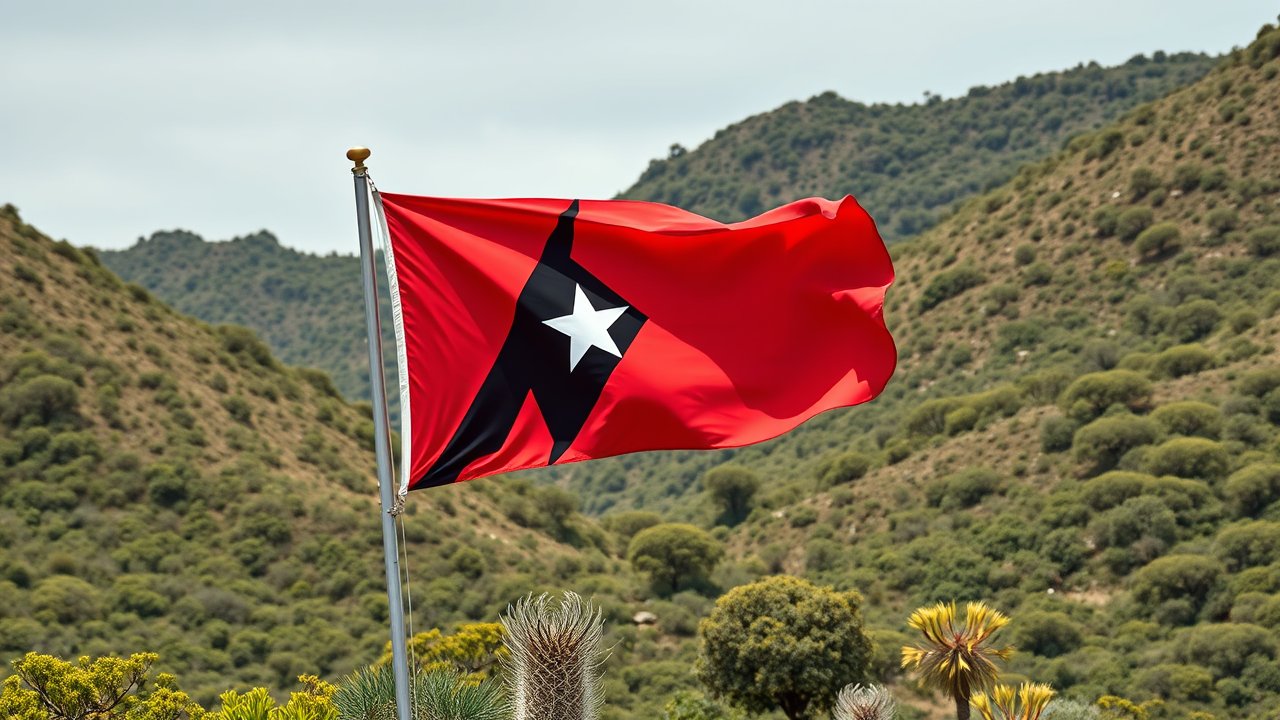
Native Landscape — Red field with black and yellow triangles at the hoist and a white star. Photorealistic photograph of the East Timor flag flying in an iconic natural landscape native to East Timor — the terrain, flora, and environment characteristic of that country. Red field with black and yellow triangles at the hoist and a white star. The flag is prominent and its colors are faithful and vivid. Remote, uninhabited wilderness. National Geographic photography style. No text, no letters, no words, no writing of any kind.
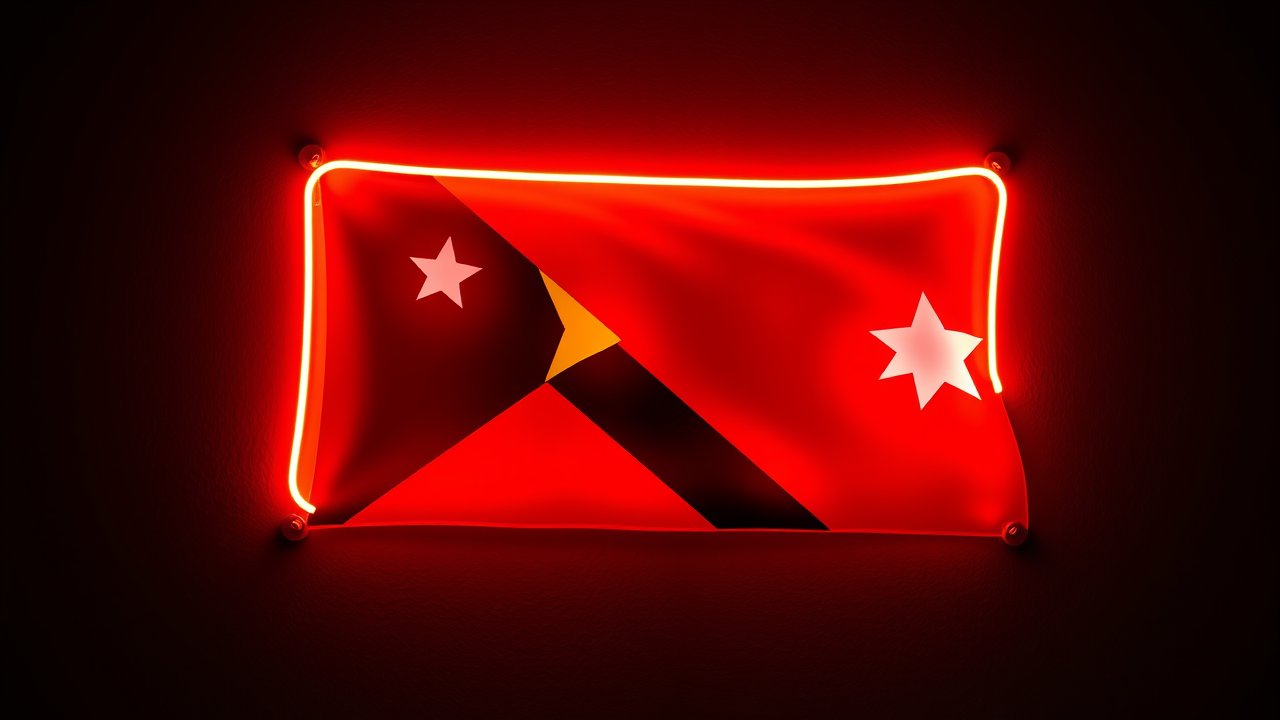
Neon Sign — Red field with black and yellow triangles at the hoist and a white star. The flag of East Timor recreated as a real neon sign mounted on a dark wall. Red field with black and yellow triangles at the hoist and a white star. Glowing glass neon tubes bent into the flag’s shapes — the colors of the flag rendered in actual neon light. Visible glass tube bends, metal mounting brackets on the wall. Warm neon glow and light bloom. Real neon, not digital. Photographed in a dark room. No text, no letters, no words, no writing of any kind.
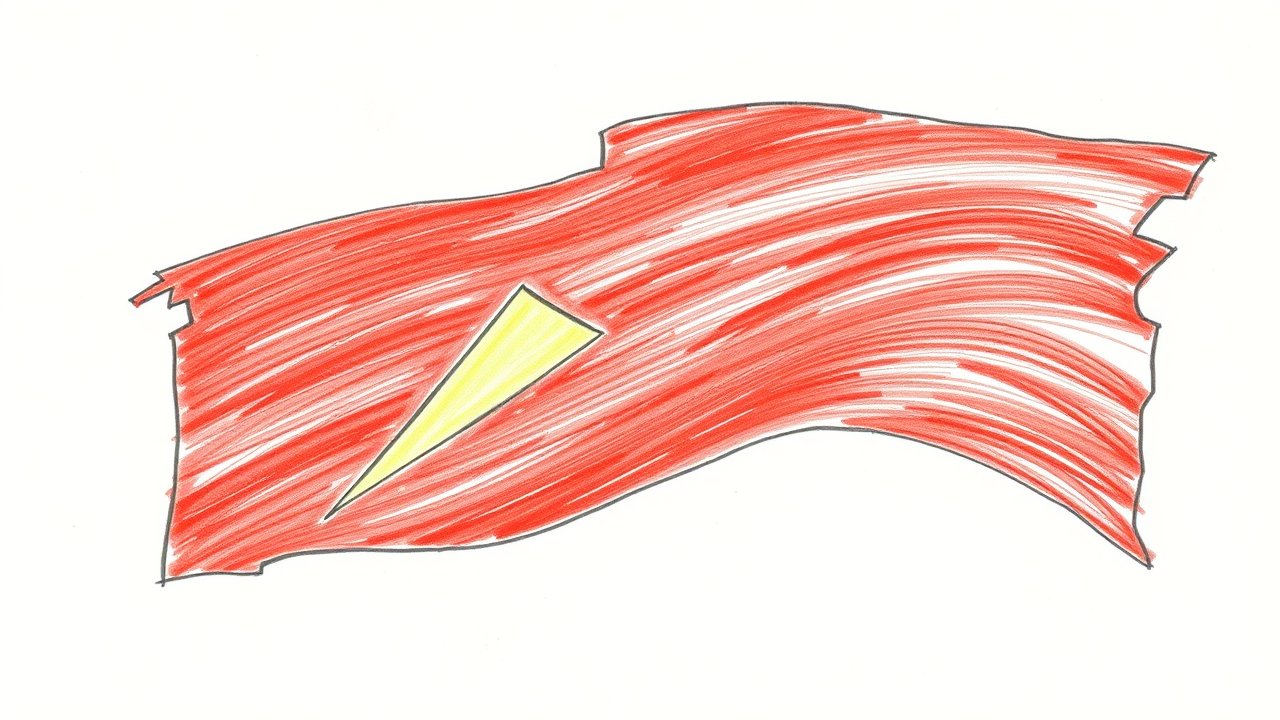
Pencil Sketch — Red field with black and yellow triangles at the hoist and a white star. The flag of East Timor as a bold, confident pencil sketch. Red field with black and yellow triangles at the hoist and a white star. Strong graphite lines on cream paper — not delicate but bold and decisive. Heavy pressure on key outlines, dramatic cross-hatching for deep shadows and shading. Immediately recognizable as the East Timor flag. Artist’s confident hand, not tentative. No text, no letters, no words, no writing of any kind.
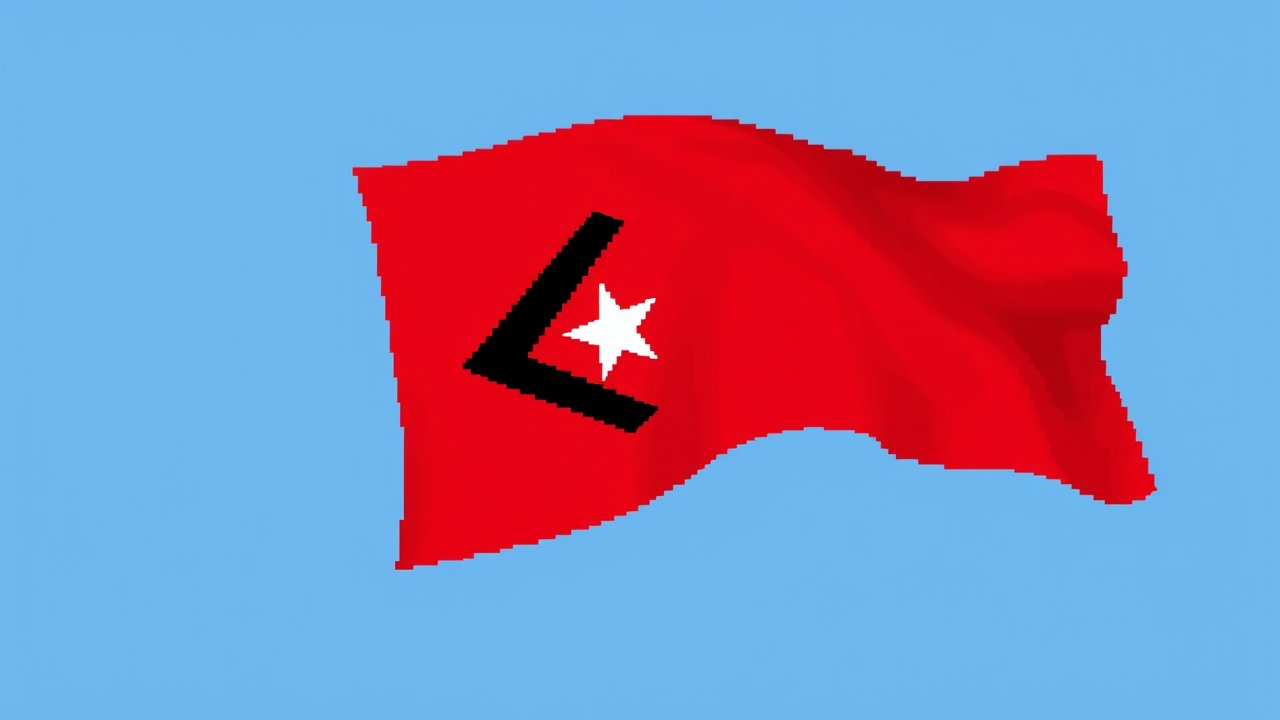
Pixel Art — Red field with black and yellow triangles at the hoist and a white star. The flag of East Timor as detailed 16-bit pixel art. Red field with black and yellow triangles at the hoist and a white star. Crisp pixel grid, limited palette with careful dithering, nostalgic retro game aesthetic. Clean grid-aligned design with subtle shading. Every element of the flag faithfully reproduced in pixels. No text, no letters, no words, no writing of any kind.
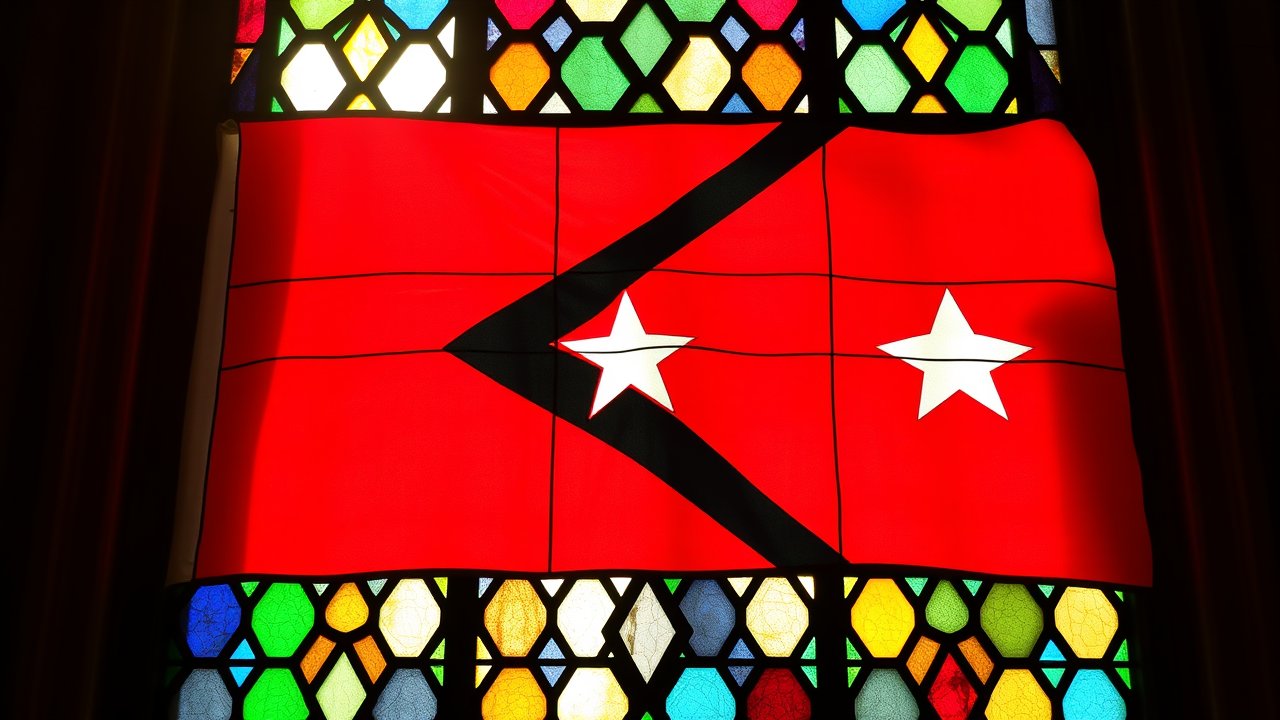
Stained Glass — Red field with black and yellow triangles at the hoist and a white star. The flag of East Timor rendered as an ornate stained glass window. Red field with black and yellow triangles at the hoist and a white star. The design is completely faithful to the real East Timor flag — exact colors, geometry, and all symbols preserved. Brilliant jewel-toned glass pieces separated by dark lead came lines. Warm sunlight streaming through, casting colored light. Gothic cathedral craftsmanship. No text, no letters, no words, no writing of any kind.
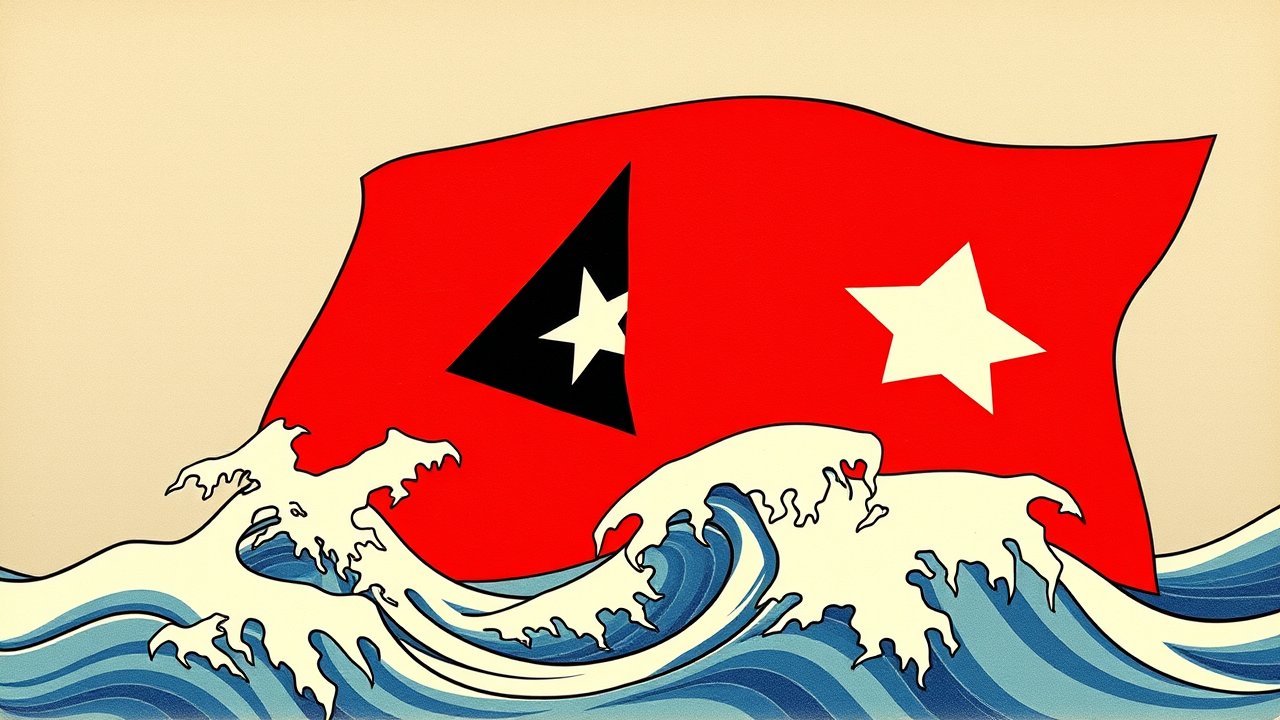
Ukiyo-e Woodblock — Red field with black and yellow triangles at the hoist and a white star. The flag of East Timor as a traditional Japanese ukiyo-e woodblock print. Red field with black and yellow triangles at the hoist and a white star. Bold outlines, flat areas of rich color, flowing organic forms. Wind and waves incorporated into the composition. Printed on washi paper with visible wood grain texture. The flag is the central focus and instantly recognizable. No text, no letters, no words, no writing of any kind.
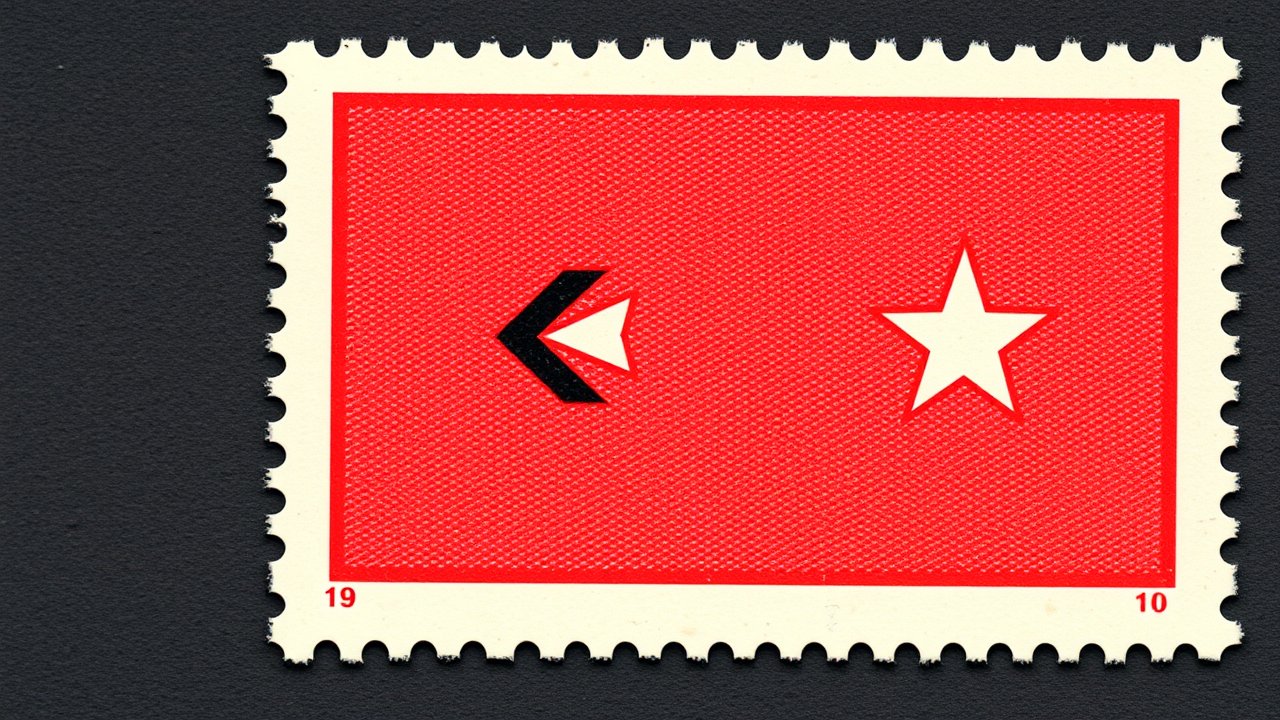
Vintage Postage Stamp — Red field with black and yellow triangles at the hoist and a white star. The flag of East Timor as a vintage 1950s postage stamp. Red field with black and yellow triangles at the hoist and a white star. The flag fills most of the stamp — it is the primary subject, faithfully rendered in fine engraved intaglio style. Perforated edges, aged paper with slight foxing. The stamp may show a denomination numeral only — absolutely no other text or country names.
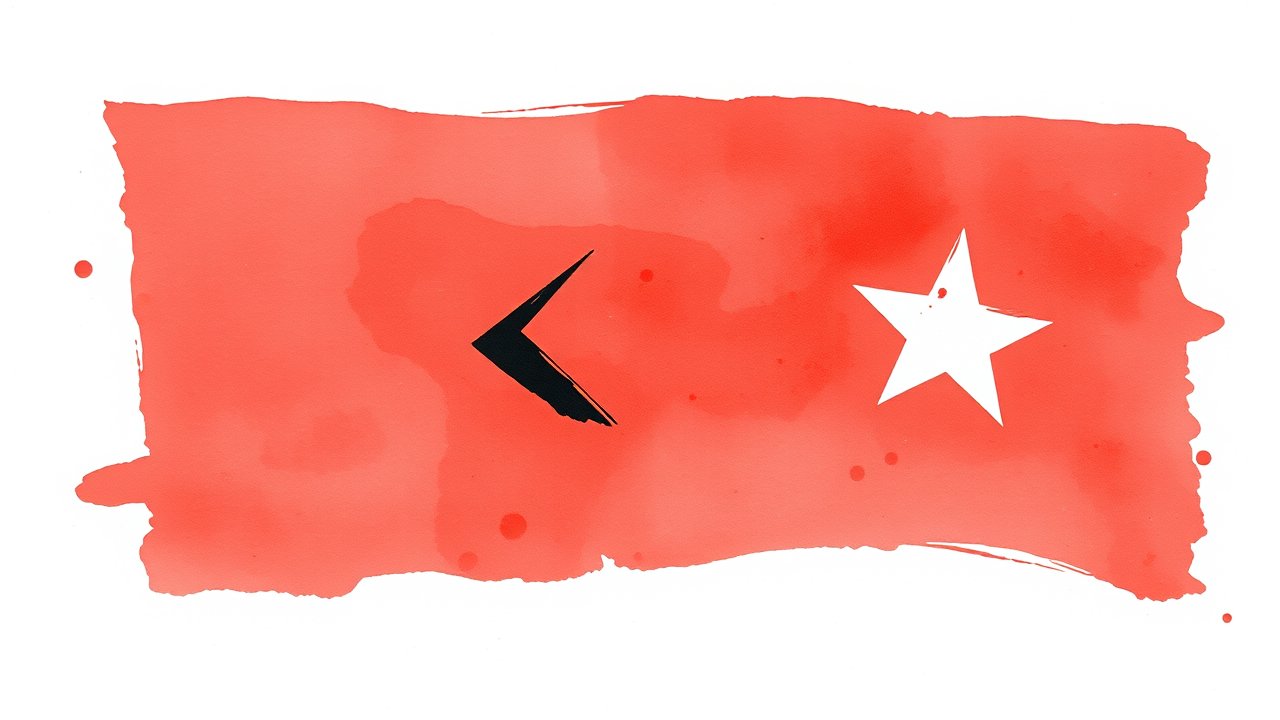
Watercolor — Red field with black and yellow triangles at the hoist and a white star. The flag of East Timor painted in loose, expressive watercolor. Red field with black and yellow triangles at the hoist and a white star. Wet-on-wet technique with soft color bleeds, visible brushstrokes, natural paper texture. Delicate splashes and drips at the edges. Luminous, translucent layers of pigment. No text, no letters, no words, no writing of any kind.
Red, Black, and Gold: The Flag of East Timor and the Journey to Independence
The flag of Timor-Leste (East Timor) stands as a potent symbol of one of the world’s newest nations, embodying the resilience and determination of a people who fought for centuries to reclaim their independence. Adopted in 2002 upon the nation’s official independence from Indonesia, the flag features a striking composition of red, black, yellow, and white—each element carefully chosen to represent the nation’s history, struggles, and aspirations. Understanding the Timor-Leste flag requires examining the archipelago’s complex colonial history, the symbolism embedded in its modern design, and the remarkable journey of a people who transformed their flag from a symbol of resistance during armed struggle into the official emblem of a sovereign nation.
Colonial History and the Path to Independence
Timor-Leste’s history is marked by centuries of foreign domination, beginning with Portuguese colonization in the 16th century. Portugal established control over the eastern half of the island of Timor (the western half falling under Dutch rule until absorbed into Indonesia). For over four centuries, from 1515 until 1975, East Timor remained under Portuguese administration, though the colonial period was characterized by relative neglect and limited development compared to other European colonies. The Portuguese colonial system created a small Timorese educated elite while maintaining rigid structures that limited indigenous political participation and economic advancement.
The catalyst for independence came in 1974 when Portugal’s own revolution, the Carnation Revolution, led to the rapid decolonization of Portuguese possessions worldwide. In 1975, Portugal formally withdrew from East Timor, precipitating a brief period of self-determination and the declaration of independence under the flag of FRETILIN (Frente Revolucionária de Timor-Leste Independente, the Revolutionary Front for an Independent East Timor). However, this independence was short-lived. Just nine days after East Timor’s declaration of independence, Indonesia—under the rule of General Suharto—launched a military invasion, claiming that East Timor was rightfully part of the Indonesian archipelago.
What followed was one of the worst humanitarian catastrophes of the late 20th century. Indonesian occupation lasted 24 years, from 1975 to 1999, during which time an estimated 200,000 Timorese died from violence, starvation, and disease. Throughout this brutal occupation, the flag of independence—featuring the red, black, yellow, and white colors associated with FRETILIN—became a symbol of resistance and hope for the underground independence movement. Resistance fighters carried the flag in secret, displaying it clandestinely during commemorations and gatherings despite severe penalties for doing so. The flag transformed into a tangible representation of Timorese nationhood and the unwavering commitment to independence, even in the face of overwhelming military occupation.
The Flag’s Design and Symbolism
When Timor-Leste achieved internationally recognized independence on May 20, 2002, the flag that had motivated resistance fighters for nearly a quarter-century was officially adopted as the national standard. The flag’s design is geometrically distinctive: on a red field, a black triangle at the hoist contains a white star, and within this composition sits a smaller yellow triangle positioned above the white star. This arrangement creates a striking visual hierarchy and carries profound symbolic weight.
The red field dominating the flag represents the struggle for independence, the sacrifices made by those who fought for freedom, and the vitality and courage of the Timorese people. In the context of Southeast Asian flags, red appears frequently, but in Timor-Leste’s case, the particular shade and placement emphasize the nation’s hard-won independence. The red also connects to the liberation ideology of FRETILIN, the organization that led the independence struggle and now governs the nation.
The black triangle at the hoist carries equally important symbolism, representing the obscurity and darkness of colonialism—both the Portuguese colonial period and the subsequent Indonesian occupation. The black serves as a visual reminder of the nation’s past suffering and subjugation, ensuring that future generations will understand that independence was not granted freely but was instead seized through extraordinary sacrifice and determination. Some interpretations also suggest the black represents the Timorese people themselves, embodying their resilience and dignity.
Within the black triangle sits a white five-pointed star, which symbolizes the light of independence, peace, and unity that emerged from the darkness of occupation. The star can also be understood as representing the aspiration toward modernity and development, guiding the young nation forward. In many national contexts, stars symbolize guidance and hope, and the white color emphasizes purity of purpose and the idealistic nature of the nation’s founding principles.
The yellow triangle, positioned above the white star, represents the sun and the light of enlightenment breaking through darkness. Yellow is often associated with hope, optimism, and spiritual awakening in Southeast Asian symbolism. The yellow sun suggests that despite centuries of obscurity under foreign rule, Timor-Leste has emerged into the light of a new era—one characterized by self-determination, sovereignty, and the possibility of national development and prosperity. Together, the yellow sun and white star create a visual narrative of transition from darkness to light, from oppression to freedom.
The Flag in Modern Timor-Leste
Since its adoption in 2002, the flag has served not only as the official national symbol but as an ongoing emblem of Timorese identity and pride. In a young nation still grappling with post-conflict reconstruction and development challenges, the flag represents the continuity of the independence struggle and the shared identity that holds together a diverse population speaking numerous languages and dialects. While Tetum and Portuguese serve as official languages in the post-independence period, the national flag transcends linguistic divisions, serving as a visual representation of what Timorese people hold in common: the memory of struggle and the determination to build a prosperous, democratic nation.
The flag’s appearance at international events, government buildings, and in public spaces serves as a daily reminder of national sovereignty and the unique position Timor-Leste occupies in Southeast Asia and the world. As the first nation to gain independence in the 21st century (following the 1999 referendum that formally ended Indonesian occupation), Timor-Leste’s flag represents not only the specific journey of the Timorese people but also the broader principles of self-determination and decolonization that continue to resonate globally.
Conclusion: A Symbol of Triumph and Aspiration
The flag of Timor-Leste encapsulates the extraordinary journey of a nation that maintained its independence aspirations through over three centuries of foreign rule, resisted occupation through decades of armed and cultural struggle, and finally achieved internationally recognized sovereignty in the 21st century. The red field commemorates the sacrifices of independence fighters, while the black triangle represents the dark period of colonialism and occupation that the nation has overcome. The white star and yellow sun symbolize the light of freedom, peace, and enlightenment that now guides Timor-Leste toward a prosperous future. Today, as the flag flies from government buildings, schools, and private homes throughout the archipelago and among diaspora communities worldwide, it stands as a powerful testament to the enduring spirit of a people who refused to surrender their dreams of nationhood, even in the darkest hours. The flag of Timor-Leste is not merely a collection of colors and shapes; it is a narrative of struggle, sacrifice, triumph, and hope condensed into a single, elegant design.
Free Printable: Flags of the World Reference Card
Get a beautiful printable poster with 50 flag emojis, Unicode codes, and fun facts. Perfect for classrooms and desks!
No spam, ever. Unsubscribe anytime.