
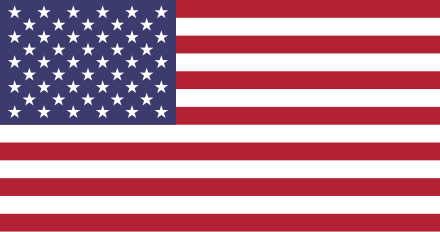
Standard Emoji:
How To
How To
Time needed: 1 minute
How to copy and paste the Flag of the United States Emoji to any device.
- Copy the American Flag Emoji
Go to flagemoji.com and press the copy button (above). This works on any device.
- Paste the Emoji
Go to your email/iMessage/SMS texting service/document and paste the emoji.
For mobile devices
— double-tap or tap-hold, then paste should appear. Tap it.
For desktop and laptops on Apple devices
— command-P / ⌘-P
For desktop and laptops on Windows devices
— control-p
Codes
Emoji Codes
Flag emojis are unicode symbols, like any other letter or number on your keyboard. This means you can copy and paste the emoji itself into your code, whatever the language (click the button above).
Want the full printable classroom pack?
Take the flag reference from your screen to an offline pack for lessons, practice, and quiz time.
- Printable atlas with 230+ high-resolution flag flats
- Four regional quizzes with answer keys
- Flag Bingo boards and caller sheet
They actually count as two characters: the two-letter country code (the ISO international standard).
| Country Code | Unicode | Shortcode |
| US | U+1F1FA U+1F1F8 | :flag_us: :us: |
Emoji shortcodes are used on some platforms as a way for users to type in emojis from the keyboard. If you type the emoji shortcode on Github or Slack, the emoji will appear.
*The official name of the emoji is only the country name, not ‘United States Flag’, for example.
Description
Flag Description
The American flag consists of thirteen horizontal red and white stripes representing the original thirteen colonies of the USA. The colors alternate with red on the top and bottom. On the hoist side in the upper left corner is a blue canton with fifty white 5-pointed stars. The 50 stars represent the current 50 states.
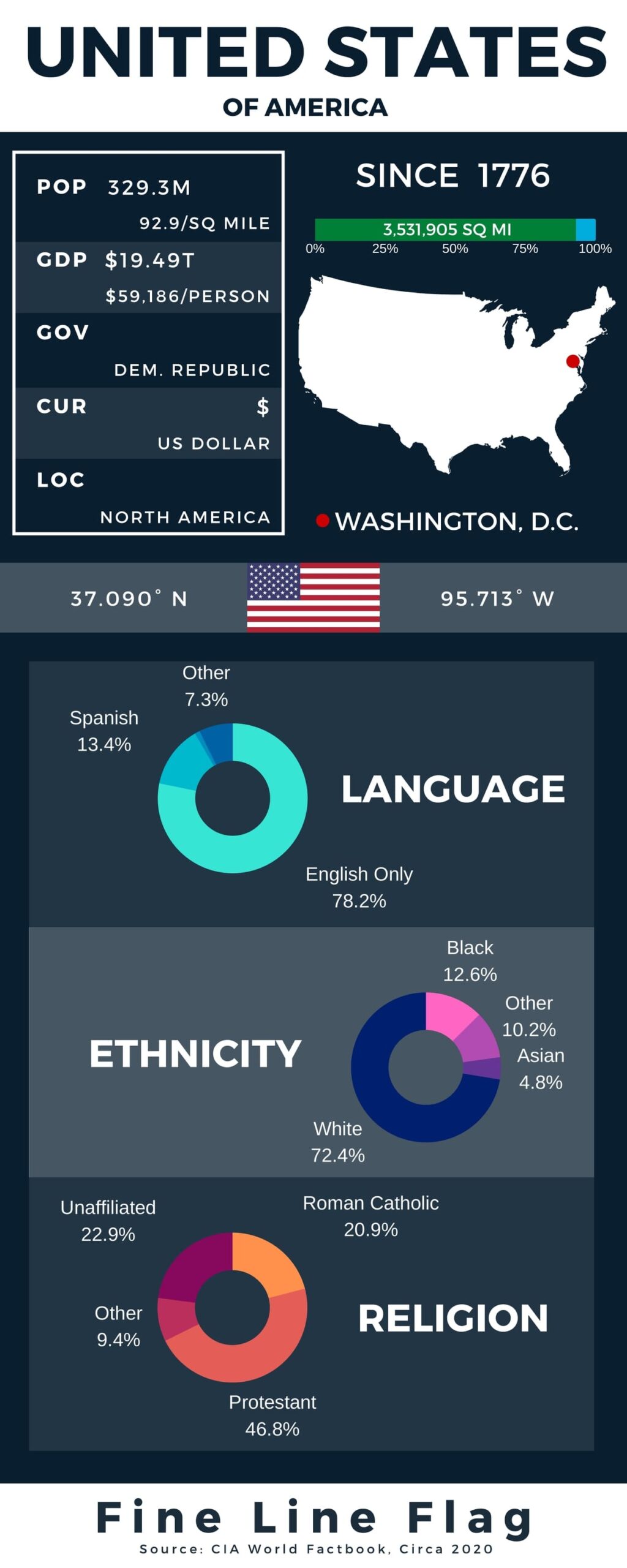
Map
Map
Weather
FAQ
FAQs
July 4 is the day of independence.
The ‘Stars and Stripes’ was adopted as the United States of America flag on June 14, 1777.
The US flag has been modified many times, to update the total number of stars as new territories became states. The original flag, known as the ‘Betsy Ross’ flag, had thirteen stars for thirteen states arranged in a circle. Read more about each version.
Red, white, and blue. The white is ‘White’ or #FFFFFF. The red is ‘Old Glory Red’ or #B22234. The blue is ‘Old Glory Blue’ or #3C3B6E. Blue represents loyalty, devotion, truth, justice, and friendship. Red signifies courage, zeal, and fervency, and white stands for purity and moral conduct.
“I pledge allegiance to the Flag of the United States of America, and to the Republic for which it stands, one Nation under God, indivisible, with liberty and justice for all.” (Since 1954, per 4 U.S.C. §4)
Anthem
National Anthem
| Title | The Star Spangled Banner |
| Author | Francis Scott Key |
Printable
Printable US Flag
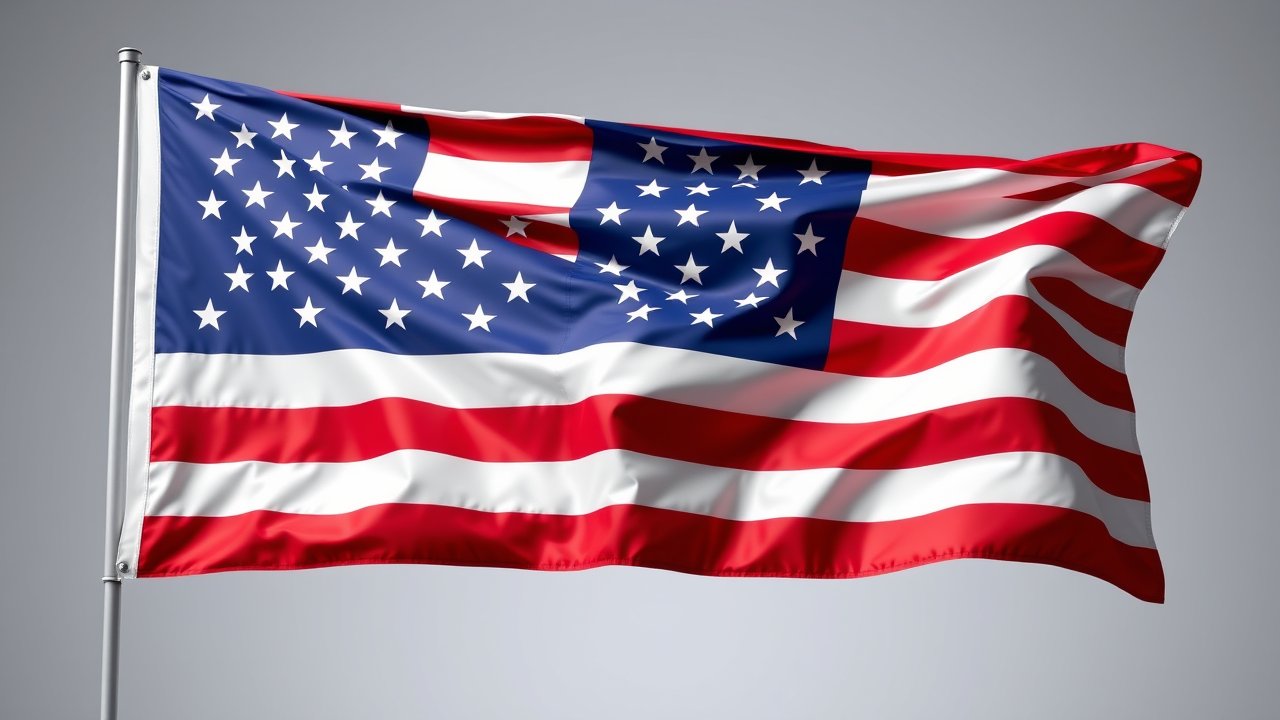
3D Glossy Render — Thirteen alternating red and white stripes with a blue canton bearing fifty white stars. The flag of United States as a photorealistic 3D render. Thirteen alternating red and white stripes with a blue canton bearing fifty white stars. The flag fabric hangs or drapes naturally but preserves exact proportions, colors, and all symbols perfectly — completely faithful to the real United States flag. Dramatic studio lighting, glossy silk material, soft shadows, subsurface scattering, perfect specular highlights. No text, no letters, no words, no writing of any kind.
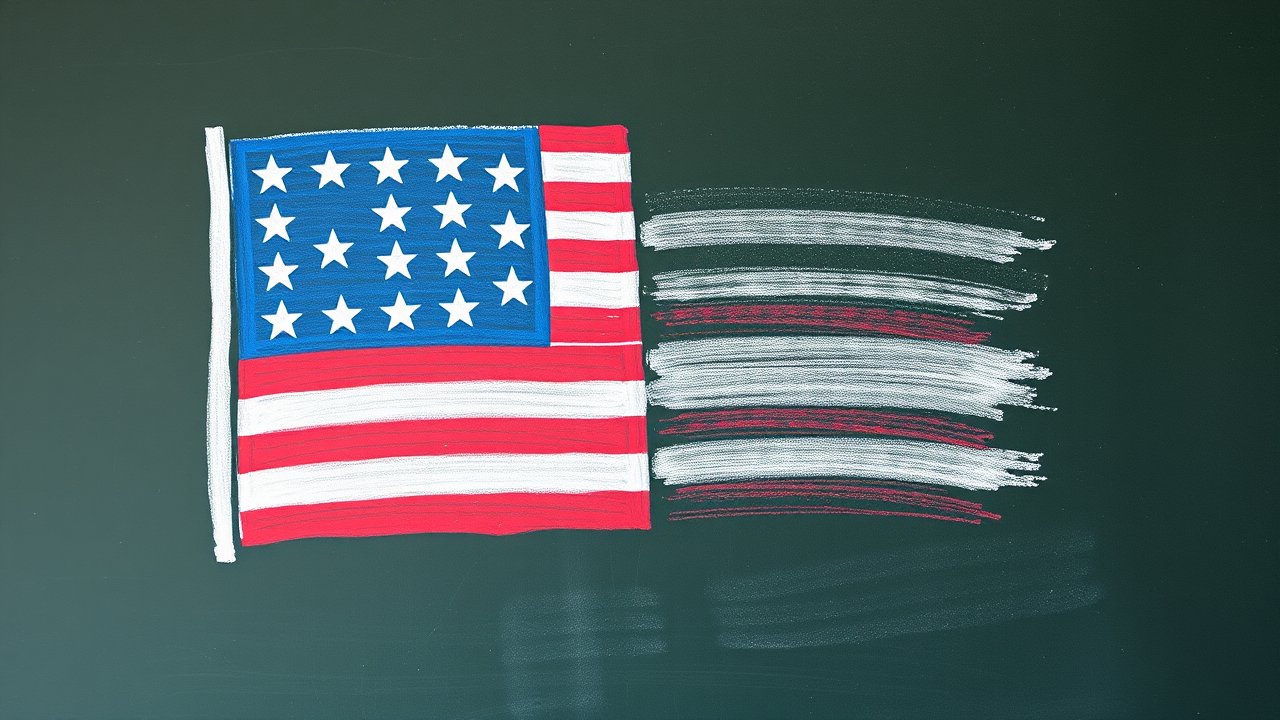
Chalk on Blackboard — Thirteen alternating red and white stripes with a blue canton bearing fifty white stars. The flag of United States drawn in chalk on a real blackboard. Thirteen alternating red and white stripes with a blue canton bearing fifty white stars. Authentic blackboard — dark slate green surface with chalk dust and smudge marks. Soft, dusty white and colored chalk lines, imperfect edges, hand-drawn quality. Chalk dust particles visible in the air. The flag is immediately recognizable. No text, no letters, no words, no writing of any kind.
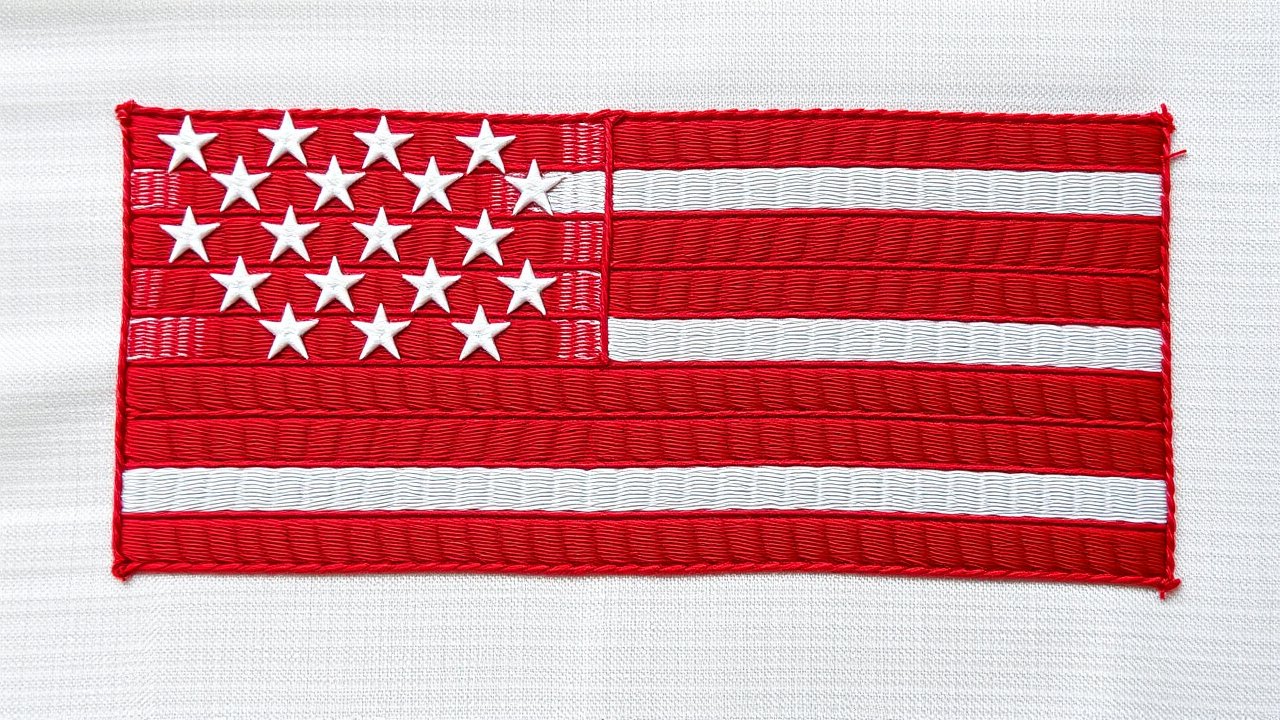
Embroidered Textile — Thirteen alternating red and white stripes with a blue canton bearing fifty white stars. The flag of United States as intricate embroidery on linen fabric. Thirteen alternating red and white stripes with a blue canton bearing fifty white stars. Dense satin stitches, French knots, chain stitch detail. The flag design is completely faithful — exact colors, geometry, and all symbols faithfully stitched, immediately recognizable as the United States flag. Visible thread texture, dimensional quality, warm handcrafted feel. No text, no letters, no words, no writing of any kind.
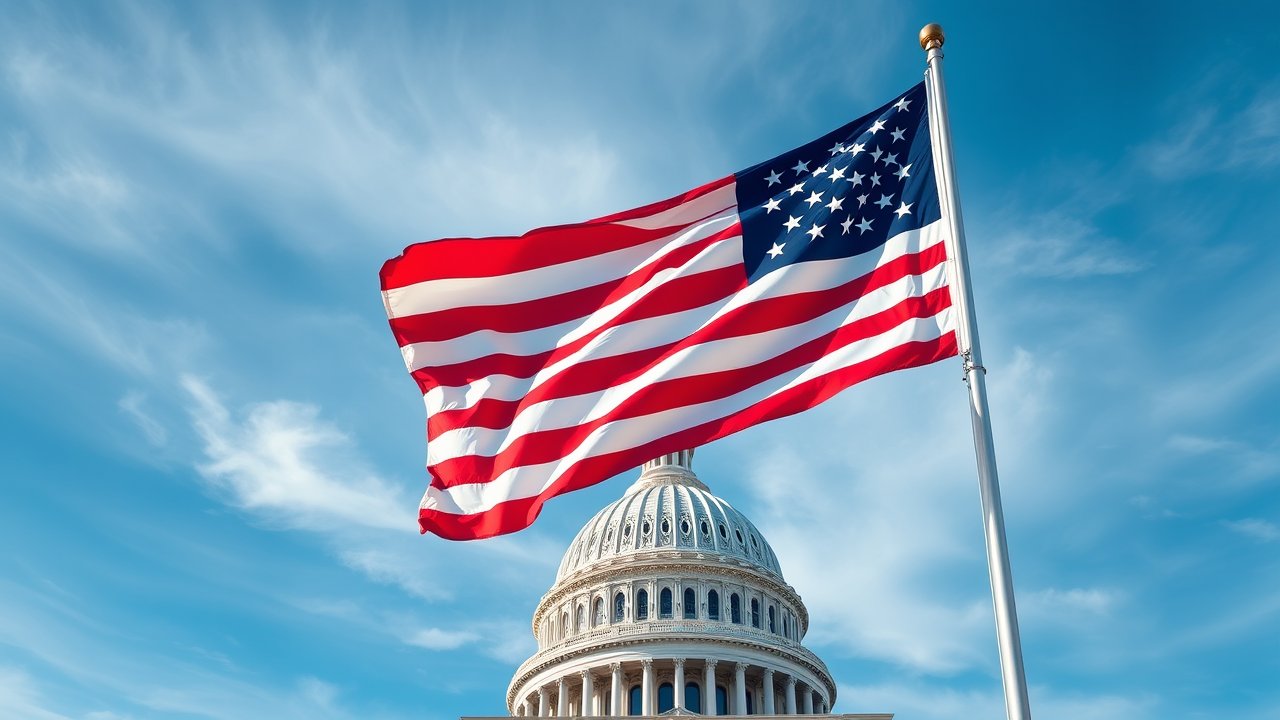
Flagpole in Capital — Thirteen alternating red and white stripes with a blue canton bearing fifty white stars. Photorealistic photograph of the United States flag flying on a tall flagpole in front of an iconic government building in the capital city. Thirteen alternating red and white stripes with a blue canton bearing fifty white stars. The flag ripples naturally in the wind, colors vivid and exact. Documentary photography style, sharp and realistic. Grand architecture in the background. Blue sky, dramatic clouds. No text, no letters, no words, no writing of any kind.
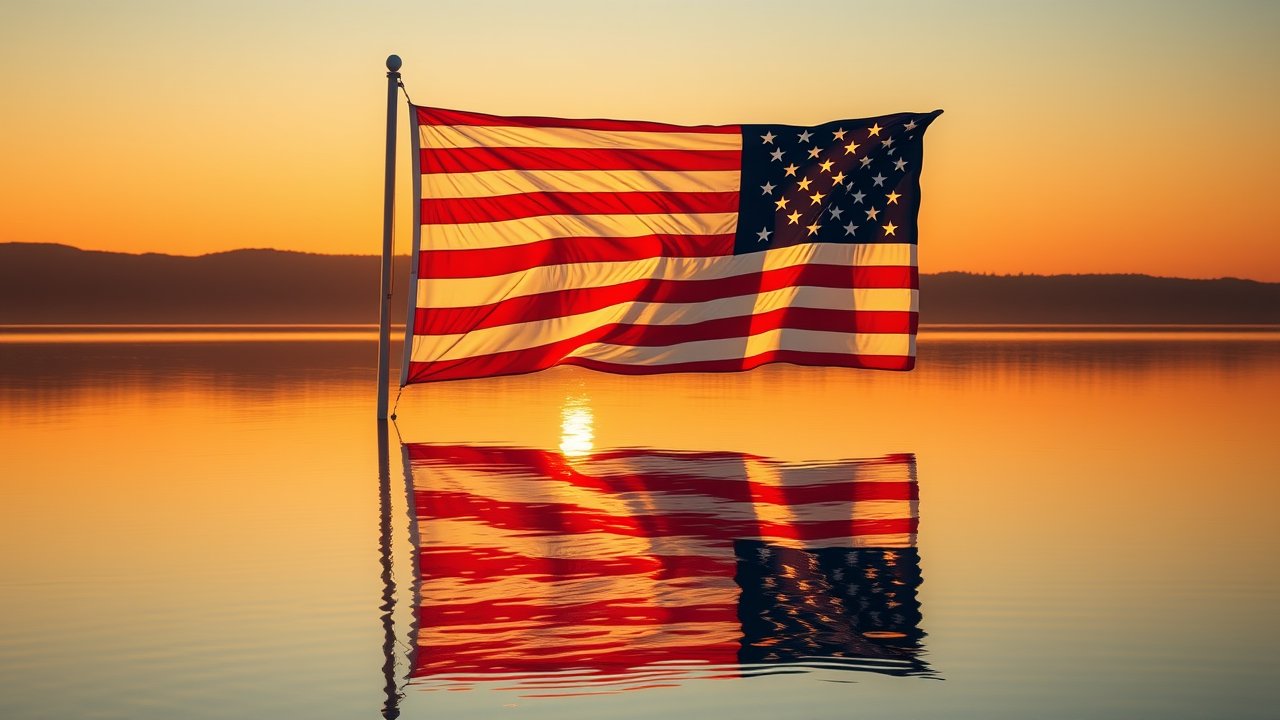
Golden Hour Reflection — Thirteen alternating red and white stripes with a blue canton bearing fifty white stars. Photorealistic photograph of the United States flag reflected in still water at golden hour. Thirteen alternating red and white stripes with a blue canton bearing fifty white stars. The flag flies on a pole at the water’s edge, its reflection shimmering on the surface below. Warm amber and orange sunset light. The flag colors and design are faithful and vivid. Serene, cinematic landscape photography. No text, no letters, no words, no writing of any kind.
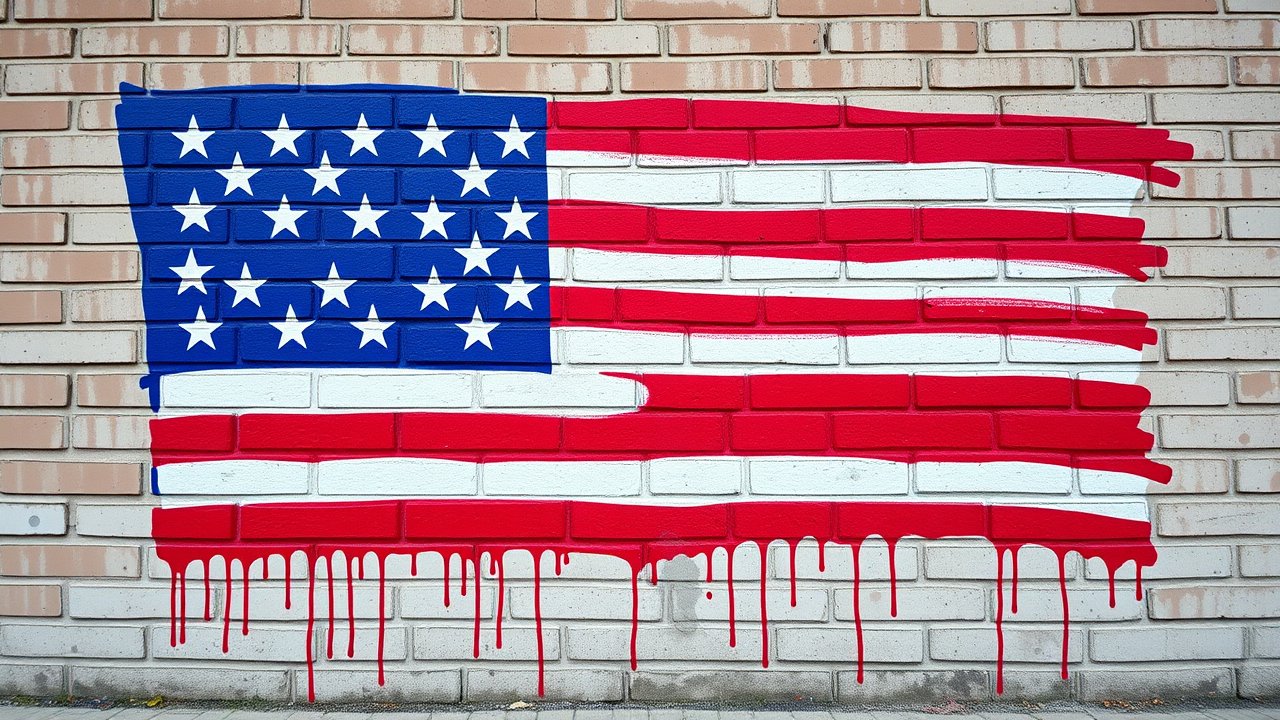
Street Art / Graffiti — Thirteen alternating red and white stripes with a blue canton bearing fifty white stars. The flag of United States as vibrant street art spray-painted on a brick wall. Thirteen alternating red and white stripes with a blue canton bearing fifty white stars. Bold spray paint, dripping edges, stencil layers, overspray halos. The flag design is faithful and immediately recognizable — exact colors and symbols, just rendered in spray paint on urban concrete. No text, no letters, no words, no writing of any kind. No tags, no graffiti lettering.
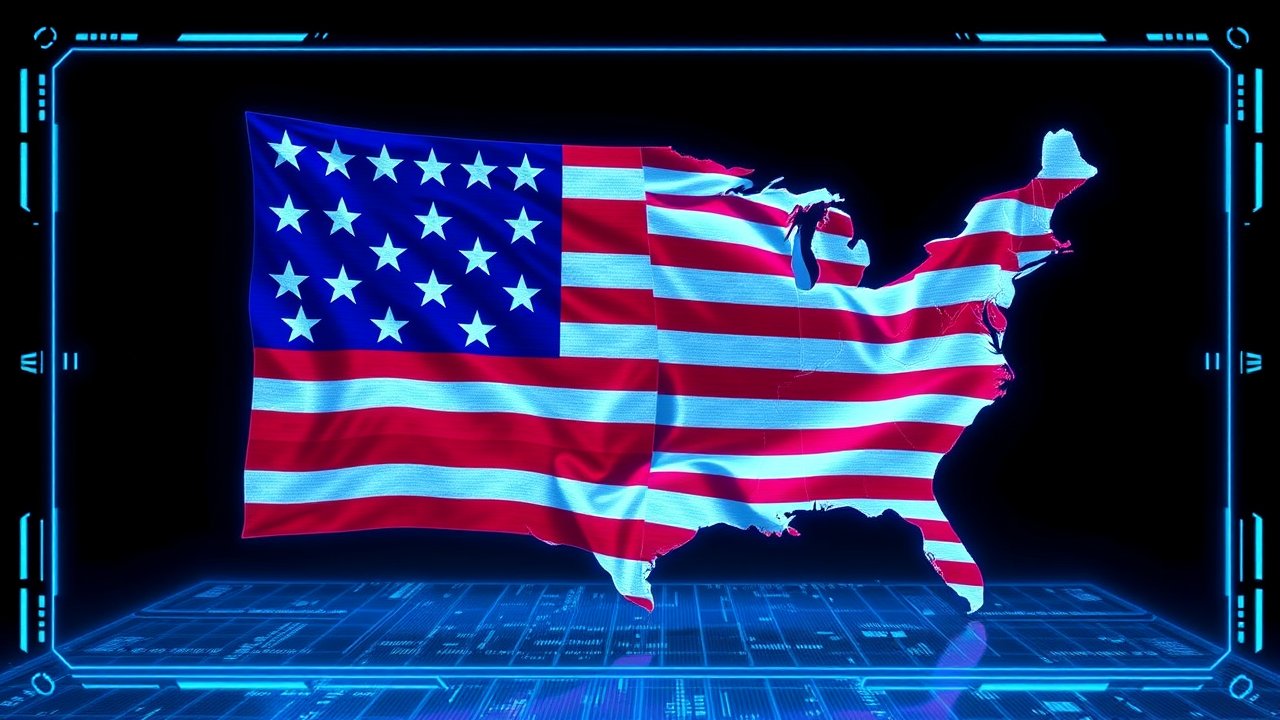
Sci-Fi Hologram — Thirteen alternating red and white stripes with a blue canton bearing fifty white stars. The flag of United States projected as a futuristic holographic display. Thirteen alternating red and white stripes with a blue canton bearing fifty white stars. Translucent blue-white projection with scan lines, floating in dark space. Glitching edges, particle effects, data streams. The flag design is completely faithful and recognizable. Cyberpunk HUD elements framing the projection. No text, no letters, no words, no writing of any kind.
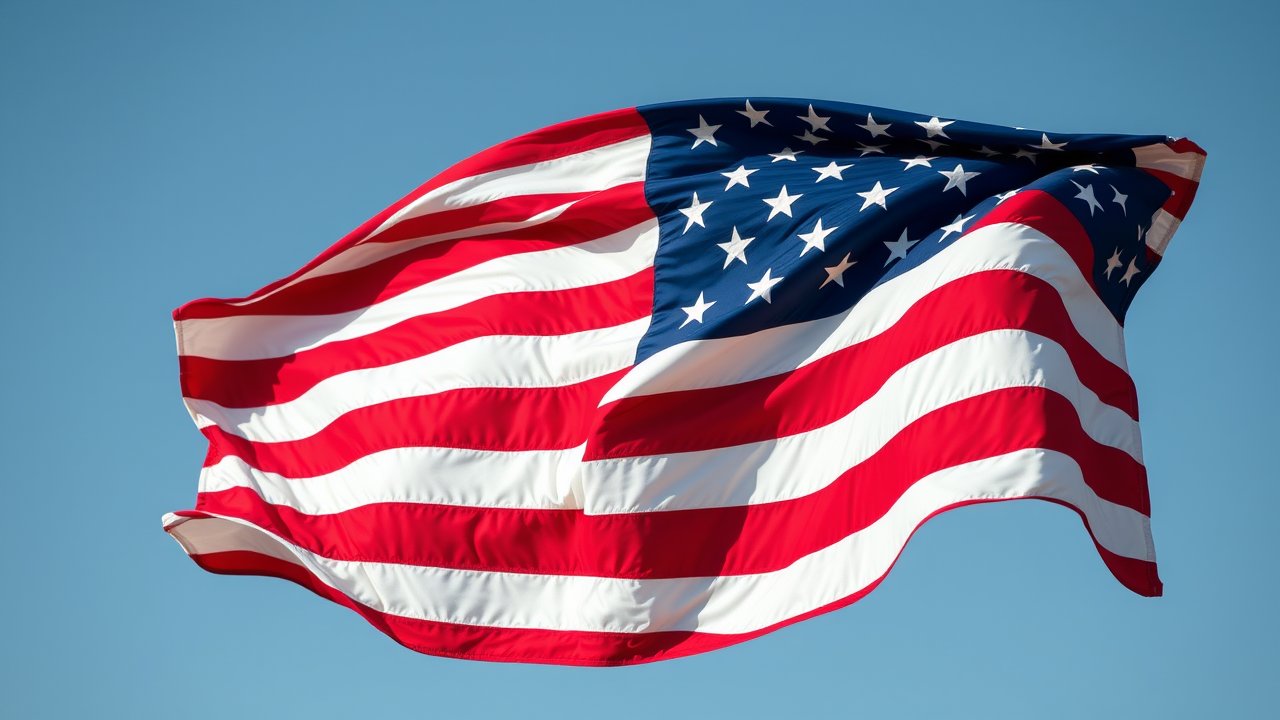
Hyperrealistic Wind — Thirteen alternating red and white stripes with a blue canton bearing fifty white stars. Ultra-hyperrealistic photograph of the United States flag caught in a dramatic gust of wind. Thirteen alternating red and white stripes with a blue canton bearing fifty white stars. Macro-level fabric detail — individual threads visible, fabric folds and tension lines crisp. Colors and design completely faithful to the real United States flag. High-speed shutter, razor-sharp focus, studio lighting. No text, no letters, no words, no writing of any kind.
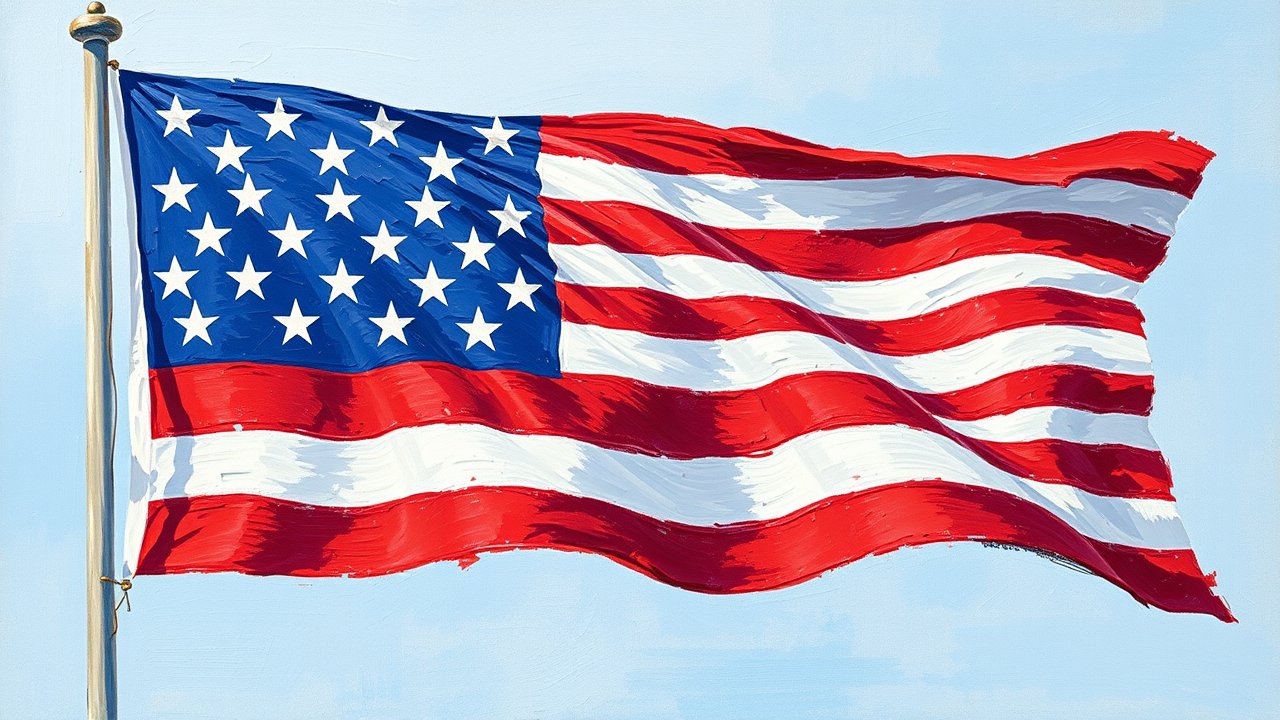
Impressionist Oil — Thirteen alternating red and white stripes with a blue canton bearing fifty white stars. The flag of United States painted in French Impressionist oil on canvas. Thirteen alternating red and white stripes with a blue canton bearing fifty white stars. Thick impasto brushstrokes, dappled light, vibrant broken color technique in the style of Monet. The flag is instantly recognizable — colors and design faithful to the real United States flag, interpreted with impressionist light and texture. No text, no letters, no words, no writing of any kind.
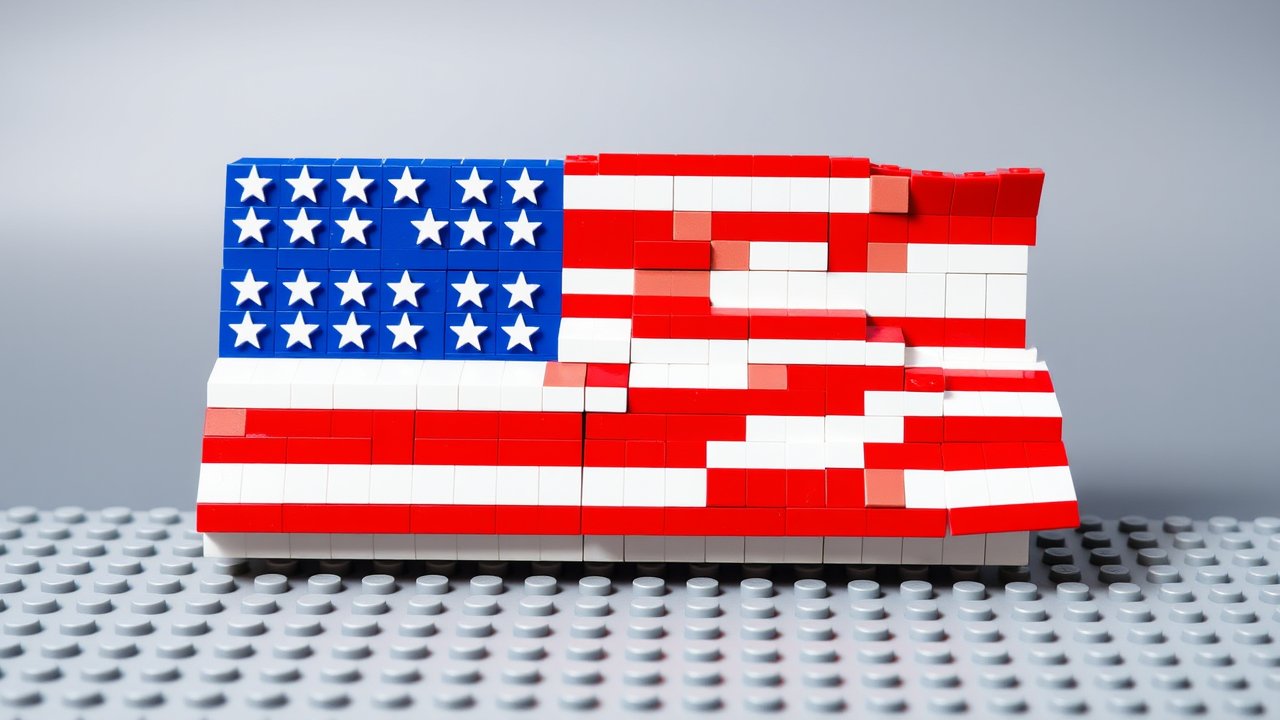
Lego Bricks — Thirteen alternating red and white stripes with a blue canton bearing fifty white stars. The flag of United States built from Lego bricks, photographed as a real physical construction. Thirteen alternating red and white stripes with a blue canton bearing fifty white stars. Visible studs and brick seams, slight plastic sheen. Standard Lego colors approximate the flag’s palette. Built on a gray Lego baseplate. Dramatic angle showing the three-dimensional brick texture. No text, no letters, no words, no writing of any kind.
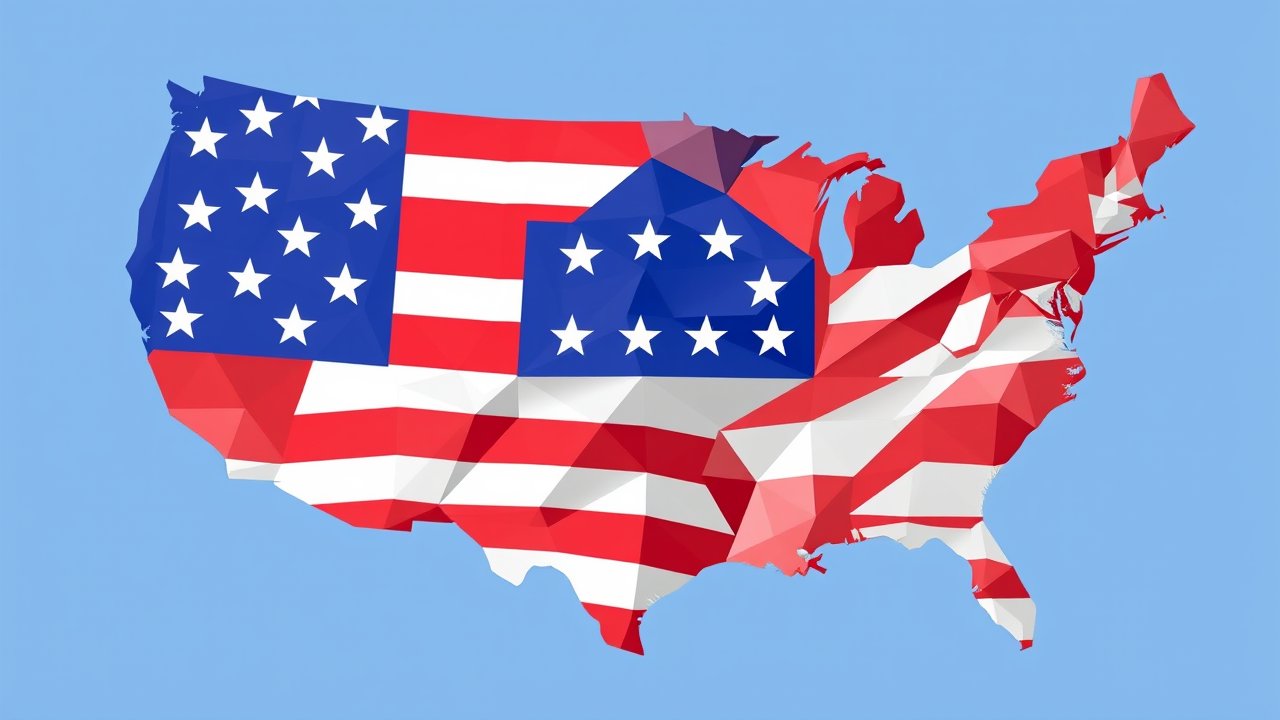
Low-Poly Geometric — Thirteen alternating red and white stripes with a blue canton bearing fifty white stars. The flag of United States constructed from low-polygon geometric triangles. Thirteen alternating red and white stripes with a blue canton bearing fifty white stars. Aggressively faceted — each region broken into many visible triangular faces with subtle color variation across each polygon, creating real depth and dimensionality even in flat-color areas of the flag. Crystal-like, contemporary computational design. The flag is completely faithful and immediately recognizable. No text, no letters, no words, no writing of any kind.
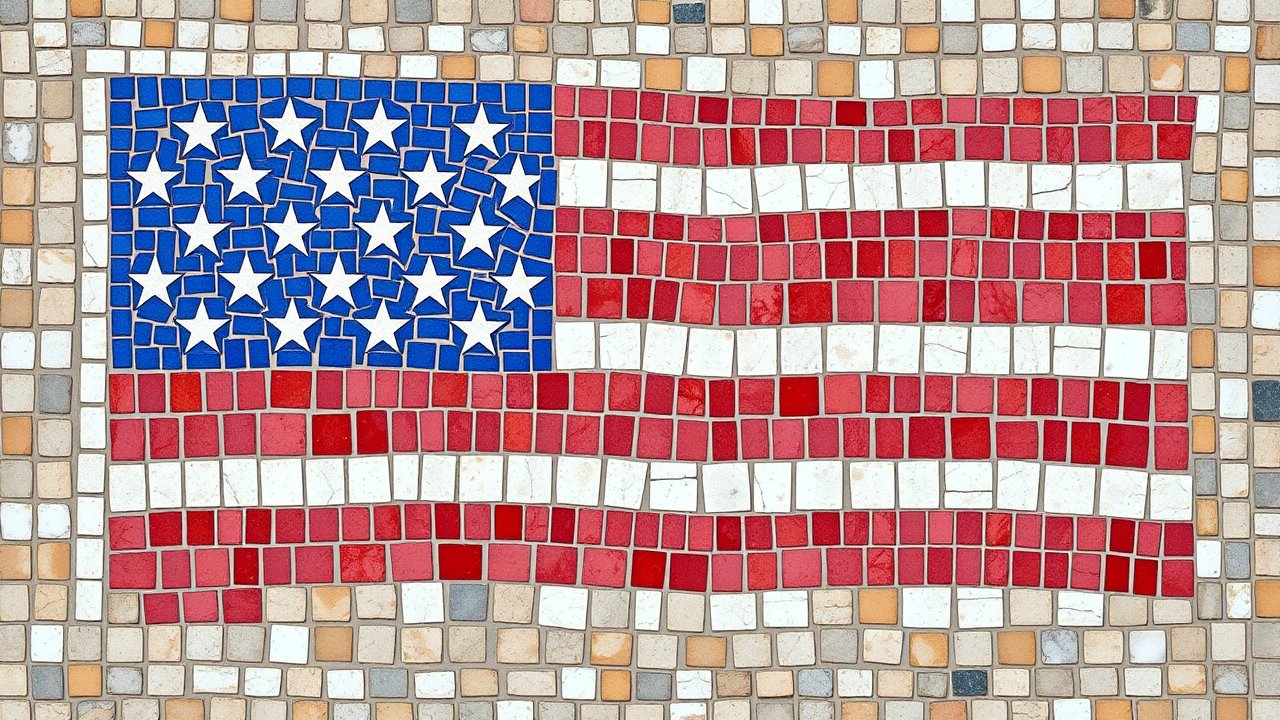
Mosaic Tiles — Thirteen alternating red and white stripes with a blue canton bearing fifty white stars. The flag of United States assembled as a Roman-style mosaic. Thirteen alternating red and white stripes with a blue canton bearing fifty white stars. The flag is completely faithful to the real United States flag — exact proportions, colors, and all symbols, rendered in thousands of small stone and glass tesserae. Visible grout lines, rich earthy tones mixed with brilliant glass, slight historical weathering. No text, no letters, no words, no writing of any kind.
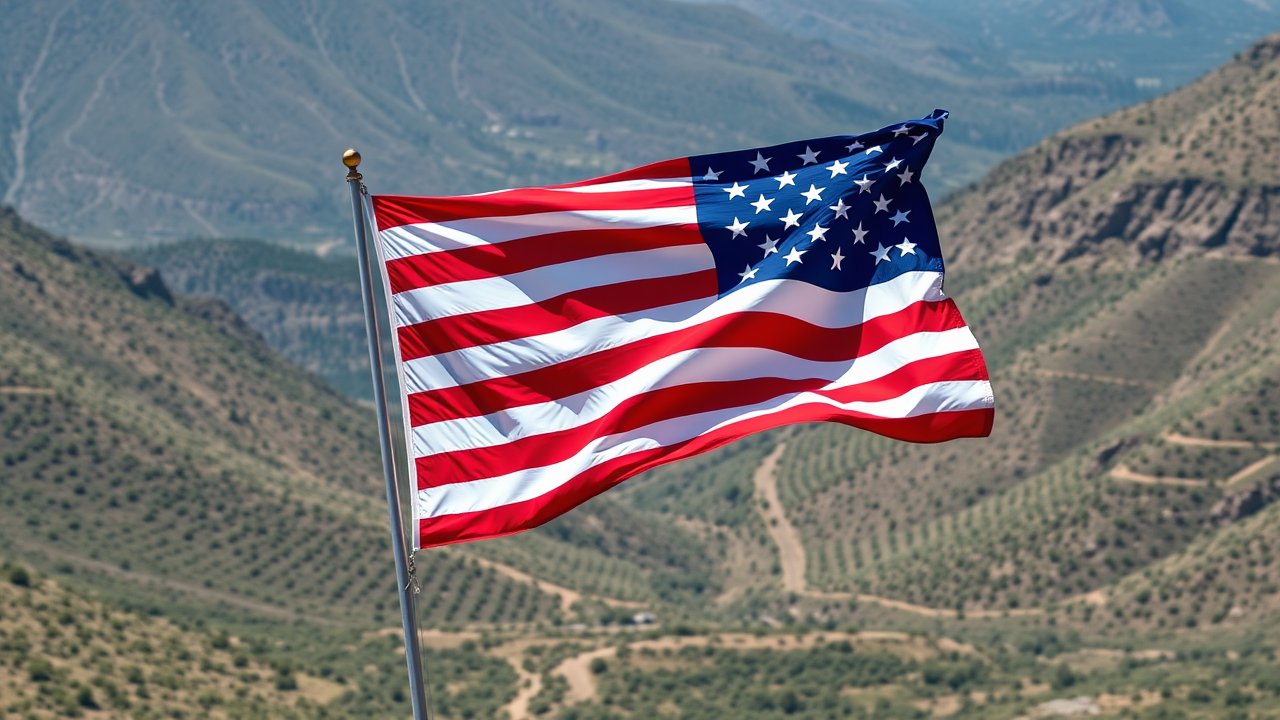
Native Landscape — Thirteen alternating red and white stripes with a blue canton bearing fifty white stars. Photorealistic photograph of the United States flag flying in an iconic natural landscape native to United States — the terrain, flora, and environment characteristic of that country. Thirteen alternating red and white stripes with a blue canton bearing fifty white stars. The flag is prominent and its colors are faithful and vivid. Remote, uninhabited wilderness. National Geographic photography style. No text, no letters, no words, no writing of any kind.
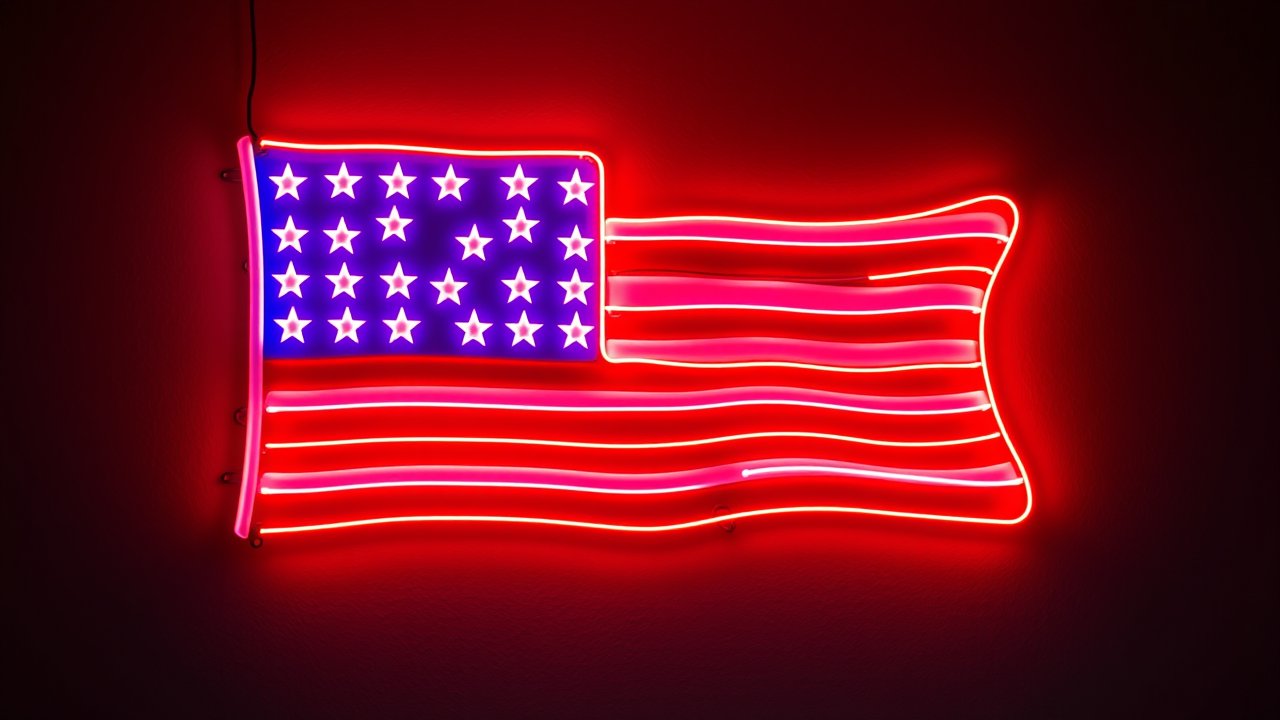
Neon Sign — Thirteen alternating red and white stripes with a blue canton bearing fifty white stars. The flag of United States recreated as a real neon sign mounted on a dark wall. Thirteen alternating red and white stripes with a blue canton bearing fifty white stars. Glowing glass neon tubes bent into the flag’s shapes — the colors of the flag rendered in actual neon light. Visible glass tube bends, metal mounting brackets on the wall. Warm neon glow and light bloom. Real neon, not digital. Photographed in a dark room. No text, no letters, no words, no writing of any kind.
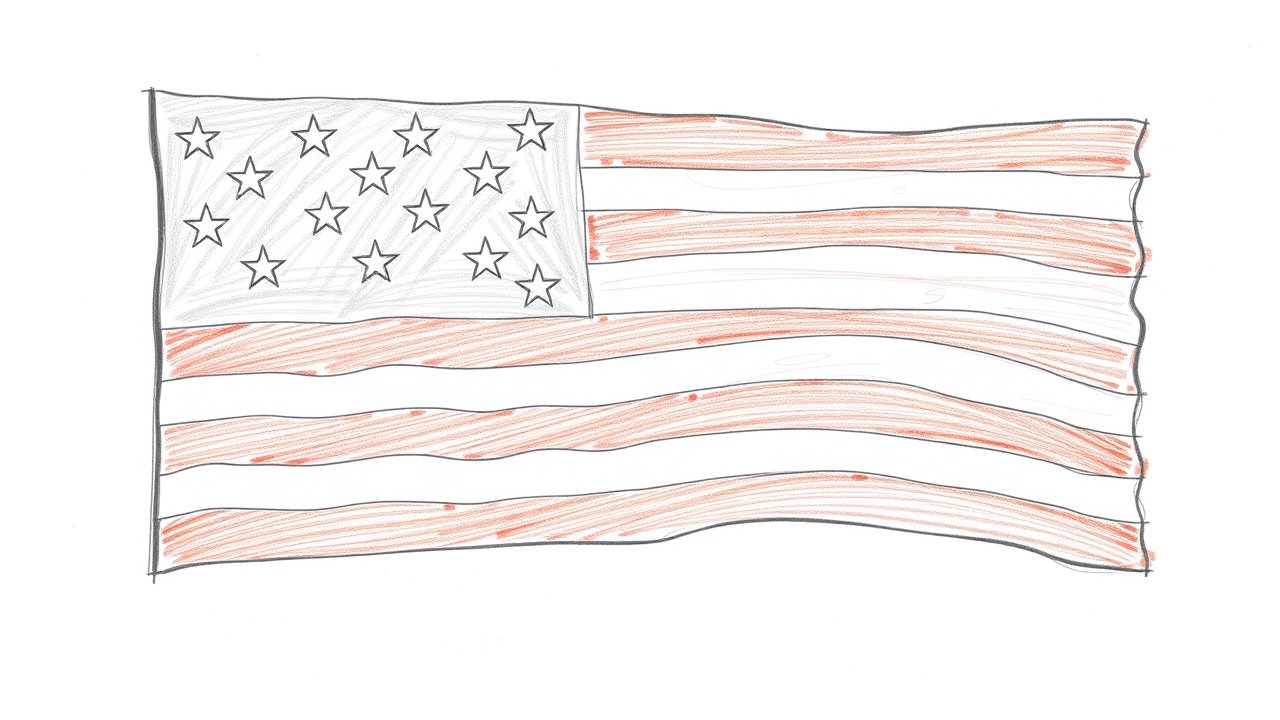
Pencil Sketch — Thirteen alternating red and white stripes with a blue canton bearing fifty white stars. The flag of United States as a bold, confident pencil sketch. Thirteen alternating red and white stripes with a blue canton bearing fifty white stars. Strong graphite lines on cream paper — not delicate but bold and decisive. Heavy pressure on key outlines, dramatic cross-hatching for deep shadows and shading. Immediately recognizable as the United States flag. Artist’s confident hand, not tentative. No text, no letters, no words, no writing of any kind.
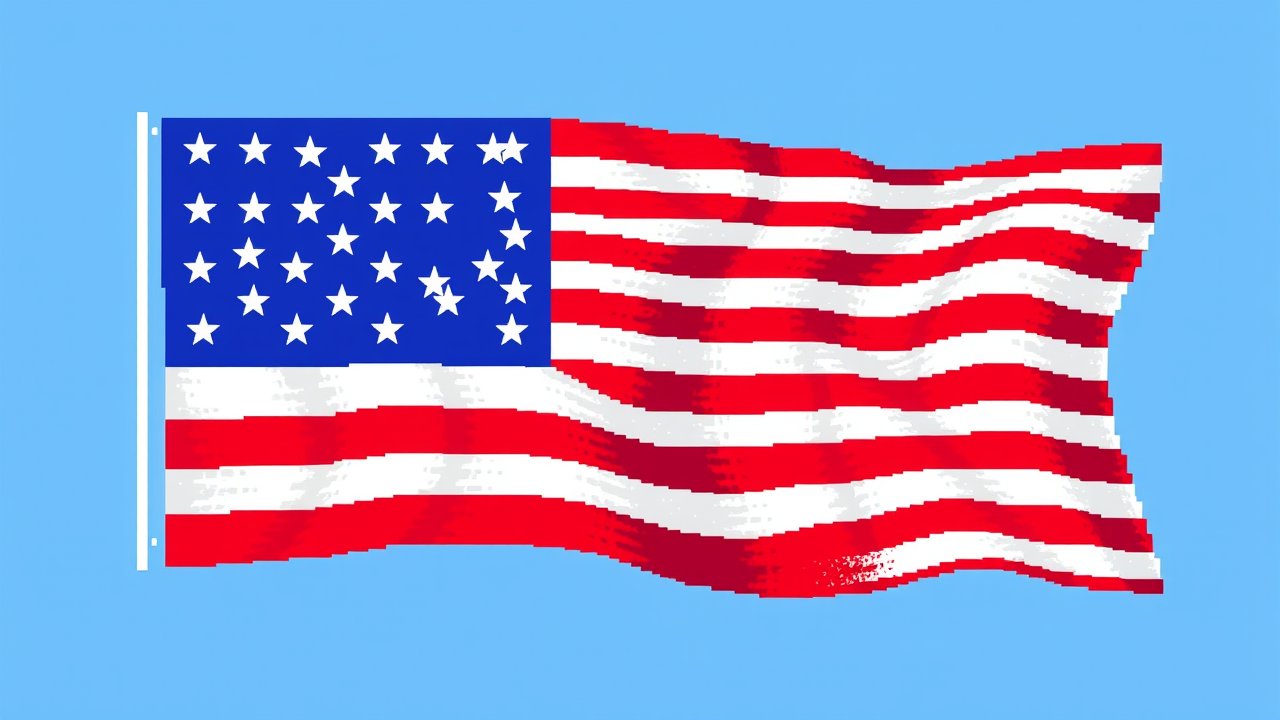
Pixel Art — Thirteen alternating red and white stripes with a blue canton bearing fifty white stars. The flag of United States as detailed 16-bit pixel art. Thirteen alternating red and white stripes with a blue canton bearing fifty white stars. Crisp pixel grid, limited palette with careful dithering, nostalgic retro game aesthetic. Clean grid-aligned design with subtle shading. Every element of the flag faithfully reproduced in pixels. No text, no letters, no words, no writing of any kind.
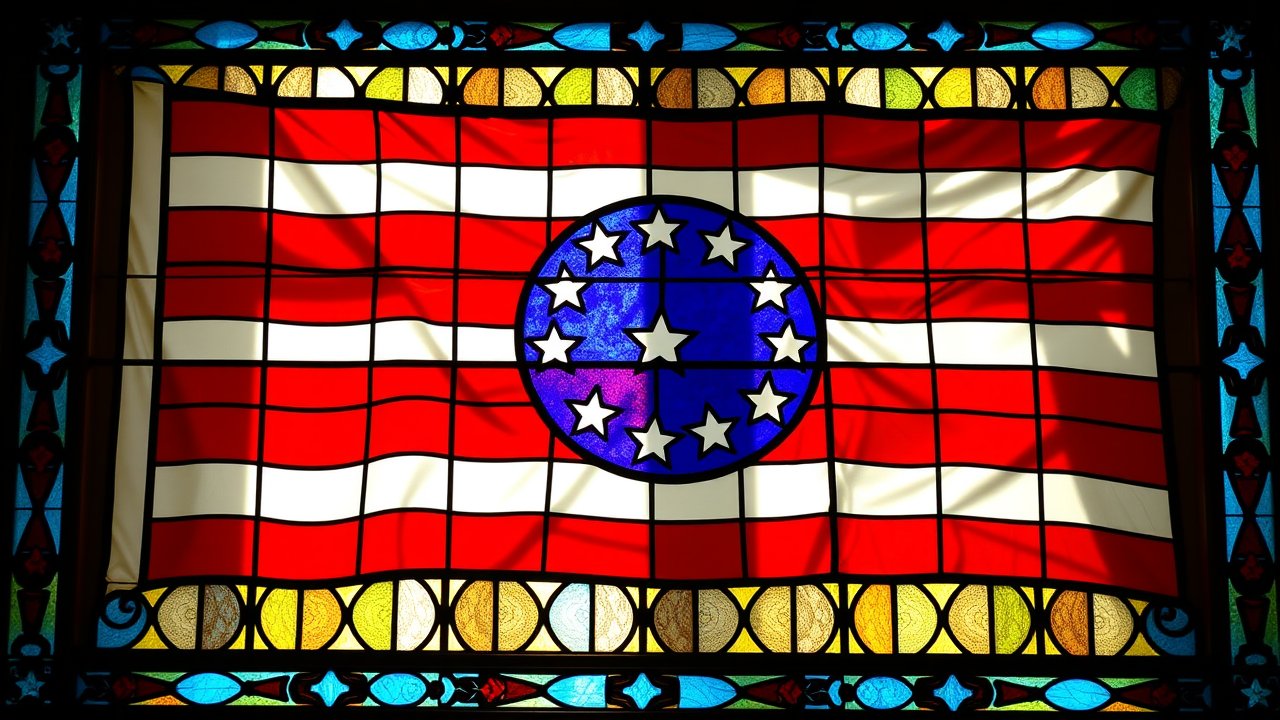
Stained Glass — Thirteen alternating red and white stripes with a blue canton bearing fifty white stars. The flag of United States rendered as an ornate stained glass window. Thirteen alternating red and white stripes with a blue canton bearing fifty white stars. The design is completely faithful to the real United States flag — exact colors, geometry, and all symbols preserved. Brilliant jewel-toned glass pieces separated by dark lead came lines. Warm sunlight streaming through, casting colored light. Gothic cathedral craftsmanship. No text, no letters, no words, no writing of any kind.
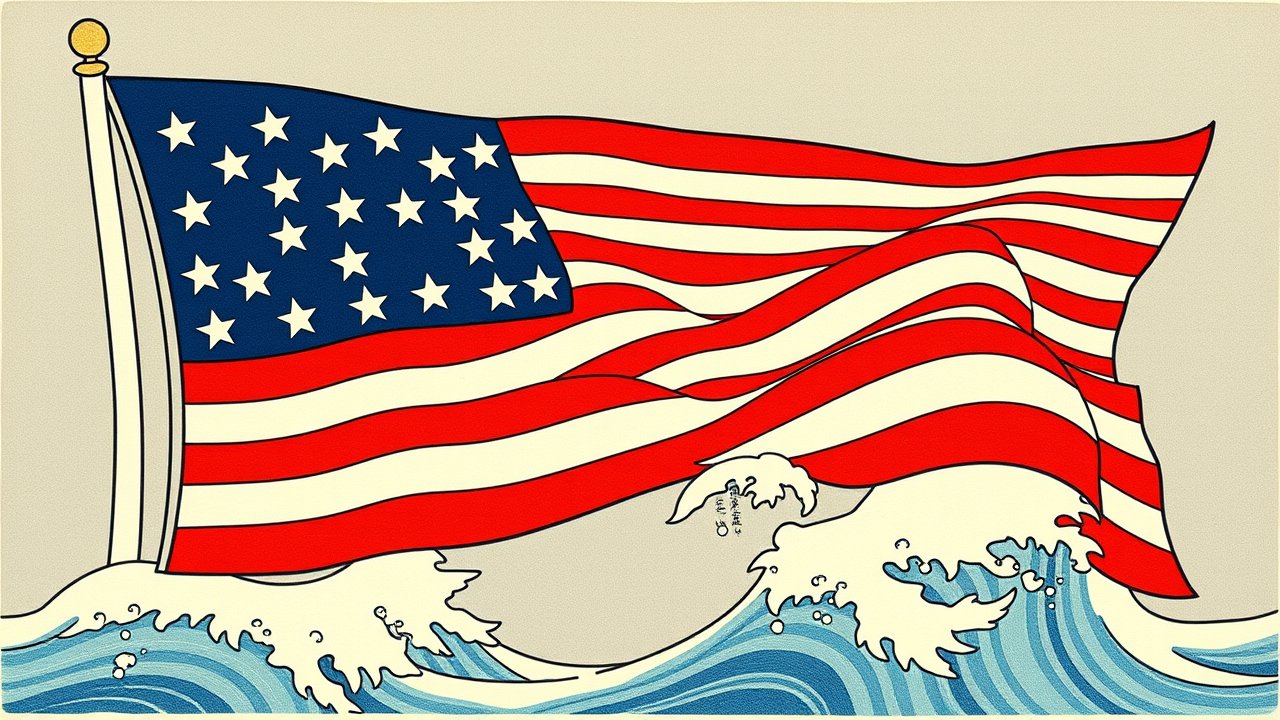
Ukiyo-e Woodblock — Thirteen alternating red and white stripes with a blue canton bearing fifty white stars. The flag of United States as a traditional Japanese ukiyo-e woodblock print. Thirteen alternating red and white stripes with a blue canton bearing fifty white stars. Bold outlines, flat areas of rich color, flowing organic forms. Wind and waves incorporated into the composition. Printed on washi paper with visible wood grain texture. The flag is the central focus and instantly recognizable. No text, no letters, no words, no writing of any kind.
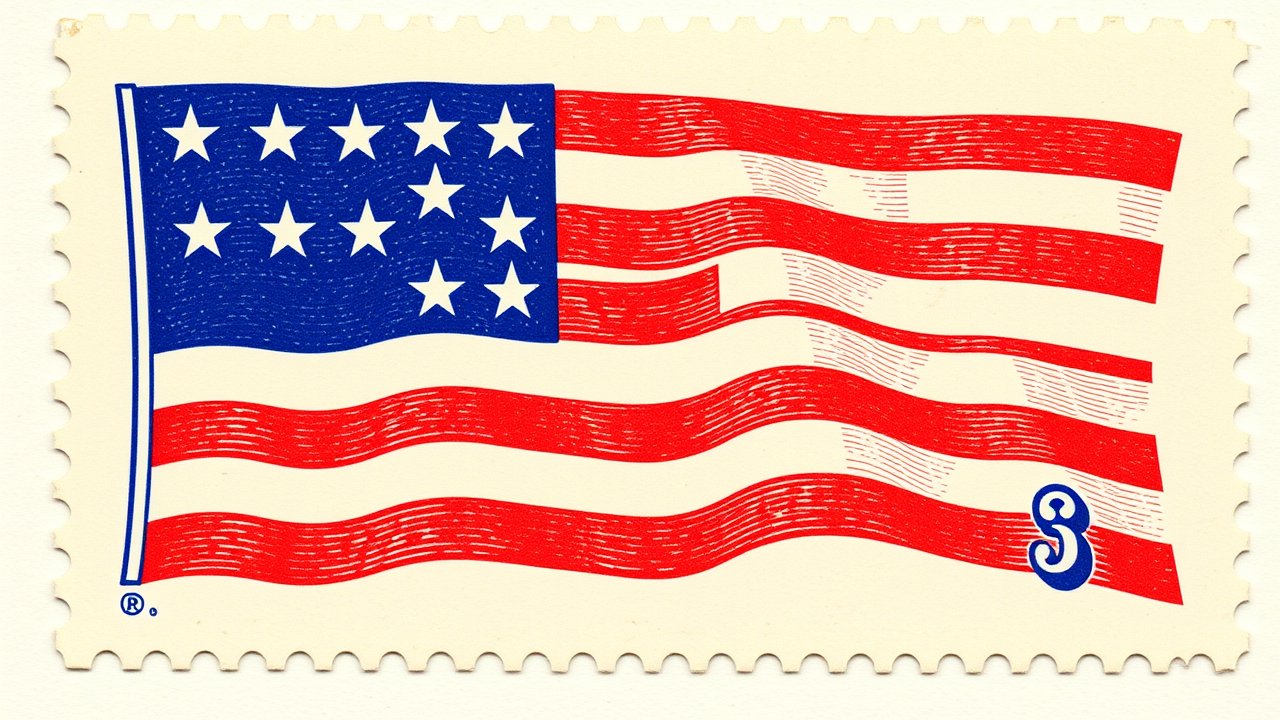
Vintage Postage Stamp — Thirteen alternating red and white stripes with a blue canton bearing fifty white stars. The flag of United States as a vintage 1950s postage stamp. Thirteen alternating red and white stripes with a blue canton bearing fifty white stars. The flag fills most of the stamp — it is the primary subject, faithfully rendered in fine engraved intaglio style. Perforated edges, aged paper with slight foxing. The stamp may show a denomination numeral only — absolutely no other text or country names.
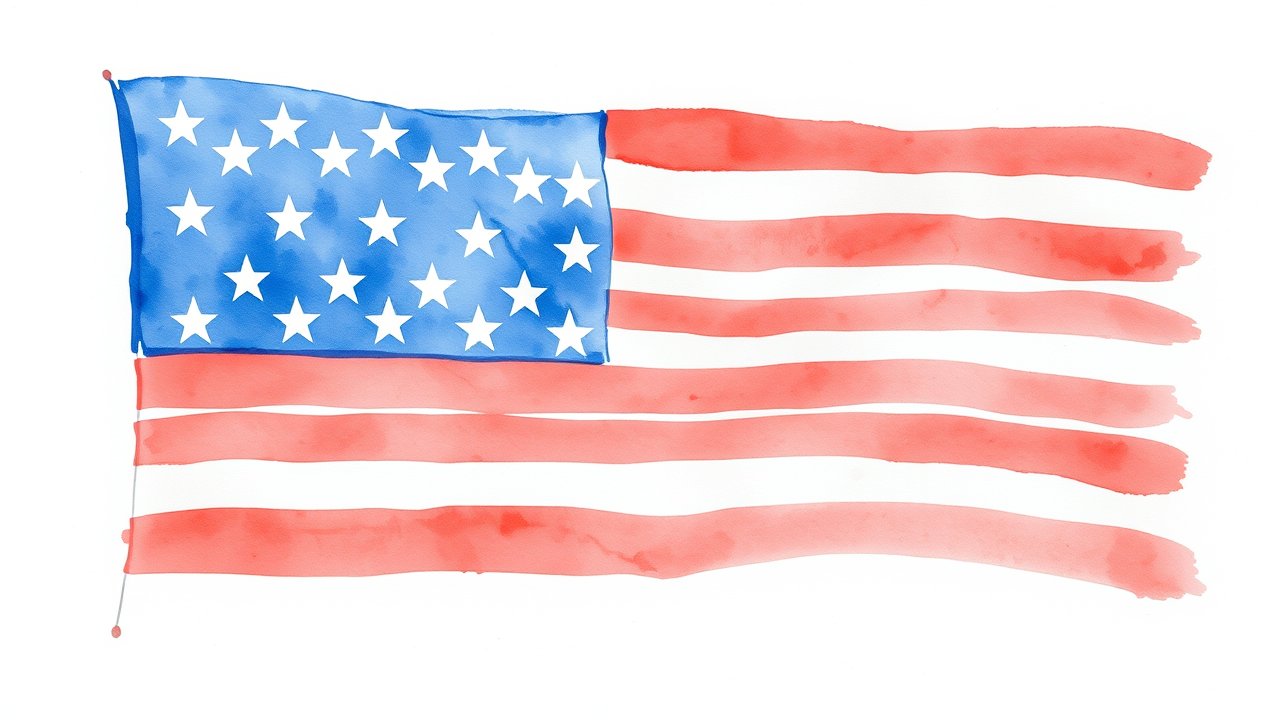
Watercolor — Thirteen alternating red and white stripes with a blue canton bearing fifty white stars. The flag of United States painted in loose, expressive watercolor. Thirteen alternating red and white stripes with a blue canton bearing fifty white stars. Wet-on-wet technique with soft color bleeds, visible brushstrokes, natural paper texture. Delicate splashes and drips at the edges. Luminous, translucent layers of pigment. No text, no letters, no words, no writing of any kind.
The flag of the United States, known as the Stars and Stripes or Old Glory, represents one of the most recognizable national symbols in the world. Its history is deeply intertwined with American independence, territorial expansion, and national identity, evolving through 27 official variations over more than 240 years.
Design Origins and Early History
The design of the American flag originated during the Revolutionary War, though its exact creator remains a matter of historical debate. The popular legend credits Betsy Ross, a Philadelphia seamstress, with sewing the first flag in 1776, but historical evidence supporting this claim is limited. What is certain is that the Continental Congress adopted the Flag Resolution on June 14, 1777, officially establishing the flag’s basic design: thirteen alternating red and white stripes representing the original thirteen colonies, with a blue canton (upper left corner) containing thirteen white stars representing the united states.
The earliest flag designs placed stars in various patterns—some in circles, others in rows. The circular arrangement became the most common representation during the early republic, symbolizing the union of states in an eternal circle with no beginning or end. These thirteen stripes and stars embodied the principle of federation: individual states united under one banner. Before the official adoption in 1777, various flags were used during the Revolutionary War, including the Continental Colors (which featured the British Union Jack in the canton) and other regional variations that combined patriotic symbolism with practical identification for military purposes.
Symbolism of Colors and Elements
Each element of the American flag carries deep symbolic meaning. The thirteen stripes represent the original thirteen colonies that declared independence and formed the United States: Delaware, Pennsylvania, New Jersey, Georgia, Connecticut, Massachusetts, Maryland, South Carolina, New Hampshire, Virginia, New York, North Carolina, and Rhode Island. The red stripes symbolize hardiness and valor, while the white stripes represent purity and innocence. These colors were not specifically chosen for meaning; rather, red, white, and blue were colors already used in the British flag and were associated with patriotism in 18th-century America.
The blue canton represents vigilance, perseverance, and justice—qualities deemed essential to the nation’s character. The stars in the canton, initially thirteen and later increasing to fifty, represent the states of the union. Each star is a five-pointed star, a symbol that has represented unity and celestial guidance across cultures for centuries.
Historical Evolution
The flag’s design evolved primarily as states joined the union. The Flag Acts of 1818 and 1912 standardized the flag’s design, establishing that new stars should be added on the July 4th following a state’s admission. The number of stripes remained fixed at thirteen to preserve the historical significance of the original colonies, a decision that distinguished the American flag from many other national flags that continue adding elements.
Major variations include: the 15-star flag (1795–1818), used during the early expansion when Vermont and Kentucky joined the union during the presidency of George Washington; the 20-star flag (1818–1819), following the addition of five new states; and subsequent additions through the 19th century as westward expansion accelerated. The 48-star flag (1912–1959) remained standard for 47 years, making it the longest-serving version in American history. The addition of the 49th star for Alaska in 1959 and the 50th star for Hawaii in 1960 created the current design that has been in use for over 60 years—the second-longest tenure of any flag design.
The arrangement of stars has also evolved significantly. Early flags featured stars in irregular or scattered patterns, then graduated to organized rows as printing and manufacturing techniques improved. The current 50-star arrangement, officially adopted in 1960 and designed by Robert G. Heft while still a high school student, uses nine rows of alternating six and five stars, creating a balanced and visually harmonious design that has become the definitive modern standard.
Notable Facts and Cultural Significance
June 14 is celebrated as Flag Day in the United States, commemorating the adoption of the first official flag design in 1777. The Pledge of Allegiance, recited by schoolchildren and citizens nationwide, explicitly references the flag as a symbol of the nation’s ideals. Composed in 1892, the Pledge reinforced the flag’s position as a central symbol of American nationalism and civic identity.
The phrase “Old Glory” became popularized in the 19th century, attributed to Captain William Driver, a sea captain who named his flag “Old Glory” in the 1830s. The flag has been carried into battle throughout American military history, around the world, and to the moon during the Apollo 11 mission in 1969, symbolizing American achievement and exploration. Astronaut Buzz Aldrin’s iconic photograph holding the flag on the lunar surface remains one of the most powerful images associated with the banner.
The United States Flag Code, formally known as Title 36 of the United States Code, though not strictly enforced, establishes comprehensive rules for how the flag should be displayed and treated with respect. The flag should never touch the ground, be flown upside down except in distress signals (a recognized international maritime convention), or be used for commercial purposes without proper licensing. When a flag becomes worn, faded, or damaged, it should be retired in a dignified ceremony, often involving respectful burning by organizations such as the American Legion and Boy Scouts of America.
The Stars and Stripes has served as the basis for numerous state and local flags, and its design principles—stripes and stars—have influenced flags worldwide, particularly in the design of the flags of Malaysia, Liberia, and the Philippines. The flag’s visual simplicity, combined with its profound symbolism of unity, democracy, and freedom, has made it an enduring icon of American identity. Its presence in homes, schools, government buildings, and public spaces underscores its central role in American civic consciousness and patriotic expression across generations.
Sources
• Smithsonian Institution. “The American Flag.” americanhistory.si.edu
• Library of Congress. “American Memory: The Star Spangled Banner.” loc.gov
• U.S. Flag Code (4 U.S.C. § 1–10)
• National Geographic. “American Flag History and Meaning.” nationalgeographic.com
• DePauw, Linda Grant. “Founding Mothers: Women in America in the Revolutionary Era.” Houghton Mifflin, 1975
• CIP. “Vexillology and Flag History.” VexillologyToday.com
Free Printable: Flags of the World Reference Card
Get a beautiful printable poster with 50 flag emojis, Unicode codes, and fun facts. Perfect for classrooms and desks!
No spam, ever. Unsubscribe anytime.